Tag: Budget 2022-23

  • ‘Apologise to the nation for record-high 38% inflation’: PTI wants Dar to resign

    ‘Apologise to the nation for record-high 38% inflation’: PTI wants Dar to resign

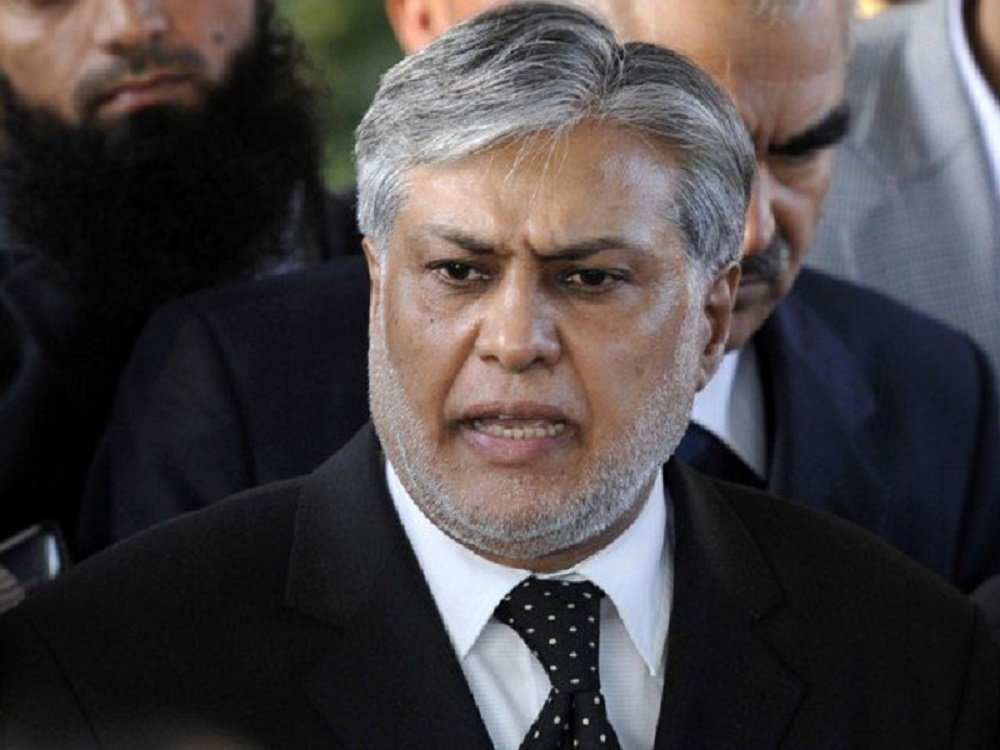
    A spokesperson for Pakistan Tehreek-e-Insaf (PTI) in a statement on Friday said that they want Finance Minister Ishaq Dar to resign and apologise to citizens for taking the country to the brink of default and unleashing 38 percent inflation.

    The PTI spokesperson further said that the Economic Survey FY2023 “paints a truly dismal picture of the economy”.

    “The epic failure of the PDM government has led to a ‘never-seen-before’ crisis with eight million workers becoming unemployed in FY2023, the unemployment rate rising to 10%, and causing nearly 18 million households to fall below the poverty line.”

    “The epic failure of his ‘Dar peg’ policy has showcased again why we believe he is unfit for this job, with a complete lack of basic understanding of markets and economic policy. This policy has brought the economy to the brink of a default, with SBP reserves now standing at only $3.9bn, not even enough to finance one month of imports. They were $10.5 billion at the time of the VONC,” the statement added.

    Amidst the economic crisis, the coalition government presented an expansionary budget for fiscal year 2023-24 on Friday.

  • Petroleum levy of Rs50 per liter approved in Finance Bill 2022–23

    Petroleum levy of Rs50 per liter approved in Finance Bill 2022–23

    On Wednesday, the National Assembly approved an amendment to the Finance Bill 2022 that will allow the government to increase the fuel levy to Rs50 per liter.

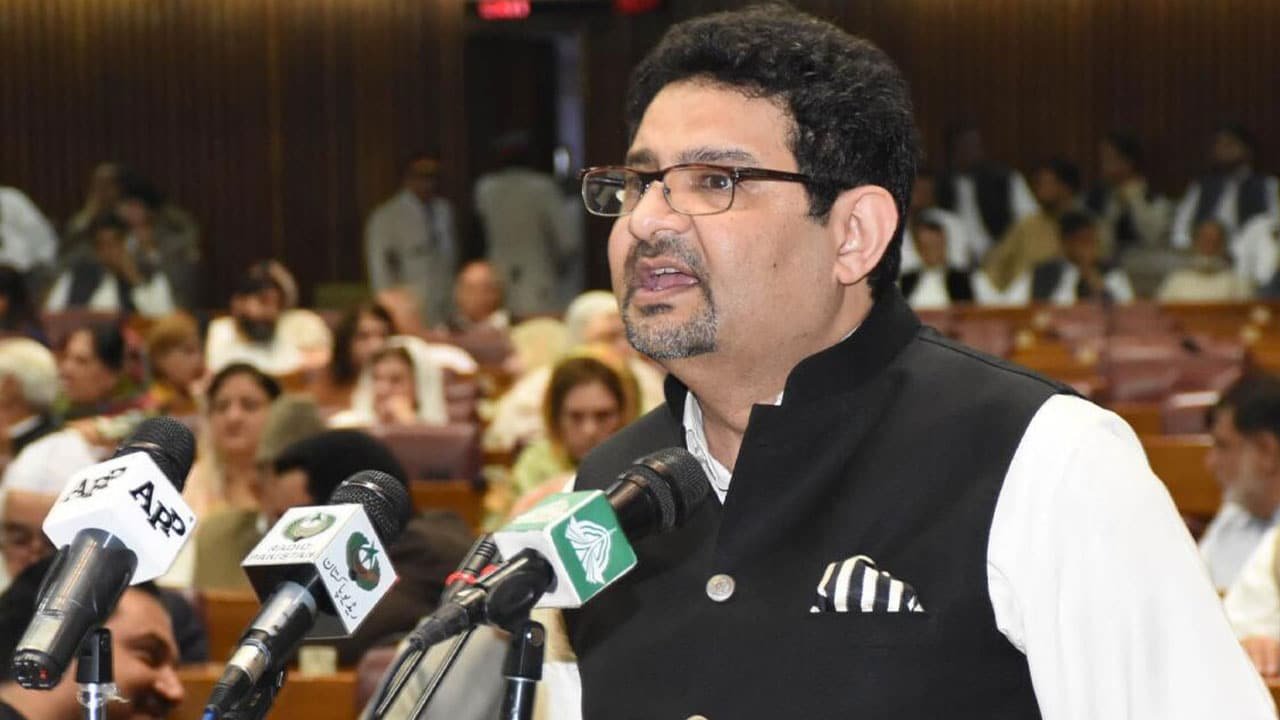
    During the National Assembly session held to discuss the amendments to Finance Bill 2022, Finance Minister Miftah Ismail made it clear that the amendment grants the government the authority to impose a tax of no more than Rs50 per liter. The levy will not be implemented instantly, he said.

    He went on to say that the levy had been temporarily kept at zero by the government. Throughout the upcoming fiscal year, the levy will be gradually implemented.

    According to The News, about 80 per cent of the amendments to the finance bill, according to State Minister for Finance and Revenue Ayesha Ghous Pasha, were tax-related.

    She emphasised that the government’s objective was to burden the wealthy while sparing the rest of us.

    The participants also agreed to impose a 5 per cent tax on the services of IT and software consultants in addition to the collection of sales tax through shopkeeper utility bills.

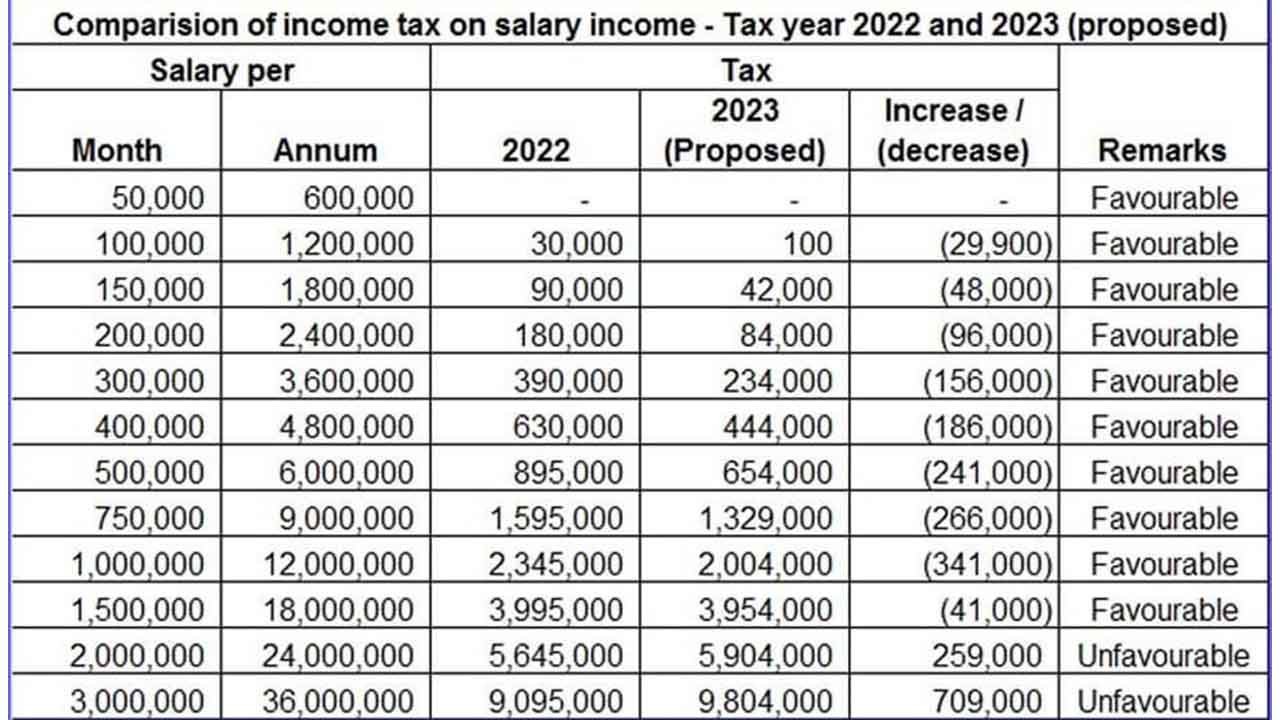
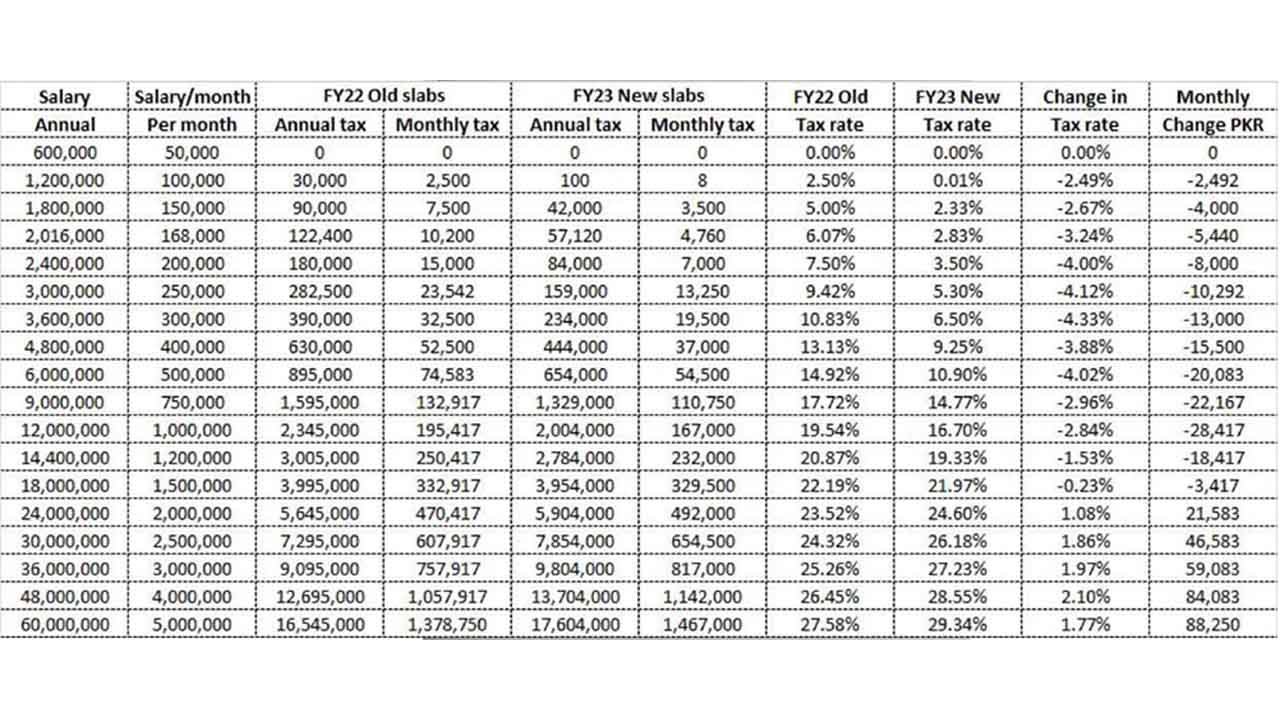
    Additionally, a change to revoke the salary class’s relief was approved. Individuals earning between zero and Rs600,000 annually would not be subject to income tax, per the initial budget proposals (where salary income exceeds 75 per cent of taxable income). The following slab would have had a nominal deduction of Rs100 per year (those earning between Rs600,000 and Rs1.2 million per year).

    With the new rates, those making between Rs0.6 and Rs1.2 million annually will now be required to pay 2.5 per cent in income tax.

    Furthermore, a 10 per cent super tax on 13 high-income sectors was approved by the National Assembly. The 10 per cent super tax on large industries was announced by Prime Minister Shehbaz Sharif on Friday in his “bid to relieve the general public of tax pressures.”

    “The revenue generated by this tax will be used to alleviate poverty in Pakistan, and it will be funded by high-income earners,” he said following a meeting with the government’s economic team.

    The tax will be levied on the cement, steel, sugar, oil and gas, fertiliser, LNG, textile, banking, automobile, beverages, chemicals, and tobacco industries. Later, Miftah Ismail, the finance minister, added airlines to the list, bringing the total to 13 sectors.

    Miftah went on to explain that the indirect tax (super tax) was intended to help the state accumulate funds under the heading of tax collection and reduce the budget deficit. He also stated that the fee was a one-time levy.

    The government’s proposed 1-4 per cent super tax on high-income individuals’ salaries was also approved by the National Assembly.

    The leadership levied a 1 per cent tax on those making up to Rs150 million annually, a 2 per cent tax on those making up to Rs200 million annually, a 3 per cent tax on those making up to Rs250 million annually, and a 4 per cent tax on those making up to Rs300 million annually.

    Additionally, a change was approved that imposes a tax on imported mobile phones that ranges from Rs100 to Rs16,000 depending on their value.

    Late Tuesday night, new amendments were added to the Finance Bill, 2022, including a potential reduction in the sales tax rate on the import of pharmaceutical raw materials from 17 per cent to 1 per cent, a tax exemption for theatres and production companies, and a change in the definition of “deemed rental income” by replacing the words “immovable properties” with “capital assets” and other changes.

    Under the revised Finance Bill 2022, the FBR also decreased the capital value tax (CVT) on vehicles from 2 per cent to 1 per cent.

  • Punjab cabinet approves annual budget 2022-23

    Punjab cabinet approves annual budget 2022-23

    On Monday, the provincial cabinet adopted the annual budget for the fiscal year 2022-23, as well as yearly development funds.

    The cabinet passed a Rs 3.226 trillion budget bill for 2022-23 with approval of amended estimates for 2021-22 at a meeting chaired by Punjab Chief Minister Hamza Shehbaz.

    In addition to raising pensions, the meeting approved an increase in salary for provincial employees. Employees were also approved for a 15 per cent special allowance.

    A memorandum of understanding (MoU) for delivering free drugs to cancer patients across the province was approved at the session.

    The meeting also ratified the decisions made at the Punjab cabinet’s previous meeting.

    The chief minister praised the work of provincial ministers, the chairman of the planning and development committee, the secretary of finance, and other authorities in creating the best budget documents.

    He stated that the budget included concrete steps to provide true relief to the public.

    The cabinet has approved a Rs164.26 billion budget for infrastructure development projects. A total of 177 billion rupees has been set allocated for the development of roads.

    In the meantime, the cabinet authorised a planned allocation of Rs164.26 billion for infrastructure development projects. One hundred and seventy-seven billion rupees has been set aside for road construction.

    According to the records, Rs27.63 billion has been put aside for irrigation, Rs5 billion has been set aside for energy, and Rs41.4 billion has been set away for production.

    The provincial finance ministry has proposed allocating Rs29.5 billion for public buildings, as well as more than Rs21 billion for urban development.

    The government of Punjab has set aside Rs14.77 billion for agriculture, Rs4.5 billion for forests, approximately Rs1 billion each for wildlife and fisheries, and nearly Rs4 billion for the livestock and dairy sectors. While Rs6.2 billion has been set aside for governance and information technology (IT).

  • Here are the latest income tax rates and slabs for salaried class

    Here are the latest income tax rates and slabs for salaried class

    In the budget for fiscal year 2022-23, the government has exempted those earning up to Rs100,000 per month from paying income tax, up from Rs50,000 last year.

    For the salaried income group, the latest budget is a mishmash as the government reduced tax rates and the number of slabs while eliminating available credit through the omission of deductible allowance for profit on debt and tax credit for investment in shares, health insurance, and pension funds.

    Moreover, the government has released a revamped list of income tax brackets for salaried employees. There were previously 12 slabs, which have now been shrunk to seven.

    Here are the new slabs:

    1. For annual incomes less than Rs600,000 (below Rs50,000 per month)
    2. For a yearly income of Rs600,000-Rs1.2 million (Rs50,000 to Rs100,00 per month).
    3. For annual earnings of Rs1.2m-2.4m (Rs100,000 to Rs200,000 per month)
    4. For annual earnings of Rs2.4m-3.6m (Rs200,000 to Rs300,000 per month)
    5. For earnings of Rs3.6m-6m (Rs300,000 to Rs500,000 per month)
    6. For annual earnings of Rs6m-12m (Rs500,000 to Rs10,00,000 per month)

    For annual earnings of more than $12 million (more than $100,000 per month), income tax is not to be levied on people earning between 0 and Rs600,000 per year (where income from salary exceeds 75 per cent of taxable income). A nominal amount of Rs100 will be subtracted per year from those earning between Rs600,000 and Rs1.2 million.

    Employees getting paid more than Rs1.2 million but less than Rs2.4 million per year will be levied 7 per cent of the amount that exceeds Rs1,200,000 in the third slab.

    An employee getting paid Rs1,400,000 per year will be levied 7 per cent of Rs200,000 (Rs1,400,000 minus Rs1,200,000 since that is the amount exceeding Rs1,200,000).

    As per the latest budget resolution, the government recommended an income tax rate of 20 per cent on small business earnings, 42 per cent on banking, and 29 per cent on related companies.

  • Getting a new car? Check out the new advance tax imposed on your favourite vehicle

    Getting a new car? Check out the new advance tax imposed on your favourite vehicle

    The government has released the fiscal budget for 2022-23, which includes several changes, including a 200 per cent advance tax on the purchase of cars with engine displacements greater than 1600cc for non-filers.

    This decision is likely to possess a considerable effect on the sales of several cars in Pakistan, which have already witnessed multiple price hikes in previous months. The tax amount for non-filers has now been doubled, which will have an influence on new car sales, particularly those with larger engines.

    The advance tax will now be applicable to several famous vehicles that have dominated the auto industry for years now from well-known manufacturers, including old players like Honda and Toyota, as well as new players like Hyundai, Kia, DFSK and BAIC.

    Taxes for filer and non-filer

    Toyota Corolla Altis Grande, 1800cc, ranges from Rs4,499,000-4,859,000, Tax for filer: Rs150,000, Tax for non-filer: Rs300,000

    Hyundai Elantra GLS, 2000cc, priced at Rs4,949,000, Tax for filer: Rs200,000, Tax for non-filer: Rs400,000

    Hyundai Tucson, 2000cc, ranges from Rs5,799,000-6,299,000, Tax for filer: Rs200,000, Tax for non-filer: Rs400,000

    Hyundai Sonata 2.0, 2000cc, priced at Rs6,999,000, Tax for filer: Rs200,000, Tax for non-filer: Rs400,000

    DFSK Glory 1.8 CVT, 1800cc, priced at Rs5,159,000, Tax for filer: Rs150,000, Tax for non-filer: Rs300,000

    Kia Sportage, 2000cc, priced at Rs5,300,000-6,300,000, Tax for filer: Rs200,000, Tax for non-filer: Rs400,000

    BAIC BJ40, 2000cc, priced at Rs8,199,000, Tax for filer: Rs200,000, Tax for non-filer: Rs400,000

    Hyundai Sonata 2.5, 2500cc, priced at Rs7,849,000, Tax for filer: Rs300,000, Tax for non-filer: Rs600,000

    Kia Sorento, 2400cc, ranges from Rs6,836,000-7,499,000, Tax for filer: Rs300,000, Tax for non-filer: Rs600,000

    Toyota Fortuner, 2700-2800cc, ranges from Rs9,959,000-12,679,000, Tax for filer: Rs400,000, Tax for non-filer: Rs800,000

    Toyota Hilux, 2800cc, ranges from Rs7,359,000-9,729,000, Tax for filer: Rs400,000, Tax for non-filer: Rs800,000

    Isuzu D-Max V-Cross, 3000cc, ranges from Rs6,600,000-6,960,000, Tax for filer: Rs400,000, Tax for non-filer: Rs800,000

    Kia Sorento V6, 3500cc, ranges from Rs7,499,000, Tax for filer: Rs450,000, Tax for non-filer: Rs900,000

    Local vehicle assemblers are dissatisfied with the new budget, claiming that the government unilaterally raised advance tax on motor vehicles larger than 1,600cc because the industry did not propose it. They claim that the decision is also discriminatory and will reduce auto sales.

    Read more: Energy sector to get a massive portion of the Rs699 billion subsidy

    Advance tax on motor vehicles larger than 1600cc has been doubled, while electric vehicles costing Rs5 million or more will be subject to a 3 per cent tax.

  • Govt unveils Rs9.5 trillion budget 2022-23, focused on sustainable growth

    Govt unveils Rs9.5 trillion budget 2022-23, focused on sustainable growth

    The federal budget for 2022-23 has been revealed with a total outlay of Rs9,502 billion. It includes measures for sustainable economic growth, industrial and agricultural development, and aid for the poor ones.

    Finance Minister, Miftah Ismail began his address by claiming that the PTI administration had left Pakistan’s economy in shambles and harmed investor confidence by often switching finance ministers and monetary policies.

    He slammed former Prime Minister Imran Khan, claiming that he never cared about the poor, claiming that “keeping an eye on potato and tomato prices is not a PM’s duty”.

    He claims that the governing party took control of the country despite the fact that it will have to make difficult decisions to save the economy, which will affect their individual parties’ appeal, but they chose to put the country’s interests ahead of their own.

    Relief for working class and the poor

    He claimed that the budget is geared at providing greater relief to the working class and the poor, as opposed to the wealthy, because the working class prefers to buy local products over foreign ones, boosting the economy.

    Budget 2022-23, according to Miftah Ismail, will concentrate on offering facilities to farmers planting crops that supply cooking oil, such as corn and sunflower, so that the country does not need to import palm oil, which is at an all-time high in the worldwide market.

    Slashing furniture, stationary expenses in govt offices

    Considering the current economic downturn, the administration has decided to restrict operational expenditures to the absolute minimum, and that new furniture and stationary for government offices will be completely prohibited. Other than obligatory diplomatic visits, all government-sponsored foreign trips will be prohibited.

    Education

    The government has set aside Rs65 billion for the Higher Education Commission (HEC) in the current budget. In addition, the HEC has been granted Rs44 billion for development programmes, which is 67 per cent more than the previous year.

    Miftah Ismail said that this is a demonstration of our commitment to the youth. We are encouraging provinces to completely fulfill their obligations in terms of higher education promotion in the coming years, he said. The HEC budget includes 5,000 scholarships for Balochistan and tribal district students. He added that a unique scholarship programme has been introduced for Balochistan’s coastal communities.

    The Finance Minister said that 100,000 laptops would be provided to students around the country on affordable instalments. Funds have also been set aside for the purchase of cutting-edge equipment to improve engineering and technology education.

    15 per cent Increase in govt employees’ salaries

    In Budget 2022-23, Miftah Ismail announced a 15 per cent increase in government employee salaries, as well as the merger of adhoc allowances.

    He said that the tax on savings certificates, pensioners’ benefit accounts, and martyrs’ family assistance accounts had been reduced from 10 per cent to 5 per cent.

    Small merchants will be subject to a new fixed income and sales tax regime, according to the Minister. Electricity bills would be used to collect taxes ranging from Rs3,000 to Rs10,000 under this method. This will be a final agreement, and FBR will have no right to inquire about the tax.

    According to Miftah Ismail, a proposal has been made to increase initial depreciation rates for industries and other businesses from 50 per cent to 100 per cent in the first year.

    Furthermore, he stated that any tariffs imposed on industrial units during the import of raw materials will be considered adjustable in order to protect the business community’s working capital.

    New industrial policy

    He stated that an industrial policy is being implemented in partnership with the Asian Development Bank in order to boost the country’s industrial base. He stated that the Prime Minister has directed that all exporter claims be resolved as soon as possible.

    A sum of Rs40.5 billion is due to them right now, and we will pay it as soon as possible. Regardless of financial challenges, sales tax refunds are issued swiftly. Industrial feeders have been spared from load-shedding, according to him, in order to ensure that the industrial sector has uninterrupted power supply.

    A new strategy for promoting investment in the country is being developed which aims to provide an enabling atmosphere for investors by eliminating the lengthy procedure. The government will overhaul the dispute settlement structure to make it easier for domestic and foreign investors.

    Boosting agriculture sector

    Talking about the agriculture sector, Finance Minister stated that Rs21 billion had been set aside to boost agriculture and livestock productivity. He stated that the Ministry of Food Security, in consultation with the Planning Commission and the provinces, has developed a three-year growth strategy. This plan aims to increase agri-production, increase farmer prosperity, and promote smart agriculture and self-sufficiency.

    National Youth Commission

    The Finance Minister also announced the development of a National Youth Commission to help youth realise their full potential. Various plans for the youth, he noted, have been offered. He stated that a coordinated strategy is being implemented to strengthen the role of educated youth in the growth of the country. According to him, the youth employment initiative will create over two million job chances.

    He added that a scheme to foster youth entrepreneurship will be launched, under which interest-free loans of up to Rs500,000 and loans of up to Rs25 million will be made available on easy payments. He stated that in this lending arrangement, a 25 per cent quota has been been aside for women. He stated that women will be given precedence in hi-tech training in order to achieve economic empowerment. Youth development centres would be set up over the country, he said.

    A green youth movement would be launched to involve young people in environmental initiatives. Funds will be set aside to distribute laptops on a merit-based and instalment basis, as well as the construction of 250 mini-sports stadiums across the country. Miftah Ismail stated that an innovation league would be established in order to improve the youth’s potential. He said that a talent quest and sports drive programme will be developed for youngsters between the ages of eleven and twenty-five.

    Reduction in govt spending

    According to the Finance Minister, the current government’s top focus is austerity. This budget includes a reduction in government spending, and we are taking meaningful moves in that direction. He stated that automobile purchases will be completely prohibited. Apart from development initiatives, procurement of furniture and other products would be prohibited. Cabinet members and government officials will have their gasoline quotas lowered by 40 per cent. There will also be a ban on international tours paid for by the government, with the exception of the most important ones.

    A medium-term macroeconomic framework has been established to put the economy on a road of development, according to the Finance Minister. He emphasised his belief that by implementing this framework, we will be able to steer the economy in the right way. Our biggest problem, he remarked, is to expand without a current account deficit. As a result, a minimum of 5 per cent will be obtained without disrupting the balance.

    Improved fiscal and monetary policy

    He said that the GDP will increase from Rs67 trillion to Rs78.3 trillion in the coming fiscal year and the government is attempting to lower inflation through improved fiscal and monetary policy. During the next fiscal year, inflation will be decreased by 11.5 per cent.

    He predicted that the tax-to-GDP ratio will rise to 9.2 per cent in the coming fiscal year, up from 8.6 per cent now. He noted that in 2017-18, we had kept this ratio at 11.1 per cent. He stated that the overall deficit, which is currently at 8.6 per cent, will be steadily reduced. In the coming fiscal year, this will be reduced to 4.9 per cent. Similarly, the overall primary balance, which presently stands at -2.4 per cent of GDP, will be reduced to 0.19 per cent.

    Import and export

    Imports, which are estimated to be $76 billion this fiscal year, would be lowered to $70 billion the following fiscal year, according to the Finance Minister. Exports are currently $31.3 billion, but will increase to $35 billion in the coming fiscal year. The current account deficit will be decreased from -4.1 per cent of GDP to -2.2 per cent of GDP.

    Remittances, which are predicted to continue at $31.1 billion this fiscal year, are expected to grow to $33.2 billion next fiscal year.

    Key allocations in Budget 2022-23

    Rs1,523 billion allocated for defence

    Rs800 billion allocated for Public Sector Development Program (PSDP)

    Rs699 billion allocated for targeted subsidy

    Rs364 billion allocated for Benazir Income Support Program (BISP)

    Rs64 billion allocated for Higher Education Program

    Rs25.99 billion allocated for Atomic Energy Commission

    Rs24 billion allocated for Health

    Rs21 billion allocated for Benazir Nashunuma Program

    Rs11 billion allocated for Agriculture

    Rs10.12 allocated billion for food security 

    Rs9.60 billion allocated for Climate Change

    Rs530 billion allocated for pension funds

    Rs3.46 billion allocated for Maritime Affairs

    Key announcements

    The GDP growth target has been set at 5 per cent.

    Remittances are expected to total $33.2 billion.

    Inflation will be held at 11.5 per cent.

    FBR has set a revenue target of Rs7,004 billion.

    Non-tax revenue objective is set at $2 billion.

    The goal set for imports is $70 billion.

    The target for exports is $35 billion.

    Government employees will have a 15 per cent raise in pay.

    Under a new employment scheme, youngsters will be eligible for interest-free loans up to Rs500,000.

    Distributors and manufacturers will no longer be subject to an 8 per cent withholding tax.

    On national saving systems, the profit rate dropped from 10 per cent to 5 per cent.

    Cinema owners and film makers are exempt from income tax.

    On cars with engines larger than 1600cc, the advance tax will be raised.

    Pharmaceutical materials are exempted from any customs duties.

    This is a developing story..
  • Direct taxes target predicted at Rs2,560 billion for FY 22-23

    In an attempt to meet the Federal Board of Revenue’s (FBR) revenue collection target of Rs7,255 billion for the upcoming fiscal year, the direct taxes target has been predicted at Rs2,560 billion, up from Rs2,182 billion in 2021-22.

    According to Brecorder, the indirect taxes (net) estimates were predicted at Rs4,695 billion in the macroeconomic framework for 2022-23. Direct taxes forecasts included income tax and withholding taxes, whereas indirect taxes projections included sales tax, customs duty, and Federal Excise Duty (FED).

    The indirect tax goal for 2022-23 has been set at Rs4,695 billion, up from Rs3,647 billion in 2021-22, representing a Rs1,048 billion rise. The indirect tax revenue for the fiscal year 2021-22 was Rs3,440 billion.

    The entire collection of indirect taxes in 2020-21 was Rs3,008.2 billion. Direct taxes are expected to reach Rs2,560 billion in the next fiscal year, up from Rs2,182 billion in 2021-22, a Rs378 billion increase.

    Read more: PM Shehbaz directs to eliminate taxes on raw materials used by export industries

    During the first 11 months of the current fiscal, the FBR collected roughly Rs1.9 trillion in direct taxes. In the fiscal year 2020-21, direct tax collections totalled Rs1,726.0 billion. Withholding taxes account for 72 per cent of the total direct tax collection.

  • Coming budget 22-23 will improve Pakistan’s IT sector

    Coming budget 22-23 will improve Pakistan’s IT sector

    Prime Minister (PM) Shehbaz Sharif emphasised the importance of drafting an economic strategy during the day-long Pre-Budget Business Conference on Tuesday, stating that all stakeholders should work together to develop a framework for attaining economic growth.

    During his speech, the PM stressed the importance of financial management in order to boost exports and agricultural yields. The meeting was attended by senior economists, industrialists and was organised by the government to explore avenues of consensus-based economic initiatives, according to APP.

    “All of us will have to move collectively. The government will need guidance from stakeholders and experts. The government will form a taskforce on agriculture and exports for formulating comprehensive plans,” he said.

    PM Shehbaz stated that his government had about 15 months to implement short and medium-term economic initiatives.

    He was disappointed that Pakistan was lagging behind other countries, despite the fact that the rest of the world had excelled by following their development plans. He claimed that Pakistan was endowed with talented individuals capable of replicating India’s success in the IT sector.

    PM Shehbaz announced that he had assigned Minister of Information Technology Aminul Haque the objective of increasing IT exports to $15 billion in the next two years. “We cannot progress until we set ambitious targets,” he stressed.

    Syed Amin Ul Haque pledged on Tuesday to increase information technology exports to $5 billion by the end of 2023.

    For the coming fiscal year, several IT and telecommunications programmes have been proposed in this regard.

    According to sources, these projects include 31 existing and two new ones, for which the Pakistani government would give Rs4,438.696 million and foreign aid will provide Rs1,042 million.

    Budget allocation for IT sector

    Reportedly, an amount of Rs100 million is proposed for IT professional certification through the Pakistan Software Export Board, while Rs80 million is planned for Crime Analytics and Smart Policing. In Azad Jammu and Kashmir and Gilgit-Baltistan, Rs50 million has been suggested for demand-driven industry, while Rs179 million has been earmarked for the building of a data centre to provide cloud-based services.

    PM Shehbaz warned that development plans could not be implemented unless political stability was achieved. The premier also stressed the importance of concentrating on exports and developing the agricultural sector.

    He went on to claim that he was aiming to ‘fix’ friendly country relations that had deteriorated during the previous administration’s tenure. “I have invited China, Japan, Turkey, and other countries to invest in Pakistan,” he said. He invited the corporate community to join him in this endeavour.

    Meanwhile, Finance Minister Miftah Ismail stated that the government will require $41 billion in the next 12 months and that he is ‘confident’ that this can be achieved.

    The Shehbaz Sharif government, he added, has re-engaged with the International Monetary Fund (IMF). “We spoke with them and are extremely optimistic that we will reach an agreement with the IMF soon. That is something we are extremely certain about”.

    Moreover, he explained that the present coalition administration had made difficult measures to help the economy stabilise. “It is difficult for any prime minister to authorise a fuel price hike of twice the amount we have, but we were losing Rs84 per litre on diesel and Rs69 per litre on petrol”.

  • Pakistan’s GDP projected to climb by 5-6 per cent in FY 22-23

    Pakistan’s GDP projected to climb by 5-6 per cent in FY 22-23

    Finance Minister Miftah Ismail forecasted that Pakistan’s GDP would expand by 5 per cent to 6 per cent, and that the government would keep inflation under control, while speaking at the pre-budget conference on Tuesday, June 7.

    The Finance minister expressed his ‘high confidence’ in the agreement with the International Monetary Fund (IMF) and revealed that the government had developed a progressive fiscal budget with a deficit of less than 5 per cent, according to Express News.

    “We had to make difficult decisions; it’s difficult for any prime minister to authorise such a hike in petrol costs, but we were losing money.” “Every month, we lost more than 120 billion rupees,” the minister said.

    According to him, the PTI administration signed an IMF agreement that mandated the reduction of fuel subsidies.

    Miftah claimed the administration has re-engaged with China, Saudi Arabia, and the United Arab Emirates (UAE), among other countries, as part of the present government’s successful negotiations.

    “Following a meeting between Foreign Minister Bilawal Bhutto and Chinese Prime Minister [Li Keqiang], China decided to re-roll their $2.4 billion programme. China has lowered its borrowing rate from 2.5 per cent to 1.5 per cent, saving the country money “Miftah said, “Roughly $23 million”.

    He went on to say that the Saudis had agreed to increase Pakistan’s “oil line” and offer the country with a $100 million revolving credit.

    According to Miftah, the current government inherited a country with the world’s third highest inflation rate, 20 million people living in poverty, and widespread unemployment.

    He went on to say that the country’s debt payments had increased tremendously as a result of the amount of loans taken on by the PTI government.

    Pakistan’s economic paradigm, according to the minister, is inherently faulty. “We enrich the wealthy,” he remarked.

    The finance minister also spoke about one-time Rs2,000 assistance for 14 million families. The amount will be distributed in June at a cost of Rs28 billion to the government.

    Aside from the 7.3 million BISP recipients, the package also covers 6.7 million households with poverty levels of less than 37.

    According to Miftah, the country’s industry and consumers are heavily reliant on imports, causing the current account to be in deficit. He went on to say that Pakistan’s economy focuses on import substitution rather than export development, a paradigm that has been replicated in a number of developing countries.

    Aside from textiles, Pakistan has no big exports because the agriculture sector is failing to remain productive.

  • No plan proposed to raise petrol prices at pre-budget seminar, clarifies Miftah

    No plan proposed to raise petrol prices at pre-budget seminar, clarifies Miftah

    After a tremendous increase of Rs60 in less than a month, Finance Minister Miftah Ismail announced Tuesday that the price of petroleum goods in the country would rise even more.

    Ismail mentioned in his statement at the one-day pre-budget business conference that if the government had followed ex-prime minister Imran Khan and former finance minister Shaukat Tarin’s contract with the International Monetary Fund (IMF), petrol would have cost Rs300 per liter.

    “The previous government had agreed with the IMF that they would not give subsidies,” the finance minister said, lashing out at the Khan-led government for messing up the economic policies of the country.

    Furthermore, The News reports that the government cannot simply withdraw subsidies without also imposing taxes on petroleum items.

    “The IMF has asked for 100 per cent withdrawal of subsidy on POL products. Once the subsidy is over, then the government will have to impose taxes and petroleum levy,” the publication reported, adding that there is still a subsidy of Rs9.32 per liter on petrol and Rs23.05 per liter on diesel.

    The finance minister had ruled out the potential of a financial emergency in the country the day before, as the government took efforts to address the country’s continued economic upheaval.

    No petrol hike discussed at the pre-budget meeting

    UPDATE: Miftah Ismail, on the other hand, has clarified that he never mentioned a hike in petroleum prices during the pre-budget meeting, despite the fact that social media and known channels have been swamped with headlines of yet another hike, with several netizens sharing images of folks rushing to petrol pumps yet again. “Channels running these tickers are doing a disservice to their viewers,” said the Finance Minister.

    “In the pre-budget seminar I never even spoke about petroleum prices. Channels running these tickers are doing a disservice to their viewers. There will be no increase in prices today and there is no summary or plan to raise prices,” he tweeted.