Tag: budget

  • Coalition govt shows ‘full confidence’ in PM Shehbaz, as Zardari hosts dinner ahead of budget

    Coalition govt shows ‘full confidence’ in PM Shehbaz, as Zardari hosts dinner ahead of budget

    Former President Asif Ali Zardari hosted a dinner for leaders and members of the coalition government, on June 9 ahead of the fiscal budget 2022-23 announcement in Islamabad.

    The fiscal budget that is to be released on June 10, 2022, (today) was the centre of discussion at the dinner. The meeting also discussed the overall political state of the country and expressed full confidence in Prime Minister (PM) Shehbaz Sharif.

    Zardari was also lauded by the coalition leaders and members for his efforts to unite the parties together. PM Shehbaz also received advice from members and leaders present at the dinner.

    In attendance were Yousaf Raza Gillani, Marriyum Aurangzeb, Maulana Fazl-ur-Rehman, Sherry Rehman, Qamar Zaman Kaira, Raja Pervez Ashraf, and Rana Sanaullah among others.

    Foreign Minister (FM) Bilalwal Bhutto-Zardari was not in attendance at the dinner because he is currently in quarantine.

  • Elimination, reduction of withholding taxes in budget 22-23

    On June 10, 2022, Pakistan will present its federal budget for 2022-2023. A number of new taxes measures are expected to be announced in the budget to raise additional income.

    It has been learned that a number of withholding taxes would be removed or lowered in the coming budget.

    The Federal Board of Revenue (FBR) will choose those withholding taxes that have lower revenue implications without jeopardising the goal of documenting as part of the budget planning process.

    According to Brecorder, to document future withholding transactions, a new Directorate-General for Synchronized Withholding Agents System would be developed.

    Withholding taxes cause inconsistencies will be reduced by the FBR, as all withholding taxes will be examined to see whether there are any distortions produced by income tax withholding, and adjustments will be made to correct them.

    This will be accomplished by making modifications to guarantee that all withholding tax received is either claimed or reimbursed in the return filed in response to the tax demand.

    Elimination of Taxes in budget 21-22

    The government had eliminated multiple withholding taxes, including the tax on royalty payments to residents during budget 21-22 such as cash withdrawals, banking tools, money transfers other than cash, tax collection from persons remitting funds abroad via credit, debit, or prepaid cards, tax collection on domestic and international air travel, mineral extraction, tax collection by a stock exchange registered in Pakistan, tax collection on marginal financing by NCCPL, CNG stations, and tax collection on certain petroleum products.

    Income Tax Ordinance

    The Income Tax Ordinance of 2001 contained 38 withholding tax measures. This large number of requirements adds to the complexity and places an excessive strain on different withholding agents to comply. It also has an impact on a country’s ease of doing business rating. In the last budget, 12 withholding taxes were eliminated in an effort to improve company ease and simplify tax rules.

    The Overseas Investors Chamber of Commerce and Industry (OICCI) advocated that the withholding tax (WHT) structure be overhauled and reduced from its current twenty-six rates to just five for filers.

    Only inactive taxpayers should be subject to this tax. Alternatively, the 8% WHT rate on services is a minimum tax that applies regardless of the service provider’s actual taxable revenue. This tax effectively becomes an indirect tax, raising the cost of doing business for service providers; as a result, service tax should be flexible.

    Withholding Tax Regime

    The Withholding Tax Regime (WHT) is a worldwide phenomena, and it is the primary source of federal revenue received at the national level in Pakistan. The collection of withholding taxes, as well as the reliance on them, has increased throughout time. Various Withholding Taxes, which are distinguished by their adjustable and presumptive nature, collected Rs422(b) out of total Direct Taxes collection of Rs740(b) for the financial year 2012, accounting for 57 per cent of total Direct Taxes collection.

    Since the imposition of direct taxes by governments and taxpayers on two counts, the withholding tax regime has been a feature of the tax system in some form or another:

    1. The government receives revenue on a consistent basis throughout the year to fund its expenditures and operations.
    2. Provides taxpayers with the opportunity to pay down their debts in affordable installments.

    Many countries have been obliged to change their economies in recent years as a result of globalisation, in order to unify tax laws and align them with new trade and investment policies represented in free trade agreements. “Hang Together” is more relevant today than it has ever been. Neither countries’ borders nor their economies can be closed. Tax policies are also inextricably linked to foreign economies.

    Due to the requirement for an entity to oversee and manage the Withholding Tax Regime in such a competitive climate, the Directorate General of Withholding Taxes was established by the Finance Act of 2008 under section 230A of the Income Tax Ordinance 2001.

  • PANAH suggests tobacco taxes be raised even higher

    PANAH suggests tobacco taxes be raised even higher

    Pakistan National Heart Association (PANAH) has proposed that the government increase tariffs on unnecessary and harmful tobacco products. Increased tobacco-related levies will lessen diseases and healthcare expenses while also helping to generate tax revenue.

    Sanaullah Ghumman, PANAH’s General Secretary, announced this at a news conference held by the Pakistan National Heart Association on Wednesday at a local hotel.

    Smoking, according to Sanaullah Ghumman, is not healthy for human health in any aspect, and it is the first step toward addiction. Health experts and civil society groups have also urged the Prime Minister to increase tobacco goods taxes.

    A significant number of health experts and civil society representatives attended the event. Tobacco kills 8 million people worldwide each year, according to a global study, and more than 1.5 million individuals in Pakistan lose their lives each year owing to smoking.

    On World Food Safety Day, PANAH proposed that tariffs on sugary drinks be increased as well, as these beverages are harmful to children and cause a variety of health problems.

    Sanaullah Ghumman spoke at the event, urging a 30 per cent rise in tobacco product taxes to protect minors from tobacco usage.

    “This will be a win-win situation for us,” he continued, “since it will lower the health burden while also dramatically increasing revenue”. PANAH, he claimed, had been educating the public about a variety of dangerous diseases, including heart disease and its causes, for 39 years.

  • Direct taxes target predicted at Rs2,560 billion for FY 22-23

    In an attempt to meet the Federal Board of Revenue’s (FBR) revenue collection target of Rs7,255 billion for the upcoming fiscal year, the direct taxes target has been predicted at Rs2,560 billion, up from Rs2,182 billion in 2021-22.

    According to Brecorder, the indirect taxes (net) estimates were predicted at Rs4,695 billion in the macroeconomic framework for 2022-23. Direct taxes forecasts included income tax and withholding taxes, whereas indirect taxes projections included sales tax, customs duty, and Federal Excise Duty (FED).

    The indirect tax goal for 2022-23 has been set at Rs4,695 billion, up from Rs3,647 billion in 2021-22, representing a Rs1,048 billion rise. The indirect tax revenue for the fiscal year 2021-22 was Rs3,440 billion.

    The entire collection of indirect taxes in 2020-21 was Rs3,008.2 billion. Direct taxes are expected to reach Rs2,560 billion in the next fiscal year, up from Rs2,182 billion in 2021-22, a Rs378 billion increase.

    Read more: PM Shehbaz directs to eliminate taxes on raw materials used by export industries

    During the first 11 months of the current fiscal, the FBR collected roughly Rs1.9 trillion in direct taxes. In the fiscal year 2020-21, direct tax collections totalled Rs1,726.0 billion. Withholding taxes account for 72 per cent of the total direct tax collection.

  • Coming budget 22-23 will improve Pakistan’s IT sector

    Coming budget 22-23 will improve Pakistan’s IT sector

    Prime Minister (PM) Shehbaz Sharif emphasised the importance of drafting an economic strategy during the day-long Pre-Budget Business Conference on Tuesday, stating that all stakeholders should work together to develop a framework for attaining economic growth.

    During his speech, the PM stressed the importance of financial management in order to boost exports and agricultural yields. The meeting was attended by senior economists, industrialists and was organised by the government to explore avenues of consensus-based economic initiatives, according to APP.

    “All of us will have to move collectively. The government will need guidance from stakeholders and experts. The government will form a taskforce on agriculture and exports for formulating comprehensive plans,” he said.

    PM Shehbaz stated that his government had about 15 months to implement short and medium-term economic initiatives.

    He was disappointed that Pakistan was lagging behind other countries, despite the fact that the rest of the world had excelled by following their development plans. He claimed that Pakistan was endowed with talented individuals capable of replicating India’s success in the IT sector.

    PM Shehbaz announced that he had assigned Minister of Information Technology Aminul Haque the objective of increasing IT exports to $15 billion in the next two years. “We cannot progress until we set ambitious targets,” he stressed.

    Syed Amin Ul Haque pledged on Tuesday to increase information technology exports to $5 billion by the end of 2023.

    For the coming fiscal year, several IT and telecommunications programmes have been proposed in this regard.

    According to sources, these projects include 31 existing and two new ones, for which the Pakistani government would give Rs4,438.696 million and foreign aid will provide Rs1,042 million.

    Budget allocation for IT sector

    Reportedly, an amount of Rs100 million is proposed for IT professional certification through the Pakistan Software Export Board, while Rs80 million is planned for Crime Analytics and Smart Policing. In Azad Jammu and Kashmir and Gilgit-Baltistan, Rs50 million has been suggested for demand-driven industry, while Rs179 million has been earmarked for the building of a data centre to provide cloud-based services.

    PM Shehbaz warned that development plans could not be implemented unless political stability was achieved. The premier also stressed the importance of concentrating on exports and developing the agricultural sector.

    He went on to claim that he was aiming to ‘fix’ friendly country relations that had deteriorated during the previous administration’s tenure. “I have invited China, Japan, Turkey, and other countries to invest in Pakistan,” he said. He invited the corporate community to join him in this endeavour.

    Meanwhile, Finance Minister Miftah Ismail stated that the government will require $41 billion in the next 12 months and that he is ‘confident’ that this can be achieved.

    The Shehbaz Sharif government, he added, has re-engaged with the International Monetary Fund (IMF). “We spoke with them and are extremely optimistic that we will reach an agreement with the IMF soon. That is something we are extremely certain about”.

    Moreover, he explained that the present coalition administration had made difficult measures to help the economy stabilise. “It is difficult for any prime minister to authorise a fuel price hike of twice the amount we have, but we were losing Rs84 per litre on diesel and Rs69 per litre on petrol”.

  • Pakistan’s GDP projected to climb by 5-6 per cent in FY 22-23

    Pakistan’s GDP projected to climb by 5-6 per cent in FY 22-23

    Finance Minister Miftah Ismail forecasted that Pakistan’s GDP would expand by 5 per cent to 6 per cent, and that the government would keep inflation under control, while speaking at the pre-budget conference on Tuesday, June 7.

    The Finance minister expressed his ‘high confidence’ in the agreement with the International Monetary Fund (IMF) and revealed that the government had developed a progressive fiscal budget with a deficit of less than 5 per cent, according to Express News.

    “We had to make difficult decisions; it’s difficult for any prime minister to authorise such a hike in petrol costs, but we were losing money.” “Every month, we lost more than 120 billion rupees,” the minister said.

    According to him, the PTI administration signed an IMF agreement that mandated the reduction of fuel subsidies.

    Miftah claimed the administration has re-engaged with China, Saudi Arabia, and the United Arab Emirates (UAE), among other countries, as part of the present government’s successful negotiations.

    “Following a meeting between Foreign Minister Bilawal Bhutto and Chinese Prime Minister [Li Keqiang], China decided to re-roll their $2.4 billion programme. China has lowered its borrowing rate from 2.5 per cent to 1.5 per cent, saving the country money “Miftah said, “Roughly $23 million”.

    He went on to say that the Saudis had agreed to increase Pakistan’s “oil line” and offer the country with a $100 million revolving credit.

    According to Miftah, the current government inherited a country with the world’s third highest inflation rate, 20 million people living in poverty, and widespread unemployment.

    He went on to say that the country’s debt payments had increased tremendously as a result of the amount of loans taken on by the PTI government.

    Pakistan’s economic paradigm, according to the minister, is inherently faulty. “We enrich the wealthy,” he remarked.

    The finance minister also spoke about one-time Rs2,000 assistance for 14 million families. The amount will be distributed in June at a cost of Rs28 billion to the government.

    Aside from the 7.3 million BISP recipients, the package also covers 6.7 million households with poverty levels of less than 37.

    According to Miftah, the country’s industry and consumers are heavily reliant on imports, causing the current account to be in deficit. He went on to say that Pakistan’s economy focuses on import substitution rather than export development, a paradigm that has been replicated in a number of developing countries.

    Aside from textiles, Pakistan has no big exports because the agriculture sector is failing to remain productive.

  • No plan proposed to raise petrol prices at pre-budget seminar, clarifies Miftah

    No plan proposed to raise petrol prices at pre-budget seminar, clarifies Miftah

    After a tremendous increase of Rs60 in less than a month, Finance Minister Miftah Ismail announced Tuesday that the price of petroleum goods in the country would rise even more.

    Ismail mentioned in his statement at the one-day pre-budget business conference that if the government had followed ex-prime minister Imran Khan and former finance minister Shaukat Tarin’s contract with the International Monetary Fund (IMF), petrol would have cost Rs300 per liter.

    “The previous government had agreed with the IMF that they would not give subsidies,” the finance minister said, lashing out at the Khan-led government for messing up the economic policies of the country.

    Furthermore, The News reports that the government cannot simply withdraw subsidies without also imposing taxes on petroleum items.

    “The IMF has asked for 100 per cent withdrawal of subsidy on POL products. Once the subsidy is over, then the government will have to impose taxes and petroleum levy,” the publication reported, adding that there is still a subsidy of Rs9.32 per liter on petrol and Rs23.05 per liter on diesel.

    The finance minister had ruled out the potential of a financial emergency in the country the day before, as the government took efforts to address the country’s continued economic upheaval.

    No petrol hike discussed at the pre-budget meeting

    UPDATE: Miftah Ismail, on the other hand, has clarified that he never mentioned a hike in petroleum prices during the pre-budget meeting, despite the fact that social media and known channels have been swamped with headlines of yet another hike, with several netizens sharing images of folks rushing to petrol pumps yet again. “Channels running these tickers are doing a disservice to their viewers,” said the Finance Minister.

    “In the pre-budget seminar I never even spoke about petroleum prices. Channels running these tickers are doing a disservice to their viewers. There will be no increase in prices today and there is no summary or plan to raise prices,” he tweeted.

  • What to expect from the upcoming budget 2022-23

    What to expect from the upcoming budget 2022-23

    Pakistan is escalating efforts in order to revive the stalled loan from International Monetary Fund (IMF) programme, as the prerequisites are steadily being completed.

    The revival of the bailout will provide much-needed relief in order to keep Pakistan’s economy afloat and avoid default as Pakistani currency has plummeted 9 per cent in the last month, recording the poorest performance among Asian currencies.

    According to Geo, the key policy rate was recently raised by 150 basis points to 13.75 per cent, while the price of fuel has now risen by Rs60 a litre in less than a month and is being sold at from Rs209 to Rs212 (depending on the area).

    In an interview with a private channel, the finance minister discussed the government’s decision to raise petroleum product pricing, saying that despite the difficult decision, the government is still losing money on gasoline and diesel.

    These moves are highly affecting the masses, but they are essential as the IMF programme is crucial to fix the country’s economy. Also, petroleum prices are projected to continue to rise along with power tariff.

    Increase in income tax

    An increase in income tax is a major policy recommendation from the international lender in the approaching budget for the fiscal year 2022-23.

    All suggestions are expected to enhance Pakistan’s tax income.

    The IMF issued the following rules for Personal Income Tax (PIT) in its February conditions:

    1. Lower the number of tax bands.
    2. Cut tax credits and allowances (excluding disabled and old persons, as well as Zakat receipts).
    3. Implement special tax processes for very small taxpayers.
    4. Increase the number of people who pay taxes. As the change maintains the present PIT threshold, low-income households will be safeguarded (almost three times income per capita).

    If these policy recommendations for the forthcoming budget are enacted, the tax system will be simplified and the income tax regime will be more progressive.

    These recommendations are anticipated to increase the country’s tax revenue. It will also make the system more progressive, as people with higher incomes will be required to pay more.

    Salaried class

    The burden on the salaried class, which is already heavily under pressure, may be increased. It will make working less appealing because a large portion of the wage will be devoted to direct personal income tax.

    The IMF proposed taxing the upper-middle class and wealthy individuals with monthly incomes ranging from Rs104,000 to Rs1 million at a uniform rate of 30 per cent.

    The idea demonstrates inequality in taxation, and if approved, it might leave the majority of salaried workers worse off in the face of double-digit inflation.

    On the other hand, Federal Minister for Finance and Revenues Miftah Ismail categorically stated last month that the government would not add to the burden on the salaried class and pensioners in the coming budget. 

    According to sources, the maximum rate of 30 to 35 per cent for salaried and business class individuals earning Rs20 million per year could be increased.

    Special tax proposal for small taxpayers

    Imposing a tax on small taxpayers can overcome the long-term structural problems and correct internal and external imbalances. Our tax-to-GDP ratio has remained below 11 per cent, which is lower than regional standards.

    Two-thirds of our overall taxation is made up of indirect taxation. This level of indirect taxation is not only excessive, but it also makes the system less progressive.

    Currently, a labourer pays the same amount of GST as the country’s richest man.

    Agriculturalists and real estate barons are the most important import consumers. As a result, the lack of taxation in agricultural and real estate contributes to the underlying imbalances in the external sector.

    Low-income households

    Low-income households are expected to be protected from policy interventions after the government publishes the upcoming budget, as the Personal Income Tax (PIT) threshold of three times per capita income would stay in place.

    Genuine taxpayers can also decrease their tax payments by clever investments under the Income Tax Ordinance 2001, taking into account all of the foregoing.

    In the fiscal year 2022-23, policymakers must aim to increase the tax net and the tax-to-GDP ratio as there is no chance for the country to progress without it.

    Pakistan must pay $21 billion in foreign debt payments by next year, according to the Finance Minister, while the current account deficit is $10-12 billion.

    He said, “We will also try to tilt away from the wealthy elite towards to low incoming masses, I will impose more taxes on the wealthy, but no taxes will be levied on the salaried class”.

    The wealthy and capable must prepare to pay their fair share of taxes, or the country will soon be back on the IMF’s doorstep.

  • Govt approves 6 per cent hike in defence budget to mitigate impact of inflation

    Govt approves 6 per cent hike in defence budget to mitigate impact of inflation

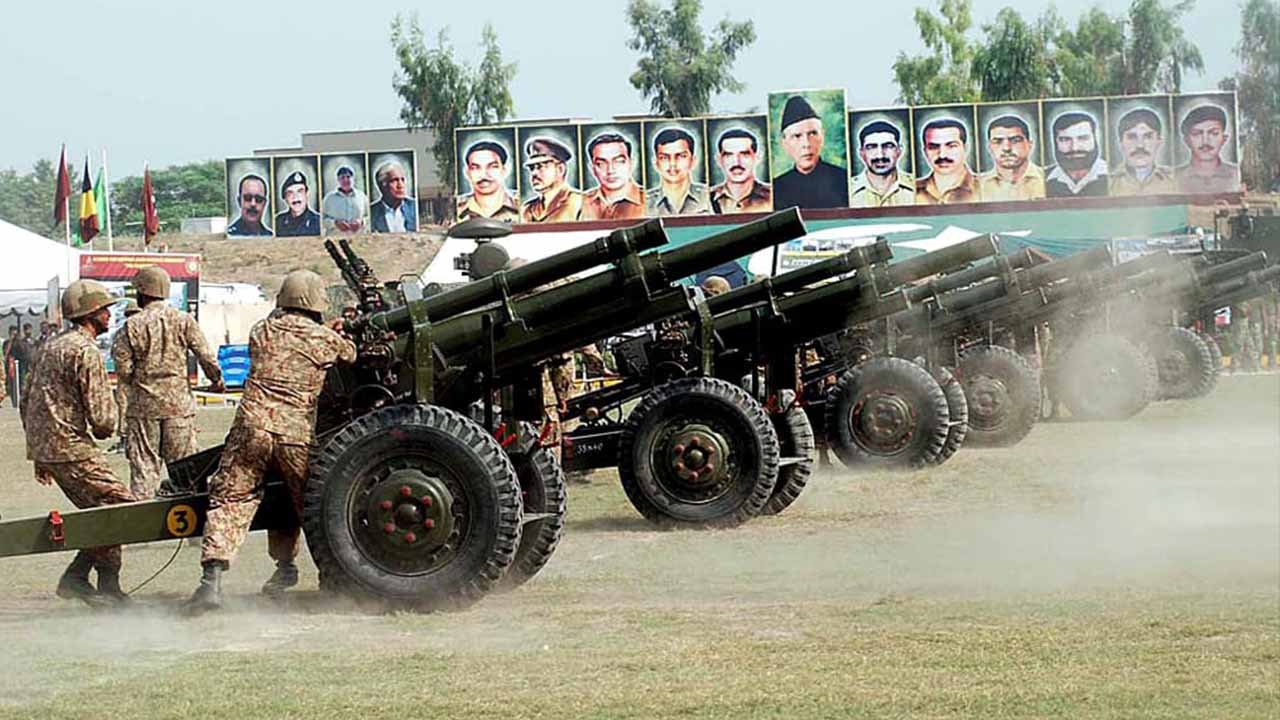
    The government boosted the defence budget for the current fiscal year by nearly 6 per cent to more than Rs1.45 trillion on June 4 in order to cater the demands of the military services, along with increase in their salaries.

    As per a report from The Express Tribune, the Economic Coordination Committee (ECC) of the Cabinet okayed an additional Rs80 billion in auxiliary grants, bringing the total approved to Rs182 billion. The Ministry of Defence had requested an additional Rs80 billion for “critical shortfalls” in the defence budget, in addition to budget revisions for expenses on the Jinnah Naval Base, the Naval Base Turbat, and the multi-functional office building in the headquarters.

    Miftah Ismail, Federal Minister of Finance, chaired the ECC meeting, which endorsed a Rs80 billion supplementary budget for the armed forces, or the amount of total expenditures incurred. The ministry of finance projected that extra spending in fiscal year 2021-22, which ends on June 30, would be less than Rs80 billion.

    The National Assembly approved an Rs1.373 trillion defence budget for the present fiscal year in 2021. Keeping in view the increase in the spending ceiling, the next fiscal year’s defence budget could be greater than the previously estimated figure of more than Rs1.55 trillion.

    The Ministry of Defence received Rs153 billion in total, which is 11.8 per cent more in this fiscal year than in the previous year’s revised budget, which is identical to Pakistan’s average inflation rate. Defence spending will amount to 2.2 per cent of GDP, excluding armed forces development expenditures.

    The ECC also agreed to impose a 10 per cent regulatory duty on Chinese petrol imports in order to prevent abuse of bilateral free trade agreements. Some oil marketing companies rerouted their imports through China in order to avoid paying 10 per cent customs duty.

    For fiscal year (FY) 2021–22, the Pakistan government had decided a defence budget of Rs1.37 trillion (USD8.78 billion). The allocation represented a 6.2 per cent increase over the initial 2020–21 defence budget of Rs1.29 trillion.

    The defence budget represented approximately 16 per cent of the government’s total expenditure for 2021–22, and it was announced against the backdrop of Pakistan’s improving economy. Despite the Covid-19 pandemic, the country’s GDP is expected to rise by nearly 4 per cent in 2020–21.

    The majority of Pakistan’s defence budget goes to defence services, with a small portion going to defence administration. Employee-related expenses are the largest expenditure in the former appropriation, receiving Rs481.6 billion in 2021–22, a 1 per cent increase year on year.

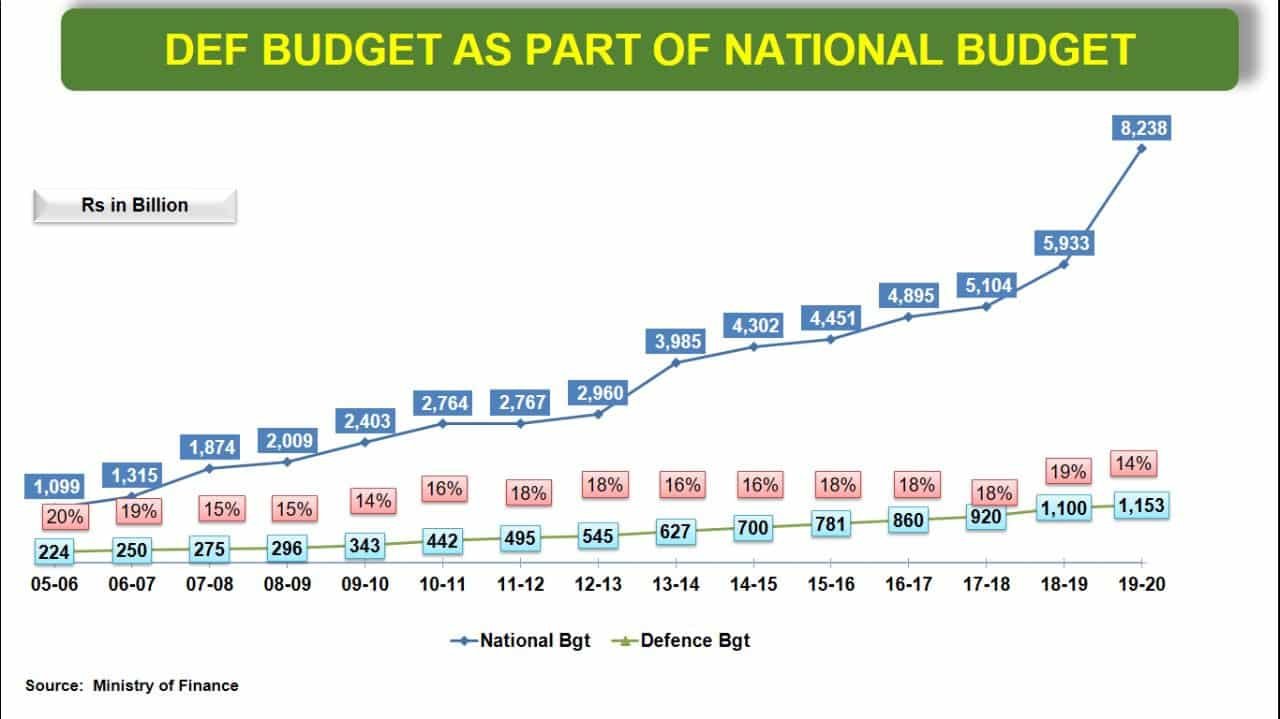
    The graph below compares how much money the nation spent on defence:

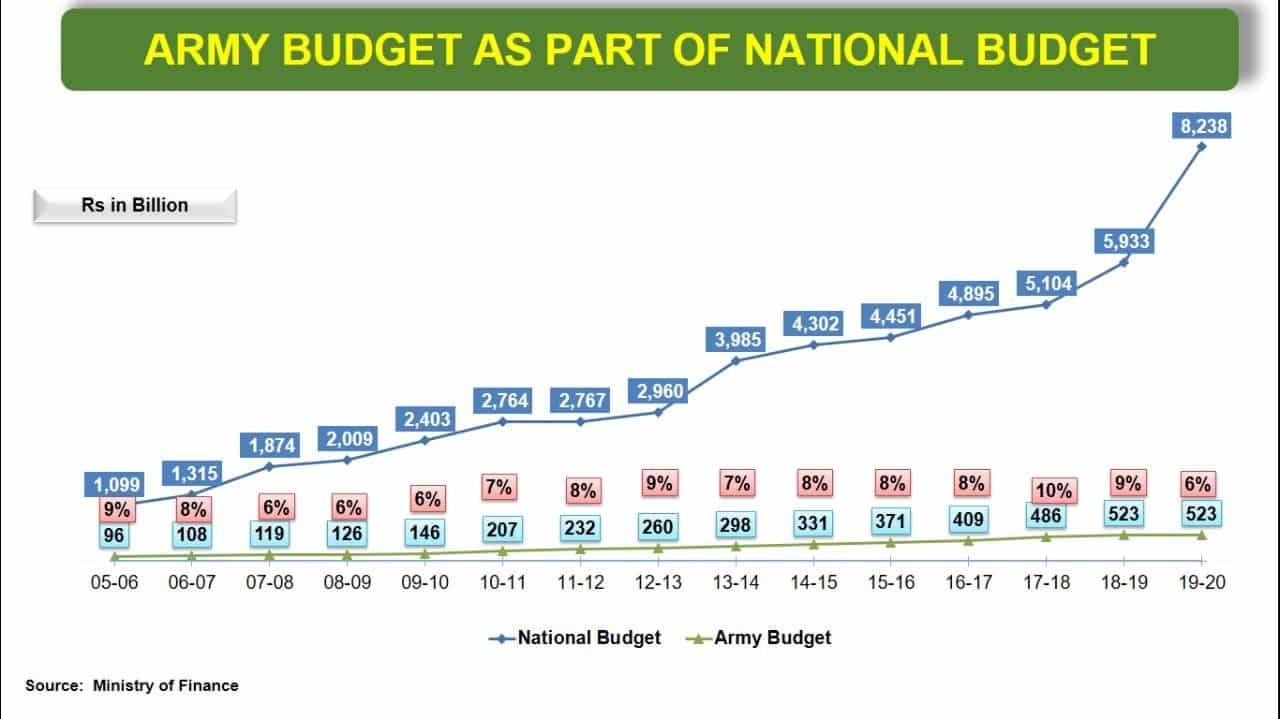
    Here’s a comparison of the national and army budgets as it grows over time:

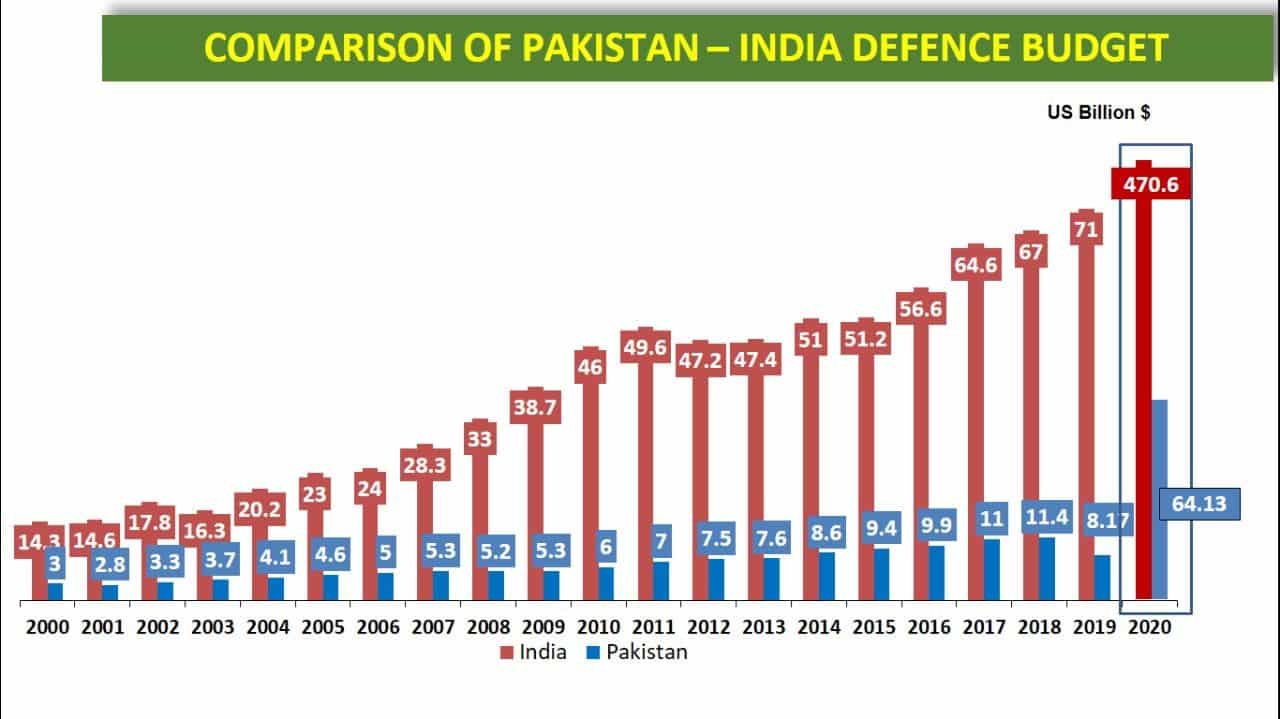
    The graph depicts how little Pakistan has spent on defence than India. Pakistan’s defence spending is not even close to India’s:

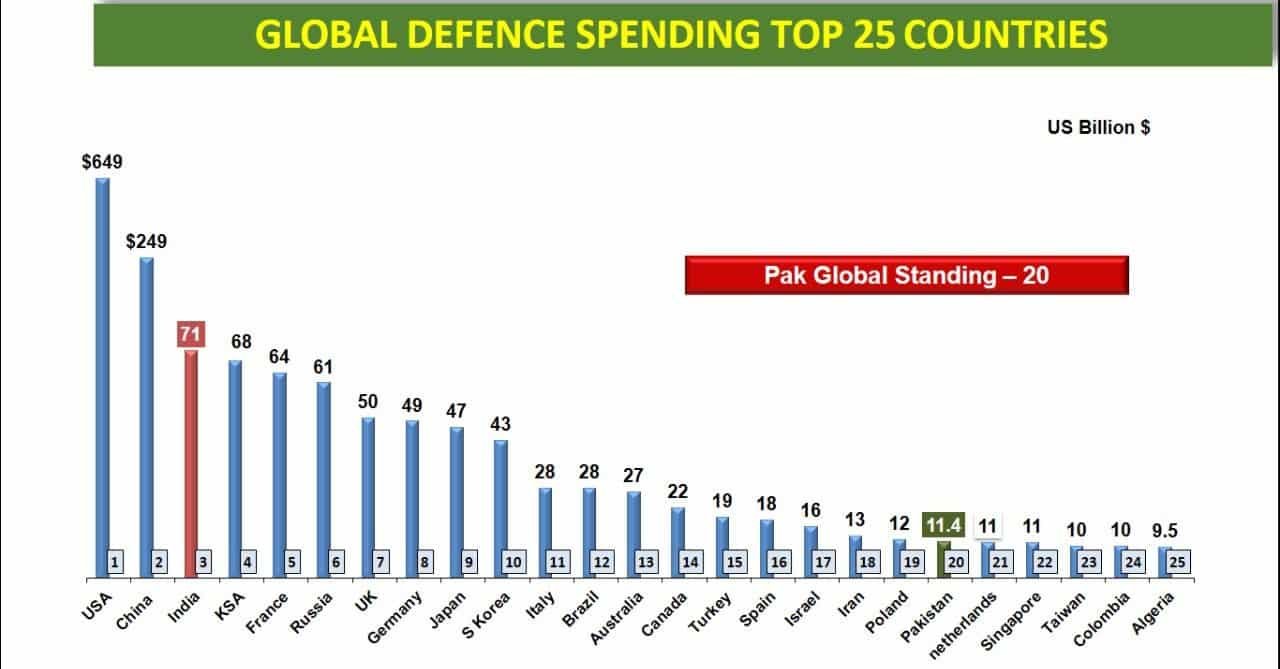
    As shown in the graph below, Pakistan is still among the countries that spend far less than others:

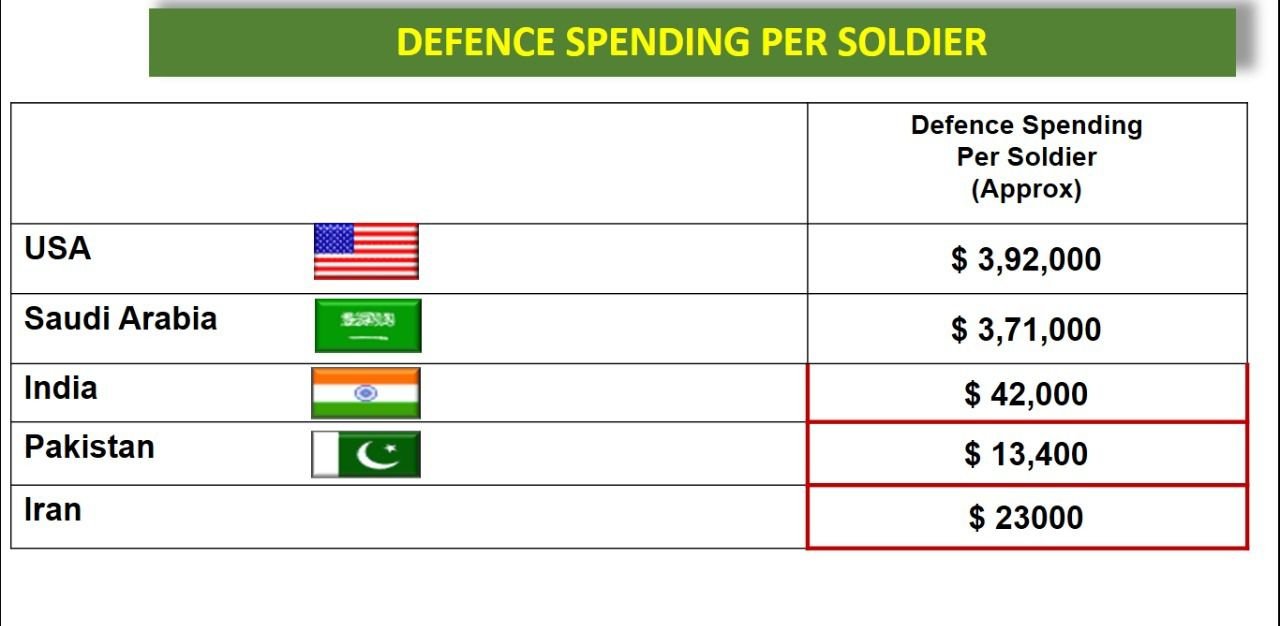
    The graph below demonstrates the average spending of the United States, Saudi Arabia, India, Iran, and Pakistan, which is significantly less than what Iran spends on each soldier:

  • Pakistan records 13.8 per cent inflation in May

    Pakistan records 13.8 per cent inflation in May

    The latest data provided by the Pakistan Bureau of Statistics (PBS) on June 1, inflation continued to rise in May 2022, with the Consumer Price Index (CPI)-based reading coming in at 13.8 per cent year on year, up from 13.4 per cent the previous month and 10.9 per cent in May 2021.

    In May 2022, inflation climbed by 0.44 per cent month over month, compared to 1.6 per cent the previous month and 0.1 per cent in May 2021. This brings average inflation in 11MFY22 to 11.29 per cent year over year, up from 8.83 per cent in 11MFY21.

    Rising prices have emerged as a major source of concern for the economy of the South Asian country, which is grappling with dwindling foreign exchange reserves and a growing import bill.

    The State Bank of Pakistan (SBP) hiked the main interest rate by 150 basis points to 13.75 per cent last month in an attempt to combat economic headwinds.

    The existing administration, on the other hand, has indicated that it will partially remove subsidies by raising petroleum product tariffs by Rs30 per liter, a move that is projected to raise inflation.

    As per a report from Brecorder, on a month-on-month basis, Inflation in Urban areas increased by 0.3 per cent in May 2022 as compared to an increase of 1.6per cent in the previous month and increase of 0.2per cent in May 2021.

    In the meantime, CPI inflation in urban areas grew 12.4 per cent year over year in May 2022, compared to 12.2 per cent the previous month and 10.8 per cent in May 2021.

    It climbed by 0.3 per cent month over month in May 2022, compared to a 1.6 per cent increase the previous month and a 0.2 per cent increase in May 2021.

    In rural areas, CPI inflation climbed by 15.9per cent year over year in May 2022, compared to 15.1 per cent the previous month and 10.9 per cent in May 2021. It climbed by 0.6 per cent month over month in May 2022, compared to an increase of 1.6 per cent the previous month and a fall of -0.03 per cent in May 2021.

    In May 2022, the SPI inflation grew by 14.1 per cent year over year, compared to 14.2 per cent a month earlier and 19.7 per cent in May 2021. On a month-over-month basis, it climbed by 0.6 per cent in May 2022, compared to 1.5 per cent a month earlier and 0.8 per cent in May 2021.