Tag: budget

  • Nisab amount of zakat deduction set at Rs88,927 for 2022

    Nisab amount of zakat deduction set at Rs88,927 for 2022

    The nisab amount of zakat for the year 2022 is set at Rs88,927, according to a notification dated March 30, 2022, issued by the Poverty Alleviation & Social Safety Division, Cabinet Secretariat, Government of Pakistan.

    The account holders, maintaining a minimum of Rs88,927 balance on the first day of Ramzan would be liable to pay 2.5 per cent Zakat on the first day of the fasting month of Ramzan.

    If the amount standing to the credit of an account is less than the said amount, no Zakat deduction shall be made. While savings, profit-and-loss sharing, and other similar accounts are subject to nisab deductions. it is worth noting that the zakat deduction has surged by Rs7,994 as compared to last year, due to an increase in gold and silver prices.

    Read more: Banks to remain closed for public dealing on 4 April

    The amount for nisab in 2021 was set at Rs80,933 and Rs46,329 for 2020. In the majority of Islamic countries, It is adjusted at 2.5 per cent of one’s wealth above the nisab.

  • Is the iPhone SE 2022 a major flop?

    Is the iPhone SE 2022 a major flop?

    Apple is limiting the production of its recently launched ‘budget’ smartphone, the ‘iPhone SE 2022’ owing to lower-than-expected demand. The tech giant has urged suppliers to reduce the manufacturing of the iPhone SE, by roughly 2 million to 3 million devices, or about 20 per cent of initial booking orders.

    In fact, the iPhone SE is still not as well-known as Apple’s higher-priced iPhones. According to research, from its launch through Q4 2021, the 2020 edition of the iPhone SE contributed to only 12 per cent of total iPhone sales.

    It is worth mentioning that Apple also slashed orders for AirPods by around 10 million devices for the current year.

    The 5g enabled iPhone SE is marketed by the company as an alternative for the premium devices from Apple. However, its price tag of Rs105,238 (excluding PTA charges) still seems surprising as compared to the earlier SE model which was offered with a lesser price tag of Rs72,520 (excluding PTA charges).

    Read more: Apple to offer subscription-based service for selling iPhone, iPad, MacBook

    According to Nikkei, the drop in production is a result of the Ukraine crisis and inflation’s detrimental influence on the demand for gadgets.

    Following Russia’s invasion of Ukraine, several major IT companies, including Apple, ceased sales in the country. The United States, the European Union, Japan, South Korea, and Taiwan have all slapped economic sanctions on Russia, causing supply chain disruption and raising inflation concerns.

  • Khyber Pakhtunkhwa cabinet approves Rs2.5 billion subsidy under Ramzan package

    The Khyber Pakhtunkhwa (KP) cabinet on March 29 okayed a subsidy package of Rs2.5 billion for the upcoming holy month of Ramzan, to ensure an uninterrupted supply of edible items at lesser rates.

    KP Chief Minister Mahmood Khan presided over the meeting, which was attended by ministers, chief minister’s advisers, and administrative secretaries.

    Following the meeting, government spokesman Barrister Mohammad Ali Saif revealed that 2,800 points had been set up around the KP to sell 20kg bags of wheat flour for Rs800 instead of the customary Rs1100 during Ramzan, while 10kg bags would be sold for Rs400.

    During Ramzan, the cabinet also decided to set up 83 sasta bazaars, 123 Ramazan facilitation centers, 42 mobile utility stores, and 96 Ramzan dastarkhwans.

    All of these points will be supervised by monitoring units led by respective secretaries and deputy commissioners to prevent price hikes and shortages of vital commodities on the market.

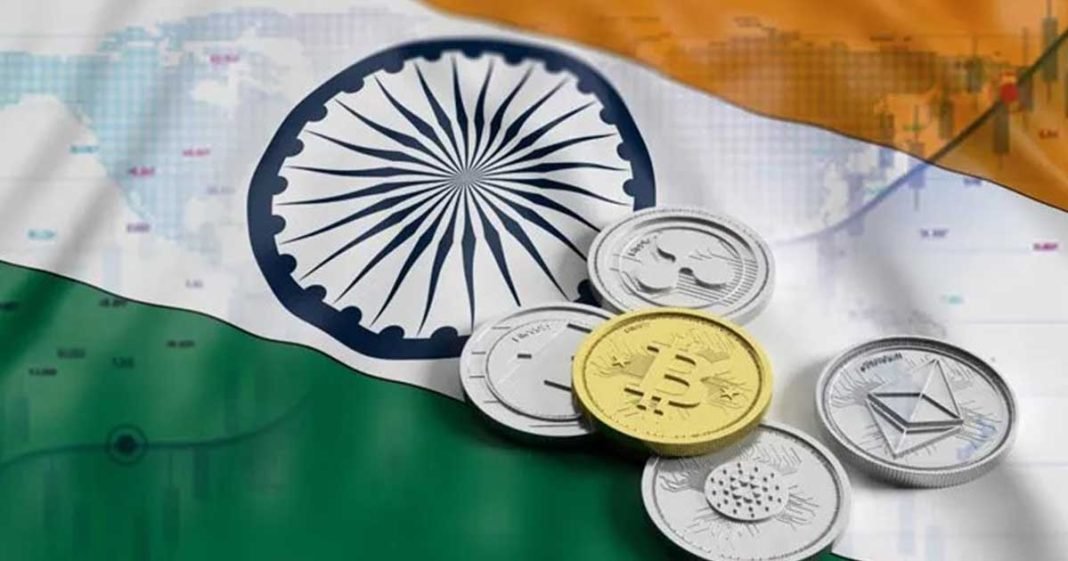
  • India set to launch its own digital currency, tax crypto assets

    India set to launch its own digital currency, tax crypto assets

    India’s central bank plans to launch the digital version of the rupee in the coming fiscal year, according to Indian finance minister. The 2022-2023 financial year of India will begin on April 1.

    “Introduction of a central bank digital currency will give a boost, a big boost to the digital economy,” Nirmala Sitharaman said while delivering India’s annual budget. “Digital currency will also lead to a more efficient and cheaper currency management system.”

    The minister did not give any technical details about the currency but said it will involve block chain and other technologies.

    If India launches its digital currency, it will become one of the world’s largest economies to implement Central Bank Digital Currency (CBDC).

    India’s decision comes after China began CBDC experiments in different cities. The United States and the Bank of England are exploring the prospects for their own economies.

    Nirmala Sitharaman also said that India will impose a tax of 30% on income from cryptocurrencies and other digital assets.

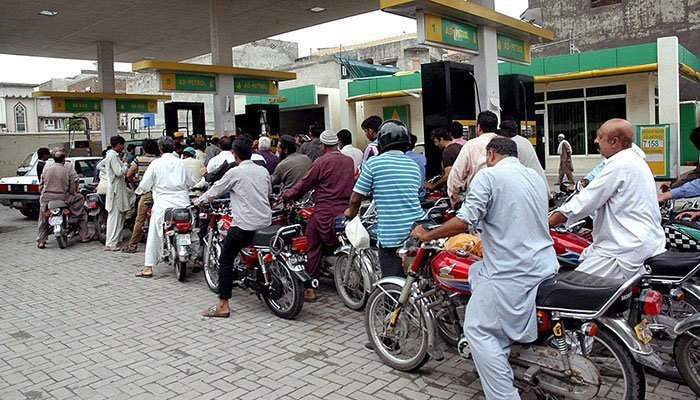
  • Govt plans to launch Ehsaas petrol cards for motorcyclists

    Govt plans to launch Ehsaas petrol cards for motorcyclists

    The federal government has planned to launch Ehsaas Petrol Cards for motorcyclists to enable them to buy petrol at a subsidised rate.

    Earlier this week, Naya Pakistan Qaumi Sehat Card was distributed by the government, which will provide free medical treatment to all citizens at government and private hospitals.

    In a meeting chaired by Federal Minister for Finance and Revenue Shaukat Tarin, several other proposals were also considered such as subsidised fuel, tax reliefs, rise in income/minimum wages, internships, record tax collection and removal of bureaucratic hurdles.

    The government also intends to raise the pay of public sector employees in the upcoming fiscal year 2022-23 budget. Moreover, it has been reported that no consideration was made regarding monetising of bureaucratic perks and privileges.

    A meeting was also held to discuss the Kamyab Pakistan Programme progress. It was informed that the first phase of the programme is going successfully and that the loans are being disbursed after fulfillment of requirements to the deserving applicants.

  • Federal government to present mini-budget of Rs350 billion today

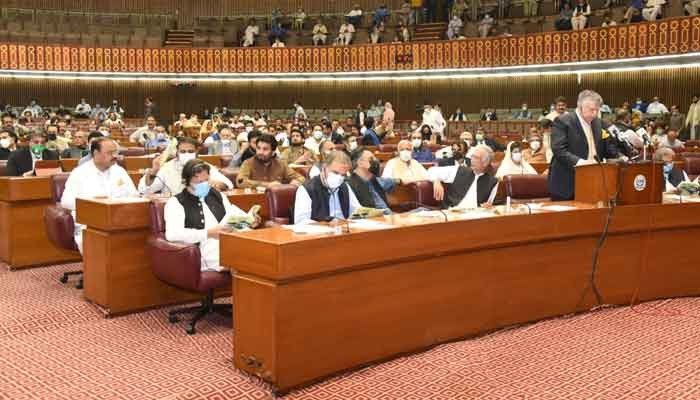
    The federal government will present the mini-budget worth Rs350 billion today.

    Prime Minister (PM) Imran Khan summoned a meeting of the federal cabinet that will approve the mini-budget at noon today. The federal cabinet, with PM Khan in the chair, will give a go-ahead to the Finance (Supplementary) Bill 2021.

    The Finance Amendment Bill 2021 will directly be presented in the National Assembly (NA) as part of the government’s effort to get the IMF package worth $6 billion.

    Finance Minister Shaukat Tarin will introduce the bill in the house to amend certain laws relating to taxes and duties.

    The Opposition has already vowed to block the passage of the bill during the NA session. The opposition has claimed that the bill will further increase inflation and add to people’s misery.

  • ‘Stationery, makeup, mobiles’, mega price hikes set through mini-budget

    Through the mini-budget, the government plans to roll back tax exemptions worth Rs350 billion which will result in several items getting expensive, reports Samaa.

    The budget and the State Bank of Pakistan (SBP) Autonomy Bill are set to be tabled on Thursday in Parliament. According to officials, these changes are being done at the demands of the International Monetary Fund (IMF).

    Mobile phones, stationery items, packaged foods and makeup items are likely to get expensive as tax exemptions would be withdrawn after almost two months of its implementation.

    The tax on the import of luxury items will also be raised. However, prices of several items are likely to remain unchanged i.e. food items and medicine. A temporary or permanent ban or hiking sales tax from 12.5 percent to 17 percent on imported vehicles is also proposed.

    The tax collections target for the coming year is also being raised to Rs6100 billion from Rs5829 billion.

    Earlier, it was reported that government might pass the budget through a presidential ordinance. But IMF rejected this government’s proposal and insisted on legislation through the Parliament. 

    The exemptions need to be reverted before the IMF’s executive board meeting on January 12.

  • Govt confirms tax on phone calls longer than five minutes

    Govt confirms tax on phone calls longer than five minutes

    The federal government has imposed a tax of 75 paisas on phone calls that exceed the duration of five minutes.

    This was announced by Finance Minister Shaukat Tarin while concluding the budget discussion in the National Assembly on Friday.

    Tarin said talking over the cellphone for more than five minutes will be taxed at 75 paisas, but there will be no tax on an SMS.

    Tarin added that the government will take action against tax defaulters with the help of third party. “Arrest will be made after legal formalities.”

    As per reports, the government has decided to decrease the taxes on 1000cc vehicles while tax imposed on milk and other items has also been fixed at 10 per cent, which was earlier proposed at 17pc.

    The finance minister clarified that the federal government has not proposed any tax on flour or other items.

    Property tax has been reduced to 20 per cent from the earlier proposal of 35 per cent.

    Mentioning the government’s initiatives in the housing sector, Shaukat Tarin said now every citizen can avail bank loan to purchase or construct a house. Rs3 billion have been fixed for the payment of subsidies being offered by the government on housing loans, he added.

    For Ehsaas Programme, the finance minister said Rs260 billion have been proposed for the financial grants in the upcoming financial year 2021-22.

  • Demystifying Budget 2021-22

    Demystifying Budget 2021-22

    This year’s budget held special significance for the Pakistan Tehreek-e-Insaf (PTI) government, as many viewed it as the last opportunity for the incumbent government to show its mettle. The last two to three years were marred by the economic slowdown, the Covid-19 pandemic, and high inflation. If this were to continue, it could take a toll on PTI’s vote bank in the next election and therefore a course correction was in order. But no one expected that such course correction would come in so swiftly. Hafeez Shaikh was let go, apparently on his insistence on electricity tariff increase, and Shaukat Tarin was sworn in as the new finance minister.

    Soon after, this year’s growth estimates took everyone by surprise. Pakistani economy turned out to be much more resilient to the pandemic, but it is hard to ignore the role played by the Covid stimulus package, smart lockdowns and rapid vaccinations. Pakistan is once again back on the growth trajectory.

    While it was critical to sustain this rapid recovery, we were also facing tough IMF conditionalities, which if fully implemented, could very well slow down the economy once again. While no one would disagree on the need for fiscal discipline proposed by IMF, many would question its timing, scale, and modus operandi. 

    More than anyone else, it’s the politicians who clearly did not have time for a long economic cycle to run its course. They knew that they were fast running out of time and would have to go back to their voters in 2023.

    But to give credit where it’s due, the government held its end of the bargain and has come up with an excellent budget, perhaps the best that’s possible within the given constraints. It is interesting to see that so far no one has criticised the direction of the budget, and even the worst of the critique has been about the government’s ability to pull it off.   

    So what’s so great about this budget?

    First and foremost, the budget has introduced a number of proposals to support industry, businesses and investors. In particular, the budget has brought good news for construction, automobile, information technology and a number of other sectors. The budget includes reduction or exemption of duties on raw materials and inputs for various sectors such as electronics, pharmaceutical, textiles, footwear, paints, etc. Export of services for the IT sector have been zero-rated, while zero-rating has also been proposed for local supplies or import of raw materials, components, parts and plant and machinery for registered exporters authorised under Export Facilitation Scheme, 2021.

    The construction sector amnesty scheme has been extended by another six months, which will have a positive impact on cement and all construction-related industries. A number of incentives have been granted on electric vehicles including exemption of sales tax on CKD kits, while sales tax on small domestically assembled cars has been reduced. A number of generous incentives have also been introduced for the planned special technology zones. Lastly, the capital gains tax (CGT) has also been reduced on sale of securities that is likely to further support a rapid stock market recovery. 

    The budget has also introduced a number of incentives for the SMEs, which brings the spotlight on the long-ignored segment. A separate scheme of taxation is proposed for SMEs, giving them flexibility to be taxed either on their profitability or turnover. The threshold for levy of minimum tax (individuals/AOPs) has been enhanced, while the threshold for annual turnover to qualify as cottage industryhas been increased from Rs3 million to Rs10 million. The budget also includes proposals like common bonded warehousing, introducing a one-page tax return for SMEs, etc. that will have a positive impact on the small and medium-sized businesses. 

    One the taxation side, the budget 2021-22 promises to bring a major cultural transformation. After many years, we are again heading back to self-assessments, which will bode well for the businesses and will prevent harassment by tax officials. The budget also includes deletion of 12 withholding taxesincluding that on banking transactions and air travel. Electronic processing and issuance of refunds is also promised to facilitate businesses, whereas the arbitrary powers of the tax officials have been curtailed in many cases. 

    On the development side, the budget has increased the size of public sector development programme (PSDP) by a massive 38% increasing it to Rs900 billion. The national PSDP target is also set at Rs2.1 trillion (about 61 per cent higher than the last year). Such magnitude of increased spending is likely to help stimulate growth.

    Then comes the Ehsaas programme, for which the government has made a generous allocation of Rs260 billion. The government is also planning to give interest-free loans, provide free technical trainings and other initiatives for 4-6 million families at the bottom of the pyramid. The government has also allocated $1.1 billion for Covid-19 vaccination and set an ambitious target of vaccinating 100 million people by June 2022. In addition, the subsidies for power sector have been increased, aiming to minimize the need for tariff increases during the year. 

    All in all, these measures are likely to boost business confidence significantly and will stimulate growth, hopefully beyond the set target of 4.8 per cent. 

    However, there are a few things that need to be kept in mind. First is the ambitious revenue target of Rs5.8 trillion next year, which amounts to 24 per cent increase over this year. Soon after introducing the budget, the government had to retrack its proposal on taxing the cellular calls and internet usage, whichwould take away about Rs100 billion from the estimated revenues and would have to be compensated from elsewhere. In addition, the government foresees about Rs242 billion coming in from administrative measures. Although there is a plan to achieve this target through bringing e-commerce retailers within the tax net, installing POS machines at retailers and providing incentives to general public to demand sales tax receipts, this would need a strong management push throughout the year. Similarly, the public should also expect increase in petroleum prices to meet the Rs610 billion targetfor Petroleum Development Levy. Unless the global oil prices start receding, this would be passed on to the public. 

    The negotiations with IMF is another area which needs some attention. With this ambitious budget, the IMF program is likely to be affected. This in turn may impede our ability access funding from other sources. Therefore, an amicable settlement with IMF, if not immediately then in a few months, is critical. 

    Lastly and most importantly, comes the question of whether this growth is sustainable. While we’ll only get to know thisin due time, there are some good measures in place to support the industry targeting import substitution. Any consequent dip in imports, in the medium term, continued healthy remittance inflow on the back of FATF-action plan, and a realistic exchange rate will definitely help in averting a future balance of payment crisis. 

    For now, it seems that Pakistan is finally out of the woods and the next 2-3 years are going to witness some decent growth.

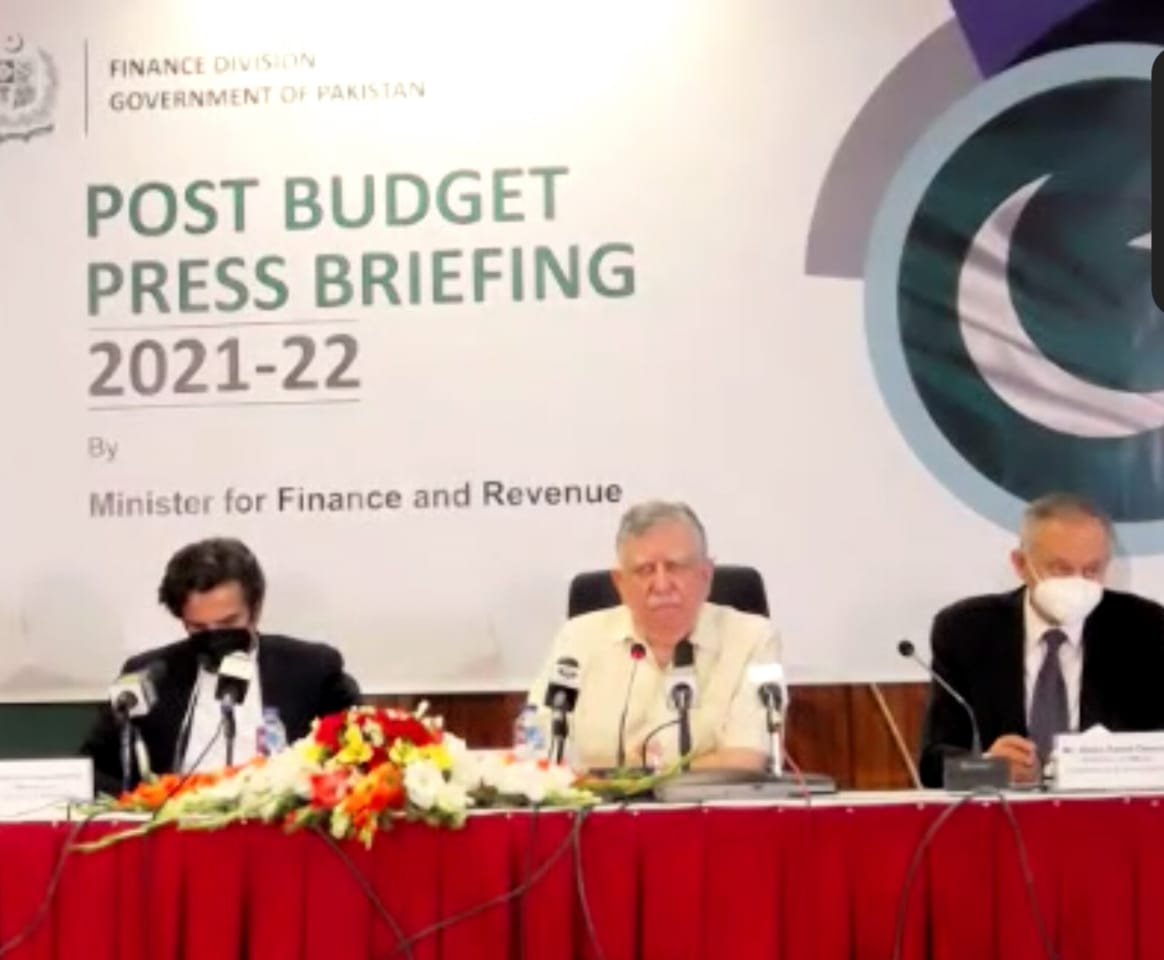
  • ‘No increase in tax rate of mobile phone calls, SMS, internet’: Shaukat Tarin

    ‘No increase in tax rate of mobile phone calls, SMS, internet’: Shaukat Tarin

    Addressing a post-budget press conference in Islamabad, Finance Minister Shaukat Tarin said that ” Prime Minister Imran Khan and the cabinet opposed the imposition of tax on mobile phone calls, internet data, and SMS. “Now there will be no increase in the tax rate for all these services.”

    The original decision, if it had been implemented, would have affected over 98 million people.

    Tarin said the government has presented a total growth budget and their challenge is to stabilise growth.

    Tarin said that additional tax of Rs500 billion will be collected in the next financial year. “We have to earn dollars by increasing exports and add an additional tax of Rs500 billion in the next financial year.”

    The finance minister said that Pakistan had to go to the International Monetary Fund (IMF) for help when its position is weak.

    “We need 20 per cent growth in exports. Our savings rate is 15 per cent and our investment rate is up to 16 per cent. If we do not have revenue, how will we achieve growth?”

    Tarin said that the poor in the country have not received loans and training for the last 70 years. Loans up to Rs 2 million will be given to build a roof and loans to poor farmers will go up to Rs 500,000. Pakistan has become a food deficient country and we are now importing what we used to export, Tarin said, adding that the country is importing pulses, wheat, and sugar.

    “We did not pay attention to our crops, but now we will pay attention to it,” he assured.

    “We should not play politics with the poor,” he added.

    Tarin unveiled the Budget 2021-22 yesterday. The total expenditure of the budget had been kept at Rs 8,478 billion and had set the tax collection target at Rs 5,829 billion.