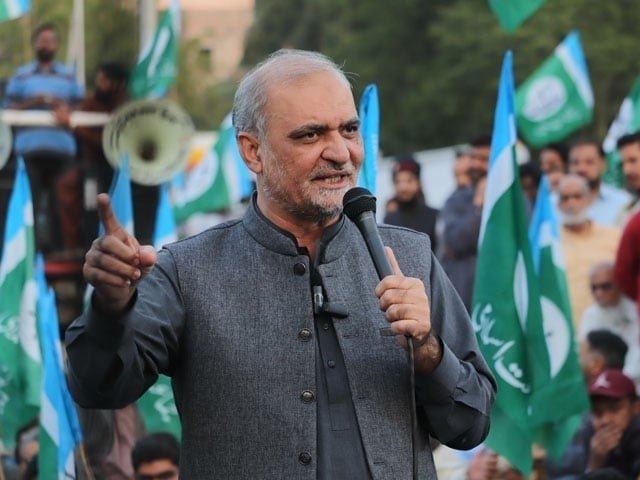
Central Ameer of Jamaat-e-Islami Pakistan Hafiz Naeem-ur-Rehman has demanded that bureaucrats and the Army Chief give up their extra privileges as the country grapples with exorbitant taxes.
Addressing a media group dinner in Lahore, Hafiz Naeem said that the country is facing a severe and immediate “brain drain.” The Army Chief should announce the withdrawal of extra privileges, and the country’s bureaucracy should also withdraw their privileges.
He lamented the country’s socioeconomic problems, saying, “People are leaving Pakistan, and the education system is getting worse.”
Furthermore, he stated, “Installing solar panels is not the solution to the problem because electricity tariffs should be reduced.”
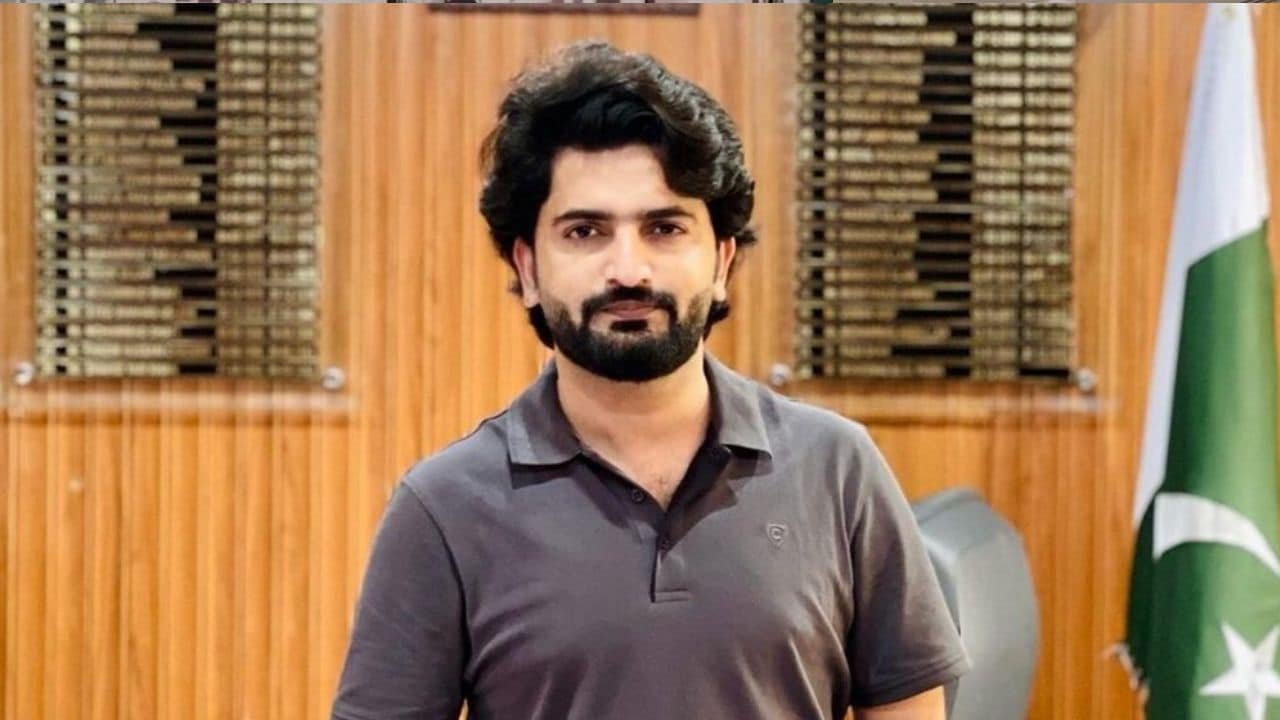
Muhammad Bilal Pasha came under the spotlight as a candidate who cleared CSS examination, securing 85th position in the prestigious test having come from a humble background. In an old video that emerged after the result, he was seen standing next to his father against the backdrop of a brick wall, advocating about keeping the field open for those who work hard for it. He credited his father for his hard work.
He then got interviewed by TV Channels to share his struggle of being a son of a mason, yet reaching for the stars.
I still remember the day when he passed his CSS, he were called on the morning show at “Hum News “and I was having breakfast at that time and Bilal’s story was heart touching, a boy that came from lower middle class family. I don’t know where Bilal was posted 1/2#BilalPashapic.twitter.com/8MioaNifeJ
On November 27, the sad news of his demise surfaced online. #BilalPasha is trending on Twitter since the news broke out. He allegedly committed suicide.
Bilal was serving as a Chief Executive Officer in the Bannu Cantonment Board. According to Deputy Superintendent of Police (DSP) Cantt Azmat Khan, Pasha was suffering from mental stress for several days which led to the suicide.
The police said that they found Pasha’s body covered in blood inside his residence where he shot himself. They added that his body has been moved to the District Headquarters Hospital, Bannu, reports Geo.
According to a media report, the police have launched an inquiry into the incident to find out whether Pasha committed suicide or was murdered. They also said that he had a bullet wound in his head.
His funeral prayers were offered in his home district of Khanewal. His father talked to BBC, stating that the last conversation he had with his son was on Saturday in which he told him that he is getting a transfer.
The old man who worked hard to raise his son was crying at the loss. Ahmed Yar told BBC that a week ago his son was telling him about the tiresome job and that he want to either quit or get time off so that he could just sleep and unwind.
Bilal’s father talked about how he was not able to reach him after the last call and that his friend broke the news to him.
Bilal separated from his wife a few months into the marriage about two to three years ago.
He pledged to be a guiding light for those who can not afford to join big academies for CSS preparation in his initial viral video and fulfilled the promise by becoming a mentor for many.
His unfortunate death has diverted people’s attention towards the importance of mental health.
Senior CSP Hamza Shafqaat tweeted about all those who have committed suicide in past years stressing how they are not mere numbers but people dealing with mental health issues.
Following CSS officers committed suicide in last few years .. 2 PAS , 2 PSP , 2 Audit and 1 MLCG. These are not mere numbers; they are not just a few faces #MentalHealthMatters#CSSpic.twitter.com/J0GksR1XQg
Many of his seniors and other colleagues are expressing grief in social media messages. Zoha Malik Sher wrote, “The passing of our colleague, Bilal Pasha, is a moment of grief, not a topic for discussion.”
In this difficult time, let’s prioritize empathy. The passing of our colleague, Bilal Pasha, is a moment of grief, not a topic for discussion. May Allah grant peace to the departed soul, strength to his family, and may we collectively honour his memory with sensitivity
“Politically incorrect, but amusingly ironic is the fact that many of the civil servants putting up hefty, poignant statuses/tweets about this would be really small people in their own offices, doing their best to make it a toxic environment for those working under them.”
They will copy-paste beautiful sentiments about mental health because it is apparently the correct thing to do, without ever stopping to think how their own demeanour and conduct is absolutely vitriolic for those around them. There is no introspection. https://t.co/nyvPBHqHjn
Another officer of 46th Common, Mirza Bilal Hassan tweeted, “I have never met Bilal Pasha and i can never feel the agony he went through. Civil service is rotten to its core and is frequently killing people. It is high time for the young civil servants to speak up and alter the old, rotten, corrupt, and inhumane values of civil service OR WAIT FOR THE NEXT/YOURS DEATH.”
For a person who is Fair , Just, intelligent, and Compassionate, civil service and our society are death beds. Its a Murder by Depression. Depression shoved down his throat by seniors, horrible working culture, continuous helplessness to do right, family and friends, and a mental… pic.twitter.com/mR0m9fTC5i
Bilal’s father and brother have been interviewed by different media outlets where they denied any knowledge of him being depressed. The two have also narrates stories of his hard work and commitment to the job while maintaining humility.
Bilal’s father clearly told Urdu Point that there was no work-related pressure on his son.
Bilal’s eldest brother talked about his last conversation with his sibling and said that he inquired about his son’s studies with Bilal and the latter told him that he is doing fine and will become a CSP in the future.
Many of Pasha’s students are demanding an investigation into his death, expressing dissatisfaction over the declaration of his demise as a suicide. To them, he was a happy-go-lucky person, patriotic and optimistic. There are an ample number of tweets with #JusticeforBilalPasha.
#JusticeForBilalPasha The authorities must thoroughly investigate the incident of his death so as to save the other civil servants and those having so much fame like Mr. Pasha from such a painful end. pic.twitter.com/VlXQKjItew
We demand an immidiate impartial judicial inquiry into this tragic inicident as we have seen biased behavior of @KP_Police1 So an independednt judicial investigation team must be comprised to probe into it and bring out the complete truth and #JusticeForBilalPasha
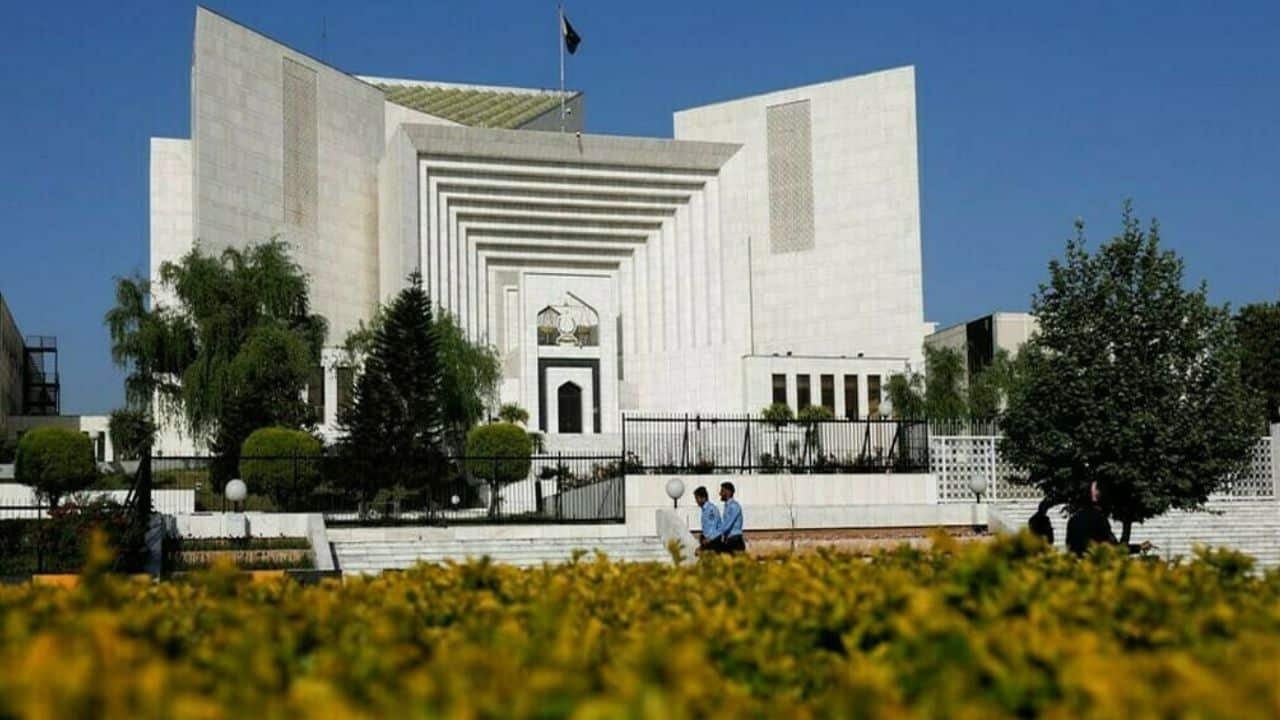
Supreme Court of Pakistan has banned the use of the word ‘Sahib’ with the titles of government officials, The News reported on Thursday.
This ruling came about when Additional Advocate General Khyber Pakhtunkhwa presented the case of the murder of a nine-year-old child.
During the hearing, the apex court expressed its disappointment with the quality of the investigation by the Khyber Pakhtunkhwa Police. Chief Justice Qazi Faez Isa reproached the public prosecutor for calling a deputy superintendent of police “sir”, adding that the titles have addled minds. The official was only a DSP and that too ineligible, he added to that effect.
Justice Isa remarked, “Supreme Court has been made a court of magistrate. Is it some joke? Should there be no arguments and we go on merely looking at the faces of lawyers. Was one file so heavy that two officers brought it from KP to Islamabad? Petrol and TA, DA free. While getting print from WhatsApp is costly.”
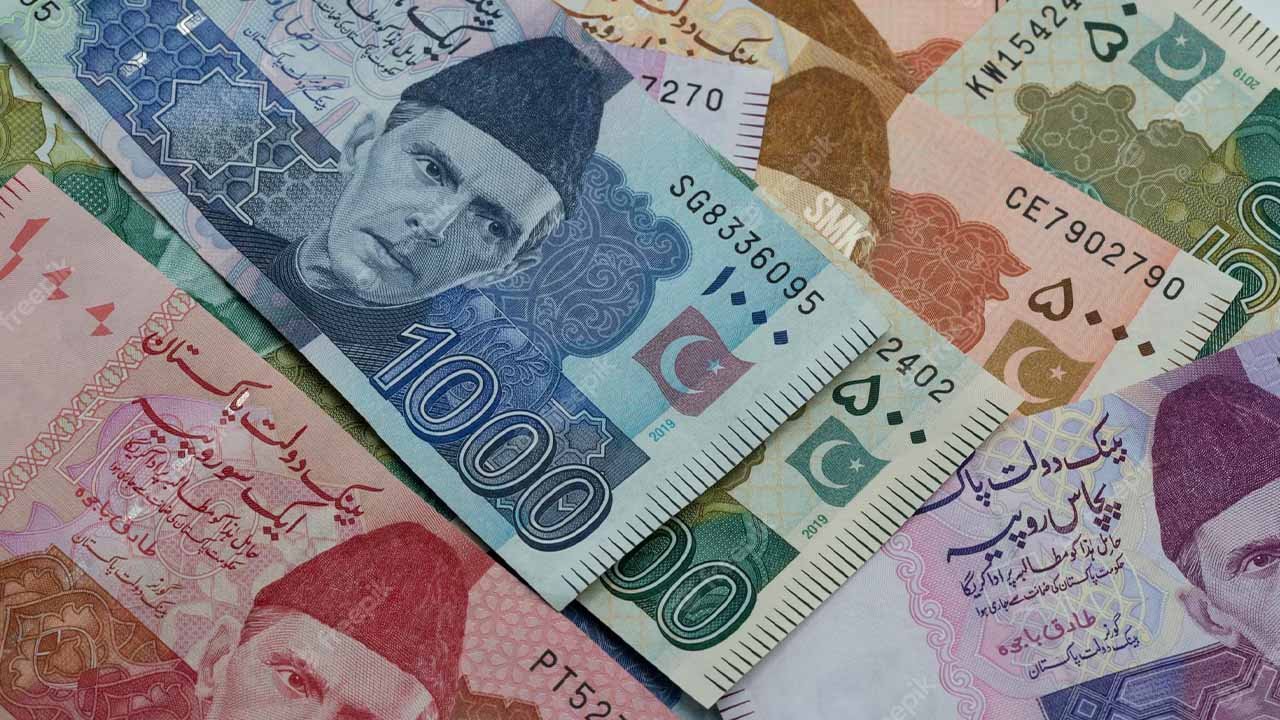
The federal government, in accordance with a notification issued by the finance division, has officially implemented a minimum monthly wage of Rs32,000.
The prescribed minimum wage, which is set at Rs32,000, applies to all civil employees of the federal government.
This also encompasses civilians who receive their remuneration from Defence estimates, including contingent paid staff and contract employees engaged for civil posts within the basic pay scales, under standard terms and conditions of contract employment.
Individuals whose gross monthly salary falls below the newly established minimum wage of Rs32,000 will be entitled to receive the difference as a “special allowance.”
It is worth noting that the government had previously announced an increase in financial compensation for individuals hired from the private sector for MP1, MP2, and MP3 positions within the bureaucracy earlier in the same month.
The revised minimum wage regulations will be in effect from July 1, 2023.
The federal caretaker government has just approved a hefty pay rise of 45 percent for top bureaucrats in management positions. These are distinct from career diplomats and are the ones typically drawn from the private sector because of their expertise in a relevant field.
In a notification released by the Ministry of Finance, the increase would apply to all MP-I, MP-II, and MP-III positions, including basic salaries, house rents, and utilities as approved by the caretaker prime minister.
The ministry said the monthly remuneration of officers on the MP-I scale used to begin from Rs554,600, including basic salaries, house rent, and utilities with a terminal amount of Rs699,250 per month. The minimum and maximum remunerations would now be Rs804,180 and Rs1,013,920 per month, respectively. The officers in this grade would also be drawing Rs95,910 per month for transport monetisation allowance, taking the revised monthly package to between Rs900,090 and Rs1,109,830.
Likewise, the minimum and maximum monthly package of MP-II scales was Rs255,750 and Rs413,600 per month. This will now range from Rs370,850 to Rs599,740. The monthly monetisation allowance for this scale will be Rs77,430. The officers in the MP-III grade used to get Rs165,855 to Rs233,750 per month. The amount has now been revised to Rs240,460 and Rs338,960, apart from a monetisation allowance of Rs65,060. The rumenarations were last viewed in July 2017 and the current rise is effective from October 1.
Pakistan Institute of Development Economics (PIDE) has released a detailed study titled as “LifeTime Cost Of Public Servants” on its website.
The state-run institute headed by economist Nadeemul Haque, has said that the study reveals that the federal government pays a total of Rs. 8 trillion to its Rs. 1.92 million government servants. Along with this expense come pensions for retired staff with six dozen kinds of privileges to the serving lot.
— Pakistan Institute of Development Economics (PIDE) (@PIDEpk) October 16, 2023
It states that “The combined ratio of salaries, perks, and operating expenses is much higher for BPS-22 employees, earning 32.52 times from BPS-1 employees. This suggests that perks and benefits and operating expenditure are highly compressed, with a large gap between the highest and the lowest salaries.” Added to this disparity is the use of vehicles for personal use by officers from Grade 20-22 which costs more than 1.2 percent of the basic pay and the reimbursements of health allowances and medical bills cost the budget over Rs. 2.5 to 3 billion. The housing facility that has never been accounted for in the total cost of living.
It has been pointed out very clearly that political hirings and promises by politicians to provide jobs for their voters is a big issue since their role is to create more opportunities and not offer jobs.
A public servant of Grade-1 hired in July 2023 will be costing Rs.8.17 million including the salary, pension, perks and benefits that come with it for a period of thirty years. This goes on to increase for all the officers till Grade 17.
The PIDE report suggests long-term planning, keeping in check all the major expenses spent on Government servants and before hiring a new one. Immediate job creation is good but rapid job creation may have negative effects on the economy in the longer run. It is important to strike a balance between short-term benefits and sustainable fiscal goals.
Former Senator Mustafa Nawaz Khokhar has announced that he along with a group of politicians and bureaucrats, will be organising a series of seminars across Pakistan aimed at bringing about a “political consensus for restructuring the governance structures of Pakistan”.
Former Prime Minister Shahid Khaqan Abbasi, former Finance Minister Miftah Ismail, Fawad Hasan Fawad, Asad Ali Shah, Haji Lashkari Raisini, Mir Humayun Kurd, Khawaja Mohammad Hoti, along with others, will be part of this effort to create political consensus.
Khokhar tweeted, “In a nonpartisan effort, I have been talking to friends & colleagues about the current economic, political and social crisis of Pakistan which are now striking at the core foundations of the state and the society.”
In a nonpartisan effort, I have been talking to friends & colleagues about the current economic, political and social crisis of Pakistan which are now striking at the core foundations of the state and the society. 1/5
“At the same time individual and collective rights are under severe stress causing a widespread dissatisfaction of people across the regional and ethnic divides in Pakistan. These trying times require us to “rethink” or “reimagine” Pakistan.”
At the same time individual and collective rights are under severe stress causing a widespread dissatisfaction of people across the regional and ethnic divides in Pakistan. These trying times require us to “rethink” or “reimagine” Pakistan. Therefore, a few of us…2/5
Talking to The News, Khokar said, “From political uncertainty to economic meltdown to polarisation in society that has reached dangerous levels of intolerance, Pakistan is not facing just one crisis but multiple crises at the same time. Today we are at a juncture where we are actually at a ‘naazuk morr’ — a phrase that we always hear but only when powerful quarters don’t want something to be talked about”.
Ismail too took to Twitter and said, ” I and many other colleagues are trying to bring about a national consensus on major issues. Thus we are starting with holding seminars across Pakistan.”
Friends, @SKhaqanAbbasi. @mustafa_nawazk, @fawadhasanpk, Khawaja Mohammad Hoti, Haji Lashkari Raisani, @Asad_Ashah & I and many other colleagues are trying to bring about a national consensus on major issues. Thus we are starting with holding seminars across Pakistan 1/3
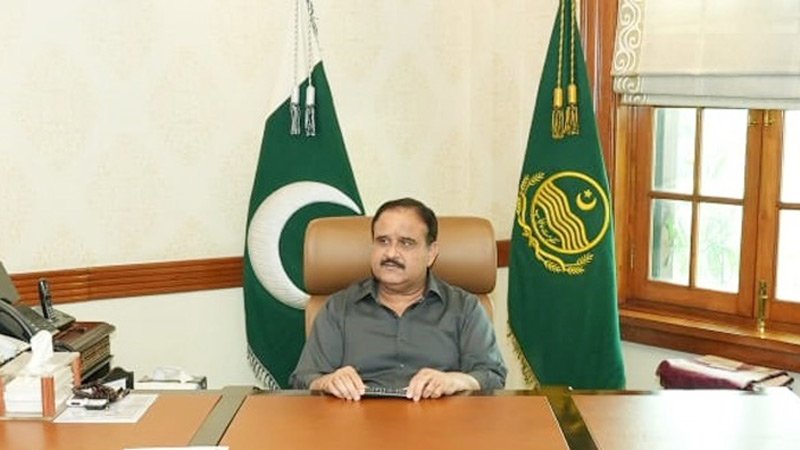
During a three-and-a-half-year tenure, former Punjab Chief Minister (CM) Usman Buzdar transferred over 3,000 officers in violation of both the tenure policy and the Supreme Court’s (SC) judgment in the Anita Turab case, reports The News.
In Anita Turab’s case, the apex court barred the government from transferring officers before the completion of their tenure.
In the Anita Turab case, the SC had laid down the several principles to save the government servants from politicisation. Appointments, removals and promotions must be made in accordance with the law and the rules. Secondly, when the ordinary tenure for a posting has been specified in the law or rules made thereunder, such tenure must be respected.
According to the news outlet, there have been no suo moto notices and no punishments for the violators.
Moreover, it has been reported that the Buzdar government transferred around 1,100 secretaries, Director Generals (DG), commissioners, Deputy Commissioners (DC) and additional deputy commissioners in Punjab.
In the Police Department, there were more than 1,900 senior police officials, including Deputy Inspector General (DIGs), regional police officers, city police officers, district police officers and Sub-Divisional Police Officers (SDPOs), who were transferred.
The record reveals that Lahore, Gujranwala, Pakpattan and Dera Ghazi Khan were the major districts that were the focus of these changes where maximum numbers of transfers and postings occurred.
It is pertinent to mention that during Buzdar’s tenure Punjab saw five chief secretaries and seven inspectors generals of police which has never happened before.
In 36 districts of Punjab, the Buzdar government transferred 198 deputy commissioners in three and a half years. On average, 5.5 DCs were changed in every district during the PTI-led government.
Dera Ghazi Khan and Gujranwala are the two districts where the maximum number of DCs were changed.
In DG Khan and Pakpattan, some DCs were transferred within three months. Waqas Rashid was transferred within three months as DC Dera Ghazi Khan and Nauman Yousaf was transferred in three months as DC Pakpattan.
A total of 19 bureaucrats of grade BS-22 secured three housing units each, including Special Assistant to the Prime Minister on Establishment Shehzad Arbab.
According to the papers obtained byDawn, the officers had already been allotted a double-story “grey structures” house each in the Pakistan Housing Authority Foundation (PHAF) scheme.
The PHAF traditionally built low-cost housing schemes for its members and this was the first time that it introduced a scheme for senior bureaucrats.
Previously, former prime minister Nawaz Sharif had cancelled the allotment of “choice” apartments to influential bureaucrats in the same locality [PHAF] and ordered an investigation into the manipulated balloting carried out by the housing scheme.
Not only this, the official documents say that 185 of the 588 bureaucrats right after this allotment were allotted plots in the capital’s new sectors of F-14 and F-15.
Following this, the Federal Government Employees Housing Authority (FGEHA) recently allotted two plots each to senior bureaucrats, judges of superior courts, lawyers, and judicial officers of Islamabad’s subordinate judiciary.
Earlier, the Islamabad High Court (IHC) ruled against the allotment of more than one plot to top bureaucrats at public expense under Article 25 of the Pakistan Constitution and then set aside the policy of allotment of the second plot and referred the matter to the federal cabinet.
While talking to Dawn, Federal Minister for Law and Justice Barrister Farogh Naseem said the allotments would be examined in light of the IHC judgment. Federal information minister Fawad Chaudhry said, “The government is working on the issue in the light of the IHC directive and has formed a committee as well.”
Initially, civil servants were entitled to one plot each only. However, in 2006, the then prime minister allowed two plots each for BS-22 officials.
However, an insider said the policy to make such allotments had never been approved by the federal government.
Spokesperson Punjab Government, Fayyaz-ul-Hassan Chohan, made a comparison between the Pakistan Tehreek-e-Insaf (PTI) with the regime of former United States (US) President Donald Trump.
“Donald Trump’s administration’s 38 positions were changed around three to six times during his five years in power,” said Chohan while speaking on Geo News programme ‘Aaj Shahzeb Khanzada Kay Sath’.
ڈونلڈ ٹرمپ نے بھی اپنے دور میں ہر عہدے پر تین سے چھ دفعہ تبدیلیاں کی تھیں۔
فیاض الحسن چوہان کا پنجاب حکومت میں بار بار آئی جی اور بیوروکریسی میں تبدیلیوں پر جواب pic.twitter.com/SeYeTsHbSE
Chohan was questioned about the continuous changes in the bureaucracy and police in Punjab.
“No one from the world except for PTI would have made a comparison with Trump’s regime,” said anchorperson Shahzeb Khanzada.
Adding to his response, Khanzada said, “Changes in administration should be based on performance. Trump’s regime was blamed that the repetitive changes in his administration were mostly because of his partiality, political disliking, and preferences. PTI too is being blamed for the same reason.”
In 2018, IG Kaleem Imam was changed over the dispute with Divisional Police Officer (DPO) Pakpatan. Muhammad Tahir was changed because he refused to abide by the instruction on the Model Town case. Amjad Javed Saleemi was changed because he was not cooperating with National Accountability Bureau (NAB) during the leader of the Opposition in the Punjab Assembly, Hamza Shehbaz’s arrest.
“All the people who have been removed from their positions have been because of personal preferences,” commented Khanzada.
“If people are being changed for better results, it is fine,” added Fayyaz Chohan.
“These changes are better than Ahad Cheema, Fawad Hassan Fawad or Dr Syed Tauqir Hussain Shah, who were involved in money laundering, murders and doing things on behalf of the chief minister (CM),” said Chohan.
“None of the claims against these people were proved by the government. So my question is: what is the criteria to check the performance?” asked Khanzada.
“I don’t think administrative changes have anything to do with or in any way has an effect on the performance of the government,” said Fayyaz Chohan.
Yesterday, the federal cabinet approved the appointment of Kamran Ali Afzal as the Punjab chief secretary and Sardar Ali Khan as Punjab inspector general of police (IGP) with immediate effect.
Afzal is the fifth Punjab chief secretary while Khan is the seventh IGP during the three years of PTI’s government.
CM Usman Buzdar had reportedly recommended the names.