Tag: Business News

  • PIA set for transformation: Federal cabinet approves privatisation, restructuring

    PIA set for transformation: Federal cabinet approves privatisation, restructuring

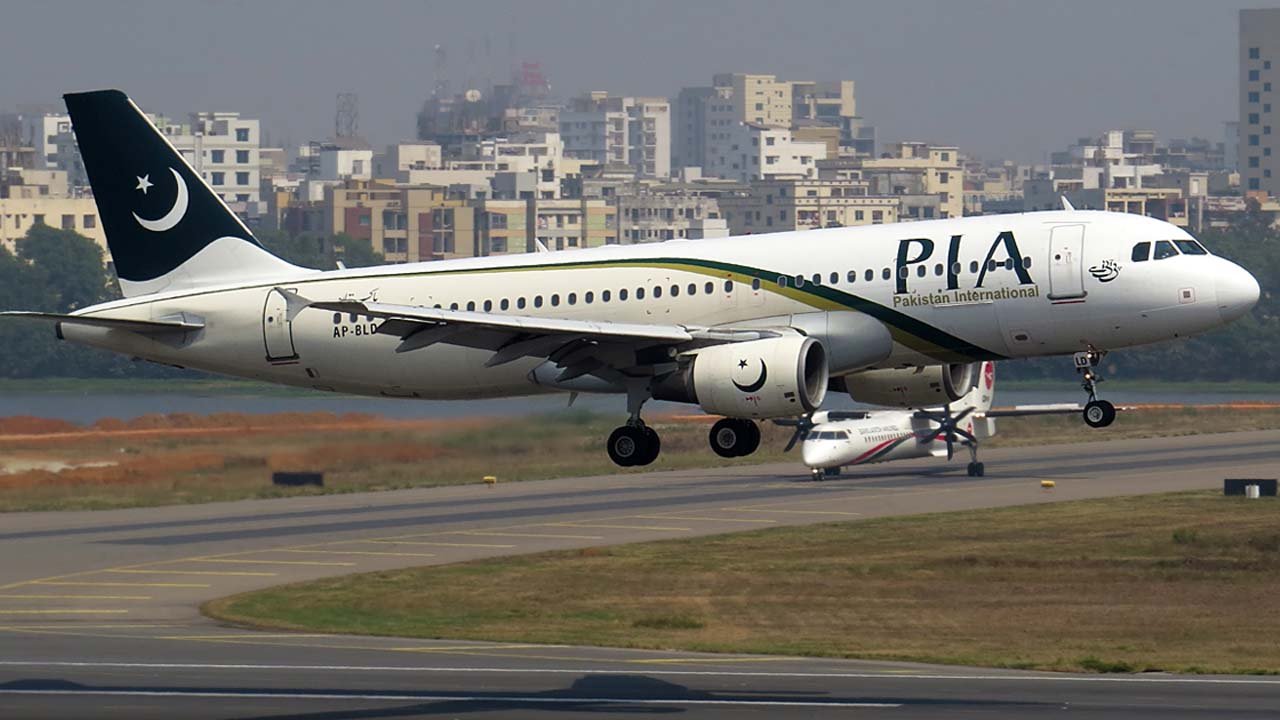
    In a significant development, the caretaker federal cabinet has granted approval for the restructuring of Pakistan International Airlines (PIA) and the privatisation of First Women Bank Limited.

    This decision, based on recommendations put forth by the Privatisation Division, aims to address the financial challenges faced by PIA in recent years.

    The pivotal meeting of the federal cabinet, presided over by Caretaker Prime Minister Anwaar ul Haq Kakar, saw the submission of restructuring recommendations by the Privatisation Division.

    It was highlighted during the session that PIA has been grappling with financial losses over an extended period.

    Previous cabinet meetings had already endorsed the appointment of a financial advisor, whose role is integral to the financial and administrative restructuring of PIA.

    The cabinet was briefed on the progress, indicating that the financial advisor has devised a comprehensive financial restructuring plan aligned with international norms.

    Under this plan, PIA is set to undergo a division into two distinct entities: Top-Co and Hold-Co. The core operations of PIA, including engineering, ground handling, cargo, flight kitchen, and training, will be consolidated under Top-Co.

    On the other hand, entities such as Precision Engineering Complex, PIA Investment Limited, properties, and other subsidiaries will find their place within Hold-Co.

    This strategic restructuring aims not only to address the financial challenges faced by PIA but also to attract potential investors.

    The cabinet has been briefed on the measures undertaken to enhance the attractiveness of PIA for investment, laying the groundwork for a positive trajectory in the airline’s future.


  • Shell Pakistan’s domestic operations set for sale to Saudi company 

    Shell Pakistan’s domestic operations set for sale to Saudi company 

    On Wednesday, Shell Pakistan (SHEL.PSX) announced that its parent company’s subsidiary, Shell Petroleum Company, has entered into an agreement with Wafi Energy for the sale of its domestic operations. 

    The international branch of Shell (SHEL.L), known as Shell Petroleum Company, anticipates the completion of this sale by the fourth quarter of 2024, pending regulatory approvals. 

    Back in June, Shell Petroleum Company declared its intention to divest its 77 per cent ownership stake in Pakistan.  

    This decision follows a series of global operational updates by Shell and significant losses incurred by Shell Pakistan (SPL) in 2022.  

    These losses were primarily attributed to fluctuating exchange rates, the devaluation of the Pakistani rupee, delayed receivables, and the backdrop of a financial crisis and economic slowdown in the country. 

    According to Reuters, Wafi Energy, an entirely owned affiliate of Asyad Holding Group, a fuel retailer based in Saudi Arabia, is the acquiring party. 

    Shell Pakistan’s operations encompass more than 600 mobility sites, 10 fuel terminals, a lubricant oil blending plant, and a 26 per cent ownership interest in Pak-Arab Pipeline Company Limited. 

  • PTCL’s profits drop by 7.11% despite revenue increase

    PTCL’s profits drop by 7.11% despite revenue increase

    Pakistan Telecommunication Company Limited (PSX: PTC) has reported its financial performance for the first nine months of 2023.

    The company’s profit dropped by 7.11 per cent compared to the same period last year, coming in at Rs7.64 billion with earnings of Rs1.50 per share. This is less than the Rs8.23 billion profit and Rs1.61 per share in the previous year.

    On the positive side, the company’s revenue increased by 17.15 per cent compared to last year, reaching Rs71.61 billion, up from Rs61.13 billion.

    Even though the cost of sales also increased by 17.16 per cent, the increase wasn’t as much as the rise in sales, resulting in a 17.1 per cent increase in gross profit, which reached Rs15.28 billion.

    In terms of expenses, selling and marketing costs rose by 21.53 per cent year-on-year, while administrative and general expenses increased by 10.28 per cent during this period.

    Additionally, the company’s impairment loss on trade debts and contract assets went up by 6.53 per cent.

    Looking ahead, PTCL’s other income increased significantly, going up by 48.30 per cent. The company’s finance costs saw a substantial increase due to higher interest rates.

    Regarding taxes, the company paid 11.33 per cent more in taxes compared to the previous year.

  • Here’s why Toyota Indus Motor Company is halting car production for one month

    Here’s why Toyota Indus Motor Company is halting car production for one month

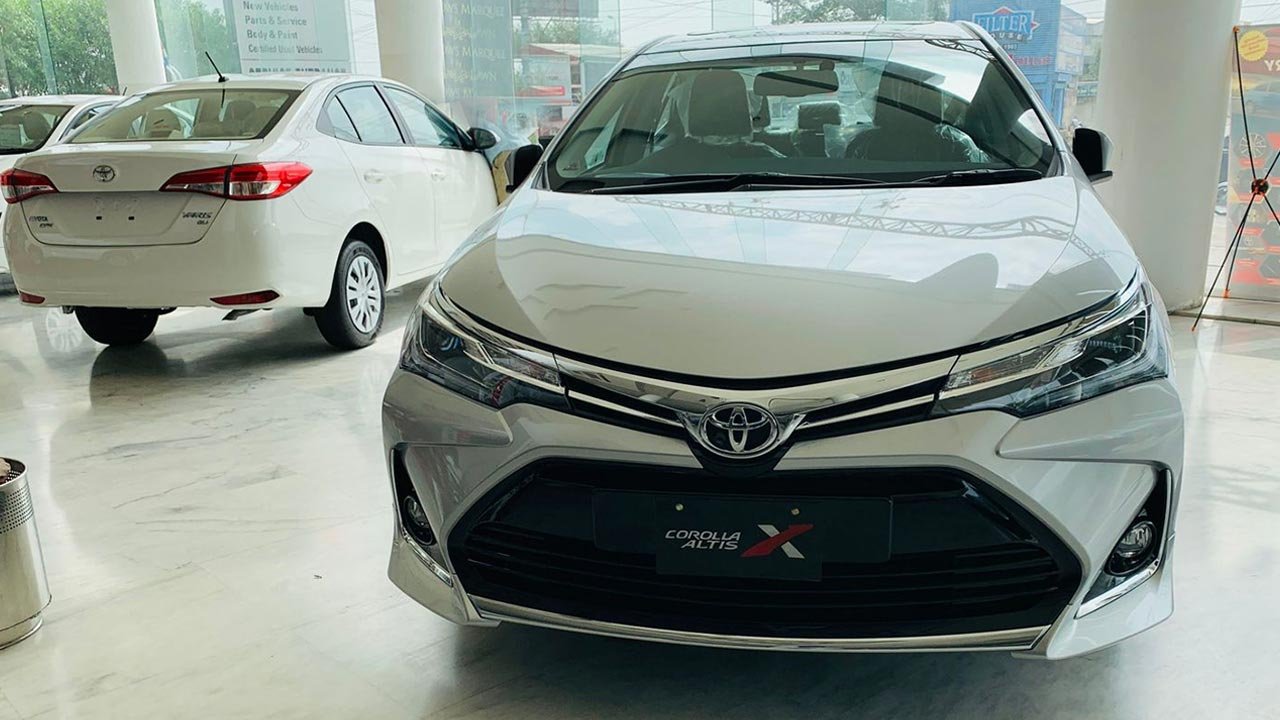
    Indus Motor Company (IMC), the leading manufacturer of Toyota vehicles in Pakistan, has announced a temporary production suspension lasting a month due to inventory shortages.

    The company informed the Pakistan Stock Exchange (PSX) of this development.

    Starting on October 17 and concluding on November 17, 2023, Toyota IMC has chosen to halt production in response to insufficient inventory of vehicles and parts stemming from supply chain challenges.

    The company has stated that they will keep stakeholders informed of any adjustments to this plan. This marks the ninth production closure announcement by Indus Motor this year. In the previous month, the company ceased plant operations from September 28 to October 9 due to similar inventory issues.

    In its most recent financial report, Indus Motor recorded a profit-after-tax (PAT) of Rs9.66 billion for FY23, representing a nearly 39 per cent decline compared to the earnings of Rs15.8 billion in the preceding year’s corresponding period.

    The Pakistani auto sector, heavily reliant on imports, has encountered hardships due to government measures to restrict imports and limit LC issuance. Elevated financing costs and substantial car price hikes have also dampened consumer demand.

    In the first quarter of FY24, sales figures reached 20,983 units, reflecting a 40 per cent decrease compared to the same period in the prior year.

    The Pakistani automotive industry is grappling with dwindling demand, primarily attributed to soaring prices, costly auto financing, and increased taxes, all contributing to a year-on-year decline in sales.

  • PM Kakar pushes for speedy privatisation of financially troubled state-owned enterprises

    Caretaker Prime Minister (PM) Anwaar-ul-Haq Kakar, in a meeting held on Monday, directed the relevant authorities to expedite the privatisation process of state-owned enterprises (SOEs) that are experiencing financial losses.

    Stressing the importance of this privatisation effort, the Prime Minister emphasised its role in safeguarding the national treasury from further deficits.

    During this meeting, Minister for Privatisation Fawad Hasan Fawad provided a detailed update on the progress made in the privatisation of these enterprises.

    PM Kakar also commended the Special Investment Facilitation Council (SIFC) for its commendable contributions to this endeavor. 

    It’s worth noting that the caretaker Premier had previously issued similar directives to accelerate the privatisation process of Pakistan International Airlines (PIA), a loss-making entity.

    This development comes in response to reports suggesting that unless emergency funding is secured, PIA’s flight operations could face suspension.

    A senior PIA director revealed that the operational fleet had been reduced from 23 to 16 aircraft, resulting in the cancellation of numerous flights.

  • Pakistan bonds fall as investors brace for Afghanistan fallout

    Pakistan bonds fall as investors brace for Afghanistan fallout

    Pakistan’s international bonds came under selling pressure on Monday as market investors brace themselves for the fallout from the crisis in Afghanistan.

    Afghanistan’s US-backed government collapsed over the weekend as Taliban fighters seized the capital, Kabul, following a stunning advance that had seen the Islamist group take over most of the country.

    The likely evacuation of refugees from Afghanistan could strain the finances of neighbouring countries, fund managers say, and there is also concern over the potential for ‘western retaliation’ against Pakistan for providing a safe haven for the Taliban.

    As per a report of Financial Times, Pakistan’s dollar-denominated bonds fell by about one per cent to just above 100 cents on the dollar, with some longer dated issues sinking to their lowest prices in nine months. The yield on a 10-year bond issued in April this year, which moves in the opposite direction to the debt’s price, climbed by about a quarter of a percentage point to roughly 7.3 per cent.

    The country’s $8.8bn of dollar bonds have now fallen by about four per cent since mid-June.

    “There are a few concerns driving this move,” said head of emerging market debt at Legal and General Investment Management, Uday Patnaik to Financial Times. “One is the refugee crisis — clearly Pakistan is going to be affected by that, and that’s going to be expensive.”

    “A lot of people are also debating the possibility of formal or informal sanctions on Pakistan for working with the Taliban. We’ve been underweight for the last couple months because of these issues but like everyone else we didn’t expect this to happen so quickly.”

    Even prior to the recent sell-off, Pakistan already had some of the highest bond yields among emerging economies that are not considered to be at immediate risk of default. Its debt is rated B minus by Standard & Poor’s and by Fitch.

    The market’s focus has fallen on Afghanistan’s neighbours as the country itself does not have any internationally traded debt, with the ousted government having received most of its financing from western governments and other donors such as the World Bank and the IMF.

    The Current reached out to Chairman of KASB Securities, Ali Farid Khwaja for a word on this situation and said: “Global investors are and will be concerned about the spillover impact of the fall of Kabul and takeover by Taliban. Of course, they will need assurance that such a thing cannot happen in Pakistan and a Taliban government in Afghanistan will not destabilize Pakistan. The jury is still out. I think there are two important aspects of this. First the world would want to see whether Pakistan is standing by them on the values they claim to preach and promote, or do we share the ethos with Taliban. So far, from the commentary it seems that it is the latter. Except for a few media celebrities most politicians seems to be pleased with the Taliban victory. This alone is a bit disturbing purely from an image perspective. Secondly, we need to prove that the wall we have made on the border with Afghanistan will be strong enough to keep Taliban out of Pakistan. Global markets are sensitive to sentiment and hence managing perception is very important,” he added.

    While a Bloomberg journalist in Pakistan, Faseeh Mangi has also shed some light on the situation of Pakistan’s dollar bonds after Taliban takeover in Afghanistan.