Tag: business

  • Saudi opens first alcohol store for diplomats in move seen as necessary for societal change: BBC report

    Saudi opens first alcohol store for diplomats in move seen as necessary for societal change: BBC report

    Saudi Arabia has taken a major step with the opening of an alcohol store catering to diplomats – breaking of a 70-year-long national ban on alcohol.

    BBC spoke to Kristian Ulrichsen, who explores economic trends in the Middle East and works for Rice University’s Baker Institute for Public Policy in Texas, in the U.S.

    “Key elements of Vision 2030 are tourism, entertainment, and hospitality. And Mohammed bin Salman, the Crown Prince, has set very ambitious targets of attracting more than 100 million visits a year by 2030.” he says.

    Ulrichsen points at the necessity of societal shifts to accommodate the influx of visitors and residents essential for the success of Saudi Arabia’s ambitious development projects.

    Moreover, Saudi Arabia is in competition with Dubai, which is why this latest move mirrors similar actions taken by UAE to maintain an advantage in the region.

    “The Saudi move is very controlled,” Ulrichsen adds.

    Starting with controlled enclaves before possibly expanding access to alcohol in designated areas or larger projects over time, he explains.

    While access in larger society remains limited for now, future developments, such as the planned mid-2020s offshore island projects in the Red Sea, may see increased availability as public acceptance grows.

  • Plastic currency coming soon in Pakistan?

    Plastic currency coming soon in Pakistan?

    Negotiations between Pakistan and the IMF mission for the next instalment of a vital loan will continue to proceed today.

    According to sources quoted by Geo news, IMF officials will be briefed on FBR reforms, tax collection and other issues, as well as more immediate measures to increase tax collection in the current financial year.

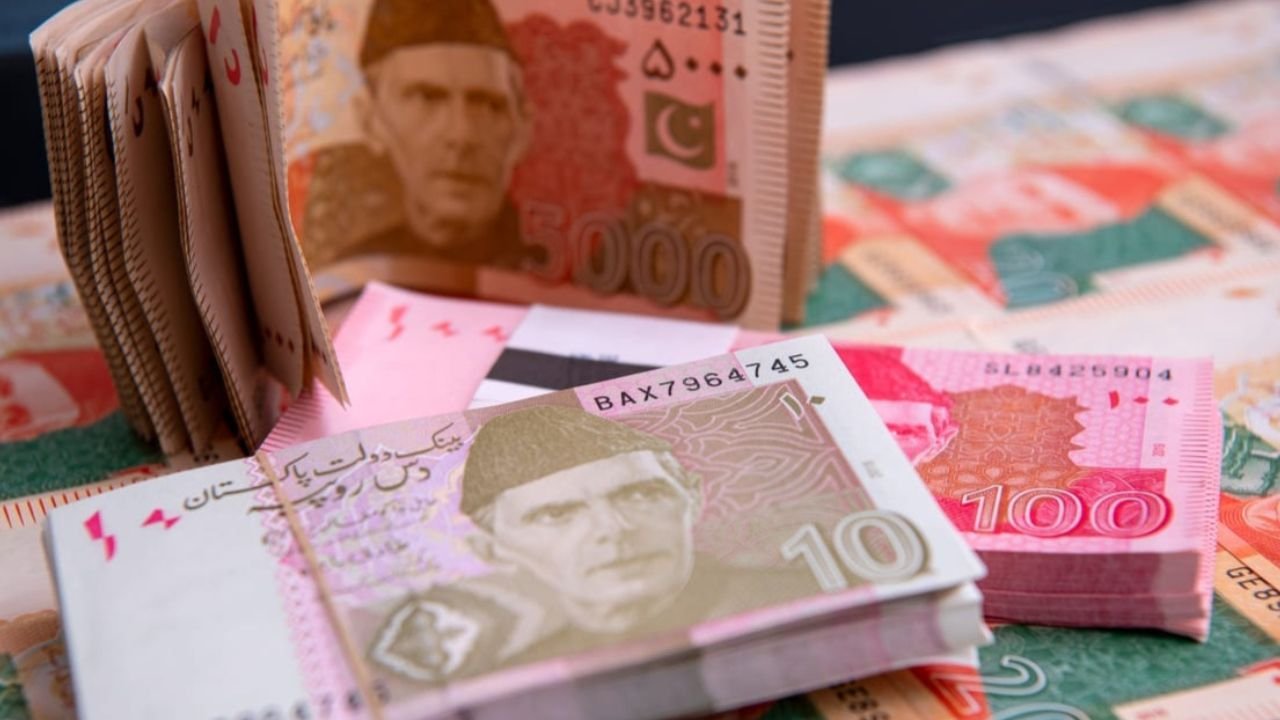
    Sources say that State Bank officials will brief the IMF delegation on the plan to issue new plastic notes to prevent fake currency.

    Such currency notes are being used in Far Eastern countries and Switzerland.

    The IMF will also be briefed on reports issued under the United Nations Anti-Corruption Convention.

    The IMF had set a condition for Pakistan to prepare a report from experts on the efficiency of anti-corruption institutions.

    This condition has to be implemented by the Ministry of Interior and Ministry of Law.

    The IMF will also be briefed on improving the efficiency of government institutions and privatisation.

  • Optimism among Pakistanis increases by 10 per cent

    Optimism among Pakistanis increases by 10 per cent

    The number of people in Pakistan expecting financial conditions to improve in the country has increased by 10 per cent compared to the previous quarter.

    A survey conducted by Ipsos Pakistan’s Consumer Confidence Survey – a global market research and public opinion specialist – laid out the latest figures.

    The survey revealed that 35 per cent of Pakistanis expressed hope for improvement in their own financial conditions in the future as the financial conditions in the country improve.

    On the other hand, 35 per cent of Pakistanis are disappointed and believe that the financial conditions will become weaker.

    The rate of Pakistanis expressing disappointment has reportedly increased by two per cent i.e. 43 per cent.

    Pakistanis also expressed concern regarding the overall economic situation of the country. This ratio, however, remains at the same level as of November 2023.

    On the other hand, 88 per cent believe that the country is heading towards a wrong direction, while 60 per cent of Pakistanis said the current state of the country’s economy is weak.

    The percentage of Pakistanis who expect the country’s economy to improve in the future has decreased by six per cent i.e. to 27 per cent.

  • Apple’s iPhone sales decline by 24% in China, while Huawei’s sales surge

    Apple’s iPhone sales decline by 24% in China, while Huawei’s sales surge

    In the first six weeks of 2024, Apple experienced a significant downturn in iPhone sales in China, facing a 24 per cent year-on-year decrease, according to a report by research firm Counterpoint.

    The decline was attributed to heightened competition from local rivals, notably Huawei, which witnessed a remarkable 64 per cent increase in unit sales during the same period.

    Apple, once holding the second position in the Chinese smartphone market in 2023 with a 19 per cent market share, now finds itself in fourth place with a reduced share of 15.7 per cent.

    On the other hand, Huawei climbed to second place, expanding its market share from 9.4 per cent to 16.5 per cent year-over-year.

    Counterpoint’s senior analyst, Mengmeng Zhang, explained the dynamics, stating that Apple faced formidable competition from a resurgent Huawei at the high end while also encountering pricing pressures from domestic brands like OPPO, Vivo, and Xiaomi in the middle segment.

    To counteract the decline, Apple initiated measures such as subsidising certain iPhone models by up to 1,300 yuan ($180.68) through flagship stores on Tmall, Alibaba’s major marketplace platform.

    Earlier, the company had offered discounts of up to 500 yuan on its official sites.

    Huawei’s resurgence in premium smartphone sales was attributed to the successful release of its Mate 60 series in August.

    Overcoming years of challenges posed by US restrictions on key component exports, Huawei managed to reclaim its position in the market.

    Additionally, Honour, the smartphone brand that separated from Huawei in 2020, witnessed a 2 per cent increase in unit sales, making it the only other top-five brand to experience growth in the first six weeks of the year.

    Contrastingly, Chinese brands Vivo, Xiaomi, and Oppo faced declines of 15 per cent, 7 per cent, and 29 per cent, respectively, highlighting the fiercely competitive landscape in the Chinese smartphone market.

    Overall, the report indicates a 7 per cent shrinkage in the country’s smartphone market during this period.

  • WTO launches $50m fund for female entrepreneurs in developing world

    WTO launches $50m fund for female entrepreneurs in developing world

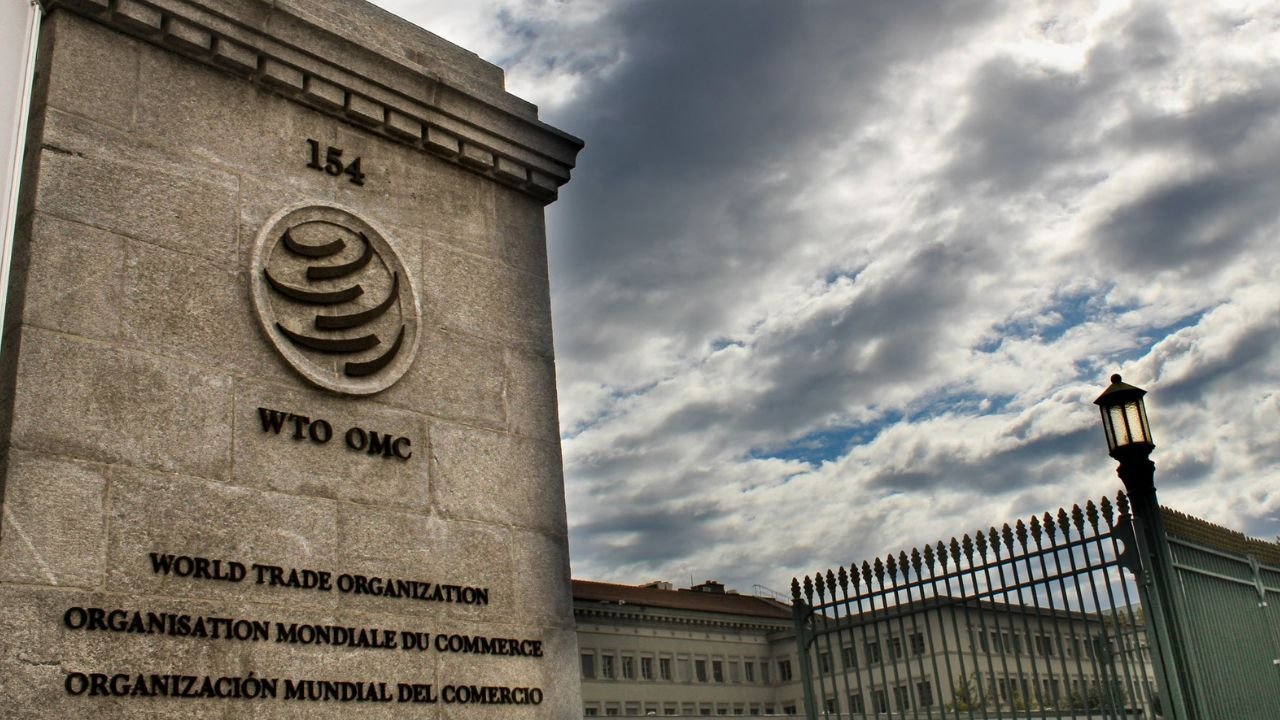
    The director general of the World Trade Organisation, Ngozi Okonjo-Iweala, on Sunday launched a $50 million fund to help female entrepeneurs in developing countries to export more using the opportunities offered by the digital economy.

    The announcement came ahead of the 13th ministerial conference of the WTO which opens on February 29 in the United Arab Emirates.

    Okonjo-Iweala, speaking alongside the Emirati Minster of State for Foreign Trade Thani al-Zeyoudi, said the “ground-breaking initiative… embodies our collective commitment to empower women”.

    “We need catalytic solutions to solve the financing issue that women face,” she added.

    The fund will help businesses run by women in developing countries to adopt digital technologies and increase their online presence.

    Zeyoudi said his country would contribute $5 million to the fund, adding “this initiative allows us to celebrate the invaluable contribution of women entrepreneurs and women led businesses around the world and to recognise the critical role they play in driving economic growth”.

    “While women are one half the world’s population, they only contribute 37 percent to the global GDP,” he said.

    Also at the announcement was Saudi Arabian Minister of Commerce Majid al-Kasabi, who called it a “milestone” and said his country was “dedicated” to supporting female empowerment.

    Okonjo-Iweala said that in meeting female entrepeneurs, “a common refrain among them is the need for adequate financing to scale their businesses and to tap into the vast opportunities of global trade”.

    apo/dcp/fz

    © Agence France-Presse

  • Saudi Arabia to open first liquor store in Riyadh

    Saudi Arabia to open first liquor store in Riyadh

    Saudi Arabia is gearing up to inaugurate its maiden alcohol store in the capital city of Riyadh, exclusively catering to non-Muslim diplomats, according to a reliable source and an official document disclosed on Wednesday.

    Prospective customers will be required to register through a designated mobile app, obtain a clearance code from the foreign ministry, and adhere to monthly purchase quotas, as outlined in the document.

    This development marks a significant milestone in Saudi Arabia’s initiatives, spearheaded by Crown Prince Mohammed bin Salman, to transform the ultra-conservative Muslim nation into a hub for tourism and business. Notably, the consumption of alcohol is strictly forbidden in Islam.

    Situated in Riyadh’s Diplomatic Quarter, a locale housing embassies and diplomats, the new store will be “strictly restricted” to non-Muslims, according to the document. 

    It remains unclear whether other non-Muslim expatriates will be granted access to the establishment, given that the majority of expatriates in Saudi Arabia are Muslim workers from Asia and Egypt.

    Insiders familiar with the plans have indicated that the store is anticipated to open its doors in the coming weeks.

    Saudi Arabia has long maintained stringent laws against alcohol consumption, with penalties ranging from lashes, fines, and imprisonment to deportation. 

    As part of ongoing reforms, the practice of whipping has largely been replaced by jail sentences. Until now, alcohol has only been available through diplomatic mail or on the black market.

    According to Reuters, the Saudi government has not responded to requests for comments on the matter.

    Recent reports from state-controlled media suggest that the government is imposing new restrictions on alcohol imports within diplomatic consignments. This move is expected to bolster demand for the forthcoming alcohol store. 

    The new regulations aim to control imports and prevent the improper exchange of special goods and alcoholic beverages received by non-Muslim embassies in Saudi Arabia, as reported by the Arab News daily on Sunday.

    In recent years, Saudi Arabia, traditionally closed off to the world, has relaxed strict social codes. These changes include ending the segregation of men and women in public places, lifting the requirement for women to wear all-covering black robes (abayas), and allowing women to drive. 

    These transformations, part of Vision 2030, align with the broader goal of developing local industries, logistics hubs, and generating hundreds of thousands of jobs for Saudi nationals.

  • Nobel winner Yunus convicted in Bangladesh labour law case

    Nobel winner Yunus convicted in Bangladesh labour law case

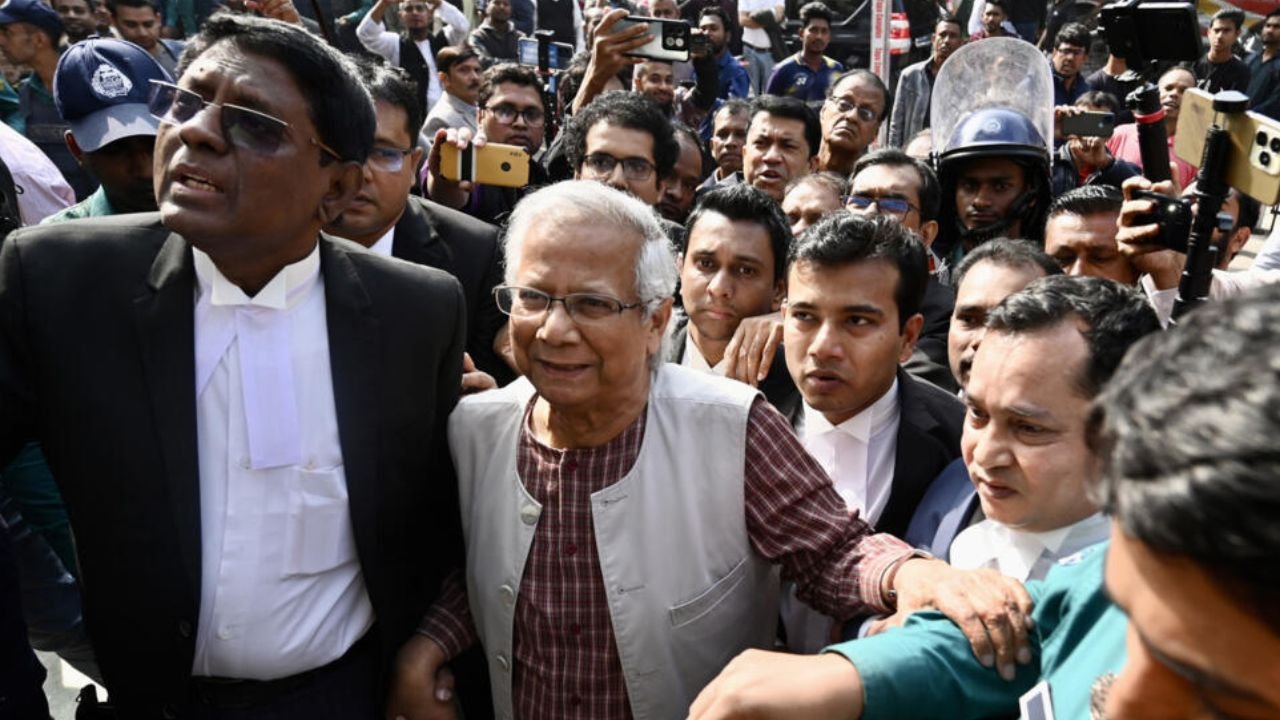
    Dhaka (AFP) – Nobel peace laureate Muhammad Yunus was convicted on Monday of violating Bangladesh’s labour laws in a case decried by his supporters as politically motivated.

    Yunus, 83, is credited with lifting millions out of poverty with his pioneering microfinance bank but has earned the enmity of longtime Prime Minister Sheikh Hasina, who has accused him of “sucking blood” from the poor.

    Hasina has made several scathing verbal attacks against the internationally respected 2006 Nobel Peace Prize winner, who was once seen as a political rival.

    Yunus and three colleagues from Grameen Telecom, one of the firms he founded, were accused of violating labour laws when they failed to create a workers’ welfare fund in the company.

    A labour court in the capital Dhaka convicted and sentenced them to “six months’ simple imprisonment”, lead prosecutor Khurshid Alam Khan told AFP, adding that all four were immediately granted bail pending appeals.

    All four deny the charges. Dozens of people staged a small demonstration of support outside the court for Yunus, who left without speaking to media.

    “This verdict is unprecedented,” Abdullah Al Mamun, a lawyer for Yunus, told AFP. “We did not get justice.”

    Yunus is facing more than 100 other charges over labour law violations and alleged graft.

    He told reporters after one of the hearings last month that he had not profited from any of the more than 50 social business firms he had set up in Bangladesh.

    “They were not for my personal benefit,” Yunus said.

    Another of his lawyers, Khaja Tanvir, told AFP that the case was “meritless, false and ill-motivated”.

    “The sole aim of the case is to harass and humiliate him in front of the world,” he said.

    ‘Travesty of justice’

    Irene Khan, a former Amnesty chief now working as a UN special rapporteur who was present at Monday’s verdict, told AFP the conviction was “a travesty of justice”.

    “A social activist and Nobel laureate who brought honour and pride to the country is being persecuted on frivolous grounds,” she said.

    In August, 160 global figures, including former US president Barack Obama and ex-UN secretary-general Ban Ki-moon, published a joint letter denouncing “continuous judicial harassment” of Yunus.

    The signatories, including more than 100 of his fellow Nobel laureates, said they feared for “his safety and freedom”.

    Critics accuse Bangladeshi courts of rubber-stamping decisions made by Hasina’s government, which is all but certain to win another term in power next week at elections boycotted by the opposition.

    Her administration has been increasingly firm in its crackdown on political dissent, and Yunus’s popularity among the Bangladeshi public has for years earmarked him as a potential rival.

    Amnesty International accused the government of “weaponizing labour laws” when Yunus went to trial in September and called for an immediate end to his “harassment”.

    Criminal proceedings against Yunus were “a form of political retaliation for his work and dissent”, it said.

  • Canada’s ‘Startup Visa Program’ with no education, experience, job requirement or age limit

    Canada’s ‘Startup Visa Program’ with no education, experience, job requirement or age limit

    Umair Saleemi, journalist for BBC Urdu, shed light on Canada’s ‘Startup Visa Program’ in his latest piece:

    Every year, thousands of people from India and Pakistan migrate to America, Canada and European countries for better opportunities and a brighter future.

    Therefore, any changes in immigration and work visa laws or the introduction of any new programs are closely monitored in these countries.

    As Canada has changed the work permit law this month, Canadian authorities extended work permits for 18 months due to increased demand in the labour market during the Covid era, which is being phased out from January next year.

    Since then, Canada has initiated a startup visa program has been hailed by some experts as a golden opportunity.

    The program is mainly for talented foreigners who want to establish their own small businesses or startups in Canada.

    Certain criteria have been set to assess the quality of a startup, including innovation, creation of new jobs for local people and ability to compete globally.

    Who can apply for a Canadian Startup Visa?

    To apply for a Canadian start-up visa, a candidate must have a valid business. It is important that the candidate owns the shares of the business. One must hold 10 per cent or more of the company’s shares and have voting power (at shareholders’ meetings).

    A maximum of five people can apply in this program. It is important that the startup is supported by a Canadian organisation or ‘designated body’ and a letter of support is issued.

    Your business must operate from Canada, have its main activities from Canada and be established in Canada.

    In addition to mastering the English language, knowledge of French can further help your startup succeed in Canada. Canadian visa rules require the applicants to be fluent in speaking, writing and understanding either English or French.

    The startup visa candidate also has to provide evidence to the Canadian government that they have the resources to support themselves and their dependents. Candidates cannot manage this money by borrowing money.

    Immigration expert Julie Desai told BBC Gujarati that a startup visa is quite different from a normal work permit visa. Its aim is only to attract businessmen and entrepreneurs to Canada.

    The most important requirement is that the candidate’s business must be innovative enough to create new jobs in Canada, Desai explains. This visa is not for general business people — such start-up plans are needed that they can compete in the world.

    Under this program, the financial resources required by a family can be determined by the number of its members. If only one person wants to go to Canada under this program, one will need 13757 Canadian dollars. This amount can increase if other family members also want to go along. It will also be important to see if the Canadian authorities revise this amount every year.

    Meanwhile the candidate needs a ‘Letter of Support’ for start-up from a recognized business group in Canada. For this the candidate approaches these organisations and assures them that their startup idea deserves support.

    Candidate has to contract with these institutions for a letter of support as this letter is proof that a Canadian investor, such as a venture capital fund, angel investor group or business incubator, supports the candidate’s idea.

    In addition, accredited organisations also issue Canadian Government ‘Certificates of Commitment’ to candidates. The government then verifies both the letters for the visa application.

    The Canadian government may ask for more information about your startup to review the information.

    The Canadian government may reject the application if the letter of support or other requirements are not met.

    Immigration lawyer Prashant Ajmera asserts that it is very important that the startup plan has the support of Canadian organisations, that the candidate has a detailed business plan, and to have knowledge of the Canadian market.

  • More Pakistanis hopeful about economy: survey

    More Pakistanis hopeful about economy: survey

    A survey conducted by IPSOS has revealed that there is an increase in the number of Pakistanis who are hopeful that the economic situation of the country will improve in the next six years.

    The results also show that the fear of losing jobs or work has decreased.

    The survey, based on 1,000 participants across Pakistan, was conducted between October 31 and November 3, 2023.

    There has been an increase from 11 per cent to 25 per cent in people’s optimism of improving their financial conditions in the next six months while pessimism and disappointment has gone down from 60 per cent to 49 per cent.

    No difference has been noted among the people with moderate stance as 26 per cent are neither hopeful nor despondent about their financial situation in the future.

    According to IPSOS, 95 per cent of Pakistanis feared losing employment in the previous survey, but now the number has come down to 88 per cent, indicating an increase in optimism by seven per cent.

    Additionally, the rate of Pakistanis who expressed an inability to save and invest to meet future needs decreased by four per cent, while 92 per cent said they were not able to save.

    Only one in 10 Pakistanis believe that the country is headed in the right direction among whom men are four times more likely to be more optimistic than women.

  • Are you interested in newsletters?

    Are you interested in newsletters?

    Newsletters are the best way to get your daily update on news, events, sales, and more.

    Fill out this survey and help us make a newsletter that you need!