Tag: business

  • The inconvenient truth about Pakistan’s economy

    Battle of narratives confuses ordinary citizens who are less interested in politics and are more keen to know where the economy is actually heading, what they should expect in terms of growth and whether Pakistan can offer them a prosperous future.

    Economy is the hottest subject these days. Political zealots from opposing sides pick and choose data snippets of their choice, build an argument and relentlessly attack the other party.  On one hand, the Pakistan Tehreek-e-Insaf (PTI) social media machine keeps focusing on massive current account deficit and export decline during Pakistan Muslim League-Nawaz’s (PML-N) tenure, while the PML-N social media warriors rely on abundant ammunition provided by high inflation and slowing down economy.

    This battle of narratives, however, confuses ordinary citizens who are less interested in politics and are more keen to know where the economy is actually heading, what they should expect in terms of growth and whether Pakistan can offer them a prosperous future.

    Let’s first understand the origin of the present economic crisis.

    For years, Pakistan’s foreign exchange inflows — earned through exports, foreign direct investment, remittances and official development assistance — have been lagging behind its forex outflows required to pay for its imports. But this gap increased considerably in recent years, thereby forcing the country to excessively rely on external borrowing. The problem was further compounded by the overvalued exchange rate that was held artificially high during the last government’s term. This overpricing made imports cheaper and exports expensive, further enhancing the trade deficit. As a result, the current account deficit went as high as about $1.5 to 2 billion a month, which became unsustainable. The PTI government sought help from friendly countries like Saudi Arabia and China and managed to get more than $6 billion in loans or deferred payments. But without working on reducing the current account deficit, even this didn’t last long.

    The situation was no better on the fiscal front. Pakistan has been generating far less revenue than what it was spending, leading to huge fiscal deficits, which were again financed through borrowing. The state-owned enterprises kept on draining the exchequer and the circular debt kept on piling up, crippling the government. This unsustainable financial situation compelled Pakistan to knock at the doors of the International Monetary Fund (IMF).

    IMF is considered the lender of last resort and provides a bailout to a country to avoid an economic crisis when no other lender is willing to step in. But in return, it puts down certain conditions for the borrower, to put its house in order. The same happened with Pakistan.

    Pakistan has a resilient economy on the back of its 200+ million-strong population, abundant natural resources and a vibrant private sector. About two-thirds of the Pakistani population is youth, making it the youngest country in South Asia and skilling this workforce can do wonders for the country.

    To immediately curtail the current account deficit, Pakistan had to significantly devalue its exchange rate to bring it in line with its market value. But this sudden devaluation overnight made imports expensive, including petrol, leading to a round of imported inflation. Along with consumer goods, industrial goods and raw materials also became expensive. Many industries such as automotive had to pass this increase on to consumers, putting their products out of reach of many, slowing down the consumer demand for them.

    The government also had to raise prices of gas and electricity to reduce the fiscal deficit, fueling inflation. Mismanagement leading to food supply disruptions, such as wheat and flour crisis, also played its part in further pushing the inflation higher. In anticipation of the inflationary pressure, the government had already increased the interest rates. But these high interest rates, while curbing inflation, made borrowing expensive for the businesses, thus taking a further toll on their growth.

    Factories had to cut down production. Unemployment rose. And the economy started to slow down. It was as if an over-heated engine was suddenly sprayed with a splash of cold water.

    The tight fiscal and monetary policies, which were unavoidable to reign in out of control current account and budget deficits, also brought in inadvertent consequences making life hard for the people. And this is how the government ended up where it is right now. The inflation is still rising, growth is nowhere in sight and the government keeps on mulling over ways to cut corners to meet stringent IMF conditions.

    The dark night of economic hardship will be over soon. But what matters is if we can take some hard decisions during this time, correct the imbalance between our public sector spending and income, develop our export base and pull Pakistan out of its perpetual reliance on foreign and domestic borrowing.

    But all is not doom and gloom. Pakistan has a resilient economy on the back of its 200+ million-strong population, abundant natural resources and a vibrant private sector. About two-thirds of the Pakistani population is youth, making it the youngest country in South Asia and skilling this workforce can do wonders for the country. Not only does the country have 10+ million expats, forming the sixth-largest diaspora in the world, but their remittances have also been growing. Since the year 2000, remittance inflows to Pakistan have grown by 19-20 times in real terms. Moreover, in recent years, China has pumped in billions of dollars, as part of the China-Pakistan Economic Corridor (CPEC), improving Pakistan’s infrastructure and putting it on the Belt Road Initiative (BRI) map. The improved connectivity can yield sizeable trade and investment dividends for Pakistan.

    Given this tremendous economic potential, it is quite likely that as soon as the government will ease out the fiscal and monetary policies, the economy will rebound. But that growth can only be sustained if our trade deficit does not go out of control, our manufacturing sector has the capacity to expand and we can generate enough investments to sustain the growth momentum. And for this to happen, our public sector needs to be more efficient and give more space to the private sector to grow. It also requires that the government should reduce its non-productive expenditure and increase public investments, broaden the tax base and use the tax money effectively to stimulate the economy and stop using state-owned enterprises like Pakistan International Airlines (PIA) and Pakistan Railways (PR) for patronage and instead make them self-sustainable and profitable entities.

    The dark night of economic hardship will be over soon. But what matters is if we can take some hard decisions during this time, correct the imbalance between our public sector spending and income, develop our export base and pull Pakistan out of its perpetual reliance on foreign and domestic borrowing.
  • Pakistan, Turkey sign trade, investment MoUs

    To increase economic engagement and mobilise the untapped potential for trade and investment, Pakistan and Turkey have signed two memorandums of understandings (MoUs), Dawn reported.

    The two MoUs include one on trade facilitation and customs cooperations, while the second pertains to reinforcing cooperation in the field of halal accreditation. The two sides agreed to explore the possibilities of enhancing bilateral trade for the mutually beneficial market access and trade facilitation.

    Read moreFreelancers payment limit raised to Rs. $25,000: State Bank of Pakistan

    Both sides also agreed to encourage their businessmen to establish joint ventures in industrial sectors and cooperate in the field of e-commerce.

    Read moreNew survey reveals Pakistani businesses positive about future

    Both have the potential to explore possibilities of investment opportunities in defence industry, food processing and packing, automotive industry and auto-parts, household appliances, construction material, textiles, leather machinery and finished products, sports goods and surgical instruments.

  • New survey reveals Pakistani businesses positive about future

    New survey reveals Pakistani businesses positive about future

    A new report has revealed that international investors are looking towards Pakistan for business opportunities and queries regarding this have increased to a great extent.

    Dun & Bradstreet (D&B), which provides commercial data globally in the form of ‘Business Optimism Index’ (BOI), presented the report which stated that the business community in the country is optimistic about their position.

    Read more – Imran’s ‘blue-eyed’ Shabbar Zaidi resigns as FBR chairman: report

    In an official statement, D&B said: “We used to collect data of Pakistani companies located in Dubai, We had data of around 100,000 Pakistani companies but looking at the rising demand we [D&B] decided to launch our office in Pakistan.”

    Read more – As Dar’s residence is converted into Panahgah, Musharraf’s farmhouse remains untouched

    As per the report, large companies are relatively more optimistic than small and medium enterprises (SMEs). Similarly, companies in the services sector are more hopeful as compared to the trading and manufacturing sectors.

    D&B, initiated in the early 1900s, will publish a report quarterly, in a bid to measure the progress of the business community and serve as a tool to assess the position of the businesses in Pakistan.

    Read more Naya Pakistan: Govt to set up 50,000 shops to sell daily-use items on subsidised rates

    The response from the business community reflects respondents’ position regarding the current business situation, and forecast business situation. Based on the results, respondents are more optimistic regarding the forecast business situation in comparison to the current business situation.

    Around 66% of the respondents expect business situation to be good in the upcoming quarter compared to 42% of respondents in the current quarter. However, 9% of the respondents expect their business situation to be poor in the upcoming quarter, compared to 16% in the current quarter which is a positive indicator for businesses.

  • Careem lays off over 150 employees

    Careem lays off over 150 employees

    Dubai-based Careem has laid off over 150 employees to cut down on costs due to financial constraints. The ride-hailing app’s co-founder and CEO Mudassir Sheikha in an interview confirmed the news and said “that cuts are being made to support its [the company’s] expansion strategy.”

    He further added, “The expansion will require cost-cutting that will involve the loss of five percent of existing roles and the reassigning of ten percent of staff to more critical technology development areas.”

    The layoffs come just three weeks after Uber completed $3.1 billion acquisition of Careem.

    An employee who was laid off spoke to MENAbytes, a leading tech news company in the Middle East, and shared, “Careem was a fantastic company but things started deteriorating after the deal with Uber was announced. The uncertainty hiked since the acquisition but I didn’t see this coming. We could have been informed earlier. It would have given us more time to look for an alternative but nevertheless it has been a good journey.”

    Another ex-employee remarked, “It is sad to see a company that used to have great culture and values, lose everything. It has become a highly political organisation where performance is not the criteria to progress anymore”.

    Uber, that now owns Careem, has also laid off over 1,000 people from its different teams across the world in a bid to cut down on costs. According to stats, it lost approximately $1.1 billion in the third quarter of 2019.

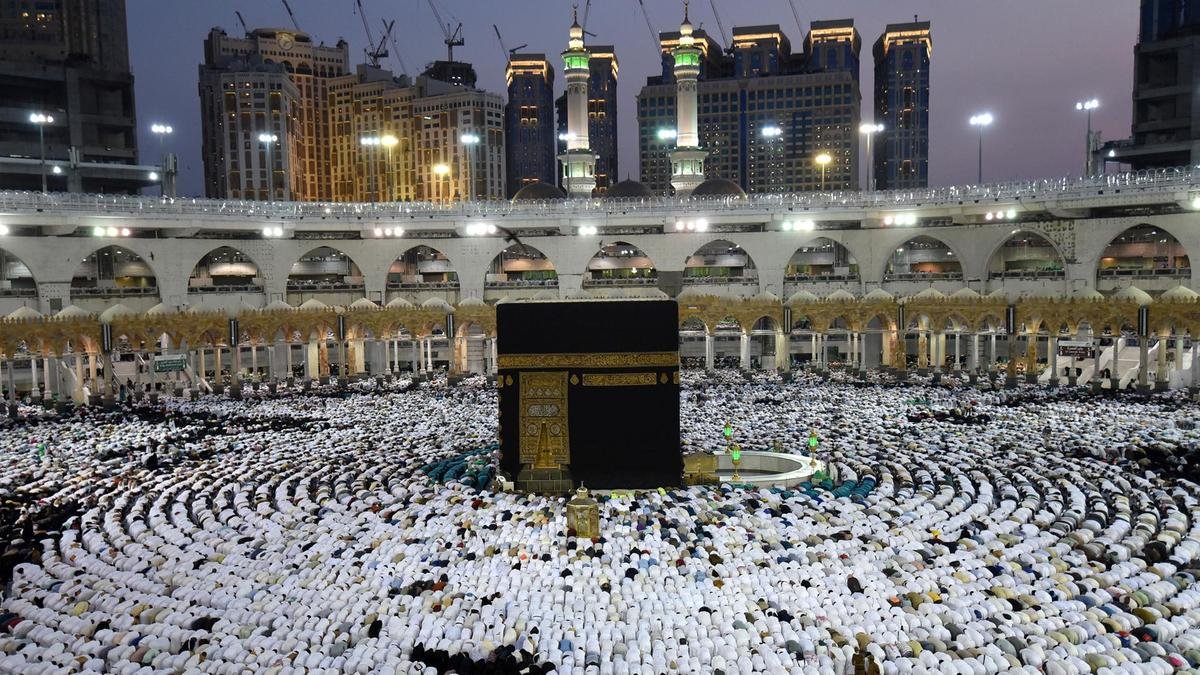
  • Businesses in Saudi Arabia will no longer shut down during namaz

    Businesses in Saudi Arabia will no longer shut down during namaz

    The Saudis, known for their strict adherence to Shariah laws, have recently progressed in technology and societal aspects as they attempt to rebrand themselves as a modern state. Keeping that in mind, concerned authorities have decided not to close businesses during prayer time because they want to create a 24 hours business environment and a promising economy.

    Dr Al Gaith, a member of Saudi Arabia’s Shoura Council, expressed “There is no legal base for closing shops for prayer after amending the bylaws of the authority. Forcing shops to close their doors and people to pray right at the beginning of prayer time, and to do this in a mosque, stands no ground – neither in Shariah nor in law.”

    “Rather is rather a breach of both of them, and an infringement on people’s religious rights (right of Ijtihad freedom to follow a reference) and worldly rights (freedom of movement, shopping, benefiting of services round the clock without being forced to abide by judicial matters subject to conflict and differences.” 

    Saudi Arabia is now aiming to become tourist-friendly. Non-Muslims are allowed to visit the country and last year the government granted permanent residence to a foreigner. A few years back, it was near to impossible.

  • Iconic Maggi noodles are no more

    Iconic Maggi noodles are no more

    The iconic Maggi noodles that introduced the concept of convenience food to many in Pakistan, have been shut down in the country, Profit has reported.

    According to reports, Nestlé — the company that owns the brand and manufactures the product — has confirmed that they will no longer be marketing the instant noodles with which at least two generations of Pakistanis grew up.

    “Yes, we discontinued Maggi by the end of 2018. The divestment is part of Nestlé’s strategy to manage its multi-product portfolio,” the report quoted an official as saying on the condition of anonymity.

    Nestlé Pakistan has made no public announcements about the matter, and Maggi noodles remain listed as a product on the company’s website. However, the product is conspicuously absent from the 2018 annual financial statements of the company. There was no explicit mention of a discontinuation; it was just listed as a product offering on the 2017 report, and not listed on the 2018 report.

    When it was first launched in Pakistan in 1992, Maggi was the only brand of noodles in the country and had a complete monopoly for the first year of its production. And while Unilever quickly launched its Knorr brand of instant noodles in 1993, Maggi was the market leader and, for the most part, remained so for the next two decades.

    Over the past four years, however, Maggi went from being the market leader in its category to being almost completely wiped out from the country. Sources inside the company confirmed to Profit that the current stock of Maggi in stores is all that is left. Once it is gone, there will be no more.

    Among other reasons behind Maggi’s death are the food safety scare in India from a few years ago – one that turned out to be a false alarm – and losing market share to Knorr even before that scare. Unilever, it seems was much better at localisation than Nestle was, the report said, adding that as a result, Unilever’s product was able to continue gaining market share from Nestle, and was therefore well-positioned to become the market leader by the time Maggi met its demise.

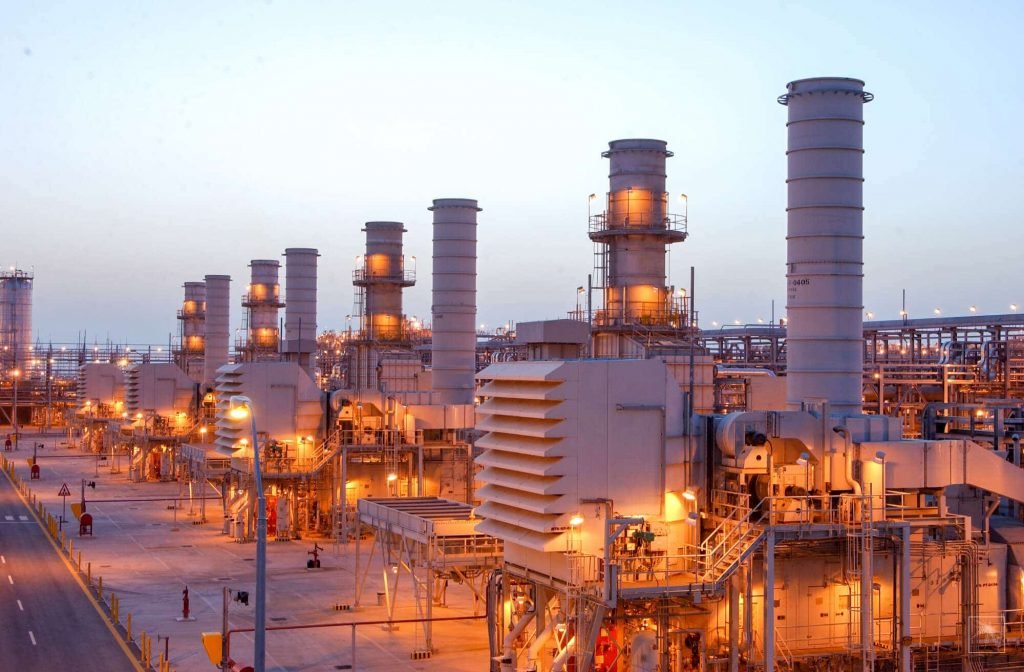
  • Saudi Arabia’s energy company ‘Aramco’ worth’s $1.7 trillion after a historic IPO

    Saudi Arabia’s energy company ‘Aramco’ worth’s $1.7 trillion after a historic IPO

    Saudi Arabia has recently turned Aramco (Arabian-American Oil Company) in publicly owned enterprise. By making it a public entity – that investors can buy and sell shares in the stock market.

    Shaybah

    In the Initial Public Offering (IPO) phase, the worth of the company has plunged to $1.88 trillion that break all the records of the recent decades.

    The offering price of Armaco shares were 32 Riyals ($8.53) and people bought the shares of $25.6 billion – eclipsing Alibaba’s $25 billion IPO of 2014.

    Moreover, seconds after the debut on Riyadh’s Tadawul exchange, the price per stock rose to 35.2 riyals. This development further boosted the energy giant’s valuation.

    Haradh Gas Plant (Aramco)

    On the launch ceremony, the Chairman of Aramco Yasir Al-Rumayyan said “Today the kingdom of Saudi Arabia is no longer the only shareholder of the company. More than five million shareholders have joined including citizens and residents, in addition to Gulf countries and international investment institutions. The kingdom is immensely proud of this day.”

    It was the strategy of Crown Prince Mohammad Bin Salman to overhaul the oil-reliant economy.

    The IPO process had put the energy giant’s value at $1.7 trillion, far ahead of other firms in the trillion-dollar club, including Apple and Microsoft.

    The listing of Aramco, with its huge capital value, boosts the Saudi bourse — known as Tadawul — to the ranks of the world’s top ten.

  • IN DATA: ‘Pakistan’s economy has crashed 13 times in 60 years,’ says Economist Atif Mian

    In an article in the New York Times, Economist Atif Mian discusses what has led to the persisting economic crisis, and what can save Pakistan’s economy.

    SWIPE RIGHT: Atif Mian’s key points

    His key points include the facts that Pakistan’s volume of exports has not risen since 2005 and the government is running on borrowed money right now, but people are ready for a change. He states that Pakistan elected Imran Khan because they want a change in their daily life.

    Delving a little deeper into what Mian mentioned and the links that he provided in his article, the following infographics show the state of Pakistan’s economy.

    World Bank rankings on Pakistan ease of doing business.

    Pakistan, since 2005, has remained an increasingly difficult place to invest in. The ranking in 2020 is 108, which means that ease of doing business has gotten better as compared to 2015 — when it stood at 138. The best time to invest in Pakistan was 2005, when the ranking was even better — at 65. The lower the World Bank’s ranking, the easier the time is to invest in Pakistan.

    The level of investment by private and public sectors during the 1980s and up until 2015

    The graphic above shows that the best time for public and private investment in Pakistan in relation to the Gross Domestic Product (GDP) — any country’s total value of goods produced and services. The best time to invest in Pakistan was in the early 1990s and has been declining ever since.

    Foreign Investment in Pakistan, India and Bangladesh during the years

    The chart above shows that Pakistan had the highest amount of foreign investment in 2004, but it has been declining ever since (with a minimal boost in 2008).

    https://public.flourish.studio/visualisation/1079785/
    Pakistan has performed the least compared to other countries in Asia

    As compared to other countries in Asia, Pakistan’s investment status is the lowest, especially in recent times.

  • PayPal not coming to Pakistan despite Asad Umar’s promise

    Former finance minister Asad Umar, earlier this year, had announced that the government was pushing for PayPal, the online payment system that supports online money transfer in over 200 countries, to come to Pakistan.

    A delegation from Pakistan’s Information Technology Ministry visited the United States in October to convince them to come to Pakistan but failed.

    Urdu News reported that PayPal officials told the delegation that Pakistan was not included in its three-year road map because it didn’t have adequate business opportunities.

    A Pakistani official of the National Institute of Technology said that PayPal changes its road map every year and Pakistan is still hopeful that they might come into the Pakistani market in the future.

  • Imran’s adviser all praise for PML-N; says previous govt’s policies boosted economy

    Adviser to Prime Minister (PM) Imran Khan on Commerce, Abdul Razak Dawood, has given the credit of Pakistan’s improved rating in World Bank’s (WB) Ease of Doing Business Index to the previous Pakistan Muslim League-Nawaz (PML-N) government and its good policies.

    Pakistan has jumped up 28 places on the index and secured a place among the top 10 countries with the most improved business climate — a development that will greatly improve its image abroad.

    Pakistan carried out six reforms that helped improving its ranking from 136 to 108, according to the WB’s annual flagship report, ‘Ease of Doing Business 2020’, released last month. It turned out to be the sixth global reformer and first in South Asia that brought ease in doing business in the past one year.

    Praising the PML-N in what is being termed as challenging his own premier’s policy statement, Dawood has said that it was the previous government’s good policies that helped the ruling Pakistan Tehreek-e-Insaf (PTI) carry out the said reforms.

    “Ease of doing busniess started improving under the previous government and their efforts helped us make even better. It’s not just us… look how the power crisis has been overcome. All of it wasn’t done within a single year,” he can be heard as saying in a video doing rounds over the internet.

    WATCH VIDEO:

    According to The Express Tribune, the WB monitors a country’s business related regulations on 10 benchmarks that are as broad as from starting a business, to getting electricity connection, securing construction permits, paying taxes, dispute resolution, business insolvency and protecting minority shareholders’ rights. All these areas are closely looked at by the global investors before they take decisions on making investment.

    The report measures how close each economy is to the best global practices in business regulations.

    On the measure of absolute progress towards best practices, Pakistan has improved the score to 61 from 55, suggesting the country did some remarkable work this time around and built on the reforms introduced in the previous year as well.

    International investors consult the report and the Global Competitiveness Index of the World Economic Forum before taking decisions on investment plans.

    While India remained top among South Asian nations, up 14 spots to 63, Pakistan also made a mark by climbing 28 positions and securing a place among the top 10 global business climate reformers and improving 28 positions in a year.

    “This rise is significant and made possible by collective and coordinated actions of the federal government and provincial governments of Sindh and Punjab over the past year,” said the WB Country Director for Pakistan Illango Patchamuthu.