Tag: CAA

  • Woke students in ‘secular’ India

    The BJP coming to power has only removed the lid from the internal realities of the unsuccessful story of Indian democracy.

    Unlike Pakistan, where student unions were banned during the military rule of Ziaul Haq, in India, student unions on campuses have successfully sustained till date. In the past few years, Jawaharlal Nehru University (JNU) has been mentioned as a refrain in discussions on student politics — particularly in terms of burgeoning progressive politics — the spillover effect of which has reached not only Pakistan, but major parts of the globe as a good omen for the oppressed.

    The student union of JNU, better known as JNUSU, was recognised as a symbol of resistance, the voice of voiceless and a representative of the marginalised and vulnerable communities within India. JNUSU gained popularity across the world after its former president Kanhaiya Kumar was arrested from campus in 2016 due to his association with a protest gathering held at JNU.

    The protest was organised by some students of the varsity on February 9, 2016, in order to commemorate the judicial killing of Afzal Guru (hanged Feb 9, 2013) and also to question the violation of human rights by the Indian state in Indian occupied Kashmir (IoK).

    Consequently, the fascist Bharatiya Janata Party (BJP) government pressed charges against the students who had organised the protest, as well as Kanhaiya, who had addressed the protest gathering. Kanhaiya, Umar Khalid and Anirban Bhattacharya were the three students who were jailed following the registration of an FIR [First Information Report] against them.

    With already popular Azadi slogans taking a different tone following Kanhaiya’s arrest, students – especially Kashmiri — took a tone that went on to prove their courage at the forefront of the struggle against Indian Prime Minister (PM) Narendra Modi’s fascist regime.

    The recent wave of mass-mobilisation in India started in the aftermath of the controversial Citizenship Amendment Act (CAA) that grants the government the right to declare people, unable to produce citizenship documents, as “illegal immigrants” and allows any declared illegal immigrant, except Muslims, to become a citizen of India on the grounds of persecution in neighbouring Muslim states.

    CAA’s implementation, however, comes after forming a National Register of Citizens (NRC). NRC has been implemented in the Indian state of Assam where people, who have not made it to the register, have either already been detained in camps or are facing the threat of landing in the same since there is no way to prove which countries do these allegedly illegal immigrants belong to.

    The massive mass-scale protests in India against the discriminatory CAA law drew much attention after the December 15 protest led by students of Jamia Millia Islamia University in a Muslim locality of New Delhi. With police cracking down on these protesting students by not only baton-charging but also shooting them, and that too on campus, tables started to turn on the Indian state.

    With students of Aligarh Muslim University protesting on campus against the brutality met out to their peers from Jamia Millia Islamia University, a new wave of resistance took over India. Fierce confrontation meted out to the cops, especially by female students, in what turned out to be the defining moment for the anti-CAA movement, as more people, although largely Muslims, joined the protests, and the same still goes on.

    Outside their campuses, students of Jamia Millia and Aligarh University are much more involved in mobilising and organising the ongoing protests. However, they are subsumed by the grandiosity of JNU and its student leadership that has expressed solidarity to Jamia students by joining one of the protests outside JNU.

    Despite a huge communication gap and both Pakistan and India’s coercive forces employed to keep people away from each other, the engagement of student-political activists gives us hope that a broader united front to fight injustice and oppression will someday be built.
    While mass participation of students, youth and religious minorities in the protests against BJP’s plan of constructing a Hindu Rashtra, which according to their publicised map, is extended to Afghanistan, seems insufficient to deal with, it is important, as well as necessary, to demand that the newly-passed legislation by the parliament be rolled back.

    But would it ensure peace and security for Muslims and other marginalised communities like Dalits, who too are at risk after the promulgation of CAA and NRC? Or in other words, does the struggle for safeguarding Indian constitution in itself, guarantee protection to religious minorities?

    Apart from the popular discourse propagated around the Indian constitution that claims it is ‘secular’, the deployment of state apparatus against lower caste people within Hindus and other marginalised and religious minorities, tell a different story, which has become clearer under the BJP. The destitution of religious minorities in terms of poverty, employment, education and above all, political representation, stands in testimony to the fact that they were reduced to ‘second-class citizens’ in the largest democracy of the world even when BJP was not in power.

    The BJP coming to power has only removed the lid from the internal realities of the unsuccessful story of Indian democracy. Therefore, it becomes much more significant for the protesters from Asam to Uttar Pradesh and from Jamia Millia to Shaheen Bagh to consolidate these anti-BJP forces in one political project which possibly would push the current discourse beyond constitutionalism, instead of leaving the burden of saving constitution and secularism on the shoulders of already underprivileged Muslim community of India.

    Amid all the recent political developments in Pakistan and India, there has been a convergence of progressive ideas across the border which is largely manifested in the unconditional solidarity extended by the Progressive Students’ Collective (PSC) among other progressive student organisations in Pakistan to their counterparts in India.

    Despite a huge communication gap and both the states’ coercive forces employed to keep people away from each other, the engagement of student-political activists gives us hope that a broader united front to fight injustice and oppression will someday be built.

  • CAA introduces new policy to encourage female pilots

    CAA introduces new policy to encourage female pilots

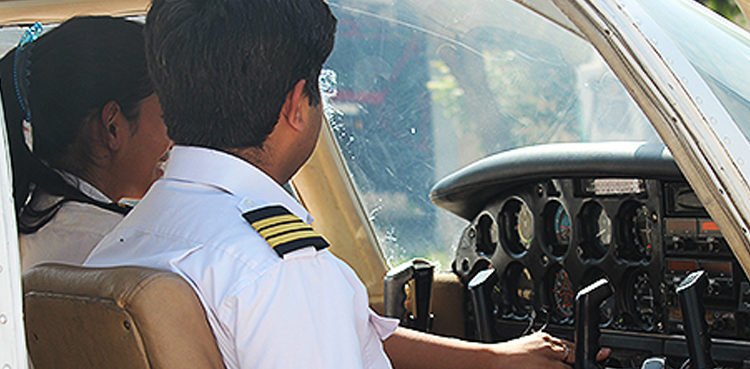
    Civil Aviation Authority (CAA) has announced to empower women under the new Aviation Policy 2019 as the institution will bear half expenses of under training female pilots.

    The spokesperson of CAA said the institution will bear 50% expenses of female trainee pilots. The allowance will be given to the female pilots who have completed 100 hours of flying. The authority will directly provide the funds to the training institutions.

    Earlier in May last year, CAA had exempted aeronautical charges on domestic flights under a new aviation policy.

    The decision will advantage domestic flight operators
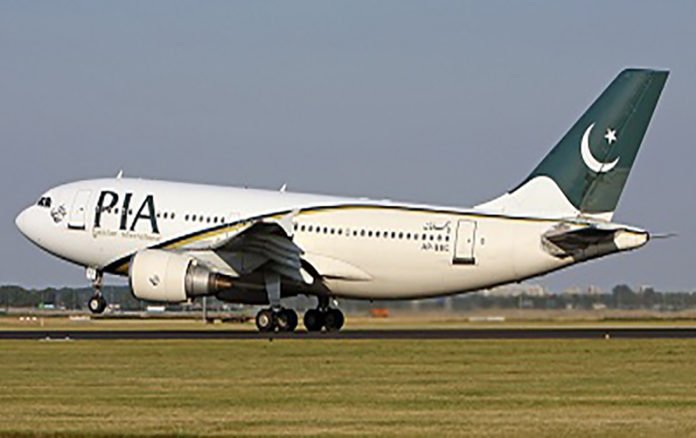
    including Pakistan International Airlines (PIA) as the aviation authority has
    zeroed aircraft landing charges on private airlines as well.

    In addition, the charges for parking, boarding, power supplies and terminal navigation, were also ended up. According to CAA spokesperson, the national flag-carrier’s profit will increase up to 70% after the suspension of charges and flight operators will be able to save Rs 4 billion annually.

  • Indian university to investigate if Faiz’s poem ‘Hum Dekhenge’ is ‘anti-Hindu’

    Indian university to investigate if Faiz’s poem ‘Hum Dekhenge’ is ‘anti-Hindu’

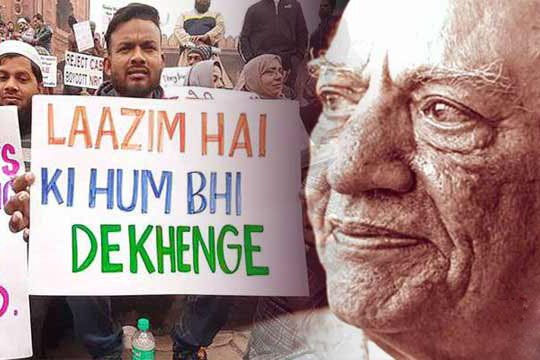
    A university in Indian state of Uttar Pradesh has set up a panel to investigate if Pakistani Marxist, poet, and author Faiz Ahmed Faiz’s iconic poem “Hum Dekhenge” is “anti-Hindu”, Scroll.in reported.

    According to reports, Indian Institute of Technology (IIT) in Kanpur has set up the panel after the poem was recited by students on campus on December 17 during a solidarity march held for their counterparts at Delhi’s Jamia Milia University.

    A police crackdown on the Jamia Milia Islamia campus on December 15 triggered nationwide protests as part of the campaign against passing of the Citizenship Amendment Act (CAA), the ongoing National Population Register (NPR) update exercise and the proposed pan-India National Register of Citizenship (NRC).

    During one such protest, about 300 students of the institute were not allowed to go out of the campus as large gatherings under Section 144 of the Code of Criminal Procedure were banned, the institute’s deputy director, Manindra Agarwal, was quoted as saying.

    A complaint was filed by temporary faculty member Vashimant Sharma and 16 others against the poem. “The written complaint filed by them with the IIT director states that the poem had some wordings that could hurt the sentiments of Hindus,” Agarwal said.

    “A committee of six members was established, headed by me, to investigate the matter. Some students have been questioned, while the others will be questioned after they return to the institution after the holidays.”

    The probe committee will investigate three areas – whether the students defied prohibitory orders, the social media posts they shared ahead of the solidarity march and if the poem of Faiz Ahmad Faiz is “anti-Hindu”.

    ‘HUM DEKHEINGE’:

    The popular revolutionary poem was written by Faiz in 1979 when he was in Honolulu for a writers’ conference.The poem was included in Faiz’s seventh poetry book titled “Mere Dil Mere Musafir” in 1981 and is known for its rendition by singer Iqbal Bano.

    The poem’s beginning deals with conventional themes such as injustice and oppression, then gives way to more overtly religious symbolism. Faiz writes that the idols will be lifted from the Kabah and goes on to describe a revolutionary inversion of power, where the pure-hearted, who were outlawed, or cast out, will be honoured.

    The crowns (of those in power) will be thrown up in the air (alluding to a celebration) and their thrones will be cast low. The final stanza of the poem is the most religious in tone, declaring that the only name (essentially on people’s lips) will that be of Allah and a great revolutionary cry of “I am Truth” will go up and people of faith will rule again.

    In recent times, the poem has become an anthem for rights activitsts taking to streets across the Indian subcontinent.

  • Feroza Aziz is back with another hidden message

    Feroza Aziz is back with another hidden message

    A video by a beauty vlogger went viral on TikTok. Video of Afghan-American TikToker, Feroza Aziz has a hidden message about the Indian Citizenship Amendment Act (CAA 2109). The video starts with a skincare routine and then Feroza starts talking about Indian CAA that violates human rights.

    According to the Indian government, CAA 2019 is supposed to grant citizenship to religious minorities that have taken refuge in India till 2014. Except for the Citizenship Amendment Bill (CAB 2019) makes it a point to exclude Muslims. The law requires Indian Muslims to prove their origins in India otherwise they will lose their citizenship.

    This 17-year old TikToker made a video with the hidden message about China’s treatment of Xinjiang Uighur Muslims before.

  • PIA suffered losses worth Rs32.7bn in first half of 2019: report

    PIA suffered losses worth Rs32.7bn in first half of 2019: report

    Pakistan International Airline (PIA) and its subsidiary, PIA Investments Limited, continue to bleed massively due to a variety of reasons, ranging from mismanagement to lack of transparency and weak audit controls by independent auditors as well as the auditor general of pakistan, Profit reported.

    According to reports, PIA’s before tax unaudited six-month loss for the period January-June 2019 stands at Rs32.746 billion, which, after taxation, is expected to be in the range of Rs38-39 billion. Although PIA revenue generation in this period has risen by 44pc in terms of Pak Rupee, it does not reflect the actual revenue since almost 55-60pc of its revenue is earned in hard foreign currency through sales at its various international outlets and travel agents.

    Rupee devaluation as compared to 2018 is in the range of approximately 39-40pc, while the cost of fuel has increased by over 19pc. PIA route miles decreased as compared to 2018.

    According to the annual report of PIA for 2018, the national flag carrier registered a total loss of Rs. 59.685 billion. It was the highest ever loss for PIA since the years 2008-2011 when it was headed by Ijaz Haroon and Nadeem Yousafzai, the former MDs who were allegedly involved in financial embezzlements causing losses of billions to the national exchequer.

    Mismanagement, lack of transparency, and weak audit controls remain the underlying reasons that impede PIA in becoming a profitable organization.

    Since 2015, PIA Investments Limited, a subsidiary of PIA, has also registered losses while the senior management continues to enjoy all kinds of perks and bonuses. Dr. Najeeb Samie, the current MD of PIA Investments Limited, was set to retire in 2015. However, because of his connections, Dr. Najeeb managed to receive extensions in his retirement. Dr. Najeeb is a member of the board of directors of HBL and also serves as a director in several tourism entities in France and the USA.

    Perhaps that is why the meetings of the board of directors of PIA Investments Limited have always been held in either New York or Paris and never in Pakistan. Not only is this a violation of rules of PIA Investments Limited but it also prevents the Auditor General of Pakistan to be a part of these meetings. In the meeting of the board of directors, a summary of the accounts in the past 6 months, pricing mechanisms, and quantification of the expenditures of the organization were discussed.

    Moreover, since the days of Ijaz Haroon, unqualified individuals have been appointed as Chief Internal Auditors. The primary requirement for an individual to be installed at this post is that they must be a qualified Chartered Accountant. So far, MBA graduates and audit diploma holders have been chosen to conduct internal audits of the PIA.

    The board of audit hasn’t met in 2019. Audit experts have expressed serious concerns that no meeting of the Audit Board of PIA has been held yet.

    The only positive point in the report is that PIA’s revenue increased by 44% during the first six months of 2019 compared to the same period in 2018. However, nearly 60% of this revenue was earned in foreign currency through international sales. The revenue from January to June was hit by a 40% rupee devaluation and a 19% increase in the cost of fuel in comparison to H1 2018.