Tag: cabinet committee

  • PIA’s privatisation plan gets nod from Cabinet Committee

    PIA’s privatisation plan gets nod from Cabinet Committee

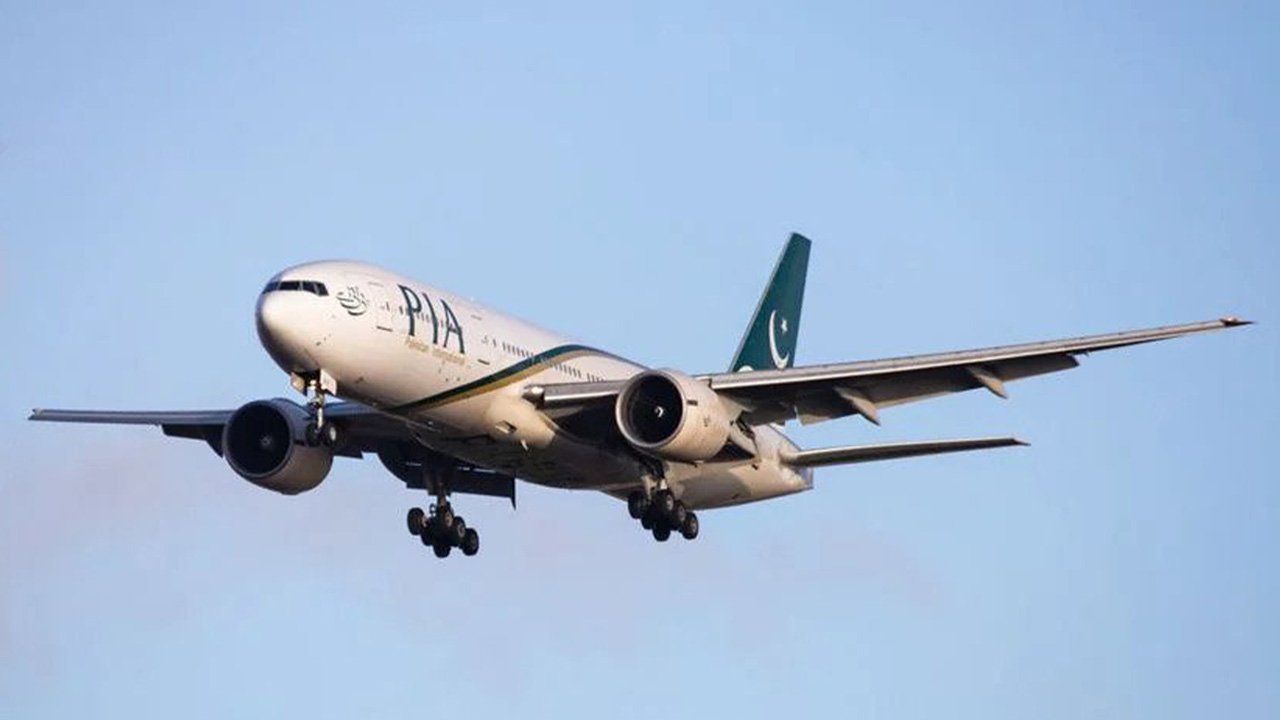
    In a significant development aimed at reviving the fortunes of Pakistan International Airlines (PIA), the Cabinet Committee on Privatisation (CCoP) has given its unanimous approval for the privatisation of the national carrier. The decision was reached during a recent session of the Cabinet Committee on Privatisation, chaired by Finance Minister Senator Ishaq Dar.

    The meeting deliberated on a proposal presented by the Privatisation Commission, advocating for the inclusion of Pakistan International Airlines Co. Ltd. (PIACL) in the ongoing privatisation programme. After thorough consideration and following a crucial amendment in the parliamentary law, the CCoP decided to formally incorporate Pakistan International Airlines Co. Ltd. (PIA) into the list of active privatisation projects.

    A significant aspect of the meeting’s agenda was the Privatisation Division’s detailed presentation on the progress of the Roosevelt Hotel’s privatisation. The Cabinet Committee on Privatisation engaged in an extensive discussion and subsequently granted its consent to the Privatisation Commission’s plan to appoint a Financial Adviser. This Financial Adviser will play a pivotal role in structuring and facilitating transactions related to the Roosevelt Hotel in New York, an asset owned by PIA Investment Limited (PIA-IL).

    Highlighting the urgent need for corrective action, Aviation Minister Khawaja Saad Rafique had previously issued a stark warning regarding PIA’s financial trajectory. If immediate measures were not undertaken, the airline could potentially incur staggering losses amounting to Rs259 billion by the year 2030. Minister Rafique stressed that the transfer of administrative control to the private sector, along with the injection of Foreign Direct Investment (FDI), was essential to mitigate these looming financial challenges.

    In pursuit of this objective, Minister Rafique tabled “The Pakistan International Airlines Corporation (Conversion) (Amendment) Bill, 2023” before the Senate. The proposed amendment to Section 3 of the bill seeks to redefine the ownership and privileges of the company’s shareholders. Additionally, the bill empowers the Federal Government to issue fresh shares or cancel existing ones, further facilitating the necessary structural changes.

    Despite the bold vision presented by Minister Rafique, the bill encountered resistance within the Senate. While emphasising the potential benefits of FDI and private sector involvement, the bill’s proponents faced opposition from certain Senators. In light of these differing perspectives, the Senate Chairman has referred the matter to the relevant standing committee for further deliberation.

    As Pakistan International Airlines embarks on this transformative journey towards privatisation, the nation awaits the outcome of these critical discussions, cognizant of the substantial implications for both the airline industry and the country’s economic landscape.
  • Cabinet Committee grants approval for UAE to build cargo terminal at Karachi Port

    Cabinet Committee grants approval for UAE to build cargo terminal at Karachi Port

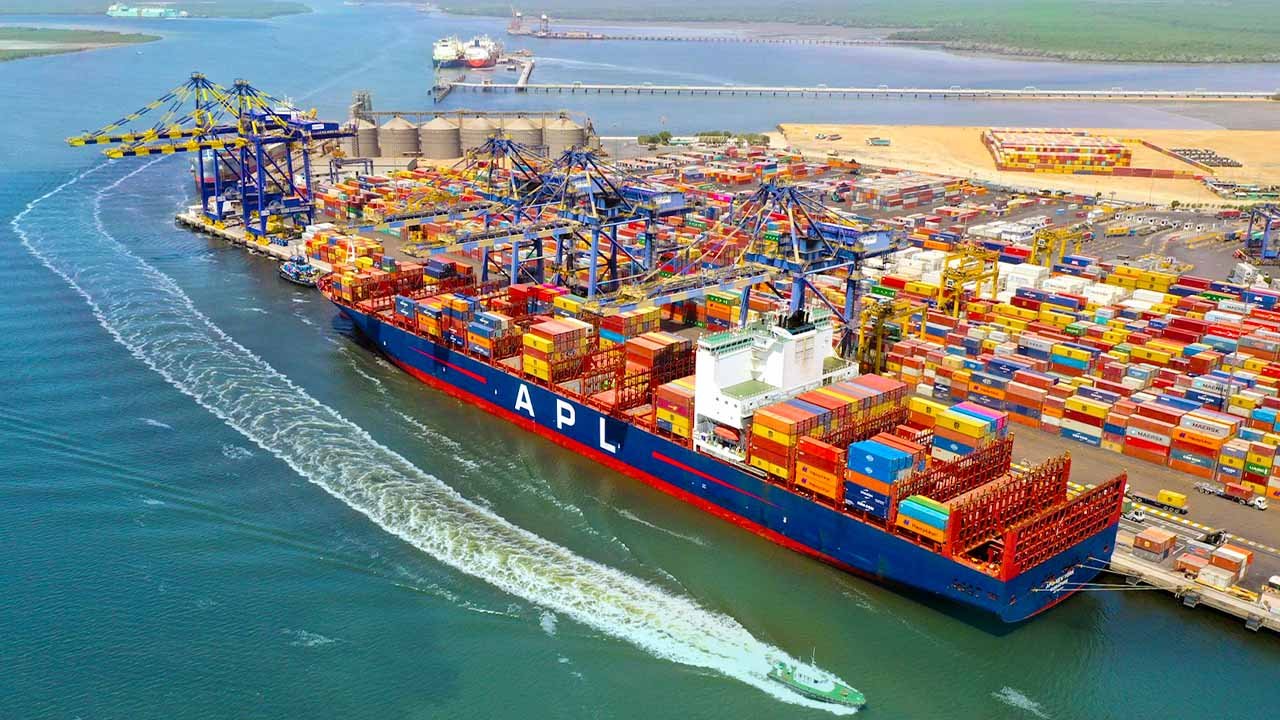
    The Cabinet Committee on Inter-Governmental Commercial Transactions has granted approval for the proposed collaboration between Pakistan and the United Arab Emirates (UAE) aimed at establishing a bulk and general cargo terminal at East Wharf, Karachi Port.

    Before the agreement is finalised, it will undergo ratification by the federal cabinet, following which the governments of Pakistan and UAE will officially sign it. The draft agreement, which has been endorsed by the cabinet committee, encompasses various essential aspects.

    These include the terms and conditions of the agreement, the cost estimation for the terminal’s reconstruction, the terminal’s expected lifespan, its maximum cargo handling capacity, the dimensions of the quality wall, royalty details, land rent per square meter in the bonded areas, storage charges, dock labour charges, upfront payment arrangements (adjustable and non-adjustable), as well as the quantum and type of investment involved.

    The Cabinet Committee on Inter-Governmental Commercial Transactions meeting, where the draft agreement received approval, was chaired by Finance Minister Senator Mohammad Ishaq Dar on Monday.

    The committee’s decision was based on a summary presented by the Ministry of Maritime Affairs, which outlined the proposed government-to-government agreement between UAE and Pakistan for fostering cooperation in the development of the bulk and general cargo terminal at Karachi Port’s East Wharf. The agreement operates under the framework of the Inter-Governmental Commercial Transaction Act 2022, as indicated by the Ministry of Finance.

  • PM Khan informed about a serious rift in his cabinet

    PM Khan informed about a serious rift in his cabinet

    Serious disagreements between cabinet members have led to problems at the Ministry of Energy and Petroleum. Prime Minister (PM) Imran Khan has been informed about the current rift, reports The News.

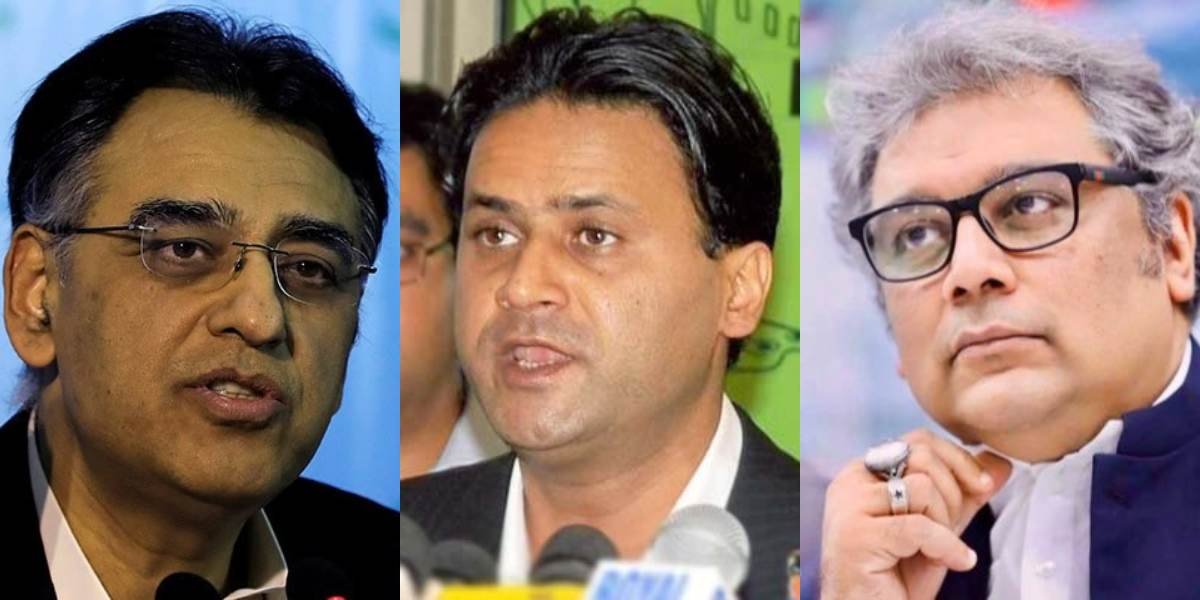
    Important facts were brought to light in Geo News Programme, ‘Aaj Shahzeb Khanzada Kay Sath’. According to reports, the Ministry of Energy and Petroleum is worried about the interference of Asad Umar and Ali Zaidi.

    Asad Umar, Minister of Planning Commission and Special Initiatives heads the Cabinet Committee on Energy (CCOE), and Ali Zaidi, Federal Minister for Maritime Affairs, is its member.

    Reportedly, Special Assistant to PM Khan Tabish Gauhar has lodged a complaint with the premier, pleading that the two cabinet members were interfering in the affairs of the Ministry of Energy.

    Sources say that Hammad and Tabish are in favour of using the full capacity of the existing terminals. However, they are being pressured in the cabinet to sign the Sui South gas pipeline agreement with the new terminals rather than the old Liquified Natural Gas (LNG) terminals.

    Asad Umar gave a tough time to the Energy Ministry for arranging LNG at a higher cost and for the dry docking of the Floating Storage Regasification Unit (FSRU) at the Engro Terminal. 

    The decisions forced the country to face a gas-electricity crisis, subjected the government to the wrath of the Opposition, and triggered a backlash from the masses.

    In the CCOE meeting, Finance Minister Shaukat Tarin, along with Umar and Zaidi, objected to the delayed dry-docking from June 29 to July 5 and why it wasn’t done earlier in 2019. Tarin wanted an inquiry in this regard and ordered Railway Minister Azam Swati to lead the inquiry. Sources have revealed that Tabish was trying to put an end to the inquiry.

    However, Gauhar is currently not attending the CCOE meetings. Sources said that despite protests from Gauhar, the inquiry will go ahead since it is part of the written procedures of the CCOE and has been ratified by the federal government.


  • Naya Pakistan: ‘Gas shortage to double’

    Naya Pakistan: ‘Gas shortage to double’

    With a projected shortfall of 477 million cubic feet per day (mmcfd) and amid lack of new explorations, the shortage of gas is likely to be doubled next year, Cabinet Committee on Energy (CCoE) has been informed.

    According to Profit, a meeting of the CCoE, chaired by Adviser to Prime Minister on Finance and Revenue Dr Abdul Hafeez Shaikh, was informed on Wednesday that the demand of gas had risen by 5 per cent per annum during the past seven years.

    The heavy gas shortfall recorded last month (December 2019) was nearly 270 mmcfd.

    “One of the major reasons for this upsurge was the consumption of gas in the winter season by the domestic sector, which prefers to use heavily-subsidised gas as compared to other energy sources,” officials of the Ministry of Energy informed the CCoE.

    The committee was further told that work on adding 70 mmcfd gas in the Sui Southern Gas Company’s system and taking LNG supplies for Sui Northern Gas Pipeline up to 1,300 mmcfd had already started but its implementation was hampered by issues pertaining to the grant of ‘Right of Ways’ from the Sindh government, which had granted only one RoW so far while two more were still awaited since last summer.

    “With these measures, nearly 70 mmcfd gas is likely to be added to SSGC by the end of January.”

    According to the energy ministry, in view of 2020-21 projections showing a shortfall of 477 mmcfd, the government has decided to build additional terminals; five new private terminals were awarded in Nov 2019, while process for a dedicated pipeline of 1.2BCFD+, required to carry imported LNG from these terminals to north, would also begin soon.

    The CCoE noted that there was a need to work on contingency plans for 2020-21 to overcome the gas shortage. It stressed using energy produced through gas and electricity as a whole to provide more options to energy consumers and to bring efficiency in the system.

    Earlier, the Ministry of Energy briefed the CCoE on the current demand-supply situation of gas/RLNG, natural gas allocation and management, average gas supplies, winter load management, indigenous gas production, supplies and consumption in different regions, and LNG requirement by the SNGPL/SSGC.

    The CCoE asked the ministry to brief in the next meeting the current situation in the power sector so that the problems in both gas and power sectors could be properly analyzed and contextualized uniformly and a realistic and more efficient solution to bridge the demand and supply gap could be chalked out.