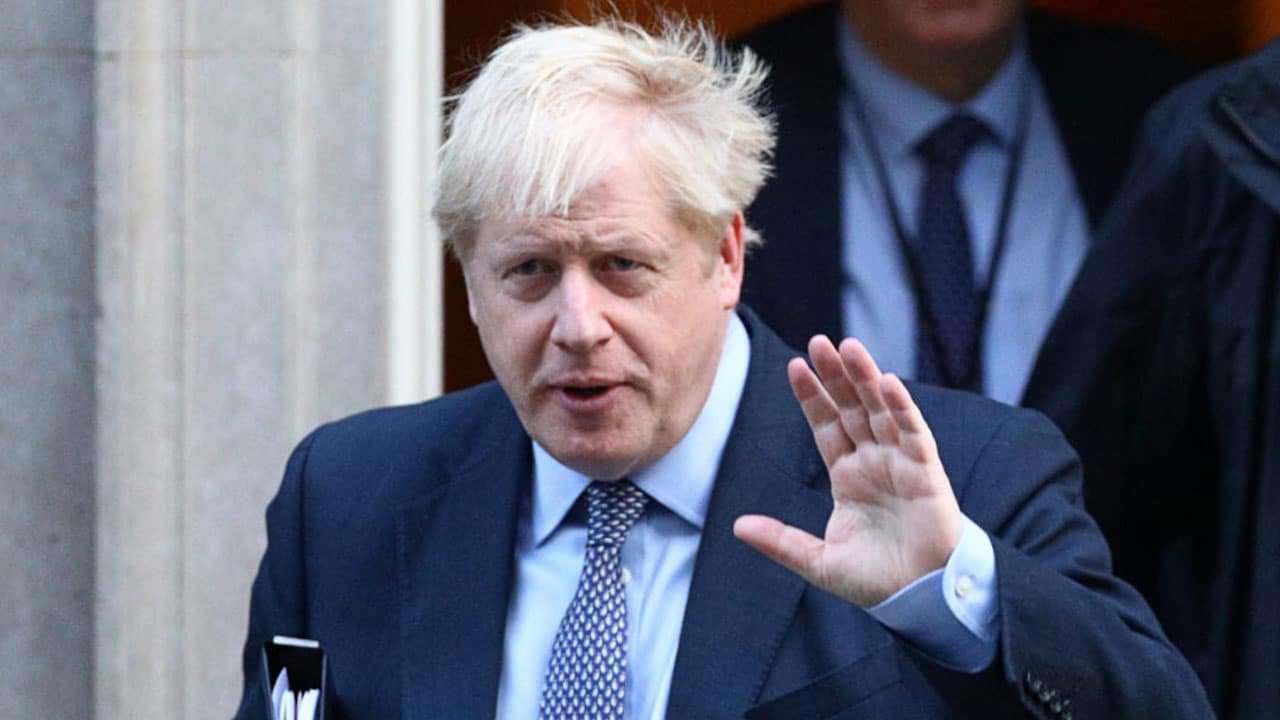
Following the resignation of dozens of cabinet members, Boris Johnson will step down as the leader of the Conservative Party on Thursday, according to BBC. This will make room for a new prime minister of the United Kingdom.
At 1 pm, he is scheduled to address the country and lay out his agenda for the coming few weeks.
Although it is not yet known when the selection process to succeed him would start, Attorney General Suella Braverman has already entered the race. It took six weeks to hold the last Tory leadership contest.
Since the initial Cabinet walkouts on Tuesday, the PM has come under great pressure to resign. On Wednesday, he declared his intention to “keep going” in the position, but it now seems that the pressure may have been too much.
According to a government source, he thought about it overnight and decided to quit when he awoke “with a clarity of thinking.” Today, he will call with President Volodymyr Zelenskyy to ensure that the UK will continue to help Ukraine.
As a courtesy, he also informed the Queen of his plans this morning.
Just 24 hours after accepting the position left empty by Rishi Sunak’s departure, the new chancellor, Nadhim Zahawi, made the extraordinary decision to urge his employer to leave, making it very evident that the end was near.
Less than a day after accepting Mr Zahawi’s position as education secretary, Michelle Donelan, who may have held the record for the shortest tenure in UK history, announced her resignation.
Sajid Javid’s departure as health secretary on Tuesday evening set off a wave of resignations in the cabinet, which was swiftly followed by Mr Sunak’s resignation as chancellor and Sajid Javid’s resignation as health minister.
Although there have been 56 resignations overall, it seems like that number is continually rising.
Nearly all of those who resigned cited Mr Johnson’s integrity as a reason for their actions, citing scandals like Partygate and the more recent Chris Pincher affair; some, however, also highlighted problems with the government’s LGBT+ policy.
The way Mr Johnson handled the charges of sexual misbehaviour against Mr Pincher, who quit after allegedly “groping” two men last week, seems to have been the tipping point for many.
After Mr Javid and Mr Sunak left, Mr Johnson apologised for appointing Mr Pincher as deputy chief whip while being aware of the allegations made against him on Tuesday.
On Wednesday during PMQs, he apologised once more, but by that point, the crowd seemed to have fully turned against him.
The prime minister responded to a Tory MP’s question about whether there was ever a situation in which he would resign by saying: “The role of a prime minister in tough circumstances when he has been awarded a massive mandate is to keep going and that’s what I’m going to do.”
UPDATE: Boris Johnson’s nearly three-year term as prime minister of the United Kingdom ended abruptly on Thursday due to scandal and controversies.
Addressing outside Downing Street, Johnson argued that the selection process for the new Conservative Party leader should start right away, with a timeline to be revealed the following week. He declared that he would continue in that position until a new Tory leader was chosen.
Despite a glaring lack of support from his own party and mounting pressure from across the political spectrum to resign immediately, he has decided to stay in office.
Johnson acknowledged that “no one is remotely indispensable” in politics but expressed sadness at leaving “the best job in the world.”
At Westminster, the herd instinct is strong, and when the herd moves, it moves, Johnson observed in reference to members of his own ruling party who turned against him.
He tried to end his approximately six-minute speech on a positive note. “Our future together is golden, even though things often seem gloomy now.”
There are a tonne of tweets mocking PM Boris Johnson’s resignation on social media.
کوئی رہ تو نہیں گیا جس نے جانسن کو ہٹانے کے لیے امریکی رجیم چینج سازش میں حصہ نہ لیا ہو؟؟ https://t.co/CpQw8t3vrp
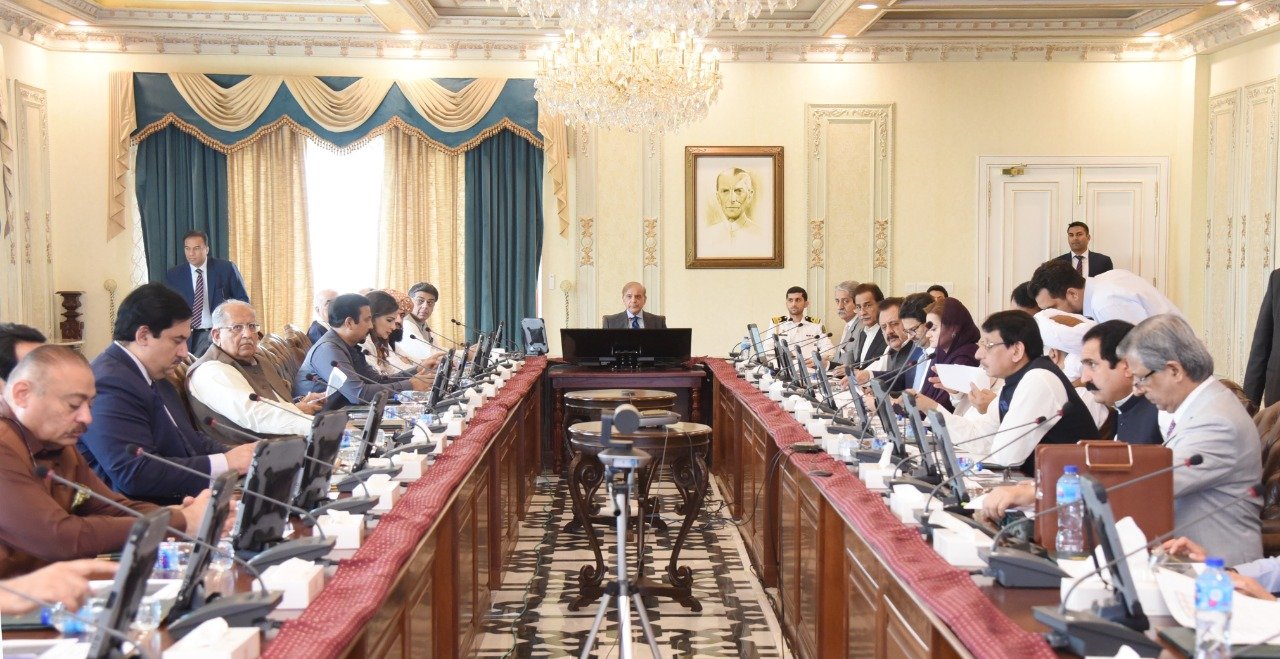
A cabinet meeting chaired by Prime Minister (PM) Shehbaz Sharif approved the formation of a committee headed by the Law Minister to amend the National Accountability Bureau (NAB) law.
During the meeting, it was pointed out that “NAB’s black law” was used only for political revenge, harassment of government officials and the business community.
The committee will also include personalities from the legal fraternity, banking sector, bureaucracy and other fields.
Other than this, PM informed the cabinet that the country is facing a severe heatwave for which a special task force has been formed under the Ministry of Climate Change.
This task force will also take steps to address climate change so that the threats to Pakistan can be addressed in a timely manner.
Moreover, Rs 52 billion has been reserved for the Petroleum Division.
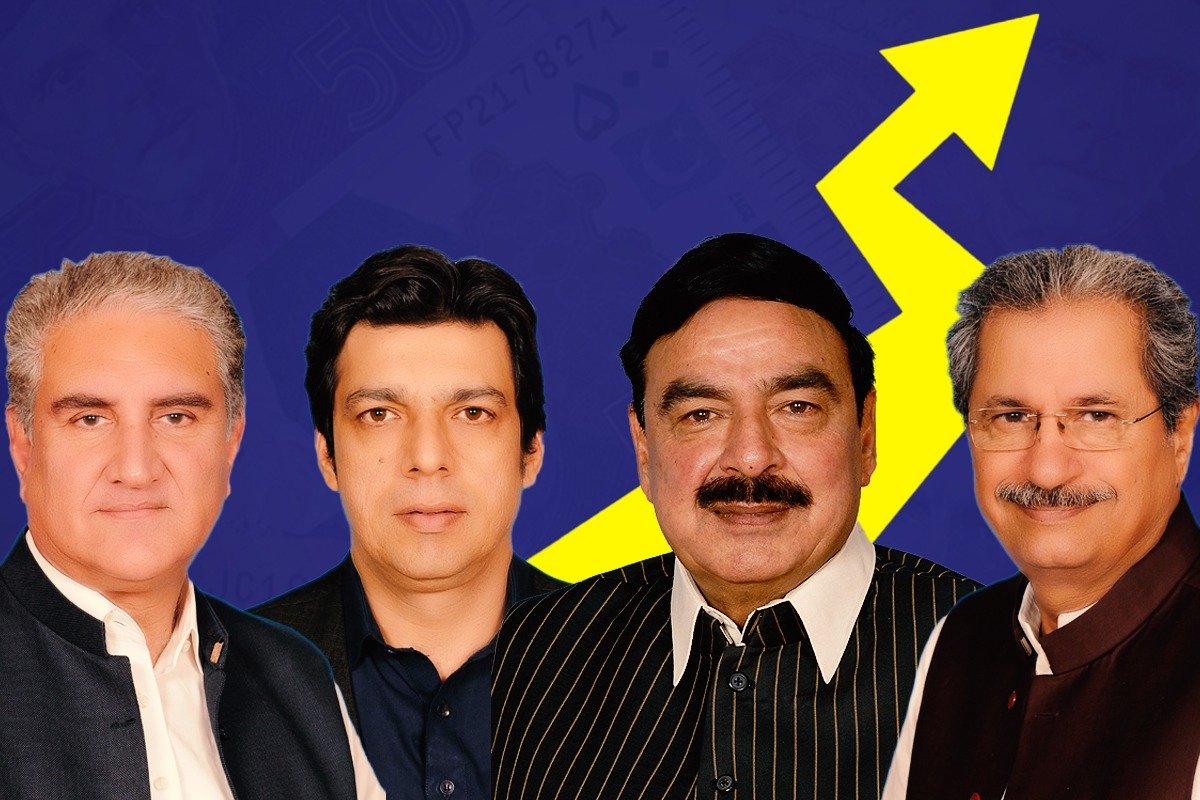
Official documents revealed that several members of Pakistan Tehreek-e-federal Insaf’s cabinet enjoyed gains in their fortunes during their term in parliament and as ministers, despite being elected on pledges of fighting corruption.
According toSAMAA TV, Shah Mehmood Qureshi and Sheikh Rasheed Ahmad, Omar Ayub Khan, Azam Khan Swati, Khusro Bakhtiar, Faisal Vawda, Shafqat Mehmood, Fehmida Mirza, Zubaida Jalal, Mahboob Sultan, and Tariq Cheema are among the listed former ministers.
Since select ministers received notices to explain their excessive wealth, the majority blamed weak wealth and asset declaration regulations, which did not contribute to increases in the valuation of assets overtime or the amalgamation of entities.
An inquiry into assets spontaneously declared before the Election Commission of Pakistan (ECP) and Pakistan’s tax authorities — primarily the Federal Board of Revenue (FBR) — by cabinet members who worked under former Prime Minister Imran Khan disclosed that plenty of of them saw a tremendous upsurge in their riches, with growth proportions primarily in the triple digits.
As per the official record, the ECP sent notices to at least six former ministers while they were still in government in 2019 and 2020, requesting them to clarify their wealth-related issues.
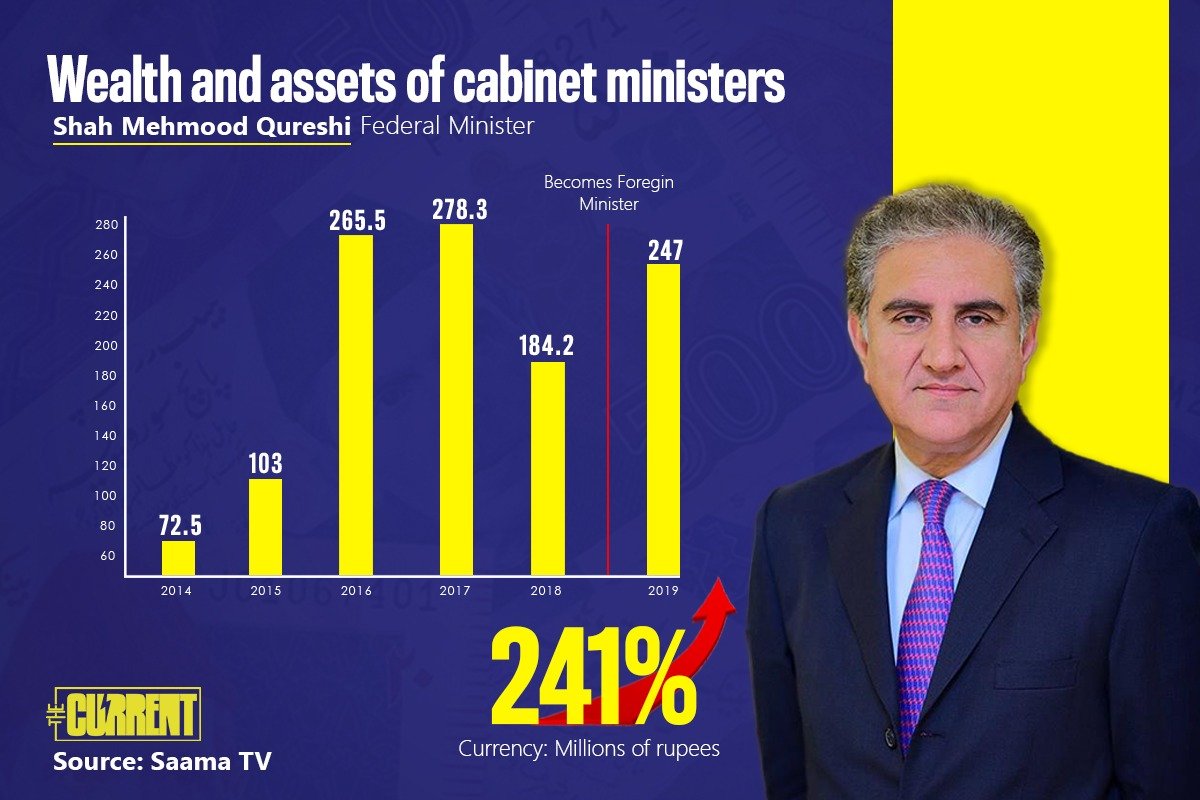
From 2014 to 2019, former foreign minister Shah Mahmood Qureshi, who has been a staple of the parliament for more than a decade and served twice in the federal cabinet in two different governments, had a 241 per cent growth in his wealth.
He and his wife held assets worth only Rs72.5 million in 2014, according to asset declarations he submitted to the ECP and the FBR. In the following three years, his assets nearly quadrupled, reaching Rs278.3 million, a 283.86 per cent increase over his wealth in 2014. Qureshi’s fortune dropped dramatically to Rs184.2 million in 2018, the year he returned to the Treasury benches, albeit with a new party, the PTI. However, while in power, it soon increased to Rs247.1 million in 2019, a rise of 240.82 per cent since 2014.
When questioned, Qureshi recounted how the worth of his assets had evolved over the years.
“The reason for the increase in assets was that during 2015-16, my wife received her share from the sale of property situated in Lahore, which had been gifted by her mother, and shares from sale proceeds of inherited property worth Rs169.6 million and Rs22.6 million,” he claimed. In October 2017, duplicates of sale deeds were handed to the ECP, according to the former minister.
“The ECP raised this observation too,” he said regarding the increase in his wealth, adding, “I and my dependent family members are all filers with the FBR”.
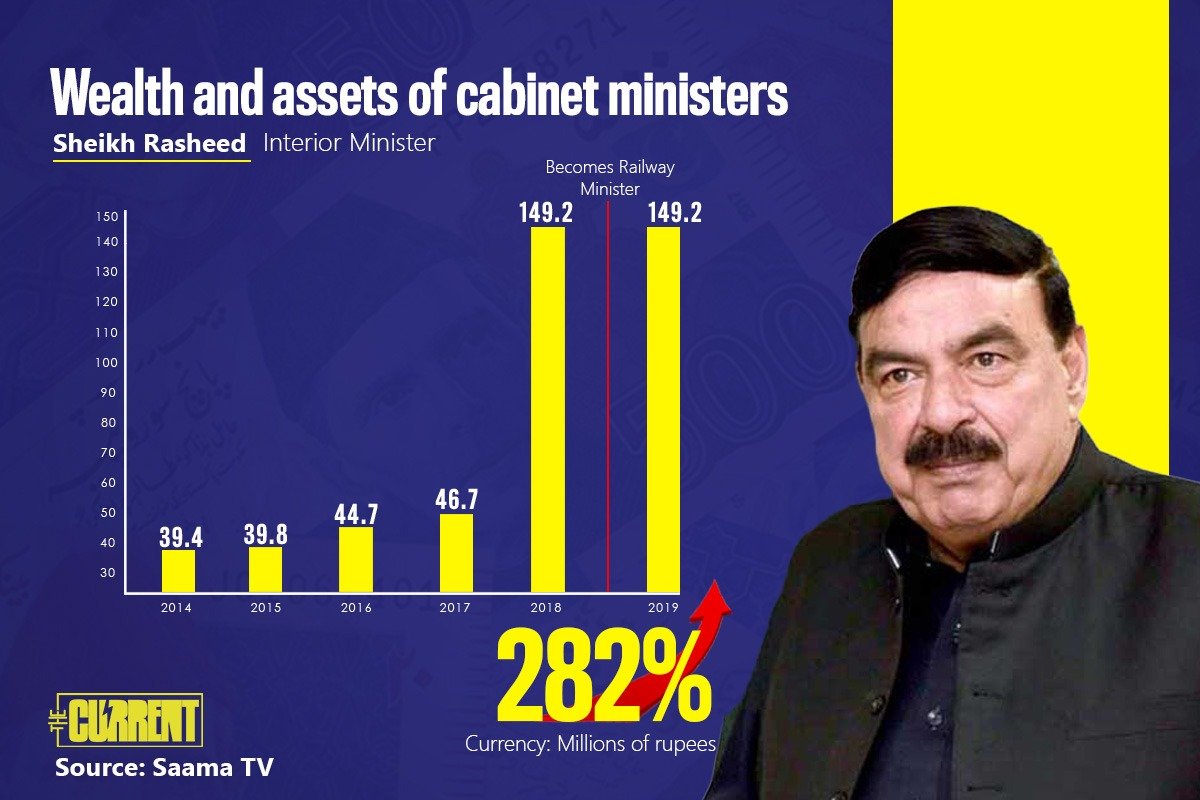
Sheikh Rashid, the former interior minister, watched his fortune increase by nearly 278.68 per cent between 2014 and 2019.
The financial disclosures for 2014 revealed that he only had Rs39.4 million in assets. Earnings climbed by Rs0.4 million to Rs39.8 million. His holdings steadily expanded over the next two years, reaching Rs44.7 million in 2016 and Rs46.7 million in 2017.
Conversely, in 2018, the time he was elected to power, his assets boosted by Rs100 million to Rs149.2 million. In 2019, there was no movement in reported assets. After inquired why his assets had suddenly changed, Rashid said that the discrepancy was due to an advance payment he had obtained for reselling a portion of land in 2018.
“I received Rs100 million as advance after making a deal of land to be sold last year, [2021],” he said, adding, “There is no such increase in my assets”. The former interior minister stated that the rise in his declarations submitted with the FBR and the ECP had been properly disclosed.
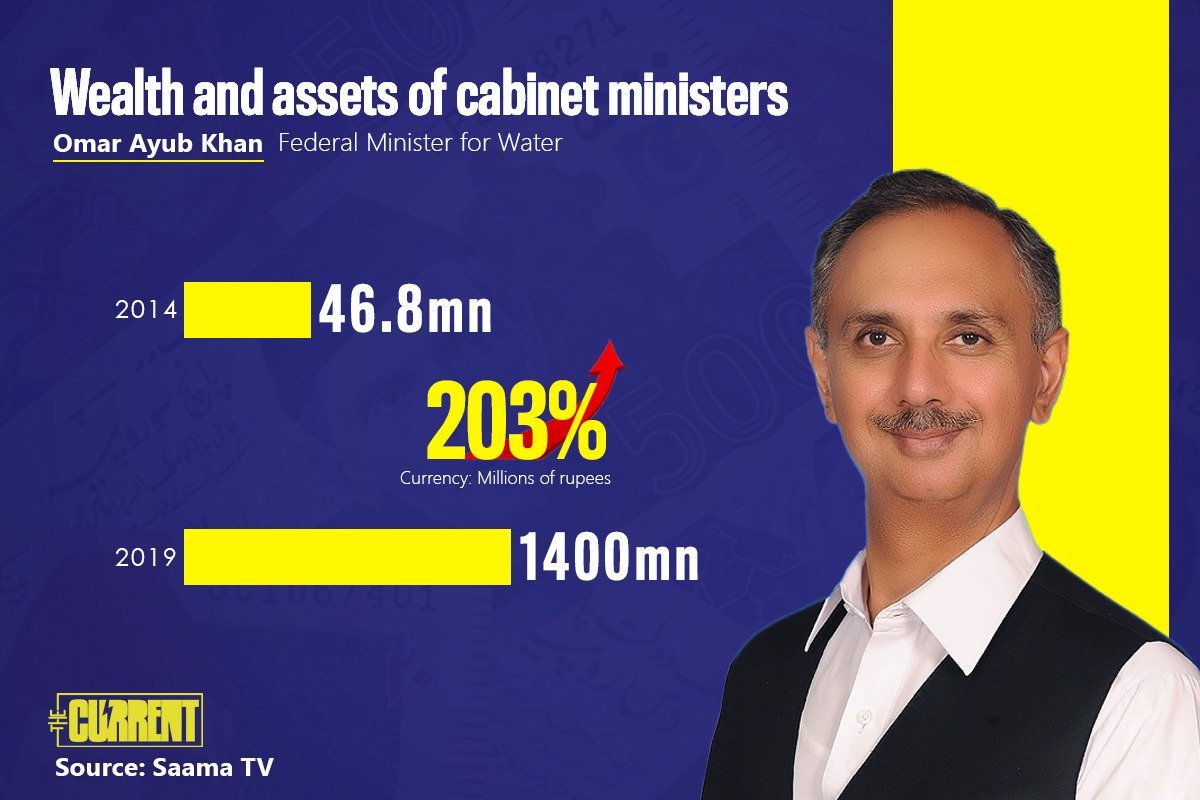
Between 2014 and 2019, the fortune of former federal minister of water Omar Ayub and his wife jumped by 203 per cent.
As per Ayub’s filings to the ECP and FBR in 2014, he and his wife held assets worth Rs461.8 million. This comprised Rs132 million in assets held by his wife and Rs329 million in assets owned by the minister. This value had risen to Rs1.4 billion by 2019. Surprisingly, while his wife’s holdings increased slightly to Rs201 million, Ayub’s assets increased to Rs1.2 billion. Each has debts worth only Rs26.3 million, according to the disclosures.
As a result, the ECP expressed concerns about Ayub’s and his family’s unexpected surge in wealth.
“It was explained to the ECP in 2019 that it [increase in wealth] is because of group formation having no cash involvement,” Ayub said, confirming that the top poll body had issued him a notice on this subject. Ayub claimed that he owned shares in Nova Synpac Ltd. and NovaGene Pharmaceuticals Ltd., which increased in value by approximately Rs1.071 billion.
“My assets have decreased (excluding this group formation) since I took an oath as a minister because I resigned from my group,” he claimed, adding that the increase was due to the consolidation of all of his businesses under the group.
“This cannot be reflected in a declaration, which is always a reflection of statements submitted to the FBR and there cannot be any difference [between them] otherwise it would have been challenged there,” he explained.
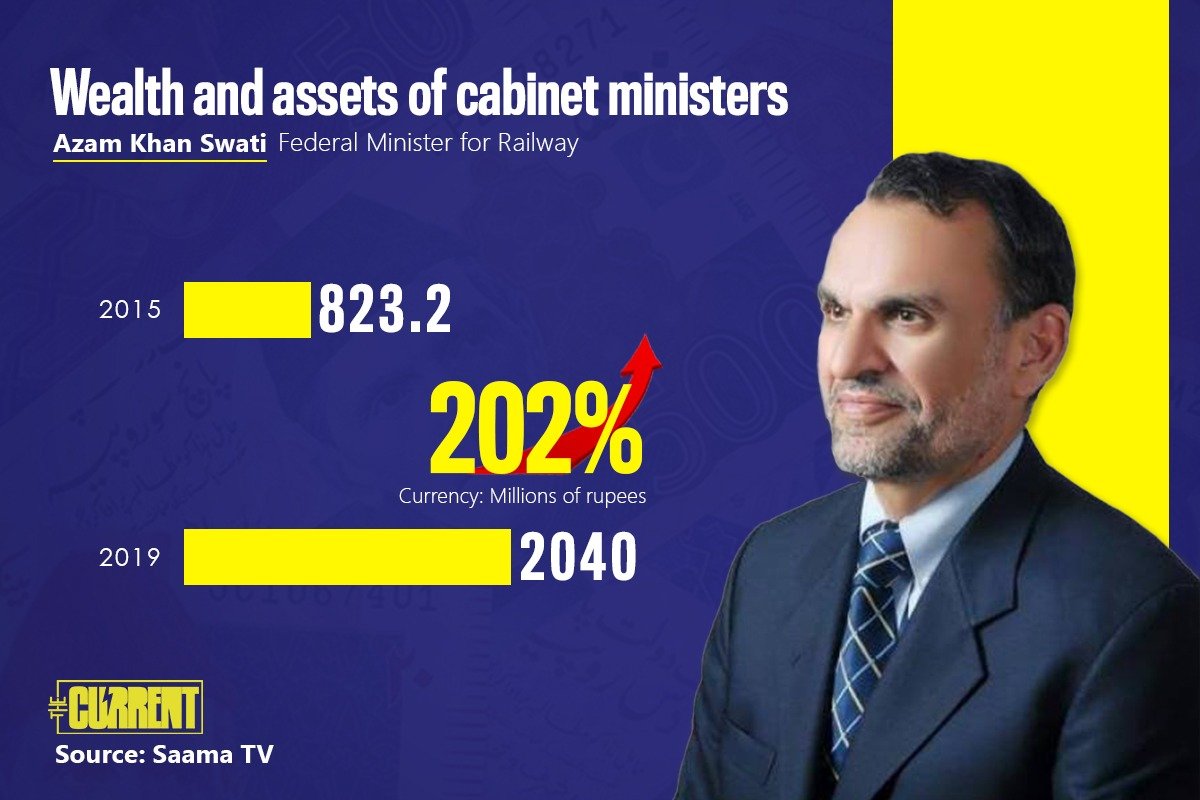
Azam Swati, the former federal railways minister, saw his fortune grow by 202 per cent from Rs823.2 million in 2015 to about Rs2.04 billion in 2019. He reported that his liabilities increased from Rs417 million in 2015 to Rs811 million in 2019.
“[Your] figures are wrong due to incomplete information being furnished before ECP by members and cabinet members owing to faulty legal requirements mentioned in ECP Act 2017,” he explained.
He further said that his situation was slightly unusual. “In Pakistan, I have no income and no business.” I am confident that our FBR wealth statement [filed] will be compared to ECP in 2019 [asset declarations],” he remarked, worried that the statistics may contain a few errors.
“ECP has no efficiency and capability to audit assets and liabilities,” he disclosed, adding, “We were making mistakes filing combined [wife and husband together]”.
“Now we have corrected the mistake and filed separately because the wife is not dependent,” Swati told SAMAA TV.
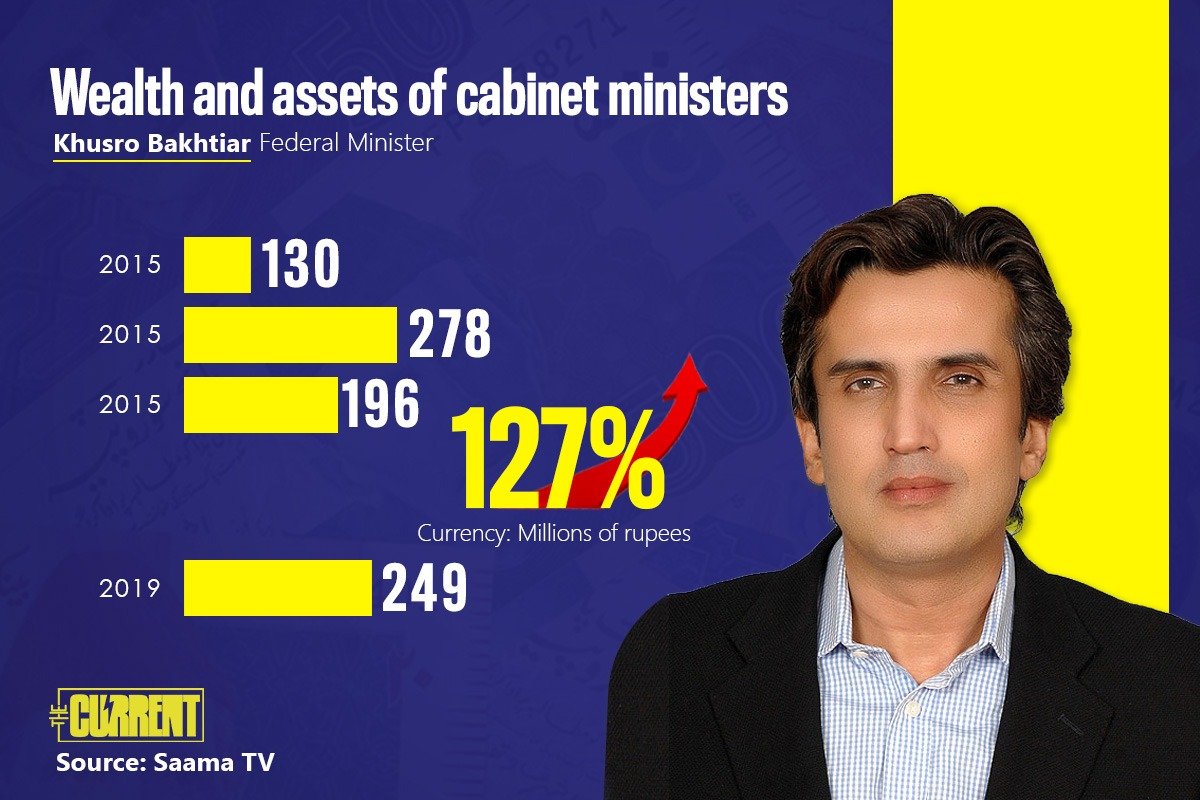
Khusro Bakhtiar, the former federal commerce minister, saw his fortune rise by 127.8% from Rs109.3 million in 2013 to Rs249 million in 2019. In 2014, he had assets of Rs130 million, which more than doubled to Rs278 million in 2015, shrank to just Rs196 million in 2016, and then surged again in the next three years.
“Increase in assets were mainly comprised of [various] sources during the year 2014 to 2019,” he told SAMAA TV, detailing that these sources included savings from agricultural income, proceeds from the sale of land worth Rs40 million, other sources which contributed Rs20 million.
Bakhtiar also claimed that he actually paid Rs27.5 million in agricultural taxes from 2017 to 2020, and that he owed Rs60 million in 2016.
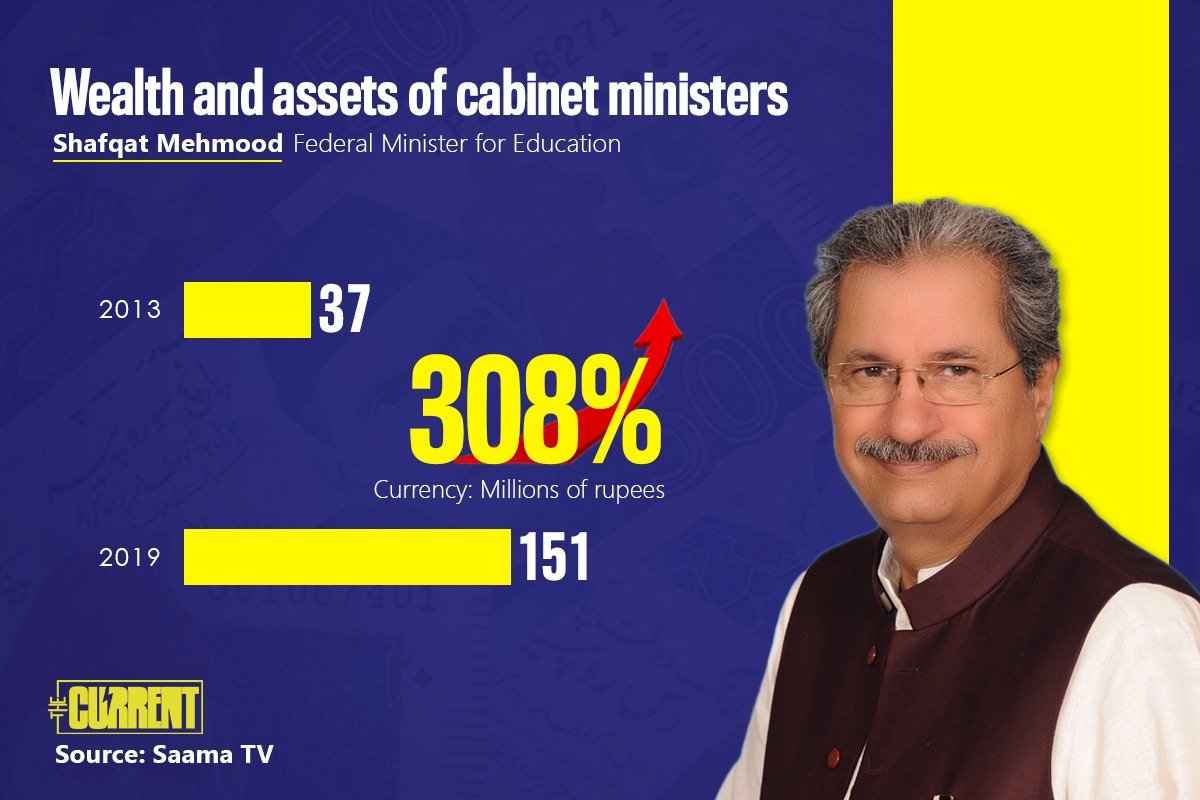
Former federal minister for education Shafqat Mahmood and his family had a 308 per cent growth in asset valuation between 2013 and 2019, making them one of the most successful federal ministers in terms of percentage increases. According to Mehmood’s filings, his and his family’s assets were valued at just Rs37 million in 2013, but had grown to Rs151 million by 2019.
“My assets have not changed since 2013 onwards,” Mehmood asserted, explaining “The change that you see is the cost re-evaluation from purchase price to market price”. The ex-minister further said that he has 360 kanals of hereditary land, a few more plots, and automobiles that he never assessed.
“There will, of course, be some variation regarding bank accounts. There will also be a slight difference in detail offered to FBR and ECP with regards to bank accounts,” he maintained. He went on to say that in his previous disclosure, he had combined the amounts in all of his bank accounts to present a single total.
“My wife is a distinct taxpayer because she works, but I have included her assets as well”, he explained.
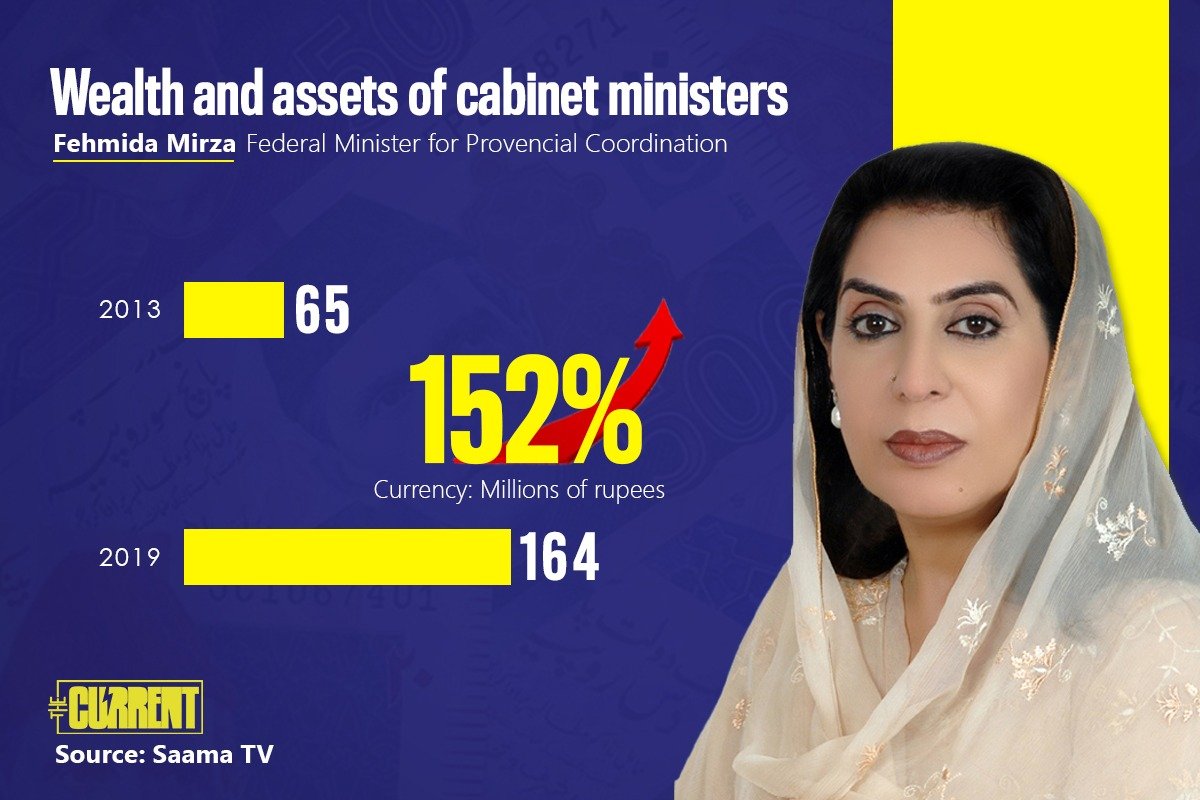
Fehmida Mirza, the former federal minister for interprovincial coordination, had a similar scenario, with her net worth rising from Rs65 million in 2013 to Rs164 million in 2019.
“I did not see any rise in my assets and wealth at all,” she told SAMAA TV. She did, although, reveal that she had sold some property in Pakistan in order to purchase a home in the United Kingdom.
“This new increase in my assets has already been declared with the FBR and the ECP,” she stated.
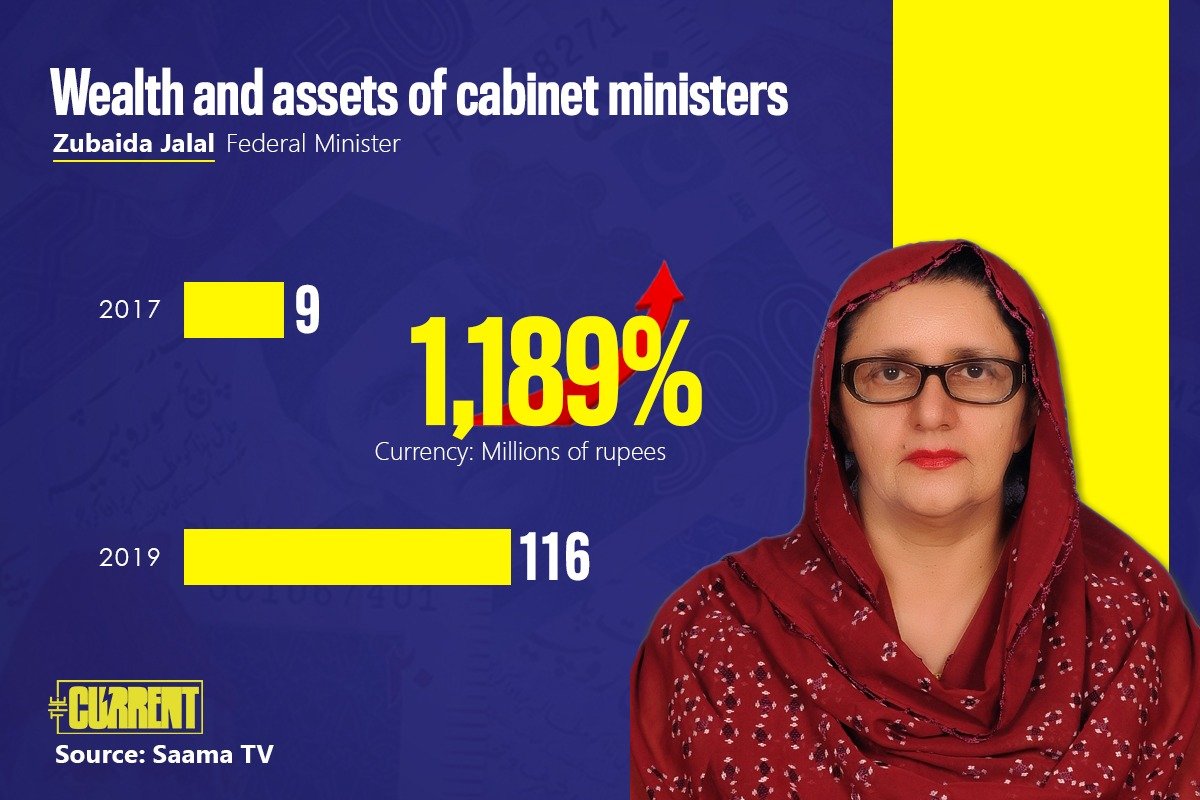
Contrary to the PTI’s cabinet’s millionaire members, one of the “weakest” members of the federal cabinet, former federal minister Zubaida Jalal and her husband, had a 1,189 per cent growth in their fortune in a short period of time. Their riches increased from Rs9 million to Rs116 million in 2019.
Jalal, on the other hand, described the quick spike in wealth as the outcome of changes in declaration requirements.
“There is no big difference in my assets’ declaration” she asserted while speaking to SAMAA TV. The value of immovable assets was not mentioned in data provided in past elections, she said, noting that the ECP declaration requirements changed over time.
“[We are] required to mention values of assets in the asset declaration for this time,” she stated. She explained that the variations in asset values were attributable to market forces working on enterprises.
“Ups and downs will keep happening [in mining operations and business],” she said, as she reminded that her husband owns the National Coal Mining Company since the 1960s.
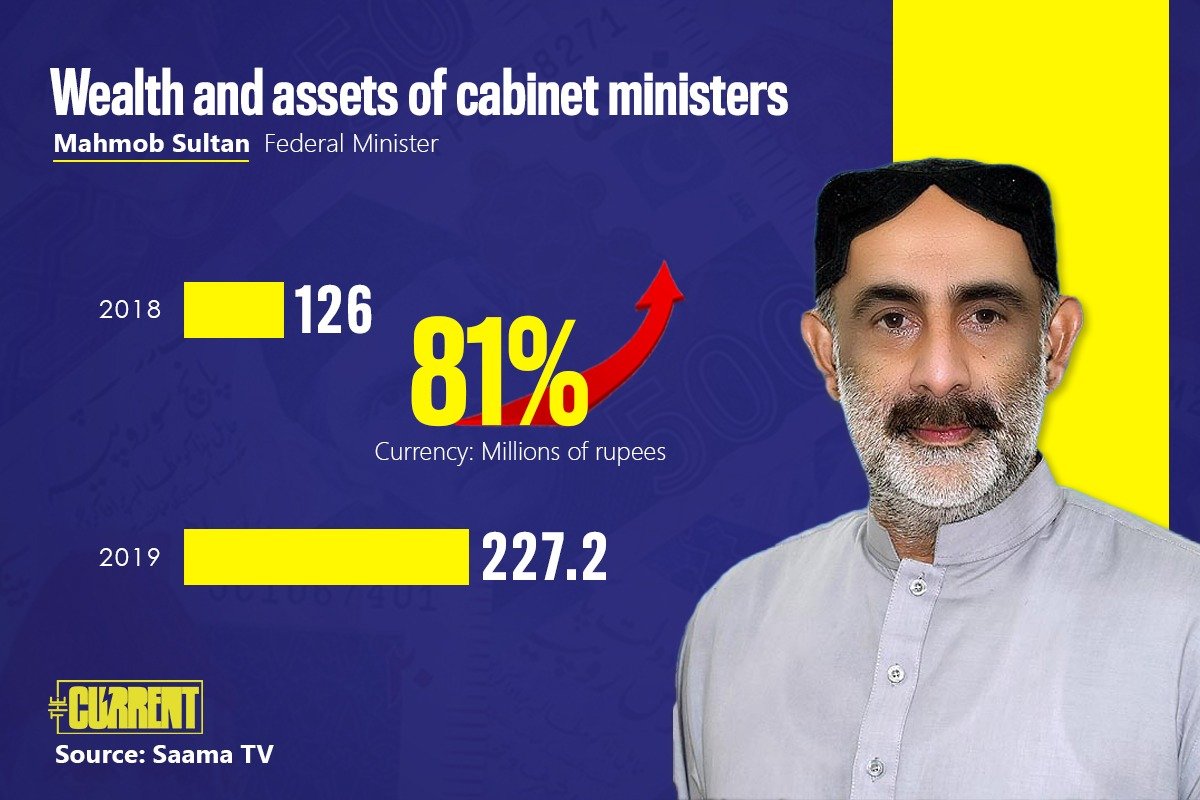
Former state minister Mahboob Sultan was one among the ministers who saw only double-digit asset growth. Only 81 per cent of his assets increased from Rs126 million in 2018 to Rs227.2 million in 2019. It’s worth noting, however, that his growth of nearly Rs100 million occurred while he was in the cabinet of ministers.
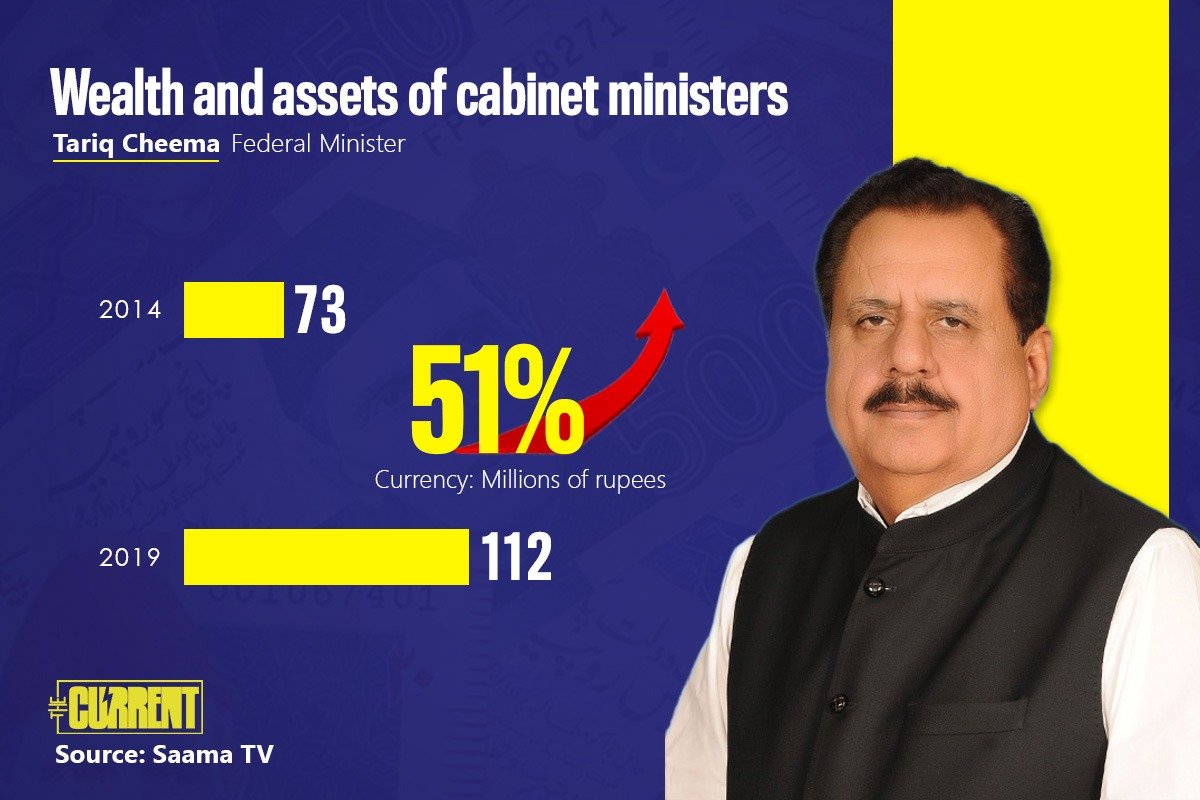
Tariq Cheema, the former federal minister for housing and infrastructure, showed the smallest growth in his wealth, going from Rs73 million in 2014 to Rs112 million in 2019. He did not, however, assess the value of his inherited assets and report them to the electoral or tax authorities.
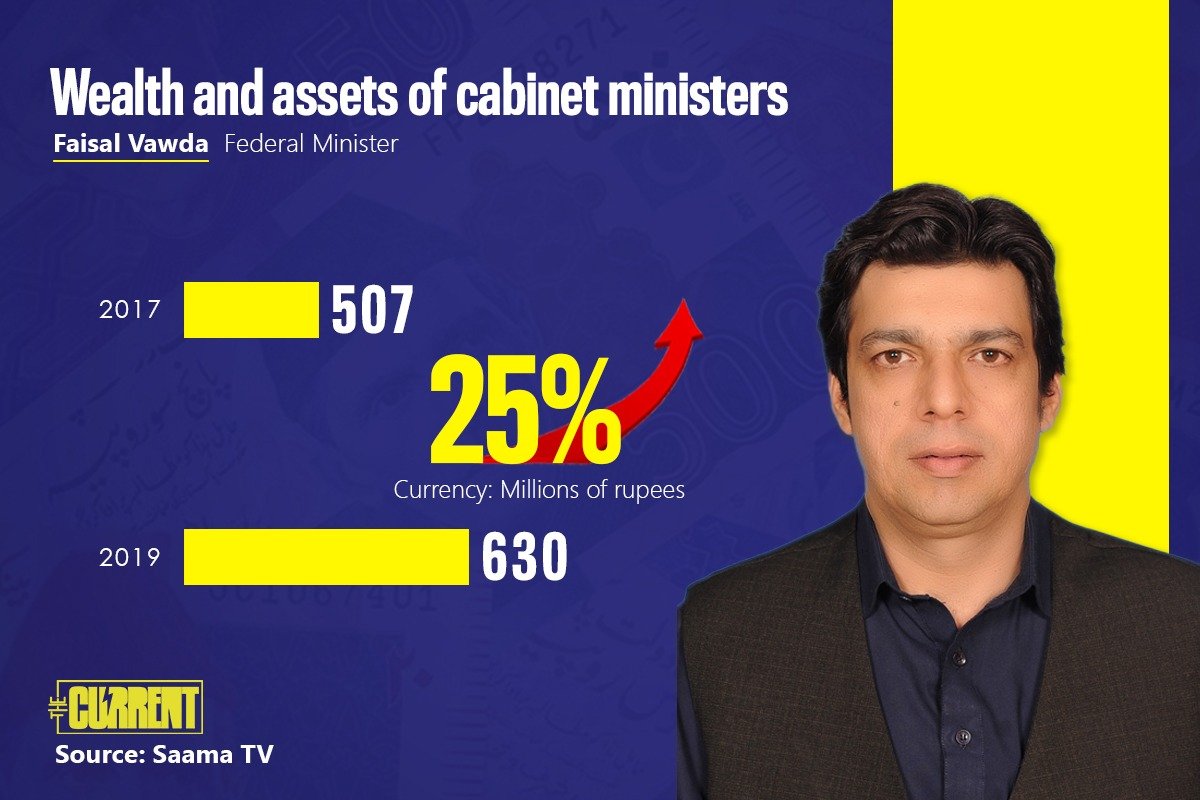
Former federal minister Faisal Vawda and his family witnessed their fortune increase by 25 per cent from Rs507 million in 2017 to Rs630 million in 2019. He was among the most controversial cabinet ministers who were eventually dismissed by the ECP.
Despite multiple requests from SAMAA TV, neither Sultan, Cheema, Vawda, nor an ECP official have commented on inquiries regarding their wealth.
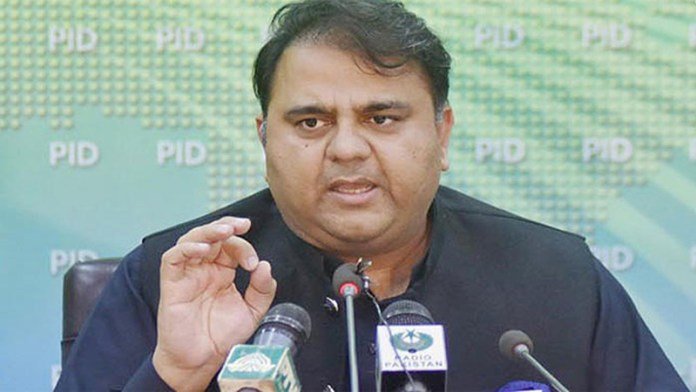
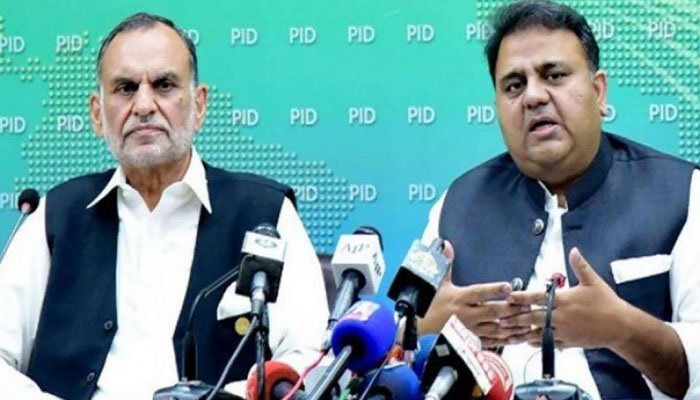
Federal Minister for Information and Broadcasting Fawad Chaudhry, while addressing a press conference after the cabinet meeting, said that Prime Minister (PM) Imran Khan has approved a separate judicial system for Overseas Pakistanis.
Fawad shared that the cabinet has approved the formulation of a separate judicial system for the expats for summary trial.
The minister further said that the implementation of the laws will come in accordance with PM Khan’s vision to facilitate overseas Pakistanis, who are a precious asset of the country.
The federal minister further revealed that a similar judicial system will also be established in Khyber Pakhtunkhwa and Punjab, where PTI is in power.
Fawad said that the administrative issues of courts should be dealt with in line with the view of the government.
“Pakistan is facing an administrative crisis due to stay orders given by the courts,” said Fawad, adding that lawsuits are “cheaper in Pakistan than in the world”.
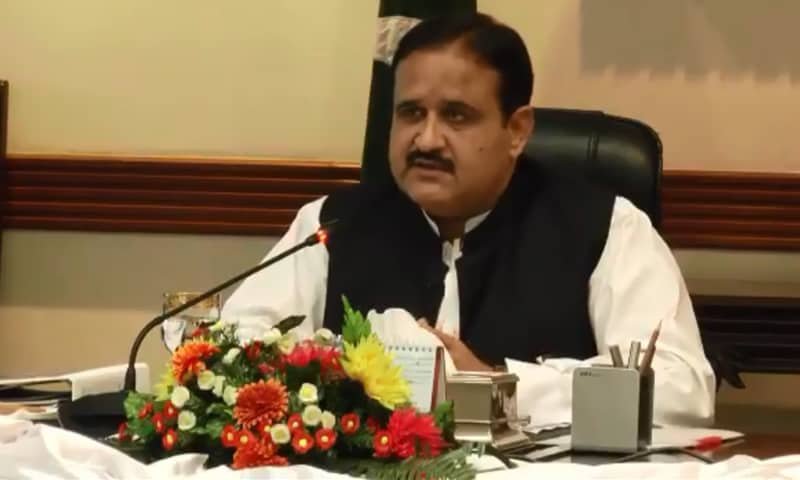
A hefty amount is to be spent on the renovation of Chief Minister Pubjab (CM) Usman Buzdar’s office, reports Dunya. A total of 4 crore and 91 lakh will be spent on Chief Minister’s office. In addition the offices of the staff appointed to him will also be renovated.
CM’s office will have new air-conditioners and new carpets. In addition, the funds will also be spent to buy historic paintings for the office.
As per the Punjab Revenue Department, The Communication and Construction Department has made an estimate and requested the release of funds from the Revenue Department. A summary has been sent to the Standing Cabinet Committee on Finance for the release of the supplementary grant. The funds will be issued after the approval of Cabinet.
The additional grant required to meet the required expenditure of the government is called a supplementary grant.
In January 2020, the Chief Minister’s office shared comparative details of expenditure claiming that Usman Buzdar had set an example of austerity by curtailing spending under different heads.
Chief Minister Usman Buzdar in a statement said that the austerity policy was being strictly followed by the Punjab government. “Unnecessary expenditures are against public interest and a new tradition has been set by curtailing expenditures.”
Earlier, this month Punjab government issued a formal order for the purchase of 46 new cars for provincial ministers and will make an advance payment to a car manufacturer in this regard. The Cabinet Committee has approved payment for purchasing news cars.
The Election Commission of Pakistan (ECP) has reportedly accepted the apologies of Pakistan Tehreek-e-Insaf’s (PTI) Minister for Railways Azam Swati and Information Minister Fawad Chaudhry for their remarks against the election body.
Swati said that the ECP was responsible for destroying Pakistan’s democracy and it should be set on fire. On the other hand, Chaudhry labelled ECP as the mouthpiece of the Opposition. Both ministers later apologised.
Swati appeared before the ECP, where he was pardoned and warned to exercise caution in the future.
While questioning his absence from earlier hearings, the ECP inquired, “You are a busy man, why didn’t you appear in previous hearings?”
Upon this, Swati remarked that he has always advocated for the independence of the ECP.
“All the institutions are yours; it is not appropriate to talk bad about them,” the ECP remarked.
Swati expressed gratitude to the ECP for accepting his apology and stated that the commission will make sound judgments regarding Electronic Voting Machines (EVMs).
In September, the ECP had sent notices to the ministers. In November, Chaudhry appeared before the ECP and apologised. Swati did not show up at that time.
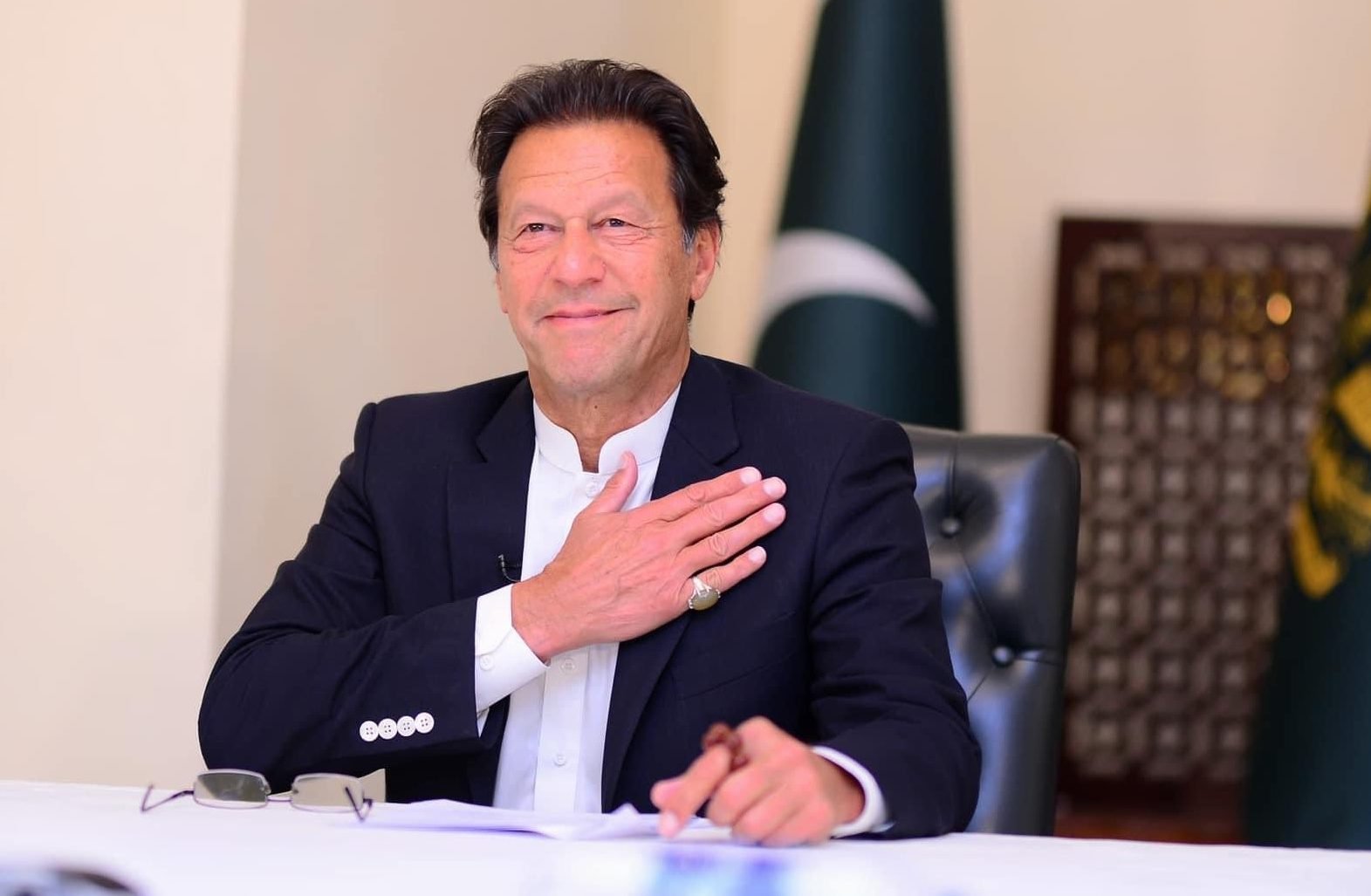
Prime Minister (PM) Imran Khan has warned the international community that repeating the mistake of segregating Afghanistan would be a great drawback for the world.
PM Khan had a high-powered meeting with his cabinet and the Chief of Army Staff General Qamar Javed Bajwa in which he further stressed that the international community should help Afghanistan and assured that Pakistan will be helping Afghanistan in every way.
Pakistan has already committed to immediate relief of in-kind humanitarian assistance worth Rs5 billion to Afghanistan.
A statement by the Prime Minister’s Office said, “Participants of the Apex Committee again expressed concerns about the deteriorating humanitarian situation in Afghanistan and emphasised that Pakistan will not abandon Afghans in their time of need.”
Pakistan to provide all out support for Afghanistan to avert humanitarian crisis : Prime Minister @ImranKhanPTIDisengaging with Afghanistan would be disadvantageous for the world : The PM
PM Imran Khan chaired the second meeting of Apex Committee on Afghanistan today. pic.twitter.com/ZJOJ19Zv93
Prime Minister also instructed that “humanitarian organisations wishing to work from Pakistan to support efforts in Afghanistan should be facilitated as Pakistan has already committed to being the air and land bridge for humanitarian support to Afghanistan,” further read the statement.
Information Minister Fawad Chaudhry warned Tehreek-i-Taliban Pakistan (TTP) and said that the government will only talk to those who respect the Constitution and law of Pakistan. Otherwise, the government has battled before and will do again, reportsDawn.
The information minister said that the Taliban government had once again pressed the TTP to abide by the ceasefire agreement. “And I think their advice is sane,” he added.
Chaudhry’s remarks came after TTP’s announcement of ending a month-long ceasefire with Pakistan and the death of a policeman in an alleged armed attack on a polio vaccination team by TTP in Khyber Pakhtunkhwa (KP).
The banned organisation TTP said the government had not only failed to implement the decisions reached between the two sides but also raids had been conducted by Pakistan in Dera Ismail Khan, Lakki Marwat, Swat, Bajaur, Swabi, and North Waziristan where they killed and detained militants.
Prior to this, both sides [Pakistan and TTP] had reached a month-long ceasefire from November 1 to November 30, 2021. According to which the Pakistani government promised to release 102 imprisoned mujahideen.
Prior to this, the Pakistan Information Commission (PIC) had directed the Cabinet Division to “provide the requested information about the gifts received by PM Khan”.
However, the Cabinet Division argued that the matter did not fall under the Right of Access to Information Act, 2017.
“What is the harm in making it public if some country has given a necklace as a gift?” asked Justice Mian Gul Hassan Aurangzeb. He said that gifts received by the rulers of a country belonged to the nation and not to them, asking whether public officeholders would even receive those gifts if the public office did not exist.
Justice Aurangzeb asked: “Why doesn’t the government keep all the gifts in the museum? The government should make details of the gifts in the last 10 years public.”
He also said that the Centre should inform how many gifts had their valuation done by the Federal Board of Revenue (FBR). The government representative at the hearing requested time to respond, after which the court adjourned the hearing.
Earlier in September, Federal Minister for Information and Broadcasting Fawad Chaudhry revealed that Arab rulers who presented gifts to PM Khan “did not want their names to be made public”.
Toshakhana is a department established in1974 that stores precious gifts given to the rulers, parliamentarians, bureaucrats, and officials heads by the other governments and foreign dignitaries.
According to Dawn, it has valuables ranging from bulletproof cars, gold-plated souvenirs, expensive paintings, watches, ornaments, rugs and swords.
Announcing on Twitter, PM Khan has decided that to save taxpayers’ money, the prime minister will not go to any ‘private function with protocol and security. He also stated that he is reviewing protocol guidelines for ministers, governors, and PTI Chief Ministers to decide how expenditure can be reduced.
To save taxpayer money & avoid inconvenience to the public I will not be going to any private function with protocol & security. I am also reviewing protocol & security for ministers, governors & PTI CMs to decide how we can minimise expenditure & end public inconvenience.
He also tweeted that in the coming days, his “Cabinet will decide on a comprehensive policy in this regard”.
“We will put an end to the colonial legacy of pomp & glory used to overwhelm the people.”
Next week Cabinet will decide on a comprehensive policy in this regard. We will put an end to the colonial legacy of pomp & glory used to overwhelm the people.
Speaking to the Gwadar business community earlier this week, when visiting Balochistan, the Prime Minister said if it wasn’t for his sincere intentions, he would be spending summers in London and shopping from Harrods since he did not win the election from the province.
Twitter reacted to the series of tweets, with some supporting the PM’s move and others saying that as the prime minister, Khan needed added security.