Tag: Cambridge

  • A-level’s Maths exam leaked on May 2

    A-level’s Maths exam leaked on May 2

    It has been revealed that the A Level Mathematics paper to be held in the country on May 2 has been leaked.

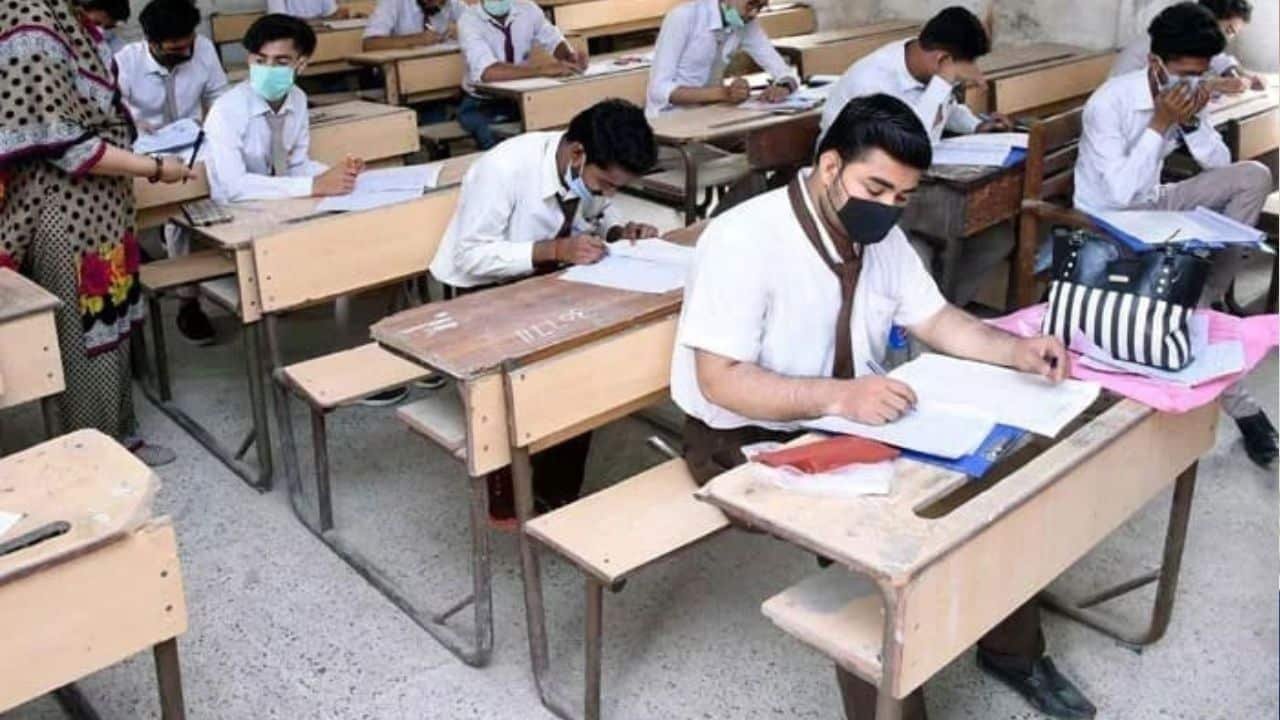
    Mehtab Haider of The News reported about many ‘O’ level and ‘A’ level students complaining that a mathematics paper was allegedly leaked on May 2, 2024.
    They said that there was a need to hold an independent inquiry and if it was proved that the paper was leaked, then a fair method should be applied to avoid any kind of a disadvantaged position for students.

    “We have studied days and nights for a whole year and then came out from my examination center and found that the Maths paper held on May 2, 2024 got leaked. It caused headache as I had solved 99 percent correctly,” one aggrieved student told The News on Tuesday. If Cambridge decides to continue with the Maths paper held on May 2, 2024, then its threshold should not be done in a strict manner. “We want fairer treatment in this whole episode,” the student added.

    “We are looking into concerns raised about a potential paper leakage on 02 May 2024 for AS Level Mathematics 9709 Paper 12. This is being investigated, and Cambridge and the British Council are in close communication,” said the British Council in their official response on social media.

    Pakistan’s Ministry of Education also contacted the British Council and they were assured that the investigation was underway with regard to this alleged leakage.

  • CIE students continue to demand justice

    On August 10, Cambridge International Examinations (CIE) announced the results for this year’s May/June A Level examinations, leading to a loud uproar from students who believed that the marking was unjustified. Students have said that their devastation stems from the fact that only a few students have achieved A or B grades while many only managed to get Cs, Ds, Es, and Us.

    This year, Cambridge examinations were disrupted in Pakistan following the May 9 and 12 riot, leading to a shut down across many areas and cities. The riots also resulted in the cancellation of three whole days of examinations.

    While students believe that the CIE grading criteria has been unfair and that the papers should be taken again, Cambridge International on August 13, published an official statement to address the controversy.

    Responding to students, the CIE stated that this year’s marking has returned to the pre-pandemic 2019 standard. This means achieving, for example, an A grade, would mean getting an A grade in 2023. “Students all around the world have seen this return to the 2019 standard,” the statement said.

    The grading has been done on the basis of the components given. CIE has acknowledged the disappointment of students in Pakistan but it has also offered reassurances of its fairness and reliability of grading for the missed exams.

    The anger, however, has refused to cool down. On Tuesday, several students went out on the streets of Lahore and Karachi to protest against the “unfairness”.

    The students demanded retakes so they could improve their grades.

    Institute of Business Administration (IBA) has taken into consideration that many students have not been able to achieve the grade they could have otherwise. According to IBA’s Registrar Dr Asad Ilyas, the number of students who cannot meet their usual admission standards is more than double this time. Henceforth, the university will also reconsider their admission requirements for this year to be fair to the students.

    Nonetheless, A Level students apply to universities across Pakistan and around the globe, and with the grade they have been granted this year, their chances of getting into prestigious universities have lowered.

  • Cambridge grading system under fire after outrage from Pakistani students

    Cambridge grading system under fire after outrage from Pakistani students

    Pakistani students have slammed Cambridge International Examinations (CIE) after results for 2023 examinations came to light.

    Cambridge exams were disrupted in Pakistan due to riots on May 9 and 12. However, instead of rescheduling the affected papers, Cambridge allegedly opted to allocate average marks.
    The announcement of the results, on August 10, has stirred frustration among students across Pakistan, as only a small number managed to attain A and B grades. More than 45,000 students appeared in the exams.

    In response, students expressed their intent to stage peaceful protests in Karachi, Islamabad, and Lahore, to highlight what they perceive as an injustice done by Cambridge.

    Outraged students have turned to social media, urging a rescheduling of the exams to provide them with a fair opportunity to showcase their capabilities and receive grades reflective of their performance.

    Students took to X (formerly known as Twitter) to run an online campaign and raise their concerns regarding the issue.

    X user, Muhammad Awais Sial mentioned that Cambridge graded them on components where scoring marks are inevitable.
    https://twitter.com/MASial34789939/status/1690045360998322176?s=20

    https://twitter.com/MASial34789939/status/1690045360998322176?s=20

    Senior Vice President of Pakistan Muslim League (N), Maryam Nawaz, also expressed concerns, stating that numerous students have reached out to her. She urged the CIE to consider the conditions in which students sat during these exams while reviewing the results on fairgrounds.

    Chief organiser of President Punjab PML(N), Mohammad Sarwar mentioned that he has been contacted by students who are disheartened after receiving E grades. The former chief minister of Punjab stated that he has reached out to a member of the House of Lords, Wajid Khan, for support in urging CIE to review their grading process.

    Activist and lawyer Jibran Nasir explained the issue in detail while demanding that “Cambridge Assessment International Education and British Council Pakistan needs to provide details and transparency in the mechanism adopted this year and it must ensure that students of Pakistan did not suffer in particular due to some discriminatory or flawed policy.”

    Addressing the concerned Cambridge students, Uzma Yousuf, the Country Director for CAIE Pakistan, stated, “Cancelling the exams on 10, 11 and 12 May has been a difficult decision for the British Council. Your safety and well-being come first, and that’s why this decision was taken.”

    She further added, “Our team is continuously monitoring the situation, and we will keep you updated as we have more information. We are completely committed to providing a safe and secure environment for you to sit for your exams.”

  • Man who couldn’t read or write as a teenager becomes sociology professor at Cambridge

    Man who couldn’t read or write as a teenager becomes sociology professor at Cambridge

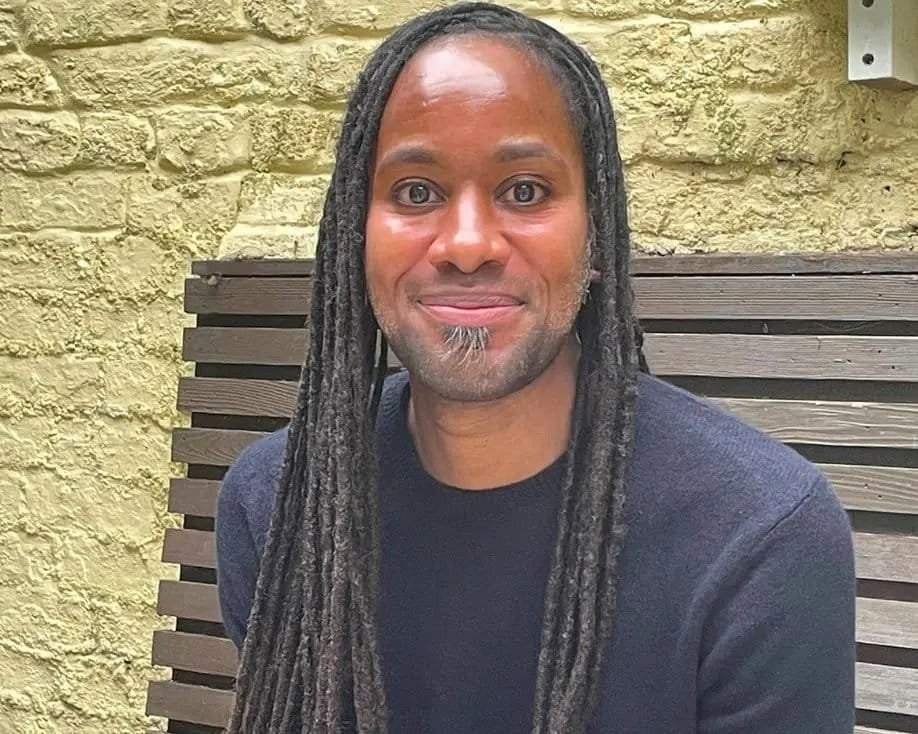
    Jason Arday, who was diagnosed with autism and global developmental delay as a child, has become the youngest black professor at Cambridge University. Ardy couldn’t read or write until he was eighteen, and only started speaking at 11 years of age. Arday has revealed that as a child, he was told that he will need to live at an assisted living facility. However, he refused to let the diagnosis break his spirit, writing ‘Work at Oxford or Cambridge’ as one of his life goals on his mom’s bedroom wall.

    Speaking to the BBC, Arday recalled how reading about Nelson Mandela’s struggles and later witnessing South Africa win the 1995 Rugby World Cup made him determined that if he “didn’t make it as a football player or a snooker player,” then he would “save the world.”

    Arday spoke to The Times about the numerous rejections he received from academia because he didn’t have a mentor who taught him how to write.
    “Everything I submitted got violently rejected. The peer review process was so cruel, it was almost funny, but I treated it as a learning experience and, perversely, began to enjoy it.”
    Eventually, he completed two masters degrees from the University of Surrey and later recieved his PhD from Liverpool John Moores University in 2016.
    “A lot of academics say they stumbled into this line of work, but from that moment, I was determined and focused — I knew that this would be my goal. On reflection, this is what I meant to do,” Arday revealed to The Times.
    With his position as a Sociology Professor at Cambrdige, Arday said that he hoped to find more ways people from marginalized backgrounds can find acceptance in academia.
    “My work focuses primarily on how we can open doors to more people from disadvantaged backgrounds and truly democratize higher education,” he said.

  • A new visa scheme allows graduates from world’s top universities to come to UK

    A new visa scheme allows graduates from world’s top universities to come to UK

    Under a new visa scheme, graduates from the world’s finest universities will be able to apply to come to the United Kingdom. The “high-potential individual” path, as per the government, will attract the “brightest and greatest” early in their careers.

    According to BBC, alumni of major non-UK universities who graduated within the last five years will be eligible for the scheme. Graduates will be eligible regardless of where they were born, and they will not be required to apply if they have a job offer.

    If you have a bachelor’s or master’s degree, you will be awarded a two-year work visa, and if you have a Ph.D., you will be given a three-year work visa. If they achieve certain standards, they will be eligible to switch to other long-term employment visas.

    There will be no limit on the number of graduates that are eligible.

    A person must have graduated from a university that was ranked in the top 50 of at least two of the Times Higher Education World University Rankings, the Quacquarelli Symonds World University Rankings, or The Academic Ranking of World Universities in the year they graduated to be eligible.

    The government produced an online list of qualified colleges for 2021 that included 20 US universities, including Harvard, Yale, and MIT.

    The University of Hong Kong, the University of Melbourne, and the Paris Sciences et Lettres University were among the other 17 qualified universities.

    Some scholars, on the other side, have expressed displeasure that no universities from South Asia, Latin America, or Africa have been featured on the list.

    It’s a deeply inequitable method, according to Christopher Trisos, director and senior researcher at the University of Cape Town.

    “They need to be recognised and including varied skills and in-depth knowledge held by many graduates from institutions in developing nations,” he said, if the UK wants to play a part in addressing the century’s big challenges, such as energy access, climate change, and pandemics.

    The visa will cost £715 plus an immigration health premium, which permits migrants to use the NHS in the United Kingdom.

    Graduates will be able to bring their families, but they must have a minimum of £1,270 in maintenance funds. They must also pass a security and criminality check and have at least a B1 intermediate level of English proficiency, which is characterised as having the “fluency to communicate with native speakers without effort.”

    Changes to the plan allow international students studying in the UK to stay and work for up to two years.

    The student visa scheme, which was reintroduced two years ago, overturned a 2012 decision by then-Home Secretary Theresa May, which required international students to leave four months after completing their degree.

    The combination of university lists used by the Home Office “provides independent validation for institutions and opens up the option for new foreign universities to progress up the ranks and join this list in the future,” according to a spokesman for the department.

    They went on to say that each of the qualified universities attracts students from all over the world, and that there are “many alternative paths eligible for graduates from other universities, including the Graduate, Skilled Worker, and Global Talent routes” for graduates from other universities.

    “The approach implies that the UK will grow as a major international hub for innovation, creativity, and entrepreneurship,” stated Chancellor Rishi Sunak.

    Via: BBC