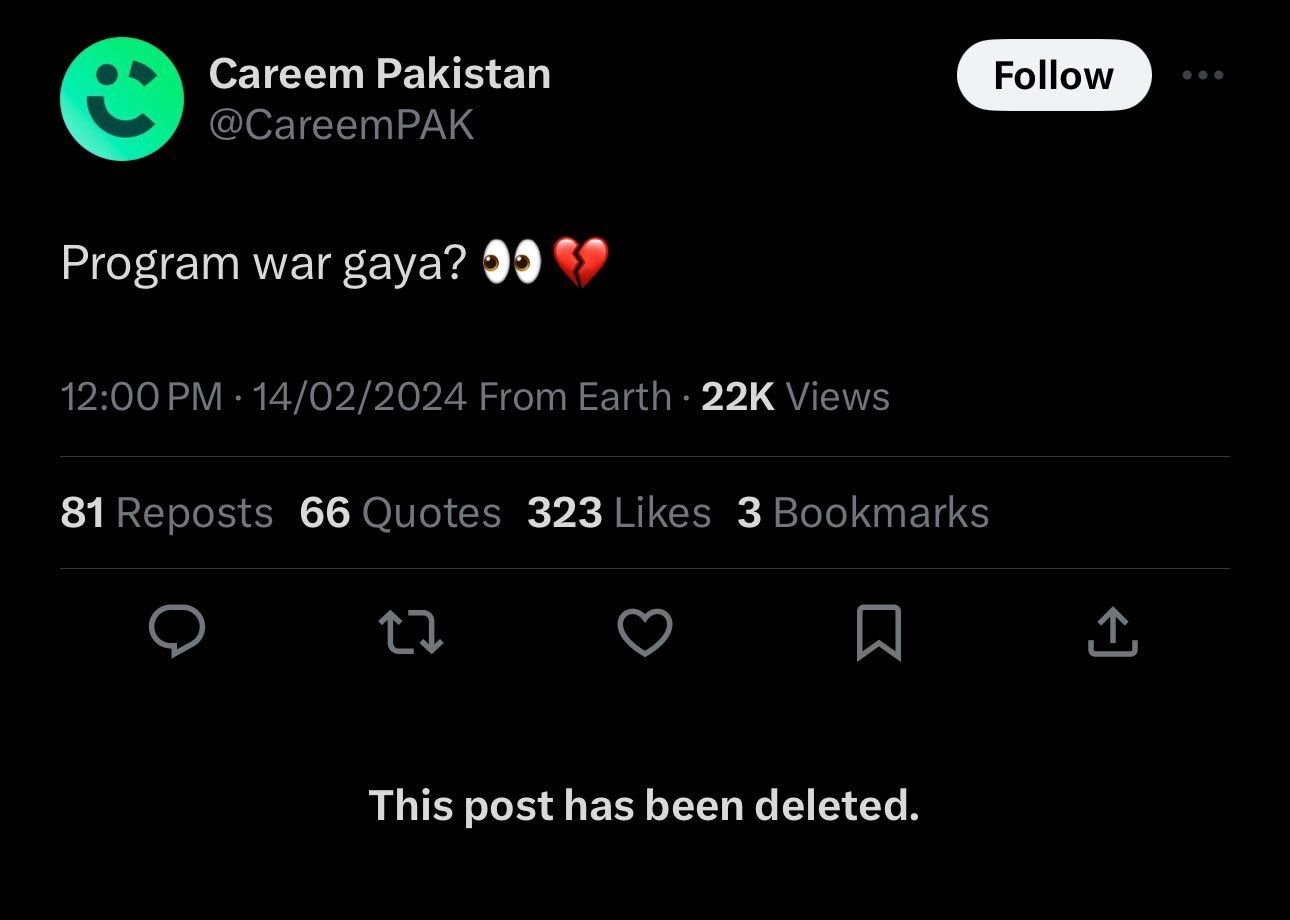
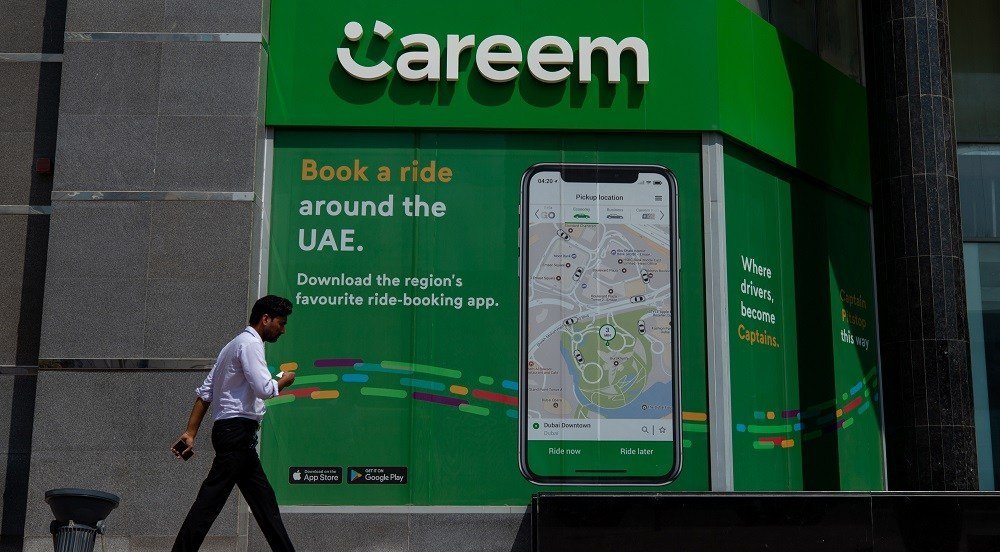
Pakistan Muslim League- Nawaz (PML-N) has posted a tweet against ride sharing company Careem after the app put up a cryptic post on their social media account.
After February 8 elections, PML-N secured 79 seats, the PPP 54 seats, and independent candidates who were supported by the PTI led the field with 93 seats in the National Assembly, according to preliminary results released by the Election Commission of Pakistan.
The PML-N, which was sure it would have a majority to establish its own government in the Center and Punjab, did not appear to be anticipating the outcomes.
Careem found itself in a sticky situation following the sharing of a mysterious yet hilarious tweet.
The post features PTI leader Sher Afzal Marwat’s well-known statement, “Program to war gaya” (Game is over).
The PML-N took exception at the post and began pushing for Careem to be boycotted for its “shameful” act.
“This isn’t the first time they have done this. @CareemPAK showing its true colors again. More interested in pushing political agendas. Shameful,” the account said.
There was mixed response,, with some people applauding it and others criticizing the ride-sharing firm for becoming involved in politics.
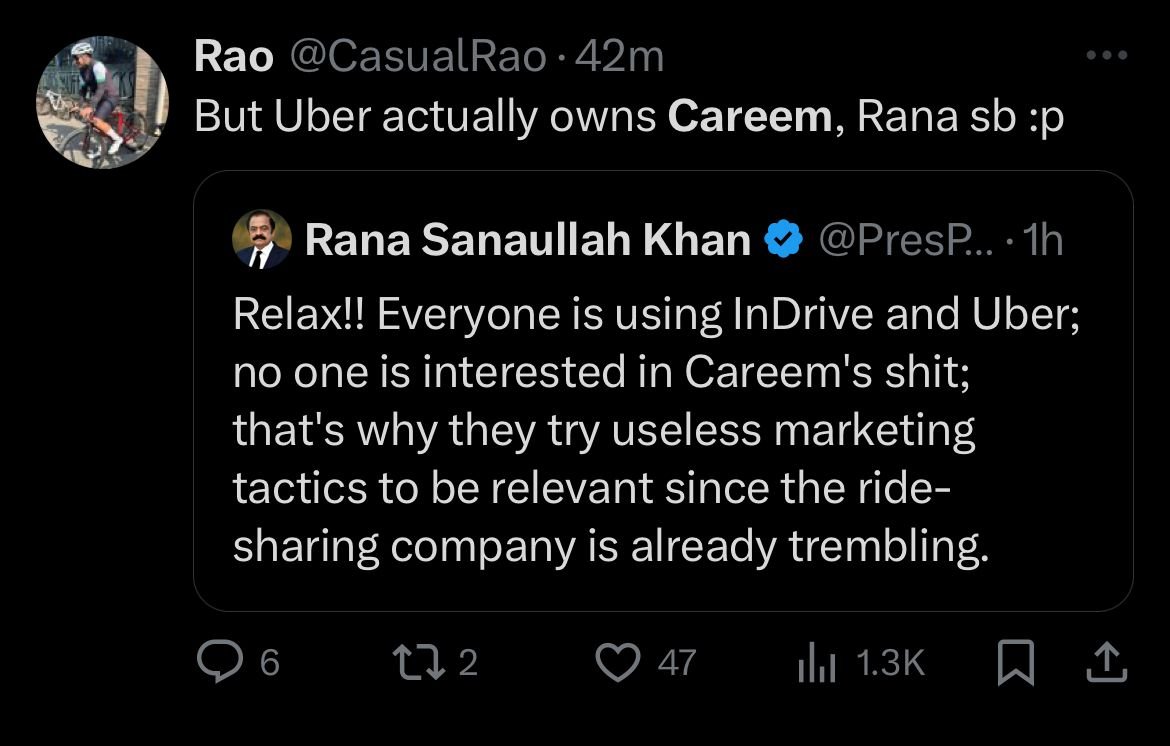
However President of PML-N punjab Rana Sanaullah shared an angry post stating, “Relax!! Everyone is using InDrive and Uber; no one is interested in Careem’s shit; that’s why they try useless marketing tactics to be relevant since the ride-sharing company is already trembling.”
According to reliable sources, the suspension of mobile broadband services has had a devastating impact on the economy in Pakistan. Telecom operators have incurred a revenue loss of approximately Rs820 million, while the government has lost around Rs287 million in tax revenue.
The suspension has also caused significant losses for digital app users, such as Careem, InDrive, and FoodPanda, as well as brought digital payments to a halt. The situation has caused widespread inconvenience and hardship for the general public, necessitating the immediate attention of the relevant authorities to resume data services.
Furthermore, social media platforms like Facebook and Twitter remained partially or fully suspended on the second day. Jazz CEO, Aamir Ibrahim, expressed his dissatisfaction through a tweet, emphasising that shutting down the internet is not a solution to any problem, but instead, it creates more problems than it solves. He stated that the impact on the economy is quantifiable, but the inconvenience to the people is incalculable.
According to Brecorder, Muhammad Zohaib Khan, the Chairman of Pakistan Software Houses Association (P@SHA), strongly criticised the indiscriminate blockage of internet services in Pakistan due to the emergent political situation. He condemned the mindless and consultation-less decision and highlighted that the IT industry has come to a standstill since Tuesday evening.
According to a statement released by Uber on Tuesday, it has stopped operating in Karachi, Multan, Faisalabad, Peshawar, and Islamabad.
A statement on the company’s website says, “Uber is dedicated to Pakistan. We will continue to serve these five cities via our subsidiary brand Careem and continue to run the Uber app in Lahore.”
Uber will keep providing its services in Lahore while also introducing new products to “help earners through these challenging times.”
It declared that it would inform its customers and business partners in the five locations of how to use and seamlessly switch to Careem.
“When we acquired Careem, it was always our belief that the two companies could come together to complement each other’s strengths and better serve the region through tailored experiences,” the statement added.
According to Dawn, the company said it was aware this was a “difficult time” for its teams, which had “worked incredibly hard to build this business over the past few years”.
“We greatly appreciate everyone’s contributions and our priority is to minimise the impact on our employees, drivers, riders, and Hero partners who use the Uber app during this change in Karachi, Islamabad, Faisalabad, Multan and Peshawar,” the statement reads.
Uber finalised the $3.1 billion acquisition of rival Careem in 2020. At the time, it was said that Careem and Uber will continue to operate as distinct businesses and provide their own regional services.
By the time the purchase was completed, Uber had acquired Careem’s mobility, delivery, and payments operations throughout the larger Middle East, including its key markets in Saudi Arabia, Egypt, Jordan, and the United Arab Emirates.
The bike taxi and logistics company BYKEA has recently hinted that it will start offering a car-hailing service. Although the company has not publicly announced its plans or informed its regular users, a recent tweet from its official account suggests what it may be up to in the next weeks or months.
Since BYKEA offers slightly lower costs than its competitors, such as Uber and Careem, it has experienced tremendous growth and popularity among everyday commuters. However, given that petrol prices are so high and that people would rather take inexpensive transportation than spend money on a car, it does not seem like the ideal time to roll out such a service.
Although it is too early to speculate about BYKEA’s plans, but it is apparent that the ride-hailing company is growing and wants to expand its operations in the country. Considering its latest tweet, “hum 2 se 4 honay walay hain,” makes it obvious that the company is actively formulating a significant strategy.
Airlift Technologies, a national grocery delivery service, has laid off 31 per cent of its workforce.
The company posted a statement on its official LinkedIn account confirming the layoff of its workforce; “In the light of the significant downturn in global capital markets, Airlift is undertaking a strategic realignment to reduce the surface area of operations and to increase focus in key areas that drive sustainability and profitability.”
“The decision to part ways with talented teammates has been incredibly challenging for the company. For impacted teammates, Airlift stands committed to providing financial and placement support to help find new roles,” the statement read.
Quick commerce startup Airlift closes down all cities apart from Karachi, Lahore and Islamabad, lays off 31% staff. pic.twitter.com/hSM8Cz3kYE
Usman Gul, the 33-year-old co-founder, and CEO commented on the company’s decision to permanently shut down, saying, “I think if the lens of change is ‘Did Airlift offer great returns to investors?’ then yes, regrettably, it was unsuccessful. If you’re talking about bringing Pakistan into a new reality or altering the entire ecology, then by that yardstick of success, we’ve come a long way,” Gul told Rest of World.
“In many ways, Airlift raised the bar of ambition for Pakistani startups in a big way. Our teams at Airlift redefined the standard of execution, strategy, building a world-class culture, developing a cutting-edge product, raising sizable fundraising rounds,” Gul continued.
What is the point of raising the greatest series B in the nation if the business fails 11 months later? Gul believed that these were improper inquiries when questioned about the $85 million that Airlift blew through in less than one year. He said that the appropriate questions to ask were: “What enabled Airlift to raise $100 million-plus in three years? That’s never happened in Pakistan before. What did this team do differently?”
Airlift was started in 2019 by Usman Gul, Ahmed Ayub, Awaab Khaakwany, Meher Farrukh, Muhammad Owais, and Zohaib Ali as a mass-transit option that connected consumers with buses at reduced costs. Due to the pandemic, Airlift’s transportation operations were halted in March 2020. During the covid pandemic, the company then pivoted its business plan and launched Airlift Express, a grocery delivery service with $10 million in investment. Airlift, last year in August, secured a mega-round of funding of $85 million dollars.
A former Airlift employee described the layoff as “shocking, unexpected, and heartbreaking.”
WHAT FINANCIAL EXPERTS THINK HAPPENED AT AIRLIFT
Ariba Shahid, Financial Journalist at Profit Magazine and DealStreetAsia, while talking to The Current about the layoffs at Airlift, said, “While downsizing is sad considering people lose their livelihoods, sometimes young startups need to scale back operations, recalibrate and start differently or fresh,” adding “In order to do so, they sometimes downsize. There is nothing wrong in doing so. I don’t think any business downsizes unless it’s absolutely necessary.”
Taking about the reason behind the layoffs Ariba added, “There are a number of ways to look at it. One likelihood is that Airlift’s funding was contingent on it attaining milestones. So maybe, they did not get the entire $85 million.”
“The other scenario is that they burned through approximately $10 million a month in customer acquisition costs and expansion. It is difficult for consumers to change their consumption pattern and move onto quick commerce. It also costs a lot to expand and grow, especially internationally, like Airlift did in South Africa. The macroeconomic environment with rising inflation and diminishing purchasing power makes it even more difficult.”
“Airlift was one of the bigger names in the ecosystem. The same way Airlift was used as an example while raising funds, it may be seen as a warning sign. However, the global liquidity crunch plays a bigger role at this point in time, in addition to Pakistan’s weakening macroeconomic sentiments.”
“There is no right or wrong way to run a startup at this point because the ecosystem is very nascent. There are no examples locally to follow. However in order to succeed startups need to ensure they are clean, transparent, do not fudge numbers, accept realistic valuations, stop obsessing over large rounds, and know when to stop blitz-scaling,” she added, talking about Pakistani startups.
While answering a question about the situation of Pakistan’s job market Ariba said, “Too soon to say that but yes, one can expect more layoffs across industries considering working capital will be more expensive, political instability, low investment inflows.”
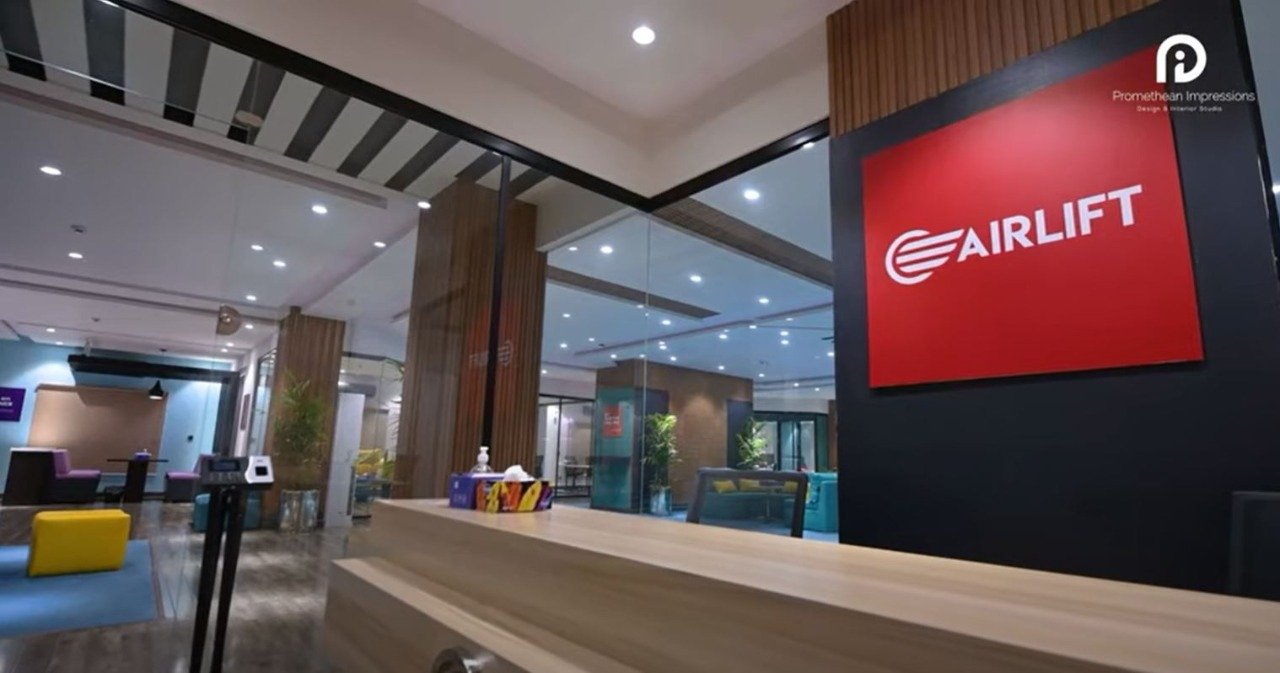
Aitlift’s Lahore office
Dr Aqdas Afzal, Program Director and Assistant Professor of Economics, Habib University while talking to The Current about the possible reason behind the layoffs said, “The reason is not related to the Pakistani market, there is an economic downturn in the entire world. The inflation in UK and US is highest in last 40 years.”
He continued by adding that, “the main input of Airlift’s delivery is fuel and as considering the fuel inflation, they have withdrawn their services from those markets and cities from where they don’t get much sales and find it difficult to drive “sustainability and profitability.”
“I don’t think Pakistani startups are doing anything wrong, as we have seen they have been able to get get a lot of seed money.”
He further said, “In the coming days you will see a lot more startups booming in Pakistan.”
“The government needs to provide reliable, fast speed and affordable internet, because it is slowly becoming the weakest link for Pakistani startups.”
“I don’t think that Pakistan’s job market is collapsing,” said Afzal while answering a question about Pakistan’s job market.
He added, “We are in low value-added end of the spectrum in terms of freelancing skills and we should see if our educational institutions are teaching the level of coding that freelancers around the world are doing.”
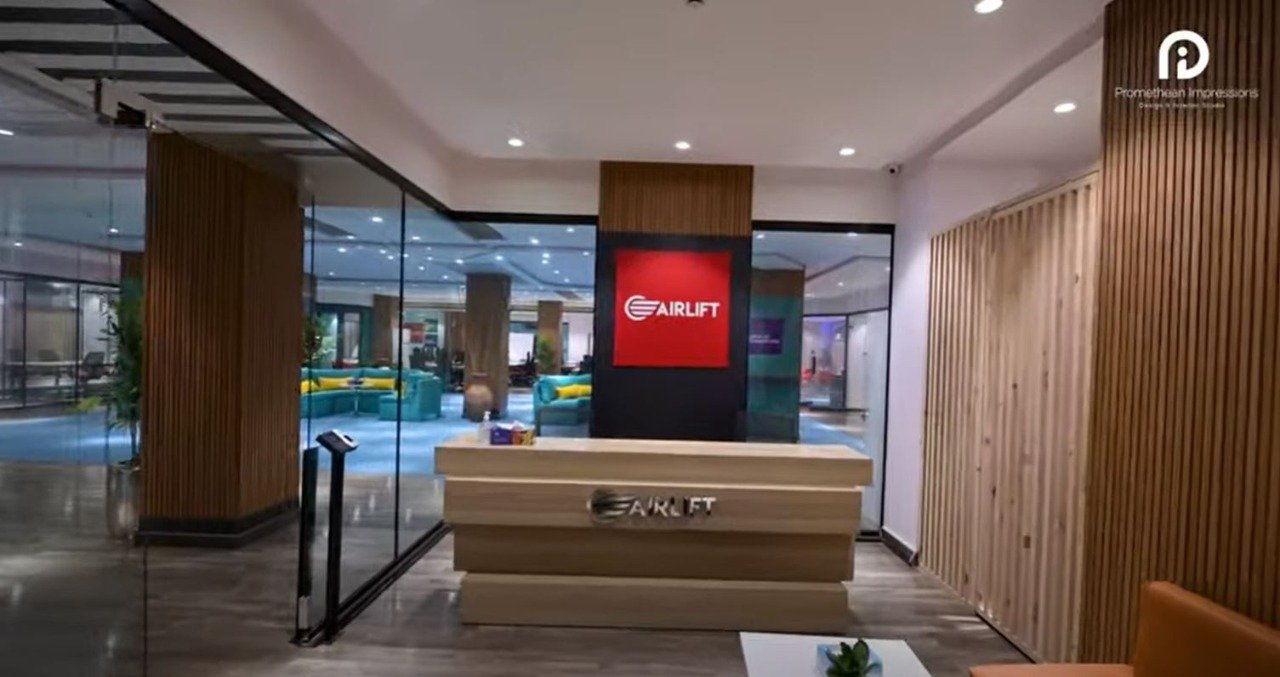
Aitlift’s Lahore office
WHAT LAID-OFF EMPLOYEES HAVE TO SAY
Airlift released a database of the names of113 staffers who were abruptly terminated from their positions and were then ‘open to work.’ The employees listed in the database served in various departments of the cash-strapped venture, including operations, human resources, customer service, rider support specialists, and several software engineers, that were based in Pakistani cities including Karachi, Lahore, Islamabad, Gujranwala, Faisalabad, Hyderabad, and Peshawar, with the remainder in South Africa.
“The layoff news shocked the entire workforce as we had no idea the company would announce a massive layoff along with closing key warehouses in different cities,” an employee at Airlift Head Office Lahore, told The Current, “I was aware that the stock market was collapsing dramatically, with some well-known corporations laying off a large number of staff, but I had no idea that the capital market’s volatility would have such an immediate impact on Airlift.”
According to another insider, the company was unable to generate sufficient profit to entice international investors, which is why layoffs had to be done.
Khan revealed that he is looking for work and has undergone three job interviews so far. “After the news of the Airlift went viral on social media, I was approached by a couple of companies and individuals, although I have yet to receive job confirmation,” he claimed.
“I have had a wonderful time at the Airlift. The management took good care of the overall staff. The payouts were never delayed,” Husnain Raza, who was employed as a Rider Operations Specialist at Airlift barely a year ago, told The Current. “The company had to take this horrendous step or it could’ve been dissolved.”
Ex-Operations Lead at Airlift Faisalabad, stated that he is not concerned since the company has offered to compensate the employees who were laid off without notice with 1-2 months of salary. “I assume I’ll find another job until then,” he asserted.
The Current has reached out to the founders of Airlift for a comment on why the layoffs took place and about the future of the company. We are still waiting for a comment and until we get one, here is the statement issued by the company on the dismissal of their staff.
GLOBAL IMPACTOF THE ECONOMIC DOWNTURN
The impact of the global economy is not just being seen at Airlift or in Pakistan.
Cutbacks, contract terminations, and layoffs have impacted at least 5,600 startup employees since the beginning of 2022 at a number of unicorns, global tech companies in India, and growth-stage startups.
Startups like Unacademy, Furlenco, and many others have cut back and downsized in order to improve profitability. Better.com, a mortgage technology company based in the United States, has also asked employees to sign voluntary separation agreements. These layoffs occurred at Better.com’s India operations, where another 920 employees were let go earlier this month, following a total of over 3,000 laid off by April.
Unacademy, the edtech unicorn, laid off over 1,000 employees and shut down its online education platform, PrepLadder, in April 2022. More than 800 employees at BYJU’s-owned WhiteHat Jr were told to resign because they refused to work from the office.
Furthermore, Cars24, a marketplace, laid off workers in order to cut costs and move toward automation. In this downsizing, the unicorn may lay off up to 600 employees soon.
Alongside startups, some big names, such as Netflix, have cut staff this year, with some blaming the COVID-19 pandemic and others faulting ‘overhiring’ during periods of speedy growth. In 2022, Robinhood, Glossier, and Better are just a few of the technology firms that have significantly reduced their staff numbers.
The capital markets have taken a beating in 2022, and this has filtered down to the private sector. Fears about inflation, rising interest rates, and geopolitical issues have all contributed to a volatile financial market.
Startups, particularly those that profited from a pandemic growth that is now slowing, are beginning to feel the strain as well. Valuations have begun to fall, especially at the later phase, and entrepreneurs say it is far more challenging to raise new funding in such a situation.
A multitude of companies that experienced pandemic-related surges are experiencing a correction as a result of a variety of factors, including rising inflation, economic distress, war, and shifting consumer taste buds. Companies such as Meta and Twitter have publicly announced hiring freezes, and Snap confirmed this week that it is slowing hiring as revenue targets are missed.
If a company is bleeding money, it will most likely begin to lay off employees, preserving only those who are required to work to retain the business’s level of operations. If the company dissolves, the remaining workers may be laid off as well.
Among the most likely causes for layoffs is that the company is trying to cut costs in some way. This could be because the company needs to pay off debts, fewer sales or the company no longer has the financial backing of investors like Airlift.
As technological advancements and automation grow common in businesses, employers sometimes lay off employees in order to cut costs and reduce position redundancy. Moreover, if the employee satisfies certain requirements and is prepared to make the change, the organisation may commit to finding another role for them and transferring them to the position.
A civil court in Rawalpindi has restricted Careem, a private ride-hailing service, from calling its drivers ‘Captains’ after an airline pilot filed a petition against it, reports Dawn.
Labeeb Ahmed, a pilot by profession who filed the complaint, says he has faced “humiliation and disgrace” over sharing his job title with the ride-hailing company’s staff.
Furthermore, he stated that due to this, he felt intimidated and argued that the title of captain should either be reserved for a pilot or an officer of the armed forces.
In his defence, he added that due to this use of the term “captain” for Careem drivers, he has to bear the jokes as people often confuse his job title with Careem captains. This has shattered his confidence very much.
Civil Judge Rawalpindi Rao Ejaz Ahmed Awan restricted Careem for not using this word until the next hearing and ordered the company to submit its response by July 31.
Yasir Hussain, who never shies away from expressing his love for wife Iqra Aziz, has publicly appreciated his wife and mother-in-law for being empowered women.
“My beautiful wife Iqra with her proud mother Asiya Aziz (Pakistan’s first female Careem driver) sitting in her daughter’s new car,” said Yasir, while posting a picture of the duo.
“Powerful aurton k chehry pe alag hi glow hota hai (powerful women glow differently),” said the actor further, adding: “Apni maon, behnon, betiyon aur biwi ko roknay walay insecure hotay hain, mard nahi (Those who stop their mothers, sisters, daughters and wives [from excelling] are insecure. They are not real men).”
Replying to Yasir’s post, Iqra said: “And this is why I fall for you all over again.”
Iqra’s mother was Pakistan’s first female cab driver in Karachi and raised two girls as a single parent.
Meanwhile, Iqra on several occasions has opened up on her relationship with Yasir saying that he is her biggest support and encourages her to achieve her goals.
“I chose Yasir because he always speaks the truth and does not differentiate among people,” the actor had said. “He respects everyone and gives them their due credit. In addition to this, he knows how to respect a woman. After my mother and sister, no one has given me more confidence than him.”
She further said: “This is important in these times that a man, your husband, supports you in your work, your dreams and wishes to see you succeed in your life.”
Dubai-based Careem has laid off over 150 employees to cut down on costs due to financial constraints. The ride-hailing app’s co-founder and CEO Mudassir Sheikha in an interview confirmed the news and said “that cuts are being made to support its [the company’s] expansion strategy.”
He further added, “The expansion will require cost-cutting that will involve the loss of five percent of existing roles and the reassigning of ten percent of staff to more critical technology development areas.”
An employee who was laid off spoke to MENAbytes, a leading tech news company in the Middle East, and shared, “Careem was a fantastic company but things started deteriorating after the deal with Uber was announced. The uncertainty hiked since the acquisition but I didn’t see this coming. We could have been informed earlier. It would have given us more time to look for an alternative but nevertheless it has been a good journey.”
Another ex-employee remarked, “It is sad to see a company that used to have great culture and values, lose everything. It has become a highly political organisation where performance is not the criteria to progress anymore”.
Uber, that now owns Careem, has also laid off over 1,000 people from its different teams across the world in a bid to cut down on costs. According to stats, it lost approximately $1.1 billion in the third quarter of 2019.
Weddings are serious business in Pakistan. From those getting married to those attending the wedding, everyone is equally involved in the events and happenings of the shaadi. The festivities can range from a few hours to a few days but no matter what, these five apps need to be in your phone at all times because they will help make your life easier.
Ride-hailing apps – Careem, Uber
This goes without saying. Having a ride-hailing app in your phone is an absolute must because you never know where you’ll end up getting stranded with no one to pick you. Despite all their issues, Careem and Uber are life-savers in a busy household.
Sometimes going to the parlour is just not possible. Either there is too much happening at home or there is no car available. In situations like these, Ghar Par will be your saviour. Ghar Par offers all beauty services from waxing to manicures to blow-drys and hairdos. Save yourself the hassle and call a beautician home.
One thing is for sure – household help is extremely unreliable and in crisis situations, they are usually the first ones to bail – there are exceptions ofcourse. Nonetheless, whenever things get out of control and there is no one to clean the mess or do the laundry, book a helper from Mauqa.
Mauqa has trained staff and they charge by the hour.
Bank Account App
No matter which bank you use, keep your bank’s app downloaded on your phone so you’re able to transfer money in a second.
Waisay toh all shaadi wala ghars have plenty of food available round the clock, there are times when the cravings get to you, especially at midnight, and you want to have your favourite junk food. In times like those, food delivery apps are perhaps your best saviour.
People who regularly use Careem for conveyance are well aware of the problems one faces while availing this cab service so it will come as no surprise that the private ride-hailing service was fined Rs 50,000 by a consumer court for providing bad service and causing mental distress to a customer.
Careem Pakistan CEO Junaid Iqbal was directed to deposit Rs 25,000 in fines to the court, Rs 15,000 to the complainant for causing mental agony and Rs 10,000 litigation fee. Judge Javed Ali Korejo delivered the verdict on a complaint filed by a Careem user.
As per reports, petitioner Advocate Mehmood Ahmed Khan stated in his complaint that he had booked a Careem cab from Gulistan-e-Jauhar to Saadi Garden. He and some of his guests were picked by a Careem captain, who ignored directions and drove in a rash manner. Instead of following Khan’s friends who were on a motorcycle, as Khan requested him to, the captain got angry at being repeatedly asked to follow the motorcycle and dropped the passengers in the middle of the road. Khan mentioned that the passengers were all fasting when the ride ended halfway. He added that the driver also used offensive language.
Khan further said that he had lodged an online complaint with the company before approaching the court but after receiving no satisfactory response from the management he was left with no other option.
“They did not even reply to the legal notice he sent”, said Khan.