Tag: ceasefire

  • Ceasefire agreement in Gaza coming close at hand?

    Ceasefire agreement in Gaza coming close at hand?

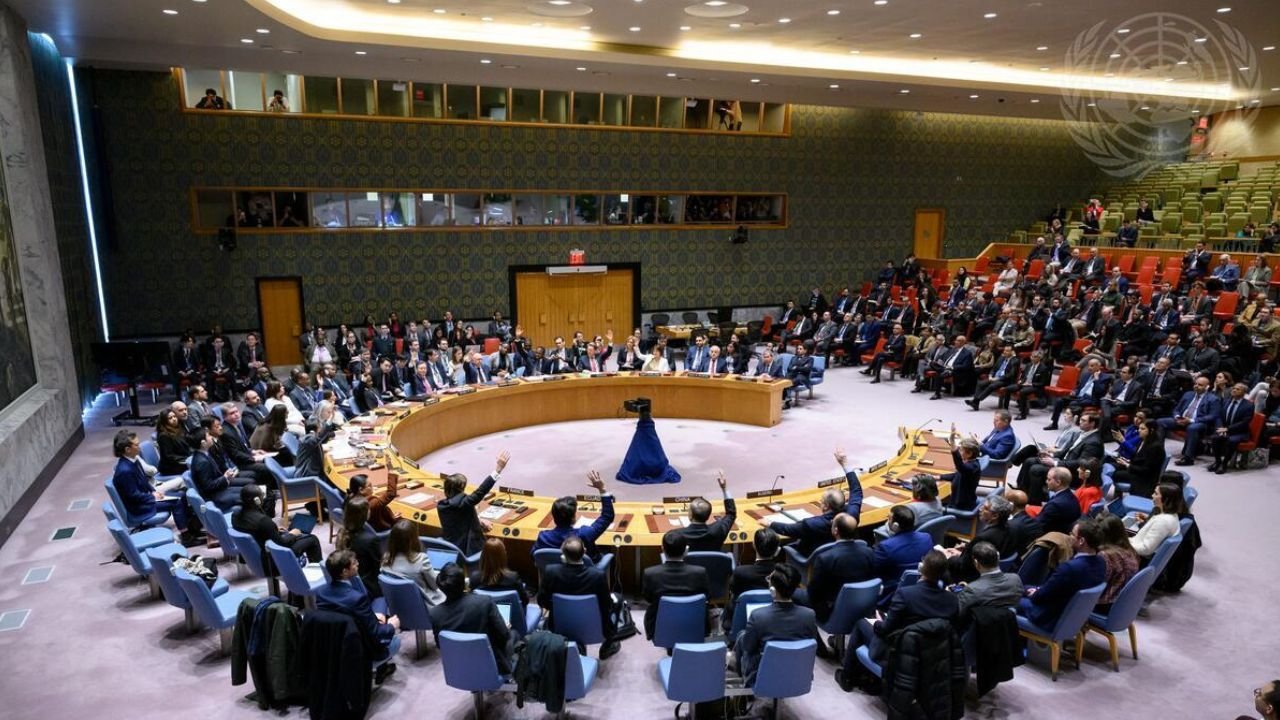
    The UN Security Council gave a green signal to a US-proposed ceasefire plan on Monday aimed at ending the Israeli attacks in Gaza.

    The proposition consists of a three-stage ceasefire and captive-release proposal laid out on May 31 by President Biden, prompting the “parties to fully implement its terms without delay and without condition”.⁠

    As per the plan, Israel will withdraw its military forces from Gaza’s populated areas, Hamas will release the remaining captives and humanitarian aid would be allowed into Gaza “at scale”.⁠

    A temporary ceasefire will be in effect for six weeks at first, with the possibility of extension as negotiators work towards a permanent cessation of hostilities.

    As per the resolution, Israel has agreed to the plan and urged Hamas to also agree to it as well.

    However, Israeli officials, including Prime Minister Netanyahu, have recently vowed to continue the operations until Hamas is completely eradicated, raising doubts about their commitment to the ceasefire agreement.

    Hamas has expressed approval of the resolution and signalled readiness to engage in indirect talks regarding the implementation of the agreement’s principles.

  • Japan’s Nagasaki holds off inviting Israel to peace ceremony

    Japan’s Nagasaki holds off inviting Israel to peace ceremony

    The Israeli ambassador to Japan has not yet been invited to Nagasaki’s annual peace ceremony, said city officials who instead sent the embassy a letter calling for a Gaza ceasefire.

    The city in southern Japan this week invited dozens of countries and territories to the August 9 event on the anniversary of the US nuclear attack in 1945 that killed 74,000 people.

    But “as for Israel, the situation is changing day by day… so we have put sending an invitation letter on hold,” mayor Shiro Suzuki told reporters on Monday.

    Israel launched a blistering military offensive in Gaza nearly eight months ago, following an attack by Palestinian militant group Hamas on the country.

    Worries that protests could disrupt the memorial for atomic bomb victims are partly behind the decision, said Suzuki.

    “Given the critical humanitarian situation in Gaza, and public opinion in the international community, there are concerns about the risk of unexpected incidents during the ceremony,” which should be “safe and smooth”.

    “As the Ukraine situation has not changed, we are not inviting Russia or Belarus” either, Suzuki added.

    The Hamas attack on October 7 resulted in the death of 1,194 people in Israel, most of them civilians, according to an AFP tally based on official Israeli figures.

    More than 36,470 Palestinians, mostly civilians, have been killed in the Gaza Strip since the war broke out, according to data provided by the health ministry of Hamas-run Gaza.

    The Palestinian envoy has been invited to the ceremony in Nagasaki, local officials told AFP on Tuesday. Japanese media said that both sides are usually invited.

    Nagasaki, Hiroshima ceasefire push

    Nagasaki has instead sent a letter to the Israeli embassy in which “we call for an immediate ceasefire”, Suzuki said.

    Its letter said that if city officials decide in the coming months that there is no problem in inviting Israel, “we will issue an invitation swiftly”, according to the mayor.

    The Israeli embassy did not immediately issue a comment.

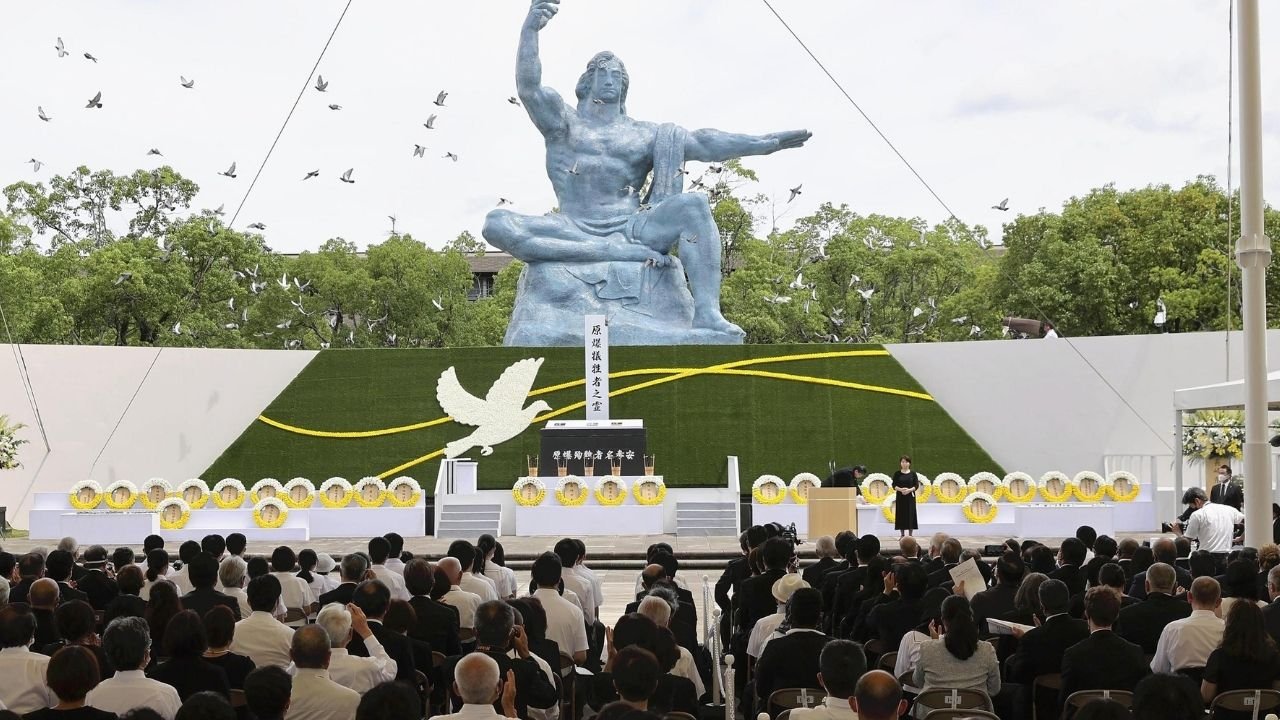
    The sombre memorial at Nagasaki’s Peace Park has in the past included ringing bells, a release of doves, and a prayer ceremony for the bombing victims.

    Hiroshima also holds a yearly ceremony in memory of the 140,000 people killed there after the United States dropped the first nuclear bomb on August 6, 1945.

    The two strikes led to the end of World War II, and to this day Japan remains the only country to be hit by atomic weapons in wartime.

    Hiroshima has invited Israel to this year’s ceremony, but in its letter called for a “ceasefire as soon as possible and resolution through dialogue”, a city official said.

    According to local media, Hiroshima has never invited a Palestinian representative to its ceremony.

  • ‘Burning children alive can never be justified’; Dua Lipa demands ceasefire

    ‘Burning children alive can never be justified’; Dua Lipa demands ceasefire

    British-Albanian singer Dua Lipa is once again calling for an urgent and permanent ceasefire as Israel’s military actions in the southern Gaza city of Rafah, where numerous Palestinian civilians have reportedly lost their lives in recent days. Dua Lipa is once more advocating for an immediate and enduring ceasefire.

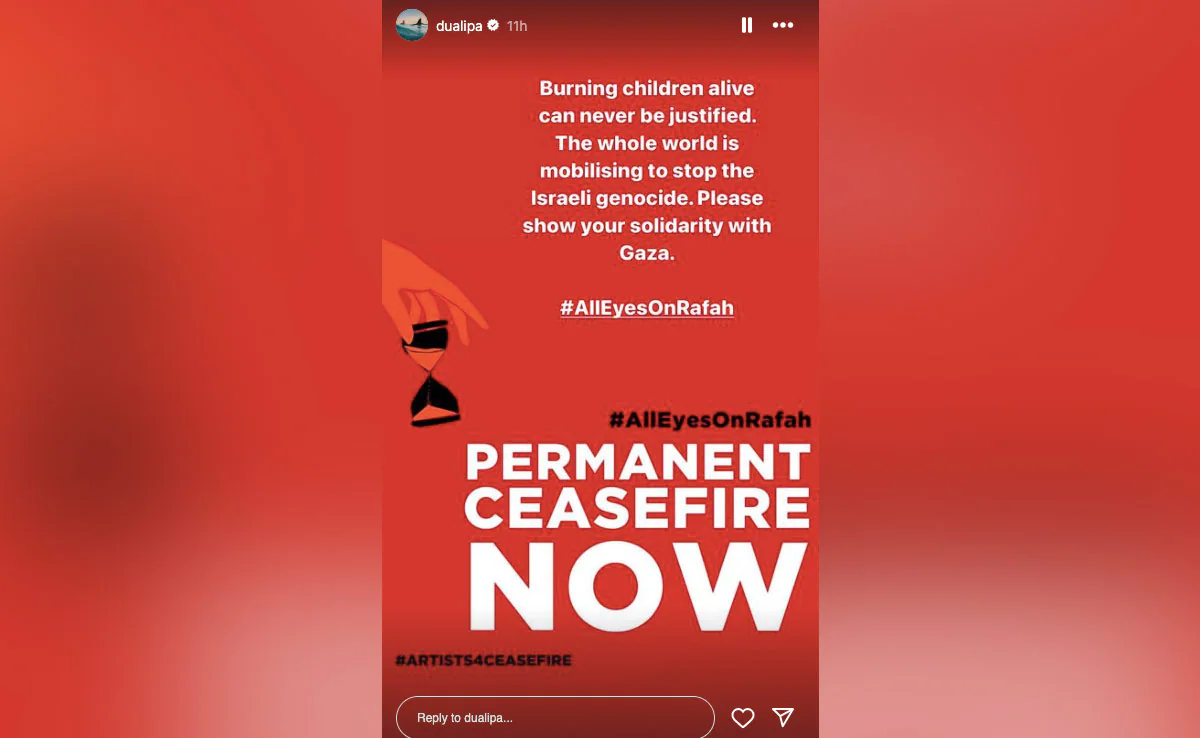
    On May 28, the pop star posted an Artists for Ceasefire image with the hashtag “#AllEyesOnRafah” on her Instagram Story, stating, “Burning children alive can never be justified.” The harsh condemnation of Israel followed Israel’s massacre in Rafah where videos showed children decapitated and burnt alive.

    Lipa said, “The whole world is mobilising to stop the Israeli genocide, please show your solidarity with Gaza.”
    She signed an open letter from Artists for Ceasefire, encouraging President Joe Biden to support peace in Gaza, a few weeks after the strikes on October 7. She was among many celebrities who supported the initiative. She freely expressed her thoughts on the fight three months later in her January cover story for Rolling Stone.

    On Monday, 45 people were killed in a fire that started in a tent camp in the Gazan city of Rafah due to an Israeli attack. This led to international protest from leaders around the world, who requested the enforcement of a ICJ ruling to stop Israel’s genocide

    Health officials in Gaza stated that women, children, and the elderly made up more than half of the deceased and that the number of fatalities was probably going to increase due to those who had serious burns.
    Over 45 million users, including local and international celebrities, shared the viral ‘All eyes on Rafah’ story on Instagram.
    At least 36,171 Palestinians have been killed and 81,420 wounded in Israel’s war on Gaza since October 7.

  • Israel’s Netanyahu approves new Gaza ceasefire talks

    Israel’s Netanyahu approves new Gaza ceasefire talks

    Palestinian Territories – Israeli Prime Minister Benjamin Netanyahu gave the go-ahead Friday for a new round of talks on a Gaza ceasefire, a day after the world’s top court ordered Israel to ensure aid reaches desperate civilians.

    But despite a binding UN Security Council resolution earlier this week demanding an “immediate ceasefire”, fighting raged on unabated in Gaza Friday, including around its few functioning hospitals.

    The health ministry said dozens of people were killed overnight.

    Among them were 12 people killed in their home in the southern city of Rafah, which has been bombed repeatedly ahead of a threatened Israeli ground operation.

    Men worked under the light of mobile phones to free people trapped under the debris, AFPTV images showed.

    Regional fallout from the conflict also flared, with Israel saying it killed a Hezbollah rocket commander in Lebanon and a war monitor saying that Israeli air strikes killed several Hezbollah fighters in Syria.

    Netanyahu’s office said new talks on a Gaza ceasefire and hostage release will take place in Doha and Cairo “in the coming days… with guidelines for moving forward in the negotiations”.

    Those talks had appeared deadlocked in recent days despite a major push by the United States and fellow mediators Egypt and Qatar to secure a truce in time for the Muslim fasting month of Ramadan, now more than half way through.

    – Famine ‘setting in’ –

    In its ruling, the International Court of Justice (ICJ) in The Hague said it had accepted South Africa’s argument that the further deterioration of the humanitarian situation in Gaza required Israel to do more.

    “Palestinians in Gaza are no longer facing only a risk of famine, but… famine is setting in,” it said.

    Philippe Lazzarini, head of the UN agency for Palestinian refugees, said the ruling was “a stark reminder that the catastrophic humanitarian situation in the Gaza Strip is man-made (and) worsening”.

    A UN-backed report released last week warned that half of Gazans are feeling “catastrophic” hunger and projected imminent famine in the territory’s north.

    The Israeli defence ministry body responsible for Palestinian civil affairs (COGAT) hit back on Friday, alleging the assessment contained inaccuracies and questionable sources.

    The ICJ had ruled in January that Israel must facilitate “urgently needed” humanitarian aid to Gaza.

    The latest binding ruling by the court, which has little means of enforcement, came as Israel’s military said it was continuing operations in Gaza’s largest hospital Al-Shifa for a 12th day.

    Fighting around Gaza hospitals

    The United Nations says Gaza’s health system is collapsing “due to ongoing hostilities and access constraints”.

    Israel’s military accuses Hamas of hiding inside medical facilities, using patients, staff and displaced people for cover — charges the militants have denied.

    On Friday the army said it was “continuing precise operation activities in Shifa Hospital” where it began a raid early last week.

    Troops first raided Al-Shifa in November, but the army says Palestinian militants have since returned.

    About 200 militants have been killed during the latest Al-Shifa operation, it said.

    In north Gaza’s Shati refugee camp, Amany, a 44-year-old mother of seven, described how it felt to live under relentless Israeli bombardment.

    “Explosions and air strikes go on throughout the night, it’s petrifying,” she said. “I feel like I’m living a continuous nightmare that doesn’t want to end.”

    Netanyahu said on Thursday that troops “are holding the northern Gaza Strip” and also the southern city of Khan Yunis, amid heavy fighting.

    Near Al-Amal Hospital in Khan Yunis, troops carried out “targeted raids on terrorist infrastructure”, killing dozens in combat backed by air support, the army said on Thursday.

    Israeli tanks have also surrounded another Khan Yunis health facility, the Nasser Hospital, the Gaza health ministry said.

    Syria, Lebanon strikes

    Israel’s intensified attacks in Gaza have killed at least 32,623 people since October 7, mostly women and children, according to health ministry figures.

    Palestinian militants also seized about 250 hostages. Israel believes about 130 remain in Gaza, including 33 who are presumed dead.

    Since the Gaza war began, Israel has increased its strikes in Syria, targeting army positions and forces including Lebanon’s Hezbollah movement.

    A Britain-based war monitor, the Syrian Observatory for Human Rights, said Israeli air strikes killed seven Hezbollah fighters.

    The Israeli military said it killed the deputy commander of Hezbollah’s rocket unit in south Lebanon, Ali Abdel Hassan Naim, in an air strike.

    Israeli Defence Minister Yoav Gallant toured the army’s northern command on Friday “to closely examine another successful termination like the one that was executed this morning”, he said in a post.

    Gallant said the army would keep up its operations against Hezbollah, and its leader Hassan Nasrallah was to blame for the consequences, including members killed and wounded.

    “We will make them pay a price for every attack that comes out from Lebanon,” he said.

    Recent days have seen an uptick in deadly exchanges, and the White House has called on both Israel and Lebanon to put a high priority on restoring calm.

    burs-kir/hkb

    © Agence France-Presse

  • Israel furious at US abstention on Security Council ceasefire vote

    Israel furious at US abstention on Security Council ceasefire vote

    Israel reacted angrily on Monday to the first UN Security Council vote to demand an “immediate ceasefire” in the Gaza war, after its closest ally the United States abstained, while fighting raged in the Palestinian territory.

    Immediately after the resolution passed, Israel cancelled the visit of a delegation to Washington, which the United States had requested to discuss concerns over a mooted Israeli invasion of Rafah, in crowded southern Gaza.

    Israel said the US abstention “hurts” both its war effort and efforts to release hostages.

    It was “a clear retreat from the consistent position of the US,” Prime Minister Benjamin Netanyahu’s office said.

    While diplomatic attention turned to New York, fighting continued across the Gaza Strip, with Israeli forces battling Hamas militants around at least two major hospitals.

    Washington insisted that its Security Council abstention did not mark a shift in policy, although it has taken an increasingly tougher line with Israel in recent weeks.

    The United States had repeatedly vetoed Security Council resolutions calling for an immediate ceasefire, but on Friday it put forward its own unsuccessful text mentioning one, before abstaining on Monday’s resolution drafted by non-permanent Council members.

    Applause

    It meant that the resolution, which demands an “immediate ceasefire” for the ongoing Muslim holy month of Ramadan that leads to a “lasting” truce, went through with all other 14 Security Council members voting yes.

    The resolution drew applause in the usually staid council and also demands that Hamas and other militants free hostages they seized, though it does not directly link a release to the ceasefire.

    The Gaza war broke out with Hamas’s unprecedented attack of October 7 which resulted in about 1,160 deaths in Israel, mostly civilians, according to an AFP tally based on official Israeli figures.

    Militants also seized about 250 hostages, of whom Israel believes around 130 remain in Gaza, including 33 presumed dead.

    Netanyahu’s failure to bring home the hostages has led to regular protests in Israel.

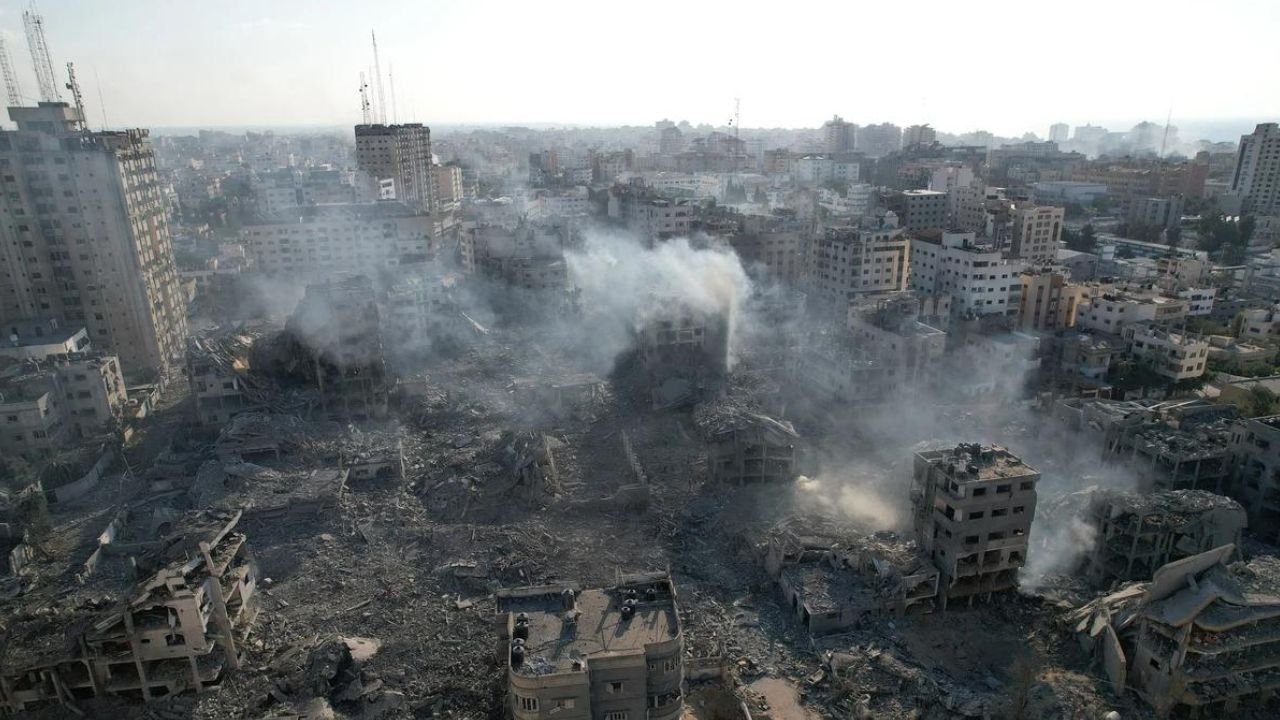
    Vowing to destroy Hamas and free the captives, Israel has carried out a relentless bombardment of the coastal territory and a ground invasion that began in Gaza’s north before moving southward.

    The health ministry in the Hamas-run Gaza Strip on Monday put the total Palestinian death toll at 32,333, most of them women and children.

    Hamas welcomed the Security Council resolution and said it was reaffirming its readiness to negotiate the release of hostages in exchange for Palestinian prisoners held by Israel.

    Member states are obliged to comply with resolutions passed by the Security Council, whose vote came while Israeli Defence Minister Yoav Gallant visited Washington.

    After the UN decision, Gallant said the war will go on.

    “We have no moral right to stop the war while there are still hostages held in Gaza,” he said.

    Tensions between the two allies have grown alongside US concerns about the humanitarian crisis in Gaza, where the UN says famine is imminent.

    Netanyahu’s determination to launch a ground operation in Rafah, the city on Gaza’s southern border where most of the territory’s population is sheltering, has become a key point of contention.

    Prior to the UN vote, US Vice President Kamala Harris told ABC TV that a Rafah invasion would be “a huge mistake”. Asked hether she would rule out “consequences” for Israel, Harris said: “I am ruling out nothing”.

    Before heading to Washington, Gallant said his focus would include “our ability to obtain platforms and munitions”.

    Hospital battles

    Troops and tanks have encircled Gaza City’s Al-Shifa Hospital, the territory’s biggest, for a week and more recently moved on Al-Amal Hospital in the main southern city of Khan Yunis.

    Israel has labelled its operations “precise operational activities” and said it has taken care to avoid harm to civilians, but aid agencies have voiced alarm about civilians caught up in the fighting.

    The Israeli military said it was battling militants around the two hospitals and reported around 20 militants killed around Al-Amal over the past day in close-quarters combat and air strikes.

    Palestinians living near Al-Shifa have reported hellish conditions, including corpses in the streets, constant bombardment and the rounding up of men who are stripped to their underwear and questioned.

    The Al-Shifa raid was in its eighth day and the military reported having detained a total of about 500 militants “affiliated with” Hamas and Islamic Jihad, another militant group.

    ‘We are suffering’

    Israel has signalled an extended presence at Al-Shifa which troops also raided in November, to an international outcry.

    At Al-Amal Hospital, the Palestinian Red Crescent said Israeli troops ordered staff and patients to evacuate, but the departing convoy got stuck due to debris on the road.

    The charity reported that Israeli troops opened fire on staffers who tried to clear the debris, wounding two — one of whom made it back to the convoy.

    Israel’s military did not immediately respond to a request for comment.

    The military said its Al-Amal operation included “raids on several terrorist infrastructure sites”, where they found explosive devices, rocket-propelled grenades and other military equipment.

    UN chief Antonio Guterres, on a visit to the Middle East, has pleaded for an end to the “non-stop nightmare” for the 2.4 million people trapped in Gaza’s worst-ever war and stalked by starvation.

    According to Gaza’s health ministry, at least 107 people were killed in a 24-hour period into Monday, and the Hamas government press office said more than 50 airstrikes rained down on the Gaza Strip.

    Israel’s armed forces gave a similar number and said its fighter jets and helicopters had struck about 50 targets.

    Food and water shortages have deepened the suffering, especially in northern Gaza where residents, mostly women and children, waited in line to fill up jerrycans and buckets in Jabalia.

    “We don’t even have food to give us the energy to go to collect the water — let alone the innocent children, women and the elderly,” said one man, Bassam Mohammed al-Haou.
  • Countries call for swift implementation of UN ceasefire vote

    Countries call for swift implementation of UN ceasefire vote

    The UN Security Council on Monday called for an immediate ceasefire in Gaza five months into the grinding war, despite Israel’s ally the United States abstaining.

    Here are some reactions to the resolution to halt fighting over the Muslim holy month of Ramadan with an aim for a “lasting” truce, which drew rare applause at the Security Council:

    UN Secretary-General Antonio Guterres called for swift implementation of a ceasefire after Israel voiced anger over the resolution.

    “Failure would be unforgivable,” Guterres wrote on X, formerly known as Twitter.

    Hamas welcomed the resolution to halt fighting in Gaza while saying it was ready to negotiate the release of hostages in exchange for Palestinian prisoners.

    “We also affirm our readiness to engage in an immediate prisoner exchange process that leads to the release of prisoners on both sides,” the militant group said.

    Israeli Prime Minister Benjamin Netanyahu’s office said the UN vote “hurts both the war effort and the effort to release the abductees”.

    “It gives Hamas hope that international pressure will allow them to accept a ceasefire without the release of our abductees,” the statement said. It also took aim at the US abstention, calling it a “clear retreat” from its earlier position.

    Hussein al-Sheikh, minister for civilian affairs of the Palestinian Authority which has partial administrative control in the Israeli-occupied West Bank, hailed the resolution in a post on X.

    “We call for a permanent cessation to this criminal war and Israel’s immediate withdrawal from the Gaza Strip,” he wrote.

    Following the vote, the United States said a ceasefire can “only” be implemented once Hamas begins releasing hostages it still holds.

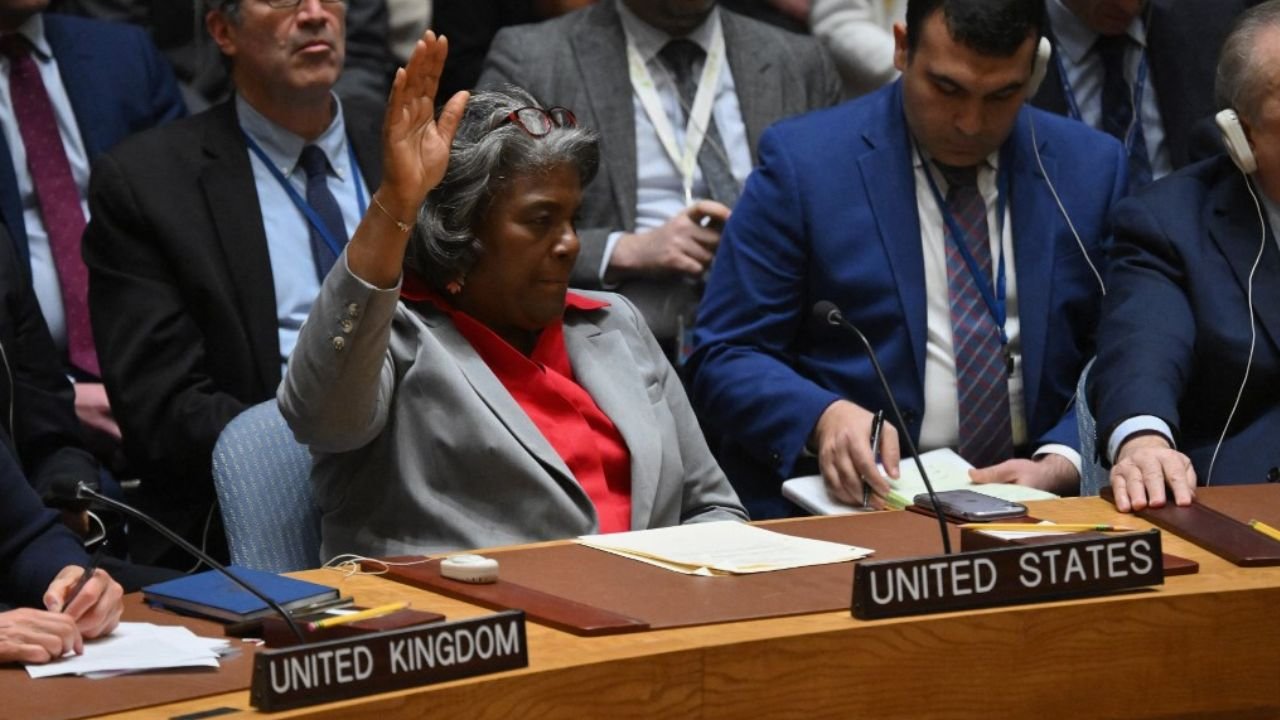
    “A ceasefire can begin immediately with the release of the first hostage,” US ambassador to the UN Linda Thomas-Greenfield said.

    After the United States vetoed previous drafts, National Security Council spokesman John Kirby told journalists that the US decision to abstain from Monday’s vote does not represent a “shift in our policy”.

    The Arab League’s Secretary-General Ahmed Aboul Gheit said the decision “comes late”.

    “The lesson now is to implement the decision on the ground, stop military operations and Israeli aggression immediately and completely,” he added.

    Top European Union officials welcomed the resolution, calling for a ceasefire and the unconditional release of all hostages.

    “Implementation of this resolution is vital for the protection of all civilians,” European Commission President Ursula von der Leyen wrote on X.

    The resolution “represents the first important and necessary step to stop the bloodshed,” the Egyptian ministry of foreign affairs said in a statement to the UN.

    The Brazilian government said it “hopes that the ceasefire will be implemented immediately, as stipulated by the resolution, and reiterated “the urgency of ensuring the effective entry of an expanded and regular flow of humanitarian aid into Gaza, as well as the release of all hostages”.

    France’s UN representative called for a sustained truce between Israel and Hamas beyond the ongoing month of Ramadan.

    “This crisis is not over,” said Nicolas de Riviere. “After Ramadan, which ends in two weeks, it will have to establish a permanent ceasefire.”

    German Foreign Minister Annalena Baerbock said she was “relieved by the adoption of the resolution”. “Every day counts,” she added.

    Baghdad’s foreign minister applauded the resolution in a statement and stressed “the importance for the parties to respect their obligations under international law”.

    Jordan’s foreign ministry expressed hope that the UN and international community would “take action to safeguard the two-state solution and ensure the establishment of an autonomous and sovereign Palestinian state”.

    Lebanese Prime Minister Najib Mikati hailed the “first stage in the process of ending Israeli aggression against the Gaza Strip.”

    He also called for a political solution “to end the conflict and give the Palestinians their rights”.

    Qatar said it hopes the resolution “represents a step towards a permanent cessation of fighting in the Strip”.

    The gas-rich emirate has been engaged in weeks of mediation between Israel and Hamas to secure a truce in Gaza and an exchange of hostages and prisoners.

    Foreign minister Naledi Pandor welcomed the resolution on public radio but stressed that “the ball is in the court of the Security Council”.

    Spanish Prime Minister Pedro Sanchez on X applauded the resolution, and said that “the realisation of two states, Israel and Palestine, living side-by-side in peace and security is the only realistic and viable solution for the region”.

    Outgoing Dutch Prime Minister Mark Rutte said the next step was “to stop the violence, free the hostages, immediately send in vastly more humanitarian aid to Gaza and find a lasting solution”.

    The country’s far-right leader, Geert Wilders, who swept to victory in recent polls, on X voiced support for Israel “against the dark forces of hate and destruction called Hamas”.

    Turkey called the resolution and prospective return of humanitarian access to Gaza “a positive step”.

    “We hope that Israel will comply with the requirements of this resolution without delay,” Turkish foreign affairs spokesman Oncu Keceli wrote on X.

    Chile’s foreign office said it was “necessary to progress the two state solution, in which Palestine and Israel can live in peace inside internationally recognised borders.”

    “I invite the world’s nations if Israel breaks this ceasefire to break diplomatic relations with this country,” said Colombian President Gustavo Petro on X.

    Amnesty International’s Secretary General Agnes Callamard said the resolution is “long overdue” and called for “an immediate and comprehensive arms embargo”.

    Human Rights Watch’s UN lead Louis Charbonneau called for Israel to halt “unlawful attacks”, for Palestinian armed groups to “immediately release all civilians held hostage”, and for the US and others to suspend “arms transfers to Israel”.

    Oxfam’s UN representative Brenda Mofya said the resolution should provide “much-needed respite from the relentless and devastating Israeli violence”.

  • UN expert accuses Israel of several acts of genocide in Gaza

    UN expert accuses Israel of several acts of genocide in Gaza

    A UN rights expert on Monday said there were “reasonable grounds” to determine that Israel has committed several acts of “genocide” in its war in Gaza, also warning of “ethnic cleansing”.

    Francesca Albanese, the UN special rapporteur on the rights situation in the Palestinian territories, said there were clear indications that Israel had violated three of the five acts listed under the UN Genocide Convention.

    “The overwhelming nature and scale of Israel’s assault on Gaza and the destructive conditions of life it has inflicted reveal an intent to physically destroy Palestinians as a group,” she said in a report, which was immediately rejected by Israel as an “obscene inversion of reality”.

    Albanese, an independent expert appointed by the UN Human Rights Council but who does not speak on behalf of the United Nations, said she had found “reasonable grounds to believe that the threshold indicating the commission of… acts of genocide against Palestinians in Gaza has been met”.

    The report, entitled “Anatomy of a Genocide”, listed those acts as: “killing members of the group; causing serious bodily or mental harm to the group’s members; and deliberately inflicting on the group conditions of life calculated to bring about its physical destruction in whole or in part”.

    Israel’s diplomatic mission in Geneva said the country “utterly rejects the report”, describing it as “simply an extension of a campaign seeking to undermine the very establishment of the Jewish State”.

    “Israel’s war is against Hamas, not against Palestinian civilians,” it said in a statement, slamming Albanese’s “outrageous accusations”.

    Israel has long been harshly critical of Albanese and her mandate, which the United States on Monday called “biased against Israel.”

    Washington is “aware” of Albanese’s report but has “no reason to believe Israel has committed acts of genocide in Gaza,” a US official told AFP.

    Last month Israel slapped a visa ban on her after she made comments denying that Hamas’s October 7 attack, which sparked the war in Gaza, was anti-Semitic.

    Israel’s relentless bombardment and ground offensive in Gaza has since killed more than 32,300 people, mainly women and children, according to the health ministry in Gaza.

    South Africa has already filed a complaint against Israel before the International Court of Justice, alleging its assault on Gaza amounts to a violation of the genocide convention.

    The court has yet to rule on the underlying issue, but earlier this year ordered Israel to do everything it could to prevent genocidal acts during its campaign and also to allow in humanitarian aid.

    In Albanese’s report, which she is due to present to the Human Rights Council on Tuesday, she maintained that Israel’s “genocidal acts” followed “statements of genocidal intent”.

    Statements by some senior Israeli officials spelling out an intent to forcibly displace Palestinians and replace them with Israeli settlers, she said, indicated that “evacuation orders and safe zones have been used as genocidal tools to achieve ethnic cleansing”.

    The report also found that Israel was treating all Palestinians and their infrastructure “as ‘terrorist’ or ‘terrorist-supporting’, thus transforming everything and everyone into either a target or collateral damage”.

    “In this way, no Palestinian in Gaza is safe by definition,” it said.

    “This has had devastating, intentional effects, costing the lives of tens of thousands of Palestinians.”

    The report also stressed that Israel’s mistreatment of the Palestinians had not begun on October 7.

    “Israel’s genocide on the Palestinians in Gaza is an escalatory stage of a longstanding settler colonial process of erasure,” it said.

  • Hamas welcomes China, Russia veto of US-backed Gaza resolution

    Hamas has reportedly shown “appreciation” as Russia and China vetoed a US-led draft resolution on a Gaza ‘ceasefire’ at the UN Security Council on Friday.

    The United States proposed a resolution endorsing “the urgent need for an immediate and enduring ceasefire” and, notably, condemning the October 7 attack carried out by Hamas for the first time.

    “We express our appreciation for the position of Russia, China and Algeria who rejected the biased American resolution of aggression against our people,” the Hamas said in a statement.

    They added that the draft consists of “misleading wording that is complicit” with Israel and “grants it cover and legitimacy to commit a genocidal war against the Palestinian people in the Gaza Strip.”

    On the other hand, prior to the vote, Russia’s ambassador to the UN, Vassily Nebenzia, urged members against endorsing the resolution, deeming it as “excessively politicized” and implying it endorsed Israeli military operations in Rafah, Gaza, where more than half of its 2.3 million residents sought shelter in camps to escape the Israeli offensive in the northern regions.

    Nebenzia asserted that several non-permanent Security Council members had crafted an alternative resolution, which he portrayed as a fair proposal, calling on all members to support it.

  • Israel broadly agrees Gaza truce, US official says, ahead of talks

    Palestinian Territories – Israel has “more or less accepted” a proposal for a ceasefire in its attacks in the Gaza Strip, a US official said Saturday as Palestinian negotiators were expected in Cairo.

    Mediators have been scrambling to lock in a truce before Ramadan, the Muslim fasting month which begins on March 10 or 11, eyeing an end to the almost five-month conflict that has ravaged Gaza.

    In a sign of the dire humanitarian conditions as violence rages on, the besieged territory’s health ministry reported more than a dozen child malnutrition deaths in recent days.

    The US official told reporters on condition of anonymity that “there’s a framework deal” for a ceasefire which “the Israelis have more or less accepted”.

    “Right now, the ball is in the camp of Hamas,” the official said.

    A source close to Hamas told AFP a delegation from the group was headed from Qatar to Egypt on Saturday.

    Israel has yet to confirm that it has accepted the truce plan.

    Speaking on condition of anonymity, the source said that Hamas would deliver its “official answer” to the plan, which resulted from talks with Israeli negotiators in Paris late last month.

    The mediators “will resume negotiations for a Gaza truce in Cairo on Sunday,” Egypt’s AlQahera News reported.

    Earlier the United States, which provides ally Israel with billions of dollars in military aid, said it began airdropping aid into war-ravaged Gaza.

    The start of the US relief operation came a day after President Joe Biden announced the move and spoke of the “need to do more” to alleviate the dire humanitarian crisis.

    But parachuting aid cannot replace “the fundamental need to move assistance through as many land crossings as possible”, the US official said.

    ‘Unjustifiable’ shooting

    Gaza has faced dwindling deliveries of relief supplies across its land borders, which aid groups blame at least in part on Israeli restrictions.

    US Central Command, in a post on social media platform X, said the air operation was conducted jointly with Jordan and saw planes drop “over 38,000 meals along the coastline of Gaza allowing for civilian access to the critical aid”.

    Several Arab and European governments have carried out air drops over Gaza since November but Tuesday’s operation was the first involving the United States.

    At least 13 children have died from “malnutrition and dehydration”, the Gaza health ministry said Saturday, two days after a desperate rush for aid from a convoy of trucks in Gaza City ended in the deaths of dozens of Palestinians.

    The health ministry said Israeli forces shot civilians but the Israeli army insisted most died in a stampede or crush.

    A United Nations team that visited Gaza City’s Al-Shifa Hospital reported seeing “a large number” of gunshot wounds among Palestinians in the aftermath of the aid truck storming.

    Hossam Abu Safiya, director of the city’s Kamal Adwan Hospital, said all the casualties it admitted were hit by “bullets and shrapnel from occupation forces”.

    The European Union’s foreign policy chief Josep Borrell joined calls for an “impartial international investigation” into the “tragic event” early Thursday.

    The shooting “against civilians trying to access foodstuff is unjustifiable”, he said.

    The health ministry said 116 people were killed and more than 750 wounded in the chaotic scenes, which drew widespread international condemnation.

    The aid convoy deaths helped push the number of Palestinian war dead in Gaza to 30,320, mostly women and children, according to Gaza’s health ministry.

    ‘Destruction is everywhere’

    Jens Laerke, spokesman for the UN humanitarian office OCHA, said on Friday that “a famine is almost inevitable”.

    Laerke cited the near-total closure of commercial food imports, the “trickle of trucks” coming in with food aid, and the “massive access constraints” to moving around inside Gaza.

    The International Rescue Committee said the very fact airdrops were “being considered is testament to the serious access challenges”.

    The group said parachuting aid mostly distracts “time and effort from proven solutions to help at scale”.

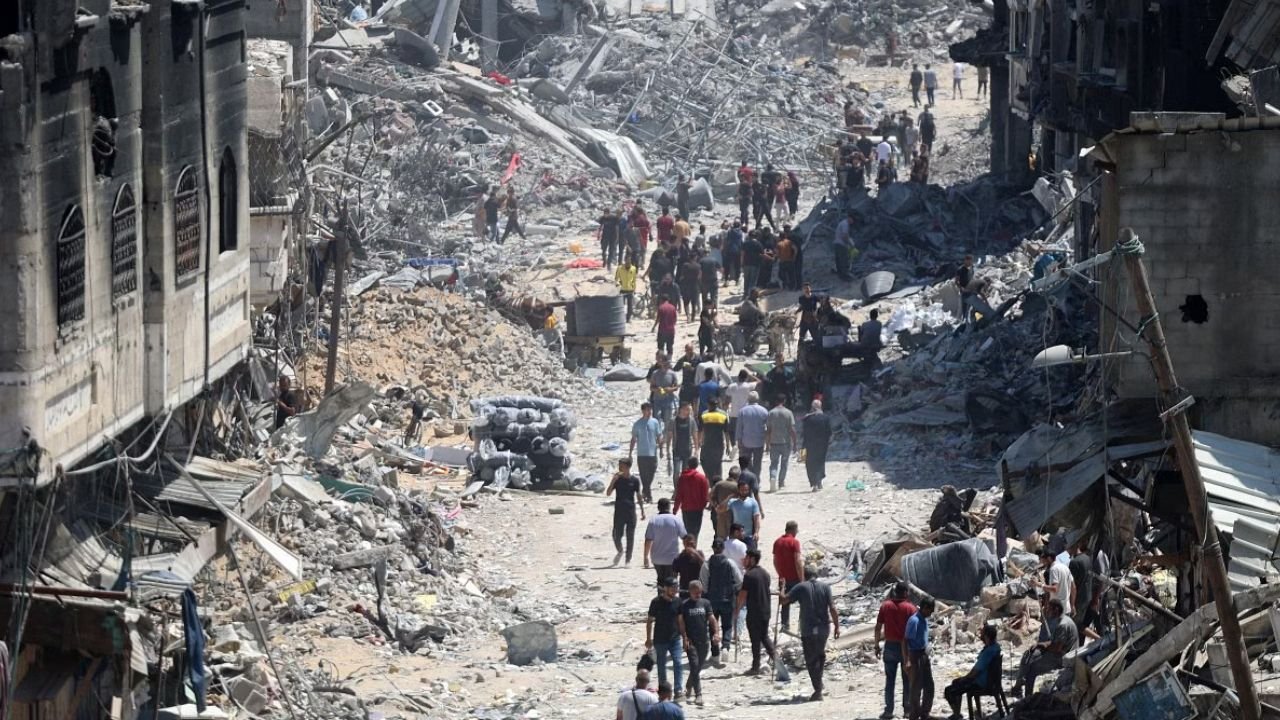
    AFPTV images showed people running and pedalling fast on bicycles past bomb-damaged buildings on a rutted dirt road to reach aid floating down to Gaza City.

    Hisham Abu Eid, 28, of Gaza City’s Zeitun area, said he got two bags of flour from an aid distribution and gave one to his neighbours.

    “Aid that is getting into Gaza is rare and not enough for even a small number of people. Famine is killing people,” Abu Eid said.

    As mediators seek a deal that may include more aid into Gaza and the release of hostages, Israeli Prime Minister Benjamin Netanyahu has come under increasing domestic pressure over the fate of the remaining captives.

    Israelis protesters reached Jerusalem on Saturday, capping a four-day march from the Gaza border to pressure the government to secure the hostages’ release.

    The US official said a six-week ceasefire was on the table, “starting today if Hamas agrees to release the defined category of vulnerable hostages… the sick, the wounded, elderly and women”.

    In Rafah, where hundreds of thousands of Gazans displaced by the war have sought refuge, Israeli bombardment that hit a makeshift camp killed at least 11 people, the Gaza health ministry said.

    The strike near a hospital also left “about 50 injured, including children”, it added.

    The Israeli military said it was looking into the incident.

    An AFP journalist saw wounded people being rushed on stretchers to another Rafah hospital.

    “Destruction is everywhere and there are many martyrs,” said resident Belal Abu Jekhleh.

    burs-ami/kir

    © Agence France-Presse

  • Alarm over fate of major Gaza hospital after Israeli raid

    Alarm over fate of major Gaza hospital after Israeli raid

    Palestinian Territories – There was growing concern Friday over a key Gaza hospital a day after a raid by the Israeli army, with the health ministry saying several patients had died there due to a lack of oxygen.

    The health ministry said the power was cut off and the generators stopped after the raid at the Nasser hospital in the southern city of Khan Yunis, and that four patients had died Friday.

    In recent days, intense fighting has raged in the vicinity of the hospital – one of the Palestinian territory’s last remaining major medical facilities that are still operational.

    On Thursday Israeli army spokesman Daniel Hagari said there was “credible intelligence” to suggest hostages seized by Gaza militants in the October 7 attack that sparked the war had been held at the hospital, and that bodies of some of the captives may still be inside.

    But the military said later it had “not yet found any evidence of this”, although forces had found “weapons, grenades and mortar bombs” at the hospital complex.

    On Friday it said Israeli forces had taken into custody more than “20 terrorists” suspected of involvement in the October 7 attack at the hospital.

    A witness who declined to be named out of fear for their safety told AFP the army had shot “at anyone who moved inside the hospital”.

    The health ministry also raised fears over the fate of six other patients in the intensive care unit and three children, saying it held Israel “responsible for the lives of patients and staff considering that the complex is now under its full control”.

    ‘Pattern of attacks’

    Medical charity Doctors Without Borders described a “chaotic situation” at the hospital, with one employee unaccounted for and another detained by Israeli forces.

    “Our medical staff have had to flee the hospital, leaving patients behind,” it said.

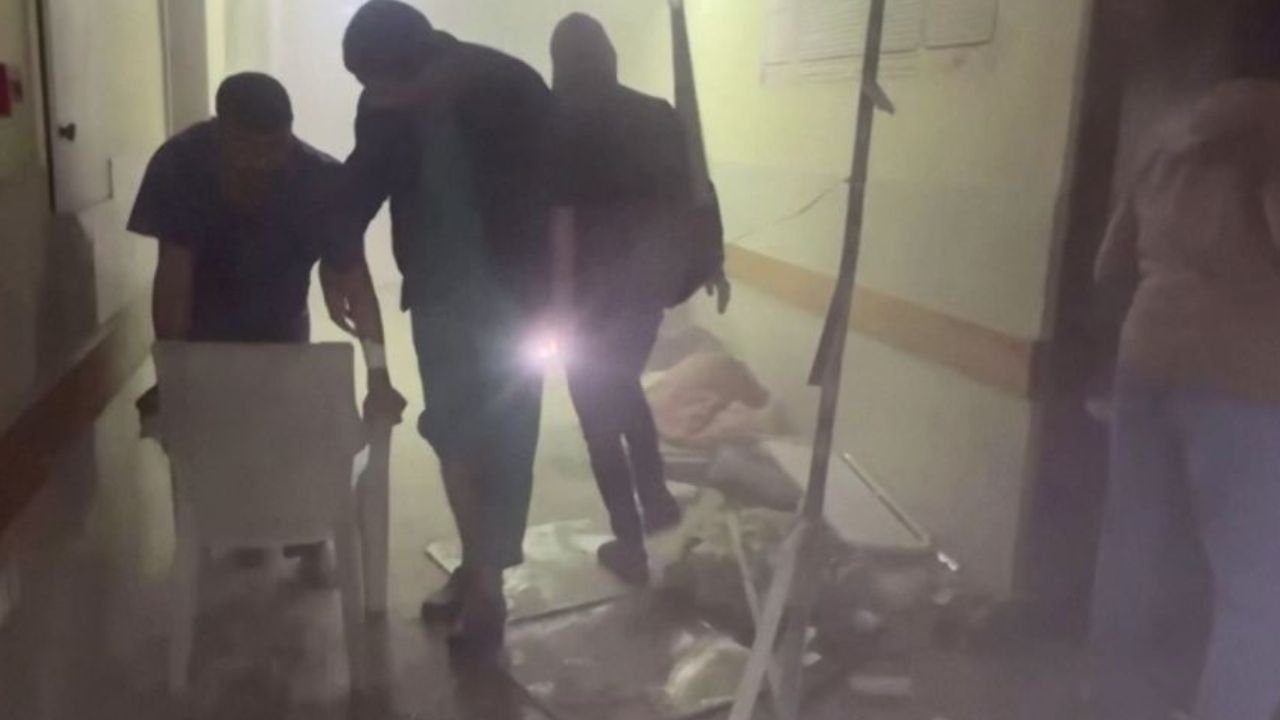
    Footage circulating on social media, which AFP could not independently verify, showed rescuers trying to move patients through dust-filled corridors amid fallen debris.

    At least 28,775 people, mostly women and children, have been killed in Israel’s assault on the Palestinian territory, according to the health ministry.

    The UN Human Rights Office said Israel’s raid on the Nasser hospital appeared to be “part of a pattern of attacks by Israeli forces striking essential life-saving civilian infrastructure in Gaza, especially hospitals”.

    The World Health Organization has described the Nasser hospital as a critical facility “for all of Gaza”, where only a minority of hospitals are even partly operational.

    Israeli strikes continued in the besieged territory overnight, with the health ministry saying Friday another 112 people were killed.

    ‘Dying slowly’

    Nearly 1.5 million displaced Palestinians are trapped in Rafah – more than half of Gaza’s population – seeking shelter in a sprawling makeshift encampment near the Egyptian border.

    There are fears about a growing humanitarian disaster without adequate supplies.

    “They are killing us slowly,” said displaced Palestinian Mohammad Yaghi. “We are dying slowly due to the scarcity of resources and the lack of medications and treatments in the city of Rafah.”

    “There is no medicine,” said Jihan al-Quqa, who was displaced from Khan Yunis to Rafah.

    “There are no antibiotics or any other treatments,” she added.

    “Everyone is sick, children and the elderly, and there is no medicine.”

    US President Joe Biden spoke by phone with Israeli Prime Minister Benjamin Netanyahu late Thursday, the White House said, and urged him again not to carry out an attack on Rafah without a plan to keep civilians safe.

    Britain, Australia, Canada and New Zealand have also urged Israel not to launch a ground offensive in the city.

    Despite international pressure, Netanyahu has insisted he would push ahead with a “powerful” operation in the overcrowded city to achieve “complete victory” over Hamas.

    Media reports suggested Egyptian authorities were building a new wall near the frontier with Gaza, amid fears of an influx of refugees.

    Truce talks

    Mediators from the United States, Qatar and Egypt gathered in Cairo this week to try and broker a deal to halt the fighting and see the release of the remaining hostages in exchange for Palestinian prisoners held by Israel.

    CIA director Bill Burns made an unannounced visit to Israel Thursday for talks with Netanyahu and the head of Israel’s Mossad intelligence agency, David Barnea.

    Barnea had already held talks with Burns and Egyptian and Qatari representatives in Cairo on Tuesday, before a Hamas delegation visited Wednesday.

    US Secretary of State Antony Blinken said he believed an agreement was still “possible”.

    But there has been limited sign of progress.

    Netanyahu said Thursday he rejected a plan for international recognition of a Palestinian state, following reports of the move in The Washington Post.

    burs-rox/dv

    © Agence France-Presse