Tag: Central Bank

  • State Bank announces aggressive policy rate hike to 22% in response to inflation risks

    State Bank announces aggressive policy rate hike to 22% in response to inflation risks

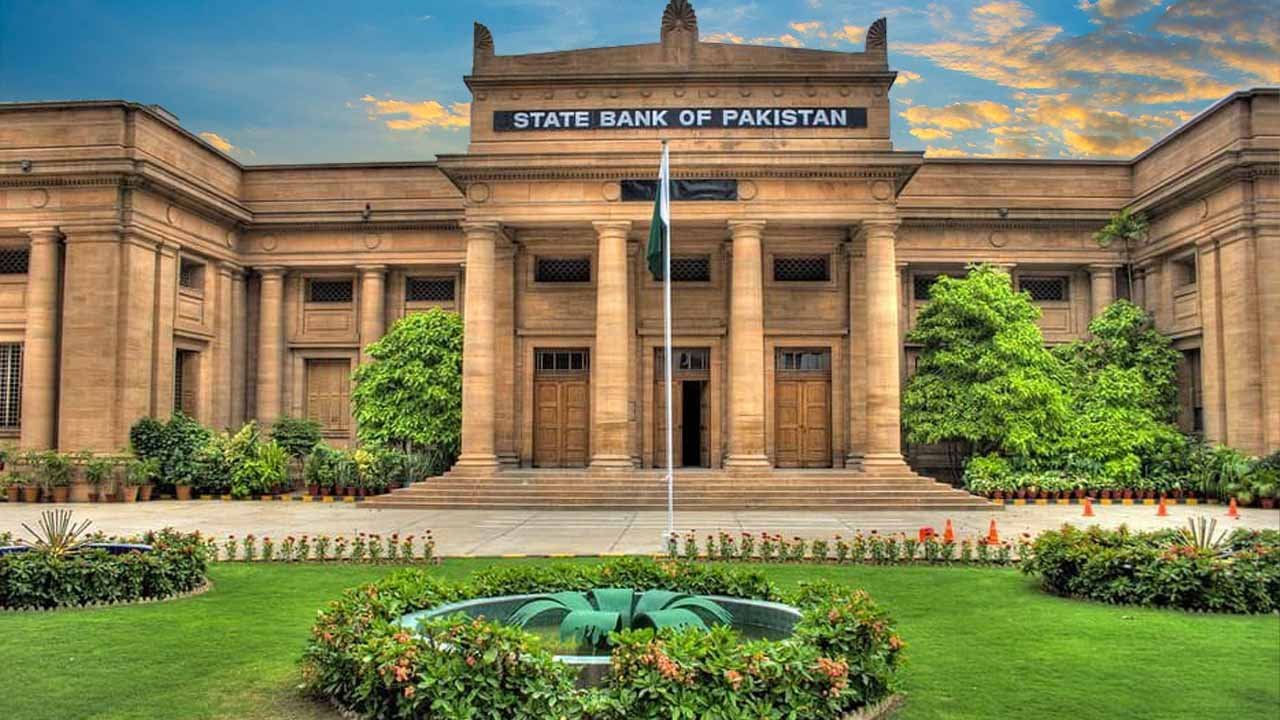
    During an emergency meeting convened on Monday, the State Bank of Pakistan (SBP) made the decision to raise the policy rate by 100 basis points (bps), resulting in a new rate of 22 per cent.

    The announcement was made subsequent to a gathering of the bank’s Monetary Policy Committee (MPC).

    The SBP clarified that the MPC acknowledged a heightened potential for upward risks to the inflation outlook compared to its previous meeting held on June 12.

    The committee highlighted that these risks primarily stem from the implementation of new measures in the fiscal and external sectors, which hold significant importance in the context of concluding the ongoing programme with the International Monetary Fund (IMF).

    “MPC noted that today’s action is necessary to keep the real interest rate firmly in positive territory on a forward-looking basis that would help in bringing down inflation towards the medium-term target of five to seven per cent by the end of fiscal year 25,” the SBP said.

  • Pakistan lifts import restrictions to satisfy IMF demand

    Pakistan lifts import restrictions to satisfy IMF demand

    In a recent development, the State Bank of Pakistan (SBP) has taken the decision to lift all import restrictions as part of fulfilling a condition set by the International Monetary Fund (IMF).

    The central bank issued a circular to officially end these restrictions, thereby satisfying another requirement put forth by the IMF.

    To facilitate the release of over 6,000 containers, the federal government has granted permission to banks for remittance provision. The circular issued by the SBP states that remittances will be provided for all imports following the implementation of this latest order. The central bank has instructed authorised dealers to process remittances based on the recommendations of stakeholders.

    It came to light yesterday that Pakistan and the IMF are facing challenges in reviving a loan program, leading to disagreements between the Ministry of Finance and the IMF. Sources revealed that the plan to bridge the external financing gap relied on funds received from a donor conference held in Geneva.

    The primary objective of the conference was to garner support and contributions for Pakistan’s financial requirements. As part of this plan, the IMF was tasked with securing $500 million by June through the Geneva Donor Conference. However, efforts to obtain funds for the Ministry of Planning and Treasury have encountered obstacles. Delays in finalising contracts and agreements under the Donor Conference have further impeded the financing process.

    Sources within the Ministry of Finance report that the amount received through the Geneva Donor Conference currently stands at $150 million, falling short of the expected sum. This has raised concerns from the IMF, which has expressed dissatisfaction with the level of financial support obtained through the conference.

    According to ARY News, the funds acquired from the Donor Conference will be allocated to crucial recovery and rehabilitation projects in regions affected by floods. The aim is to address the needs of these communities and provide support for their restoration efforts.

  • SBP calls for action against unauthorised mobile apps providing online banking services

    SBP calls for action against unauthorised mobile apps providing online banking services

    The State Bank of Pakistan (SBP) has raised concerns about commercial banks jeopardising depositors’ funds by allowing unauthorised mobile phone applications to offer online banking services to clients.

    The central bank issued a notification to regulated entities (REs) that provide digital banking services, warning about the use of unlicensed digital lending mobile applications and platforms.

    These applications integrate with customers’ bank accounts for loan disbursement, creditworthiness checks, and collections, posing consumer protection risks and potential harm to banks’ reputation.

    Regulated entities encompass commercial banks, microfinance banks (MFBs), payment system operators, payment service providers, and electronic money institutions (EMIs).

    The central bank explicitly stated that REs should not provide services such as deposits, lending products, mobile application integration with third parties, payment gateway services, credit scoring and creditworthiness checks, wallet services, and/or API integration services to unlicensed digital lending platforms, whether directly or indirectly.

    IT expert Noman Ahmad, speaking to The Express Tribune, emphasised the need for the central bank to disclose the names of financial institutions offering services through unlicensed applications. By doing so, depositors would have the opportunity to withdraw and safeguard their deposits before any unexpected events occur. He expressed surprise that unauthorised mobile platforms were offering banking services despite the SBP’s status as a responsible regulator.

    Banks in Pakistan manage deposits totaling approximately Rs23 trillion and serve 67.52 million depositors in a population of 227 million. The country has 103 million branchless banking accounts, while EMIs oversee 1.60 million accounts (e-wallets).

    The SBP’s notification advises REs to verify the licensing status and authorisation of digital lending platforms and mobile applications from relevant regulatory bodies, including the Securities and Exchange Commission of Pakistan and the central bank itself. This verification should be conducted as part of the know-your-client and customer due diligence processes.

    Furthermore, REs are urged to implement reasonable measures during customer onboarding and transaction monitoring to prevent unauthorised financial service providers from utilising their banking channels and platforms, either directly or indirectly.
  • Pakistani rupee sinks to record low of Rs308 against US dollar in open market

    Pakistani rupee sinks to record low of Rs308 against US dollar in open market

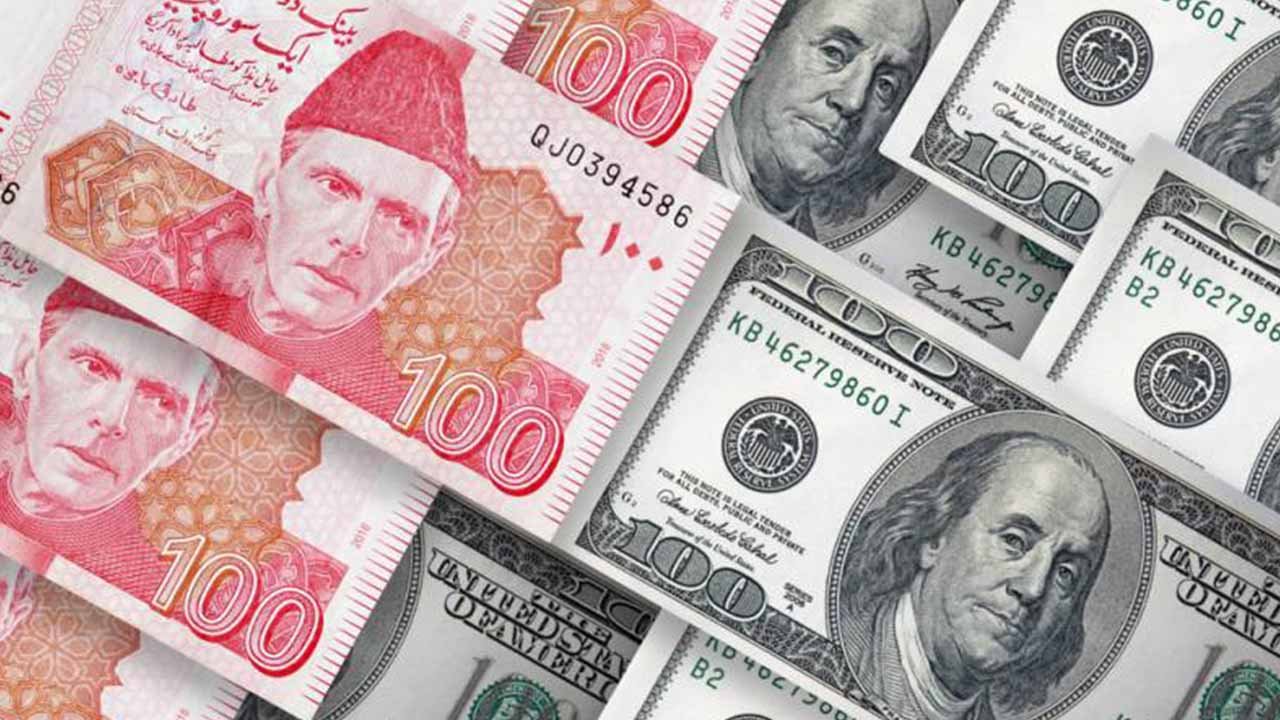
    On Tuesday, the Pakistani currency experienced a significant decline, reaching a new record low of Rs308 against the US dollar in the open market. This marked a 1 per cent decrease, or Rs3, from the previous day’s closing rate, as reported by the Exchange Companies Association of Pakistan.

    Consequently, the disparity between the exchange rates in the open market and the inter-bank market widened considerably, reaching a historic high of Rs21 to a dollar. Just a couple of months ago, this difference was in the range of Rs1-3.

    In inter-bank transactions, the central bank stated that the rupee continued its downward trend for the fifth consecutive working day, dropping by 0.21 per cent, or Rs0.59, to a 12-day low at Rs287.15 against the US dollar.

    There has been speculation in the market that the rupee is facing mounting pressure due to the expanding gap between the demand and supply of the US dollar in the currency market.

    In the meantime, Pakistan’s foreign exchange reserves have been consistently depleting and have now reached a critically low level of $4.3 billion. This is concerning because the country requires a comparatively large amount of foreign currency to cover import expenses and repay foreign debt.

    By the end of June 2023, Pakistan has to repay $3.7 billion in foreign debt. Additionally, it needs another $3.7 billion each month to ensure smooth importation of essential goods.

    Currency dealers in the open market have revealed that commercial banks are purchasing dollars in the informal market (kerb market) to settle international payments made through their clients’ credit cards. Furthermore, individuals are acquiring Saudi riyals and US dollars to cover expenses during the Hajj and Umrah pilgrimages.

    Experts strongly emphasize that the government must persuade the International Monetary Fund (IMF) to resume its $6.7 billion loan programme. Additionally, they urge friendly countries to provide fresh financing, which will help mitigate the risk of defaulting on external debt obligations.

    The resumption of the IMF programme will not only assist Pakistan in averting an imminent default but will also enable the country to attract financing from other global lenders and friendly nations. This new financing will bolster the foreign exchange reserves and aid in the reopening of the partially closed economy.

  • Pakistan’s forex reserves decline to $4.31 billion, covering less than a month’s worth of imports

    Pakistan’s forex reserves decline to $4.31 billion, covering less than a month’s worth of imports

    The State Bank of Pakistan (SBP) has experienced a continuous decline in foreign exchange reserves for the third consecutive week. This decline is attributed to the country’s ongoing struggle to secure a deal with the International Monetary Fund (IMF).

    The central bank’s statement indicates that the reserves decreased by $72 million to reach $4.31 billion as of May 12, primarily due to external debt payments. This amount is sufficient for less than a month’s worth of imports.

    In contrast, commercial banks in Pakistan hold net foreign reserves amounting to $5.62 billion, which is $1.01 billion higher than the central bank’s reserves. Therefore, the country’s total liquid foreign reserves amount to $9.93 billion.

    Pakistan’s economy is currently facing significant challenges, exacerbated by financial difficulties and the delay in reaching an agreement with the IMF. Such an agreement is crucial as it would provide much-needed funding to mitigate the risk of default.

    Earlier, on May 11, the State Bank of Pakistan (SBP) witnessed a decline of $74 million in foreign exchange reserves within a week, resulting in reserves amounting to $4.38 billion. Additionally, commercial banks held net foreign reserves of $5.6 billion.

    Reports indicate that the IMF remains skeptical and is urging Islamabad to take further actions to unlock the loan program, despite assurances from friendly countries regarding external funds for Pakistan.

    Pakistan has been asked to present a repayment plan for a $3.7 billion loan to the IMF in June and demonstrate stronger support from friendly nations to fulfill its commitments.

  • Pakistani rupee bounces back strongly after hitting all-time low of Rs300 against dollar

    Pakistani rupee bounces back strongly after hitting all-time low of Rs300 against dollar

    On Friday, the Pakistani rupee saw a significant recovery after hitting an all-time low of Rs300 against the US dollar the previous day. The local currency gained Rs12.43 per US dollar in the interbank market to trade at Rs286.50.

    This recovery can be attributed to two major developments that occurred over the last few hours. Firstly, the currency gained strength as demand from importers decreased, following the release of oil payments a day earlier.

    Secondly, the Supreme Court declared the arrest of Imran Khan, the Chairman of the Pakistan Tehreek-e-Insaf (PTI), illegal and ordered his immediate release. These two developments, combined with an improved political situation, resulted in the sharp recovery of the rupee.

    The demand for US dollars was high the previous day when the rupee hit an all-time low because imports had to retire their payments. However, the demand was relatively less on Friday, coupled with the improved political situation, which led to the sharp recovery.

    Despite the uncertainties surrounding the International Monetary Fund (IMF) programme sparking default concerns, the currency market did not react negatively to Finance Minister Ishaq Dar’s press conference, where he claimed that Pakistan would not default even if there was no IMF programme.

  • Gold price in Pakistan increases to Rs209,500 per tola on weak rupee and global trends

    Gold price in Pakistan increases to Rs209,500 per tola on weak rupee and global trends

    Gold prices in Pakistan increased on Monday, following global trends and a potential boost from a weakening rupee. As a result, yellow metal became more expensive, prompting traders to be cautious on the eve of a monetary policy meeting. According to data released by the All-Pakistan Sarafa Gems and Jewellers Association (APSGJA), the price of 24-carat gold increased by Rs1,200 per tola and Rs1,028 per 10 grams, settling at Rs209,500 and Rs164,645 respectively.

    In the inter-bank market, the rupee depreciated 0.44 per cent against the dollar on Monday, settling at 285.04, a loss of Rs1.25 according to the State Bank of Pakistan (SBP). As inflation in Pakistan spirals out of control, the SBP is expected to raise the policy rate by 100-200 basis points. In March, consumer price inflation in Pakistan rose to a record 35.37 per cent from the previous year.

    Gold is commonly viewed as a hedge against inflation, increasing in value as the purchasing power of the dollar decreases. In Pakistan, March’s monthly inflation surpassed predictions, reaching almost an all-time high of 35.4 per cent compared to the previous year. This has resulted in many individuals experiencing financial difficulty as the cost of living continues to outstrip average incomes. Last month, the central bank raised the policy rate by 300 basis points to 20 per cent.

    On Monday, world gold prices rebounded as the dollar trimmed its initial gains, which were driven by bets that OPEC’s surprise output cuts could raise global energy prices and cause central banks to increase interest rates. Spot gold increased by 0.5 per cent to $1,977.43 per ounce by 1206 GMT, with US gold futures gaining 0.4 per cent to $1,994.50. Earlier in the session, gold hit a one-week low of $1,949.54.

    However, when interest rates are raised to curb rising price pressures, the appeal of gold as an asset diminishes as it does not pay interest. In the domestic market, silver prices increased by Rs80 per tola and Rs68.59 per 10 grams, settling at their all-time highs of Rs2,350 and Rs2,014.47 respectively. While the international prices of silver fell 0.3 per cent to $24.01 per ounce, platinum was also down 0.3 per cent to $988.60, and palladium rose 0.7 per cent to $1,470.72.

  • Pakistan’s inflation expected to rise due to policy decisions and economic uncertainty, warns Finance Ministry

    Pakistan’s inflation expected to rise due to policy decisions and economic uncertainty, warns Finance Ministry

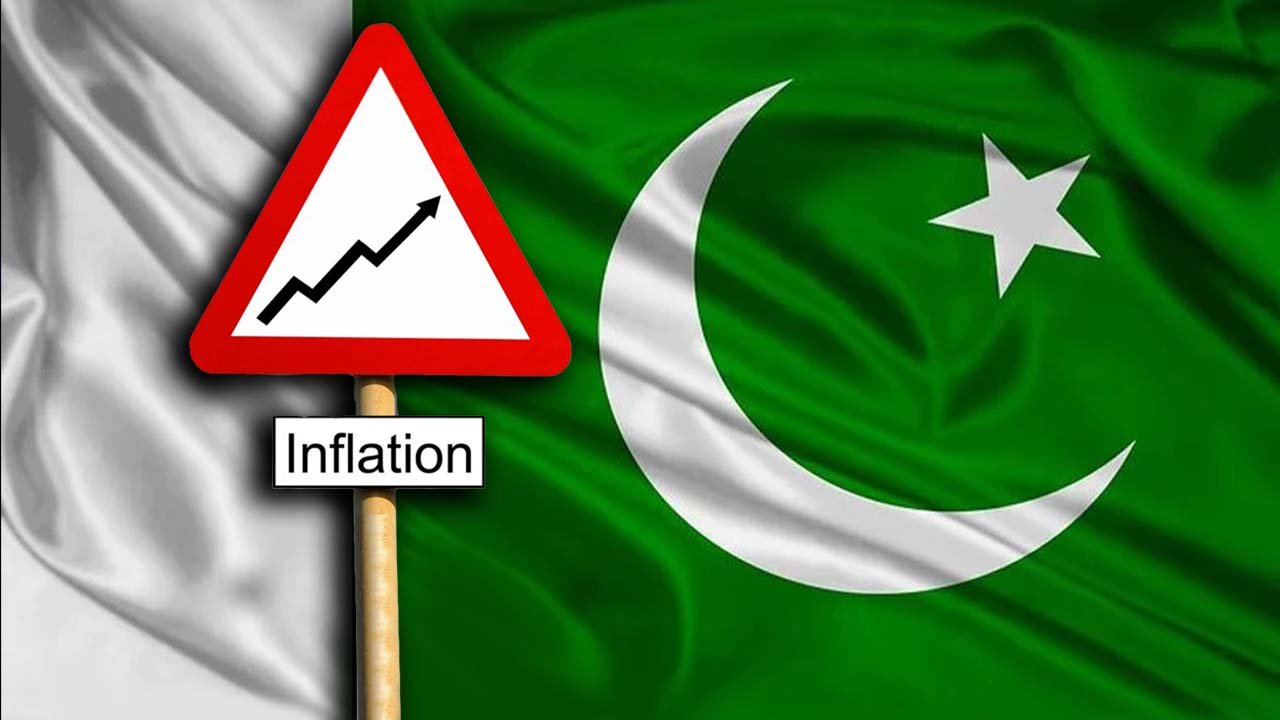
    Finance Ministry has warned that inflation in Pakistan is set to rise further due to a second-round effect of policy decisions made earlier this year to raise energy and fuel prices, the central bank’s policy rate, and the depreciation of the rupee to secure IMF funding.

    The recent political and economic uncertainties in the country are causing inflationary expectations to rise. The short-term rate of inflation measured by the Sensitive Price Indicator (SPI) hit a record 46.65 per cent last week, while monthly inflation recorded by the Consumer Price Index (CPI) reached 31.6 per cent in February – the highest in six decades.

    The ministry expects inflation to stay at an elevated level due to market frictions caused by the relative demand and supply gap of essential items, exchange rate depreciation, and recent upward adjustments of administered prices of petrol and diesel. Production losses due to floods have not yet been fully recovered, especially those of major agricultural crops. The shortage of essential items has persisted due to these factors.

    Moreover, the delay of stabilisation program has exacerbated economic uncertainty, due to which inflationary expectations have remained strong. The Economic Adviser’s Wing of the finance ministry has also conceded ineffective policy measures and the haplessness of the authorities in containing the inflationary spiral.

    A report from ministry warns that bulk buying during Ramzan might cause the demand-supply gap and result in escalation of essential items prices, although the government is taking steps to ensure a smooth supply of essential items. The report also warned that being largely dependent on prevailing climatic conditions, as witnessed last year, the delay in rains and early heatwave forecast by the Pakistan Met Office in April and May could adversely impact wheat production.

    On a positive note, the report said that despite challenges and uncertainties, the economy was showing continuous signs of resilience as depicted through contained fiscal and current account deficits during the current fiscal year.

  • Pakistan’s textile industry struggles as exports fall by 28% in February

    Pakistan’s textile industry struggles as exports fall by 28% in February

    On Monday, the All Pakistan Textile Mills Association (APTMA) released provisional data indicating that Pakistan’s textile sector exports declined significantly by 28 per cent, totaling $1.2 billion in February 2023, compared to $1.67 billion in the same month the previous year.

    Additionally, APTMA reported that textile exports for the first eight months of FY23 decreased by 11 per cent to $11.24 billion, down from $12.60 billion in 8MFY22. These declines are alarming for Pakistan, whose economy is already struggling with depleting foreign exchange reserves.

    The country’s central bank has only $3.81 billion in reserves, which is barely enough to cover a month of imports.

    Industrialists in Pakistan have expressed concern about the ongoing slump in the textile sector. Data released by the Pakistan Cotton Ginner’s Association (PCGA) on Friday revealed that cotton arrival in Pakistan also decreased by 34.5 per cent year-on-year.

    Last month, APTMA urged the federal government to implement a uniform gas price of $7 per MMBtu for the export industry throughout the country to ensure a level playing field.

    APTMA also warned that the government’s decision to suspend the regionally competitive energy tariff (RCET) of electricity for Export Oriented Units (EOUs) would harm the textile industry, particularly in Punjab.

    In December, APTMA wrote a letter to Prime Minister Shehbaz Sharif, warning that the country’s textile exports could fall below $1 billion a month from 2023 onwards, highlighting a range of issues affecting the sector, which is currently operating at less than 50 per cent capacity utilization.

  • Pakistani rupee bounces back after steep decline against dollar

    Pakistani rupee bounces back after steep decline against dollar

    During the early hours of trading on Friday, the Pakistani rupee (PKR) saw a significant recovery against the US dollar, with an increase of 4.51 per cent. The inter-bank market quoted the PKR at Rs272.78 by 11:50 am, representing an increase of Rs12.31 against the US dollar.

    This follows a steep decline of 6.66 per cent or nearly Rs19 to settle at an all-time low of Rs285.09 against the US dollar on Thursday.

    On Thursday, the State Bank of Pakistan’s Monetary Policy Committee (MPC) raised the key policy rate by 300 basis points (bps) to 20 per cent, aiming to curb inflation.

    The committee also emphasized the need for energy conservation measures to ease pressure on the external account and meet import requirements. The MPC expects this decision to stabilize inflation expectations and bring it to a medium-term target of 5 per cent-7 per cent by end-FY25.

    Globally, the US dollar eased back from a 2-1/2-month high against the yen on Friday, and weakened toward its first weekly loss since January against major peers. This comes as traders tried to gauge the path for Federal Reserve policy.

    According to Geo, the dollar index, which measures the currency against the yen, euro, and four other major peers, fell 0.11 per cent to 104.85, from its peak of 105.36 earlier this week. The index has decreased by 0.36 per cent since last Friday.

    Meanwhile, oil prices, a critical currency parity indicator, dropped on Friday, but remained poised for a weekly gain due to renewed optimism regarding China’s demand recovery, outweighing concerns over growing crude inventories in the US and tighter monetary policy in Europe.

    This is an intraday update.