Tag: ChatGpt

  • Meta blocks over 1,000 malicious URLs disguised as ChatGPT and AI tools

    Meta blocks over 1,000 malicious URLs disguised as ChatGPT and AI tools

    The internet is becoming more hazardous as the number of scams on the internet increases. Social media giants are now alerting users to fraudulent ChatGPT apps that are circulating on the internet. It is essential for users to be vigilant and only download ChatGPT apps from reliable sources.

    Meta has identified scammers exploiting people’s interest in ChatGPT by enticing users to download harmful apps and browser extensions. Cybercriminals are taking advantage of people’s curiosity and trust in ChatGPT to launch attacks, using tactics similar to those used in cryptocurrency scams.

    Meta has discovered about ten malware families that pose as ChatGPT and other similar tools. These malware strains are used to compromise accounts across the internet. Once a user downloads the malware, the malicious actors can launch an attack and keep updating their methods to bypass security protocols.

    Meta’s Q3 2023 security report states, “Over the past several months, we’ve investigated and taken action against malware strains taking advantage of people’s interest in OpenAI’s ChatGPT to trick them into installing malware pretending to provide AI functionality.” The company has detected and blocked over 1,000 unique malicious URLs from being shared on their apps, protecting unsuspecting users from falling prey to these cyberattacks.

    Furthermore, Meta has reported these malicious URLs to their industry peers at file-sharing services where malware is hosted, enabling them to take appropriate action to protect their users and networks. Meta has taken significant steps to combat the threat posed by malware strains posing as ChatGPT and similar tools.

    Cybercriminals are also using other websites such as LinkedIn, Chrome, Edge, Brave, and Firefox to deceive people. Meta has taken action against nine groups worldwide who are attempting to influence people secretly and steal information.

    Meta advises people to be cautious and ensure that the things they download are safe. They recommend that people only download things from trusted sources.

  • Godfather of AI resigns from Google, issues warning on dangers of AI development

    Godfather of AI resigns from Google, issues warning on dangers of AI development

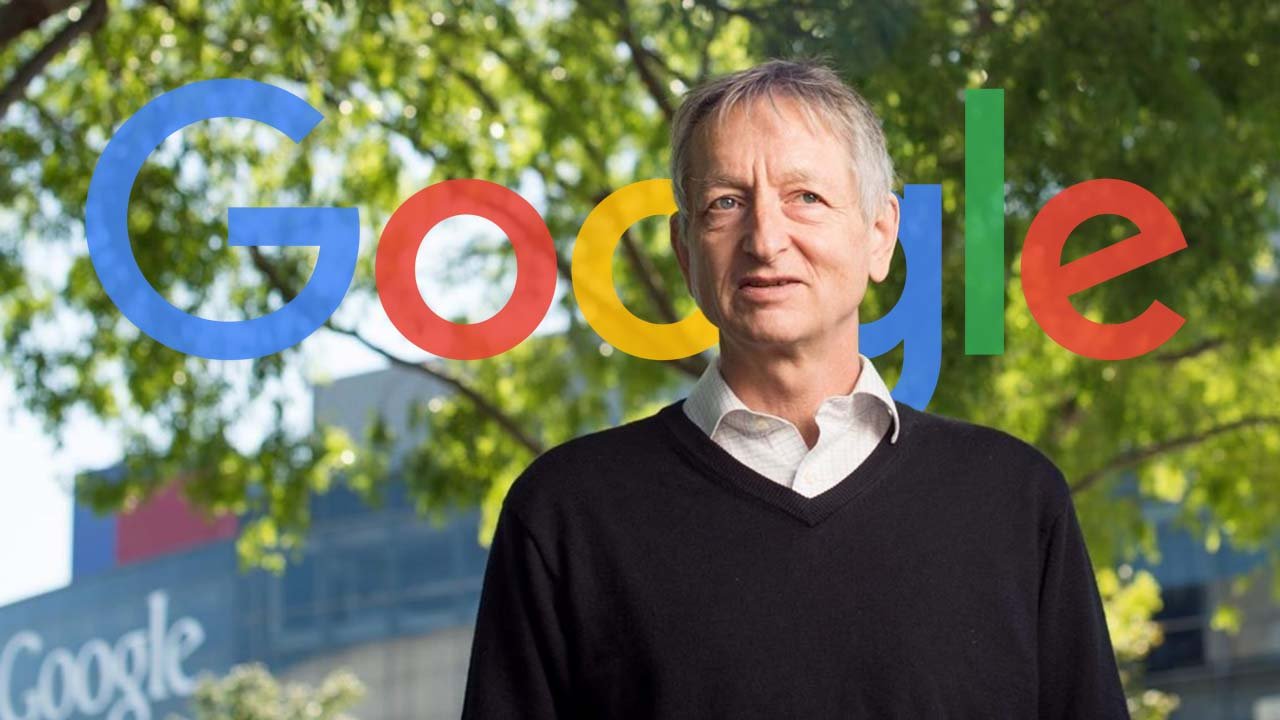
    Geoffrey Hinton, known as “the Godfather of AI,” has spent most of his career promoting the benefits of artificial intelligence, but now he is concerned about its potential dangers. He recently spoke to the New York Times about his decision to leave Google, where he co-founded Google Brain, a research team developing AI systems, citing concerns about the difficulty of preventing bad actors from using the technology for malicious purposes. Hinton is not alone in his apprehension about AI’s future, as other AI pioneers have expressed similar concerns.

    One of Hinton’s primary concerns is the spread of misinformation enabled by AI, such as deepfakes and AI-generated fake news, which can confuse people and blur the lines between reality and fiction. He worries that people will no longer be able to distinguish what is true from what is not.

    Hinton is also concerned about the rapid pace of AI technology advancement, which has been fueled by competition among major tech companies like Google and Microsoft. He is worried that the technology will become more advanced than the human brain, something he once believed was decades away from happening.

    Now 75, Hinton is dedicating the rest of his life to ensuring that the technology he helped create won’t lead to the destruction of civilization. He acknowledges the possibility that others would have developed AI had he not done so, but he still feels a sense of responsibility to help mitigate the potential negative consequences of its use.

  • India’s 5 million coders face uncertain future amid AI advancements

    India’s 5 million coders face uncertain future amid AI advancements

    If the technology underlying ChatGPT were to displace software engineers, India would be the country most affected, as it is home to over 5 million coders. This prospect is causing concern for newly qualified engineers like Palash Hade, who anticipates a reduction in software jobs in India.

    To increase his employability, Hade enrolled in an online degree program in data science and analytics from the prestigious Indian Institute of Technology (IIT) Madras.

    In the past, India’s outsourcing firms were desperate for talent and were willing to train engineers from different backgrounds. However, with the rise of generative artificial intelligence and ChatGPT, firms are now looking for candidates with these specific skills. India’s largest outsourcer, Tata Consultancy Services Ltd., made 46,000 campus offers this year, but the CEO of Tech Mahindra warns that change is fast approaching due to advanced AI.

    While students at elite schools like the Indian Institute of Science are not worried about the impact of AI on their future job prospects, tens of thousands of engineers without degrees from such institutions have reason to worry. Entry-level coding jobs are at risk of being eliminated, according to Shraddha Kulkarni, a 21-year-old engineering student in Bangalore who has been actively using ChatGPT.

    According to Bloomberg, developers on Reddit and Quora are also expressing anxiety about the potential impact of AI on their industry. They fear that the time and effort they invested in developing their skills may be rendered obsolete by AI-based programming.

  • Alibaba launches AI model ‘Tongyi Qianwen’ as ChatGPT rival for enterprise testing

    Alibaba launches AI model ‘Tongyi Qianwen’ as ChatGPT rival for enterprise testing

    Alibaba has launched its long-awaited ChatGPT rival, “Tongyi Qianwen,” for enterprise testing. The launch is not open to the general public but is restricted to a few eligible enterprises. Currently, the company is extending invitations to enterprise users only to participate in experience testing. Interested users can submit their applications via the official website, and those who meet the eligibility criteria will be considered for participation.

    “Tongyi Qianwen” is a highly advanced AI model designed to understand and respond to human commands. It serves as an efficient assistant and can even generate ideas. The model is being developed by Alibaba’s advanced research institute, the DAMO Academy. For many years, Alibaba DAMO Academy has been involved in cutting-edge scientific research fields such as natural language processing (NLP) and has been developing large models since 2019.

    Alibaba plans to integrate its AI large-scale model technology with the DingTalk productivity tools. Alibaba’s large-scale model is scheduled to be launched on April 11 at the 2023 Alibaba Cloud Summit, along with several industry-specific application models that will follow. Additionally, it has been reported that the company is set to release a large model, which could be comparable to ChatGPT 2.5, in the second half of this year.

    Alibaba DAMO Academy is the research and development arm of Alibaba Group, one of the world’s largest e-commerce companies. The academy was founded in 2017 and focuses on cutting-edge research in areas such as machine learning, artificial intelligence, natural language processing, and quantum computing. The academy has several research centers located in China, the United States, Israel, Singapore, Russia, and other countries.

    The goal of the academy is to use its research to support Alibaba’s businesses and to make significant contributions to the academic and scientific communities. The academy has partnerships with leading universities and research institutions around the world and collaborates with top researchers in various fields.

  • ChatGPT’s impact on the job market: Which professions will be most affected?

    ChatGPT’s impact on the job market: Which professions will be most affected?

    The rise of artificial intelligence has led to concerns about job displacement and unemployment. As a large language model trained by OpenAI, ChatGPT is one such example of AI technology that has the potential to impact the workforce.

    In this article, we will explore the ways in which ChatGPT may affect jobs, and whether it is ultimately beneficial or detrimental for employees.

    What is ChatGPT?

    Before delving into the impact of ChatGPT on jobs, it is important to understand what it is and how it works. ChatGPT is a natural language processing model that uses deep learning techniques to generate human-like responses to text-based queries. It was developed by OpenAI and is based on the GPT-3.5 architecture, which enables it to understand and generate language with remarkable accuracy.

    ChatGPT can be used for a variety of purposes, including customer service, chatbots, and even creative writing. It has the ability to learn from large amounts of data, which means that it can continue to improve and become more accurate over time.

    Impact of ChatGPT on jobs

    The rise of AI technology has led to concerns about job displacement and unemployment, particularly in industries that rely heavily on manual labor or routine tasks. However, the impact of ChatGPT on jobs is more nuanced and depends on the specific industry and job type.

    To better understand the potential impact of ChatGPT on jobs, let’s take a closer look at some of the industries and job types that may be affected:

    Customer service

    One of the most obvious applications of ChatGPT is in customer service. Chatbots powered by ChatGPT can provide customers with quick and accurate responses to their queries, without the need for human intervention. This has the potential to reduce the number of customer service representatives needed, particularly for routine inquiries.

    Still, ChatGPT is not a complete replacement for human customer service representatives. While it can provide quick and accurate responses to routine inquiries, it may struggle with more complex or nuanced queries that require empathy and human judgment.

    Creative writing

    Another potential application of ChatGPT is in creative writing. ChatGPT has the ability to generate human-like responses to text-based prompts, which means that it can be used to write articles, scripts, and even novels.

    While this may seem like a threat to human writers, it is important to note that ChatGPT is not capable of original thought or creativity. It can only generate responses based on the data it has been trained on. Human writers will still be needed to create truly original and creative content.

    Data entry

    Data entry is a job that involves manually inputting data into a computer system. While this may seem like a mundane task, it is still a job that many people rely on for their livelihood. ChatGPT has the potential to automate some aspects of data entry, which may reduce the need for human data entry clerks.

    However, it may struggle with handwriting recognition, and may not be able to accurately input data from non-textual sources such as images or audio recordings.

    Benefits of ChatGPT for employees

    While there may be some potential job displacement due to the rise of ChatGPT, there are also several benefits for employees. Here are just a few:

    Quick and convenient support

    One of the most significant benefits of ChatGPT is that it provides quick and convenient support to employees. With ChatGPT, employees can quickly get answers to their questions without having to wait for a human representative. This can save employees a significant amount of time, enabling them to focus on their tasks and responsibilities more effectively.

    Improved productivity

    ChatGPT can also help to improve employee productivity. By providing fast and accurate answers to employee queries, ChatGPT can reduce the amount of time employees spend looking for information. This can free up more time for employees to focus on critical tasks, helping to improve productivity and efficiency.

    Enhanced learning and development

    ChatGPT can also be used as a tool for learning and development. By providing employees with access to a wealth of information and resources, ChatGPT can help to enhance employee knowledge and skills. This can be particularly useful for employees who are new to a job or those who are looking to expand their knowledge in a particular area.

    Increased accessibility

    Another benefit of ChatGPT is that it can increase accessibility for employees. With ChatGPT, employees can access information and support from anywhere and at any time. This can be particularly useful for remote workers or those who work outside of traditional office hours.

    Personalised assistance

    Finally, ChatGPT can offer personalised assistance to employees. By using machine learning algorithms, ChatGPT can learn about employees’ needs and preferences over time, providing more personalised support and assistance. This can help to improve the employee experience, leading to increased engagement and job satisfaction.
  • Microsoft to showcase its cutting-edge AI technology in Word, PowerPoint

    Microsoft to showcase its cutting-edge AI technology in Word, PowerPoint

    Microsoft is poised to showcase its new artificial intelligence (AI) technology, which bears resemblance to OpenAI’s ChatGPT, and its transformative impact on its Office productivity suite.

    Following the demonstration of its Prometheus Model in the latest Bing search engine, Microsoft is now set to reveal its plans to integrate OpenAI’s language AI technology and Prometheus Model into its core productivity apps such as Word, PowerPoint, and Outlook.

    Sources with knowledge of Microsoft’s initiatives revealed that the company is making preparations to showcase its productivity vision, which involves the integration of OpenAI’s AI technology, in the upcoming weeks. Microsoft is reportedly aiming for an official announcement in March, highlighting the company’s drive to revolutionize its search and productivity offerings through its investments in OpenAI.

    Earlier reports by The Information indicated that GPT models have undergone trials in Outlook to enhance search results, along with features for recommending email replies and Word document integration to enhance writing capabilities. A new generative AI experience was recently introduced in Microsoft Viva Sales, leveraging the Azure OpenAI Service and GPT to create sales emails, similar to some of the features being tested in Outlook.

    As Microsoft’s new Prometheus Model, based on OpenAI’s next-generation technology, has already revolutionized Bing web searches, the integration of this functionality into Microsoft Office apps and Teams will serve as a testament to the company’s confidence in its AI capabilities. Currently, the Prometheus Model can be utilized within Office web apps through the Bing sidebar integration in Microsoft Edge browser.

    This sidebar features a compose tab that offers a glimpse into Microsoft’s ongoing testing work for Word and Outlook. Additionally, sources indicate that the company is exploring ways to generate graphs and graphics for PowerPoint. Bing already has the ability to create tables and charts for basic data, but incorporating those into visually appealing graphics for presentations or Excel use would be a natural progression.

    Microsoft is proceeding with haste in its integration efforts, largely due to the threat posed by Google. Sources informed The Verge that Microsoft had originally intended to launch its Bing AI in late February, but expedited the release in response to Google’s imminent announcements. As a result, Google unveiled its ChatGPT rival, Bard, a day ahead of Microsoft’s event.

    Microsoft CEO Satya Nadella is determined to establish the company as a leader in the field of artificial intelligence (AI), and counteract any competition from rival Google. To demonstrate his commitment, Nadella arrived early to the Bing AI event on Tuesday morning, despite the event being scheduled to start at 10 AM PT. He was so eager to commence early that he requested to start the event 20 minutes ahead of schedule, resulting in event organizers scrambling to accommodate the change and the event beginning five minutes ahead of schedule, with Nadella taking the stage two minutes before the original 10 AM PT start time.

    Internally, several Microsoft executives are confident that the company is far ahead of Google in terms of Bing AI and its integration into productivity apps. However, they are also cautious, cautioning employees to be vigilant against rivals who may attempt to disrupt Microsoft’s productivity offerings in the same manner as Microsoft is targeting Google’s search business.

    Nadella’s push for AI integration across Microsoft’s products is driven by the overwhelming consumer response to OpenAI’s ChatGPT. Analysts at UBS estimate that ChatGPT achieved 100 million monthly active users after just two months. Within 48 hours, over 1 million people signed up for the Bing waitlist, and as of Thursday, Bing was the third most popular app in the US App Store.

    According to The Verge, Microsoft intends to capitalize on the opportunities presented by artificial intelligence (AI) in 2023 and unlock the full potential of its Prometheus Model, including features that have yet to be publicly disclosed. The tech industry can expect AI to be a prominent topic of discussion throughout the rest of the year, as Microsoft and Google compete for supremacy in the search and AI space.

  • AI ChatBot passes MBA exam given by a Wharton professor

    AI ChatBot passes MBA exam given by a Wharton professor

    According to recent research by a professor at the University of Pennsylvania’s Wharton School, the chatbot GPT-3, powered by artificial intelligence, was successful in passing the program’s final exam for the Master of Business Administration (MBA) degree.

    Professor Christian Terwiesch, who wrote the research paper “Would Chat GPT3 Get a Wharton MBA?” A Prediction Based on Its Performance in the Operations Management Course,” claimed that the bot scored between a B- and B in the exam.

    The bot’s score shows its “remarkable ability to automate some of the skills of highly compensated knowledge workers in general and specifically the knowledge workers in the jobs held by MBA graduates, including analysts, managers, and consultants,” according to Terwiesch.

    The AI bot did an “amazing job at basic operations management and process analysis questions, including those that are based on case studies,” Terwiesch wrote in the paper, which was published on January 17. He also said the bot’s answers were “excellent.”

    The bot is also “remarkably good at modifying its answers in response to human hints,” he concluded.

    The results of Terwiesch’s research come as schools become more worried that AI chatbots may encourage cheating. Despite the fact that chatbots are not a recent invention, ChatGPT took off on social media in late 2022. The New York City Department of Education announced earlier this month that ChatGPT would no longer be allowed on any equipment or networks in its schools.

    The majority of the argument is centered on how difficult it is to differentiate between human responses and ChatGPT’s conversational speech style and cohesive, topical response style.

    Experts in artificial intelligence and education have admitted that ChatGPT and other such bots may eventually harm education. However, other educators and professionals said in recent interviews that they weren’t worried just yet.

    The GPT-3 model utilised in the study seems to be an older sibling of the most recent ChatGPT bot, which has generated debate among academics and AI professionals.

    ChatGPT, the newest version, “is fine-tuned from a model in the GPT-3.5 series,” according to OpenAI’s website.

    While Chat GPT3’s results were impressive, Terwiesch noted that Chat GPT3 “at times makes surprising mistakes in relatively simple calculations at the level of 6th-grade math.”

    According to NDTV, the present version of Chat GPT is “not capable of handling more advanced process analysis questions, even when they are based on fairly standard templates,” Terwiesch added. “This includes process flows with multiple products and problems with stochastic effects such as demand variability.”

    However, Terwiesch said ChatGPT3’s performance on the test has “important implications for business school education, including the need for exam policies, curriculum design focusing on collaboration between humans and AI, opportunities to simulate real-world decision-making processes, the need to teach creative problem solving, improved teaching productivity, and more.”