Tag: cheap oil

  • Pakistan receives second shipment of discounted Russian crude oil

    Pakistan receives second shipment of discounted Russian crude oil

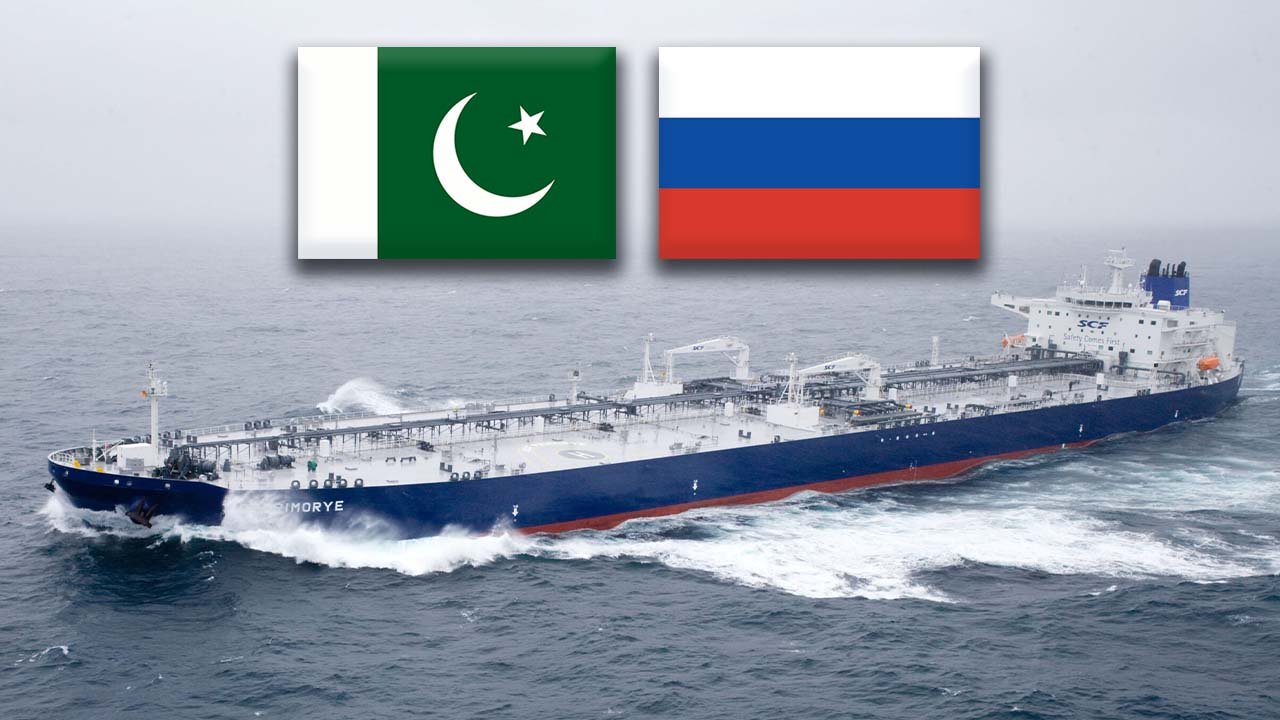
    On Tuesday, the second shipment of discounted Russian crude oil, comprising a total of 55,000 tonnes, reached the Karachi port.

    The vessel carrying Urals oil, named ‘Clyde Noble’, had been en route to the port of Karachi in the Arabian Sea, according to earlier reports from reliable sources. Once the ship’s berthing plan is finalized, it will be docked at the oil pier.

    An insider from the oil industry had previously informed The News that the vessel was expected to reach Karachi Port by Tuesday. Originally scheduled to arrive on June 20, the second cargo faced a one-week delay due to limited storage space in the tanks of Pakistan Refinery Limited (PRL).

    The PRL, being the first domestic refinery to receive crude oil from Russia under the government-led deal, encountered logistical challenges.

    Pakistan had received its initial shipment of Russian crude oil on June 12 when a tanker carrying 45,000 tonnes of crude oil docked at the Karachi port. The government had placed an order of 100,000 tonnes of Russian crude oil in April of this year after months of negotiations with Moscow to finalize the terms and conditions of the agreement.

    As per the terms of the deal, Russia dispatched the first oil tanker carrying 100,000 metric tonnes of crude, which arrived at the Omani port earlier this month.

    However, due to the Pakistani port’s limitations in handling heavy ships carrying over 50,000 tonnes of oil cargo, it was decided to transport the crude to Pakistan using smaller vessels.

    It is noteworthy that the vessel, loaded with Ural crude on April 21 at a Russian port, faced a 10-day delay due to technical issues. Subsequently, it reached Egypt’s Suez Canal on May 17, where it endured a 12-day wait in a lengthy queue before crossing the canal.

    Currently, Pakistan imports 70 per cent of its crude oil, which is refined by PRL, National Refinery Limited, Pak Arab Refinery Limited, and Byco Petroleum. The remaining 30 per cent is domestically produced and refined by Attock Refinery Limited.

    To meet the demand for petroleum products, PRL is presently in the process of refining the Russian crude oil, blending it with Arabian crude that arrived a few days ago following a PRL order.

  • Russian oil imports expected to reduce fuel prices slowly, says Musadik Malik

    Russian oil imports expected to reduce fuel prices slowly, says Musadik Malik

    At the Pakistan Energy Conference 2023, Minister of State for Petroleum, Musadik Malik, reassured the nation that the arrival of cheap oil from Russia would eventually lead to a decline in fuel prices. However, he cautioned that an immediate decrease should not be expected until a continuous supply of oil from Moscow is established.

    Minister Malik said that the import of Russian oil was not merely a promise or rhetoric. He confirmed that ships carrying the much-anticipated oil had already reached Oman and would commence supply to Pakistan within a week. While acknowledging that a single shipment would not significantly impact fuel costs, Malik expressed confidence that once a persistent supply was established, the price of fuel would gradually decrease.

    The government’s ambitious objective is to fulfill one-third of Pakistan’s crude oil requirements with affordable oil sources, including imports from Russia. The aim is to address the chronic energy shortages that Pakistan, the world’s fifth most populous country, has been grappling with. Currently, Pakistan imports 84 per cent of its petroleum products, primarily from Gulf Arab allies Saudi Arabia and the United Arab Emirates.

    The import of cheap Russian oil represents one of Pakistan’s strategies to alleviate its energy crisis, as global efforts are underway to restrict Russia’s oil exports due to its invasion of Ukraine. During a visit to the United States earlier this month, Minister Malik confirmed that Pakistan had placed its first order for Russian oil, which is expected to arrive within a month. Upon evaluating the impact of this initial shipment, Pakistan will decide on the extent of future imports.

    When asked about the possibility of pursuing more Russian imports, Malik responded that Pakistan would prioritise cheaper energy sources to meet its energy requirements. The minister further emphasised that the government’s objective was to ensure a sustainable and affordable supply of low-cost energy, highlighting accessibility, sustainability, and affordability as the key pillars of this vision.

    In addition to the import of Russian oil, Malik mentioned the Iran-Pakistan Gas Pipeline project as another avenue to address the country’s energy needs. The government has conveyed to Iran its intention to access energy through the pipeline while remaining responsible and avoiding potential sanctions. Talks are underway with both sanctioning countries and Iran to find a creative solution to this matter.

    With Pakistan eagerly awaiting the arrival of cheap Russian oil, the government remains committed to securing a sustainable and affordable energy supply to meet the needs of its citizens. The gradual decline in fuel prices is expected to provide much-needed relief to the nation, addressing its chronic energy shortages and boosting economic growth in the process.

  • Russia to sell cheap crude oil to Pakistan, Musadik Malik reiterates

    Russia to sell cheap crude oil to Pakistan, Musadik Malik reiterates

    State Minister for Petroleum Musadik Malik on Friday reiterated that Russia will provide Pakistan with crude oil at discounted rates.

    Speaking at a press conference, Malik claimed that Russia will offer Pakistan crude at a discount, just like the energy giant does for other nations across the globe.

    “It (the discount) could be greater than what others receive,” he added. 

    The remarks come a day after PBS Newshour journalist Amna Nawaz interviewed Foreign Minister Bilawal Bhutto-Zardari, who said: “As far as Russia is concerned, we aren’t pursuing or receiving any discounted energy, but we are facing an extremely difficult economic situation.”

    In response to a question on the $60 per barrel limit on Russian seaborne oil imposed by the Group of Seven and the EU in connection to Russia’s war in Ukraine, Bilawal said, “Up until now we actually haven’t received nor are we getting any oil from Russia.”

    “As far as discounted rates, no one is giving discounted rates for oil these days,” Bilawal also told reporters at the United Nations. “That’s not a reality. It is true that we’re actively pursuing ways and means to address the energy shortfalls and difficulties we’re facing in Pakistan.”

    Malik, who had earlier in the month claimed that Russia will supply cheaper oil, revealed on Friday that Pakistani refineries could process Russian crude, namely Siberian Light and Ural Light. Islamabad’s inability to obtain oil from Moscow is attributed to Pakistan’s refineries’ capacity to handle Russian crude.

    “Pakistan Refinery Limited (PRL), owned by Pakistan State Oil (PSO), told us that they could utilise up to 50 per cent light crude of Russian origin. Similarly, PARCO has told us that they could utilise up to 30 per cent of Russian crude.”

    “Whereas, Cnergyico, the third largest oil refinery in the country, could not only process these two (Siberian Light and Ural Light) crudes but also heavy crudes as well.”

    “We will get these light crudes from Russia on a discount,” added Malik.

    Discounts on finished goods, such as gasoline and petrol, will also be discussed, the state minister added. The Russian delegation is expected to visit Pakistan in 2023.

    According to DAWN, in the second week of January, there will be an Inter-Governmental Commission (IGC) meeting between Pakistan and Russia. During the conference, the Russian energy minister is likely to visit.

    In connection to the TAPI project, which “may offer us with 1.3bcf of gas,” Malik continued, the administration has also reestablished contacts with Turkmenistan.

    “A special strategic cell has been established in the Ministry to follow up these projects,” he said.

    On liquid natural gas (LNG), Malik said the government is working with Azerbaijan on a gas purchase framework agreement, which is being drafted. “Under this framework, we would have a government-to-government level agreement with the State Oil Company of Azerbaijan Republic, largely known as SOCAR,” he said.

    “SOCAR will provide us with distressed cargoes on a monthly basis, and the Government of Pakistan would have the option to purchase these cargoes at given rates or not. “This will help us increase our gas supply,” he said.

    The minister said that SOCAR has already offered Pakistan LNG cargo for December 14. “However, we were unable to purchase it as both our terminals were not available,” he said.

    Additionally, the government is still working to come to an arrangement with the UAE that would allow for the purchase of diesel and petrol cargoes.

    “I want to reiterate that the policies of the current government are meant to alleviate hardships of poverty-ridden masses,” said Malik.

    He said that despite a 10 per cent yearly loss in gas reserves, the government is giving its people more gas this year than it did the year before. ”We will have an additional cargo of gas in the coming months of January and February, in comparison to the same period in 2022,” he said.

    “We are also bringing in 20,000 tons LPG in addition to facilitate our consumers.”

  • Pakistani delegation leaves for Russia to hold discussions on cheaper oil

    Pakistani delegation leaves for Russia to hold discussions on cheaper oil

    Minister of State for Petroleum Dr Musadik Malik and the petroleum secretary have flown to Russia to hold talks over oil and gas, a source with knowledge of the situation said on Monday on the condition of anonymity.

    The trip comes as the country struggles to meet domestic gas supply demands as winter approaches while battling to contain a current account deficit swelled by energy payments, mostly for oil.

    Ishaq Dar, the federal minister of finance, had already stated that the delegation will discuss an oil contract with Moscow.

    “We should pray the visit is successful and the government manages to secure a deal on favourable terms and conditions,” Dar said during an interview.

    Given the sharp rise in the cost of energy commodities in recent months, buying Russian oil at lower prices has gained popularity. This has been difficult, especially for emerging economies like Pakistan, whose energy requirements are mostly met by imports of petroleum.

    The State Bank of Pakistan (SBP) said that during the first four months of the current fiscal year, Pakistan imported petroleum products worth $7.547 billion.

    Dar had earlier stated, speaking to a crowd in Dubai on November 13, that Islamabad hoped to clinch an import pact with Moscow on conditions comparable to those of New Delhi. He said that Pakistan could purchase oil from Russia since India was doing the same, and the US had been informed of this.