Tag: chicken

  • From donkey meat to dead chicken, authorities shut down another ‘meat’ shop

    From donkey meat to dead chicken, authorities shut down another ‘meat’ shop

    The Lahore High Court has ordered the permanent sealing of shops selling dead chickens in Tollington Market.

    Justice Shahid Karim of Lahore High Court issued a written order in the smog case, pointing out that the food authority’s report stated that a large number of dead chickens were destroyed in the Tollington market.

    It has been ordered that areas where the market’s waste is disposed off should be investigated and reported on, while the court has also called for an evaluation on cleanliness in the market.

    The court also ordered the PHA to submit a report on the maintenance of government parks along with the local committees.

  • Move over chicken; mutton is Pakistan’s favourite meat

    Move over chicken; mutton is Pakistan’s favourite meat

    In a recent survey conducted by Gallup & Gilani Pakistan, people across the country were asked about their favorite type of meat.
    The survey revealed the following preferences:
    • 41 percent of respondents chose goat meat as their favorite.
    • 25 percent favored beef.
    • 23 percent preferred chicken.
    • 11 percent either didn’t know or didn’t answer.

    Gallup & Gilani Pakistan conducted the survey to gather information about people’s food preferences. Understanding what people like helps businesses and policymakers make decisions.

    We agree that nothing beats a good mutton karahi. Or a good mutton pulao. Or a good mutton haandi. Or paai.

    As you can tell, The Current too is a mutton fan.

  • Cost of living rises: SPI records increase in weekly inflation 

    Cost of living rises: SPI records increase in weekly inflation 

    The Sensitive Price Indicator (SPI) recorded a slight increase of 0.71 per cent for the week ending November 3, 2023, compared to the previous week.

    According to data from the Pakistan Bureau of Statistics (PBS), the combined index stood at 279.08 on November 3, 2023, up from 277.11 on October 26, 2023, and significantly higher than the index of 214.88 recorded a year ago on November 3, 2022.

    Out of 51 items, the prices of 12 items increased, 14 items decreased, and 25 items remained stable. 

    The most notable price increases were seen in tomatoes (25.58 per cent), onions (25.25 per cent), chicken (10.79 per cent), potatoes (1.61 per cent), Lipton tea (1.58 per cent), eggs (1.30 per cent), garlic (0.50 per cent), basmati broken rice (0.19 per cent), georgette (0.28 per cent), and firewood (0.05 per cent).

    Conversely, significant price decreases were observed in gur (2.66 per cent), bananas (1.78 per cent), 5-litre cooking oil (1.62 per cent), 1 kg vegetable ghee (1.23 per cent), LPG cylinders (1.05 per cent), masoor pulse (0.93 per cent), wheat flour (0.62 per cent), washing soap (0.41 per cent), and mustard oil (0.32 per cent).

    The weekly SPI percentage change across different income groups revealed an increase in SPI for all quantiles, ranging from 0.64 per cent to 0.86 per cent.

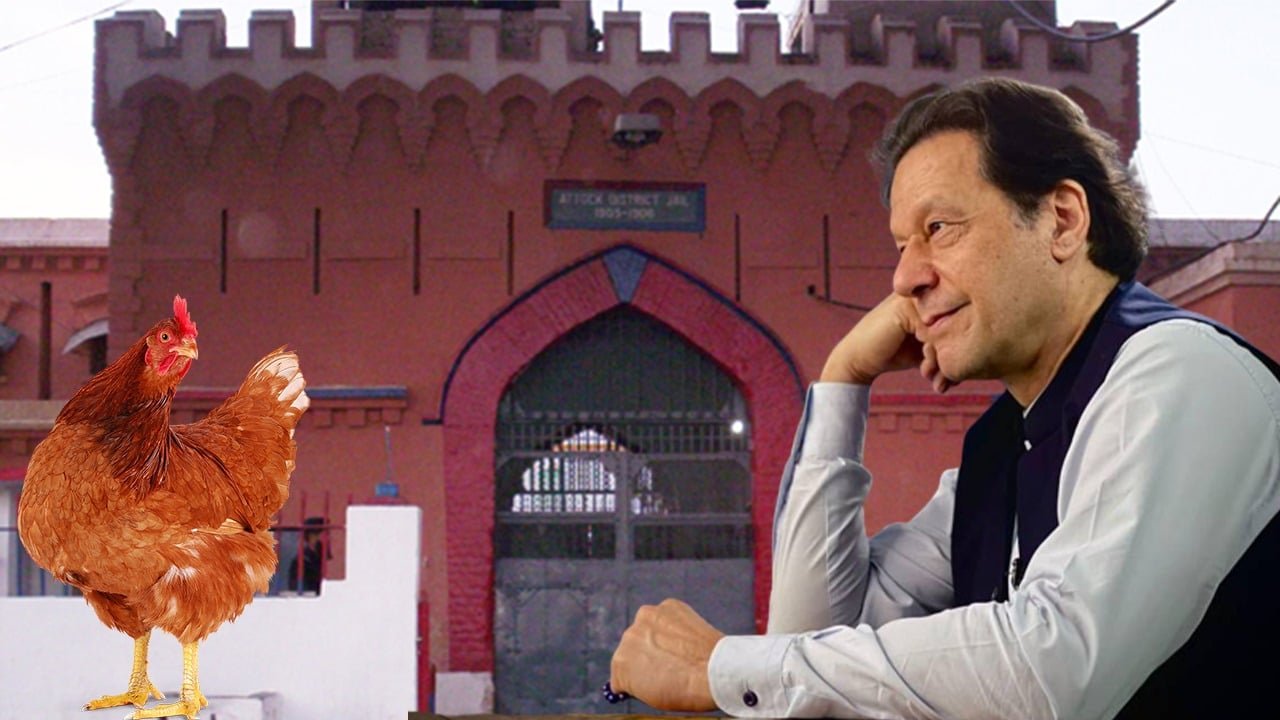
  • Khan wants desi chicken in jail, Rs79,000 deposited in his account

    Khan wants desi chicken in jail, Rs79,000 deposited in his account

    Former Prime Minister and Chairman of Pakistan Tehreek-e-Insaf (PTI), who is in Attock jail in the cipher case, refused to eat broiler chicken and asked for desi chicken (organic chicken) to be added in his diet.

    According to sources, Rs79,000 rupees have been added to Imran Khan’s bank account by his legal team to fulfill his desire to eat desi chicken in jail.

    Jail authorities outlined Khan’s daily food requirements and made a meal plan after consulting with the former prime minister. In breakfast, Imran Khan can have two eggs, bread, and yogurt. The PTI chairman can eat bread for lunch and dinner as well.

    Different pulses and vegetables are also part of the meal plan.

    Usually, broiler chicken is served four days a week in jail. However, Imran Khan doesn’t like broiler chicken, so jail authorities gave him desi chicken twice in the past 15 days, which cost Rs8,000 rupees. This amount has been deducted from Imran Khan’s account.

  • TV, 29 books, four pillows and so much more: list of things provided to Khan in jail

    TV, 29 books, four pillows and so much more: list of things provided to Khan in jail

    The details of a report submitted to the Supreme Court (SC) regarding the facilities available in Attock Jail to Pakistan Tehreek-e-Insaf (PTI) Chairman Imran Khan, who was arrested after his conviction in the Toshakhana case, have come to light.

    On the orders of the Chief Justice of Pakistan (CJP) Umar Atta Bandial, the Attorney General submitted a report to the apex court regarding the facilities provided to the PTI Chairman in jail.

    The report states that Chairman PTI has been kept in the most secure high observation block in Attock Jail and the adjoining barracks of Chairman PTI have also been kept vacant.

    Chairman PTI is kept in a barrack measuring 9 by 11, the wall of the washroom of Chairman PTI is 6 feet high and the size of the washroom is 7 by 4. The walls of Khan’s washroom have also been plastered and distempered. 

    The report states that being a prisoner of a better class, Chairman PTI has also been given the facility of mattress, air cooler, four pillows, a table and a chair. Apart from this, Imran Khan has also been provided with four English translations of the Holy Quran and 25 historical books.

    The Attorney General’s report states that Khan has been provided with a 21-inch TV and a daily newspaper; he is also provided with staff for the check-in barracks, washrooms and cleaning of clothes, and additional 54 officers have been assigned duty in jail for his security.

    The report states that according to the law, the prisoner’s family can meet for two to three hours on Tuesday, while the prisoner’s lawyers can meet for two to three hours on Wednesday. Khan’s wife and lawyers have met him three times. Chairman PTI is examined by a team of five doctors.

    It also states that Imran Khan is served desi chicken cooked in desi ghee on his request and is also provided mutton prepared in desi ghee.

    The PTI chief has been provided better class facilities in jail, the report stated, adding that the suspect has been given all the facilities according to the jail manual, rules and law.

    Imran Khan is allowed to walk in the corridor in front of the jail, as per the report.

  • Pakistan’s weekly inflation reaches record high of 48.35%

    Pakistan’s weekly inflation reaches record high of 48.35%

    According to data from the Pakistan Bureau of Statistics (PBS), the Sensitive Price Indicator (SPI) has risen by 1.05 per cent to reach a record high of 48.35 per cent year-on-year for the week ending May 4. The SPI for the aforementioned week was recorded at 254.84 points, compared to 252.2 points the previous week.

    Of the 51 monitored items, 30 items experienced an increase in average price, while 9 items decreased, and 12 items remained unchanged during the week.

    The items that experienced an increase in average prices on a week-on-week (WoW) basis were chicken (8.91 per cent), potatoes (3.99 per cent), powdered milk (3.81 per cent), pulse gram (1.96 per cent), pulse masoor (1.83 per cent), eggs (1.81 per cent), mutton (1.71 per cent), pulse mash (1.58 per cent), cooked daal (1.36 per cent), and bread (1.13 per cent). The non-food items that saw an increase were gents sponge chappal (58.05 per cent), gents sandal (33.36 per cent), ladies sandal (14.31 per cent), and washing soap (1.27 per cent).

    On the other hand, a decline was seen in the prices of onions (16.69 per cent), garlic (3.44 per cent), tomatoes (3.41 per cent), diesel (1.70 per cent), mustard oil (0.99 per cent), LPG (0.96 per cent), cooking oil 5 litre (0.40 per cent), and vegetable ghee 2.5kg & 1kg (0.10 per cent each).

    Monitored Items Average Price Increase/Decrease
    Chicken +8.91%
    Potatoes +3.99%
    Powdered Milk +3.81%
    Pulse Gram +1.96%
    Pulse Masoor +1.83%
    Eggs +1.81%
    Mutton +1.71%
    Pulse Mash +1.58%
    Cooked Daal +1.36%
    Bread +1.13%
    Onions -16.69%
    Garlic -3.44%
    Tomatoes -3.41%
    Diesel -1.70%
    Mustard Oil -0.99%
    LPG -0.96%
    Cooking Oil 5L -0.40%
    Vegetable Ghee 2.5kg -0.10%
    Vegetable Ghee 1kg -0.10%
  • Weekly inflation increases more than 38% as prices of petrol and food items hit the roof

    Weekly inflation increases more than 38% as prices of petrol and food items hit the roof

    According to the latest data released by the Pakistan Bureau of Statistics (PBS), the Sensitive Price Indicator (SPI) based inflation for the week ended February 16, 2023, registered an increase of 2.89 per cent. The rise in inflation can be attributed to an increase in the prices of both food and non-food items.

    Food Items that saw an increase in prices

    The following food items saw a significant increase in prices during the week ended February 16, 2023:

    • Cooking oil 5 litre (8.65 per cent)
    • Vegetable ghee 1kg (8.02 per cent)
    • Bananas (8.01 per cent)
    • Chicken (7.49 per cent)
    • Vegetable ghee 2.5 kgs (6.76 per cent)

    Non-food items that saw an increase in prices

    The following non-food items saw an increase in prices during the week ended February 16, 2023:

    • Petrol (8.82 per cent)
    • Diesel (6.49 per cent)
    • Cigarettes (6.18 per cent)

    Year-on-Year Trend

    The year-on-year trend depicts an increase of 38.42 per cent mainly due to an increase in the prices of the following items:

    • Onions (433.44 per cent)
    • Chicken (101.86 per cent)
    • Diesel (81.36 per cent)
    • Eggs (81.22 per cent)
    • Rice irri-6/9 (74.12 per cent)
    • Rice basmati broken (73.05 per cent)
    • Petrol (69.87 per cent)
    • Moong (67.98 per cent)
    • Bananas (67.68 per cent)
    • Tea Lipton (63.89 per cent)
    • Pulse gram (56.93 per cent)
    • Bread (55.36 per cent)
    • Maash (53.42 per cent)
    • LPG (52.68 per cent)
    • Cigarettes (50.02 per cent)

    On the other hand, the prices of tomatoes (65.30 per cent), electricity for q1 (7.50 per cent), and chillies powdered (7.42 per cent) saw a decrease during the same period.

    SPI for the week under review

    The SPI for the week under review in the above-mentioned group was recorded at 234.77 points against 228.17 points registered in the previous week. Out of 51 items, prices of 34 (66.67 per cent) items increased, 05 (9.80 per cent) items decreased and 12 (23.53 per cent) items remained stable.

    SPI for different consumption groups

    The SPI for the consumption group up to Rs17,732, Rs17,732-22,888, Rs22,889-29,517, Rs29,518-44,175 and above Rs44,175 consumption group increased by 2.45 per cent, 2.73 per cent, 2.79 per cent, 2.88 per cent, and 2.94 per cent, respectively.

    Items that recorded an increase in average prices

    The following items recorded an increase in their average prices during the week over previous:

    • Petrol super (8.82 per cent)
    • Cooking oil Dalda or other similar brand (sn), 5 litre tin each (8.65 per cent)
    • Vegetable ghee Dalda/Habib or other superior quality 1 kg pouch each (8.02 per cent)
    • Bananas (8.01 per cent)
    • Chicken (7.49 per cent)
    • Vegetable ghee Dalda/Habib 2.5 kg tin each (6.76 per cent)
    • Hi-speed diesel (6.49 per cent)
    • Cigarettes Capstan (6.18 per cent)
  • Here’s how chicken prices surpassed beef prices for the first time in Pakistan

    Here’s how chicken prices surpassed beef prices for the first time in Pakistan

    Owing to a major shipment that has been stuck at Port Qasim in Karachi for several months, chicken prices have sharply increased and surpassed beef prices (with bones) for the first time in thirty years.

    A shipment of soybean seeds worth $100 million was halted in October 2022 at Port Qasim in Karachi. These oilseeds were designed to be crushed rather than planted. One of the main components of the edible oil used in Pakistan is the liquid that is produced when the seeds are pressed.

    Being one of the biggest importers of palm seeds, soybeans, and other oilseeds from nations like Malaysia, Pakistan is heavily dependent on these oilseeds to meet its demands for edible oil. But because they are also used as cattle feed, these oilseeds serve yet another crucial role in the food chain.

    The solid parts of the seeds are left behind when oilseeds like soybeans are pressed to produce edible oil. Then, “oil cakes” made from this fiber- and protein-rich material are fed to cattle and birds as food.

    The majority of these livestock’s “meals” up until 2015–16 were made from locally obtained cotton seeds. Since they are more nutritive than cotton seeds, soybean meals have gained popularity in recent years. Pakistan consumes 2 to 2.8 million tonnes of these meals each year.

    This indicated that when the soybean shipments were stopped at the port, the poultry business was also shocked in addition to the edible oil industry. Feed for chickens was suddenly unavailable, and prices began to soar.

    Since Pakistan is a signatory to the Cartagena Protocol for Biosafety, the environmental ministry was authorised to halt the exports of genetically modified soybean seeds at the port.

    Several issues arose with this. First of all, despite widespread scaremongering, GMOs have never been proven to be dangerous for human consumption. Second, these oilseeds weren’t intended to be planted solely for the purpose of extracting edible oil and as a component in the poultry industry.

    One of the worries was that since hens were being fed with these GMO oilseeds, the ‘harmful consequences’ from these GMOs would eventually move into the chickens and reach the populace, according to Food Security Minister Tariq Bashir Cheema.

    This argument has a flaw in that Pakistani poultry has been fed oilseed diets made from GMOs since at least 2005. Cottonseed meals, which are generated by genetic modification in Pakistan, are a significant component of the poultry diet.

    As things stand, a sizable portion of the population no longer has access to one of its main sources of protein because of the skyrocketing price of chicken. Mutton and beef prices have risen faster than the Consumer Price Index (CPI) during the last few decades.

    According to Profit, only chicken costs increased more slowly than the CPI during this entire period, making it the only protein source. With chicken now costing more than beef on the open market, the population’s nutritional impact might be affected in the long run.
  • Price chicken can increase to Rs1,000 per kg: Chairman Pakistan Poultry Association

    Price chicken can increase to Rs1,000 per kg: Chairman Pakistan Poultry Association

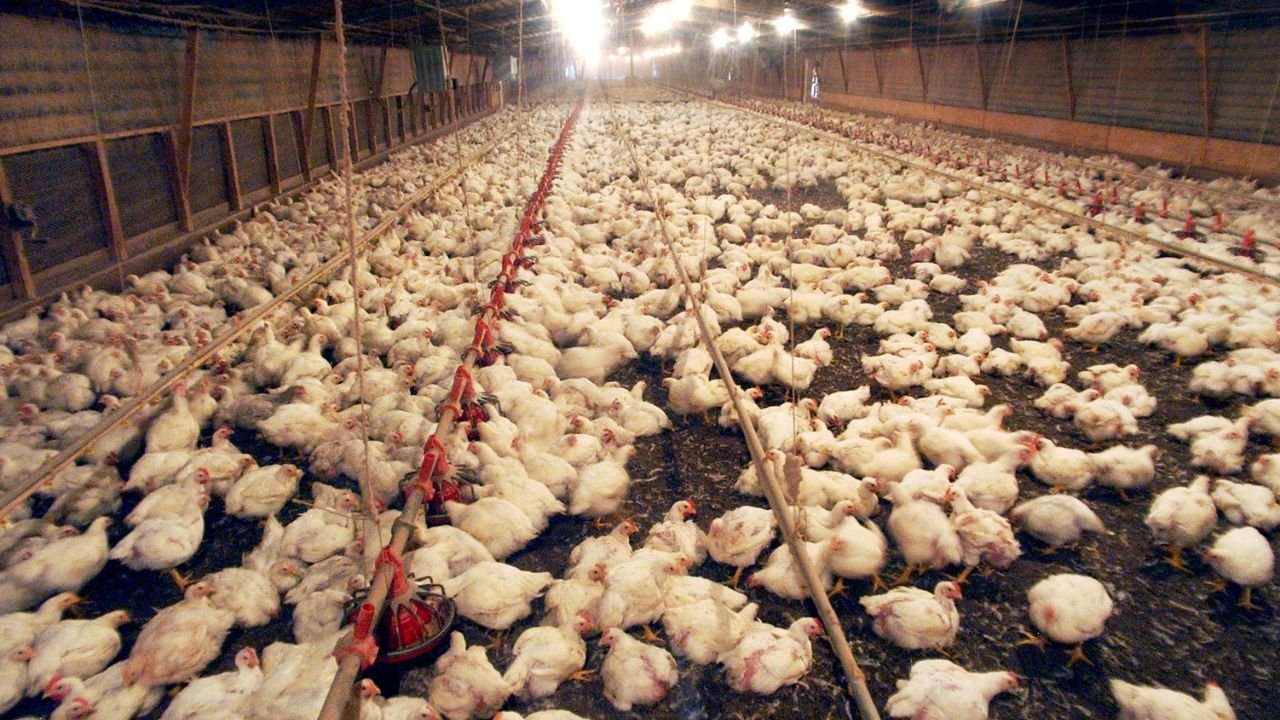
    Chaudhry Muhammad Ashraf, the chairman of the Pakistan Poultry Association (PPA), has cautioned on Friday that a scarcity of feed could cause the price of chicken, a staple food, to rise to Rs1,000 per kilogramme in the near future.

    While talking to Aaj News, Ashraf said that around a dozen containers carrying 0.75 million tons of soybean and canola are also stuck at the port.
    “In the poultry industry, we can stock supply for 15 days or a month. This has been consumed. We do not have soybean available anymore,” said the official.

    “If the two items are not available, this creates problems for feed makers who have already told the farmers that they do not have the product available,” he said.
    Federal Minister for National Food Security and Research (MoFS&R) Tariq Bashir Cheema earlier advised people to stop eating chicken.

    Addressing a press conference in Islamabad, Cheema said that non genetically modified organisms (GMO) oilseeds would be imported into Pakistan from now on.
    The minister continued by stating that since chicken is being fed diets produced from GMO oilseeds, people should cease eating it because it is unhealthy. He claimed that GMO soybeans are dangerous and might cause cancer and other ailments.

  • Stop eating chicken, it is harmful for health: Federal Minister for National Food Security and Research

    Federal Minister for National Food Security and Research (MoFS&R) Tariq Bashir Cheema on Wednesday advised people to stop eating chicken.

    Addressing a press conference in Islamabad, Cheema said that non genetically modified organisms (GMO) oilseeds would be imported into Pakistan from now on.
    The minister continued by stating that since chicken is being fed diets produced from GMO oilseeds, people should cease eating it because it is unhealthy. He claimed that GMO soybeans are dangerous and might cause cancer and other ailments.

    He also said that prior to 2015, GMO soybeans were not used in chicken feed. However, after that year, the poultry mafia allegedly levied tariffs on local soybeans, raising the price the commodity, while driving up imports. Cheema continued with the narration, revealing how the group began importing GMO soybean, making approximately Rs 2 billion against the import of the product worth Rs 1 billion. Imported soy products transmit disease and are bad for your health, he advised.