Tag: Chief Justice of Pakistan

  • PM Shehbaz writes letter to CJ asking to form judicial commission to investigate attack on Imran

    PM Shehbaz writes letter to CJ asking to form judicial commission to investigate attack on Imran

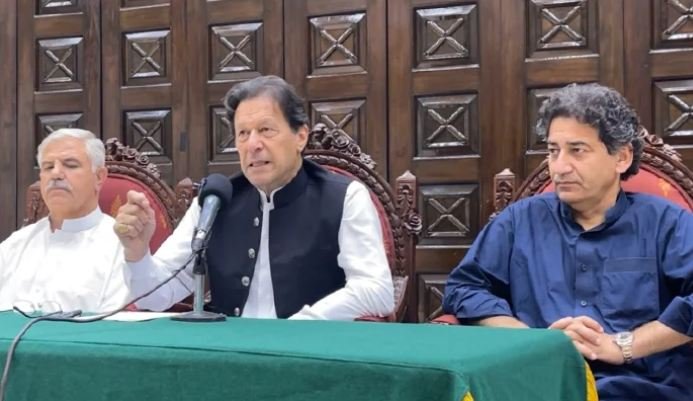
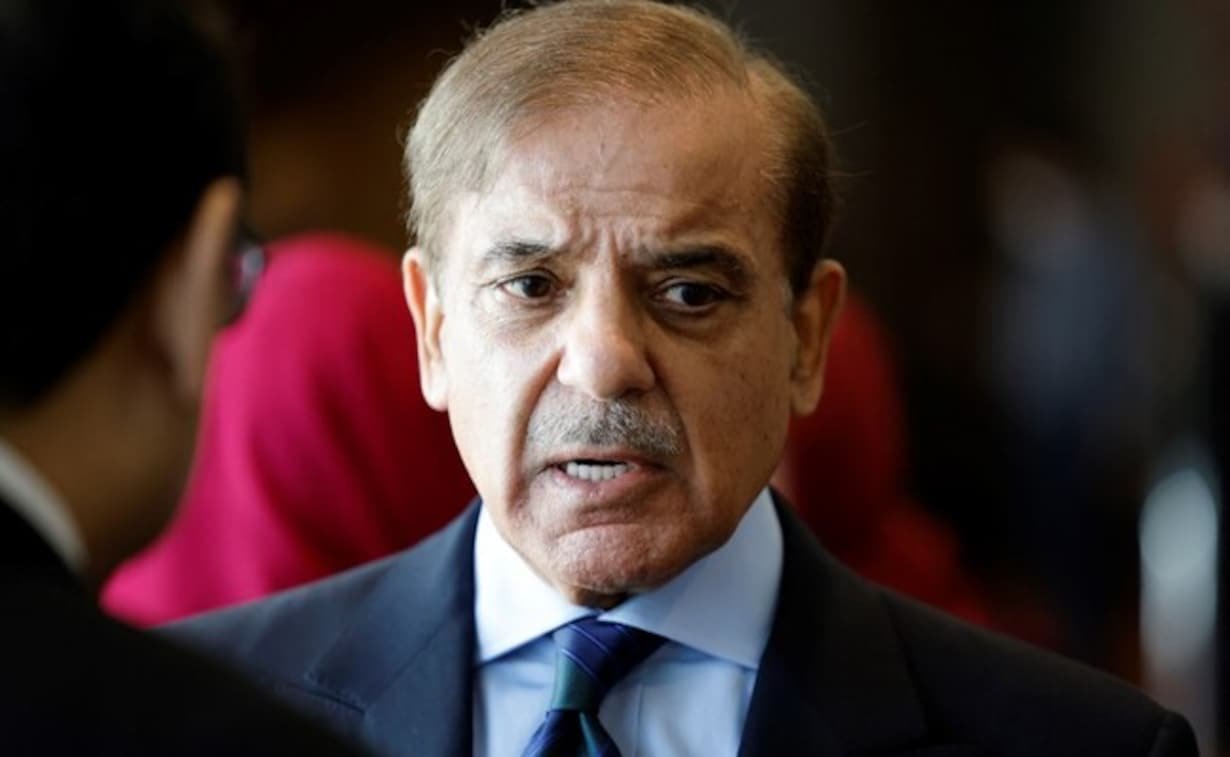
    Prime Minister (PM) Shehbaz Sharif has written a letter to Chief Justice (CJ) Umar Ata Bandial to request him to form a judicial commission to investigate the attempted assassination on Imran Khan, Chairman of the Pakistan Tehreek-e-Insaf (PTI).

    The premier said that the investigation of the incident was being “mishandled” and in its aftermath a “derogatory campaign” had been launched against the leadership of the ruling Pakistan Muslim League-Nawaz (PML-N) and state institutions.

    Putting forward five questions before the SC, Shehbaz Sharif has asked which law enforcement agencies were responsible to provide security to Imran’s convoy. He also questioned whether security protocols and other SOPs were put in place to secure the convoy and whether these protocols were adhered to. “What are the facts of the incident itself,” the letter says.

    “Whether law enforcement agencies and administrative authorities complied with the prescribed investigation, evidence collection, and handling procedures following the incident,” reads the letter.

    The last questions were: “Whether the investigation into the incident is being deliberately impeded? If yes, by which actors and why? Whether the shooting was a result of a criminal conspiracy hatched to assassinate Imran or the act of a lone shooter? Who are the actors responsible in either scenario?”

    PM’s letter to CJ about Arshad Sharif’s death

    In another letter to the SC, PM Shehbaz — who is currently in Egypt—wrote a letter to CJ Bandial and sought the formation of a judicial commission to investigate the death of slain journalist Arshad Sharif.

    The journalist was killed in a “mistaken identity” case last month in Kenya by local police.

    The Premier suggested the CJ focus on five questions — through which procedure did Arshad Sharif go abroad in August 2022? Who facilitated Sharif’s departure abroad? Was any federal or provincial agency aware of any threat to Sharif? Was any organisation or administration aware of any threat to Sharif? If Sharif’s life was in danger, what steps were taken to save him? What were the circumstances, and reasons under which Sharif went to Kenya from UAE? What is the truth behind the shooting incident in which Sharif died?

    The premier asked the chief justice to form a commission comprising all the justices of the SC. He also assured the apex court that the federal government would provide full support to the commission.
  • ‘Not convinced there was a conspiracy’: President Dr Alvi

    ‘Not convinced there was a conspiracy’: President Dr Alvi

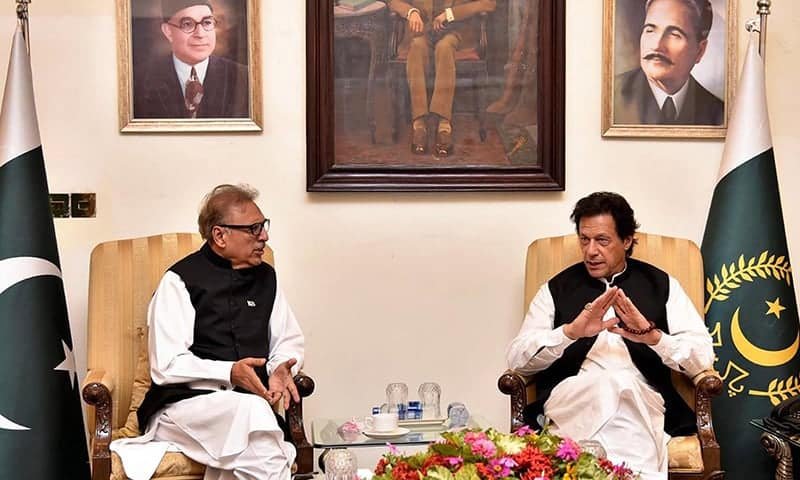
    President Dr Arif Alvi while discussing the infamous ‘cipher’, has said that he is not convinced that a “foreign conspiracy was hatched” against former Prime Minister (PM) Imran Khan.

    However, Imran Khan has claimed that the no-confidence motion against him was part of a foreign conspiracy.

    In an interview with journalist Asma Shirazi, the president stated: “I sent that letter to the Chief Justice of Pakistan (CJP). I am convinced that it must be probed. I am not convinced of the fact that a conspiracy was hatched.”

    Appointment of COAS:

    About the appointment of the new Chief of Army Staff (COAS) in November, the president was of the view that “broader consultation” should be held.

    Dr Alvi said that he learned through the newspaper that there’s a consultation going on in London regarding the appointment. The government should consult PTI chief Imran Khan on the matter, he said.

    He claimed that the Pakistan Tehreek-e-Insaf (PTI) government also consulted the Opposition when former PM Imran Khan extended the three-year term of the incumbent COAS General Bajwa in 2019.

    Importance of dialogue:

    During the interview, President Alvi stressed on the importance of “dialogue”. When asked about the speculation that he had arranged a meeting between the establishment and Imran Khan, he responded: “Meri koshish yeh hai ke logo ko bethao ke dialogue karo” (I am trying that I get people to sit down and have a dialogue).

    He said dialogue is necessary for settling political issues between the government and the Opposition. He was of the view that the people are concerned about political polarisation and one of its causes was that there are different governments in the provinces.

    ‘Khan was very disappointed’: President Alvi

    President Dr Alvi, who is also a PTI leader, talked about the party not going back to Parliament. “Imran Khan was very disappointed with the manner in which his government was ousted and on that basis, he decided not to sit in the assembly,” he told Asma Shirazi.

    However, when asked about the party’s decision of resigning from the National Assembly (NA), President Alvi said that if he had been consulted, he could have given “different advice”.

    He observed that politicians are the biggest stakeholders in the country. The president said that the army should be “neutral”. When asked that Khan says that the establishment shouldn’t be neutral, he said, “You can ask him about his views”.

    ‘Free and Fair elections’: President Alvi

    President Alvi said that in August 2023, assemblies will be dissolved, stressing that both the Pakistan Democratic Movement (PDM) and the PTI wanted early polls in the past. “Even the Supreme Court had considered the issue of early elections and consulted politicians,” he added.

    “I am trying to evolve an understanding of these issues and I will facilitate the process. The most important issue is the holding of free and fair elections”, he said.

  • Chief Justice calls lifetime disqualification under Article 62(1)(f) a ‘draconian law’

    Chief Justice of Pakistan, (CJP) Umar Ata Bandial, has termed the lifetime disqualification of politicians under Article 62(1)(f) of the Constitution a “Draconian law”.

    “Article 62 (1)(f) is a draconian law and we will hear this case with caution and in detail,” the CJP remarked while hearing Pakistan Tehreek-e-Insaf (PTI) leader Faisal Vawda’s appeal against his disqualification for life under the article.

    According to Article 62(1)(f), a person shall not be qualified to be elected or chosen as a member of Majlis-e-Shoora (Parliament) “unless — he is sagacious, righteous, non-profligate, honest and ameen, there being no declaration to the contrary by a court of law”.

    The Article was previously used to disqualify Nawaz Sharif, the three-time former Prime Minister whose party is now holding power in the federal capital. Former PTI leader Jahangir Khan Tareen was also disqualified for life under the same article.

    Vawda had appealed to the top court to set aside the order of the Election Commission of Pakistan (ECP) and the Islamabad High Court (IHC) in which he was handed out a lifetime disqualification.

    In February, ECP disqualified Vawda for hiding his United States (US) citizenship. Later, he approached Islamabad High Court (IHC), seeking the revocation of his lifetime disqualification, however, the court dismissed Vawda’s plea.

    Vawda has pleaded to Supreme Court that the ECP had cited no reason for invoking Article 62(1)(f) of the Constitution to disqualify him for life. The commission appears to be under the impression that any person disqualified under Article 63(1)(c) — for having dual nationality — could automatically be penalised under Article 62(1)(f), he said.

    During the hearing on Tuesday (today), the CJP said, “The election commission has the right to investigate a false affidavit.”

    “Even if we set aside the ECP’s verdict, the facts will remain the same,” he added.

    “The question is whether or not the ECP can order disqualification for life,” Justice Bandial said.

    The hearing was later adjourned till October 6 (Thursday).

    It is pertinent to mention that in 2018 the Supreme Court declared that the disqualification under 62(1)(f) would be for life.

    Under this same article, both Nawaz Sharif and Imran Khan’s former close aide Tareen are currently disqualified for life.

  • Regulate CJ’s powers to constitute benches, say lawyers

    Regulate CJ’s powers to constitute benches, say lawyers

    The legal fraternity on Wednesday demanded the regulation of the exercise of jurisdiction of the Supreme Court (SC), particularly ending the sole discretion of the chief justice of Pakistan (CJP) in the constitution of benches and fixing cases.

    The request was made in a joint meeting of the Supreme Court Bar Association (SCBA) and Pakistan Bar Council (PBC).

    The meeting emphasised its demand that the Judicial Commission of Pakistan (JCP) immediately amends its rules to allow nominations for judicial appointments to be initiated by any member of the Judicial Commission rather than the chief justice alone (which is even otherwise violative of Article 175-A of the Constitution) and, moreover, to frame fair, transparent and objective criteria and procedures to gauge the suitability of prospective appointees.

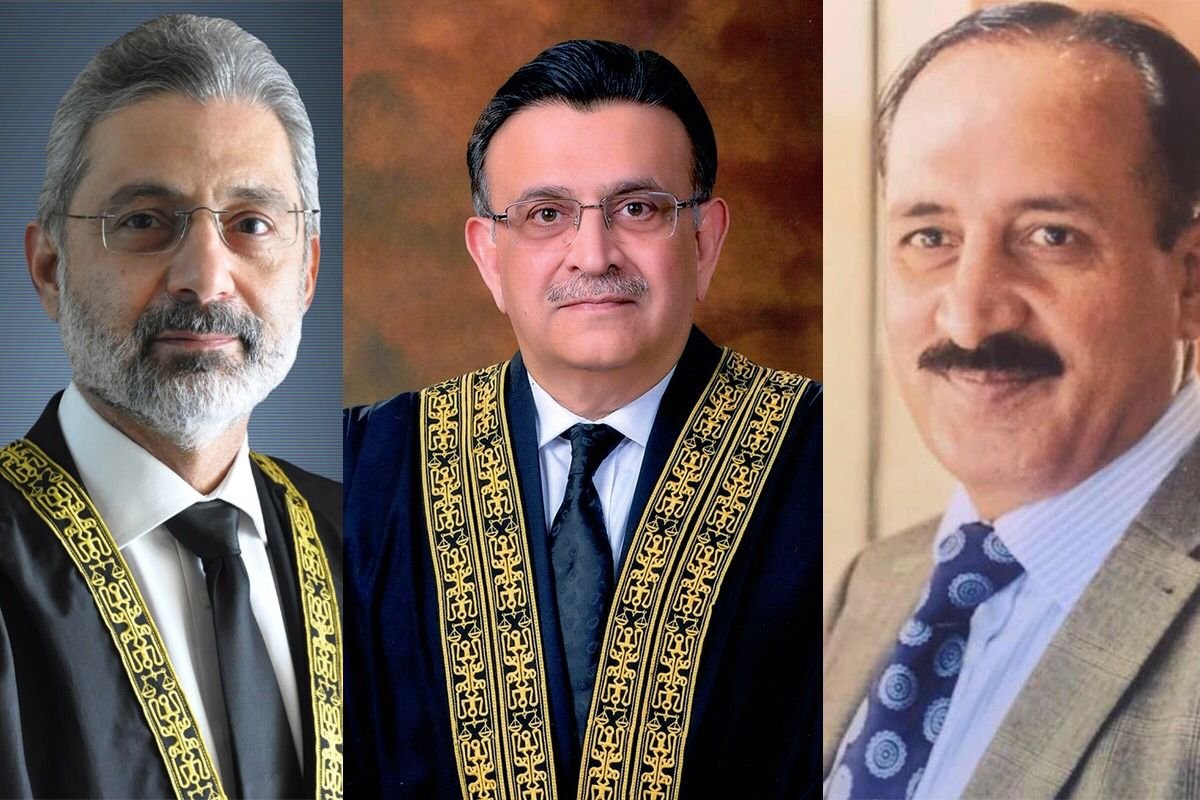
    Moreover, they demanded that Article 184(3) of the Constitution be amended in order to provide one right of appeal. They asked the federal government to immediately withdraw the curative review filed against Justice Qazi Faez Isa.

    SCBA President Ahsan Bhoon in a press conference said that the appointment of judges to the higher judiciary was not a matter of election, adding that the chief justice of Pakistan and members of the Judicial Commission should strictly adhere to the principle of seniority.

    Govt to withdraw review petition against Justice Qazi Faez Isa

    The federal cabinet on July 27 decided to withdraw the curat­ive review petitions filed against Justice Qazi Faez Isa.

    The cabinet meeting, chaired by Prime Minister (PM) Shehbaz Sharif, observed the action taken against Justice Isa by the Pakistan Thereek-e-Insaf (PTI) government was through “unfair use of authority”.

    An inquiry committee was constituted, which includes Minister for Kashmir Affairs Qamar Zaman Kaira, Minister for National Food Security Tariq Bashir Cheema and Minister for Education Rana Tanveer.

    The committee, after an assessment of the review petitions filed against Justice Isa, would present a report to the cabinet.

    Justice Faez Isa advised CJP not to bulldoze the due process of judges’ appointment

    Justice Qazi Faez Isa advised Chief Justice of Pakistan (CJP) Umar Ata Bandial not to bulldoze the “due process” for the appointment of more than one-third of the total number of judges in the apex court.

    In a letter written to the Judicial Commission of Pakistan (JCP), Justice Isa said that it was surprising that the JCP’s meeting had been convened to consider the appointment of five SC judges during summer vacations. It is pertinent to mention here that JCP is headed by CJP Bandial.

    “When availing of annual leave no meeting of the JCP was scheduled but as soon as I left Pakistan the CJP decided to hold two meetings of the JCP to consider appointments to the Sindh and Lahore High Courts, and now a third unscheduled meeting of the JCP is to be held during the summer vacations of the SC. The summer vacations of the SC were notified by the CJP himself, and then these were gazetted in the Official Gazette. If the CJP renders his own notification utterly meaningless then let him first withdraw it, instead of violating it,” wrote Justice Isa in his letter.

    “It suggests that the CJP does not want me to be physically present, which is illegal and unconstitutional.”

    Justice Isa said that the matter of appointing judges to the superior courts requires utmost care and due deliberation as it is a delicate matter.

    Addressing the CJP, the judge said: “Please do not ridicule the JCP and your nominees by contravening the Constitution. Restricting the JCP to consider only the CJ’s pre-selected nominees is inappropriate. The JCP deserves to be treated with respect and consideration by its chairman.”

    Justice Isa stressed the need that “all appointments must be made in accordance with the Constitution, on the basis of a predetermined and non-discriminatory criteria. And above all without any impression of favouritism. The Constitution does not grant the CJP any powers additional to those of the other members of the JCP; the CJP is only designated as the Chairman of the JCP.”

    JCP meeting underway to discuss CJP Bandial’s five nominees for elevation to SC

    JCP meeting is underway to discuss CJP Bandial’s five nominees for their elevation to Supreme Court. Justice Isa is attending the meeting from Spain and Attorney General for Pakistan Ashtar is participating from the USA.

  • ‘No deal with establishment, wanted to avoid bloodshed’: Khan reveals reason for ending Azadi March

    ‘No deal with establishment, wanted to avoid bloodshed’: Khan reveals reason for ending Azadi March

    Pakistan Tehreek-e-Insaf (PTI) Chairman Imran Khan on Friday said that the reason for ending the party’s Azadi March was to avoid bloodshed and that no deal with the establishment took place.

    “Our workers asked why we did not stage a sit-in. I am the man who staged a sit-in for 126 days. It was not difficult for me, but by the time I reached I became aware of the extent of the situation […] I knew that day that there would be bloodshed.”

    Khan said the people were “ready” after seeing the “terrorism” carried out by the police. “Everyone was ready to fight, some of our people were so angered by what they saw,” he said, adding that officials were instructed to brutalise protesters.

    “The anger at the time, if I had staged a sit-in that day I can guarantee that there would have been bloodshed,” said Khan, adding that there was a prevailing sense of hatred against police officials.

    “But the police is also ours, it is not their fault,” the PTI chairman said, blaming the government for issuing the directives. If there was violence then it would only have caused chaos in the country, said Khan.

    “I think of this as a jihad. I will stand up against this as long as I am alive,” he said, reiterating that he only cared about the future of the country.

    The PTI chairman again stressed his six-day ultimatum to the government for the announcement of early elections. “If they do not clearly announce a date for the elections or for the dissolution of the assemblies, I will take to the streets again. Let me make it clear, this time we will be prepared.”

    Khan said he had written to Chief Justice of Pakistan (CJP) Umar Ata Bandial asking whether or not the party had the right to stage a peaceful protest in a democracy.

    “This is the fundamental right of a citizen […] I ask our judiciary, do you think we will remain silent [like] sheep and accept all of this? If you think this, it means that we are pushing the country towards treason. If you do not allow people to stage peaceful protests, what other options do they have left?”

    He said that he had written a letter to the CJP to make his position “clear”, reiterating that he would take to the streets again after six days. In six days we will find out whether or not the apex court protects our fundamental rights, he said.

    The manner in which lawyers and women were forced to disembark from a bus and were “beaten”, had anyone seen something like that before, he asked.

    “Which justice system allows this? The entire nation should know who stands for [their] rights and who is carrying out oppression.”

  • Harvard University congratulates Ayesha Malik for becoming first female Supreme Court judge

    Harvard University has congratulated its alumnus, Ayesha Malik who is the first woman appointed as a judge of the Supreme Court of Pakistan in 75 years of its history.

    She has studied law and earned a degree of LL.M ( Master of Laws) in 1999 from Harvard Law School where she was named a Landon H. Gammon Fellow for academic excellence. Harvard Alumni Association also published an article on her achievement on its website.

    “Congratulations to @Harvard_Law alum Ayesha Malik LLM’99, who was appointed to the Supreme Court of Pakistan! She is the first woman to serve as a justice of Pakistan’s Supreme Court in the country’s 75-year history,” Harvard Alumni Association tweeted on March 27.

    Justice Ayesha Malik took oath as the Judge of the Supreme Court of Pakistan on January 24, 2022. Chief Justice of Pakistan (CJP) Gulzar Ahmed administered the oath.

  • CJP Bandial says not counting a vote during no-trust proceedings against Khan would be ‘contemptuous’

    Chief Justice of Pakistan (CJP) Umar Ata Bandial on Thursday observed that not counting a vote that has been cast during the no-confidence vote against Prime Minister (PM) Imran Khan would be “contemptuous”.

    CJP Bandial further questioned that for how long a dissident Member of the National Assembly (MNA) could be disqualified.

    He made the remarks during the hearing of a presidential reference seeking the Supreme Court’s opinion on Article 63-A of the Constitution.

    Earlier, during the hearing, Justice Mandokhail questioned whether the MNA’s vote could be counted in the proceedings conducted before he was de-seated, observing there was no mention of not counting a vote in the 18th Amendment.

    Justice Akhtar observed that the purpose of Article 63-A was to stop defection from party policies. “The party’s collective opinion is above an individual opinion. The collective opinion is important for the stability of democracy.” He said one interpretation of Article 63-A was that the vote of dissidents should not be counted.

    Attorney General of Pakistan (AGP) Khalid Javed Khan argued that the real issue was about clarifying Article 63-A(4). “Someone who violates the Constitution by defection cannot be praised. We cannot read what’s not written in the Constitution. Article 62(1)(f) states that an MNA should be honest and righteous.

    “Should defecting from the party be rewarded? Can those who are dishonest be considered righteous?” he asked.

    Justice Mandokhail replied that every MNA had the right to vote in accordance with Article 95, which deals with the procedure to bring in a no-confidence motion against the prime minister.

    “If vote can be cast, it can also be counted,” he observed, asking the AGP why the government was seeking the court’s opinion if it already had the answer. “If you agree with this point, then withdraw this reference,” he added.

    Earlier, SCBA submitted its response in the apex court, stating that voting is an individual right of an MNA instead of a political party’s collective right under Article 95.

    It declared the MNAs’ right to vote for the no-confidence motion against the prime minister to be an individual capacity in its response to the presidential reference for the interpretation on Article 63A of the Constitution Pakistan.

  • Supreme Court to take up presidential reference on Article 63-A today

    Supreme Court to take up presidential reference on Article 63-A today

    The Supreme court (SC) will take up the presidential reference seeking opinion on Article 63-A of the Constitution – which deals with the disqualification of parliamentarians over defection – at 1pm on Thursday, reports Dawn.

    A five-member bench of the SC comprising Chief Justice of Pakistan (CJP) Umar Ata Bandial will head the bench, which also includes Justice Ijazul Ahsan, Justice Mazhar Alam Khan Miankhel, Justice Munib Akhtar, and Justice Jamal Khan Mandokhail.

    Earlier, on Monday, a two-member bench of the apex court comprising CJP Bandial and Justice Akhtar took up the presidential reference and declared that a larger bench would hear the case.

    Justice Faez Isa “perplexed” over CJP Bandial’s decision to hear the presidential reference

    The senior-most judge of SC Justice Faez Isa has said that he is “perplexed” over CJP Bandial’s decision to hear the presidential reference for the interpretation of Article 63-A together with the SCBA petition over the no-confidence motion.

    In a three-page letter to the top judge, dated March 22, Justice Isa has questioned multiple legal aspects along with the formation of a larger bench “without the inclusion of senior-most judges”.

    “On 19 March 2022, a two-member bench headed by yourself and an hon’ble judge 8 in seniority, heard CP No. 2/2022 in Court on a Saturday, despite the filing of the petition on Thursday. On the said date it was ordered that CP No. 2/2022 be heard ‘along with a Reference, if any, that is filed under Article 186 of the Constitution and the petition and the proposed reference were ordered to be fixed together for hearing. I am perplexed as to how a matter which had not been filed was ordered to be fixed for hearing,” the letter said.

    Justice Isa further stated that the apex court rules demand that the constitution of a bench is done fairly and as per the law, referring to Article IV of the Code of Conduct, which says:

    “[…] a judge must avoid all possibility of his opinion or action, in any case, being swayed by any consideration of personal advantage, either direct or indirect.”

    “The Constitution specifically recognises the most senior Judge of the Supreme Court (including in Article 175A(3) and Article 180), and with seniority comes responsibility, which must not be shirked. The most senior Judge also ensures the continuity of the Supreme Court as an institution,” Justice Isa wrote.

    Better if the assembly’s fight is fought inside the assembly: CJP Bandial

    Justice Bandial on Monday heard a plea filed by the Supreme Court Bar Association (SCBA) about the lawful proceeding of the no-confidence motion in the National Assembly (NA).

    During the hearing, which was attended by three bigwigs of the Opposition — PML-N President Shehbaz Sharif, Pakistan People’s Party (PPP) Chairman Bilawal Bhutto-Zardari, and Jamiat-e-Ulema-Islam-Fazl (JUI-F) chief Maulana Fazlur Rehman, SCBA counsel argued that NA Speaker Asad Qaiser summoned the session 17 days after the submission of the no-confidence motion. However, according to Article 95, the session has to be called within 14 days.

    He further argued that the no-confidence motion could not be adjourned before voting. To this, CJ observed that it is an “internal matter” and it would be “better if the assembly’s fight is fought inside the assembly”.

    According to Justice Munib, a member’s individual vote has no “status”. Justice Munib Akhtar said after joining a political party, a member’s vote is considered a “collective” right.

    SCBA writes a reply to the apex court

    On Thursday, the SCBA submitted a written reply to the apex court ahead of today’s hearing in accordance with the court’s directives.

    In its reply, the SCBA said that the votes of MNAs “cannot possibly be construed as a collective right of a political party”, citing Article 95 of the Constitution, which deals with the procedure to bring in a no-confidence motion against the prime minister.

    Fawad Chaudhry responds to SCBA’s reply to the apex court

    Information Minister Fawad Chaudhry took to Twitter and reacted to SCBA’s response.

    Fawad said, “Reading SCBA’s answer, it seems that Supreme Court bar body is a subsidiary of Noon League,” says Fawad Chaudhry, adding, “Ordinary lawyers are dissatisfied with the role of lawyers’ organisations and the defeat of this group in the Lahore Bar elections is the result of the lawyers’ reaction.”

    Attorney General of Pakistan (AGP) Khalid Jawed Khan had submitted the reference seeking the SC’s opinion on Article 63-A of the Constitution on March 21.

  • ‘Burden of pending cases needs to be lightened, lawyers come prepared’: CJP Bandial

    ‘Burden of pending cases needs to be lightened, lawyers come prepared’: CJP Bandial

    Justice Umar Ata Bandial after being sworn in as the 28th Chief Justice of Pakistan, in an oath-taking ceremony at the Presidential Palace, made his first appearance in a courtroom as the CJP and conversed with lawyers.

    “We need to lighten the burden of pending cases. Lawyers should come prepared and avoid seeking extensions,” he said.

    The lawyers welcomed and congratulated the newly appointed top judge.

    At this, Justice Bandial thanked them and said it was a pleasure for him to be with them.

    A day earlier, Justice Bandial while speaking at a full-court reference held in honour of the outgoing chief justice, criticised mainstream and social media alike for resorting to attacking judges rather than criticising their judgements.

    “The differences in judges’ opinions in matters of law arise from our individual perceptions and this diversity brings richness to our understanding,” said Justice Bandial.

    Justice Bandial will continue as the chief justice till his retirement on September 18, 2023.

  • Justice Umar Ata Bandial becomes 28th Chief Justice of Pakistan, ceremony held in Islamabad

    Justice Umar Ata Bandial becomes 28th Chief Justice of Pakistan, ceremony held in Islamabad

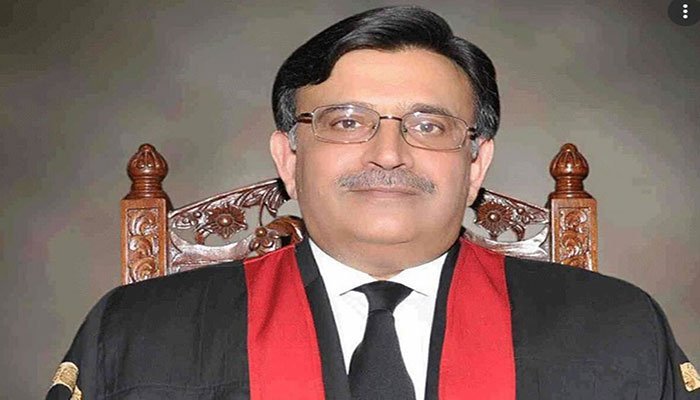
    Justice Umar Ata Bandial took oath as the 28th Chief Justice of Pakistan (CJP) at a ceremony at Aiwan-i-Sadr in Islamabad today (Wednesday). He was administered the oath of office by President Arif Alvi.

    Justice Bandial will serve in the top judicial office until September 16, 2023. He has previously served as chief justice of the Lahore High Court.

    A day earlier, Justice Bandial while speaking at a full-court reference held in honour of the outgoing chief justice, criticised mainstream and social media alike for resorting to attacking judges rather than criticising their judgements.

    “The differences in judges’ opinions in matters of law arise from our individual perceptions and this diversity brings richness to our understanding,” said Justice Bandial.