Tag: Chief Justice of Pakistan

  • Justice Umar Ata Bandial to take oath as new chief justice on Feb 2

    Justice Umar Ata Bandial to take oath as new chief justice on Feb 2

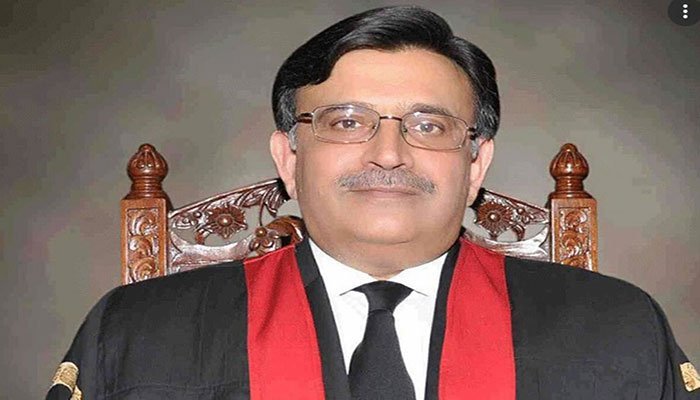
    Supreme Court (SC) Justice Umar Ata Bandial will reportedly take oath as Pakistan’s 28th Chief Justice of Pakistan (CJP) on February 2, reports Geo news.

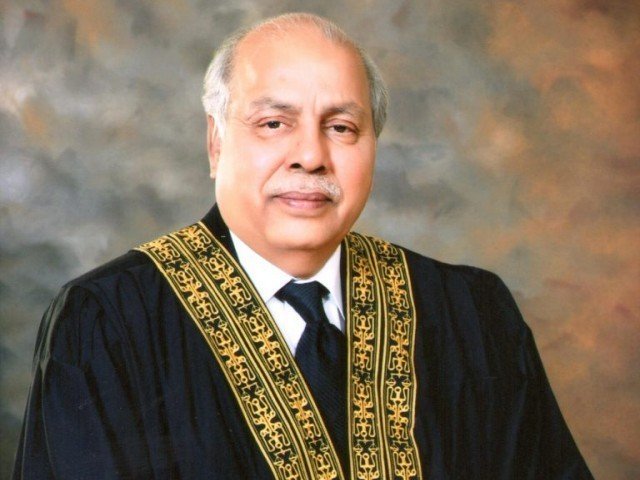
    Justice Bandial will replace the current CJP Justice Gulzar Ahmed. Justice Ahmed will retire after working in the top judicial position for more than two years. He assumed office on December 21, 2019, replacing ex-CJP Justice Asif Saeed Khosa

    The Law and Justice Secretary have sent the summary to President Arif Alvi to appoint Justice Bandial as the next CJP. After the president’s nod, the ministry will issue a notification.

    The to-be-appointed CJ will remain in position till September 18, 2023.

    After Justice Bandial, Justice Qazi Faez Isa will become the chief justice to serve the office for over one year till October 25, 2024.

  • Ex-GB judge Rana Shamim submits controversial affidavit against former CJP Saqib Nisar in IHC

    Ex-GB judge Rana Shamim submits controversial affidavit against former CJP Saqib Nisar in IHC

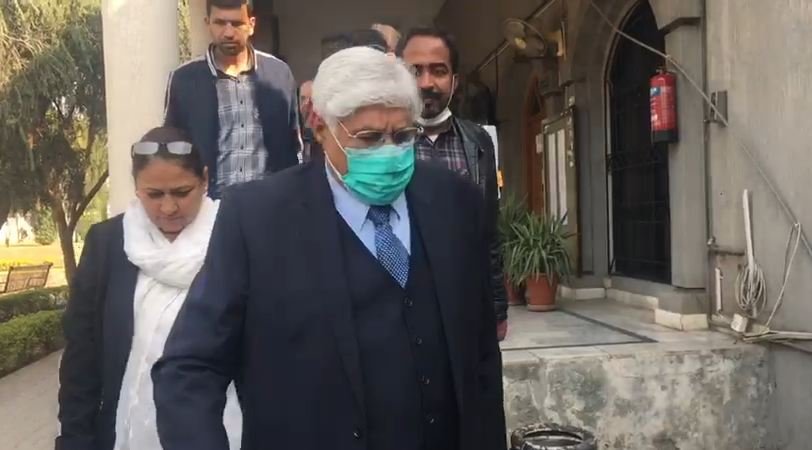
    Former Gilgit-Baltistan Chief Judge Rana Shamim on Monday submitted in the Islamabad High Court (IHC) his original affidavit accusing former Chief Justice of Pakistan (CJP) Saqib Nisar of conspiring to deny bails to top Pakistan Muslim League-Nawaz (PML-N) leadership prior to the 2018 general elections.

    Chief Justice IHC Justice Athar Minallah had issued the order after going through the reply submitted by Justice Shamim in which he explained reasons for executing the statement on oath — dated November 10, 2021.

    During today’s hearing, Lateef Afridi, Shamim’s legal counsel, informed the court that the affidavit had been submitted to the IHC and the former judge has been “standing by his statement since the first day”, reports Dawn.

    “The real affidavit was sealed and has now been brought to Pakistan on the court’s order,” said Afridi.

    Justice Minallah said the sealed envelope was in its original condition and had not been opened by the court yet.

    “The attorney general had said the media’s role is secondary. Rana Shamim has admitted that the content published in the newspaper (The News report) is [the same as] in his affidavit. Rana Shamim has cast doubt on all judges of the IHC,” the chief justice said, adding that the court had already made it clear that it did not fear criticism.

    Justice Minallah then turned to Shamim’s counsel and asked him to open the envelope, upon which the counsel said that a new inquiry could be started by opening a sealed envelope.

    “This is an open inquiry. This is our accountability,” the judge said. He added that Shamim had apparently made “a very big statement without any evidence” and given an impression that all IHC judges were “compromised”.

    Afridi said his client maintained that he did not “leak” the affidavit.

    “Can a finger be pointed at any judge of this court? The court will not ask the journalist about the source of his news. This court is hearing many important cases related to fundamental rights,” Justice Minallah remarked.

    The judge called for evidence to be presented regarding the public opinion that was being built, saying the public’s trust in the court should not be eroded.

    “This court will not deviate from the law,” Justice Minallah remarked. He added that the next hearing would be held on Thursday. However, Afridi said he would not be able to attend the hearing on that date.

    Subsequently, Afridi requested the court to adjourn the hearing until after winter vacations were over. However, Justice Minallah observed that the IHC had not issued any notification about vacations.

    The hearing was adjourned till December 28.

  • Islamabad Chief Justice says no need to investigate audio recordings if evidence is not brought to court

    Islamabad Chief Justice says no need to investigate audio recordings if evidence is not brought to court

     The Chief Justice of Islamabad High Court (IHC), Athar Minallah on Wednesday remarked that why the court should investigate a case when the concerned appellants didn’t bring any audio before the bench, reports The News.

    The court was hearing the inquiry commission to probe into the alleged video of former Chief Justice of Pakistan (CJP) Saqib Nisar.

    The Attorney General of Pakistan (AGP) Khalid Javed said the petition has been filed under Article 199-C of the Constitution.

    “Why are people choosing only one prime minister and coming to court as their proxy? Thousands of people were sacked. No video in their respect came. It is a proxy war. Today everyone is saying he has two videos and he has four videos. This is the season of harassing and pressurising judges,” said AGP.

    “Sometimes an audio, sometimes some concocted affidavit is released,” the attorney general said, referring to an affidavit by former Gilgit-Baltistan Chief Judge Rana Shamim in which he accused ex-CJP Nisar of colluding to deny bails to Nawaz Sharif and Maryam Nawaz before general elections 2018.

    “If a facility is given to one PM, then why was it not given to Bhutto,” asked the AGP.

    Salahud Din Ahmed, president SHCBA, said the AGP was holding bar associations responsible for every case. “See the statements given by Prime Minister Imran Khan against the judiciary and judges. It is now being said to either do accountability of the last 70 years or not at all to divert attention.”

    The petitioner argued that the judiciary was being made controversial through different tactics and the court could stop this practice by probing the allegations against judges. At this, the attorney general responded that all matters of the past could be sent to parliament. “One appeal against conviction in the Avenfield Reference is being heard in this court. That one appeal has perplexed the entire judiciary,” Khalid Javed added.

    While acknowledging that those whose cases would be affected by the alleged audiotape had not approached the court, Ahmed said his stance was that courts were being made controversial. The judiciary could stop that from happening by ordering an inquiry, he added.

    The IHC chief justice observed that any audio or video could be constructed in today’s age of advanced technology. “Anybody can make audio and ask for an investigation. The court remarked if we declare the petition seeking an investigation into audio maintainable, then what will be the impact on the pending appeals?”

    Justice Minallah noted, however, that the matter of the affidavit was different because the person concerned — Rana Shamim — had himself approached the court. “You’re unsure yourself about the [authenticity of] the audiotape you’re mentioning. A commission can be formed when there are grounds. The people who have cases [which could be affected by it] have not brought the audiotape to the court. Why should we [take action]? Is there anyone to take ownership of the audiotape?” he questioned.

  • ‘Law did not allow land meant for defence purposes to be used for commercial gains’: CJP Gulzar

    ‘Law did not allow land meant for defence purposes to be used for commercial gains’: CJP Gulzar

    Chief Justice of Pakistan (CJP) Gulzar Ahmed on Tuesday said that the law did not allow land meant for defence purposes to be used for commercial gains, reports Dawn.

    CJP Gulzar further said that such land should be returned to the government once its strategic use has ended. He said this during the hearing on the issue of military lands being used for commercial purposes.

    Grilling Defence Secretary Lieutenant General (Lt Gen) Mian Mohammad Hilal Hussain, CJP Gulzar said, “The law’s intention is not that defence land is used for any other purpose,” Justice Gulzar reiterated. “If [the land] is not being used for defence then it will go back to the government.”

    “This is government land,” CJP Gulzar said, further taking notice that cinemas, petrol pumps, housing societies, shopping malls and marriage halls were being constructed on land meant for defence.

    “General sahib, these are not defence purposes,” he told the defence secretary, asking the attorney general to explain how the defence ministry would “limit the land’s use to defence”.

    Justice Qazi Mohammad Amin Ahmed, one of the judges present on the bench during the hearing, said, “The army should not compromise on its bigger objectives for petty business.”

    The CJP further said that “allotting houses to senior army officers does not fall under defence purposes”.

    “How can the army carry out commercial activities on state land?” he questioned, emphasising that state land should not be “exploited”.

  • ‘Highlight previous history of PML-N as to how the party attacked judiciary’: PM Khan directs party spokespersons

    ‘Highlight previous history of PML-N as to how the party attacked judiciary’: PM Khan directs party spokespersons

    During a meeting with his spokespersons, Prime Minister (PM) Imran Khan on Monday said the alleged audio leak of former Chief Justice of Pakistan (CJP) Saqib Nisar was devised by the Pakistan Muslim League-Nawaz (PML-N). He instructed his spokespersons to highlight the previous history of the PML-N as to how the party had attacked the judiciary and maligned judges, reports Dawn.

    “But their [PML-N] bad tactics will not work this time,” he added.

    “The government stands by the state institutions,” said PM Khan.

    Meanwhile, Federal Minister for Information and Broadcasting Fawad Chaudhry on Tuesday said that the PML-N should come out of “leaks, fake videos, and games” and clarify allegations against them on the basis of merit.

    Taking to Twitter, Fawad wrote: “Nawaz & Co, come out of fake videos, leaks, and games and answer the allegations levelled against you on the basis of merit.”

    “These dramas have completely flopped. If you do not wish to be imprisoned, then you should return the nation’s wealth,” said Fawad, adding, ” This is a simple solution, which they are complicating as a way out.”

    The minister’s comments come in relevance to the leaked audio of an alleged conversation claiming that CJP Nisar was the person who passed on the directions of handing down conviction to PML-N supremo Mian Nawaz Sharif and his daughter, Maryam Nawaz only because the “institutions” wanted the former prime minister penalised in order to bring ahead Imran Khan. Ahmed Noorani reported this for FactFocus.

  • Islamabad High Court takes notice of the allegations against former CJP Saqib Nisar

    Islamabad High Court takes notice of the allegations against former CJP Saqib Nisar

    The Islamabad High Court (IHC) on Monday took notice of the claims of former Chief Judge (CJ) of the apex court of Gilgit Baltistan Rana M Shamim, who in a signed affidavit wrote that he is a witness to the then Chief Justice of Pakistan (CJP) Saqib Nisar’s direction to a high court judge not to release Pakistan Muslim League-Nawaz (PML-N) chief Nawaz Sharif and Maryam Nawaz on bail at any cost before the 2018 general elections.

    Meanwhile, Saqib Nisar said he didn’t want to respond to the “white lies” of the ex-GB chief justice.

    “I have never spoken to anybody or any high court judge in connection to any matter related to Mian sahab,” he said, reports Dawn.

    Nisar said that Shamim had asked him for an extension but he didn’t accept his request, adding that the ex-GB CJ had also complained to him about the same.

    When asked why he had not issued a public statement on the matter, he replied: “Why should I? […] I don’t want to stoop to his level.”

    Reacting to the story, Information Minister Fawad Chaudhry tweeted, “Jokes in the name of news are being circulated in the country to prove that Nawaz Sharif is a victim.”

    PML-N Information Secretary Marriyum Aurangzeb tweeted, “This affidavit of the former Chief Justice of Gilgit-Baltistan is a testimony against this heinous crime.”

    On the other hand, IHC has issued a contempt notice to Jang/ Geo CEO Mir Shakil and senior journalist Ansar Abbasi, for publishing the news report against the former Chief Justice of Pakistan.

  • ‘Saqib Nisar directed not to release Nawaz, Maryam before 2018 elections’: Ex-Chief Justice GB

    ‘Saqib Nisar directed not to release Nawaz, Maryam before 2018 elections’: Ex-Chief Justice GB

    The former Chief Judge (CJ) of the apex court of Gilgit Baltistan Rana M Shamim in a signed affidavit wrote that he is a witness to the then Chief Justice of Pakistan (CJP) Saqib Nisar’s direction to a high court judge not to release Pakistan Muslim League-Nawaz (PML-N) supremo Nawaz Sharif and Maryam Nawaz on bail at any cost before the 2018 general elections, reports Ansar Abbasi for The News.

    “Mian Muhammad Nawaz Sharif and Maryam Nawaz Sharif must remain in jail until the general elections are over. On assurances from the other side, he (Saqib Nisar) became calm and happily demanded another cup of tea,” said the affidavit.

    The affidavit contains the signature of the ex-CJ of Gilgit Baltistan as well as an image of his CNIC. The notary public stamped the affidavit and recorded that it was “sworn under oath before me” on November 10, 2021.

    The report edited the name of the High Court justice who talked to Saqib Nisar at that time.

    “In July 2018 while I was serving as the Chief Judge of the Supreme Appellate Court of Gilgit Baltistan, Justice Mian Saqib Nisar, the then Chief Justice of Pakistan, came to Gilgit for vacations along with 27 family members and stayed in the guest house of the court,” said the affidavit.

    “That one evening when I, my late wife, the Chief Justice of Pakistan Mian Saqib Nisar and his wife were taking tea in the lawn, I found the Chief Justice of Pakistan to be very disturbed and continued talking on the phone to his registrar, directing him to go to the residence of Justice —— of —— and request him to immediately call him (the CJP).”

    “That in case his call does not get through, then convey to him on his (Mian Saqib Nisar’s) behalf that Mian Muhammad Nawaz Sharif and Maryam Nawaz Sharif must not be released on bail before the general elections at any cost,” read the chief justice’s affidavit.

    “That shortly afterwards he also spoke to Justice —— directly and told him that Mian Muhammad Nawaz Sharif and Maryam Nawaz Sharif must remain in jail until the general elections are over. On assurance from the other side, he became calm and happily demanded another cup of tea.”

    “I, as his colleague and host, requested him to spend his vacations with his family in Gilgit Baltistan and then asked him why he conveyed such a message to Justice —– and for what. He said, ‘Rana Sahib you will never understand. You must treat it as if you never heard anything.’ I told him in the presence of my late wife and his wife that Mian Nawaz Sharif has been falsely implicated and his sentence and that of Maryam Nawaz were both managed as was evident from his phone calls. He was initially disturbed to hear that but then relaxed again and said, ‘Rana Sahib the chemistry of Punjab is different from Gilgit Baltistan’.”

    “That whatever is stated voluntarily herein above constitutes the complete truth,” concluding the document with the signature of Ex Cheif Justice Rana M Shamim.

    PML-N leader Maryam Nawaz took to Twitter yesterday and hinted at the revelation of this story by tweeting, “What is real happiness? To be vindicated in one’s own lifetime.”

    Reacting to the story, PML-N president Shehbaz Sharif tweeted, “It’s yet another vindication of Nawaz Sharif & Maryam in the court of public opinion.”

  • PM Khan summoned by Supreme Court in APS massacre case

    Prime Minister (PM) Imran Khan arrived at the Supreme Court of Pakistan (SCP) to appear before the apex court’s bench today (Wednesday) after he was summoned to attend a hearing of the Army Public School (APS) massacre, reports Geo News.

    The apex court summoned the prime minister to appear before the bench when the hearing resumed at 11:30am, in his personal capacity.

    During the previous hearing of the case, parents of the children martyred in the 2014 terrorist attack had complained to the court that they had lost their children in the incident hence the top civil and military leadership of the country should be summoned by the Supreme Court.

    During the hearing, the attorney-general sought time from the court to seek directives from the premier and other officials so he can respond to the court.

    However, the bench said this was a very serious case and that it would summon the prime minister and seek answers from him.

    The attorney-general asked for further time for the prime minister to appear before the court. However, the bench expressed anger at his request and said the parents of the victims of the APS massacre are also in court.

    During the hearing, the issue of the government holding talks with the banned Tehrik-i-Taliban Pakistan (TTP) was also mentioned.

    Justice Qazi Amin remarked that there are reports that the government is holding negotiations with a group and added, “Is it not the responsibility of the state to identify the real culprits [behind the APS tragedy] and nab them?”

    Meanwhile, Chief Justice of Pakistan (CJP) Gulzar Ahmed intervened and said we cannot leave the children alone to die.

  • Judicial reforms and the question of representation

    What could have been a historic moment in the history of Pakistan was lost to politics of deflection by the Bar and the placement of arbitrary power for the process of judicial appointments in the hands of the Chief Justice(s) and the members of the Judicial Commission of Pakistan (JCP) on September 9, 2021, when the possibility of Judicial Commission of Pakistan (JCP appointing its first-ever female to the apex court in the 74 years since Pakistan’s independence failed to achieve the requisite majority for Justice Ayesha A. Malik’s nomination as a judge of the Supreme Court. As a result, Pakistan to date has had no female representation or voice at the highest forum of justice in the country and remains the only country in the region to hold this unfortunate record.

    Given that the courts invariably deal with matters of public policy and adjudicate on fundamental rights that are to be accessed by the most marginalised groups, communities, and persons, including women and minorities, it is vital for there to be more inclusion, transparency, and representation to promote access to justice and build public confidence and trust in the justice system of the country.

    What transpired on September 9, however, must be viewed in the context of the historical issues surrounding the judicial nominations and appointments process, the rather unhelpful digression into the seniority versus merit, junior versus senior debate, and the overall state of representation of women and minorities in the justice sector. The larger socio-political concerns and overarching considerations of patriarchal structures can also not be divorced from the controversy the system and its stakeholders find themselves in.

    Every few years, the question of judicial appointments goes through a similar cycle of division and deflection and is placed within the larger political context of its time. Prior to the 18th Amendment, the process of judicial nominations was centered around the recommendation of a panel by the Chief Justice to the president who selected a suitable candidate from therein. Even though the president had immense discretion to select a candidate from the panel, the central role, however, remained of the Chief Justice of a given court who alone had the power to recommend the panel up to the president for such appointments. This was further cemented in the Al-Jehad Trust Case 1996 in which the courts held that the recommendations of the Chief Justice would ordinarily be binding on the president, except where the president departed from the recommendations, in which case the reasons for his decision would be justiciable. The executive discretion of the president was, therefore, curtailed to a point where it was rendered practically ineffectual. This was done on the grounds of maintaining the independence of the judiciary from political influence.

    After the 18th Amendment to the Constitution of Pakistan, the process for appointments of the higher judiciary was further amended and appointments via a Judicial Commission plus Parliamentary Committee was envisaged instead. The Commission, it was believed, would have a wider composition and representation of stakeholders from both Bench and Bar, including ex-officio members such as the Attorney General of Pakistan, Federal Minister for Law and Justice, senior judges, former judges, and senior advocate of the Supreme Court nominated by the Pakistan Bar Council to promote greater consensus among the stakeholders within the legal profession.  However, no criteria or principles were formulated to base the nominations on. Instead, Rule 3 of Judicial Commission of Pakistan Rules, 2010, placed the power to initiate nominations for consideration by the JCP in the hands of the Chief Justice of the respective court in what is critiqued to be an absolute discretion devoid of any content and objective standards making the entire exercise an arbitrary and non-transparent exercise of power. Even the deliberations within the JCP and the eventual reasons of decision for accepting or rejecting a given nominee are not disclosed.

    Over the years, this lack of transparency in the process on the whole and arbitrary power to initiate nominations has resulted in increased speculation and tension between the Bench and the Bar, especially within the circles that find themselves underrepresented within the current structure and system.

    The calls for greater democratisation of the process once again became louder and relevant when Justice Muhammad Ali Mazhar, the then judge of the Sindh High Court, was nominated for appointment as a judge of the Supreme Court in July 2021. Being fifth in seniority, the assertions for ‘overlooking’ the senior-most judges, i.e. the then Chief Justice of the Sindh High Court, Justice Ahmed Sheikh, came to the fore by the Sindh Bar. Whilst critiquing the process as arbitrary and calling for its reform, they also persisted in demanding that seniority be applied as an interim measure until an objective criterion was formulated. Implications of ethnic tensions were also raised as was the possibility of judicial engineering for political engineering, which led to a massive and organised campaign of the bar against the JCP. The situation on the ground became more complicated when the Chief Justice of Pakistan put forth the name of a female judge, fourth in seniority from the Lahore High Court, for appointment as a judge of the Supreme Court. It was alleged that her gender was being used to neutralise the sentiment against the appointment of junior judges and to justify the earlier nomination of the then Justice Ali Mazhar of Sindh High Court, which was being resisted.

    Several distinct issues appear to have been conflated, which is what led to one of the most intensive and intellectually vigorous legal debates within the community in years. Several notable scholars, and senior lawyers including Salman Akram Raja, Feisal Naqvi, Salahuddin Ahmed, Hamid Khan, and Justice (R) Nasira Iqbal, engaged with this debate in public and shared their respective and divided opinions on the matter.

    The division appeared to be more in relation to specific strategies and interim solutions that the Bar had proposed re-adopting the seniority principle as opposed to the actual need for reform in the process on which there was largely a consensus. Most stakeholders — even with an alternative point of view — agreed that the arbitrary process needs to be retired in favour of greater transparency but disagreed that the seniority principle is that measure of transparency even in the interim. They based this on the grounds that there was no seniority principle that was being violated, to begin with, because the Constitution under Articles 177 and 193 and the Supreme Court judgement PLD 2002 939 SC makes no reference to the right of senior-most judge for such nominations. The appointments to the Supreme Court are in any case to be viewed as fresh appointments and not as ‘elevations’ — therefore, the question of continuing on basis of age and seniority does not arise. They were also of the view that while the process needed reforms to promote transparency and representation, the seniority principle would still not be the guarantee of representation or inclusion. They highlighted the dangers of entrenching seniority as a principle as that would make ‘elevation’ to the Supreme Court a matter of right for senior-most judges which, once established, would be very difficult to reform in favour of inclusion and representation at the Bench. In this way, insistence on seniority could self-defeat the entire ethos and momentum for actual reforms that were supposed to be based on the objective of achieving greater transparency and representation.

    The bar eventually organised to create pressure on the JCP and held several meetings to adopt a collective way forward to challenge the arbitrary exercise of power and to insist the stakeholders work towards developing the criteria for nominations. Strangely, they also held a primarily all-male lawyers convention in Karachi in August to collectively oppose the existing nominees even though there was no irregularity as they had been nominated in line with the existing process in place at the time.

    Justice Ali Mazhar, fifth in seniority, was nevertheless appointed as a judge of the Supreme Court. Justice Ayesha A. Malik’s nomination, fourth in seniority, however, could not be so approved as the JCP also remained divided.

    This dichotomy further brought to fore the need for developing the criteria for judicial nominations as Justice Ayesha Malik’s loss was pinned on the unfettered discretion of the JCP to appoint or not to appoint judges as per their whims in absence of clearly defined and scrutable criteria.

    The issue, however, was never as simple as a matter of seniority versus merit. The lack of representation in the profession at both Bench and Bar is a much more complex challenge that requires a complete overhaul of the entire system. Reforms are required at multiple levels.

    For instance, the JCP itself lacks the inclusivity and representation in its composition, as do the Bar Councils, the Attorney General office, the office of Federal Ministry of Law and Justice, senior and former judges and advocates of Supreme Court that have the support of the Pakistan Bar Council. This lack of diversity is indicative of the structural barriers that have led to the marginalisation of women and minorities in the justice system. It is a lot like the pot calling the kettle black.

    With only 4 women out of 205 members represented in the provincial Bar Councils with none at the Pakistan Bar Council, the Bar needs to do better to be more inclusive — at least when arranging conferences on matters that impact all members of the legal community, including women. However, we do not see a similar rage for reforms in that case. In fact, the years of practice for eligibility to run as candidates was increased by five years via the Legal Practitioners and Bar Councils Amendment in 2018, which had a disproportionate impact on women and their prospect of candidacy in Bar elections held in 2020. This, in turn, had an impact on eligibility for candidacy as members of the Pakistan Bar Council, the apex body of lawyers with a say in the JCP as the candidates are elected indirectly by the electoral college composed of members of provincial Bar Councils. There has been no female Attorney General or a female Federal Minister of Law and Justice since 2010 when the JCP was first established. Despite there being seats for appointing former judges to JCP, in the past 10 years, none of the former female judges have been a part of the composition of JCP in that capacity either and neither has any female advocate Supreme Court been supported by the Pakistan Bar Council as their representative at the JCP.

    If we take an even larger spectrum, the marginalisation of women begins much earlier. It could start as early as from homes, to law schools where female students have been discouraged from pursuing litigation and other ‘hard’ fields citing the non-suitability of those areas for their gender. Most female law graduates were not encouraged to go to courts even though this is now changing and so it would often be years before they would obtain their license to practice. This delay had an impact on their seniority as well as in the time it takes to complete the list of cases in which the counsel has represented clients, which is needed for advancement in the profession for instance, as an advocate of the Supreme Court.

    Any reforms based on the underlying objective of transparency and restoring public confidence in the legal system must, therefore, be holistic and representative at all levels. In this regard, the letter by Attorney General for Pakistan dated September 9, 2021, is a welcome initiative as he has expressed willingness to engage with the legal community on the issue of developing the criteria for judicial appointments and has proposed that affirmative action be taken for representation of women at the Supreme Court. This would be a welcome first step and be in line with Article 25 of the Constitution of Pakistan.