Tag: children

  • Lahore leads in run-away children numbers

    Lahore leads in run-away children numbers

    A police report reveals that Lahore ranks first in the number of children who run away from home due to disputes with their parents. Most boys and girls head to the railway station to leave for other cities.

    According to the Railway Police, ninety-six children from various cities in Punjab were returned to their parents over a period of three months. Children tend to leave home when their demands for phones, laptops, and other items are not met.

    The help desk explained to Samaa news that railway stations provide an accessible route for children to travel to other cities.

  • 21,000 children missing in Gaza since October 7

    21,000 children missing in Gaza since October 7

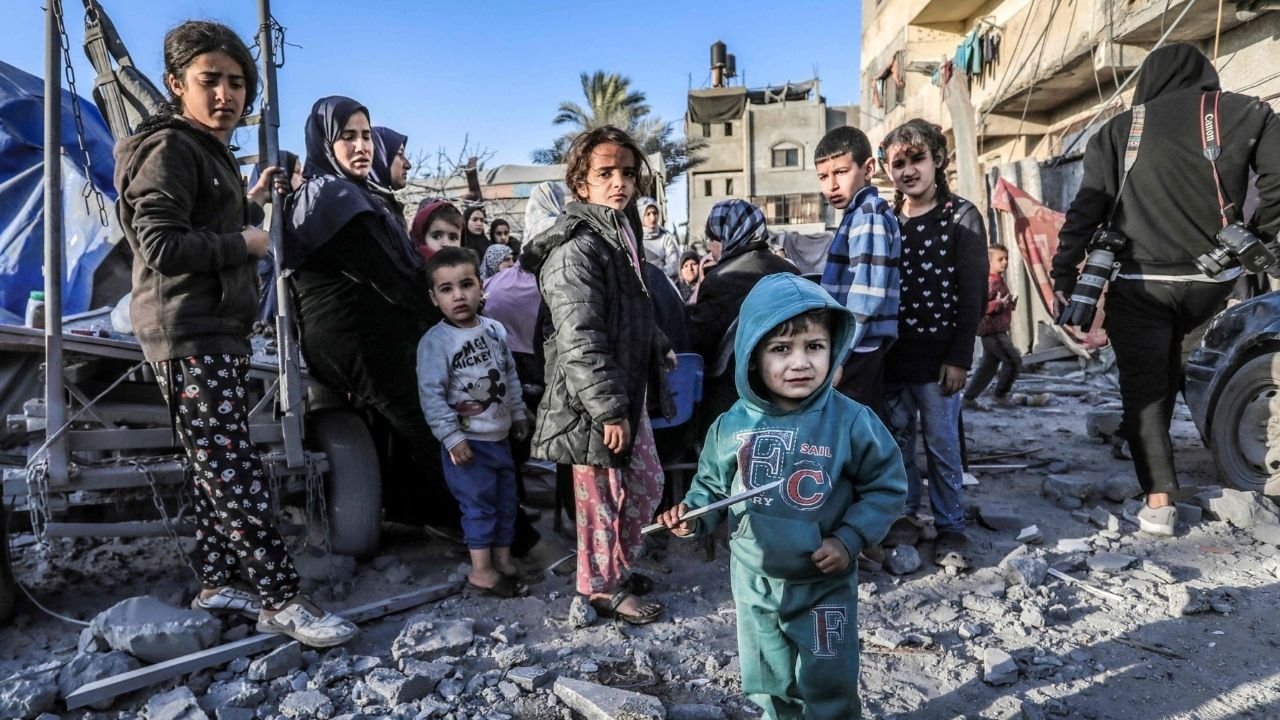
    As much as 21,000 children in Gaza are said to have gone missing since October 7, reports Save the Children, a leading humanitarian organisation for children.

    Israel launched fierce military operations against Palestinians following October 7 attacks which have killed at least 37,598 people and injured 86,032 in Gaza, according to Al Jazeera.

    More than 15,000 children have been killed by Israel in the genocide.

    Additionally, at least 3,000 children are reportedly amputated – the largest population of child amputees in the world.

  • No relief for babies: Heavy tax on formula milk

    No relief for babies: Heavy tax on formula milk

    The budget for 2024-25 was unveiled this Wednesday, on June 12, by Finance Minister Muhammad Aurangzeb.

    As the government depends on the International Monetary Fund’s (IMF) bailout package, citizens were further burdened with heavy taxes as per the administration’s commitments to the lender. Milk products for infants, a necessary item for many families, will now carry an 18 per cent tax.

    But why is this issue noteworthy?

    On January 21, 2022, the Finance (Supplementary) Bill—a ‘mini budget’—was passed by the National Assembly following extensive debate over the proposed taxes by the Pakistan Tehreek Pakistan (PTI) government. Among the contentious proposals was a 17 per cent sales tax on locally produced infant formula milk, classified as a “luxury product.”

    This classification sparked heavy criticism from both the public and the opposition, who argued that labelling a basic necessity for children as a luxury was unjust. In response, the-then Finance Minister Shaukat Tarin promised to push for the exclusion of children’s milk products from the Bill.

    However, two years later, heavy taxes are being imposed on infant milk products once again.

    According to Statista, a German data-centric platform, the Baby Milk & Infant Formula Market in Pakistan is projected to grow by 0.76 per cent from 2024 to 2029. This trend indicates increasing reliance on infant milk products due to various reasons.

    Traditionally, in South Asian countries like Pakistan, reliance on infant milk products is frowned upon, with a cultural preference for breastfeeding. However, several factors can make breastfeeding unfeasible.

    Certain health conditions, such as infections or breast surgeries, can prevent mothers from breastfeeding. Additionally, some mothers can not produce enough milk due to lactation insufficiency. In other cases, babies are born with conditions like galactosemia, which prevents them from digesting breast milk. Furthermore, specific nutritional deficiencies can not be addressed by breast milk alone and require formula milk supplementation.

    Moreover, not every mother is comfortable with breastfeeding, and many prefer to use formula milk to feed their children. Working mothers, in particular, may not have the flexibility to breastfeed and thus rely on formula milk.

  • Forced begging now non-bailable offence

    Forced begging now non-bailable offence

    The Punjab Home Department has sent amendments to the anti-rape law to the Cabinet for approval.

    According to the spokesman of the Punjab Home Department, under the new law, forced begging has been declared a non-bailable offence.

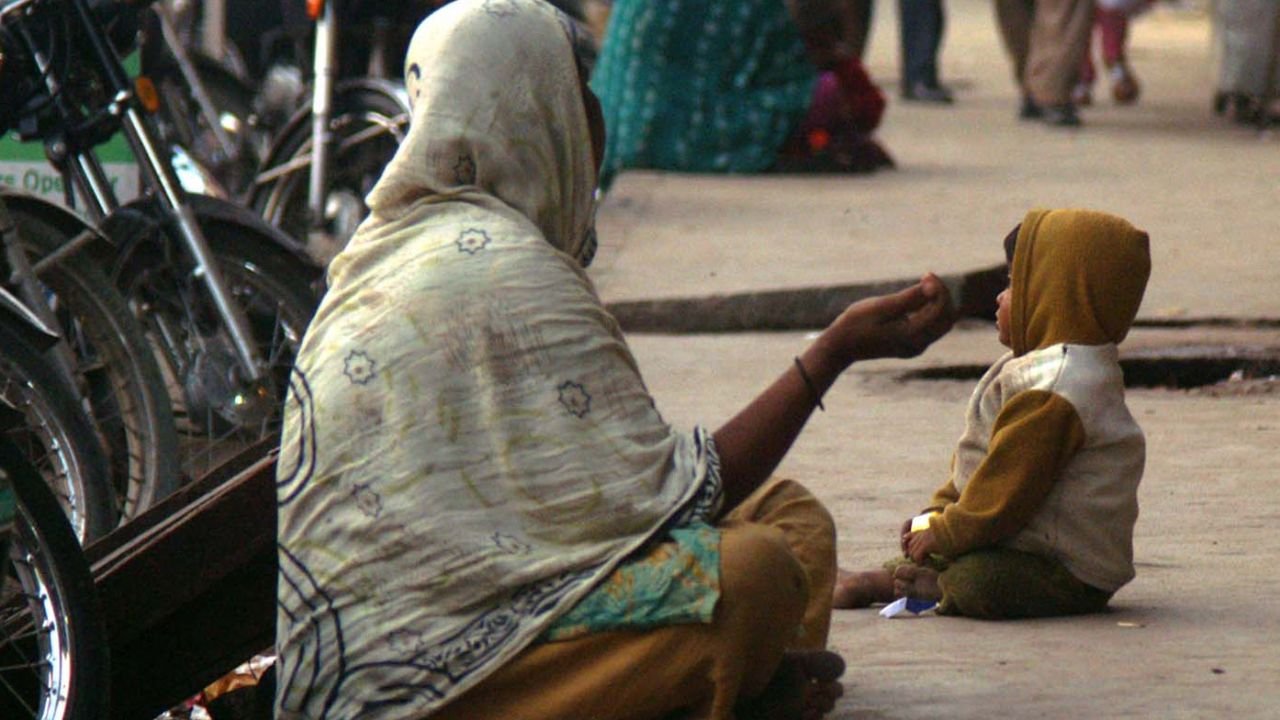
    The spokesperson said that those who force children, the elderly and women to beg will be severely punished, while the gang leaders of beggar mafias will face 10 years of imprisonment with a fine of 20 lakh rupees. In case of non-payment of fine, three additional years of punishment will have to be served.

    Similarly, apart from forcing children to beg, those you physically harm minors are also in for a tough time.

    The Home Department noted that previously, there was no law to punish the gang leaders of the beggar mafia.

  • For deaf children in Pakistan, school is life

    For deaf children in Pakistan, school is life

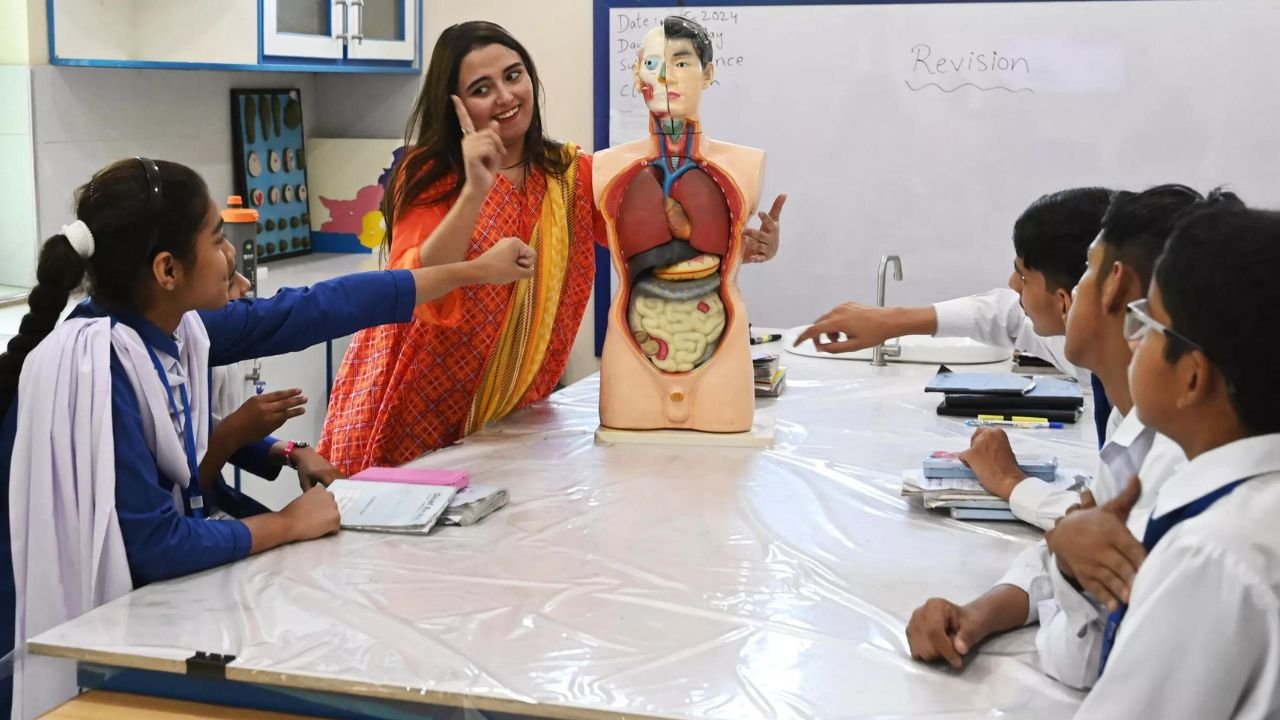
    Lahore (Pakistan) (AFP) – At a school for the deaf in Pakistan, the faces of students are animated, their smiles mischievous, as their hands twirl in tandem with their sign language teacher.

    The quiet classes exude joy, led often by teachers who are also deaf.

    “I have friends, I communicate with them, joke with them, we share our stories with each other about what we have done and not done, we support each other,” said Qurat-ul-Ain, an 18-year-old deaf woman who joined the school a year ago.

    More than 200 pupils, children and adults mostly from disadvantaged backgrounds, are among the few given a new fervour for life at this inner-city school in historic Lahore.

    Of more than a million deaf school-age children in Pakistan, less than five percent go to school.

    The figure is even lower for girls and, without a language to express themselves, many children are marginalised by society and even their families.

    “Life is a little difficult. There is a huge communication gap here where people generally don’t know sign language,” said Qurat-ul-Ain.

    At the school run by charity Deaf Reach, pupils learn sign language in English and Urdu before progressing on to the national curriculum.

    Everyone has a name in sign language, which often has to do with a physical characteristic.

    Younger children learn with visuals: a word and a sign are associated with an image.

    Their peers turn their thumbs down for a wrong answer and make the applause sign — twisting hands –- for a correct one.

    Families learning to sign

    Founded in 1998 by an American and funded with donations, Deaf Reach now has eight schools across the country, educating 2,000 students on a “pay what you can afford” basis, with 98 percent of children on scholarships.

    The vast majority of students at the school come from hearing families, who are also offered the chance to learn how to sign and break the language barrier with their son or daughter.

    Adeela Ejaz explained how she struggled to come to terms with her first born son — now 10 years old — being deaf.

    “When I couldn’t understand what he was trying to say he would bang his head against the wall and floor,” the 35-year-old told AFP.

    “It was tough for everyone because no-one knew how to communicate with him. Everyone would tell us he is deaf but I wasn’t prepared to accept that.”

    The mother and son pair are now both learning to sign.

    “I am getting better at signing and I am able to communicate with my son. He’s now become so attached to me.”

    The programme makes extensive use of technology, and offers an online dictionary and a phone app.

    It has also found employment for more than 2,000 deaf people with around 50 Pakistani companies.

    Huzaifa, 26, who became deaf after contracting a fever at a young age, was given a stitching apprenticeship at Deaf Reach to help him into the skilled workforce.

    “Teachers in the government school didn’t know any sign language. They would just write notes on the board and tell us to copy it. We used to get really disheartened, and I would be extremely worried for my future,” he told AFP.

    His family pushed for him to become educated, helping him to learn the basics of sign language before he received formal coaching.

    “My parents never threw me away. They spared no effort in ensuring I was able to continue my education,” he said.

    Without their dedication, he said: “I’d be working as a day labourer somewhere, cutting leaves or cementing walls.”

    Isolated and fearful

    Sign language varies from one country to another, with its own associated culture, and regional variations sometimes exist.

    According to World Federation of the Deaf, 80 percent of the approximately 70 million deaf people in the world have no access to education.

    “I used to sit idly at home, use the mobile or play outside. I never had a clue about what people were saying,” said Faizan, 21, who has been at Deaf Reach for 11 years and dreams of working abroad.

    “Before learning how to sign I used to feel very weak mentally and had an inferiority complex and fear. But thankfully there is none of that anymore.”

    Attitudes towards people with disabilities are slowly improving in Pakistan, which has introduced laws against discrimination.

    “We have seen over the years the mentality change tremendously. From many people hiding their deaf children, feeling embarrassed, ashamed,” noted Daniel Marc Lanthier, director of operations of the foundation behind Deaf Reach.

    Nowadays families are “coming out in the open, asking for education for their children, asking to find employment for them,” he said, though much work remains.

    “With a million deaf children who don’t have access to school, it’s a huge challenge, it’s a huge goal to be met.”

  • Children of divorced couples to have names of both parents on passports

    Children of divorced couples to have names of both parents on passports

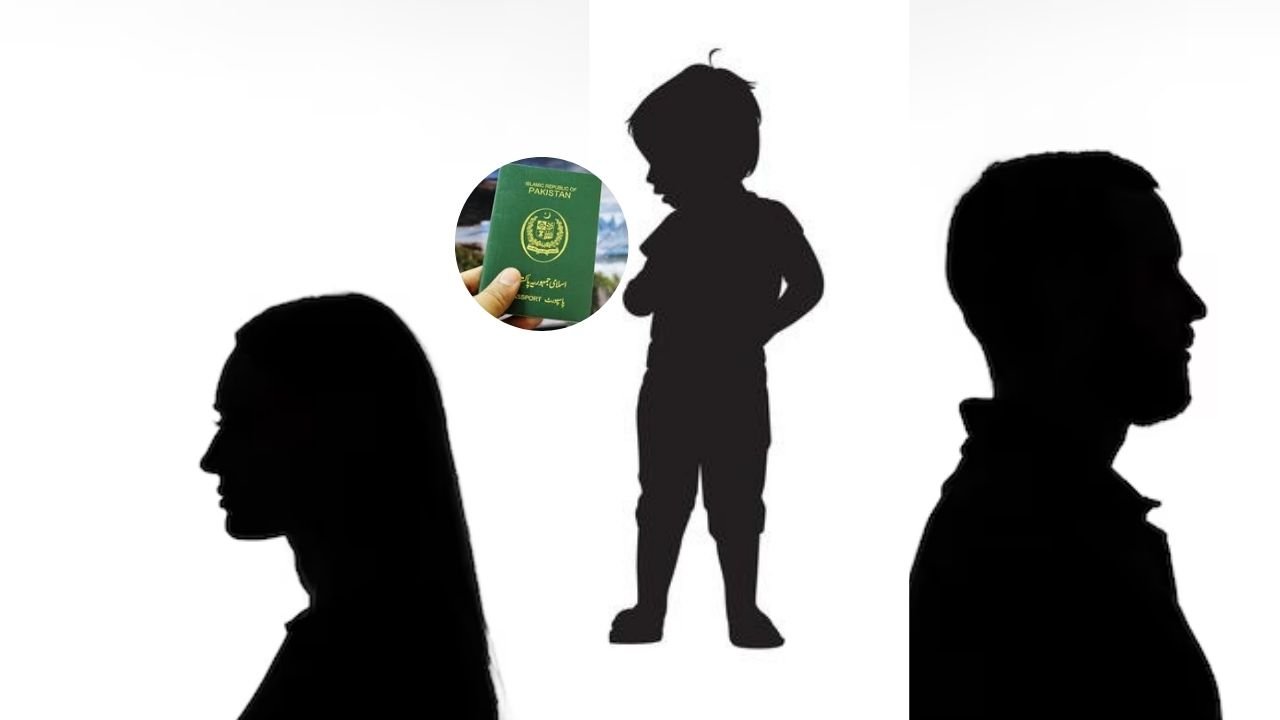
    Pakistani passports are going through a number of transformations and the recently proposed one is the inclusion of the names of both the mother and father if the child’s parents are divorced.

    Geo’s Azaz Syed shared that the proposal is under consideration. In case of divorce or separation, the woman’s passport will be made in the name of the father. Previously, it was reported that that a married woman must have her husband’s name on her passport as per law and if the woman is divorced a box will be introduced to have her former husband’s name.

    For children with divorced parents, the names of the parents will be entered in the passport.

    It is also revealed that the Ministry of Interior will take the final decision to amend passport rules while Ministry of Interior and the Ministry of Law are considering the proposal of amendments to the rules.

    Azaz’ sources at Ministry of Home Affairs say that after the amendment of the rules, passport software and boxes will have to be updated. The federal government will decide on the proposals after consultation with all stakeholders.

  • Man arrested while trying to marry 13-year-old boy to five year-old girl in Sheikhupura

    Man arrested while trying to marry 13-year-old boy to five year-old girl in Sheikhupura

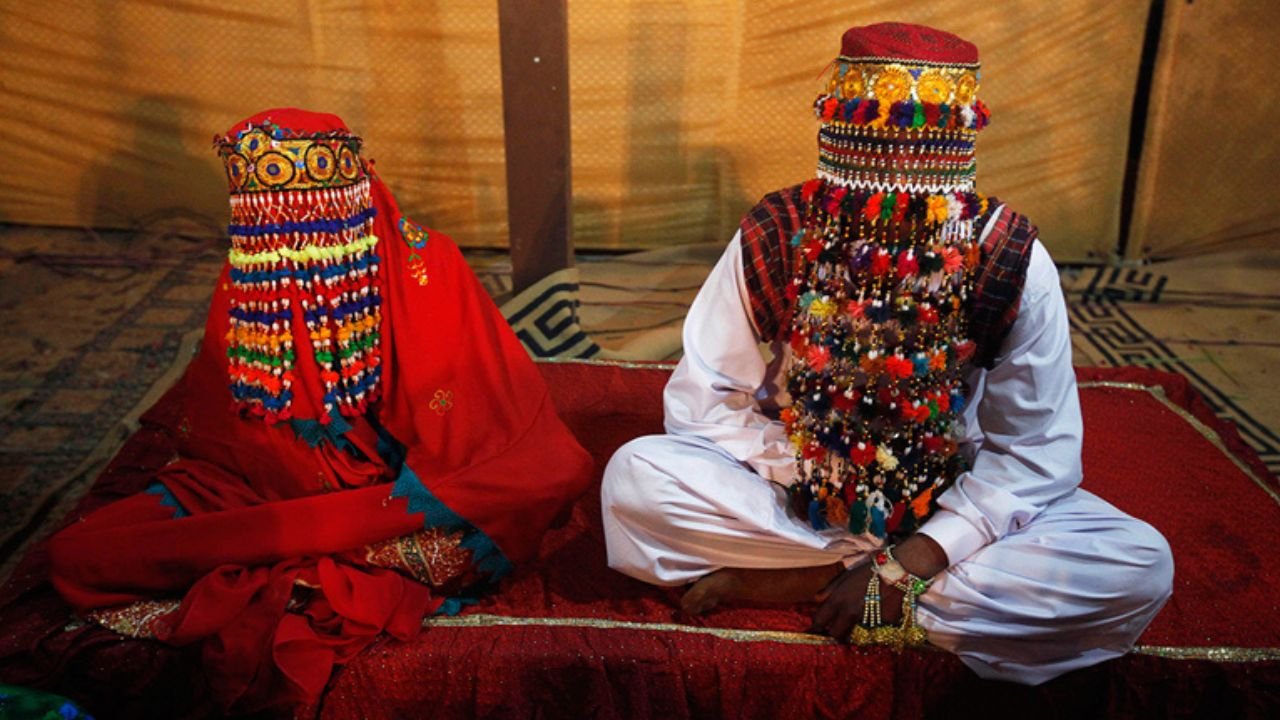
    Local police raided the wedding of a 13-year-old boy and a five-year-old girl in Sheikhupura, and arrested a man suspected of involvement in the ceremony.

    According to the police, the two children were married in Kot Nazir, a village on GT Road in Sheikhupura, in which eight people, including the parents of the two minors, participated.

    Muridke police raided the event when they were informed about it.

    A case has been registered under the Child Marriage Act on the complaint of ASI Mohammad Younis of Muridke Police.

    Police say that more raids are underway to arrest other suspects.

  • Over 300 million children a year face sexual abuse online: study

    Over 300 million children a year face sexual abuse online: study

    More than 300 million children a year are victims of online sexual exploitation and abuse, according to the first global estimate of the scale of the problem published on Monday.

    Researchers at the University of Edinburgh found that one in eight of the world’s children have been victims of non-consensual taking, sharing and exposure to sexual images and video in the past 12 months.

    That amounts to about 302 million young people, said the university’s Childlight Global Child Safety Institute, which carried out the study.

    There have been a similar number of cases of solicitation, such as unwanted sexting and requests for sexual acts by adults and other youths, according to the report.

    Offences range from so-called sextortion, where predators demand money from victims to keep images private, to the abuse of AI technology to create deepfake videos and pictures.

    The problem is worldwide but the research suggests the United States is a particularly high-risk area, with one in nine men there admitting to online offending against children at some point.

    “Child abuse material is so prevalent that files are on average reported to watchdog and policing organisations once every second,” said Childlight chief executive Paul Stanfield.

    “This is a global health pandemic that has remained hidden for far too long. It occurs in every country, it’s growing exponentially, and it requires a global response,” he added.

    The report comes after UK police warned last month about criminal gangs in West Africa and Southeast Asia targeting British teenagers in sextortion scams online.

    Cases — particularly against teenage boys — are soaring worldwide, according to non-governmental organisations and police.

    Britain’s National Crime Agency (NCA) issued an alert to hundreds of thousands of teachers telling them to be aware of the threat their pupils might face.

    The scammers often pose as another young person, making contact on social media before moving to encrypted messaging apps and encouraging the victim to share intimate images.

    They often make their blackmail demands within an hour of making contact and are motivated by extorting as much money as possible rather than sexual gratification, the NCA said.

    pdh/bp

    © Agence France-Presse

  • New crime: Green eyes

    New crime: Green eyes

    A husband in Egypt divorced his new bride for an absurd reason.

    During a hearing at the family court of Cairo, the lawyer of the woman revealed that the morning after the wedding, the woman’s husband started quarrelling with her because of the colour of her eyes after she took off her contact lenses post- event.

    The real colour of his wife’s eyes is green which the husband did not know about.

    To end the quarrel, the wife tried to tell her husband that poor eyesight compelled her to always wears contact lenses and take them off only when she sleeps, but all was in vain.

    On the other hand, the ex-husband of the woman said that since the wife’s eyes are green, their children could also have green eyes — citing that as the reason for asking for a divorce.

    According to Al Arabiya News, the woman belongs to Cairo, the capital of Egypt, and is a law student.

  • Court orders action against nikah khawan for solemnising marriage of a minor girl

    Court orders action against nikah khawan for solemnising marriage of a minor girl

    Lahore High Court (LHC) has ordered action against a nikah khawan for solemnising the marriage of a minor girl.

    Justice Anwar-ul-Haq Pannu of LHC heard a petition filed by Humaira Bibi.

    The young girl was brought to the court from Dar-ul-Aman. According to the petitioner, the girl is 15-years-old and was forced into marriage.

    Justice Pannu asked the girl if she had married of her own free will, to which she replied in the affirmative.

    The girl also claimed that her age was around 15 or 16.

    Justice Anwar-ul-Haq ordered to file a case against the Nikah Khawan who officiated the marriage of the young girl.

    The court ordered the judicial magistrate to decide on the case.