Tag: China

  • Heatwave swells Asia’s appetite for air-conditioning

    Heatwave swells Asia’s appetite for air-conditioning

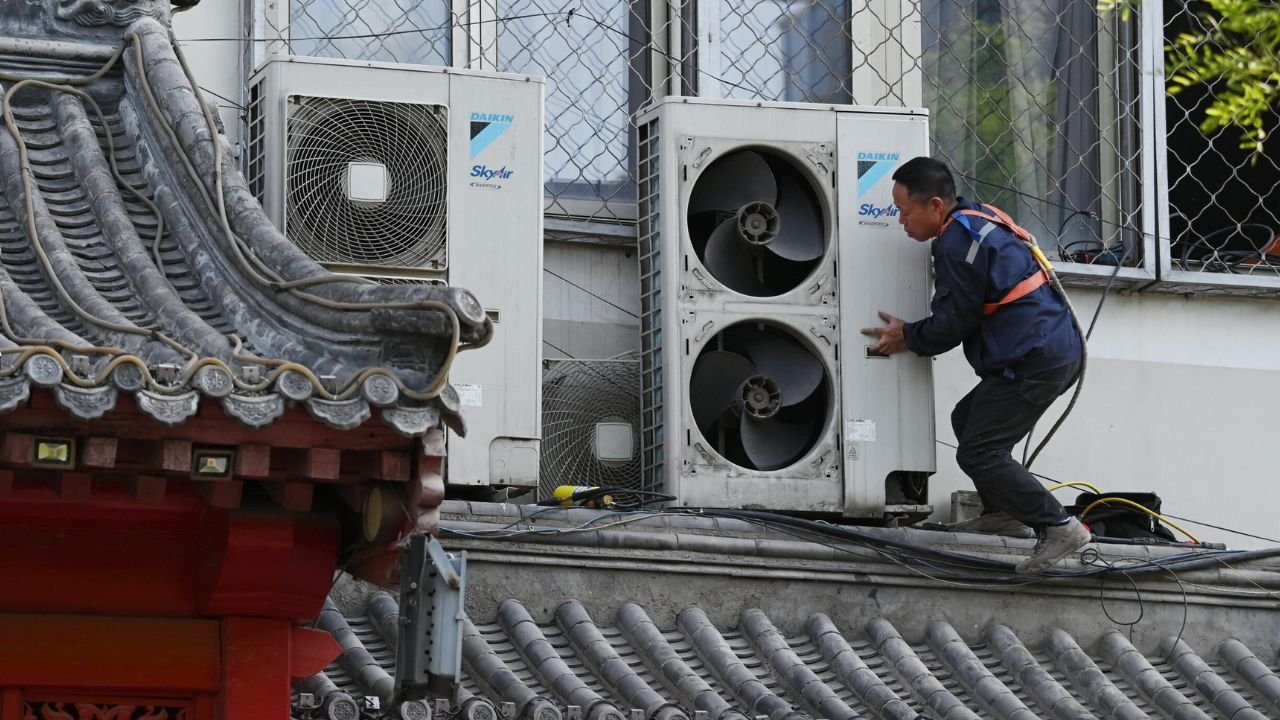
    Hong Kong (AFP) – A record-breaking heatwave is broiling parts of Asia, helping drive surging demand for cooling options, including air-conditioning.

    AC exhaust units are a common feature of urban landscapes in many parts of Asia, clinging like limpets to towering apartment blocks in Hong Kong or tucked in a cross formation between the windows of a building in Cambodia.

    They offer relief from temperatures that have toppled records in recent weeks, with many countries in the region hitting 40 degrees Celsius (104 Fahrenheit) or higher.

    Scientists have long warned that human-induced climate change will produce more frequent, longer and more intense heatwaves.

    Only 15 percent of homes in Southeast Asia have air-conditioning, according to a 2019 report by the International Energy Agency (IEA).

    But that figure obscures vast variations: ranging from around 80 percent installation in Singapore and Malaysia, to less than 10 percent in Indonesia and Vietnam, the IEA said.

    Forecasts suggest that higher temperatures and better wages could see the number of air-conditioning units in Southeast Asia jump from 40 million in 2017 to 300 million by 2040.

    That would stretch local electricity capacity, which is already struggling under current conditions.

    Myanmar is producing only about half the electricity it needs each day, with the junta blaming weak hydropower because of scant rains, low natural gas yields and attacks by its opponents on infrastructure.

    Thailand has seen record power demand in recent weeks, as people retreat indoors to cooled homes or businesses.

    Air-conditioning is already responsible for the emission of approximately one billion metric tons of carbon dioxide per year, according to the IEA, out of a total of 37 billion emitted worldwide.

    Still, cooling options like air-conditioning are a key way to protect human health, especially for those who are most vulnerable to the effects of extreme heat: children, the elderly and those with certain disabilities.

    With demand surging, dozens of countries last year signed up to the United Nations’ Global Cooling Pledge, a commitment to improve the efficiency of air conditioners and reduce emissions from all forms of cooling.

    Some countries have been trying to reduce the impact of cooling for years.

    Since 2005, Japan has encouraged office workers to ditch ties and jackets so air conditioners can be kept at 28 degrees Celsius.

    The annual “Cool Biz” programme took on new significance during power shortages in 2011 following the shutdown of nuclear plants after the Fukushima disaster.
  • China says to take ‘necessary measures’ after fresh US sanctions

    China says to take ‘necessary measures’ after fresh US sanctions

    Beijing on Thursday said it would take “necessary measures” after the United States announced fresh sanctions aimed at crippling Russia’s military and industrial capabilities, punishing companies in China and elsewhere that help Moscow acquire weapons for its war in Ukraine.

    “The Chinese side urges the US to stop smearing and containing China and stop wantonly implementing illegal and unilateral sanctions,” a foreign ministry spokesman said in a message to AFP.

    “China will take all necessary measures to resolutely uphold the legal rights and interests of Chinese companies,” he added.

    In a sweeping package announced by the US Treasury Department on Wednesday, Washington targeted nearly 300 entities in Russia, China and other countries accused of supporting President Vladimir Putin’s invasion.

    Treasury Secretary Janet Yellen said her department had “consistently warned that companies will face significant consequences for providing material support for Russia’s war”, and that its “actions will further disrupt and degrade Russia’s war efforts”.

    China has never condemned Russia’s attack on Kyiv, and stands accused of indirectly supporting the war through its strategic partnership with its neighbour Moscow.

    Beijing insisted again on Thursday it was “neither a creator nor a party” to the crisis in Ukraine, and said it had the right to develop “normal” trading relations with all countries, including Russia.

    “China has always resolutely opposed the United States implementing illegal and unilateral sanctions against Chinese enterprises and exercising ‘long-arm jurisdiction’,” the spokesman said.

  • Xi tells Blinken US, China should be ‘partners, not rivals’

    Xi tells Blinken US, China should be ‘partners, not rivals’

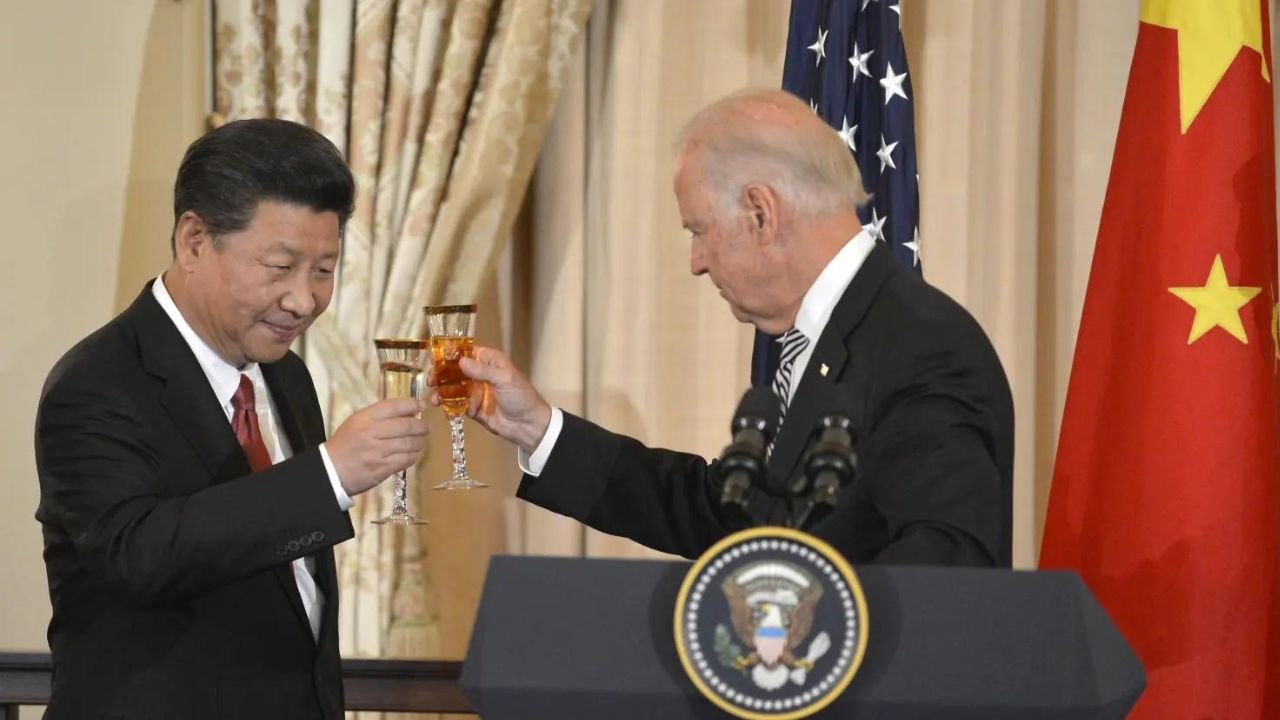
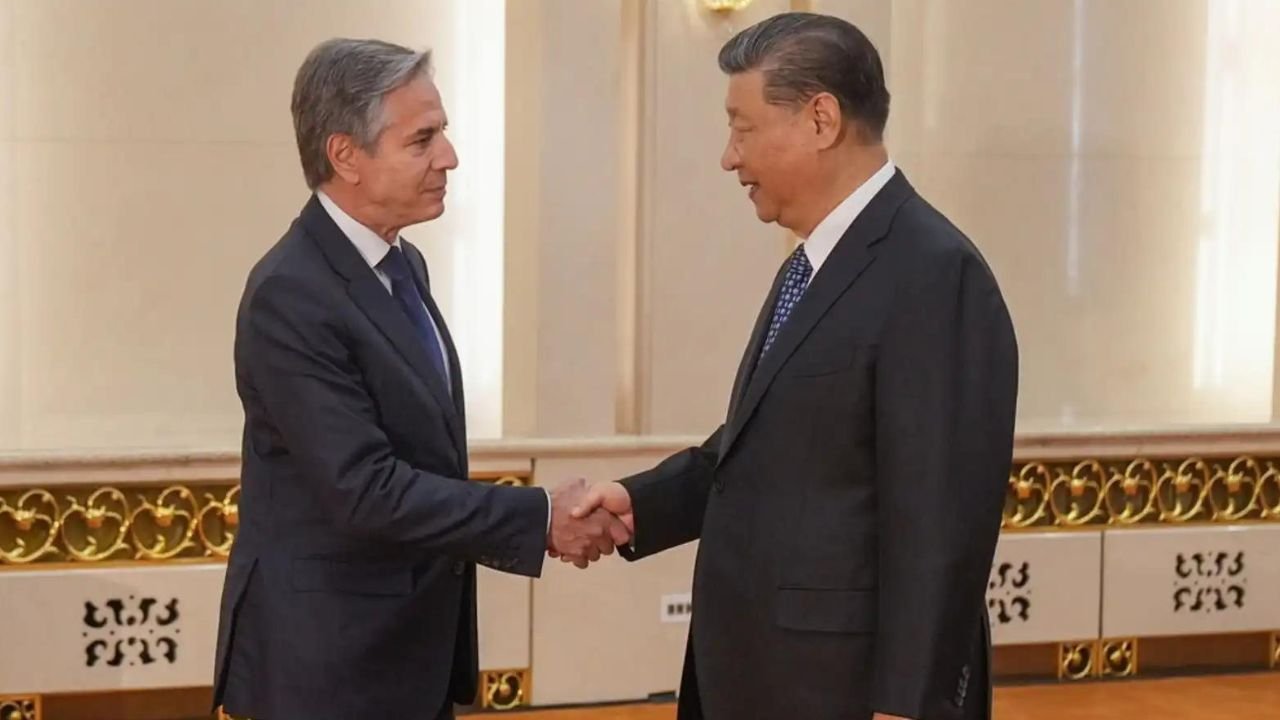
    Chinese President Xi Jinping on Friday told top US diplomat Antony Blinken that the world’s two biggest economies should be “partners, not rivals”, but that there were a “number of issues” to be resolved in their relations.

    Meeting Blinken in Beijing’s Great Hall of the People, Xi said the two countries had “made some positive progress” since he met with US President Joe Biden last year, according to state broadcaster CCTV.

    “There are still a number of issues that need to be resolved, and there is still room for further efforts,” Xi said.

    “I proposed three major principles: mutual respect, peaceful coexistence, and win-win cooperation,” the Chinese leader added.

    “The earth is big enough to hold the common development and… prosperity of China and the United States,” he continued.

    “China would be pleased to see a confident and open, prosperous and developing United States,” Xi said.

    “We hope the US can also take a positive view of China’s development,” he added.

    “When this fundamental problem is solved… relations can truly stabilise, get better, and move forward.”

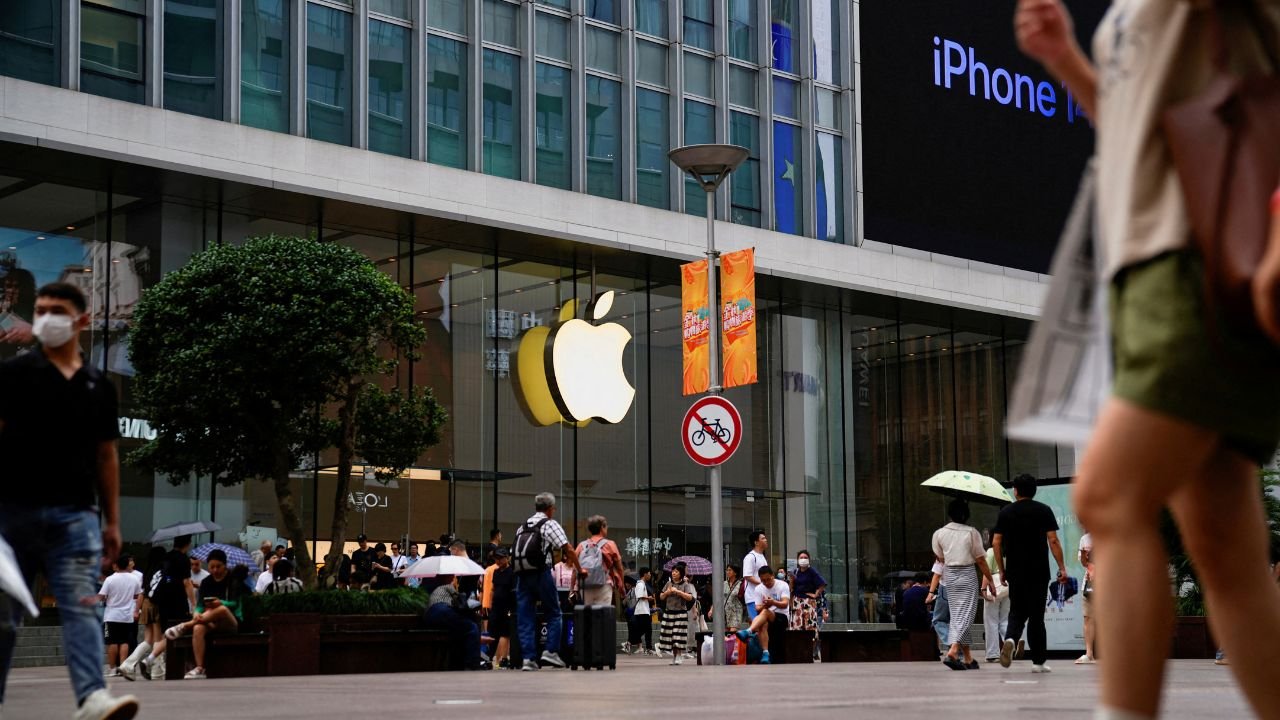
  • Apple drops WhatsApp, Threads from China app store on official order: report

    Apple drops WhatsApp, Threads from China app store on official order: report

    Beijing (AFP) – Apple has removed the Meta-owned WhatsApp and Threads from its App Store in China following an order from the country’s top internet regulator, Bloomberg reported Friday citing the tech giant.

    Beijing engages in some of the world’s most extensive internet censorship, with web users in mainland China unable to access everything from Google to many foreign apps without using a virtual private network.

    “We are obligated to follow the laws in the countries where we operate, even when we disagree,” said Apple in a statement, according to Bloomberg.

    “The Cyberspace Administration of China (CAC) ordered the removal of these apps from the China storefront based on their national security concerns,” said Apple, referring to China’s internet regulator.

    “These apps remain available for download on all other storefronts where they appear.”

    A Meta spokesperson referred AFP to Apple, which did not immediately respond to a request for comment.

    The CAC and the Ministry of Industry and Information Technology — another top Chinese internet regulatory body — also did not immediately respond.

    China is a key market for Apple, which last year topped the country’s smartphone market for the first time.

    But thorny issues of censorship and national security have long hounded the US-based firm’s operations in China as Beijing and Washington engage in a fierce battle for technological supremacy.

    In January, China said it had cracked Apple’s encrypted AirDrop communication service, which had once given protesters a vital channel for sharing information during the major 2019 pro-democracy protests in Hong Kong.

    State-backed experts said in January that they had devised a way to reveal an iPhone’s encrypted device log, allowing them to then identify an AirDrop user’s phone number and email accounts.

    Many online platforms that are popular in much of the world — including Google, Facebook, X, WhatsApp and TikTok — are blocked in mainland China.

    But savvy iPhone users in China have still been able to download banned platforms through Apple’s app store, then use a VPN to get around the restrictions.

    Removing WhatsApp and Threads from the Chinese app store will greatly complicate the ability of new iPhone users to access the apps.

    The latest development comes a day before a scheduled vote in the US House of Representatives to force the wildly popular video app TikTok to sever all links with its Chinese parent ByteDance.

    US officials have raised concerns in recent years over potential national security and privacy threats posed by TikTok, despite repeated assurances by the firm that it presents no risks to the American public.

    Beijing has frequently lashed out against US restrictions on Chinese tech, claiming they are a pretext to contain the country’s economic rise.

  • Bollywood film ’12th Fail’ to premiere in China

    Bollywood film ’12th Fail’ to premiere in China

    Indian actor Vikrant Massey’s successful film’12th Fail’, a biopic of an IPS officer, is gearing up for release on over 20,000 screens across China.
    Massey confirmed the news of the release, stating, “It’s too soon to talk about that, but I am really excited because, after a long time, something like this has happened.”

    Elaborating on the film’s popularity in China, Massey said, “There is a huge demand for Hindi cinema or Indian cinema in China. There are more than 20,000 screens [given to 12th Fail]. China really caters to the entertainment sector and hence the numbers [of screens].”
    ’12th Fail’ is based on a best-selling book by Indian author Anurag Pathak and tells the real-life story of IPS officer Manoj Kumar Sharma. Directed by acclaimed filmmaker Vidhu Vinod Chopra, the film stars Vikrant Massey alongside Medha Shankar, Anant V Joshi, Anshumaan Pushkar, and Priyanshu Chatterjee.

    Initially released in India last year, the film received critical acclaim and was later dubbed in Tamil, Kannada, and Telugu. It is currently available for streaming on the OTT platform Disney+ Hotstar.

  • Chinese factory shreds wedding photos for fuel

    Chinese factory shreds wedding photos for fuel

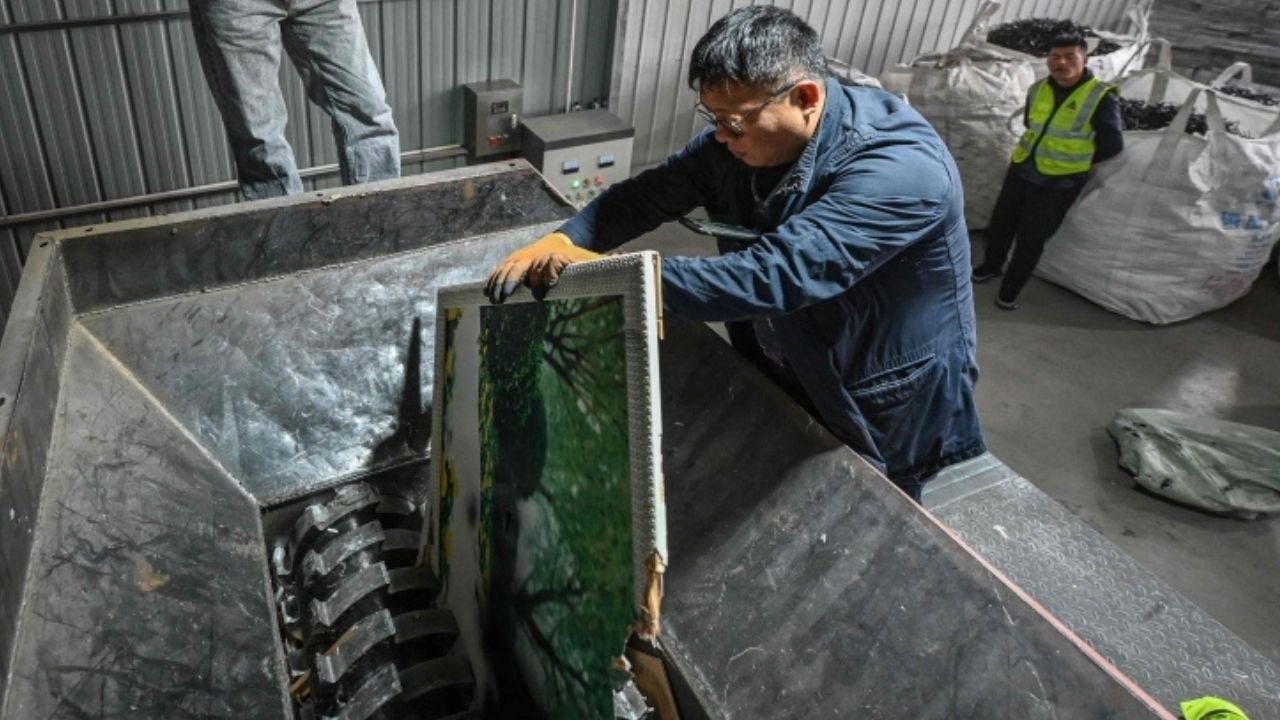
    At a dusty warehouse in northern China, Liu Wei feeds photos of beaming bridal couples into an industrial shredder — turning stories of heartbreak into a source of electricity.

    Wedding photos are big business in China, where parks, temples and historic sites often teem with newlyweds posing for elaborate shots capturing their supposedly unbreakable bond.

    But in a country where millions of divorces take place each year, many marital snaps end up shoved into the attic or tossed into the trash.

    Liu’s company offers an alternative: bereft ex-lovers can have their memories destroyed and recycled into fuel.

    “From our daily business exchanges, we found the destruction of personal belongings is a blank space nationwide,” the 42-year-old told AFP at his factory, 120 kilometres (75 miles) from Beijing.

    “People with less experience in the market probably wouldn’t have spotted this opportunity,” he added.

    Despite cultural taboos around destroying images of living people, Liu’s facility receives an average of five to 10 orders per day from across China.

    They include large wall photos and smaller decorative shots and albums, mostly cast from plastic, acrylic and glass.

    Workers heave the images onto a forklift truck and scatter them onto the warehouse floor for sorting.

    They then obscure every face with dark spray paint to protect client privacy and smash unshreddable glasswork with a sledgehammer.

    “These people are all trying to find closure,” said Liu. “They mainly want to unpick the knots in their hearts.”

    Complex motivations

    Sullied and broken, the pictures give glimpses of broken families in happier times.

    In one, a woman in a white bridal dress reclines on a bed of flowers, while another shows a lovestruck couple gazing into each other’s eyes.

    A sporty pair in matching kits pose with a football, while nearby, a smitten man presses his face tenderly to his pregnant wife’s belly.

    Brandishing his phone, Liu films the defaced photos and sends clips to customers for final confirmation.

    He estimates he has served about 1,100 clients — mostly under the age of 45, and around two-thirds women — since launching the service a year ago.

    They typically speak little about their separations, and several declined interview requests from AFP.

    Liu says the motivations for destroying wedding photos are often complex.

    “Few of them do this out of malice,” he told AFP.

    “It might be that this item brings on certain thoughts or feelings… or be a hurdle hard to overcome.”

    Some clients attend the destructions in person to give a sense of ceremony to a closing chapter in their lives, said Liu.

    Others keep their photos for years and only dispose of them when they remarry or finally come to terms with a former spouse’s death.

    Given the irreversible nature of the process, Liu says he gives clients a final chance to salvage their items in case they live to regret their decision.

    After getting the green light, he films his staff gently pushing the photos into the shredder’s gnashing teeth.

    The debris is taken to a nearby biofuel plant where it is processed with other household waste to generate electricity.

    ‘Respect others’ choices’

    Divorce rates soared in socially conservative China after marriage laws were relaxed in 2003.

    They have fallen dramatically since the government enacted a law in 2021 mandating a month-long “cooling-off” period before couples untie the knot.

    China registered 2.9 million divorces in 2022, down from over 4.3 million two years earlier.

    The number of marriages rose last year for the first time in nearly a decade, giving Beijing some relief as it seeks to reverse a steep fall in births.

    After annihilating the visual evidence of hundreds of unions, Liu says he has become numb to the emotions they stir up.

    “The deepest feeling I have in my heart towards my clients… is that you must respect others’ choices,” he said.

    “You must never persuade people one way or another,” he added. “It does no good.”

  • China to criminally try three minors for child murder

    China to criminally try three minors for child murder

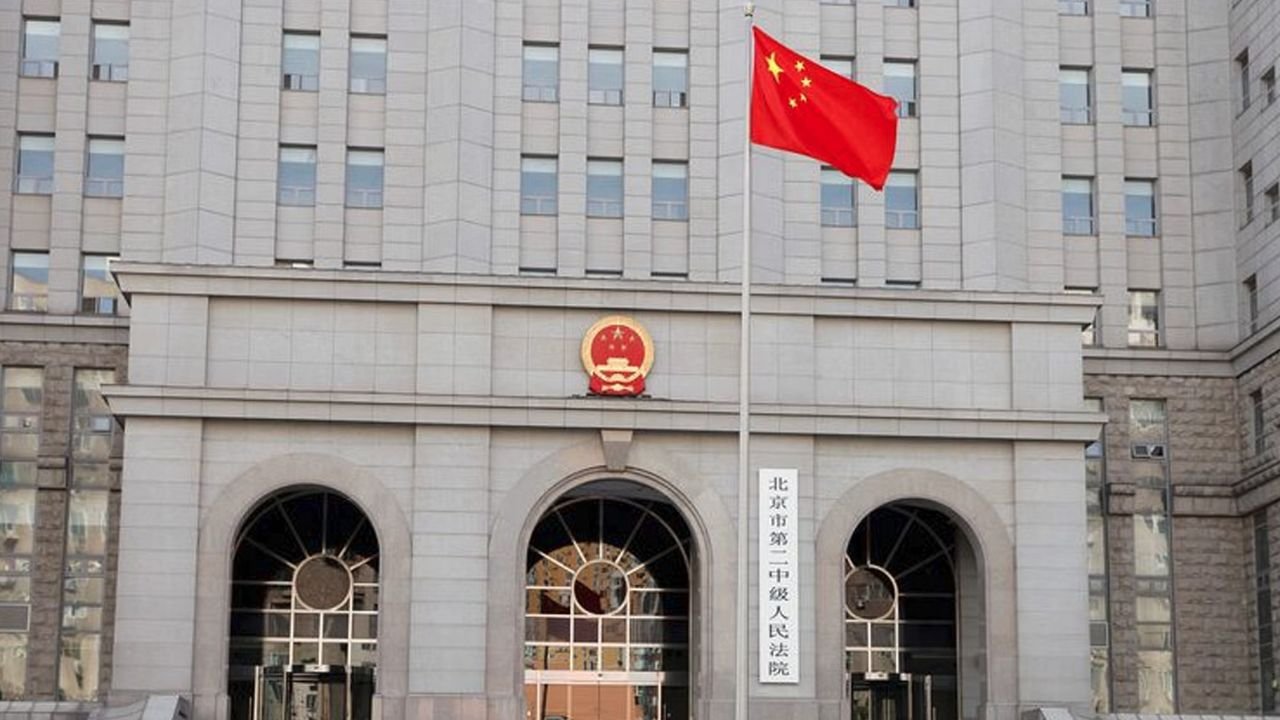
    China will put three minors on trial for allegedly murdering another child, a provincial prosecutor said Monday, in a case that has shocked the nation and sparked public debate over the treatment of juvenile offenders.

    The three suspects, all aged under 14 at the time of the murder, are accused of bullying a middle-school classmate surnamed Wang over a long period before killing him last month.

    The grim details of the case, in which the killers reportedly buried Wang’s body in an abandoned greenhouse, drew public attention to how the law deals with juveniles accused of serious crimes.

    In 2021, China lowered its age of criminal responsibility from 14 to 12 for “special cases” such as inflicting death by “extremely cruel means”.

    The Hebei case is thought to be one of the first to apply the lower age limit.

    The provincial prosecutor said Monday it had received a police request last month to criminally try the suspects, surnamed Zhang, Li and Ma.

    It said it had concluded that the three were between 12 and 14 when they “intentionally committed murder, causing the death of the victim Wang”.

    “The circumstances were serious and they should be held criminally responsible,” the provincial office said, adding that the country’s top public prosecutor had reviewed the decision.

    “While handling cases strictly in accordance with the law, the procuratorial organs will… further strengthen the prevention and treatment of juvenile crimes,” the provincial prosecutor continued.

    Under Chinese law, murder is punishable by imprisonment or the death penalty.

  • Pakistan PM orders police punished after Chinese dam worker attack

    Pakistan’s prime minister has ordered at least five senior police officials be punished for negligence after a suicide bomber killed five Chinese engineers at a major dam site last month, the country’s information minister said Saturday.

    The attack in northwestern Khyber Pakhtunkhwa province forced Power China and the China Gezhouba Company to suspend work on two dam projects after the bombing killed the five workers and a Pakistani driver, sending their van into a deep ravine.

    Hundreds of Chinese people are employed at the Dasu and Diamer Bhasha dam construction sites, located around 100 kilometres (62 miles) apart in the mountainous region.

    Minister of Information Attaullah Tarar said a committee appointed by Prime Minister Shehbaz Sharif identified a regional official, three district officials and the director of security at the Dasu dam project for their “negligence” in fulfilling their duties.

    “The prime minister has ordered immediate action against these officials,” Tarar told a press conference in the city of Lahore, without specifying what their punishment will be.

    “The prime minister himself will be monitoring the security of Chinese (nationals). Those individuals who have shown negligence will be set as an example.”

    Tarar said security matters regarding Chinese citizens would be “treated with utmost seriousness and any lapses will not be tolerated.”

    Operations by Power China have resumed at Diamer Bhasha while operations at China Gezhouba Group Company at Dasu remain closed.

    Pakistani police have detained more than 12 people, including Afghan nationals, in connection with the bombing.

    Beijing is Islamabad’s closest regional ally, frequently offering financial assistance to support its often-struggling neighbour and pouring more than $2 trillion into infrastructure projects.

    However, Pakistanis have long complained about not receiving a fair share of the jobs or wealth generated by the projects.

    The security of Chinese workers is a major concern to both countries, with nationals frequently targeted by militants hostile to outside influence.

    Last week’s attack came just days after militants attempted to storm offices of the Gwadar deepwater port in the southwest, considered a cornerstone of Chinese investment in Pakistan.

  • Who is the richest man on the planet?

    The American magazine Forbes has released its list of the richest people in the world for 2024.

    The list indicates that the number of billionaires around the world has reached an all-time high and their wealth has increased significantly over the past one year.

    141 more people became billionaires during the year and a total 2781 people are included in the list. The total wealth of these people is around fourteen thousand and two hundred billion dollars, which in comparison to 2023 is two thousand billion dollars higher. Two-thirds of billionaires got richer, with the world’s 20 richest people earning a combined total of $700 billion a year, according to Forbes. The highest number of billionaires in the world reside in the United States with 813, followed by China with 473, and India with 200.

    France’s Bernard Arnault has been named the world’s richest person in the 2024 list with assets worth $233 billion. This is the second year in a row that he has received the title, having topped last year’s list with $211 billion, his assets having increased by $22 billion in one year.

    Tesla and SpaceX owner Elon Musk is second on the list with $195 billion.

    Amazon founder Jeff Bezos came in third with a net worth of $195 billion, while Meta’s CEO Mark Zuckerberg came in fourth with $177 billion.
    India’s Mukesh Ambani was declared the 9th richest person in the world and the richest person in Asia with 116 billion dollars.

    The richest woman in the world is Francoise Bettencourt Meyers of France, who owns 99.5 billion dollars, while she is on the 15th place in the list of the richest people in the world.

    Alice Walton is the second richest woman in the world (21st overall) with $72.3 billion, while Julia Koch is the third (23rd overall) richest woman with $64.3 billion.

  • Chinese company lays off 2000 workers on Tarbela dam project

    Chinese company lays off 2000 workers on Tarbela dam project

    A Chinese company working on the Tarbela 5th Extension Hydropower Project has suspended work indefinitely after the Shangla attack which took the lives of five Chinese nationals on Tuesday.

    The company laid off 2000 Pakistani workers that were employed for the hydro-project. The suspension notice was issued by administration of Power Construction Corporation of China.

    The Chinese engineers were targeted by a suicide bomber while they were travelling in a bus on the Karakoram Highway in the Bisham area. As of now, no terrorist group has claimed responsibility for the attack.

    The notification cited “security reasons” for laying off the major workforce for an indefinite period of time.

    Dawn news contacted the general secretary of the Awami Labour Union at the Tarbela project Aslam Adil and he confirmed that under labour laws, the workers who lost their jobs would continue to receive half of their salaries until they are called back.

    He further stated that this event won’t cause a “long delay” in the project, expected to be completed by 2026.