Tag: China

  • CPEC to come down crashing? Foreign media report claims ‘most serious disagreement’ between Pakistan, China

    Pakistan and China are embroiled in their most serious disagreement relating to the Belt and Road Initiative, causing the annual bilateral summit of the China-Pakistan Economic Corridor (CPEC) to be delayed, the world’s largest financial newspaper has claimed.

    The Joint Cooperation Committee (JCC) is CPEC’s principal decision-making body. It is jointly chaired by Pakistan’s minister for planning, development and special initiatives and the vice chairman of China’s National Development and Reform Commission.

    The first JCC meeting was held in August 2013 and the last in November 2019. The 10th JCC was scheduled for early 2020, but remains postponed.

    Initially, the COVID-19 pandemic was the reason, but later disagreements between the two countries over the Main Line 1 (ML-1) railway project and special economic zones became the main points of disagreement, Nikkei Asia has learned from informed sources.

    Asad Umar, Pakistan’s minister for planning, development and special initiatives, told local media in November that the 10th JCC would be held the following month. However, officials in the Planning Commission of Pakistan, who asked not to be named, recently told Nikkei that the meeting will not take place for at least three months — by far the longest JCC gap to date.

    ML-1 is the largest CPEC project and worth $6.8 billion. China is expected to lend $6 billion of this, which Pakistan wants to borrow at a concessional interest rate of less than 3%.

    China offers a mixture of concessionary and commercial loans for such projects. This could significantly increase the aggregate interest rate Islamabad will face, according to the planning commission officials.

    “China is reluctant to lend money for ML-1 because Pakistan has already sought debt relief to meet G-20 lending conditions and it is not in a position to give sovereign guarantees,” Nasir Jamal, a senior journalist in Lahore covering business and the economy, told Nikkei. He said Beijing’s appetite for lending money for large infrastructure projects has diminished because these projects are vulnerable to local politics that delay returns on investment for China. That has hindered agreement on the finance framework for ML-1.

    Andrew Small, a senior trans-Atlantic fellow with the Asia program at the German Marshall Fund, a U.S. think tank, said China tends to base its decisions about interest rates for loans to Pakistan on a couple of criteria. Firstly, do low-interest rates encourage projects that do not make sense financially? Secondly, what precedents are set for other countries looking for similar concessions?

    “China is much more comfortable deferring payments or providing new financing than it is offering concessional rates in the first place,” Small told Nikkei. He said this approach provides Beijing with greater leverage and control even if they are willing to be very flexible at the back-end.

    With host countries under pressure to repay at higher rates, China trades payment deferments in return for influence, which helps it get more favorable arrangements.

    The delayed JCC meeting and unsettled ML-1 financial framework is complicating matters for Pakistan. Early this month, Pakistan Railways asked the government for 11 billion rupees ($69 million) to provide ML-1 security. Without the Chinese financing framework being agreed by the JCC, it is hard for Islamabad to come up with such a large amount given the state of the economy and severe budgetary constraints.

    The other major disagreement between Beijing and Islamabad delaying the JCC meeting relates to SEZs. In the second phase of CPEC scheduled for 2020 to 2025, Chinese companies are due to start producing goods in Pakistan and exporting from there.

    Currently, the industrial cooperation framework for the SEZs is limited to a memorandum of understanding without detailed modalities. Matters such as tax exemptions and requirements for employing local labor have not been finalized. These need to be agreed by China for confirmation at the JCC. The Board of Investment of Pakistan submitted the draft agreement for the industrial cooperation framework to the Chinese government last month and is still awaiting a response.

    In December 2020, during a meeting of the Joint Working Group on Industrial Cooperation under CPEC, Asim Ayub, the project director for industrial cooperation at the Board of Investment, pressed for early signing of the industrial cooperation framework agreement.

    The seriousness of the delay is clear from China’s unprecedented reluctance to schedule a JCC meeting. In the past, JCCs were always held in time, and China agreed to Islamabad’s requests most of the time. Some experts believe the delay is evidence that CPEC is derailing.

    According to Small, there were plenty of announcements about CPEC last year, but actually setting deals in motion was another matter. “The optics do matter to China so I still expect them to figure out terms in the end, and certainly to keep some narrative of continued progress alive,” Small told Nikkei. “But that doesn’t mean they’re willing to agree on something that doesn’t make sense for other reasons just to speed things up a little.”

    Pakistan is currently renegotiating its $6 billion extended fund facility with the International Monetary Fund (IMF), which was suspended in April 2020. The IMF reportedly will only resume the program if Pakistan does not take out any new commercial loans, and that is one of the reasons it is looking for concessions on loans for the ML-1 project.

    An important long-term implication of this case for other BRI countries could be that China will be more wary of lending to countries that have entered loan agreements with global lenders such as the IMF.

    Hasaan Khawar, an Islamabad-based public policy analyst, views the situation from a different perspective. “The back-and-forth with China by Pakistan on the interest rate and additional guarantees for the ML-1 project is a good sign,” he told Nikkei. “The Pakistani side is appraising the terms carefully and trying to negotiate a better deal.”

    The report originally appeared on Nikkei Asia
  • Ice cream tests positive for COVID-19

    Ice cream has been found to have been contaminated with COVID-19 in China after three samples of the dessert tested positive for the virus.

    As per details, authorities in China are tracing people who may have come into contact with the contaminated batches, which were produced by the Chinese food company.

    All products made by the firm have been sealed after the samples it sent to the municipal centre for disease control this week tested positive for coronavirus.

    Initial epidemiological investigations show the ice cream batch has used raw materials that include milk powder imported from New Zealand and whey powder imported from Ukraine.

    Authorities said the company produced 4,836 boxes of the contaminated ice cream of which 2,089 had been sealed away in storage.

    A total of 935 boxes of the ice cream, out of 2,747 boxes that entered the market, were in Tianjin and only 65 were sold to markets.

    Authorities said citizens who may have bought the product must report their health and physical movements to those in their communities.

    The city has also informed the market regulation authorities in other provinces where the ice cream was sent so it can be traced.

    Meanwhile, 1,662 employees of the company have gone into isolation.

  • Pakistan takes money from China to pay back $1bn Saudi loan

    Pakistan takes money from China to pay back $1bn Saudi loan

    Pakistan will return $1 billion to Saudi Arabia this week with the help from China that agreed to lend Islamabad $1-1.5bn on a short notice to pay back the Saudi loan.

    It may be noted here that Saudi Arabia had provided Pakistan a financial package, originally estimated at $6.2 billion, to help the government of Prime Minister Imran Khan to avoid looming default on international debt obligations two years ago.

    However, due to apparent strain in ties, the Saudis have already suspended the oil facility and taken a billion back. Pakistan paid it back as a first tranche in May this year. Pakistan returned $1 billion to Saudi Arabia after taking an equal amount of loan from China. Reports claim that the next tranche will be paid by the coming month to clear the remaining Saudi dues.

    The government has also not been able to get the suspended $6 billion IMF programme restored, which is making it difficult for it to continue uninterrupted foreign inflows.

    By Sept last year, Prime Minister Imran Khan-led government had admitted to taking $10.37 billion debt from different countries and international lenders.

    In a written reply to a question in the National Assembly, Minister for Economic Affairs Hammad Azhar had said the Pakistan Tehreek-e-Insaf (PTI) government secured $10.37 billion from various governments and international institutions from August 14, 2018, to September 30, 2019.

    The government, during this period, received $1.54 billion from China, $151.79 million from Saudi Arabia, $68.6 million from France, $0.4 million from Germany, $62.48 million from Japan, and $0.01 million from Kuwait.

  • Titanic II is preparing to sail in 2022

    Titanic II is preparing to sail in 2022

    Titanic II, a nearly identical replica of the doomed ship, might make its maiden trip in 2022, giving fans a chance to experience the journey themselves.

    According to reports, Australian businessman and politician Clive Palmer is behind the initiative. Work on the ship recently restarted after a financial dispute with the Chinese government stopped development back in 2015. The idea for the ship was first floated in 2012.

    The new ship will be an identical copy of the ship, which sank in 1912 after hitting an iceberg. It will have the same cabin layout, public areas, swimming pool, Turkish baths, and a grand staircase as the original ship.

    Titanic II will also be equipped with plenty of life boats and will have modern navigation and radar equipment to avoid any disaster.

    When construction is completed, there will be nine floors and 840 cabins, and passengers will have their pick between first, second, or third-class tickets. The first sailing is scheduled to take place in 2022.

  • ‘Only Turkey, not even China, supported Pakistan at FATF,’ Indian media reports claim

    ‘Only Turkey, not even China, supported Pakistan at FATF,’ Indian media reports claim

    After the Financial Action Task Force (FATF) decided to keep Pakistan in the grey-list till February, Indian media reports have claimed that Recep Tayyip Erdogan’s Turkey was the only country to back Pakistan at the plenary meeting of the global anti-money laundering watchdog while China bailed out.

    The FATF, also known by its French name, Groupe d’action financière, is an intergovernmental organisation that combats money laundering. In 2001, its mandate was expanded to include terrorism financing.

    Pakistan was placed on the FATF’s grey list in 2018 whereas in February 2019, the country had secured an extra four months to complete the plan after missing 13 of the 27 targets set by the global watchdog.

    According to reports, Turkey, during October 23’s plenary, proposed a special visit to Islamabad to make an onsite assessment of the Imran Khan government’s implementation to plug holes in its legal framework to curb terror financing.

    READ: ‘Successful implementation’: Hammad Azhar says FATF blacklisting off the table

    The suggestion was seen as an effort to let Pakistan off the hook for now and immediately place it on the white list but was not supported by any other country, including allied China and Malaysia.

    “Out of 27 points, we have implemented 21 points given by the authorities concerned regarding FATF, ” Minister for Revenue Hammad Azhar said while talking to a private television channel after the watchdog decided to retain Pakistan on its grey list.

    Except India, every country had appreciated the efforts of Pakistan for satisfying the people dealing FATF, he added.

    BLACKLISTING OFF THE TABLE:

    In a statement, FATF urged Pakistan to complete an internationally agreed action plan by February 2021. FATF said Pakistan had now reached 21 targets out of 27 set for it in 2018 when Pakistan was placed on FATF’s “grey list” of countries with inadequate controls over terrorism financing.

    But Pakistan still needs to demonstrate that law enforcement agencies are identifying and investigating the widest range of terrorism financing activity, FATF said.

    The watchdog also asked Islamabad to demonstrate that terrorism financing probes resulted in effective, proportionate and dissuasive sanctions.

    “FATF acknowledged that any blacklisting is off the table now,” Pakistani federal minister Hammad Azhar tweeted.

    Azhar, who leads Pakistan’s delegation at FATF plenary meetings, said the forum’s discussions were focused on how Pakistan could be supported in meeting its targets before a formal review in the middle of next year.

  • ‘Modi has decided when India would be at war with Pakistan, China’

    Bharatiya Janata Party’s (BJP) Uttar Pradesh (UP) unit chief Swatantra Dev Singh has claimed that Indian Prime Minister (PM) Narendra Modi has “decided” on a time when India would be at war with Pakistan and China.

    A minister in UP Chief Minister (CM) Yogi Adityanath’s cabinet, Swatantra Dev Singh made the remark during an event at the home of BJP’s Sikanderpur lawmaker Sanjay Yadav.

    In a video clip of Swatantra Dev Singh’s remarks, the BJP’s UP chief draws parallels between the abrogation of Article 370 in held Kashmir, construction of a Ram temple in Ayodhya where the Babri Masjid once stood, and the ongoing India-China military standoff in eastern Ladakh.

    “Like the decisions on Ram Mandir and Article 370, PM Narendra Modi has decided when there would be war with Pakistan and China,” news agency PTI quoted Swatantra Dev Singh as saying in a video posted on social media by Yadav.

    The BJP leader’s controversial remarks come amid an intense standoff between the Indian and Chinese armies in eastern Ladakh. Both countries have held multiple rounds of diplomatic and military talks to achieve disengagement in the region.

    However, Defence Minister Rajnath Singh’s statement on Sunday contradicts the remarks made by Swatantra Dev Singh. While reiterating that India is seeking an end to the border tussle with China, Singh had said that New Delhi will not allow anyone to take away “even an inch” of Indian land.

    Launching an attack on the BJP-led Centre, Congress lawmaker Shashi Tharoor tweeted:

    “Amazing. So the PM (who will not even name the state that has encroached upon our land) is planning a war against an Unnamed Enemy, over territory he claims has never been taken, on a date that only he knows? So is this what he meant by “minimal government”!?” he said while referring to Swatantra Dev Singh’s remarks.

  • Imran’s national security aide terms Chinese persecution of Muslims a ‘non-issue’

    Imran’s national security aide terms Chinese persecution of Muslims a ‘non-issue’

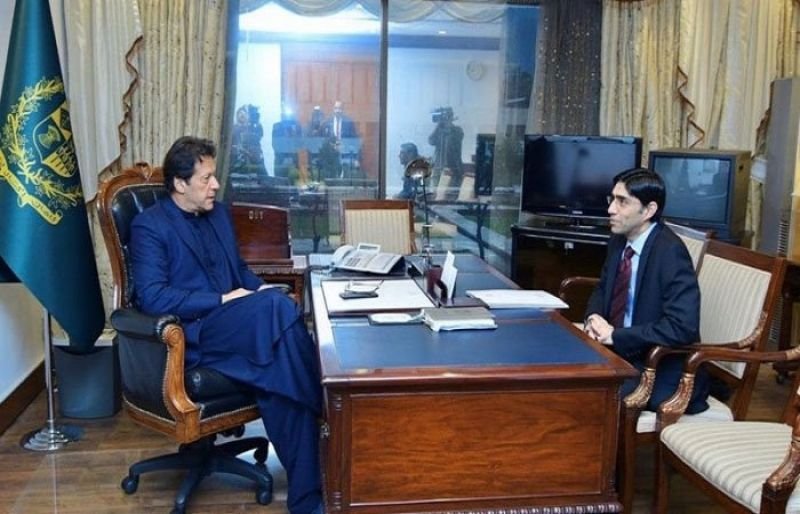
    Special Assistant to the Prime Minister (PM) on National Security aide Dr Moeed Yusuf has termed the Chinese persecution of Uyghur Muslims a “non-issue”.

    In an interview with Indian media outlet The Wire, Yusuf on Tuesday revealed that India had expressed a “desire for conversation” but said that Pakistan’s agreement to talks would be conditional.

    While his statements and Pakistan’s pre-conditions for the resumption of “meaningful dialogue” with India to resolve all outstanding issues have made headlines, the details less reported are of what he had to say about Chinese persecution of Muslim minority Uyghurs in its Xinjiang region.

    Even though China is facing growing criticism over its crimes against the said minority group, huge numbers of whom are allegedly being held in internment camps, Pakistan has been accused of turning a blind eye towards the same.

    READ: In a first since Kashmir’s 2019 siege, Imran’s national security aide gets interviewed by Indian journalist

    On Tuesday, when asked why PM Imran Khan had never raised his voice for the Uyghur community in China, the SAPM said, “China and Pakistan are friends like no other. We have a completely transparent relationship; virtually everything under the sky, we discuss.

    “Uyghurs is a non-issue […] Our delegations have visited, we’ve seen and we are a 100 per cent satisfied that it’s a non-issue. The West can say what it wants. I am telling you as a responsible official: we know everything we need to know about the Uighurs and everything else in China as they do about us.”

    Thapar quoted an interview PM Imran gave to the Financial Times last year, where the premier had said: “Frankly, I don’t know much about” the Uyghur issue. Yusuf, however, continued to insist that the matter was a non-issue and said that he had briefed the premier about it.

    YUSUF UNDER FIRE:

    Among the many prominent persons who reacted to Yusuf’s remarks was Omar Waraich, who is the South Asia deputy director of global rights group Amnesty International.

    Here’s what he had to say:

    Several others also called Imran’s aide out.

  • VIDEO: Pangong Lake of ‘3 Idiots’ fame now a part of China?

    VIDEO: Pangong Lake of ‘3 Idiots’ fame now a part of China?

    Amid the ongoing border standoff between Chinese and Indian soldiers in Ladakh, it is being speculated that the Pangong Tso area under Indian control, and of Bollywood flick ‘3 Idiots’ fame, has been taken over by China.

    As per the details, a video clip of Chinese tourists enjoying a boat ride purportedly at the Pangong Tso Lake, which among many others was also shared by Indian National Congress (INC) leader Salman Nizami, has gone viral.

    Pangong Tso is an endorheic lake in the Himalayas. Situated at an elevation of 4,225 metres, it is 134 kilometres long and extends from Ladakh in India to the Tibetan Autonomous Region in China. Line of Actual Control (LAC) between China and India also passes through the Pangong Lake, effectively dividing it into two parts.

    India controls the 45 km-long western portions of the 135 km-long lake while the rest is under Chinese control. The picture-perfect lake is also the place where 3 Idiots’ ending with Aamir Khan, Kareena Kapoor and co was shot.

    “Chinese tourists in Ladakh’s Pangong Lake. Can someone ask ’56 inch’ Chowkidar [offensive comment apparently against Indian Prime Minister (PM) Narendra Modi] if Indians now need a visa to visit Pangong Lake?” Nizami tweeted.

    National convener of INC’s social media department, Saral Patel, also shared the video.

    It was retweeted by INC spokesperson Shama Mohamed with the comment, “Chinese tourists are apparently vacationing at Pangong Tso & PM [Narendra] Modi is still in agreement with China’s lie that there have been no incursions or annexation of Indian territory.”

    While there have been no official statements over the status of the lake from Beijing or New Delhi, it is likely that the videos being circulated have been shot on the Chinese side of the lake, which is reportedly open for tourists.

    Earlier, an advertisement video shared by some Twitter users had claimed that China will facilitate the return of international tourists to Pangong Tso.

    The 45-second footage on Twitter showed the scenic landscape of the Pangong Tso.

    The ad video, which has received several retweets, was uploaded by users who used both Mandarin and Chinese as the medium of communication. Although they appeared to be handles managed by Chinese nationals, it could not be confirmed as none of the accounts were verified by Twitter.

    https://twitter.com/evazhengll/status/1301555381810991111

    “You only need to take a Chinese visa to enjoy cold air, flocks of birds and blue water. We have also placed a monument on a place where movie 3 idiots was made. Come, visit and enjoy China,” one of the users tweeted.

    https://twitter.com/CNPakWW/status/1301557920472141828

    Even though the video appears to have been produced in China, it could not be ascertained whether the clip is new or old.

    However, Shen Shiwei, a Chinese journalist working for state-owned CGTN, tweeted that the lake was open for tourists for quite a long time.

    “Pangong Tso in China is open to tourists at home and abroad for quite a long time. The lake is near the Chinese national highway and is a good place for self-driving travel. We have a resort on the lake here,” he said.

  • Enjoy high-speed internet while travelling along Makran Coastal Highway, NH 10

    The Universal Service Fund (USF) has announced that high-speed internet is installed at National Highway-10 (NH 10) Makran Coastal Highway and National Highway-25 (NH 25) Uthal to Quetta Highway.

    USF Pakistan tweeted that: ” USF in partnership with Ufone continues to make progress in National Highway-10 (NH 10) Makran Coastal Highway and NH 25 Uthal to Quetta Highway. Computers are now reaping benefit from high-speed broadband over 640 Kilometre of road segment covering areas of Kech, Awaran, Gwadar, and Lasbella district.”

    Makran Coastal Highway stretches to 653 Kilometres (Km). The road also covers the Arabian sea coast of Pakistan from Karachi in Sindhi to Gawadar in Balochistan and passes through Omara and Pasni.

    Along with the Ministry of Information and Technology (MoIT) and Pakistan Telecommunications Limited (PTCL), the USF Pakistan has installed 85 kilometres of optic Fiber cable to connect nine unserved Tehsils in North Waziristan and South Waziristan.

    The Optical Fiber cable is going to provide high-speed broadband connectivity to regions like Spinwam, Wana, ToiKhulla, Jandola, Sarwakai, Sararogha, and Barwand Tehsil.

    Last week, The board approved contracts to Jazz — Pakistan Mobile Communications Limited (PMCL), Zong — China Mobile Pakistan (CMPAK), and Ufone — Pakistan Telecom Mobile Limited (PTML), for the provision of next-generation internet.

  • Pakistan gets most advanced Chinese warship amid New Delhi’s tensions with Beijing

    Pakistan gets most advanced Chinese warship amid New Delhi’s tensions with Beijing

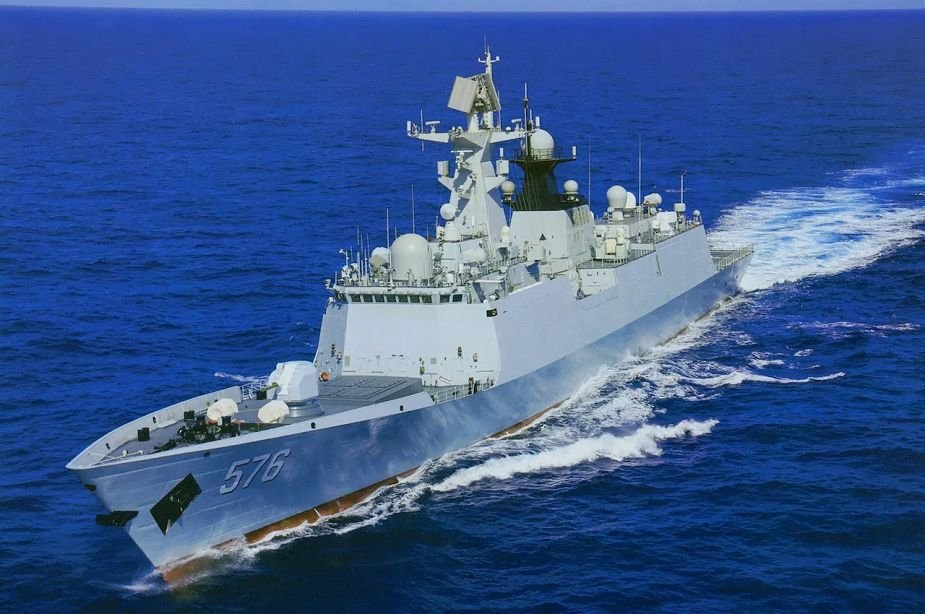
    China has launched an advanced warship for Pakistan, the largest it has built for any country, and the first among the four most sophisticated naval platforms it is readying for the Pakistan Navy amid deepening military and strategic ties.

    According to reports, the Type 054A/P, a guided missile frigate, is the largest combat ship China has sold to a foreign navy and is “an important milestone” for China’s military export sector.

    The acquisition of the warship will double the combat power of the Pakistani Navy’s surface fleet, Chinese state media reported. By 2021, the Pakistan Navy is expected to have three more similar warships in its fleet.

    The Chinese state-owned Hudong Zhonghua Shipyard in Shanghai held the launch ceremony for the advanced warship with top officials and naval officers attending the function.

    The shipyard is a wholly owned subsidiary of the China State Shipbuilding Corporation, the largest builders in the country.

    The ship launch took place two days after Foreign Minister Shah Mahmood Qureshi discussed the situation in the Indian occupied Jammu and Kashmir region with his Chinese counterpart Wang Yi during the second round of the China-Pakistan foreign ministers’ dialogue in Hainan.

    The development comes at a time while New Delhi is locked in tension with both Pakistan and China over disputed boundaries and the abrogation of Article 370 in the troubled valley.

    India is reportedly closely monitoring the military cooperation between its two neighbours.