Tag: China

  • Pakistan steps up security for Chinese workers after bombing

    Pakistan steps up security for Chinese workers after bombing

    Pakistan ramped up security guarding Chinese engineers building Beijing-linked projects in the nation’s northwest, an official said Wednesday, a day after five workers were killed in a suicide bombing.

    Beijing is Islamabad’s closest regional ally and Pakistan has benefitted from billions of dollars of investment in recent years, but has struggled to guarantee the safety of Chinese migrant workers.

    The five Chinese engineers — plus their Pakistani driver — were killed while travelling between Islamabad and a hydroelectric dam construction site in Dasu, in northwestern Khyber Pakhtunkhwa province.

    A high-ranking official from the provincial interior ministry told AFP on Wednesday that at the more than two-dozen sites hosting Chinese engineers in Khyber Pakhtunkhwa security was stepped up.

    “Directives have been issued to all law enforcement agencies to enhance security for Chinese nationals and all other foreigners,” he said on condition of anonymity.

    “Instructions have also been given to foreign nationals to restrict their movements.”

    Information minister Attaullah Tarar told a press conference in Islamabad that security procedures would be reviewed “with a focus on identifying and addressing any gaps”.

    Meanwhile, further details emerged about the attack, which has yet to be claimed by any militant group.

    Local police officer Bakht Zahir said the five engineers killed near the city of Besham included four men and a woman, and that the bomber targeted the middle vehicle in a convoy of 12.

    “The suicide bomber rammed his vehicle into the convoy in the middle, detonating himself, causing the Chinese engineers’ vehicle to fall into a 180-foot-deep (55-metre) ravine and catch fire,” he said.

    Pakistan’s domestic chapter of the Taliban is the most active militant threat in the region, but the group’s spokesman denied involvement in a statement late Tuesday.

    China has inked more than two trillion dollars in contracts around the world under its Belt and Road investment scheme, with billions pouring into neighbouring Pakistan and aiding its crumbling economy.

    Since 2015, power plants, ports and transport projects have been under construction by joint Pakistani-Chinese teams in remote parts of the South Asian nation.

    But Chinese workers have frequently been targeted by militants hostile to outside influence, with some complaining Pakistanis are not getting a fair share of wealth from the huge projects.

    Tuesday’s attack came just days after militants attempted to storm offices of the Gwadar deepwater port in the southwest, considered a cornerstone of Chinese investment in Pakistan.

    It sparked a flurry of diplomatic activity at the Chinese embassy in Islamabad, with Prime Minister Shehbaz Sharif and the foreign and interior ministers offering condolences in quick succession.

    China’s foreign ministry declared the countries “iron-clad friends” but asked Pakistan to “take effective measures to ensure the safety and security of Chinese nationals, projects, and institutions”.

  • AirCar technology purchased by Chinese company for exclusive use

    AirCar technology purchased by Chinese company for exclusive use

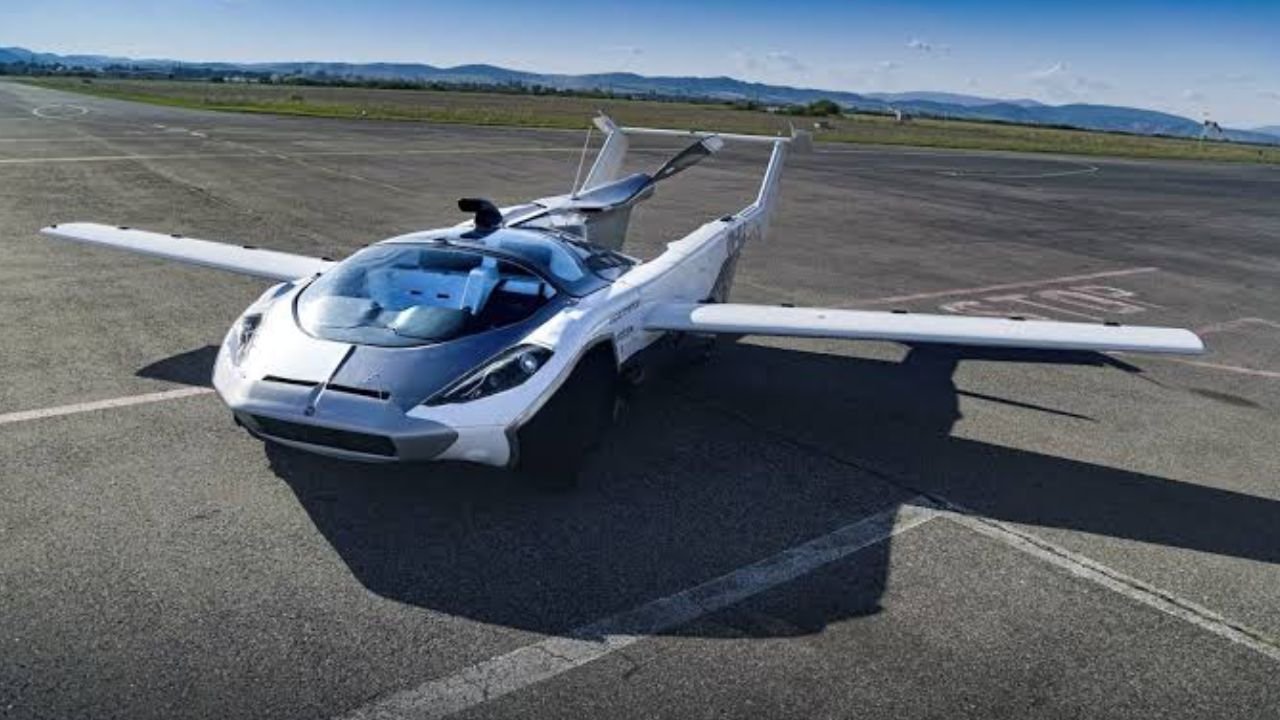
    A Chinese firm has acquired the technology behind a flying car, originally developed and tested in Europe. This AirCar, powered by a BMW engine and conventional fuel, completed a 35-minute flight between two Slovakian airports in 2021, utilising standard runways for take-off and landing. Its transformation from car to aircraft took just over two minutes.

    The Hebei Jianxin Flying Car Technology Company, based in Cangzhou, has obtained exclusive rights to manufacture and operate AirCar aircraft within a designated region in China. The company, after acquiring technology from a Slovak aircraft manufacturer, has established its own airport and flight school.

    China, known for spearheading the electric vehicle revolution, is now actively pursuing aerial transport solutions. Recently, Autoflight conducted a successful test flight of a passenger-carrying drone, drastically reducing travel time between Shenzhen and Zhuhai. Meanwhile, eHang, another Chinese firm, received safety certification for its electric flying taxi in 2023, with the UK government anticipating regular flying taxi operations by 2028.

    Unlike vertical take-off and landing drones, AirCar operates on traditional runways, presenting challenges in infrastructure, regulation, and public acceptance. While the sale details remain undisclosed, AirCar received airworthiness certification in 2022 and gained attention through a video by YouTuber Mr. Beast.

    Despite the excitement surrounding prototypes like AirCar, practical implementation may involve mundane aspects such as queues and security checks, according to experts. However, similar concerns once surrounded electric cars, which China has since dominated in the global market. The sale of AirCar raises speculation about China’s potential influence in the flying car industry.

  • Hamas welcomes China, Russia veto of US-backed Gaza resolution

    Hamas has reportedly shown “appreciation” as Russia and China vetoed a US-led draft resolution on a Gaza ‘ceasefire’ at the UN Security Council on Friday.

    The United States proposed a resolution endorsing “the urgent need for an immediate and enduring ceasefire” and, notably, condemning the October 7 attack carried out by Hamas for the first time.

    “We express our appreciation for the position of Russia, China and Algeria who rejected the biased American resolution of aggression against our people,” the Hamas said in a statement.

    They added that the draft consists of “misleading wording that is complicit” with Israel and “grants it cover and legitimacy to commit a genocidal war against the Palestinian people in the Gaza Strip.”

    On the other hand, prior to the vote, Russia’s ambassador to the UN, Vassily Nebenzia, urged members against endorsing the resolution, deeming it as “excessively politicized” and implying it endorsed Israeli military operations in Rafah, Gaza, where more than half of its 2.3 million residents sought shelter in camps to escape the Israeli offensive in the northern regions.

    Nebenzia asserted that several non-permanent Security Council members had crafted an alternative resolution, which he portrayed as a fair proposal, calling on all members to support it.

  • Seven BLA militants killed storming Gwadar port: officials

    Seven BLA militants killed storming Gwadar port: officials

    Security forces killed at least seven militants on Wednesday as they tried to storm the offices of a Pakistan port considered a cornerstone of China’s investment in the nation, officials said.

    Pakistan has for decades battled a simmering insurgency in southwestern Balochistan province, where separatists hostile to Islamabad have often targeted foreign investment projects.

    Local official Saeed Ahmed Umrani told AFP seven militants had been killed in an attempt to “infiltrate” the compound of Balochistan’s Gwadar Port Authority.

    Gwadar Port, which sits on the Arabian Sea, is managed by a Chinese firm and considered the crown jewel of Beijing’s investment in Pakistan under its gargantuan Belt and Road infrastructure project.

    An army source who asked to remain anonymous also said seven militants had been killed, alongside four soldiers defending law-enforcement posts inside the compound.

    “The terrorists attacked with grenades, rocket launchers and Kalashnikovs,” he said. “The area is cleared now.”

    Chief minister of Balochistan province Sarfraz Bugti said on social media platform X that eight militants had been killed.

    The attack was claimed by separatist group the Baloch Liberation Army (BLA) in an email statement, and spokesman Jeeyand Baloch said military intelligence offices had been targeted.

    “The operation was launched at 3:30 pm (1030 GMT) and is still underway”, he said in a message sent early Wednesday evening.

    Last August, the BLA also claimed an attack on a convoy carrying Chinese engineers to the port.

    Ethnic Baloch separatists have long claimed their communities are not getting a fair share of wealth from the region, which sits atop huge reserves of natural resources.

    They have frequently targeted Pakistani security forces protecting foreign investment projects.

    China has inked over two trillion dollars in contracts around the world under its Belt and Road scheme, but projects in Pakistan have been plagued by security concerns.

    In 2022, a BLA suicide bomber killed four people, including three Chinese language teachers, in Karachi city.

    A year earlier, a bus carrying engineers to a construction site near a dam in northwestern Pakistan was hit by a bomb, killing 13 people including nine Chinese workers.

    Islamabad has been accused of committing abductions and extrajudicial murder of Baloch citizens in retaliation for their campaign of separatism.

    bur-jts/sco

    © Agence France-Presse

  • China says US has ‘no right’ to interfere in South China Sea

    China says US has ‘no right’ to interfere in South China Sea

    China said Tuesday the United States had “no right” to interfere in the South China Sea, after Secretary of State Antony Blinken said Washington stood by its commitments to defend the Philippines against armed attack in the disputed waterway.

    “The United States is not a party to the South China Sea issue and has no right to interfere in maritime issues that are between China and the Philippines,” foreign ministry spokesman Lin Jian told a regular press conference in Beijing.

    Blinken is in the Philippine capital Manila — his second visit since President Ferdinand Marcos took office in 2022 — as part of a brief Asia tour to reinforce US support for regional allies against China.

    “Military cooperation between the US and the Philippines must not harm China’s sovereignty and maritime rights and interests in the South China Sea, and still less be used to provide a platform for the Philippines’ illegal claims,” Lin said in a response to a question on Blinken’s earlier comments.

    “China will continue to take necessary measures to resolutely defend its territorial sovereignty and maritime rights and interests, and uphold peace and stability in the South China Sea,” he added.

    Beijing claims almost the entire South China Sea — a crucial route for global trade — brushing aside competing claims from several Southeast Asian nations, including the Philippines, and an international ruling that has declared its stance baseless.

  • Do you know what were the top three most polluted countries in 2023?

    Do you know what were the top three most polluted countries in 2023?

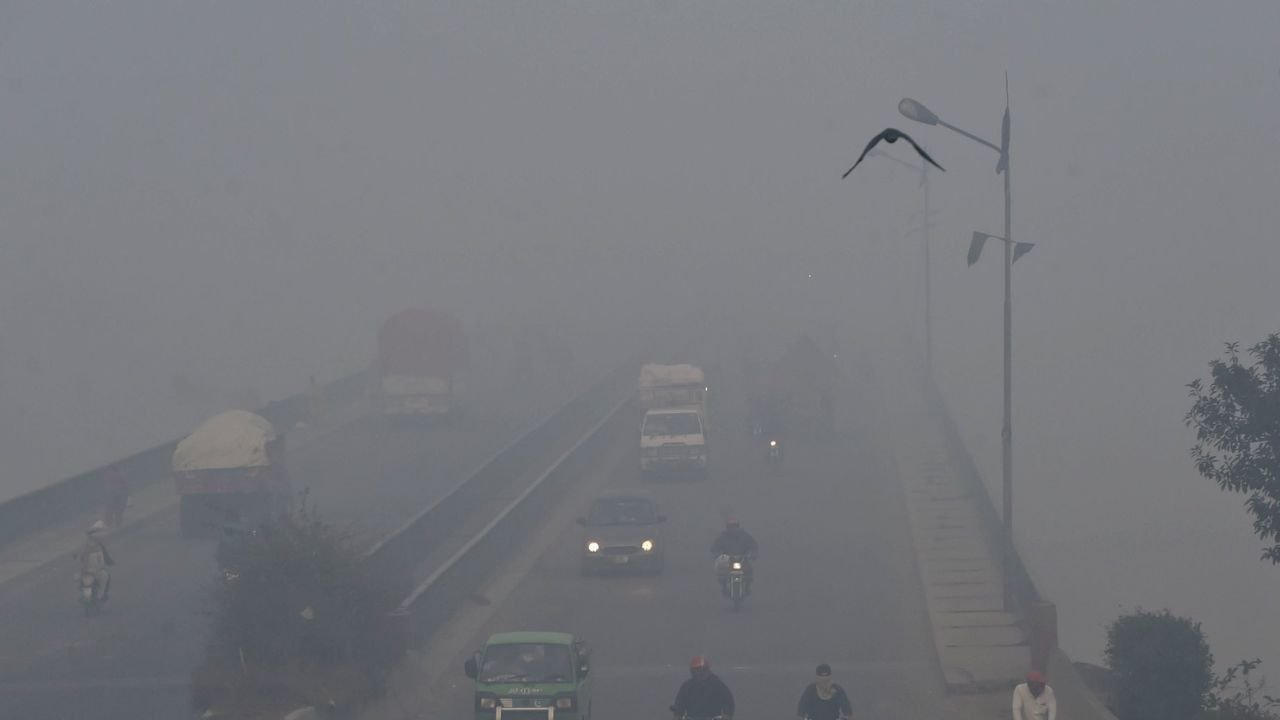
    IQAir, a Swiss air monitoring organisation, published its World Air Quality Report on Tuesday revealing troubling details of the world’s most polluted countries, territories, and regions in 2023.

    “IQAir’s annual report illustrates the international nature and inequitable consequences of the enduring air pollution crisis. Local, national, and international effort is urgently needed to monitor air quality in under-resourced places, manage the causes of transboundary haze, and cut our reliance on combustion as an energy source,” states Aidan Farrow, Sr. Air Quality Scientist, Greenpeace International.

    “In 2023, air pollution remained a global health catastrophe. IQAir’s global data set provides an important reminder of the resulting injustices and the need to implement the many solutions that exist to this problem.”

    The report revealed that Pakistan, alongside Bangladesh and India, remained among the top three countries with the highest levels of air pollution, particularly concerning particulate matter, in 2023.

    The concentrations of PM2.5, harmful airborne particles detrimental to respiratory health, surpassed recommended levels by a staggering margin, as indicated by the World Health Organization (WHO).

    In Bangladesh, the average concentration of PM2.5 reached 79.9 micrograms per cubic meter, while in Pakistan, it stood at 73.7 micrograms per cubic meter. These figures starkly contrast with the WHO’s guideline of no more than 5 micrograms per cubic meter.

    “Because of the climate conditions and the geography (in South Asia), you get this streak of PM2.5 concentrations that just skyrocket because the pollution has nowhere to go,” said Christi Chester Schroeder, air quality science manager at IQAir.

    “On top of that are factors such as agricultural practices, industry and population density,” she added. “Unfortunately, it really does look like it will get worse before it gets better.”

    In 2022, Bangladesh was ranked fifth for its air quality, with India in the eighth position. Approximately 20% of premature deaths in Bangladesh are attributed to air pollution, with related healthcare costs accounting for a substantial portion of the country’s GDP, according to Md Firoz Khan, an air pollution expert at Dhaka’s North South University.

    India also witnessed an escalation in pollution levels in 2023, with PM2.5 levels exceeding the WHO standard by about 11 times. Notably, New Delhi emerged as the worst-performing capital city, recording a PM2.5 level of 92.7 micrograms.

    China experienced a 6.3% increase in PM2.5 levels in 2023, marking a departure from five consecutive years of decline. Conversely, only a handful of countries, including Australia, Estonia, Finland, Grenada, Iceland, Mauritius, and New Zealand, met the WHO standards for air quality.

    The IQAir report, based on data from over 30,000 monitoring stations across 134 countries and regions, highlighted significant gaps in air quality monitoring, particularly in countries where the health impacts of pollution are most severe.

    Christa Hasenkopf, director of the Air Quality Life Index at the University of Chicago’s Energy Policy Institute, said 39pc of countries have no public air quality monitoring.

    “Considering the large potential benefits and relatively low cost, it’s stunning that we don’t have an organised global effort to deploy resources to close these data gaps, especially in places where the health burden of air pollution has been largest,” she said.

  • TikTok and its ‘secret sauce’ caught in US-China tussle

    TikTok and its ‘secret sauce’ caught in US-China tussle

    Seoul (AFP) – As a US campaign to sever TikTok from its Chinese parent heads to the Senate, analysts say Beijing’s response to a forced sale of the app – and its ‘secret sauce’ algorithm – will be clear: Hands off.

    Under new legislation that passed the House of Representatives last week, TikTok could be banned in the United States if it does not cut all ties with Chinese tech giant ByteDance.

    But in the battle over TikTok’s future in the United States, what strikes many as a contradiction has emerged: while the company tries to convince Congress of its independence from Beijing, China has come out swinging in its defence.

    Beijing does not want a precedent to be set where a Chinese company is strong-armed into selling one of its most valuable assets, including an algorithm that is the envy of competitors, analysts say.

    “This kind of threat is like daylight robbery,” Mei Xinyu, a Beijing-based economist, told AFP. “All things considered, the Chinese government’s actions so far have been very mild.”

    “What the US government is proposing is way over the line.”

    US lawmakers and security agencies say TikTok presents a threat because China can access and use the vast troves of data the app collects for influence and espionage.

    TikTok has denied the allegations, saying it has spent around $1.5 billion on “Project Texas”, under which US user data would be stored in the United States.

    However, many lawmakers and bodies including the FBI remain unconvinced.

    Some critics have said the data itself is only part of the issue, and that the algorithm that produces personalised recommendations for TikTok users must also be disconnected from ByteDance.

    ‘The secret sauce’

    That ByteDance algorithm has helped drive TikTok’s stratospheric success since the app was launched for the international market in 2017.

    It crunches huge amounts of user data, such as their interactions on the app and their location, to provide more content tailored for them.

    Its precise details are a closely guarded secret, but it helped propel TikTok to one billion users in just four years. Facebook, by comparison, took more than eight years to reach that milestone.

    Other social media platforms also deploy tailored recommendations based on algorithms that analyse user data, but analysts say TikTok’s has been so successful that it is considered by some to be the company’s most precious asset.

    The algorithm is “valuable because TikTok is sticky. People spend more time on TikTok than they do on other social media”, James Andrew Lewis, a technology expert at the Center for Strategic and International Studies (CSIS), told AFP.

    “This is the secret sauce that makes TikTok a success.”

    The algorithm has been at the centre of discussions about any potential sale of TikTok since the administration of then US president Donald Trump sought to ban TikTok in 2020.

    That year, the Chinese government designated algorithms that provide recommendations based on user data analysis as a protected technology, meaning their export would require Beijing’s approval.

    While no specific app or firm was cited, the economist Mei said the move was “to a very large extent” because of US pressure against TikTok.

    TikTok has said that under Project Texas, its recommendation algorithm for US users is stored along with their data on Oracle servers in the United States.

    However, The Wall Street Journal reported in January that ByteDance employees in China updated the TikTok algorithm so frequently that Project Texas workers could not track all changes.

    TikTok did not respond to AFP’s questions about the Wall Street Journal report or about where its algorithm is updated.

    CEO Shou Zi Chew has said previously that TikTok will not be “manipulated by any government” and that it has never been asked by the Chinese government for US user data.

    ‘Commercial plunder’

    In Beijing, however, officials have not minced words in their opposition to the TikTok bill, saying China will take all necessary measures to protect its interests.

    “You’ve got the desire to protect the option for a relationship with the intelligence services, and you’ve got a little bit of nationalist pride because it’s so successful,” said Lewis at CSIS.

    “Some of it is just (being) annoyed with the Americans for trying to force them to sell. All of that puts Beijing right behind ByteDance.”

    Beijing wants to avoid a forced sale to protect Chinese firms, Zhang Yi, founder of the Guangzhou-based tech research firm iiMedia, told AFP.

    “Once the precedent is set, there may be countless other Chinese companies that will face a similar fate in the future.”

    Hu Xijin, a former editor of the nationalist Chinese newspaper Global Times, urged ByteDance not to give in to US pressure.

    “The essence of this matter is commercial plunder,” he wrote this month.

    “As long as ByteDance remains firm, willing to shut down TikTok rather than give up ownership, it will create reverse pressure on the passage of the bill.”

  • China warns proposed TikTok ban will ‘come back to bite’ US

    China warns proposed TikTok ban will ‘come back to bite’ US

    Beijing (AFP) – Beijing warned on Wednesday that a proposed ban on Chinese-owned video-sharing app TikTok would “inevitably come back to bite the United States”.

    The US House of Representatives is set to vote later Wednesday on a bill that would force the app to cut ties with its Chinese owner or get banned in the United States.

    The legislation is the biggest threat yet to the video-sharing app, which has surged to huge popularity across the world while raising fears among governments and security officials over its Chinese ownership and potential subservience to the Communist Party in Beijing.

    Ahead of the vote, foreign ministry spokesperson Wang Wenbin condemned the proposed ban.

    “Although the United States has never found evidence that TikTok threatens US national security, it has not stopped suppressing TikTok,” he said.

    “This kind of bullying behaviour that cannot win in fair competition disrupts companies’ normal business activity, damages the confidence of international investors in the investment environment, and damages the normal international economic and trade order,” he added.

    “In the end, this will inevitably come back to bite the United States itself,” Wang said.

    The vote is likely to occur at 10:00 am (1400 GMT) and is expected to pass overwhelmingly in a rare moment of bipartisanship in politically divided Washington.

    The fate of the bill is uncertain in the Senate, where key figures are against making such a drastic move against an hugely popular app that has 170 million US users.

    President Joe Biden will sign the bill, known officially as the “Protecting Americans from Foreign Adversary Controlled Applications Act,” into law if it comes to his desk, the White House has said.

    TikTok staunchly denies any ties to the Chinese government and has restructured the company so the data of US users stays in the country, the company says.

    TikTok CEO Shou Zi Chew is in Washington, trying to shore up support to stop the bill.

    “This latest legislation being rushed through at unprecedented speed without even the benefit of a public hearing, poses serious Constitutional concerns,” wrote Michael Beckerman, TikTok’s vice president for public policy, in a letter to the bill’s co-sponsors seen by AFP.

  • Apple’s iPhone sales decline by 24% in China, while Huawei’s sales surge

    Apple’s iPhone sales decline by 24% in China, while Huawei’s sales surge

    In the first six weeks of 2024, Apple experienced a significant downturn in iPhone sales in China, facing a 24 per cent year-on-year decrease, according to a report by research firm Counterpoint.

    The decline was attributed to heightened competition from local rivals, notably Huawei, which witnessed a remarkable 64 per cent increase in unit sales during the same period.

    Apple, once holding the second position in the Chinese smartphone market in 2023 with a 19 per cent market share, now finds itself in fourth place with a reduced share of 15.7 per cent.

    On the other hand, Huawei climbed to second place, expanding its market share from 9.4 per cent to 16.5 per cent year-over-year.

    Counterpoint’s senior analyst, Mengmeng Zhang, explained the dynamics, stating that Apple faced formidable competition from a resurgent Huawei at the high end while also encountering pricing pressures from domestic brands like OPPO, Vivo, and Xiaomi in the middle segment.

    To counteract the decline, Apple initiated measures such as subsidising certain iPhone models by up to 1,300 yuan ($180.68) through flagship stores on Tmall, Alibaba’s major marketplace platform.

    Earlier, the company had offered discounts of up to 500 yuan on its official sites.

    Huawei’s resurgence in premium smartphone sales was attributed to the successful release of its Mate 60 series in August.

    Overcoming years of challenges posed by US restrictions on key component exports, Huawei managed to reclaim its position in the market.

    Additionally, Honour, the smartphone brand that separated from Huawei in 2020, witnessed a 2 per cent increase in unit sales, making it the only other top-five brand to experience growth in the first six weeks of the year.

    Contrastingly, Chinese brands Vivo, Xiaomi, and Oppo faced declines of 15 per cent, 7 per cent, and 29 per cent, respectively, highlighting the fiercely competitive landscape in the Chinese smartphone market.

    Overall, the report indicates a 7 per cent shrinkage in the country’s smartphone market during this period.

  • ‘Better than a real man’: Young women turn to AI boyfriends

    ‘Better than a real man’: Young women turn to AI boyfriends

    BEIJING: Twenty-five-year-old Chinese office worker Tufei says her boyfriend has everything she could ask for in a romantic partner: he’s kind, and empathetic, and sometimes they talk for hours.

    Except he isn’t real.

    Her “boyfriend” is a chatbot on an app called “Glow”, an artificial intelligence platform created by Shanghai start-up MiniMax that is part of a blossoming industry in China offering friendly – even romantic – human-robot relations.

    “He knows how to talk to women better than a real man,” said Tufei, from Xi’an in northern China, who declined to give her full name. “He comforts me when I have period pain. I confide in him about my problems at work,” she told AFP. “I feel like I’m in a romantic relationship.”

    The app is free – the company has other paid content – and Chinese trade publications have reported daily downloads of Glow’s app in the thousands in recent weeks.

    Some Chinese tech companies have run into trouble in the past for the illegal use of users’ data but, despite the risks, users say they are driven by a desire for companionship because China’s fast pace of life and urban isolation make loneliness an issue for many.

    “It’s difficult to meet the ideal boyfriend in real life,” Wang Xiuting, a 22-year-old student in Beijing, told the publication. “People have different personalities, which often generates friction,” she said. While humans may be set in their ways, artificial intelligence gradually adapts to the user’s personality — remembering what they say and adjusting its speech accordingly.

    ‘Emotional support’ 

    Wang said she has several “lovers” inspired by ancient China: long-haired immortals, princes and even wandering knights. “I ask them questions,” she said when she is faced with stress from her classes or daily life, and “they will suggest ways to solve this problem”. “It’s a lot of emotional support.”

    Her boyfriends all appear on Wantalk, another app made by Chinese internet giant Baidu. There are hundreds of characters available — from pop stars to CEOs and knights – but users can also customise their perfect lover according to age, values, identity, and hobbies.

    “Everyone experiences complicated moments, loneliness, and is not necessarily lucky enough to have a friend or family nearby who can listen to them 24 hours a day,” Lu Yu, Wantalk’s head of product management and operations, told the outlet. “Artificial intelligence can meet this need.”

    ‘You’re cute’ 

    At a cafe in the eastern city of Nantong, a girl chats with her virtual lover. “We can go on a picnic on the campus lawn,” she suggests to Xiaojiang, her AI companion on another app by Tencent called Weiban. “I’d like to meet your best friend and her boyfriend,” he replies. “You are very cute.”

    Long work hours can make it hard to see friends regularly and there is a lot of uncertainty: high youth unemployment and a struggling economy mean that many young Chinese worry about the future. That potentially makes an AI partner the perfect virtual shoulder to cry on. “If I can create a virtual character that… meets my needs exactly, I’m not going to choose a real person,” Wang said.

    Some apps allow users to have live conversations with their virtual companions — reminiscent of the Oscar-winning 2013 US film “Her”, starring Joaquin Phoenix and Scarlett Johansson, about a heartbroken man who falls in love with an AI voice. The technology still has some way to go. A two- to three-second gap between questions and answers makes you “clearly realise that it’s just a robot”, user Zeng Zhenzhen, a 22-year-old student, told AFP.

    However, the answers are “very realistic”, she said. AI might be booming but it is so far a lightly regulated industry, particularly when it comes to user privacy. Beijing has said it is working on a law to strengthen consumer protections around the new technology.

    Baidu did not respond to AFP’s questions about how it ensures personal data is not used illegally or by third parties. Still, Glow user Tufei has big dreams. “I want a robot boyfriend, who operates through artificial intelligence,” she said. “I would be able to feel his body heat, with which he would warm me.”