Tag: CIA

  • Israeli military strikes Rafah while continuing talks with mediators

    Israeli military strikes Rafah while continuing talks with mediators

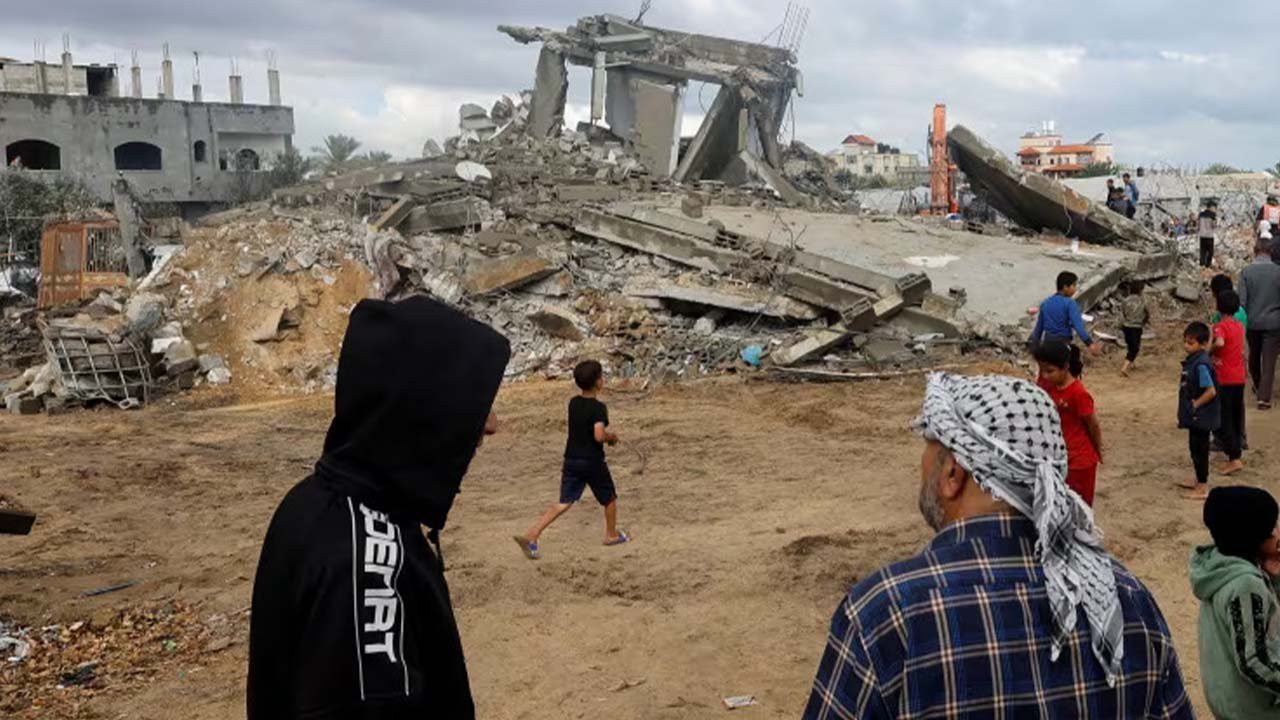
    The Israeli military said that it is conducting targeted strikes against positions held by the Islamist group Hamas in the eastern part of Rafah, a southern city in Gaza.

    The operation is part of ongoing efforts to pressure Hamas into releasing Israeli hostages and achieving other strategic goals, reports Ari Rabinovitch.

    Israeli Prime Minister Benjamin Netanyahu stated that his war cabinet has approved the continuation of the operation in Rafah. The aim is to increase pressure on Hamas to ensure the release of Israeli hostages while pursuing other military objectives.

    “The war cabinet unanimously decided that Israel continue the operation in Rafah to exert military pressure on Hamas in order to advance the release of our hostages and the other goals of the war,” Netanyahu’s office said in a statement.

    The statement also indicated that despite the ongoing strikes, Israel would engage with mediators in an attempt to reach an agreement with Hamas, noting that the current Hamas proposal does not meet Israel’s necessary demands.

    “In parallel, even though the Hamas proposal is far from Israel’s necessary demands, Israel will send a working delegation to the mediators in order to exhaust the possibility of reaching an agreement under conditions acceptable to Israel,” the statement read.

    Meanwhile, the White House announced that it is reviewing Hamas’s response to a ceasefire and hostage release deal and is urging Israel to avoid launching a large-scale offensive in Rafah.

    White House spokesperson John Kirby noted that U.S. President Joe Biden spoke with Netanyahu for about 30 minutes regarding the ongoing operation in Rafah and the hostage situation before Hamas’s response was received.

    Kirby described the discussion as constructive, stating, “It wasn’t a pressure call; it wasn’t about twisting his arm towards a certain set of parameters.”

    However, he also said that the United States does “not support ground operations in Rafah” unless Israel can demonstrate a clear plan to protect hundreds of thousands of Palestinian civilians living in the area.

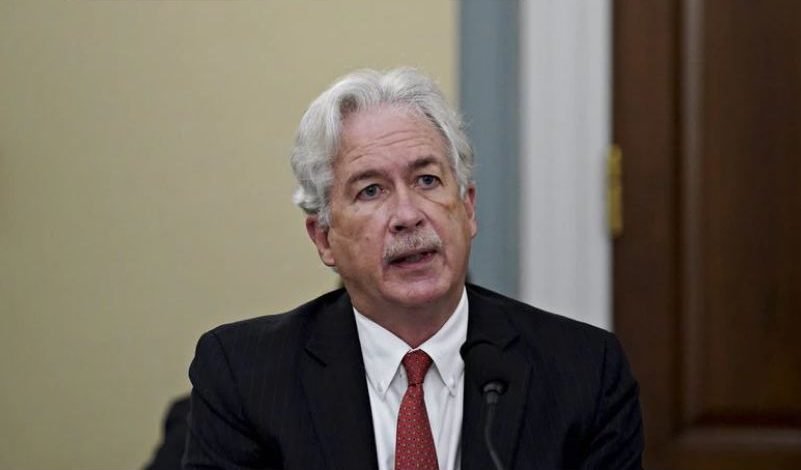
    CIA Director William Burns is also in the region, discussing the Hamas response with Israeli officials.

    Kirby highlighted the urgency of the situation, stating, “We are at a critical stage right now,” and reiterated that the U.S. is urging restraint to avoid further civilian casualties.

  • From prisoner to artist: Guantanamo Bay detainee showcases work at Karachi exhibition

    From prisoner to artist: Guantanamo Bay detainee showcases work at Karachi exhibition

    Ahmed Rabbani, a 53-year-old Pakistani who was recently released after 20 years of detention at Guantanamo Bay, turned to painting to satisfy his artistic yearnings. When he ran out of paint, he used whatever he could find, including dirt, coffee grinds, and spices such as turmeric from the prison canteen.

    “Through painting, I would feel myself outside Guantanamo,” he said at an exhibition of his work in Karachi. Rabbani was detained in September 2002 and handed over to the US Central Intelligence Agency for a bounty of $5,000. He was accused of being a notorious militant known as Hassan Ghul, but Rabbani always insisted it was a case of mistaken identity. He and his brother were never charged or faced trial during their detention.

    The US Senate published a Rendition Report in 2014, which revealed that Ghul was captured and brought to the same prison, only to be released back to Pakistan for “cooperating.” While Ghul went back to his terrorist ways and was killed in a drone strike in 2012, Ahmed got a one-way trip to Guantanamo Bay.

    Born in Mecca, Saudi Arabia, Rabbani moved back to Karachi as a teen and was a taxi driver at the time of his detention. He specialised in guiding visitors from the Middle East, which contributed to him being misidentified.

    While imprisoned in Guantanamo Bay, painting became an obsession for Rabbani, although years spent on hunger strike meant he was often too frail to even hold a brush. If he ran out of materials, he would improvise by using a piece of discarded or torn clothes as a canvas. He would also use coffee or turmeric as a medium.

    Around two dozen pieces of Rabbani’s artwork, which he was allowed to take from prison, are on display at “The Unforgotten Moon: Liberating Art from Guantanamo Bay” exhibition. The works are displayed alongside pieces by local artists who have “re-imagined” paintings that were confiscated. “He is someone who has lost so much of his life, so to produce images of this quality is a miracle… it’s remarkable,” said Natasha Malik, curator and organiser of the exhibition.

    Rabbani, sporting a salt-and-pepper beard and wearing a traditional shalwar kameez and waistcoat, was the centre of attention at the exhibition opening. He plans to publish a cookery book with his memoirs in it and wants to open a restaurant based on recipes he learned while in prison. He hopes to use funds raised from the sale of his artwork to achieve this.

    His artwork depicts his hopes and despair, and some pieces express his yearnings for freedom, such as nature seen through narrow openings, birds flying, and endless oceans. One painting shows a cage containing bright orange fish, the colour of overalls Guantanamo prisoners were forced to wear. “I spent many years in orange,” he said. “I never accepted their laws. I would always break their laws.”

  • CIA joins investigation of Lahore blast, arrest suspects

    CIA joins investigation of Lahore blast, arrest suspects

    The Crime Investigation Agency (CIA) has joined the Lahore bomb blast investigation and will interrogate the case with the Counter-Terrorism Department (CTD), reports Dawn.

    Inspector-General of Police (IGP) Rao Sardar Ali Khan also announced that the CIA has been assigned to investigate the probe beside the CTD.

    Law enforcement agencies have started their search operations all over the city and arrested some accused on the suspicion of their alleged involvement in the Lahore bomb blast.

    The CIA chief held a meeting on Friday after investigating the crime scene and also sent teams to inspect the roads that the prime suspect could have used the route for escape from the crime scene.

    He said, “We have dispatched teams to all the bus stations, railway stations, and exit-entry points of the provincial capital.”

    He also added that the regional police officers and district police officers of Punjab have also been given orders by the IGP to be vigilant for intensifying the security to track down the culprits.

    Sources shared with Dawn the initial development that the law enforcers received a tip-off about the presence of suspects in the area near Anarkali market and other locations of the city. The investigative team has received some important leads through CCTV video and call records.

    Meanwhile, officials refused to confirm any major development as the interrogation is still underway.

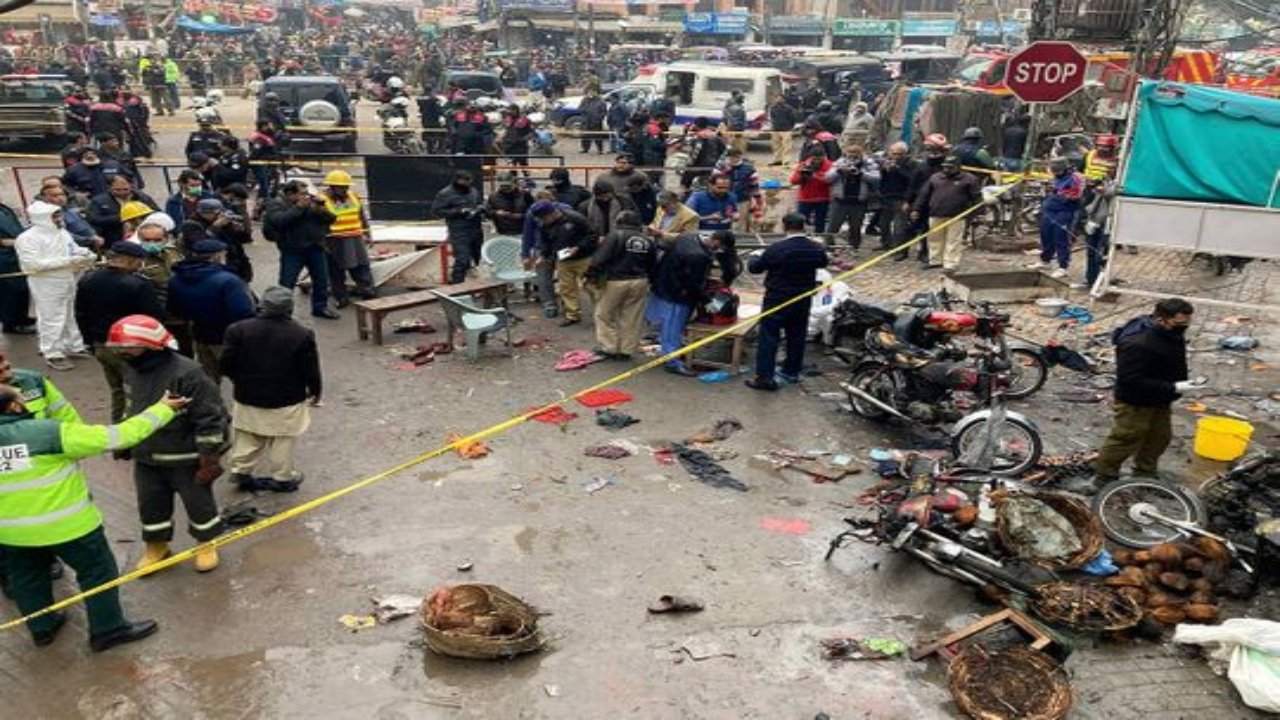
    On Thursday, a bomb blast took place in Lahore near Pan Mandi in New Anarkali in which three people died and 28 people were injured. The injured people were shifted to Mayo Hospital. 20 people who were injured got discharged from Mayo Hos­pital whereas eight victims are still under treatment.

    While replying to Dawn, an official source revealed that there is a “strong possibility” of the Baloch Nationalist Army’s involvement behind the bomb blast.

  • ‘Since 2001, I have repeatedly warned that the Afghan war was unwinnable’: Imran Khan

    ‘Since 2001, I have repeatedly warned that the Afghan war was unwinnable’: Imran Khan

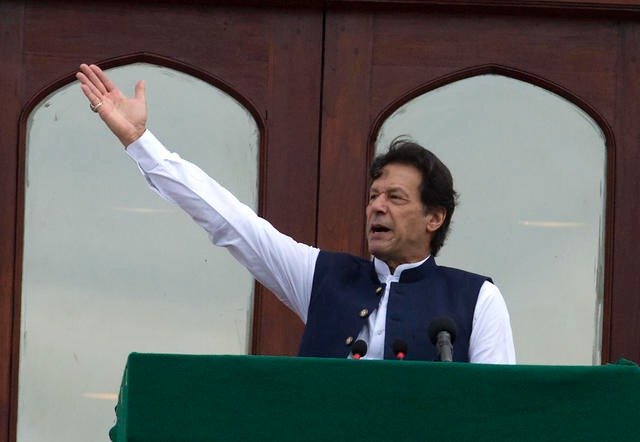
    Prime Minister Imran Khan says he was surprised to see that no mention was made of Pakistan’s sacrifices as a US ally in the war on terror for more than two decades. “Instead, we were blamed for America’s loss,” he wrote in an op-ed for The Washington Post.

    “Since 2001, I have repeatedly warned that the Afghan war was unwinnable. Given their history, Afghans would never accept a protracted foreign military presence, and no outsider, including Pakistan, could change this reality,” wrote PM Khan.

    PM Imran Khan lashed out at successive Pakistani governments, saying that they had sought to please the US instead of pointing out the flaws of a military-driven approach in Afghanistan.

    “Pakistan’s military dictator Pervez Musharraf agreed to every American demand for military support after 9/11. This cost Pakistan, and the United States, dearly,” he stressed.

    “Those the United States asked Pakistan to target included groups trained jointly by the CIA and our intelligence agency, the ISI, to defeat the Soviets in Afghanistan in the 1980s. Back then, these Afghans were hailed as freedom fighters performing a sacred duty. President Ronald Reagan even entertained the mujahideen at the White House.”

    “Once the Soviets were defeated, the United States abandoned Afghanistan and sanctioned my country, leaving behind over 4 million Afghan refugees in Pakistan and bloody civil war in Afghanistan. From this security, vacuum emerged the Taliban, many born and educated in Afghan refugee camps in Pakistan,” read the opinion piece.

    “Fast forward to 9/11, when the United States needed us again — but this time against the very actors we had jointly supported to fight the foreign occupation. Musharraf offered Washington logistics and air bases, allowed a CIA footprint in Pakistan, and even turned a blind eye to American drones bombing Pakistanis on our soil. For the first time ever, our army swept into the semiautonomous tribal areas on the Pakistan-Afghanistan border, which had earlier been used as the staging ground for the anti-Soviet jihad. The fiercely independent Pashtun tribes in these areas had deep ethnic ties with the Taliban and other Islamist militants,” wrote Khan.

    The prime minister pointed out how, between 2005 and 2016, 16,000 terrorist attacks were conducted against Pakistan by over 50 militant groups, who saw the US and Pakistan as collaborators.

    “We suffered more than 80,000 casualties and lost over $150 billion in the economy. The conflict drove 3.5 million of our citizens from their homes. The militants escaping from Pakistani counterterrorism efforts entered Afghanistan and were then supported and financed by Indian and Afghan intelligence agencies, launching even more attacks against us,” he wrote.

    The premier lashed out at former president Asif Ali Zardari, referring to him as “undoubtedly the most corrupt man to have led my country”, accusing him of not worrying about the collateral damage caused by US drone strikes. He said former prime minister Nawaz Sharif was no different.

    “Tragically, instead of facing this reality, the Afghan and Western governments created a convenient scapegoat by blaming Pakistan, wrongly accusing us of providing safe havens to the Taliban and allowing its free movement across our border. If it had been so, would the United States not have used some of the 450-plus drone strikes to target these supposed sanctuaries?”

    “Surely Pakistan is not to blame for the fact that 300,000-plus well-trained and well-equipped Afghan security forces saw no reason to fight the lightly armed Taliban. The underlying problem was an Afghan government structure lacking legitimacy in the eyes of the average Afghan,” he wrote.

    The prime minister said the “right thing” right now for the world to do would be to engage with the new Afghanistan government, adding that if assured of constant humanitarian aid, the Taliban will have a greater incentive to honour the global community’s demands.

    “Providing such incentives will also give the outside world additional leverage to continue persuading the Taliban to honor its commitments,” he wrote.

    “If we do this right, we could achieve what the Doha peace process aimed at all along: an Afghanistan that is no longer a threat to the world, where Afghans can finally dream of peace after four decades of conflict. The alternative — abandoning Afghanistan — has been tried before,” warned the prime minister.

  • ‘We should export Burnol to India after seeing their jealousy over Afghanistan’: Fawad Chaudhry

    ‘We should export Burnol to India after seeing their jealousy over Afghanistan’: Fawad Chaudhry

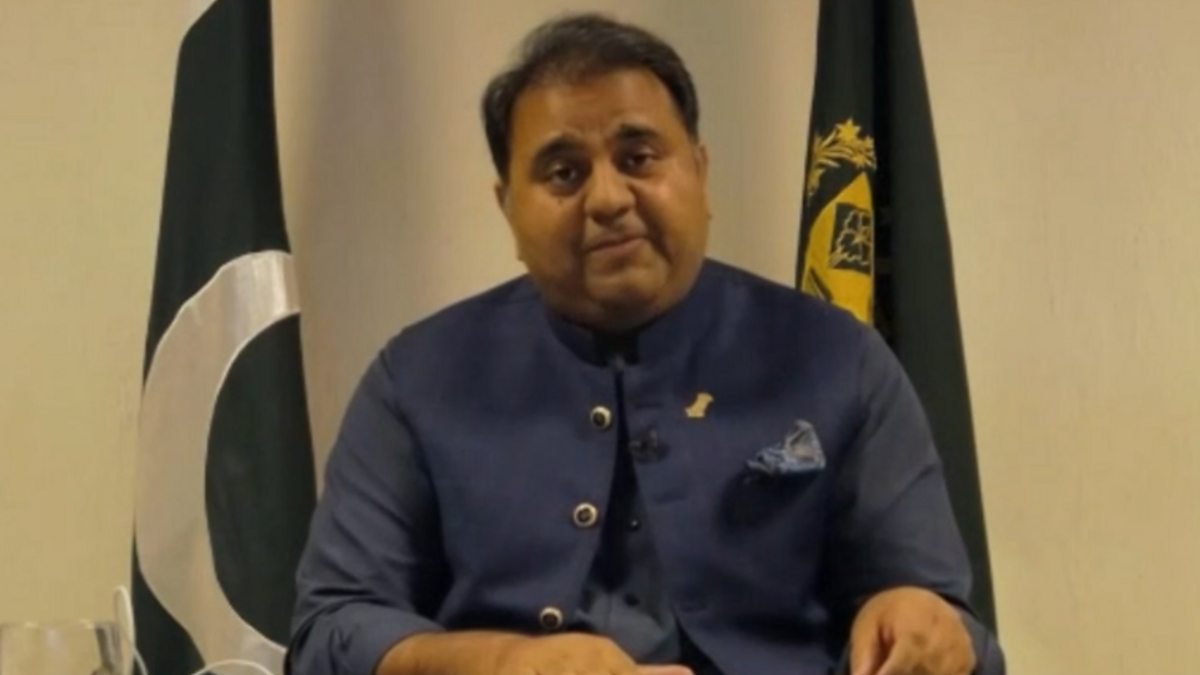
    “Seeing India’s jealousy over the situation in Afghanistan, we should export Burnol to them,” said Information Minister Fawad Chaudhry.

    https://twitter.com/FawadPTIUpdates/status/1434458264553639936

    Regarding Inter-Services Intelligence (ISI) agency’s director-general Lt-Gen Faiz Hameed’s visit to Kabul, Chaudhry said, “General Faiz is not the first intelligence chief to visit Kabul. Earlier, according to the United States (US) media, the Central Intelligence Agency (CIA) chief, Turkish and Qatari intelligence chiefs had visited Kabul as well.”

    “Pakistan’s efforts to evacuate foreigners from Afghanistan are immense and we will continue to do so,” added Fawad.

    https://twitter.com/FawadPTIUpdates/status/1434444791580868608

    “It would not be fair to say that we should not care for the people who did not leave Kabul,” added the minister.

    https://twitter.com/FawadPTIUpdates/status/1434444791580868608

    The federal minister further said, “Unconventional contacts are necessary for discussion on various issues at a time when there is a power vacuum in Afghanistan.”

    “There’s no government in Afghanistan at present and there’s a power vacuum there. In such a situation, who should a leader from the political setup of Pakistan meet there? The prime minister and foreign minister will meet their counterparts [who are not there],” said the minister.

  • CIA director secretly meets the head of Taliban in Kabul, reports WaPo

    CIA director secretly meets the head of Taliban in Kabul, reports WaPo

    United States (US) President Joe Biden sent off America’s top spy to meet the head of the Taliban on Monday, reported The Washington Post.

    This high-level diplomatic encounter comes prior to the deadline of August 31 set to airlift Americans and their allies out of Afghanistan.

    Biden warned that the evacuation was going to be “hard and painful” and much could still go wrong. US troops might stay beyond an August 31 deadline to oversee the evacuation, he said.

    Central Intelligence Agency (CIA) Director William Burns met Taliban Leader Abdul Ghani Baradar in Kabul on Monday as the Biden administration continues efforts to evacuate US citizens and other allies amid chaos at the airport in Kabul.

    “Biden’s spymaster is also his most seasoned diplomat. For Baradar, playing counterpart to a CIA director comes with a tinge of irony 11 years after the spy agency arrested him in a joint CIA-Pakistani operation that put him in prison for eight years,” writes journalist John Hudson.

    However, the CIA declined to comment on the secret meeting.

  • ‘Pakistan will absolutely not allow CIA to use bases for Afghanistan Operations’: PM Khan

    ‘Pakistan will absolutely not allow CIA to use bases for Afghanistan Operations’: PM Khan

    Pakistan will “absolutely not” allow the Central Intelligence Agency (CIA) to use bases on its soil for cross-border counter-terrorism missions after American forces withdraw from Afghanistan said, Prime Minister Imran Khan.

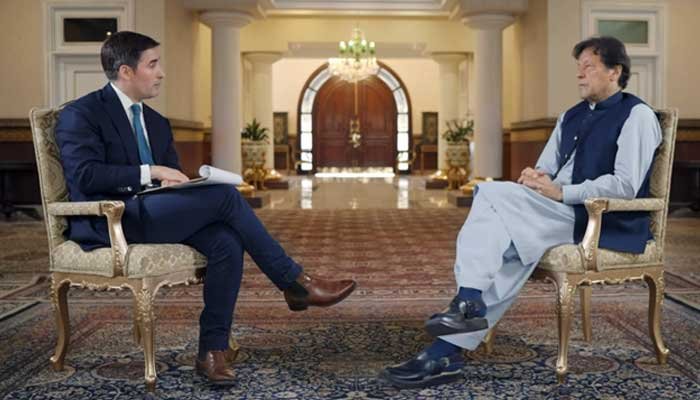
    In an interview with Jonathan Swan of HBO Axios, which will be aired Monday at 3:00 am PST, the premier reiterated Pakistan’s stance on the use of military bases and categorically stated that Islamabad will not allow it.

    The US is in talks with Pakistan and other regional countries for cooperation in future operations in the war-torn country to keep a check on militancy.

    The prime minister was again asked by the US media for his comments on giving access to the CIA to military bases.

    “Will you allow the American government to have the CIA here in Pakistan to conduct cross border counter-terrorism missions against Al Qaeda, ISIS and the Taliban?” Swan asked the premier.

    “Absolutely not,” PM Khan responded.

    Foreign Minister (FM) Shah Mahmood Qureshi had said earlier that Pakistan wants a stable Afghanistan, but there are some elements who do not want peace in the region.

    The FM had categorically stated that Pakistan has refused to give military bases to the US and added that he had told all the political parties in a briefing that they have no such intention.

    “Search for bases could be their wish. There’s no question of giving them bases, we have to see our interest.”

  • ‘Neutral’ Switzerland helped CIA spy on Pakistan, others?

    ‘Neutral’ Switzerland helped CIA spy on Pakistan, others?

    Outraged commentators warned on Wednesday that the CIA and Germany’s intelligence service had for decades used a Swiss encryption company for spying, seriously damaging Switzerland’s cherished reputation for neutrality, AFP reported.

    Critics voiced particular concern that Bern may have been at least tacitly complicit in the secret operation. Switzerland, which takes pride in its neutral and non-aligned status, “was hosting a quasi ally intelligence agency,” the Tribune de Geneve daily said in an editorial.

    Swiss officials “very likely” knew what was going on but “closed their eyes” in the name of neutrality, it added. Home to the United Nations European headquarters and the International Committee of the Red Cross, Switzerland is recognised worldwide for its standing as an honest broker.

    But media revelations on Tuesday told how for decades the US and West German intelligence services raked in the top-secret communications of governments around the world. The Trojan horse they used was their hidden control of Swiss encryption company Crypto AG.

    The company supplied devices for encoded communications to some 120 countries from after World War II to the beginning of this century, including Iran, South American governments, and India and Pakistan.

    Unknown to those governments, Crypto was secretly acquired in 1970 by the US Central Intelligence Agency together with the then West Germany’s BND Federal Intelligence Service.

    Together they rigged Crypto’s equipment to be able to easily break the codes and read the government’s messages, according to reports by the Washington Post, German television ZTE and Swiss state media SRF.

    Citing a classified internal CIA history of what was originally called operation “Thesaurus” and later “Rubicon,” the reports said that in the 1980s the harvest from the Crypto machines supplied roughly 40 percent of all the foreign communications US code-breakers processed for intelligence.

    The spy agencies were thus able to gather precious information during major crises such as the hostage crisis at the US embassy in Tehran in 1979 the 1982 Falklands War between Argentina and Britain. They also got information on several political assassinations in Latin America.

    The Swiss government said on Tuesday it had named a retired federal judge to look into the matter, with his findings due out in June. But Carolina Bohren, a Swiss defence ministry spokeswoman, stressed the difficulties ahead. “The events in question began in 1945 and are difficult to reconstruct and interpret today,” she said.

    Bern also announced it had suspended export licenses for Crypto’s successor companies, until the situation has been “clarified”. But a number of political parties, insisting that far more needed to be done, on Wednesday called for a full-blown investigation.

    The Swiss Socialist Party wondered in a tweet whether the country’s own intelligence service was a “victim or an accomplice”, demanding “clarifications and a full investigation”. The Greens and Christian Democrats also suggested a parliamentary commission might be called for.

    Amnesty International’s Swiss chapter meanwhile raised questions about the Swiss authorities’ responsibility both for the espionage and for how the information gathered had been used.

    “Were our intelligence services and the government aware of the torture and the murders committed by military dictatorships in Chile and Argentina?” it asked in a tweet. “Did they take any measures? A full investigation must be carried out.”

    Switzerland has a centuries-old tradition of neutrality. It avoided being drawn into either of the World Wars and has stayed outside political and military alliances such as NATO.

    Several media reports noted on Wednesday that this reputation ended up providing excellent cover for the United States and Germany when they set up their spying operation there.

    Whether this was done “out of incompetence, because of a desire to cover for foreign secret service agents, or to profit from the information they uncovered, must now be clarified,” the Tages-Anzeiger daily insisted. “That is the only way to get out of this mess.”