Tag: cigarette

  • Pakistan Tobacco Company fears surge in smuggling, fake cigarette supply after tax hike

    Pakistan Tobacco Company fears surge in smuggling, fake cigarette supply after tax hike

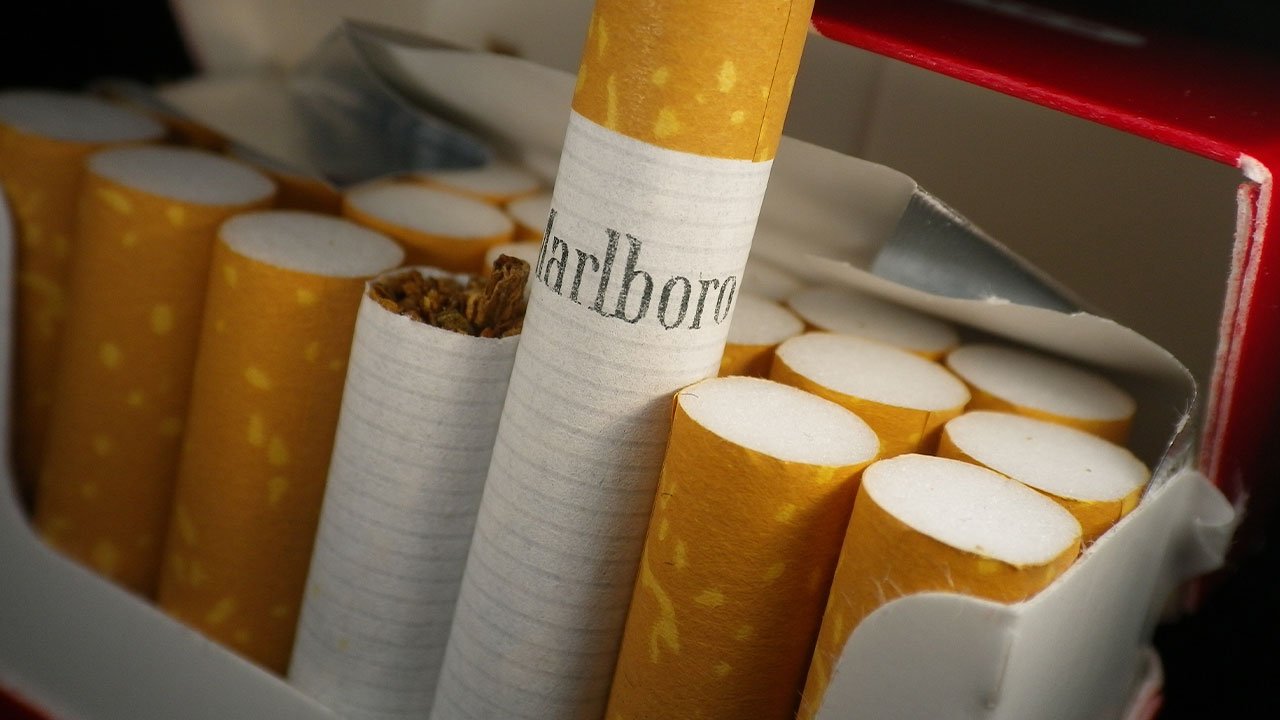
    Pakistan Tobacco Company (PTC) has expressed serious concern over the recent mini-budget announcement, stating that new taxes on cigarettes will result in an increase in smuggling and counterfeit products in markets. Speaking to the media on Friday, PTC’s Director Legal and External Affairs, Syed Asad Shah, explained that the increase in federal excise duty (FED) and the lower minimum price set by the Federal Board of Revenue (FBR) would lead to less revenue collection from the cigarette industry.

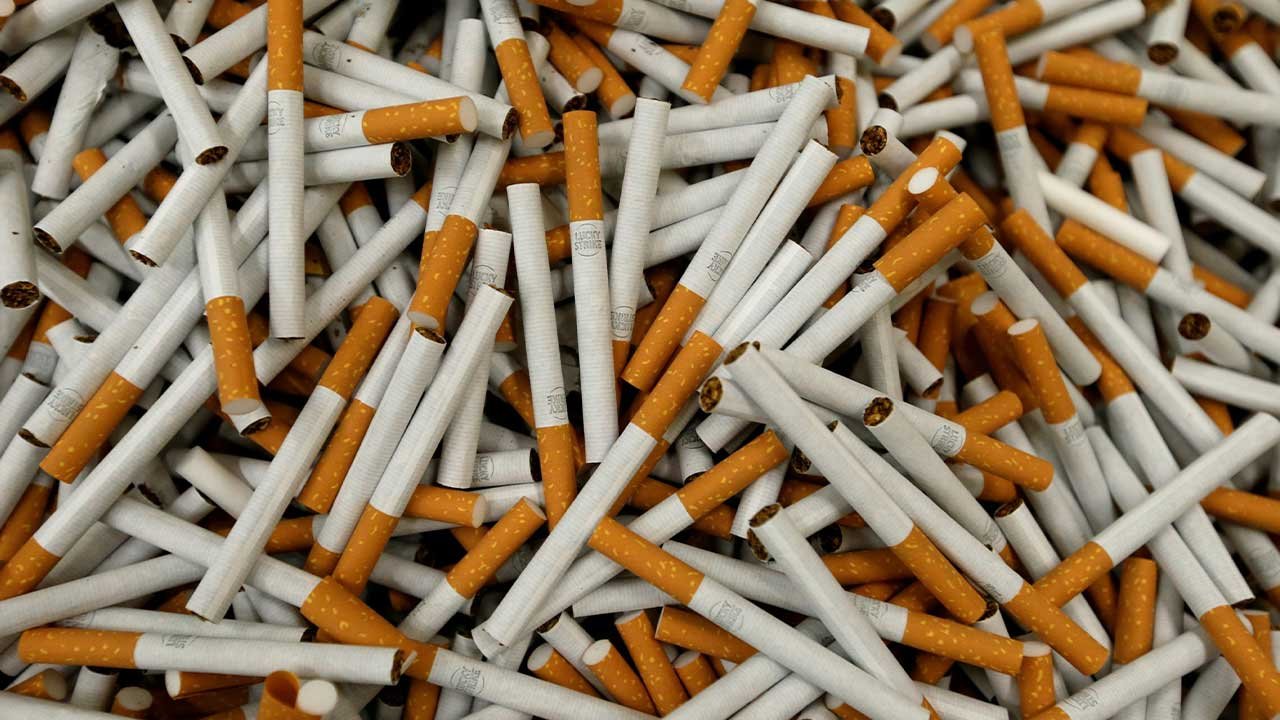
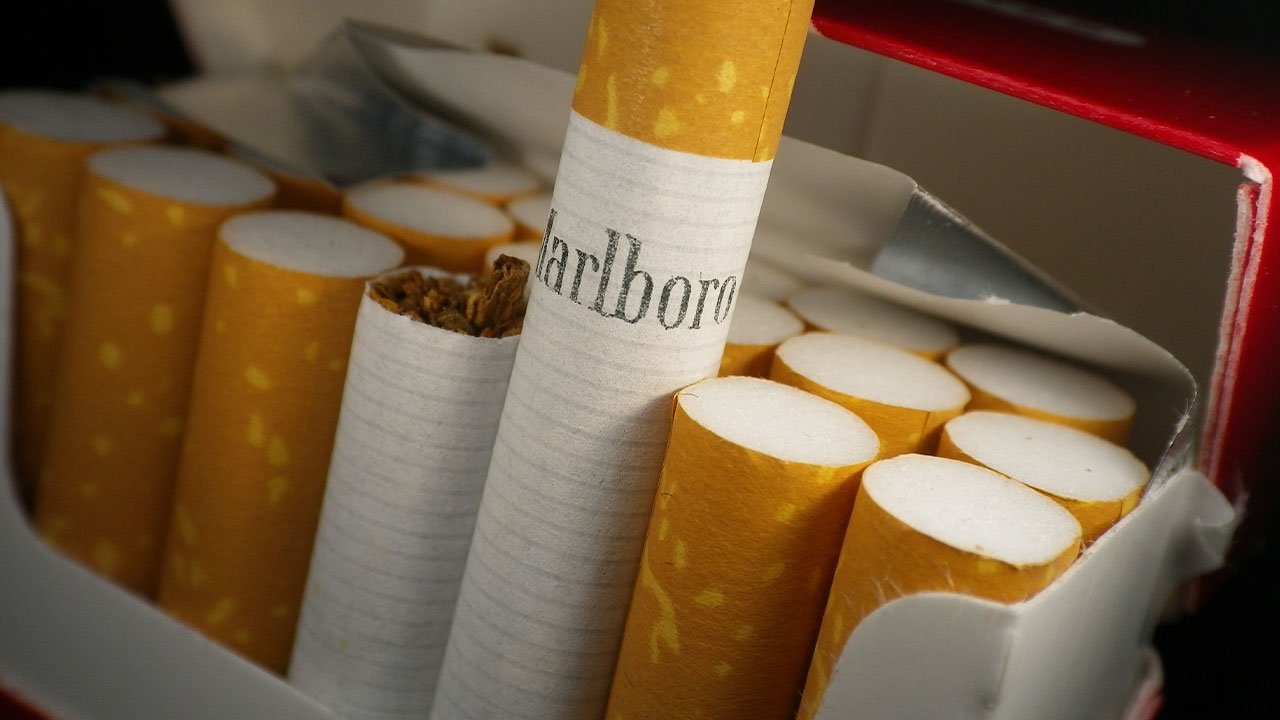
    Shah displayed several illicit cigarette packs available in markets across the country, including some smuggled brands without health warnings, counterfeit products of local brands, and unregistered and non-tax-paid locally produced cigarettes.

    Shah projected that the share of illicit cigarettes in Pakistan would increase from the current 35 per cent to 40-50 per cent in the current year. He added that if the government did not rationalize the policy of managing the threshold price level and did not restrict illicit trade, its revenues would also decline after two years. Illicit cigarettes are sold below the minimum price because the applicable tax per pack is not paid on these products.

    The cigarette industry paid total taxes of Rs150 billion in fiscal year 2021-22, and the expected tax receipts this year would be around Rs185 billion because of the new taxation measures. According to the industry, tax contribution by PTC and Philip Morris, two multinational companies, alone will be around Rs182 billion.

    Shah pointed out that around 35 cigarette companies were running in Pakistan, making some 200 brands, but local players paid only Rs3 billion in taxes and duties. He added that many companies were not paying due taxes, which was why some were selling cigarette packs for Rs7.

    PTC officials emphasized the need for a rational increase in the minimum legal price of cigarettes. After the recent rise in FED, taxes, and duties on tier-2 cigarette packs came in at Rs101, but the minimum sale price of the same packs was Rs108.

    According to Express, the company officials demanded that the finance ministry take stringent action against the illicit cigarette trade and ensure across-the-board implementation of the FBR’s track and trace system that monitors the production and supply of cigarettes.

  • Saying ‘qabool hai’ just got more expensive: Mini-budget proposes increased tax rates on weddings, related events

    Saying ‘qabool hai’ just got more expensive: Mini-budget proposes increased tax rates on weddings, related events

    The Finance (Supplementary) Bill, 2023 proposes to reintroduce advance tax on functions and gatherings, requiring a tax withholding of 10 per cent for filers and 20 per cent for non-filers.

    The tax rate will be applied to the total amount of the bill from the individual or entity hosting the function, whether it is in a marriage hall, marquee, hotel, restaurant, commercial lawn, club, community place, or any other location used for such purposes.

    If the food, service, or any other facility is provided by another person, the host must also collect advance tax on the payment for such items at a rate of 10 per cent for filers and 20 per cent for non-filers. This tax will be adjustable against income subject to the normal tax regime and refundable if it cannot be adjusted.

    The proposed supplementary finance bill has introduced advanced tax on air tickets, marriage halls, hotels, commercial lawns, marquees, and clubs. Additionally, a 10 per cent advance tax will be levied on wedding ceremonies. Duty on business and first-class air travel has also been increased.

    The bill also suggests a 10 per cent hike in the tax on the retail price of beverages. Furthermore, the FED on cement will increase from Rs1.5 to Rs2 per kg after a proposed rise of 50 paisas per kg.

    The supplementary finance bill has also proposed an increase in the FED on cigarettes.

    • The proposed supplementary finance bill suggests a tax of Rs16,500 per 1,000 cigarettes for the tier 1 category, and Rs5,050 per 1,000 cigarettes for the tier 2 category.
    • The bill proposes a 10 per cent tax on sugary juices, syrups, squashes, and artificial sweeteners, and an 18 per cent GST on the retail prices of all items.
    • Imported mobile phones worth more than $500 will see an increase in GST from 17 per cent to 25 per cent.
    • The same 25 per cent rate will be applicable to all luxury goods.
    • The bill proposes a levy of 20 per cent or Rs50,000 FED for air tickets.
    • No additional tax will be applied to wheat, rice, milk, pulses, vegetables, fruits, fish, eggs, meat, or poultry.
    • Real estate or property will not be subject to any tax in the mini budget.
    • The document proposes an increase in the monthly stipend for beneficiaries of the Benazir Income Support Program, with the program’s budget increased by 40 per cent.
  • Govt imposes Rs36 billion additional tax on cigarettes, tobacco processing to revive IMF programme

    Govt imposes Rs36 billion additional tax on cigarettes, tobacco processing to revive IMF programme

    The government has issued an ordinance to impose an additional Rs36 billion tax on cigarettes, an additional Rs2 billion tax on the processing of tobacco, and lowered charges on transportation vehicles in order to raise an additional Rs38 billion in taxes.

    According to Geo, tier-1 brand cigarettes may see a price increase of Rs20 to Rs30 each packet, while tier-2 brand cigarettes would see a price increase of Rs10 per packet.

    The government increased the advance federal excise duty (FED) tax on tobacco processing from Rs10 per kg to Rs390 per kg, which will be adjustable.

    In order to secure the restart of a stalled programme and the release of a $1.17 billion tranche under an expanded $7 billion extended fund facility (EFF), Pakistan has moved to impose taxes on cigarettes and tobacco processing just prior to the International Monetary Fund’s (IMF) executive board meeting, which is scheduled to take place in Washington on August 29.

    The government did not apply regulatory duties on luxury goods because they will be imposed through SRO after receiving tariff board approval and perhaps receiving ECC approval.

    The FBR expects to raise between Rs5 and Rs14 billion in tax income through RDs, hence the overall revenue impact could reach between Rs50 and Rs52 billion.

    It appears strange that the government did not implement any taxation measures on the production of sugar-filled beverages, which also harms the health sector.

    According to the ordinance, retailers who do not fall under tier-1 will be charged the tax through their monthly electricity bills at a rate of 5 per cent where the amount of the bill does not exceed Rs20,000 and at a rate of 7.5 per cent where the amount is greater. The electricity supplier will deposit the money that is thus collected directly without deducting it from his input tax.

    Through this move, the government hopes to raise Rs2 billion.

    In contrast, the FED on locally produced cigarettes has increased from Rs5,900/1,000 sticks to Rs6,500/1,000 sticks for tier-1 and from Rs1,850/1,000 sticks to Rs2,050/1,000 sticks for tier-2 cigarettes. The FED on un processed tobacco has increased from Rs10 per kg to Rs390 per kg.

  • PANAH suggests tobacco taxes be raised even higher

    PANAH suggests tobacco taxes be raised even higher

    Pakistan National Heart Association (PANAH) has proposed that the government increase tariffs on unnecessary and harmful tobacco products. Increased tobacco-related levies will lessen diseases and healthcare expenses while also helping to generate tax revenue.

    Sanaullah Ghumman, PANAH’s General Secretary, announced this at a news conference held by the Pakistan National Heart Association on Wednesday at a local hotel.

    Smoking, according to Sanaullah Ghumman, is not healthy for human health in any aspect, and it is the first step toward addiction. Health experts and civil society groups have also urged the Prime Minister to increase tobacco goods taxes.

    A significant number of health experts and civil society representatives attended the event. Tobacco kills 8 million people worldwide each year, according to a global study, and more than 1.5 million individuals in Pakistan lose their lives each year owing to smoking.

    On World Food Safety Day, PANAH proposed that tariffs on sugary drinks be increased as well, as these beverages are harmful to children and cause a variety of health problems.

    Sanaullah Ghumman spoke at the event, urging a 30 per cent rise in tobacco product taxes to protect minors from tobacco usage.

    “This will be a win-win situation for us,” he continued, “since it will lower the health burden while also dramatically increasing revenue”. PANAH, he claimed, had been educating the public about a variety of dangerous diseases, including heart disease and its causes, for 39 years.

  • Pakistan faces Rs615 billion annual deficit due to tobacco consumption

    Pakistan faces Rs615 billion annual deficit due to tobacco consumption

    Pakistan has a substantial Rs615 billion annual deficit owing to diseases caused by smoking and overall tobacco usage, with only Rs120 billion earning in tax revenue from the product.

    The government is expected to improve revenue by raising the tax on cigarettes by 30 per cent according to The Nation.

    This was voiced by speakers at a major symposium held in Islamabad on May 18. The Pakistan National Heart Association (PANAH) held a seminar on the theme ‘Harms of Tobacco Products and the Importance of Tax Policy,’ which was presided over by Patron General (R) Ashraf Khan and hosted by General Secretary Sana Ullah Ghumman.

    As per the speakers at the event, tobacco usage is a major cause of serious heart, lung, and cancer diseases in the country. A fact sheet on the health and economic costs of cigarette usage was released by the Social Policy and Development Centre (SPDC).

    According to the survey, tobacco is used by 31 million persons over the age of 15. More than 260,000 people are predicted to start smoking in the country if tobacco taxes are not raised in the budget for 2022-23.

    Engineer Iqbal Zafar Jhagra, the former governor of KP and a senior PML-N leader, was the special guest at the event. Nisar Cheema, a member of the National Assembly, was also present.

    Read more: Tobacco companies in Pakistan may bump cigarette prices

    PANAH Patron General (R) Ashraf Khan congratulated the attendees and informed them of the organization’s goals and objectives.

    Smoking was declared the primary cause of deaths from non-communicable diseases (NCDs) such as heart, cancer, respiratory, and chronic diseases, according to participants, with an estimated 163,360 persons dying in 2017.

  • Tobacco companies in Pakistan may bump cigarette prices

    Tobacco companies in Pakistan may bump cigarette prices

    Farmers have asked the government and firms to increase the price of future tobacco products in accordance with the current price hikes in pesticides, fertilisers, and other crop preparation and selling charges.

    On May 9, the demand was made at a meeting of Ittehad-e-Kashtkaran in Khyber Pakhtunkhwa. The participants agreed that the government should reduce agricultural inputs because pesticide, fertiliser, and other costs have risen dramatically.

    Attendees suggested that the price of tobacco be set at Rs350 per kilogramme so that growers may meet the current price increases in pesticides, fertilisers, and other expenses spent during crop preparation and marketing.

    The newly elected officials also encouraged the government to create favourable local marketplaces for agricultural products to aid hardworking farmers. They demanded that the government and tobacco businesses pay the farmers’ outstanding debts immediately.

    Read more: Open market: Lemon being sold at Rs1,100 per kg in Lahore

    Growers also asked the government to develop a policy to prevent tobacco-related industries from moving from Khyber Pakhtunkhwa to Azad Kashmir and other provinces.

    It should be noted that tobacco is grown in Pakistan, with Khyber Pakhtunkhwa accounting for 80 per cent of total production.

    Tobacco products also give Rs135 billion to the federal budget, while the tobacco development tax contributes Rs980 million to the provincial budget.