Tag: CIRCULAR DEBT

  • FIA directed to identify and suspend officials involved in overbilling electricity consumers

    FIA directed to identify and suspend officials involved in overbilling electricity consumers

    Prime Minister Shehbaz Sharif has announced stringent measures against officials responsible for overcharging electricity consumers.

    During a meeting in Islamabad on Saturday, attended by Minister for Power Sardar Awais Ahmed Leghari, Minister for Information and Broadcasting Attaullah Tarar, and other relevant officials, the Prime Minister directed the Federal Investigation Agency (FIA) to identify and suspend such officials.

    He emphasised that these actions will not be tolerated, labelling the perpetrators as “enemies of the people.”

    In the same session, the Cabinet Committee on Energy (CCoE) revealed that the circular debt in the power sector had soared to Rs2,655 billion by May 2024.

    The committee, chaired by Prime Minister Sharif, approved the creation of a support unit aimed at enhancing the efficiency of electricity distribution companies (DISCOs), curbing electricity theft, and ensuring timely bill collection.

    This support unit, which will operate for two years after receiving federal cabinet approval, will begin its work with the Multan Electric Power Company (MEPCO).

    The government’s initiatives aim to address systemic issues in the power sector, thereby alleviating financial pressures and improving service delivery.

  • IMF urges gas sector reforms to curb circular debt

    IMF urges gas sector reforms to curb circular debt

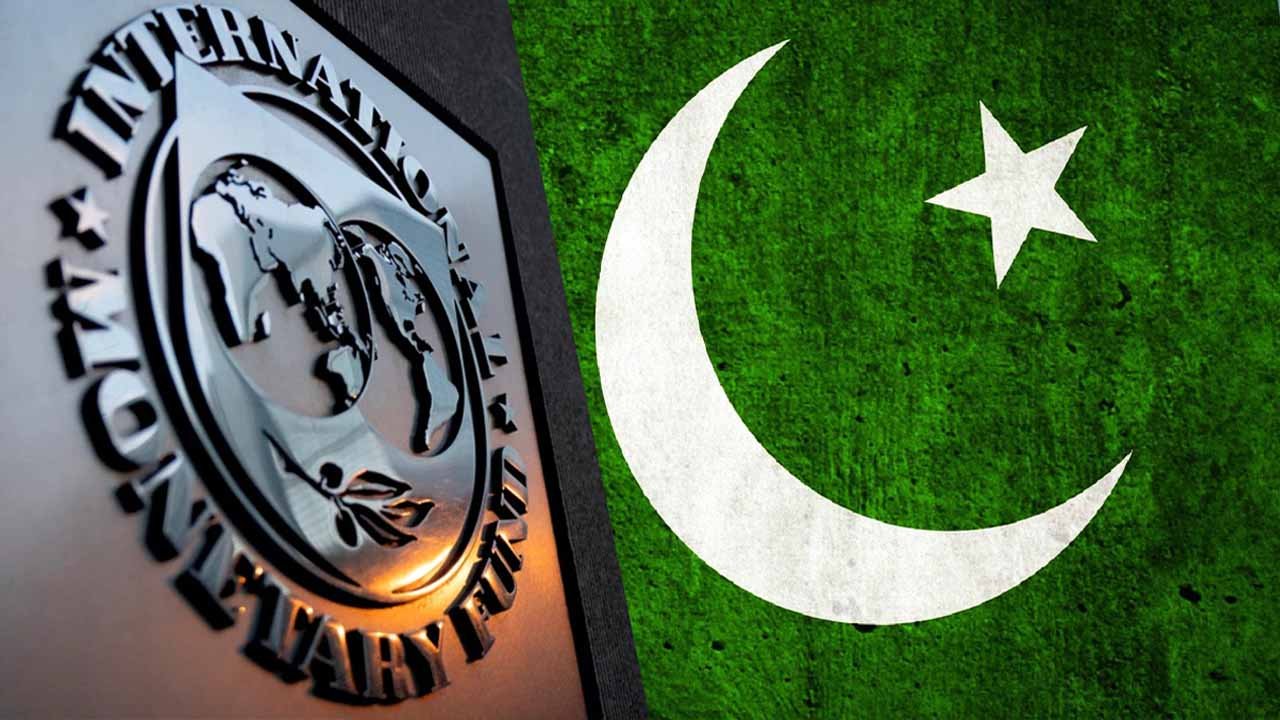
    The International Monetary Fund (IMF) highlighted the significance of prompt gas tariff determinations and notifications, crucial in curbing the escalating gas circular debt, while safeguarding vulnerable households.

    Stressing the necessity of adhering to the mandated 40-day window, the IMF underscored the urgency to initiate these measures commencing with the June 2024 semiannual adjustment.

    In its latest report, the IMF conducted its second and final review within the stand-by arrangement framework, released on Friday.

    It noted a slight decrease in natural gas circular debt to Rs2,083 billion (equivalent to 2.0 per cent of GDP) as of January 2024, attributing this decline to the resumption of gas tariff adjustments, albeit with some delay, aligned with cost recovery objectives.

    The Fund recommended a continued trajectory towards eliminating captive power usage, advocating for the prioritization of cheaper natural gas for the most efficient power plants.

    Additionally, it proposed efforts to standardize gas prices for all fertilizer companies, aligning with plans to implement a weighted average cost of gas (WACOG) across Pakistan, ensuring uniformity while facilitating cost recovery.

    Acknowledging Pakistan’s recent 24 per cent gas tariff increase on February 15, the report highlighted its progressive rate structure protecting residential consumers, while enhancing and equalizing prices for fertilizer companies.

    Furthermore, it recognized Pakistan’s adherence to the Structural Benchmarks (SBs) concerning the notification of the semiannual gas tariff adjustment.

    The report also shed light on the increasing prominence of Regasified Liquefied Natural Gas (RLNG) within Pakistan’s gas mix, driven by dwindling natural gas supplies exacerbated by years of under-pricing.

    Consequently, RLNG has been diverted to domestic users at subsidized rates, underscoring the complexity of the gas sector dynamics.

  • SNGPL proposes 137.62% hike in gas tariff amidst financial challenges

    SNGPL proposes 137.62% hike in gas tariff amidst financial challenges

    Sui Northern Gas Pipelines Limited (SNGPL) has proposed a substantial 137.62 per cent increase in gas tariffs per Metric Million British Thermal Unit (MMBtu), aiming for implementation in June 2023. 

    This tariff adjustment, seeking Rs1,715 per MMBtu, is intended to address the company’s financial shortfall of Rs181.51 billion projected for the fiscal year 2023–24. 

    The plea to the Oil and Gas Regulatory Authority (OGRA) emphasises the necessity of fixing the gas price at Rs2,961.98 per MMBtu.

    Currently priced at Rs1,246.49 per MMBtu, SNGPL proposes a hike of Rs1,209.14 per MMBtu in arrears, with an additional Rs56.48 per MMBtu attributed to rupee devaluation. OGRA is scheduled to review SNGPL’s plea on December 11.

    In a related context, the caretaker government, led by Finance Minister Dr Shamshad Akhtar, has announced plans to increase gas prices in Pakistan starting in January 2024. 

    Dr Akhtar highlighted that this decision aligns with Pakistan’s commitment to the International Monetary Fund (IMF), aiming for a comprehensive review of power tariffs. 

    The government’s broader economic strategy involves reducing debts, prioritising development initiatives, and implementing governance reforms within government enterprises.

    Upon reaching a staff-level agreement with the IMF, Pakistan anticipates receiving approximately 70 million US dollars, contributing to a total assistance amount of about $1.9 billion under the IMF programme. 

    Dr Akhtar emphasised the need to address the circular debt in the power and gas sectors, which currently exceeds 4 per cent of the Gross National Product (GNP). 

    Immediate measures have been initiated to mitigate this challenge, including adjustments to electricity and gas rates. 

    Dr Akhtar underscored the importance of a market-based exchange rate policy and the augmentation of foreign exchange reserves as key priorities for economic stability.

  • IMF recommends gas price hike, subsidy cuts for Pakistan

    IMF recommends gas price hike, subsidy cuts for Pakistan

    The International Monetary Fund (IMF) has reportedly urged Pakistan to address the growing concerns surrounding the power sector’s circular debt, which now stands at 4 per cent of the gross domestic product (GDP).

    Despite initial targets for debt reduction not being met, the IMF has not yet made a final decision on its recommendations.

    Sources suggest that the IMF is advocating for an additional hike in gas prices and a reduction in energy sector subsidies, aligning with its persistent calls for such measures.

    It’s noteworthy that no official decision has been reached on these proposals. Simultaneously, Pakistan and the IMF have collaborated on a comprehensive privatisation plan, focusing on state-owned entities (SOEs) that have incurred significant losses.

    This strategic move aims to address the financial challenges faced by these institutions. The Central Monitoring Unit will meticulously evaluate the extent of losses, with findings submitted to the IMF.

    A crucial aspect of the privatization plan involves transferring control of power distribution companies to the private sector. This shift is expected to mitigate losses and improve efficiency in the power sector, aligning with the IMF’s overarching demand for comprehensive reforms in the energy sector.

  • Govt plans to increase gas and electricity prices in January

    Govt plans to increase gas and electricity prices in January

    The interim Finance Minister, Dr Shamshad Akhtar, announced during a press conference that the caretaker government is planning to increase electricity and gas tariffs in January to address the circular debt issue, in line with the International Monetary Fund’s (IMF) Stand-By Arrangement (SBA). 

    The circular debt in the power and gas sectors, currently exceeding 4 per cent of the Gross Domestic Product, requires urgent action for reduction. 

    Dr Akhtar also discussed tariff revisions with the IMF and the potential imposition of additional taxes on sectors like real estate and retail, emphasizing that final decisions are pending. 

    She highlighted the necessity for a new short-term IMF program and anticipated a medium-term program under the Extended Fund Facility (EFF) after the SBA concludes. 

    Regarding the external financing gap, Finance Secretary Imdad Bosal expressed optimism that a successful IMF review would unlock programme and project loans from multilateral lenders. 

    He anticipated approvals in December for loans from the World Bank, Asian Development Bank, Asian Infrastructure Investment Bank, and Islamic Development Bank. 

    Bosal assured that there is no external financing gap, and the improved ratings post-review would attract foreign loans. 

    Dr Akhtar stated that the World Bank is expected to disburse $2 billion during the current fiscal year, contributing to foreign exchange reserves along with the $700 million tranche approval from the IMF, bringing the total disbursement under the SBA to $1.9 billion out of $3 billion. 

    The approval for the second tranche from the IMF’s Executive Board is anticipated within a month.

  • Govt implements major gas price hike to tackle circular debt crisis 

    Govt implements major gas price hike to tackle circular debt crisis 

    On Monday night, the interim government made a significant announcement that will have a profound impact on the nation’s economy.  

    The decision involved a substantial increase in gas prices, set to take effect on November 1st, 2023. 

    Under this new pricing structure, non-protected domestic consumers will experience a substantial surge in their gas tariffs.  

    Specifically, rates will surge by a staggering 173 per cent for this category of consumers. Commercial users will see their gas prices climb by 136.4 per cent, while those in the export and non-export industries will face increases of 91 per cent and 83 per cent, respectively. 

    Further elaborating on the specifics of these changes, the revised monthly charges for protected consumers have been elevated from a mere Rs10 to a more substantial Rs400. For non-protected consumers, the monthly charges have surged from Rs460 to Rs1000, and for higher consumption slabs, the charges have escalated to a maximum of Rs2000. 

    In terms of actual consumption, the price per mmbtu will vary depending on usage. Users consuming up to 0.25 cubic metres will be charged Rs121 per mmbtu.  

    Those using up to 0.5 cubic metres will pay Rs150 per mmbtu; users with a monthly consumption of 0.60 cubic metres will incur charges of Rs200 per mmbtu; and those utilising 0.9 cubic metres will see rates set at Rs250 per mmbtu.  

    The steepest increase is witnessed by individuals using 1 cubic metre of gas per month, as their charges have surged from Rs400 per mmbtu to Rs1,000 per mmbtu. Users with gas consumption up to 1.5 cubic metres, previously paying Rs600 per mmbtu, will now be required to pay Rs1,200 per mmbtu starting from November 1st. 

    The changes in gas pricing also extend to small commercial users, such as local tandoors, who will be paying Rs697 per mmbtu from the aforementioned date.  

    The power sector will experience a range of charges, with rates fluctuating between Rs1,050 and Rs3,890 per mmbtu, while the cement industry will be subject to a consistent rate of Rs4,400 per mmbtu. 

    As for the export industry, gas pricing has been set at Rs2,100 to Rs2,400 per mmbtu, while non-export industries will be required to pay between Rs2,200 and Rs2,500 per mmbtu. These significant adjustments have been made to alleviate the burden on the nation’s economy. 

    The Power Division, in an official statement, justified the increase in gas prices by referencing the recommendations of the Oil and Gas Regulatory Authority, which sought to prevent an additional burden of Rs400 billion on the already burgeoning circular debt.  
  • IMF-backed gas price hike in Pakistan aims to tackle rising circular debt

    IMF-backed gas price hike in Pakistan aims to tackle rising circular debt

    The Economic Coordination Committee (ECC) recently made a decision to raise gas prices, a move that financial experts at Topline Securities, a brokerage firm, believe is a crucial step in Pakistan’s efforts to reach an agreement with the International Monetary Fund (IMF). This agreement is set for review in November.

    The decision to increase gas prices is seen as a necessity due to the alarming escalation of gas circular debt, which has now reached a staggering Rs2.1 trillion.

    Unfortunately, this debt is increasing at a rate of Rs350–400 billion annually, as stated by the Energy Minister.

    The IMF has consistently advocated for reducing circular debt by raising gas tariffs, as it places a substantial burden on Pakistan’s fiscal accounts. We anticipate that this, in conjunction with the rationalisation of power tariffs, will pave the way for Pakistan to secure a staff-level agreement during the November review.

    Notably, the ECC approved the proposed tariff schedule submitted by the Ministry of Energy, which will come into effect on November 1, 2023, instead of the initially proposed date of October 1, 2023.

    According to the approved schedule, there will be an increase of up to 173 per cent for non-protected domestic consumers, 136 per cent for commercial consumers, 86 per cent for export, and 117 per cent for non-export industries.

    Looking ahead, Pakistani authorities are gearing up for discussions with the IMF during the upcoming review of the $3 billion loan programme scheduled for November.

    Analysts predict that the rise in gas tariffs will help to minimise the disparity in gas tariffs for Sui Southern Gas Company (SSGC) and Sui Northern Gas Company Limited (SNGPL), resulting in a positive impact on their cash flow.

    The combined revenues of both Sui companies, which totaled around Rs1.6 trillion, are expected to experience significant improvement following this gas price hike as the tariff differential narrows.

    Furthermore, the increase in gas prices will have a positive impact on exploration companies like the Oil & Gas Development Company (OGDC) and Pakistan Petroleum (PPL) as it aids in reducing gas circular debt.

  • Rs5.1 trillion debt threatens energy sector, govt thinking about privatisation of power companies

    Rs5.1 trillion debt threatens energy sector, govt thinking about privatisation of power companies

    The caretaker government is contemplating significant changes in response to mounting circular debt and losses in the power and gas sectors in Pakistan.

    Two key strategies are under consideration: privatising both power generation (Gencos) and distribution companies (Discos) or transferring management control to private entities for a duration of 20 to 25 years.

    This policy shift is driven by the alarming circular debt crisis in the power sector, totaling Rs2.3 trillion, and a staggering Rs2.8 trillion in the gas sector. Combined, this amounts to over $17 billion, endangering sector sustainability.

    Energy Minister Muhammad Ali disclosed that the government is considering transferring management responsibilities for four power generation plants and 10 state-run Discos to private entities under long-term concession agreements. Discussions with the World Bank’s International Finance Corporation (IFC) for such agreements are ongoing.

    The power generation plants under consideration include the Haveli Bahadur Shah and Balloki power plants, the Guddu power plant, and the Nandipur power plant. The government is exploring options such as transferring Discos to provincial governments, complete privatisation, or management delegation to private investors.

    After privatisation or management transfer, uniform tariffs may no longer be mandatory, allowing for varying tariff structures. This move is aimed at reducing government subsidies and losses.

    The government is also considering public listings, but only for profitable entities. This shift towards privatisation is seen as a means to spur economic growth, job creation, and increased tax revenues.

    Regarding gas availability, the situation is expected to be similar to the previous year, with gas load-shedding planned. Gas tariffs are set to increase, particularly for low-income consumers.

    Government-independent power producer (IPP) agreements will be honoured as international investments prevent alterations. Short-term strategies to reduce circular debt include cost reduction measures, extending loan terms, boosting local power generation, and upgrading transmission lines.

    The gas sector’s annual losses of Rs350 billion are a significant concern, primarily due to the reliance on imported liquefied natural gas (LNG) procured at a higher cost than what is sold domestically.

    In summary, the Pakistani government is considering a major overhaul of the power and gas sectors, with privatisation and management transfers as primary options to address circular debt and losses. These reforms aim to reduce financial burdens, encourage efficiency, and stimulate economic growth, all while ensuring essential services remain accessible to consumers.

  • NEPRA recommends electricity rate increase of Rs3.28 per unit

    NEPRA recommends electricity rate increase of Rs3.28 per unit

    The National Electric Power Regulatory Authority (NEPRA) has officially proposed to the government an increase in the electricity tariff of Rs3.28 per unit, citing the need for a quarterly adjustment.

    In this proposal, NEPRA is looking to impose an additional financial burden of approximately Rs160 billion on consumers of electricity. According to ARY News, this recommendation has been conveyed to the caretaker federal government through an official summary, outlining the suggested increment of Rs3.28 in electricity rates as part of the fourth-quarter adjustment for the fiscal year 2022–23. 

    The proposed increase, subject to approval by the federal government, would also apply to K-Electric consumers. As a result of this adjustment, power consumers would be required to make additional payments over the next six months, spanning from October 2023 to March 2024. 

    It is worth noting that the proposed surge in power tariffs has incited protests throughout the country, with citizens expressing their displeasure over the considerable rise in electricity costs and the imposition of excessive taxes on electricity bills. In some instances, individuals infuriated by inflated bills have resorted to burning them as a form of protest, while certain political factions have threatened to stage sit-in demonstrations outside K-Electric offices. 

    This unrest surrounding the increased electricity tariffs coincides with Pakistan’s ongoing economic struggles, characterised by financial constraints and an inflation rate hovering around 29 per cent. 

    Furthermore, it is important to highlight that the International Monetary Fund (IMF) has reportedly discouraged Pakistan from offering relief to consumers using over 200 units of electricity on a monthly basis. According to sources, the IMF argued that reducing electricity bills for such consumers would not address the issue of circular debt. 

    Consequently, relief in the form of deferred payments for electricity bills will be exclusively extended to consumers who consistently utilise less than 200 units for six consecutive months. This relief would be rescinded if a consumer’s bill exceeded 200 units within the same timeframe, as per the sources. 

    Caretaker Federal Minister for Energy, Power, and Petroleum, Muhammad Ali, has also announced that the revised electricity tariff will be introduced before October 31. During a press conference held alongside Sindh Governor Kamran Tessori, Minister Ali emphasised the government’s commitment to combating electricity and gas theft through indiscriminate measures. 

    He added that efforts are being made to regulate and potentially lower electricity tariffs, with a goal to supply cost-effective electricity to industries starting on October 31. Muhammad Ali attributed the surge in electricity bills to electricity theft and the increased price of the US dollar. 

    While acknowledging the challenges of amending previous agreements, the minister pledged that the government would explore solutions within the framework of existing arrangements. He also expressed the government’s commitment to promoting solar energy despite the lack of reductions in solar equipment prices, outlining plans to devise a strategy for the promotion of solarization. 

  • Power sector’s circular debt surpasses Rs2 trillion despite massive tariff increase 

    Power sector’s circular debt surpasses Rs2 trillion despite massive tariff increase 

    Despite raising tariffs significantly, Pakistan’s power sector debt grew to Rs2.31 trillion by June 2023, up from Rs2.25 trillion in the previous fiscal year (FY22). This increase of Rs57 billion (about 3 per cent) over 12 months is quite different from FY22 when the debt actually decreased by Rs27 billion. 

    Here’s a breakdown of the key points: 

    1. In FY22, the debt was Rs2.25 trillion, but by June 2023, it had risen to Rs2.31 trillion. 

    2. In FY22, power producers were owed Rs1,351 billion, generation companies owed Rs101 billion to fuel suppliers, and Rs800 billion was held in Pakistan Holding Limited (PHL).  

    3. In FY22-23, the debt to power producers increased to Rs1,434 billion, while the debt to PHL decreased to Rs765 billion in FY23. 

    4. In FY22, some subsidies were reduced by Rs12 billion, but in FY23, there were no subsidies left. 

    5. The interest charges on delayed payments by independent power producers (IPPs) increased to Rs105 billion in FY22 but dropped to Rs100 billion by the end of FY23. 

    6. The markup paid on IPPs’ claims by PHL increased from Rs29 billion in FY22 to Rs43 billion in FY23. 

    7. The pending generation cost, including tariff adjustments and fuel charges, decreased from Rs414 billion in FY22 to Rs250 billion in FY23. 

    8. K-Electric’s outstanding dues went from Rs107 billion in FY22 to an excess payment of Rs53 billion in FY23. 

    9. However, power distribution companies (Discos) saw their losses due to inefficiency rise from Rs133 billion to Rs160 billion in FY23. 

    Read more: Pakistan to launch digital rupee to reduce printing and distribution costs 

    In simple terms, even though the government raised tariffs to collect more money for the power sector, the debt continued to increase. This debt is owed to various power-related entities, and some subsidies and charges also changed over the years. Additionally, while some costs went down, the losses due to inefficiencies in power distribution increased.