Tag: civil war

  • Attack on mosque in Burkina Faso kills dozens during fajar

    Attack on mosque in Burkina Faso kills dozens during fajar

    An attack on a mosque in eastern Burkina Faso has killed dozens of Muslims on the same day as another deadly attack on Catholics attending mass, local and security sources told AFP on Monday.

    “Armed individuals attacked a mosque in Natiaboani on Sunday around 5:00 am, resulting in several dozen being killed,” a security source said.

    “The victims were all Muslims, most of them men” who had come for morning prayers, a local resident said by telephone.

    Another local source said “The terrorists entered the town early morning. They surrounded the mosque and shot at the faithful, who were gathered there for the first prayer of the day.”

    “Several of them were shot, including an important religious leader,” the source added.
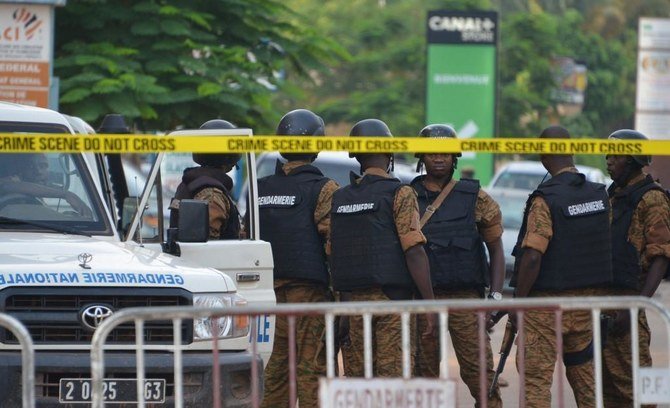
    Soldiers and members of the Volunteers for the Defence of the Fatherland (VDP), a civilian force that supports the military, were also targeted “by these hordes who came in large numbers”, the same source said.

    The source described it as a “large-scale attack” in terms of the number of assailants, who also wreaked substantial damage.

    Natiaboani is a rural community about 60 kilometres (37 miles) south of Fada N’Gourma, the main town in Burkina’s eastern region, which has seen regular attacks by armed groups since 2018.

    On the same day as the attack on the mosque, at least 15 civilians were killed and two others injured during an attack on a Catholic church during Sunday mass in northern Burkina Faso, a senior church official said.

    Jean-Pierre Sawadogo, vicar of the Dori diocese, said in a statement that the “terrorist attack” occurred in the village of Essakane while people were gathered for Sunday prayer.

    Essakane village is in what is known as the “three borders” zone in the northeast of the country, near the common borders of Burkina Faso, Mali and Niger.
  • ‘Ethnic cleansing’: Naseeruddin Shah asks Modi govt to stop genocide of Muslims

    ‘Ethnic cleansing’: Naseeruddin Shah asks Modi govt to stop genocide of Muslims

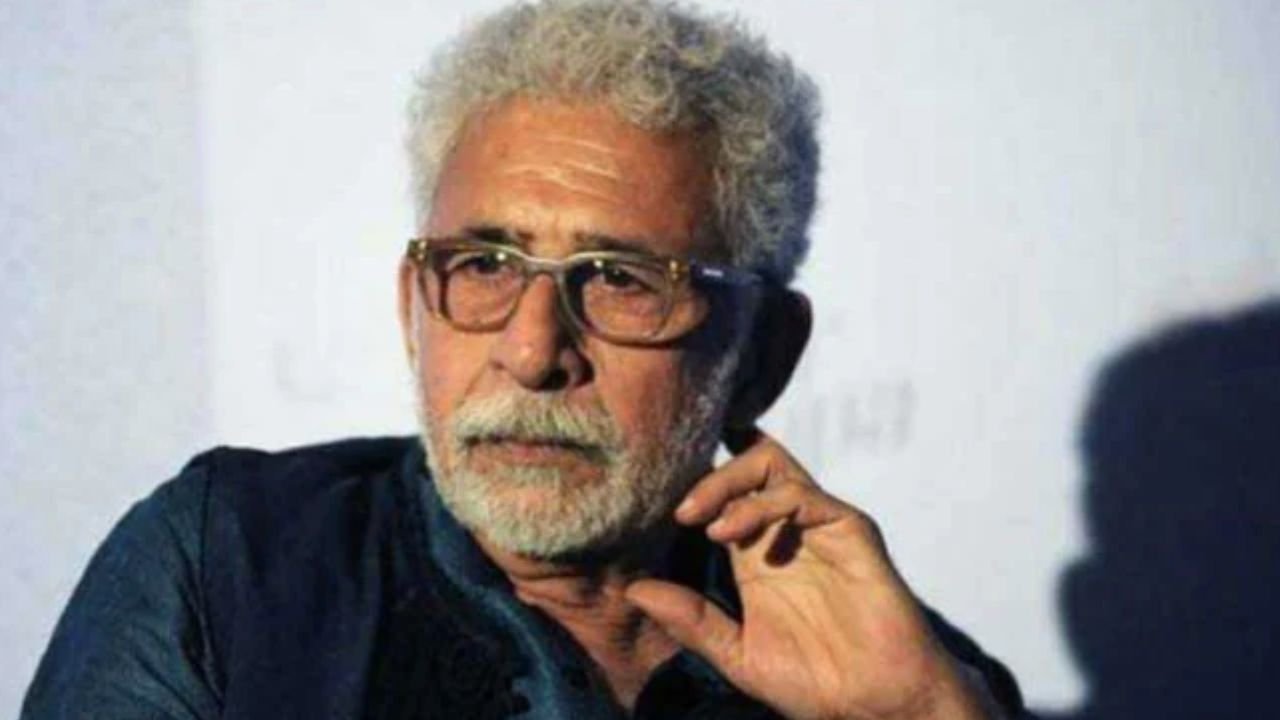
    Indian actor Naseeruddin Shah has asked the Modi government to stop genocide of Muslims and warned that oppression could lead to civil war.

    In an interview to Karan Thapar for The Wire, Shah said if attempts are made for Muslim genocide and ethnic cleansing, India’s 200 million Muslims are going to fight back.

    He said that Indian Prime Minister Narendra Modi does not care but ethnic cleansing of Muslims will trigger a civil war in India.

    While talking about the Mughals in India, he said that they “contributed” in the country and “came here to make this their homeland”.

    “The so-called atrocities of the Mughals are being highlighted all the time. We forget that the Mughals are people who have contributed to the country. They are people who have left lasting monuments in the country…who have left the tradition of dancing, music, painting, literature. Mughals came here to make this their homeland. You can call them refugees if you like,” he said.

    Shah, after this statement, earned a lot of backlash from the Indian social media, especially Indian Twitter. In a clip circulating on social media, the actor is seen talking during Thapar’s show on his YouTube channel. However, the clip omitted a few lines he said about the real marauders.

    These lines from the original video were omitted in the clip: “No one talks about Taimur, no one talks about Mahmud of Ghazni, no one talks about Nadir Shah. I don’t think these people are conversant with that history. Those were the marauders who came, looted and left.”

    https://twitter.com/MeghBulletin/status/1476082232586477572?s=20

    The clip is being circulated widely in India and has made ‘Mughals’ trend on Indian Twitter.

  • ‘I apologise to the Afghan people’: Ashraf Ghani

    ‘I apologise to the Afghan people’: Ashraf Ghani

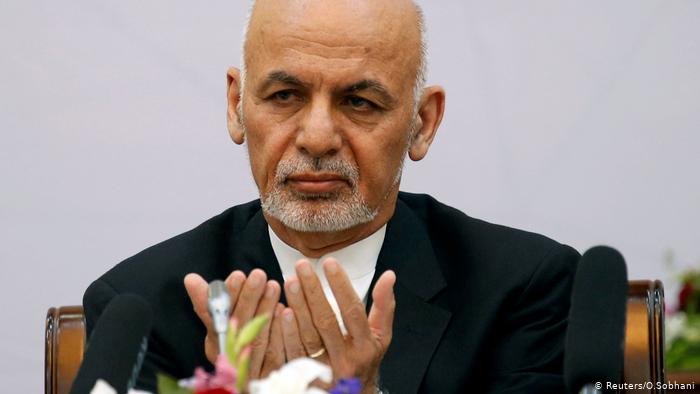
    Former Afghan President Ashraf Ghani, in a statement posted on Twitter, said: “It is with deep and profound regret that my own chapter ended in similar tragedy to my predecessors — without ensuring stability and prosperity. I apologise to the Afghan people that I could not make it end differently.”

    “Leaving Kabul was the most difficult decision of my life, but I believed it was the only way to keep the guns silent and save Kabul and her six million citizens,” said Ghani.

    “If I stayed, there was a risk of the same horrific street-to-street fighting the city had suffered during the Civil War of the 1990s.”

    Refuting the allegations that Ghani had fled the country with four cars and a helicopter full of cash, he said, “These charges are completely and categorically false.”

    “Corruption is a plague that has crippled our country for decades, and fighting corruption has been a central focus of my efforts as president,” he said, adding that he and his Lebanese-born wife were “scrupulous in our personal finances”.

    “I have publically declared all my assets. My wife’s family inheritance has also been disclosed and remains listed in her home country of Lebanon,” said Ghani.

    “I welcome an official audit or financial investigation under United Nations (UN) auspices or any other appropriate independent body to prove the veracity of my statement,” added Ghani.

    He appreciated the sacrifices the Afghans had made over the past 40 years of war in their country.

  • Taliban will not let Afghan soil be used against any other country: DG ISPR

    Taliban will not let Afghan soil be used against any other country: DG ISPR

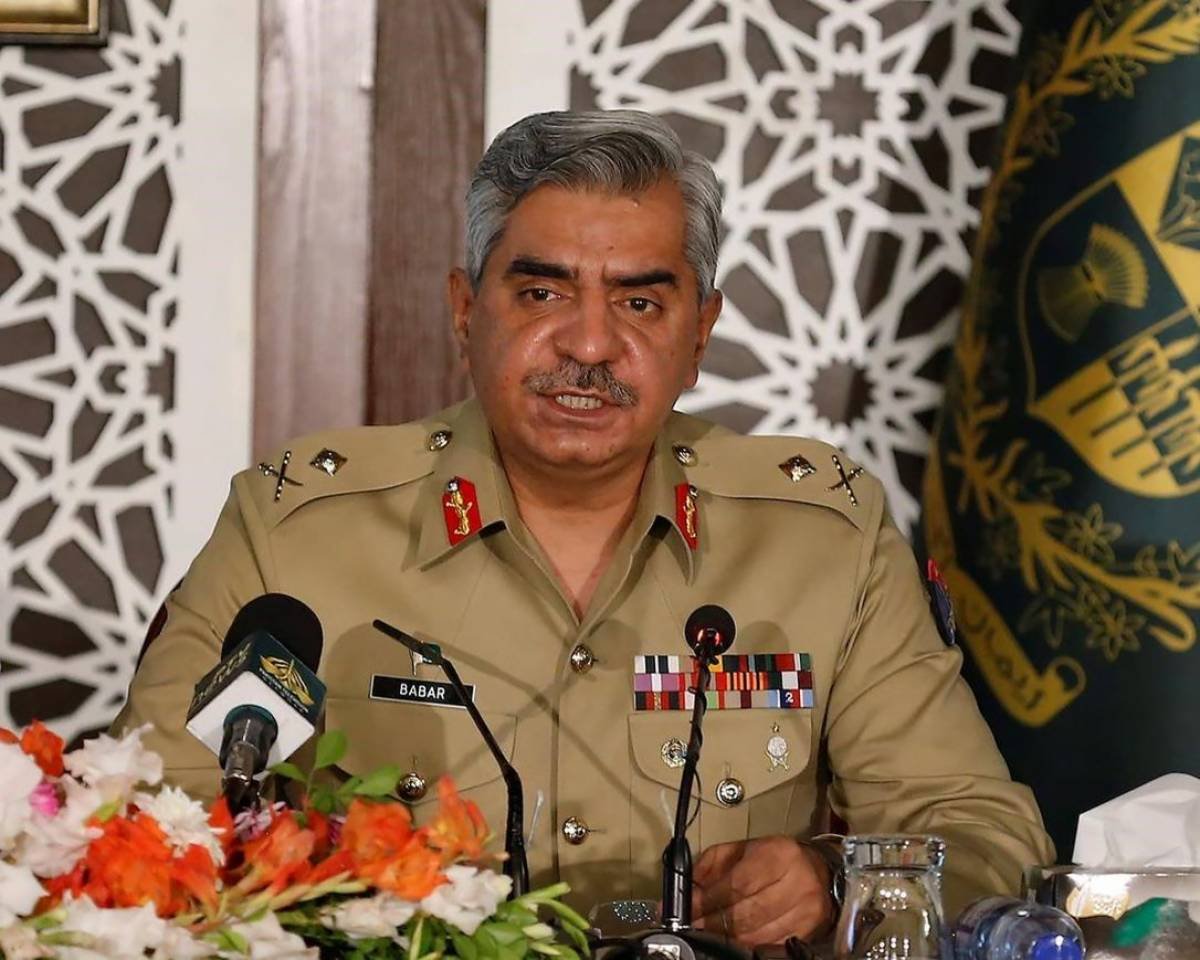
    Director General (DG) Inter-Services Public Relations (ISPR) Maj-Gen Babar Iftikhar on Friday, during a press conference in Rawalpindi, said that the Taliban have said they will not let Afghan soil be used against any other country and “we have to take them at their word”.

    The military spokesperson said Pakistan had already taken the necessary measures to guard the border and ensure security in the country, as the situation in war-torn Afghanistan moves at a rapid pace.

    Maj-Gen Iftikhar elaborated that Pakistan had reached out to Afghanistan on multiple occasions to formalise border mechanisms, as it was felt that was the answer to the instability existing along the Pak-Afghan border.

    “The political and military leadership in Pakistan had the foresight that something like this (Taliban takeover in Afghanistan) could happen. So, despite whatever has happened on that side (Afghanistan), the situation on the Pak-Afghan border is normal and under control.”

    “This does not mean nothing can happen but we are prepared and won’t be caught unaware,” he added.

    Pakistan had apprehensions that the situation would unfold in the way that it did and there could be a “spillover”, which is why it took the steps it did, he elaborated.

    So far, 113 flights — both military and commercial — have landed in Pakistan from Afghanistan, he added.

    “While we were involved in this war on terror during the last two decades, we have had three major escalations on the eastern border. At the peak of this period, there were more than 90 terrorist incidents taking place in a year in Pakistan.”

    “After two decades, we can say we have fought off the menace of terrorism very well with the whole-of-nation approach. All these operations are the epitome of insurmountable spirit and supreme sacrifice of the whole nation’s efforts.”

    Responding to another question, DG ISPR said there was no military-to-military contact with other countries for now. However, reports of India using wild animals to attack and conduct surveillance along the Line of Control (LoC) were “concerning”, he said.

    “I hope the world holds them responsible for stooping so low. We are aware of those surveillance means and taking our measures to counter that.”

    Replying to another question, he said that while there was “always a fear of a civil war” taking place in Afghanistan, the situation is volatile and nothing can be said about it as of now.

    “However, right now, there is no civil war in Afghanistan,” he said.

    He said that Pakistan is “hoping for the best” in terms of normalisation of the situation in Afghanistan but would not like to “speculate anything”.

  • Pakistan reacts to Indian claims of civil war in Karachi with memes

    Pakistan reacts to Indian claims of civil war in Karachi with memes

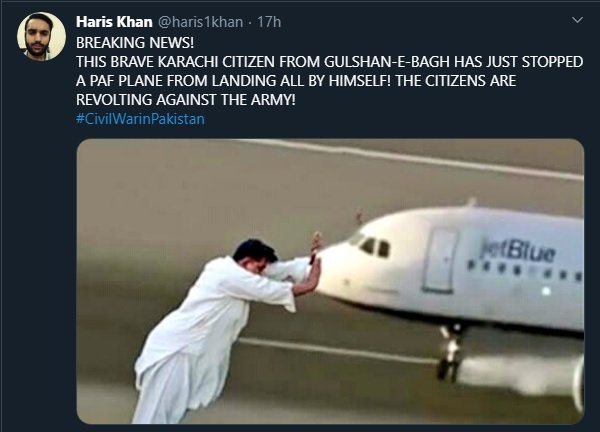
    With Indians being brutally trolled by the entire world for sensationalising the rebellion of Sindh police officials with civil war claims, Twitter is flooding with memes depicting the war that not just Indian media but also prominent citizens are claiming is going on in the southeastern province of Pakistan.

    Amid the controversy surrounding Sindh police following Pakistan Muslim League-Nawaz (PML-N) leader Captain (r) Safdar’s arrest in Karachi, India on Wednesday once again lost it as it claimed that clashes were taking place between the army and the provincial police as a civil war erupted in the port city.

    READ: ‘IG was kidnapped’: Hamid Mir takes a dig at Kamran Khan for contesting his claim

    According to reports now retracted by multiple Indian media outlets, Karachi is burning with shootouts between civil and military bodies after the army took over the provincial metropolis and the control of all police stations as well as government buildings.

    This time, however, it wasn’t just Indian media that made baseless claims, cracking people up on this side of the border…

    “10 police officers of Sindh police martyred during their line of duty of saving people of Karachi from atrocities of army [sic],” prominent Indian lawyer Prashant Patel Umrao claimed.

    https://twitter.com/ippatel/status/1318743674105233408

    He went on to say that the United States (US) Navy may enter Karachi port soon, drawing strong reactions from Twitterati, and not just those from Pakistan.

    While many resorted to reacting strongly to Indian claims, such as deputy director of the Asia Program and senior associate for South Asia at the Wilson Center, Michael Kugelman, who said that Indian disinformation accounts were exploiting Pakistan’s current political crisis, some chose to give their peers a good laugh.

    Here are some of the memes that’ll make your day:

    https://twitter.com/iKarachiwala/status/1319013537826639873

    https://twitter.com/haris1khan/status/1318924695752802304
    https://twitter.com/ThisMyHandle/status/1318888540718178313

    https://twitter.com/umerbinajmal/status/1318987098066718725

    Have something to add to this story? Let The Current know in the comments…

  • Sheikh Rasheed foresees ‘assassination of some prominent personality’

    Sheikh Rasheed foresees ‘assassination of some prominent personality’

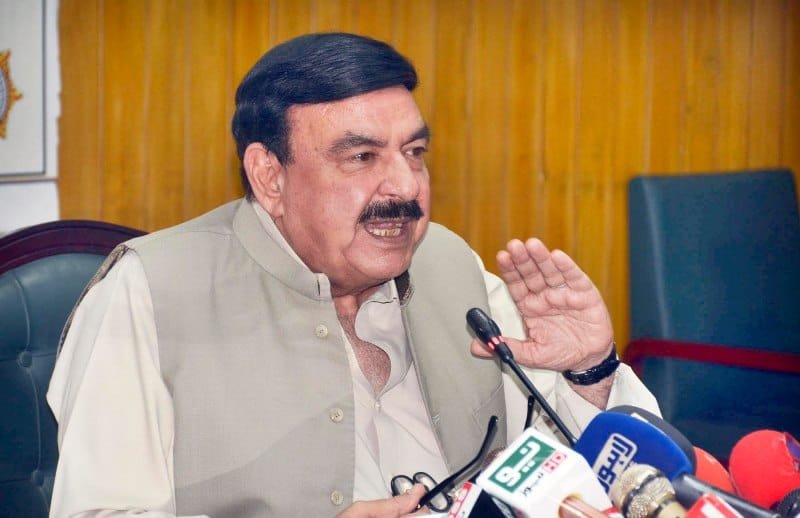
    Federal Minister for Railways Sheikh Rasheed has made headlines for reportedly saying that anything can happen over the next four months, including an attempt on his life or that of some other prominent person.

    “Anything can happen within the next four months… February 20 is the date… everything will be sorted…” reports quoted Rasheed as saying.

    “Some terrorist attack could happen, coronavirus could spread again, the [Pakistan] People’s Party (PPP) could break away from the [opposition] alliance, I could get killed or so could some other prominent person,” the minister reportedly said, adding that if something of the sort happens, it could lead to a civil war in the country.

    “Plans to ignite a sectarian fire were foiled when law enforcement acted promptly ahead Chehlum of martyrs of Karbala last week as well,” he said.

    The minister also spoke at length about the possibility of a terrorist attack and how every person’s life was in danger.

    The minister’s statement comes while investigators remain clueless about the perpetrators of the high-profile targeted killing of prominent religious scholar Maulana Adil Khan, who along with his driver, was shot dead in Karachi on Saturday.

    According to police, the scholar was sitting in a Toyota Vigo parked outside Shama Shopping Centre when suspects on motorcycles came up to him and opened fire. He succumbed to the wounds on his way to the hospital.

    While authorities claim foreign powers were at play, Prime Minister (PM) Imran Khan has described it as “an attempt by India to create sectarian conflict across the country”.

    The premier, while strongly condemning the targeted killing of Maulana Adil of Jamia Farooqia in Karachi, said that India is attempting to target religious scholars to fan sectarian rift in the country.

    In a series of tweets on Sunday, he stressed upon the religious scholars from all sects to ensure that people do not fall prey to nefarious Indian designs to destabilise Pakistan by fuelling a sectarian conflict.

    “We have prevented a number of such attempts pre-emptively in the last few months. Our intelligence organisations and law enforcement agencies will nab culprits of this murder also,” he said.

  • VIDEO: Syrian father teaches baby daughter to laugh every time a bomb drops

    A Syrian man has made a “laughing game” for his baby daughter so she doesn’t get scared every time a bomb drops in Idlib city near the Turkish border in north-west Syria, which has been the target of continuous bombing for the past few weeks.

    With at least 21 civilians being killed so far in Idlib by the strikes carried out by the Syrian Air Force and its Russian allies, the man has taught his four-year-old daughter to laugh every time a bomb is dropped, as though it were a game, News18 reported.

    “What a sad world,” wrote journalist Ali Mustafa as he tweeted a video of the father-daughter duo.

    People on the internet are heartbroken after watching the video.

    https://twitter.com/VeryTiwari/status/1229451131685703684

    The Syrian civil war is an ongoing multi-sided civil war in Syria fought between the Ba’athist Syrian Arab Republic led by Syrian President Bashar al-Assad, along with domestic and foreign allies, and various domestic and foreign forces opposing both the Syrian government and each other in varying combinations.

    The unrest in Syria, part of a wider wave of the 2011 Arab Spring protests, grew out of discontent with the Syrian government and escalated to an armed conflict after protests calling for Assad’s removal were violently suppressed.