Tag: CJP

  • CJP Isa says has received no complaints of ‘interference’ in judiciary

    CJP Isa says has received no complaints of ‘interference’ in judiciary

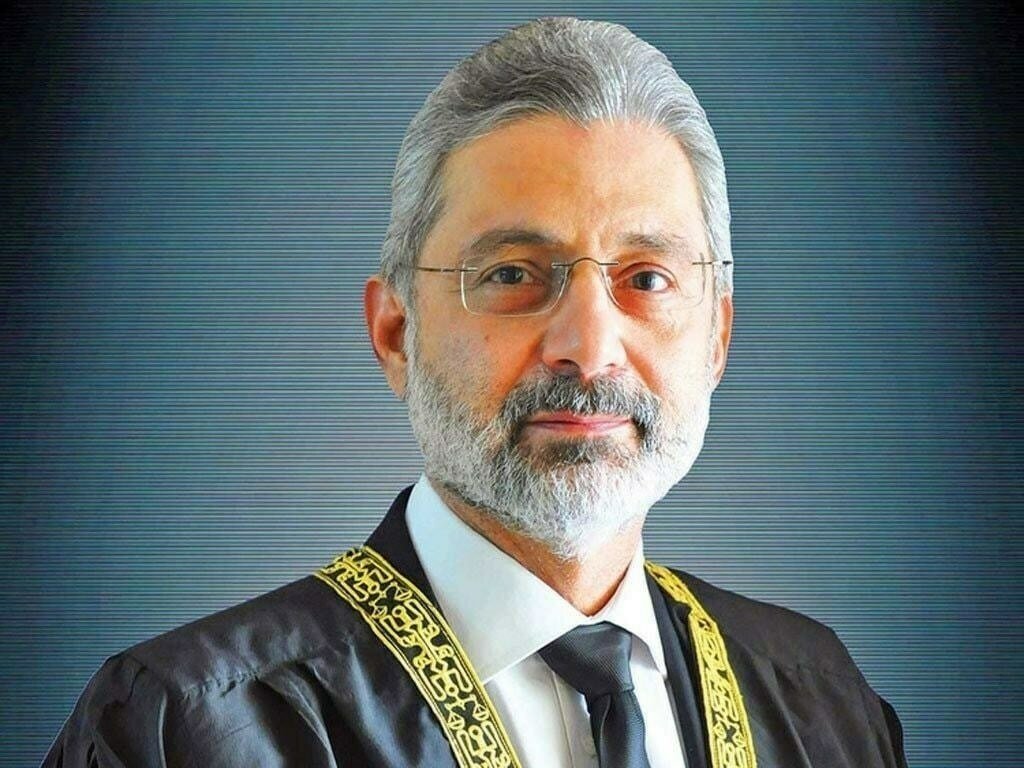
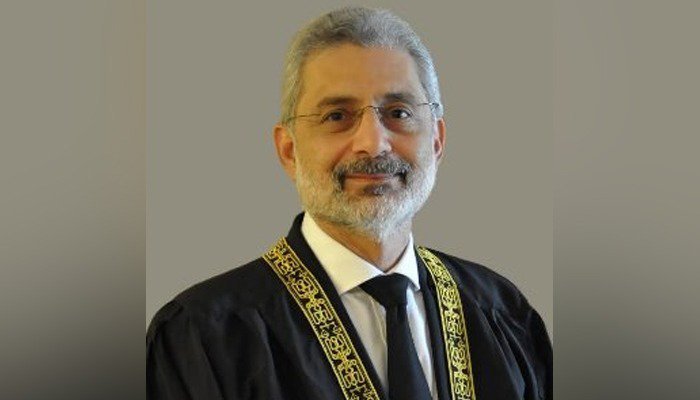
    Chief Justice of Pakistan (CJP) Justice Qazi Faez Isa stated on Thursday that he did not receive any complaints of interference in the judiciary by any High Court judge.

    “Since I have been Chief Justice [of the Supreme Court of Pakistan], I have not received a single complaint from any high court judge that there has been any interference in their work,” Justice Isa said while speaking at Sindh High Court Bar Association (SHCBA).

    Isa also stated that if there were any complaints of meddling then it would have happened before his tenure.

    “So, this is a thing to bear in mind that interference is not acceptable but at the same time nothing has been reported to me during … my watch,” said CJP Isa.

    The statement comes after six judges of Islamabad High Court (IHC) last month wrote a shocking letter to the Supreme Judicial Council (SJC) alleging blatant interference by intelligence agencies in judicial matters.

  • Achakzai stopped from entering CJ’s court room by plain clothed officials

    Achakzai stopped from entering CJ’s court room by plain clothed officials

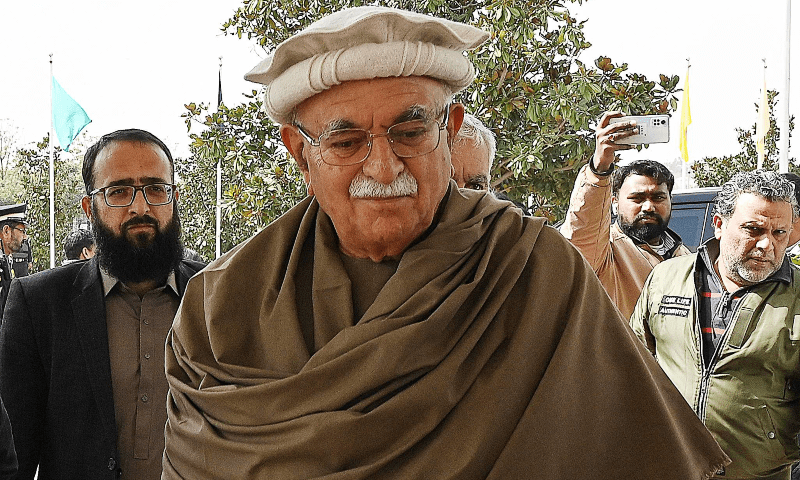
    Mehmood Khan Achakzai, the Chairman of Pashtunkhwa Milli Awami Party, was stopped from entering into Chief Justice of Pakistan Qazi Faez Isa’s courtroom on April 3 by plain-clothed individuals.

    Azaz Syed, a renowned journalist, reported from court premises about the incident. He stated in a video, “This is Mehmood Khan Achakzai behind me and he has been stopped from entering Room no 1 Courtroom.”

    When Achakzai was asked by Syed to relate the entire incident he said, “We submitted our ID cards and were issued passes to enter the courtroom.” He then also said that a person in plain clothes came up and did not allow him and his companions to enter the premises.

    It should be noted that inside the courtroom Suo Moto case hearing was being conducted on the issue of Islamabad High Court judges’ letter alleging blatant meddling by intelligence agencies in judicial matters.

  • ‘Kisi ka koyi aur agenda hai…woh chief justice bun jayein’, CJ Isa says won’t allow attack on judiciary

    ‘Kisi ka koyi aur agenda hai…woh chief justice bun jayein’, CJ Isa says won’t allow attack on judiciary

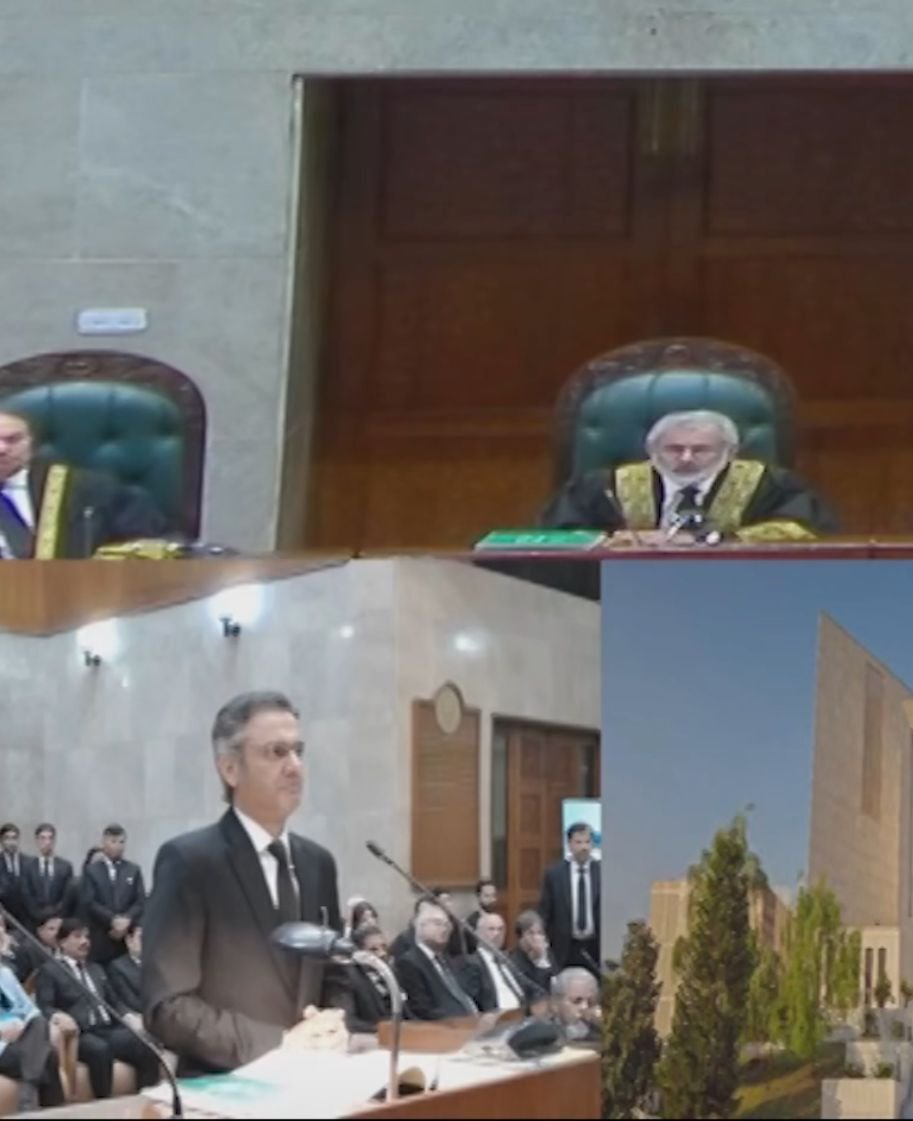
    Justice Qazi Faez Isa has said during the hearing of Supreme Court’s Suo moto notice taken on the Islamabad High Court judges’ letter that, “There is zero tolerance on the independence of judiciary.”

    The hearing is being conducted by a seven-member SC bench headed by Chief Justice Qazi Faez Isa and comprising six other judges — Justice Syed Mansoor Ali Shah, Justice Yahya Afridi, Justice Jamal Khan Mandokhel, Justice Athar Minallah, Justice Musarrat Hilali and Justice Naeem Akhtar Afghan.

    CJP Isa remarked, “Judges must be sure that they are not in danger.” He also emphasized that he could not exercise contempt power in any other court because “the court which is in contempt will exercise this power itself.”

    Importantly, the lawyers had demanded a full court in the suo moto case to which CJP raised an important point that where were these lawyers when not a single meeting of the full court was conducted in four years.

    The chief justice said: “My colleagues and I will stand before any attack on the independence of judiciary.”

  • Imran Khan alleges judges conveyed feeling of helplessness to him

    Imran Khan alleges judges conveyed feeling of helplessness to him

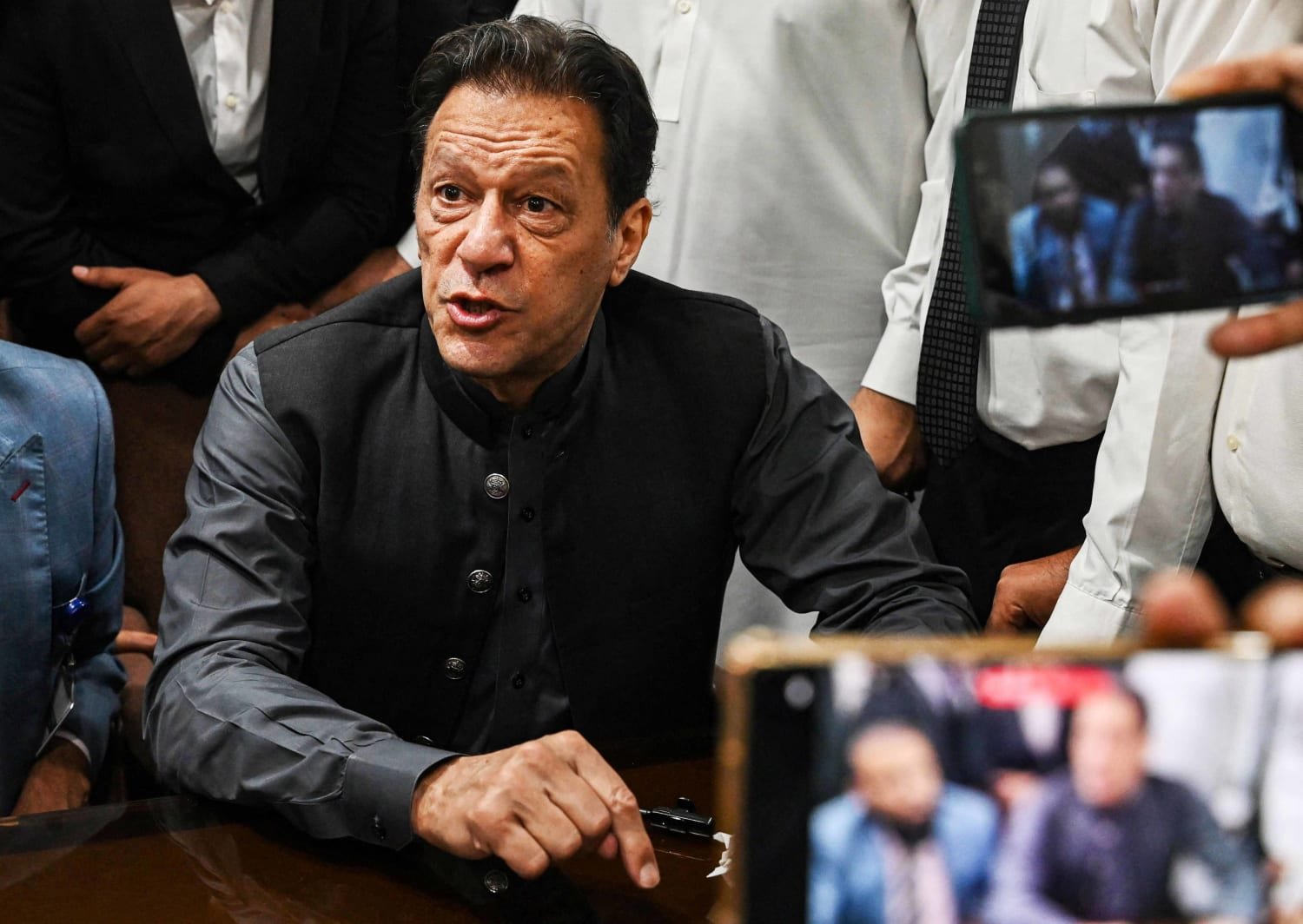
    During an interaction with journalists in Adiala Jail today, former Prime Minister Imran Khan lauded the Islamabad High Court (IHC) judges for exposing alleged interference in judicial matters and claiming judges would send him “messages of helplessness” in his cases.

    Khan’s statement came after the Supreme Court of Pakistan took a Suo Moto notice of the IHC Judges’ letter to the Supreme Judicial Council urging the body to probe the serious matter.

    A one-member inquiry commission was made by the federal cabinet however ex-CJP Tassaduq Hussain Jillani refused to head the said commission after he was chosen to lead it.

    Khan remarked, “I salute the judges for raising their voice and hope they will save the country.” He reiterated that everyone knew about the “regime change operation” in 2022 when he was ousted from the government through a no-confidence motion.

    The PTI founder gave his views about the Suo Moto notice by the SC and said, “It is a serious matter and should be heard by full court.” However, he remarked that a seven-member bench is better than the commission.

  • Cabinet names ex-CJP Tassaduq Hussain Jillani as head of commission

    The federal cabinet on Saturday officially approved the constitution of an inquiry commission to investigate the shocking allegations made by the six Islamabad High Court (IHC) judges and forwarded the name of former Chief Justice of Pakistan Justice (retired) Tassaduq Hussain Jillani as its head.

    The IHC judges — Justice Mohsin Akhtar Kiyani, Justice Tariq Mehmood Jahangiri, Justice Babar Sattar, Justice Sardar Ejaz Ishaq Khan, Justice Arbab Muhammad Tahir, and Justice Saman Fafat Imtiaz — sent the letter on Tuesday to Supreme Judicial Council headed by CJP Qazi Faez Isa.

    The letter sent shockwaves across the country as it underscored the alleged “interference” of intelligence agencies in legal matters of the court.
    Responding to the letter, the CJP and the Prime Minister held a meeting and a decision was reached to establish a commission to investigate the contents of the letter.

    Justice Jillani is known for his ‘balanced’ approach. He was awarded the 2020 J Clifford Wallace Award by the J Reuben Clark Law Society (JRCLS) to honor his “extraordinary career as a judge and a jurist”. He also received the 2023 American Bar Association (ABA) International Human Rights Award.

  • CJP throws weight behind commission to probe Judges’ letter

    CJP throws weight behind commission to probe Judges’ letter

    Chief Justice of Pakistan (CJP) Qazi Faez Isa on Thursday said that any “interference by the Executive in the affairs and judicial workings of Judges will not be tolerated”.

    The statement came through a widely anticipated press release by the Supreme Court after the CJP met with the Prime Minister of Pakistan Shehbaz Sharif yesterday regarding the six judges’ letter alleging meddling by spy agencies in judicial matters.

    The press release stated “under no circumstances can independence of judiciary be allowed to compromise,” adding that the CJP and the Senior Puisne Judge believed that an independent judiciary is a “foundational pillar which upholds the rule of law” and fosters a strong democracy.

    It added that a proposal was made to constitute an inquiry commission under the Pakistan Commissions of Inquiry Act, 2017 and it would be headed by a retired judge of “impeccable integrity” to probe into the allegations.

    The PM will undertake a Federal Cabinet meeting today to seek approval for the constitution of the said commission. The PM also assured the judges that his office will be taking strong measures to ensure judiciary’s independence.

  • Full Court meeting called after Shehbaz-Isa meeting

    Full Court meeting called after Shehbaz-Isa meeting

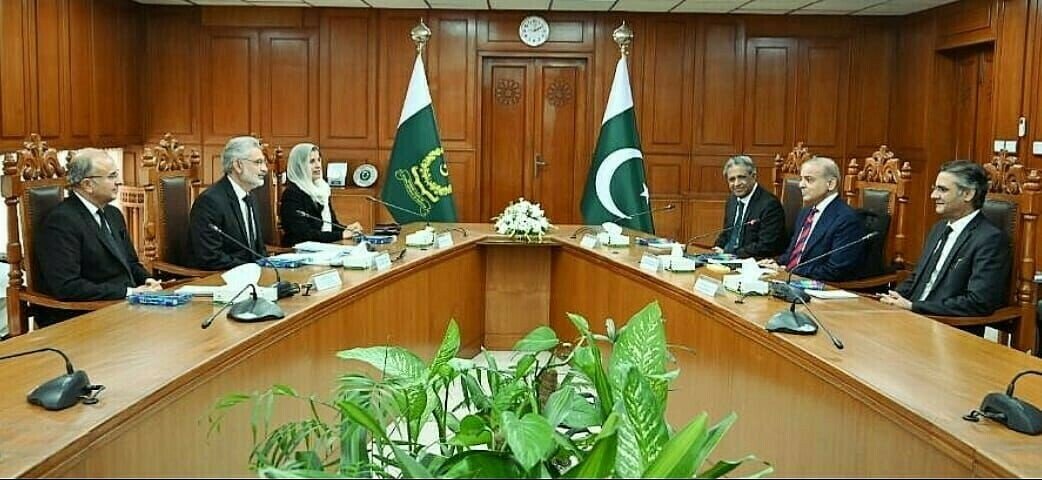
    The Prime Minister of Pakistan Shehbaz Sharif met the Chief Justice of Pakistan Qazi Faez Isa on Thursday against the backdrop of the bombshell letter written by the six judges of Islamabad High Court (IHC). The meeting lasted about an hour and twenty minutes.

    The letter went into details on what it called ‘interference’ of spy agencies in judicial matters. The PM was accompanied the by Attorney General Pakistan Mansoor Usman and Law Minister Nazir Tarar, while in the chamber, Justice Mansoor Ali Shah accompanied the CJP.

    “PM Shehbaz assured CJP Isa that no compromise will be made on the judiciary’s independence,” said Tarar in a press conference today. After the high-level meeting today, the PM decided to constitute a commission to investigate the allegations levelled by the six judges.

    Tarar further stated “The federal government considered the content of the judges’ letter an extremely serious matter as no one should be allowed to meddle in any institutions’ affairs, and it should be probed.”

    The PM will also take up the matter during a cabinet meeting tomorrow.

    Yesterday, the bar associations of the country and senior legal experts called for a thorough investigation into the contents of the letter and the CJP conducted a full court meeting to discuss the matters at hand.

  • Six IHC judges call on SJC to probe spy agencies ‘intervention’

    Six IHC judges call on SJC to probe spy agencies ‘intervention’

    In an explosive letter written to Supreme Judicial Council (SJC) headed by Justice Qazi Faez Isa, six judges of the IHC — Justice Mohsin Akhtar Kiyani, Justice Tariq Mehmood Jahangiri, Justice Babar Sattar, Justice Sardar Ejaz Ishaq Khan, Justice Arbab Muhammad Tahir, and Justice Saman Rafat Imtiaz — called on the SJC to summon a judicial convention over what they called the alleged interference of the executive, including operatives of intelligence agencies.

    “We are writing to seek guidance from the Supreme Judicial Council (SJC) with regards to the duty of a judge to report and respond to actions on part of members of the executive, including operatives of intelligence agencies, that seek to interfere with discharge of his/her official functions and qualify as intimidation,” read the letter.

    The Supreme Court had recently declared the removal of former IHC Justice Shaukat Aziz Siddiqui illegal after he had been removed from service when he alleged interference of intelligence agencies in judicial matters.

    It was also stated that in May 2023, “the brother-in-law of an IHC judge was abducted by armed men.” In another incident during the summer of 2023, surveillance equipment was discovered in the residence of another IHC judge and it had private recordings of their family members.

    In their letter, the IHC judges pointed out the lack of guidelines in the code of conduct for judges when they perceive a threat to the judiciary’s independence.

  • SC declares dismissal of former IHC judge Shaukat Aziz Siddiqui unlawful.

    SC declares dismissal of former IHC judge Shaukat Aziz Siddiqui unlawful.

    The Supreme Court on Friday ruled the dismissal of former Islamabad High Court (IHC) senior judge Shaukat Aziz Siddiqui as illegal, issuing directions that he may now be considered a retired judge.

    The decision was announced by a five-member bench led by Chief Justice of Pakistan Qazi Faez Isa, Justice Aminuddin Khan, Justice Jamal Khan Mandokhail, Justice Hasan Azhar Rizvi, and Justice Irfan Saadat. The bench had reserved the verdict on Aziz’s plea in January this year.

    In his petition, the former judge challenged the decision of Supreme Judicial Council (SJC) removing him from office and an Oct 11, 2018 notification because of which he was dismissed for a controversial speech he had delivered at Rawalpindi Bar Association.

    In his speech, Aziz blamed the country’s premier spy agency ISI of illegally using their influence to manipulate the court proceedings and forming their choice of benches in cases related to indictment of former Prime Minister Nawaz Sharif and his daughter Maryam Nawaz.

    However, since the court noticed that since the former judge had attained the age of 62 years, he would not be able to resume his previous service as a judge. “Consequently, Justice Siddiqui shall be deemed to have retired as a judge of the IHC and he will be entitled to receive all the benefits and privileges due to a retired judge, by allowing these petitions in the above term,” it stated.

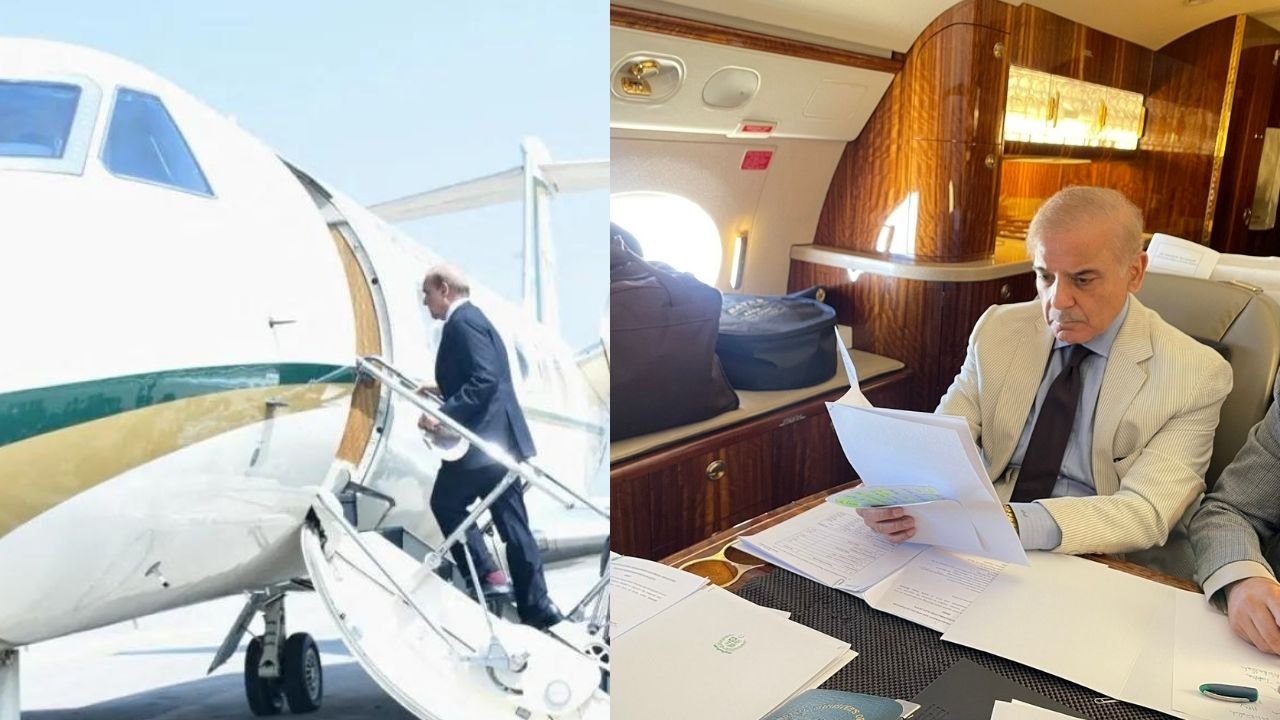
  • Mazay Khatam; No more 1st class for PM and five-star hotels for ministers 

    Mazay Khatam; No more 1st class for PM and five-star hotels for ministers 

    In a bid to curb expenses, the federal government has rolled out a stringent travel advisory affecting top-tier officials, including the president, prime minister, chief justice, services chiefs, and bureaucrats. 

    Effective immediately, the advisory mandates specific classes for air travel, categorizing officials based on their positions.

    Cabinet Division said the president and the CJP will travel in ‘class-1’, whereas the PM, Senate chairman, National Assembly speaker, ministers, services chiefs, MNAs, federal secretaries, grade-22 officers, and ambassadors will travel in business class.

    Other officers of the federal government, attached departments, autonomous and semi-autonomous bodies, corporations, and other institutions under the administrative control of various ministries/divisions will travel in economy class.

    Obligatory Visits Only

    According to the advisory, foreign travel of officers shall be allowed only in cases of obligatory visits and that too in the economy class.

    This move comes as part of a new foreign travel policy aiming to rationalize overseas visits, instill austerity measures, and enforce accountability.

    Key provisions of the policy include obtaining permission from an austerity committee for non-essential visits, providing comprehensive travel details to the Foreign Ministry, and a ban on simultaneous foreign trips by ministers and secretaries unless under unavoidable circumstances approved by the prime minister.

    No Five Star Hotels

    Additionally, the policy discourages stays in five-star hotels, prohibits support staff from accompanying government officers, and encourages teleconferencing as a viable alternative. Ministers, ministers of state, advisers, and assistants are limited to three foreign visits per year, with exceptions granted in special cases.

    Furthermore, ministers are prohibited from traveling during National Assembly or Senate sessions, and all foreign visit details must be submitted to the Foreign Ministry within 15 days.

    The guidelines also address diplomatic relations, mandating adherence to the ‘One China Policy’ for interactions with Taiwan and requiring special permission for contacts with Korea. Visiting India necessitates permission from the interior and foreign ministries.

    Lastly, hosting foreign companies is discouraged, and visits by experts and consultants are permitted only during bilateral discussions.