Tag: CJP

  • ‘Judges and generals can’t take decisions behind closed doors’: Fawad Chaudhry

    ‘Judges and generals can’t take decisions behind closed doors’: Fawad Chaudhry

    Pakistan Tehreek-e-Insaf (PTI) leader Fawad Chaudhry criticised the Supreme Court’s detailed judgement given yesterday in a suo motu case on the ruling by former National Assembly Deputy Speaker Qasim Suri under Article 5 of the Constitution. 

    “The people should be given the right to make decisions. Judges and generals can’t change their policies every day. They can’t take decisions behind closed doors.”

    Fawad said that Chief Justice Umar Ata Bandial has the sealed cipher in his office. “Senior judges should ask the CJP why it was not shown to them,” said Fawad. 

    He further claimed that a letter from President Alvi is also with the Supreme Court suggesting the formation of a commission to investigate the matter. However, the court had not responded to Alvi’s letter.

    “Rather than forming a commission to properly investigate the matter, the Supreme Court has given its verdict without even reading the material that was given to it. Moreover, the timing of the ruling is self-explanatory.” 

    The PTI leader asked if the Supreme Court could issue the detailed judgement after three months, why did it not delay it a bit longer. He alleged that it was purposefully done in the wake of the upcoming by-elections in Punjab.

    Moreover, the PTI leader claimed that people are aware of why the SC “did not want to investigate the cipher”. Chaudhry was of the view that the top court “should read the cipher before penning the judgment”.

    He challenged the decision saying that when PTI comes back into power, it will quash the order through Parliament.

    Commenting on Mazhar Alam Miankhel’s additional note which said “if we begin to pursue cases under article 6, we will find there are more people to hang than there are nooses”.

    If I get permission, will get Imran Khan arrested: Rana Sanuallah

    Interior Minister Rana Sanaullah said that President Dr Arif Alvi should resign and that if he gets permission from the cabinet to file a case against Imran Khan, he [Khan] will be arrested.

    Rana Sanaullah said that the matter of reference against former Prime Minister (PM) Imran Khan, President Alvi, former Deputy Speaker Suri will be considered in the cabinet tomorrow. Sanaullah said that Khan “can go to any level for his personal interests”.

    He claimed that PTI is still receiving salaries from the National Assembly and they are still using government vehicles. He urged that they should be de-seated and disqualified.

    Replying to a question, Rana Sanaullah said that Sheikh Rasheed was supposed to be arrested during the long march but he could not be found as he was in hiding.

    PM Shehbaz’s reaction

    Following the judgement, Prime Minister (PM) Shehbaz Sharif said that everyone should read the judgement. In a tweet, the preimer said, “Honourable Supreme Court’s detailed judgement on Vote of No Confidence exposes the lies and propaganda indulged in by Imran Khan and Co. utterly shameful how IK tried to undermine the Constitution and manufactured the lie of regime change.”

    PTI failed to produce any evidence to support claim of foreign conspiracy: Supreme Court

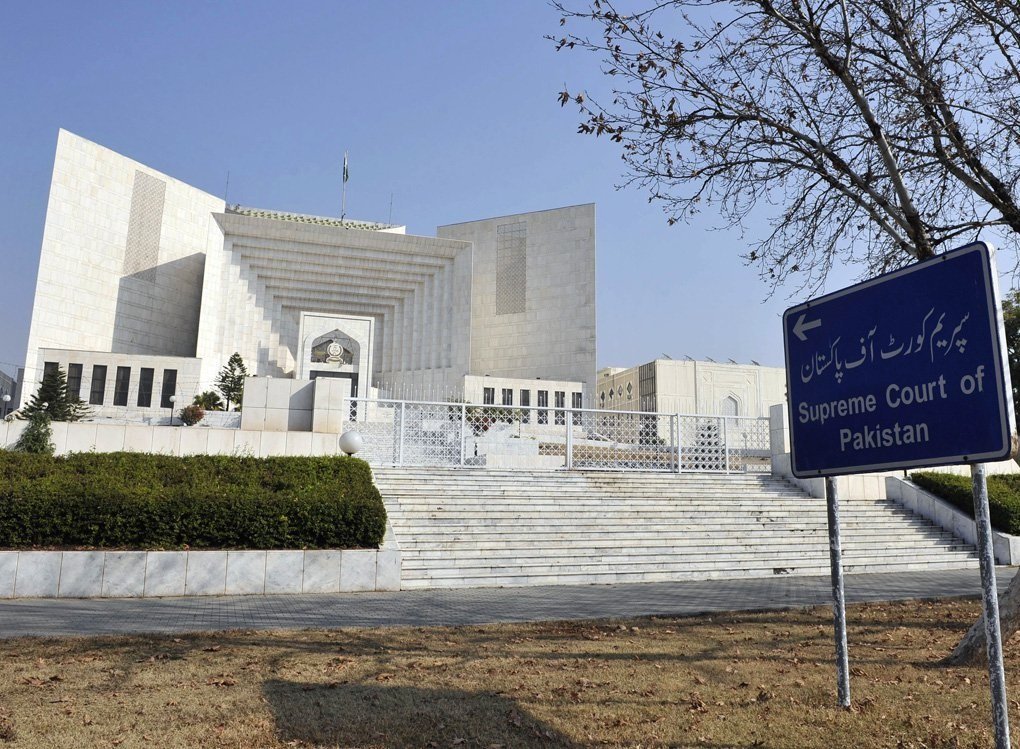
    The Supreme Court issued a detailed judgement on Wednesday (July 13) in a suo motu case on the ruling by the Deputy Speaker of the National Assembly under Article 5 of the Constitution.

    The court has said that the Pakistan Tehreek-e-Insaf (PTI) failed to “produce any evidence” before the court to support their claim of interference by a foreign force in the ousting of former Prime Minister (PM) Imran Khan through a no-confidence motion.

    In the judgement, the apex court revealed that the cipher was not even shown to it although its contents “were partially disclosed in the detailed reasons issued in support of the deputy speaker’s ruling”.

    On April 7, a five-member bench of the Supreme Court had declared Qasim Suri’s ruling on the dismissal of no-confidence motion against Imran Khan as unconstitutional and illegal. The bench unanimously ruled that President Dr Arif Alvi’s decision to dissolve the National Assembly is “illegal” and restored Imran Khan as Prime Minister as well as his cabinet ministers to face the no-confidence motion on April 9.

    No evidence

    The Supreme Court said that it rejected PTI’s plea to take suo motu action over the ‘breach of sovereignty’ allegation, citing “no precedence, absence of evidence and lack of jurisdiction”.

     Chief Justice of Pakistan (CJP) Justice Umar Ata Bandial observed that the action by the deputy speaker triggered a chain of events.

    Moreover, the SC noted that neither the Constitution nor the NA procedure rules have given the power to the Speaker and Deputy Speaker to dismiss a no-trust resolution “for being inadmissible or non-maintainable”.

    The judgement said, “It was a unilateral decision taken by the Deputy Speaker at the behest of the Law Minister.”

    High treason for President Alvi, Khan and others?

    Justice Mazhar Alam Miankhel stressed in his additional note that there must be consequences for President Alvi, ex-PM Imran, former Speaker Asad Qaiser, former Deputy Speaker Qasim Suri and former Law Minister Fawad Chaudhry because they prevented the elected representatives of the people “from voting on the resolution” and therefore it was a “blatant transgression of the Constitution”.

    “Whether the stated acts attract Article 6 of the Constitution is also left open to be determined by the Parliamentarians as to whether they leave open the doors for such unconstitutional acts or take suitable measures to stop such like mess in future,” Justice Miankhel suggested.

    Article 6 of the Constitution of the Islamic Republic of Pakistan states, “Any person who abrogates or subverts or suspends or holds in abeyance, or attempts or conspires to abrogate or subvert or suspend or hold in abeyance, the Constitution by use of force or show of force or by any other unconstitutional means shall be guilty of high treason.”

    Suri was biased

    Justice Jamal Khan Mandokhel observed in his additional note that the action of the Deputy Speaker was biased. He said that if at the time it was permitted to hold fresh elections, it would amount to giving license to an authority to misuse the extraordinary power of the doctrine of necessity.

  • Harvard University congratulates Ayesha Malik for becoming first female Supreme Court judge

    Harvard University has congratulated its alumnus, Ayesha Malik who is the first woman appointed as a judge of the Supreme Court of Pakistan in 75 years of its history.

    She has studied law and earned a degree of LL.M ( Master of Laws) in 1999 from Harvard Law School where she was named a Landon H. Gammon Fellow for academic excellence. Harvard Alumni Association also published an article on her achievement on its website.

    “Congratulations to @Harvard_Law alum Ayesha Malik LLM’99, who was appointed to the Supreme Court of Pakistan! She is the first woman to serve as a justice of Pakistan’s Supreme Court in the country’s 75-year history,” Harvard Alumni Association tweeted on March 27.

    Justice Ayesha Malik took oath as the Judge of the Supreme Court of Pakistan on January 24, 2022. Chief Justice of Pakistan (CJP) Gulzar Ahmed administered the oath.

  • Justice Umar Ata Bandial becomes 28th Chief Justice of Pakistan, ceremony held in Islamabad

    Justice Umar Ata Bandial becomes 28th Chief Justice of Pakistan, ceremony held in Islamabad

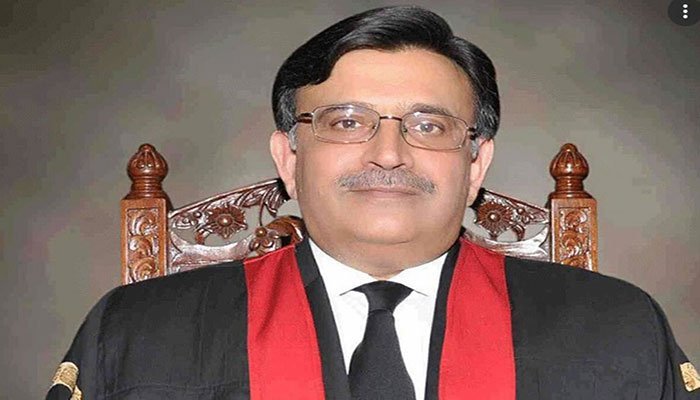
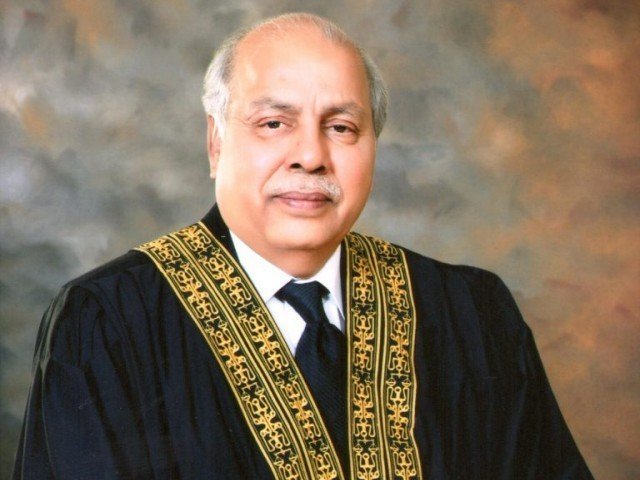
    Justice Umar Ata Bandial took oath as the 28th Chief Justice of Pakistan (CJP) at a ceremony at Aiwan-i-Sadr in Islamabad today (Wednesday). He was administered the oath of office by President Arif Alvi.

    Justice Bandial will serve in the top judicial office until September 16, 2023. He has previously served as chief justice of the Lahore High Court.

    A day earlier, Justice Bandial while speaking at a full-court reference held in honour of the outgoing chief justice, criticised mainstream and social media alike for resorting to attacking judges rather than criticising their judgements.

    “The differences in judges’ opinions in matters of law arise from our individual perceptions and this diversity brings richness to our understanding,” said Justice Bandial.

  • Chief Justice of Pakistan Justice Gulzar Ahmed retires tomorrow

    Chief Justice of Pakistan Justice Gulzar Ahmed retires tomorrow

    Chief Justice of Pakistan (CJP) Gulzar Ahmed reties on Tuesday (tomorrow). Justice Gulzar had taken oath as the CJP in December 2019.

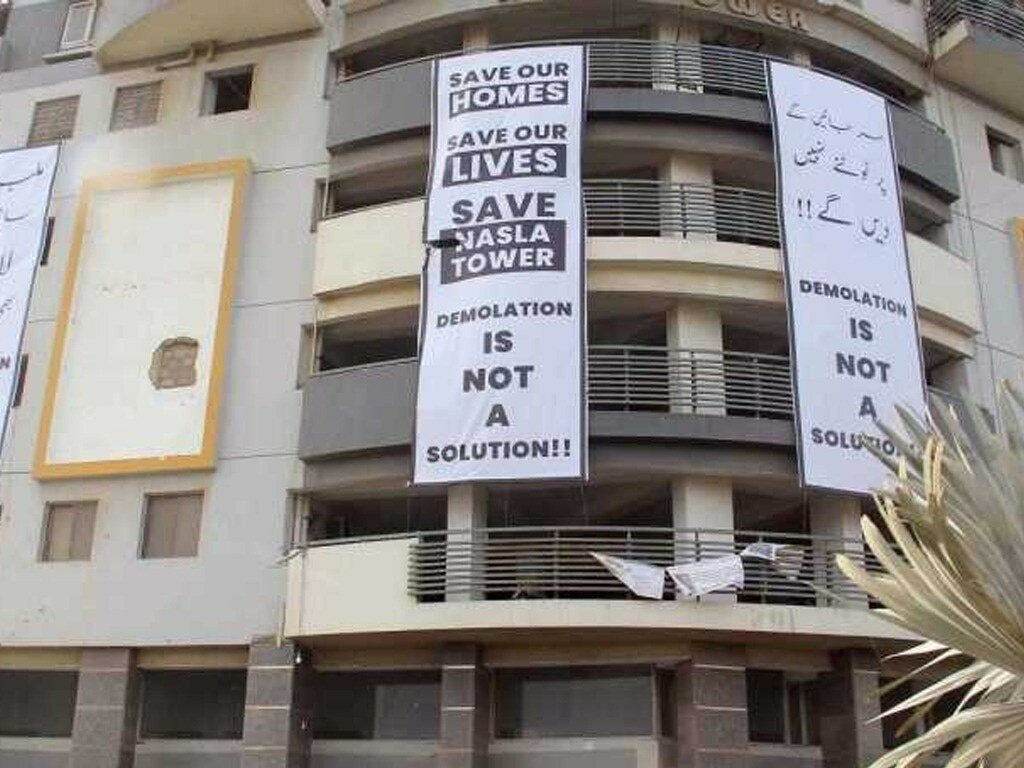
    CJP Gulzar mainly focused on removing encroachments in Karachi. He ordered the demolition of Nasla Tower as well as illegal houses built around Gujjar Nullah. In the end, he also ordered the relevant authorities to end commercial activities on military land in Karachi.

    Justice Gulzar further ordered to demolish a mosque and other encroachments built on amenity parks near Tariq Road in Karachi. Despite strong protests, he did not withdraw any order for the removal of encroachments in Karachi.

    CJP Gulzar could not give attention to reforms to improve the criminal justice system like his predecessor former CJP Asif Saeed Khosa.

    A three-judge bench led by him summoned Prime Minister (PM) Imran Khan in a suo motu case on the martyrdom of children in the Army Public School (APS) Peshawar attack.

    The efforts of Justice Gulzar cannot be ignored to end the sense of insecurity among minority communities. He took courageous steps to send a strong message to extremist elements that the judiciary would not spare anyone involved in usurping the rights of minorities.

    Taking to Twitter, federal Minister for Information and Broadcasting Fawad Chaudhary said, “The historic stand CJP Gulzar has taken on minority places of worship has greatly enhanced his prestige, at a time when India’s judiciary seems helpless at the hands of extremists.”

    The outgoing CJP also made history by nominating Lahore High Court’s Justice Ayesha Malik for her appointment as the first female judge of the Supreme Court.

    Justice Umar Ata Bandial will replace Justice Gulzar Ahmed, and will take oath as Pakistan’s 28th Chief Justice of Pakistan on February 2.

  • Justice Umar Ata Bandial to take oath as new chief justice on Feb 2

    Justice Umar Ata Bandial to take oath as new chief justice on Feb 2

    Supreme Court (SC) Justice Umar Ata Bandial will reportedly take oath as Pakistan’s 28th Chief Justice of Pakistan (CJP) on February 2, reports Geo news.

    Justice Bandial will replace the current CJP Justice Gulzar Ahmed. Justice Ahmed will retire after working in the top judicial position for more than two years. He assumed office on December 21, 2019, replacing ex-CJP Justice Asif Saeed Khosa

    The Law and Justice Secretary have sent the summary to President Arif Alvi to appoint Justice Bandial as the next CJP. After the president’s nod, the ministry will issue a notification.

    The to-be-appointed CJ will remain in position till September 18, 2023.

    After Justice Bandial, Justice Qazi Faez Isa will become the chief justice to serve the office for over one year till October 25, 2024.

  • Twitter reacts to CJP order to speed up demolition process of Nasla Tower

    Twitter reacts to CJP order to speed up demolition process of Nasla Tower

    Chief Justice of Pakistan (CJP) Gulzar Ahmed has ordered the Karachi commissioner Muhammad Iqbal Memon to speed up the demolition process of Nasla Tower, reports Dawn.

    CJP inquired whether the demolition order had been carried out or not. To this, Memon said that he needed “guidance” from the court and wanted to say something.

    “Cut to the chase, did you demolish the building or not?” the chief justice questioned again. He grilled the commissioner and warned that he could be sent to jail over contempt of court. “Do you know where you are standing?” said Justice Qazi Mohammad Amin Ahmed, who was also heading the hearing.

    “You are constantly committing contempt of court. Is he worthy of being called a commissioner? He is a grade 18 officer who is saying such things here.”

    People on Twitter condemned the demolishing act, including the chief justice’s order while others demanded the demolishment of other places.

    https://twitter.com/AsifAsifmunir3/status/1463428409317543946?s=20

    However, shortly after the hearing, the commissioner arrived at the Nasla Tower to oversee the demolition work along with several other officers.

    “Nasla Tower’s demolition work had begun. It had been halted as precautionary measures were not being taken,” he said, adding that the court had issued orders to ensure lives were not lost in the demolition process.

  • ‘Our lives are in danger,’ says firm that did the forensic of CJP Nisar’s leaked audio

    ‘Our lives are in danger,’ says firm that did the forensic of CJP Nisar’s leaked audio

    Garret Discovery, an American-based firm that conducted a forensic analysis of the alleged audio clip of former Chief Justice Saqib Nisar, took to Twitter and claimed that the company is being threatened for the work it had performed for FactFocus.

    “Today we received a call saying our lives are in danger and the same person said he is going to file in court against us for our work authenticating a file for FactFocus,” read the tweet from Garret Discovery’s Twitter handle.

    “Threatening our team to obtain a different result is unethical,” read the tweet.

    Earlier Garret Discovery had confirmed that they did work for FactFocus.

    “We did perform work for FactFocus. As part of our standard agreement, we have a confidentiality clause that prohibits us from speaking about the scope of work or work we performed,” a representative from Garret Discovery had revealed.

    We have no problem releasing details as long as our client signs an agreement allowing us to do so. Please contact FactFocus with any inquiries as to the work we performed and discuss with them any release of information. We will not comment anymore on this issue until that time.”

  • ‘Highlight previous history of PML-N as to how the party attacked judiciary’: PM Khan directs party spokespersons

    ‘Highlight previous history of PML-N as to how the party attacked judiciary’: PM Khan directs party spokespersons

    During a meeting with his spokespersons, Prime Minister (PM) Imran Khan on Monday said the alleged audio leak of former Chief Justice of Pakistan (CJP) Saqib Nisar was devised by the Pakistan Muslim League-Nawaz (PML-N). He instructed his spokespersons to highlight the previous history of the PML-N as to how the party had attacked the judiciary and maligned judges, reports Dawn.

    “But their [PML-N] bad tactics will not work this time,” he added.

    “The government stands by the state institutions,” said PM Khan.

    Meanwhile, Federal Minister for Information and Broadcasting Fawad Chaudhry on Tuesday said that the PML-N should come out of “leaks, fake videos, and games” and clarify allegations against them on the basis of merit.

    Taking to Twitter, Fawad wrote: “Nawaz & Co, come out of fake videos, leaks, and games and answer the allegations levelled against you on the basis of merit.”

    “These dramas have completely flopped. If you do not wish to be imprisoned, then you should return the nation’s wealth,” said Fawad, adding, ” This is a simple solution, which they are complicating as a way out.”

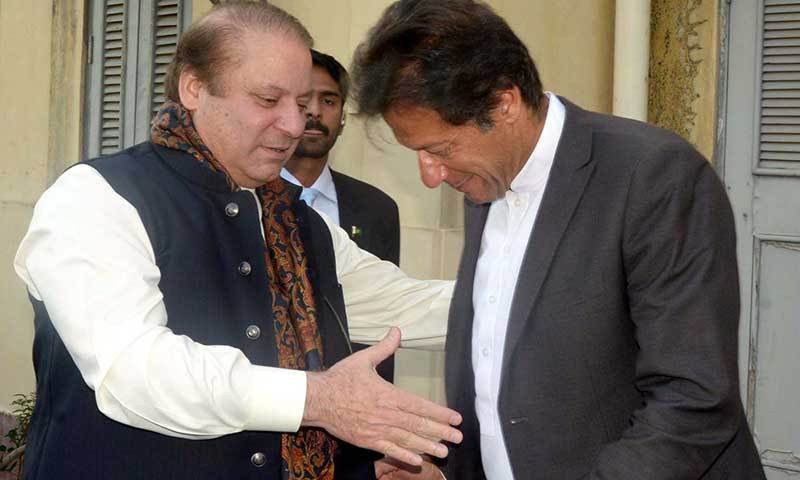
    The minister’s comments come in relevance to the leaked audio of an alleged conversation claiming that CJP Nisar was the person who passed on the directions of handing down conviction to PML-N supremo Mian Nawaz Sharif and his daughter, Maryam Nawaz only because the “institutions” wanted the former prime minister penalised in order to bring ahead Imran Khan. Ahmed Noorani reported this for FactFocus.

  • Judicial reforms and the question of representation

    What could have been a historic moment in the history of Pakistan was lost to politics of deflection by the Bar and the placement of arbitrary power for the process of judicial appointments in the hands of the Chief Justice(s) and the members of the Judicial Commission of Pakistan (JCP) on September 9, 2021, when the possibility of Judicial Commission of Pakistan (JCP appointing its first-ever female to the apex court in the 74 years since Pakistan’s independence failed to achieve the requisite majority for Justice Ayesha A. Malik’s nomination as a judge of the Supreme Court. As a result, Pakistan to date has had no female representation or voice at the highest forum of justice in the country and remains the only country in the region to hold this unfortunate record.

    Given that the courts invariably deal with matters of public policy and adjudicate on fundamental rights that are to be accessed by the most marginalised groups, communities, and persons, including women and minorities, it is vital for there to be more inclusion, transparency, and representation to promote access to justice and build public confidence and trust in the justice system of the country.

    What transpired on September 9, however, must be viewed in the context of the historical issues surrounding the judicial nominations and appointments process, the rather unhelpful digression into the seniority versus merit, junior versus senior debate, and the overall state of representation of women and minorities in the justice sector. The larger socio-political concerns and overarching considerations of patriarchal structures can also not be divorced from the controversy the system and its stakeholders find themselves in.

    Every few years, the question of judicial appointments goes through a similar cycle of division and deflection and is placed within the larger political context of its time. Prior to the 18th Amendment, the process of judicial nominations was centered around the recommendation of a panel by the Chief Justice to the president who selected a suitable candidate from therein. Even though the president had immense discretion to select a candidate from the panel, the central role, however, remained of the Chief Justice of a given court who alone had the power to recommend the panel up to the president for such appointments. This was further cemented in the Al-Jehad Trust Case 1996 in which the courts held that the recommendations of the Chief Justice would ordinarily be binding on the president, except where the president departed from the recommendations, in which case the reasons for his decision would be justiciable. The executive discretion of the president was, therefore, curtailed to a point where it was rendered practically ineffectual. This was done on the grounds of maintaining the independence of the judiciary from political influence.

    After the 18th Amendment to the Constitution of Pakistan, the process for appointments of the higher judiciary was further amended and appointments via a Judicial Commission plus Parliamentary Committee was envisaged instead. The Commission, it was believed, would have a wider composition and representation of stakeholders from both Bench and Bar, including ex-officio members such as the Attorney General of Pakistan, Federal Minister for Law and Justice, senior judges, former judges, and senior advocate of the Supreme Court nominated by the Pakistan Bar Council to promote greater consensus among the stakeholders within the legal profession.  However, no criteria or principles were formulated to base the nominations on. Instead, Rule 3 of Judicial Commission of Pakistan Rules, 2010, placed the power to initiate nominations for consideration by the JCP in the hands of the Chief Justice of the respective court in what is critiqued to be an absolute discretion devoid of any content and objective standards making the entire exercise an arbitrary and non-transparent exercise of power. Even the deliberations within the JCP and the eventual reasons of decision for accepting or rejecting a given nominee are not disclosed.

    Over the years, this lack of transparency in the process on the whole and arbitrary power to initiate nominations has resulted in increased speculation and tension between the Bench and the Bar, especially within the circles that find themselves underrepresented within the current structure and system.

    The calls for greater democratisation of the process once again became louder and relevant when Justice Muhammad Ali Mazhar, the then judge of the Sindh High Court, was nominated for appointment as a judge of the Supreme Court in July 2021. Being fifth in seniority, the assertions for ‘overlooking’ the senior-most judges, i.e. the then Chief Justice of the Sindh High Court, Justice Ahmed Sheikh, came to the fore by the Sindh Bar. Whilst critiquing the process as arbitrary and calling for its reform, they also persisted in demanding that seniority be applied as an interim measure until an objective criterion was formulated. Implications of ethnic tensions were also raised as was the possibility of judicial engineering for political engineering, which led to a massive and organised campaign of the bar against the JCP. The situation on the ground became more complicated when the Chief Justice of Pakistan put forth the name of a female judge, fourth in seniority from the Lahore High Court, for appointment as a judge of the Supreme Court. It was alleged that her gender was being used to neutralise the sentiment against the appointment of junior judges and to justify the earlier nomination of the then Justice Ali Mazhar of Sindh High Court, which was being resisted.

    Several distinct issues appear to have been conflated, which is what led to one of the most intensive and intellectually vigorous legal debates within the community in years. Several notable scholars, and senior lawyers including Salman Akram Raja, Feisal Naqvi, Salahuddin Ahmed, Hamid Khan, and Justice (R) Nasira Iqbal, engaged with this debate in public and shared their respective and divided opinions on the matter.

    The division appeared to be more in relation to specific strategies and interim solutions that the Bar had proposed re-adopting the seniority principle as opposed to the actual need for reform in the process on which there was largely a consensus. Most stakeholders — even with an alternative point of view — agreed that the arbitrary process needs to be retired in favour of greater transparency but disagreed that the seniority principle is that measure of transparency even in the interim. They based this on the grounds that there was no seniority principle that was being violated, to begin with, because the Constitution under Articles 177 and 193 and the Supreme Court judgement PLD 2002 939 SC makes no reference to the right of senior-most judge for such nominations. The appointments to the Supreme Court are in any case to be viewed as fresh appointments and not as ‘elevations’ — therefore, the question of continuing on basis of age and seniority does not arise. They were also of the view that while the process needed reforms to promote transparency and representation, the seniority principle would still not be the guarantee of representation or inclusion. They highlighted the dangers of entrenching seniority as a principle as that would make ‘elevation’ to the Supreme Court a matter of right for senior-most judges which, once established, would be very difficult to reform in favour of inclusion and representation at the Bench. In this way, insistence on seniority could self-defeat the entire ethos and momentum for actual reforms that were supposed to be based on the objective of achieving greater transparency and representation.

    The bar eventually organised to create pressure on the JCP and held several meetings to adopt a collective way forward to challenge the arbitrary exercise of power and to insist the stakeholders work towards developing the criteria for nominations. Strangely, they also held a primarily all-male lawyers convention in Karachi in August to collectively oppose the existing nominees even though there was no irregularity as they had been nominated in line with the existing process in place at the time.

    Justice Ali Mazhar, fifth in seniority, was nevertheless appointed as a judge of the Supreme Court. Justice Ayesha A. Malik’s nomination, fourth in seniority, however, could not be so approved as the JCP also remained divided.

    This dichotomy further brought to fore the need for developing the criteria for judicial nominations as Justice Ayesha Malik’s loss was pinned on the unfettered discretion of the JCP to appoint or not to appoint judges as per their whims in absence of clearly defined and scrutable criteria.

    The issue, however, was never as simple as a matter of seniority versus merit. The lack of representation in the profession at both Bench and Bar is a much more complex challenge that requires a complete overhaul of the entire system. Reforms are required at multiple levels.

    For instance, the JCP itself lacks the inclusivity and representation in its composition, as do the Bar Councils, the Attorney General office, the office of Federal Ministry of Law and Justice, senior and former judges and advocates of Supreme Court that have the support of the Pakistan Bar Council. This lack of diversity is indicative of the structural barriers that have led to the marginalisation of women and minorities in the justice system. It is a lot like the pot calling the kettle black.

    With only 4 women out of 205 members represented in the provincial Bar Councils with none at the Pakistan Bar Council, the Bar needs to do better to be more inclusive — at least when arranging conferences on matters that impact all members of the legal community, including women. However, we do not see a similar rage for reforms in that case. In fact, the years of practice for eligibility to run as candidates was increased by five years via the Legal Practitioners and Bar Councils Amendment in 2018, which had a disproportionate impact on women and their prospect of candidacy in Bar elections held in 2020. This, in turn, had an impact on eligibility for candidacy as members of the Pakistan Bar Council, the apex body of lawyers with a say in the JCP as the candidates are elected indirectly by the electoral college composed of members of provincial Bar Councils. There has been no female Attorney General or a female Federal Minister of Law and Justice since 2010 when the JCP was first established. Despite there being seats for appointing former judges to JCP, in the past 10 years, none of the former female judges have been a part of the composition of JCP in that capacity either and neither has any female advocate Supreme Court been supported by the Pakistan Bar Council as their representative at the JCP.

    If we take an even larger spectrum, the marginalisation of women begins much earlier. It could start as early as from homes, to law schools where female students have been discouraged from pursuing litigation and other ‘hard’ fields citing the non-suitability of those areas for their gender. Most female law graduates were not encouraged to go to courts even though this is now changing and so it would often be years before they would obtain their license to practice. This delay had an impact on their seniority as well as in the time it takes to complete the list of cases in which the counsel has represented clients, which is needed for advancement in the profession for instance, as an advocate of the Supreme Court.

    Any reforms based on the underlying objective of transparency and restoring public confidence in the legal system must, therefore, be holistic and representative at all levels. In this regard, the letter by Attorney General for Pakistan dated September 9, 2021, is a welcome initiative as he has expressed willingness to engage with the legal community on the issue of developing the criteria for judicial appointments and has proposed that affirmative action be taken for representation of women at the Supreme Court. This would be a welcome first step and be in line with Article 25 of the Constitution of Pakistan.

  • ‘Restore the Mandir’: minority rights in Pakistan

    ‘Restore the Mandir’: minority rights in Pakistan

    A week from now, Pakistan will be celebrating 74 years of independence from the British. Quaid-e-Azam Muhammad Ali Jinnah, in his August 11 address to the Constituent Assembly, promised the people of Pakistan that we will live in a country where there will be religious freedom and no intolerance. “You are free; you are free to go to your temples, you are free to go to your mosques or to any other places of worship in this state of Pakistan. You may belong to any religion or caste or creed — that has nothing to do with the business of the state,” said the Quaid. Our founder was a great proponent of minority rights but it seems that the people of Pakistan do not want to pay any heed to his words.

    On Wednesday, a mob attacked a Hindu temple in Rahim Yar Khan district after a court granted bail to an eight-year-old Hindu boy who was accused of allegedly urinating in a local seminary. The main door of the temple was burned down and statues of Hindu deities were also damaged. Prime Minister Imran Khan condemned the incident and ordered the police to take action against the culprits. PM Khan also announced on Twitter that the government will “restore the Mandir”. Chief Justice Pakistan Gulzar Ahmed reprimanded the police and the local administration for just standing there and watching. CJP Gulzar also said that we should imagine what would have been the reaction of Muslims, had a mosque been demolished like the Hindu temple was. The Supreme Court also directed the police to arrest the culprits.

    This is not the first temple attack in Pakistan. Since last year, there have been several attacks on temples all across the country. August 11 has been declared as the National Minorities Day in Pakistan since 2009. Imagine, how our Hindu brethren would have felt that their place of worship was attacked just days before we pay lip service to the rights of minorities. As per the 6th Population and Housing Census 2017, there are 96.47 per cent Muslims in Pakistan. As for the minorities, there are 1.27 per cent Christians, 1.73 per cent Hindus, 0.09 per cent Ahmadis, 0.41per cent scheduled caste, and 0.02 per cent others. In a country dominated by Muslims, why can we not respect the rights of other religious minorities? It is unfortunate how we continue to fail our own citizens, our minorities. We hope the authorities will arrest the culprits and the government will protect our minorities.