Tag: Climate change

  • 2024 ‘virtually certain’ to be hottest year on record: EU monitor

    2024 ‘virtually certain’ to be hottest year on record: EU monitor

    This year is “virtually certain” to be the hottest in recorded history with warming above 1.5C, EU climate monitor Copernicus said Thursday, days before nations are due to gather for crunch UN climate talks.

    The European agency said the world was passing a “new milestone” of temperature records that should be a call to accelerate action to cut planet-heating emissions at the UN negotiations in Azerbaijan next week.

    Last month, marked by deadly flooding in Spain and Hurricane Milton in the United States, was the second hottest October on record, with average global temperatures second only to the same period in 2023.

    “Humanity’s torching the planet and paying the price,” said United Nations Secretary-General Antonio Guterres in a speech on Thursday, listing a string of calamitous floods, fires, heatwaves and hurricanes across the world this year so far.

    “Behind each of these headlines is human tragedy, economic and ecological destruction, and political failure.”

    Copernicus said 2024 would likely be more than 1.55 degrees Celsius (2.8 degrees Fahrenheit) above the 1850-1900 average — the period before the industrial-scale burning of fossil fuels.

    This does not amount to a breach of the Paris deal, which strives to limit global warming to below 2C and preferably 1.5C, because that is measured over decades and not individual years.

    “It is now virtually certain that 2024 will be the warmest year on record and the first year of more than 1.5C above pre-industrial levels,” said Copernicus Climate Change Service (C3S) Deputy Director Samantha Burgess.

    “This marks a new milestone in global temperature records and should serve as a catalyst to raise ambition for the upcoming Climate Change Conference, COP29.”

    – Wild weather –

    The UN climate negotiations in Azerbaijan, taking place in the wake of the United States election victory by Donald Trump, will set the stage for a new round of crucial carbon-cutting targets.

    Trump, who has repeatedly called climate change a “hoax”, pulled the United States out of the Paris Agreement during his first presidency. While President Joe Biden took the United States back in, Trump has threatened to withdraw again.

    Meanwhile, average global temperatures have reached new peaks, as have concentrations of planet-heating gases in the atmosphere.

    Scientists say the safer 1.5C limit is rapidly slipping out of reach, while stressing that every tenth of a degree in temperature rises heralds progressively more damaging impacts.

    Last month the UN said the current course of action would result in a catastrophic 3.1C of warming this century, while all existing climate pledges taken in full would still amount to a devastating 2.6C temperature rise.

    And in a report on Thursday, the UN warned that the amount of money going to poorer countries for adaptation measures was barely one-tenth of what they needed to spend on disaster preparedness.

    In a month of weather extremes, October saw above-average rainfall across swathes of Europe, as well as parts of China, the United States, Brazil and Australia, Copernicus said.

    The United States is also experiencing ongoing drought, which affected record numbers of people, the EU monitor added.

    Global warming is not just about rising temperatures, but the knock-on effect of all the extra heat in the atmosphere and seas.

    Warmer air can hold more water vapour, and warmer oceans mean greater evaporation, resulting in more intense downpours and storms.

    Copernicus said average sea surface temperatures in the area it monitors were the second highest on record for the month of October.

    C3S uses billions of measurements from satellites, ships, aircraft and weather stations to aid its calculations.

    Copernicus records go back to 1940.

    But other sources of climate data such as ice cores, tree rings and coral skeletons allow scientists to expand their conclusions using evidence from much further in the past.

    Climate scientists say the period being lived through right now is likely the warmest the Earth has been for the last 100,000 years.
  • Khyber Pakhtunkhwa government faces criticism over large-scale deforestation

    Khyber Pakhtunkhwa government faces criticism over large-scale deforestation

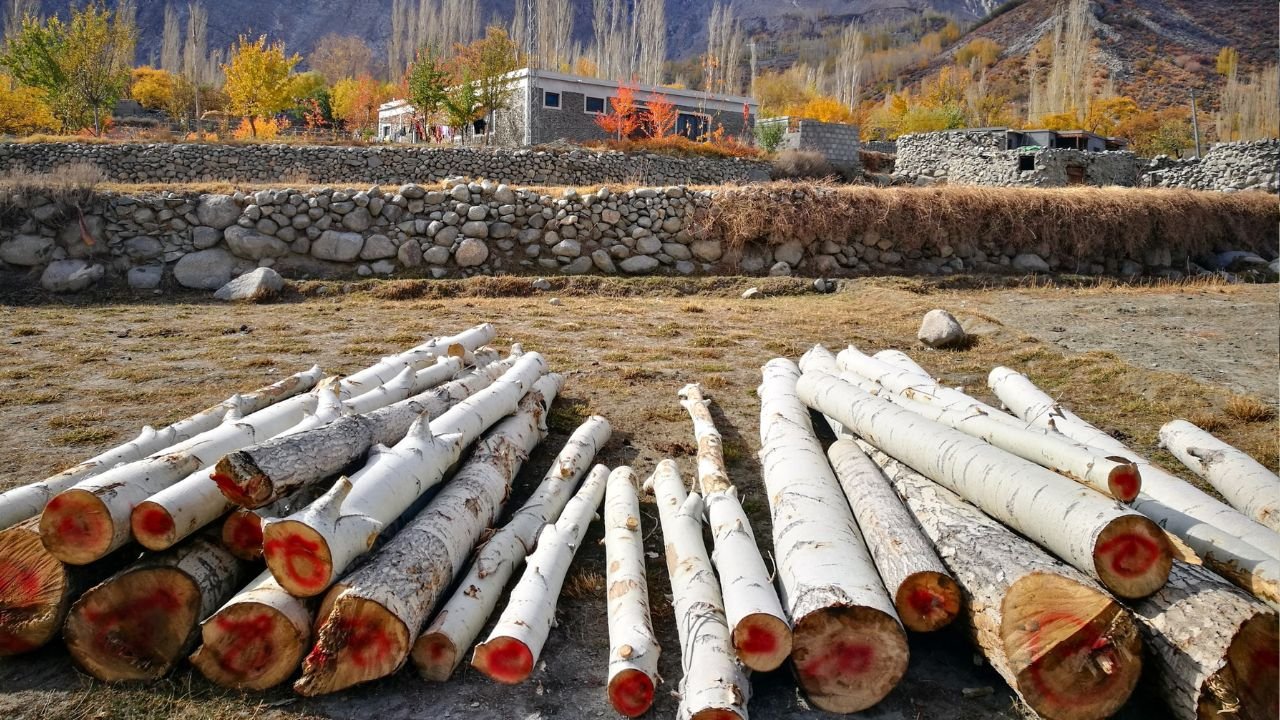
    The Khyber Pakhtunkhwa government is reportedly associated with large-scale deforestation in the province, which has been ongoing for the past two years.

    Among the suspects is Minister Fazal Hakeem, who was removed from his position as Provincial Minister for Climate Change and Environment and reassigned to the portfolio of Livestock following condemnation on social media regarding the deforestation in the province.

    The deforestation rate in Pakistan has been recorded at 25 percent, with Khyber Pakhtunkhwa being more affected than other provinces.

    Swat, Shangla, and Mansehra are among the most affected regions.

    Deforestation is also one of the major contributors to increased temperatures in Khyber Pakhtunkhwa, reportedly leading to a 26 percent rise.

    In 2015, Imran Khan, the founder of Pakistan Tehreek-e-Insaf, launched the Billion Tree Tsunami project to counter land erosion and the degradation of mountainous terrain.

  • Air conditioners are contributing in global warming: Experts

    Air conditioners are contributing in global warming: Experts

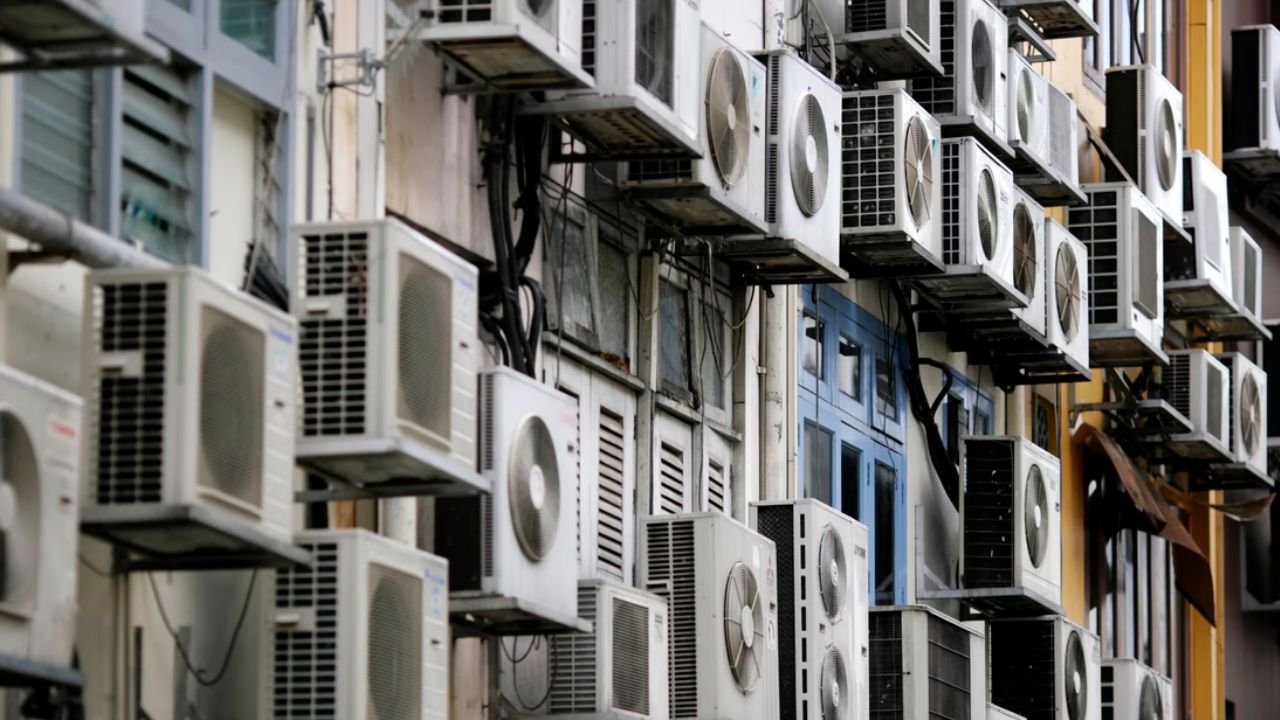
    Experts warn that air conditioners, primarily used to beat the heat and cool rooms, are contributing to global warming by heating up the environment and increasing temperatures.

    In cities where tree cover is decreasing, the number of air conditioners is rising.

    Ecologists from the University of Agriculture explain that while ACs cool indoor spaces, they simultaneously heat the outdoor environment, leading to higher temperatures.

    ACs can raise outdoor temperatures by as much as 60 to 80 degrees Celsius in extreme conditions and has reportedly caused temperatures to rise by half a degree Celsius over the past century.

    Experts further warn that continued proliferation of air conditioners to cool environments could irreversibly damage natural ecosystems.

    Instead of disregarding environmental warnings, experts urge increasing urban tree cover as a sustainable alternative to cooling the environment without exacerbating global warming.

  • KP Minster defines climate change as garbage being converted into pacifiers for children

    KP Minster defines climate change as garbage being converted into pacifiers for children

    A shocking interview of Khyber Pakhtunkhwa’s (KP) Minister for Environment and Climate Change, Fazal Hakeem Khan, has shocked netizens. The interview, conducted in Pashto, shows the minister defining climate change as “ragpickers pick up junk, hand it over to industries to make pacifiers for babies who then grow up stunted.”

    The provincial minister gave an interview to a local channel, Khyber News, with the host of the programme Rafat Ullah Orazakzai, asking him to tell what climate change is – the portfolio he’s in charge of.

    The host asked the minister to explain his thoughts further, and the climate minister did not hold back.

    “Our environment is being destroyed by China and India. I will cool down certain districts so the glaciers in the country stop melting,” he said, displaying incredible ignorance of what he is supposed to govern.

    Journalist Iftikhar Firdous tweeted about the interview saying, “In the middle when he doesn’t know, the answers he shifts the topic to Imran Khan’s imprisonment and why people love him. These are the people who run this system we expect to deliver.”

  • Delhi airport roof collapses amid heavy rainfall

    Delhi airport roof collapses amid heavy rainfall

    An outdoor partial roof at Delhi airport collapsed early on Friday morning after heavy rainfall in the city, killing one person and injuring four others.

    Videos online showed huge pillars erected to support the roof, smashing into cars parked along the airport’s main terminal.

    Rescue operations are underway at the airport, and the injured are being treated in hospitals.

    Civil Aviation Minister Ram Mohan Naidu Kinjarapu rushed to the airport after the incident

    India’s aviation regulator has advised airlines to accommodate passengers on alternate flights or offer them full refunds.

    Federal Aviation Minister Ram Mohan Naidu Kinjarapu has announced a compensation of two million Indian Rupees to the deceased’s family and 300,000 rupees for the injured.

    On social media, many users pointed out that the terminal had undergone a massive renovation at the cost of billions of rupees and had been inaugurated by Prime Minister Narendra Modi in March – a month before the recent general election began.

    However, Kinjarapu later said the portion that collapsed was not part of the renovated section.

  • Maldives Ministers arrested for performing black magic on President Muizzu

    Maldives Ministers arrested for performing black magic on President Muizzu

    Local police in the Maldives have arrested two serving ministers for allegedly performing black magic on President Mohamed Muizzu. Ministers Shamnaz Saleem, Adam Rameez, and two others were apprehended, reported international media.

    Maldives Minister Fathimath Shamnaz Ali Saleem is the state minister for Environment, Climate Change, and Energy in the Maldives. Her ex-husband, Adam Rameez, was a minister at the President’s Office. On June 23, they were arrested and remanded in custody for seven days on charges of allegedly performing black magic.

    “Shamnaz, alongside two other individuals, was arrested on Sunday. All three of them have been remanded in custody for seven days. She was suspended from her post on Wednesday as per the Environment Ministry,” news portal Sun.mv reported, adding that Rameez was also suspended on Thursday.

    “Rameez, during his time at Male City Council, was known as a close aide of Muizzu, who was the mayor at that time,” Sun.mv said. “However, he has been absent from the public light in the past five months or so,” the report added.

    Shamnaz and Rameez worked with Muizzu as members of the Male City Council when he was mayor.

    The Maldives government has yet to make an official statement on this situation.

    Background

    After Muizzu was elected President last year, Shamnaz resigned from the Male City Council and later transferred to the Environment Ministry.
    Her role is vital in a nation facing the brunt of the climate crisis.

    A 62-year-old woman was stabbed to death by three neighbours in April 2023 after she was accused of conducting black magic, aalthough the police investigation found her to be innocent, according to a local Mihaaru news website.

    In 2012, during a crackdown on an opposition political rally, the police accused the organizers of hurling a “cursed rooster” at officers who were raiding their offices

  • Dozens of cattle die in Karachi heat

    Dozens of cattle die in Karachi heat

    Karachi Cattle Farms Association spokesperson Shabir Dar has reported that 150 animals have died in a span of three days as temperatures increase in the coastal city, Samaa news has reports.

    Cattle farmers are facing financial losses as timely treatment remains elusive.

    Shabir Dar emphasised that despite the challenges, including the absence of veterinary doctors from the livestock department, it is crucial for the department to ensure the supply of care and medicines.

    Yesterday, following the mercury hitting 41 degrees Celsius in Karachi, concerns among residents escalated. Over the past four days, more than 70 people affected by extreme heat sought treatment at Civil and Jinnah Hospitals.

    Dr. Nizam, AMS Civil Hospital, reported that 67 heat-affected individuals were admitted to the emergency room, predominantly elderly or those suffering from various illnesses.

    Chief Meteorologist Sardar Sarfraz has forecast a partial heatwave in Karachi for the next two days, attributing the intensified heat to changing winds. Temperatures are expected to decrease after two days, with monsoon rains likely starting in the first week of July.

  • World not ready for climate change-fueled wildfires: experts

    World not ready for climate change-fueled wildfires: experts

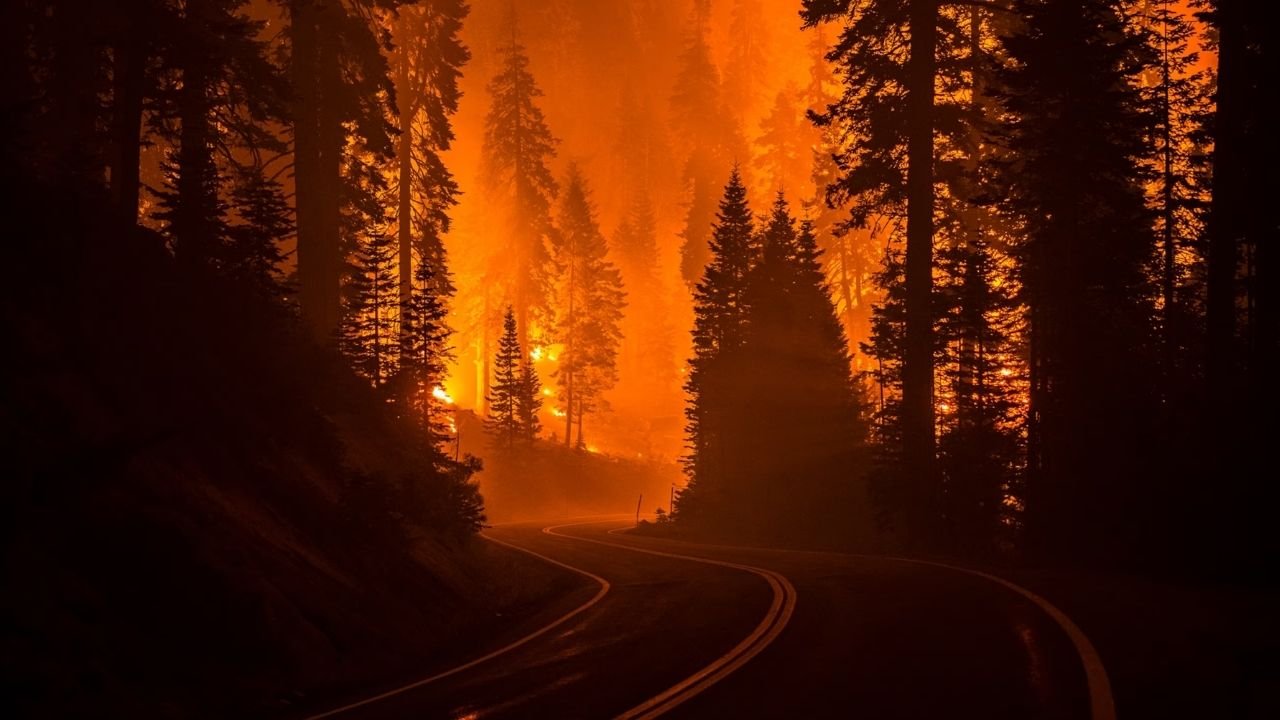
    The world is unprepared for the increasing ferocity of wildfires turbocharged by climate change, scientists say, as blazes from North America to Europe greet the northern hemisphere summer in the hottest year on record.

    Wildfires have already burned swathes through Turkey, Canada, Greece and the United States early this season as extreme heatwaves push temperatures to scorching highs.

    While extra resources have been poured into improving firefighting in recent years, experts said the same was not true for planning and preparing for such disasters.

    “We are still actually catching up with the situation,” said Stefan Doerr, director of the Centre for Wildfire Research at the UK’s Swansea University.

    Predicting how bad any one blaze will be — or where and when it will strike — can be challenging, with many factors including local weather conditions playing into calculations.

    But overall, wildfires are getting larger and burning more severely, said Doerr, who co-authored a recent paper examining the frequency and intensity of such extreme events.

    A separate study published in June found the frequency and magnitude of extreme wildfires appeared to have doubled over the past 20 years.

    By the end of the century, the number of extreme wildfires around the globe is tipped to rise 50 percent, according to a 2022 report by the UN Environment Programme.

    Doerr said humanity had not yet faced up to this reality.

    “We’re clearly not well enough prepared for the situation that we’re facing now,” he said.

    Climate change is a major driver, though other factors such as land use and the location of housing developments play a big part.

    Fires do not respect borders so responses have evolved between governments to jointly confront these disasters, said Jesus San-Miguel, an expert for the European Commission Joint Research Centre.

    The EU has a strong model of resource sharing, and even countries outside the bloc along the Mediterranean have benefited from firefighting equipment or financial help in times of need, San-Miguel said.

    But as wildfires become increasingly extreme, firefighting simply won’t be a fix.

    “We get feedback from our colleagues in civil protection who say, ‘We cannot fight the fires. The water evaporates before it reaches the ground,’” San-Miguel said.

    Wildfires have already burned swathes through Turkey as extreme heatwaves push temperatures to scorching highsMahmut BOZARSLAN

    “Prevention is something we need to work on more,” he added.

    Controlled burns, grazing livestock, or mechanised vegetation removal are all effective ways to limit the amount of burnable fuel covering the forest floor, said Rory Hadden from the University of Edinburgh.

    Campfire bans and establishing roads as firebreaks can all be effective in reducing starts and minimising spread, said Hadden, an expert on fire safety and engineering.

    But such efforts require funding and planning from governments that may have other priorities and cash-strapped budgets, and the return is not always immediately evident.

    “Whatever method or technique you’re using to manage a landscape… the result of that investment is nothing happens, so it’s a very weird psychological thing. The success is: well, nothing happened,” said Hadden.

    Local organisations and residents often take the lead in removing vegetation in the area immediately around their homes and communities.

    But not everyone is prepared to accept their neighbourhood might be at risk.

    ‘People don’t think that it will happen to them, but it eventually will,’ fire expert Jesus San-Miguel saidETIENNE TORBEY

    “People don’t think that it will happen to them, but it eventually will,” San-Miguel said, pointing to historically cold or wet climates like the US Pacific Northwest that have witnessed major fires in recent years.

    Canada has adapted to a new normal of high latitude wildfires, while some countries in Scandinavia are preparing for ever-greater fire risk.

    But how best to address the threat remains an open question, said Guillermo Rein from Imperial College London, even in places where fire has long been part of the landscape.

    Even in locations freshly scarred by fire, the clearest lessons are sometimes not carried forward.

    “People have very short memories for wildfires,” said Rein, a fire science expert.

    In July 2022, London witnessed its worst single day of wildfires since the bombings of World War II, yet by year’s end only academics were still talking about how to best prepare for the future.

    “While the wildfires are happening, everybody’s asking questions… When they disappear, within a year, people forget about it,” he said.

  • Eight patients die in Karachi Civil Hospital amidst extreme heat

    Eight patients die in Karachi Civil Hospital amidst extreme heat

    The administration of Civil Hospital in Karachi has reported the death of eight patients due to severe dehydration among 40 to 45 heat-affected individuals brought to the emergency room. The deceased suffered from co-morbidities such as epilepsy, diabetes, and high blood pressure.

    Meanwhile, the meteorological department has forecasted intense heat for the next two days in Karachi. Health experts have advised citizens to avoid direct sunlight, stay hydrated, and wear light-coloured, loose clothing.

    For the second consecutive day, Karachi experienced scorching temperatures in to the absence of sea breezes during the day, leading to severe heat discomfort among residents.

    Additionally, rescue sources reported the discovery of seven bodies of drug addicts from various parts of the city today, bringing the total to 17 deaths in the last two days.

    Temperatures soared to 42 degrees Celsius, with the ‘Feels Like’ at 50 degrees in some areas such as Gulistan Johar where apartments recorded 43.7 degrees Celsius.

    Furthermore, water supply disruptions were reported across Karachi during the heatwave. Areas like Federal B Area Blocks 19 and 20, as well as Kharadar, faced water shortages. Protests erupted in Baldia Naval Colony and Musa Colony due to the lack of water and electricity.

  • Diplomats say at least 550 pilgrims, mostly Egyptians, died during Haj this year

    Diplomats say at least 550 pilgrims, mostly Egyptians, died during Haj this year

    Diplomats on Tuesday said at least 550 pilgrims died during the Haj, underscoring the gruelling nature of the pilgrimage which again unfolded in scorching temperatures this year.

    At least 323 of those who died were Egyptians, most of them succumbing to heat-related illnesses, two Arab diplomats coordinating their countries’ responses told AFP.

    “All of them (the Egyptians) died because of heat” except for one who sustained fatal injuries during a minor crowd crush, one of the diplomats said, adding the total figure came from the hospital morgue in the Al-Muaisem neighbourhood of Makkah.

    At least 60 Jordanians also died, the diplomats said, up from an official tally of 41 given earlier on Tuesday by Amman.

    The new deaths bring the total reported so far by multiple countries to 577, according to an AFP tally.

    The diplomats said the total at the morgue in Al-Muaisem, one of the biggest in Makkah, was 550.

    The Haj pilgrimage is increasingly affected by climate change, according to a Saudi study published last month that said temperatures in the area where rituals are performed were rising 0.4 degrees Celsius (0.72 degrees Fahrenheit) each decade.

    Temperatures hit 51.8 degrees Celsius (125 Fahrenheit) at the Grand Mosque in Makkah on Monday, the Saudi national meteorology centre said.

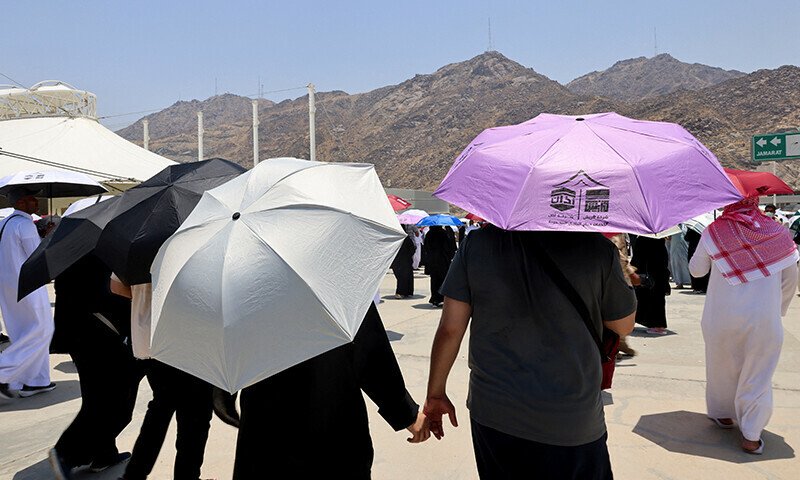
    Muslim pilgrims hold hands as they walk with umbrellas to the site where people take part in the Satan stoning ritual, during the annual haj pilgrimage in Mina, Saudi Arabia on June 18, 2024 — Reuters

    Heat stress

    Earlier on Tuesday, Egypt’s foreign ministry said Cairo was collaborating with Saudi authorities on search operations for Egyptians who had gone missing during the Haj.

    While a ministry statement said “a certain number of deaths” had occurred, it did not specify whether Egyptians were among them.

    Saudi authorities have reported treating more than 2,000 pilgrims suffering from heat stress but have not updated that figure since Sunday and have not provided information on fatalities.

    At least 240 pilgrims were reported dead by various countries last year, most of them Indonesians.

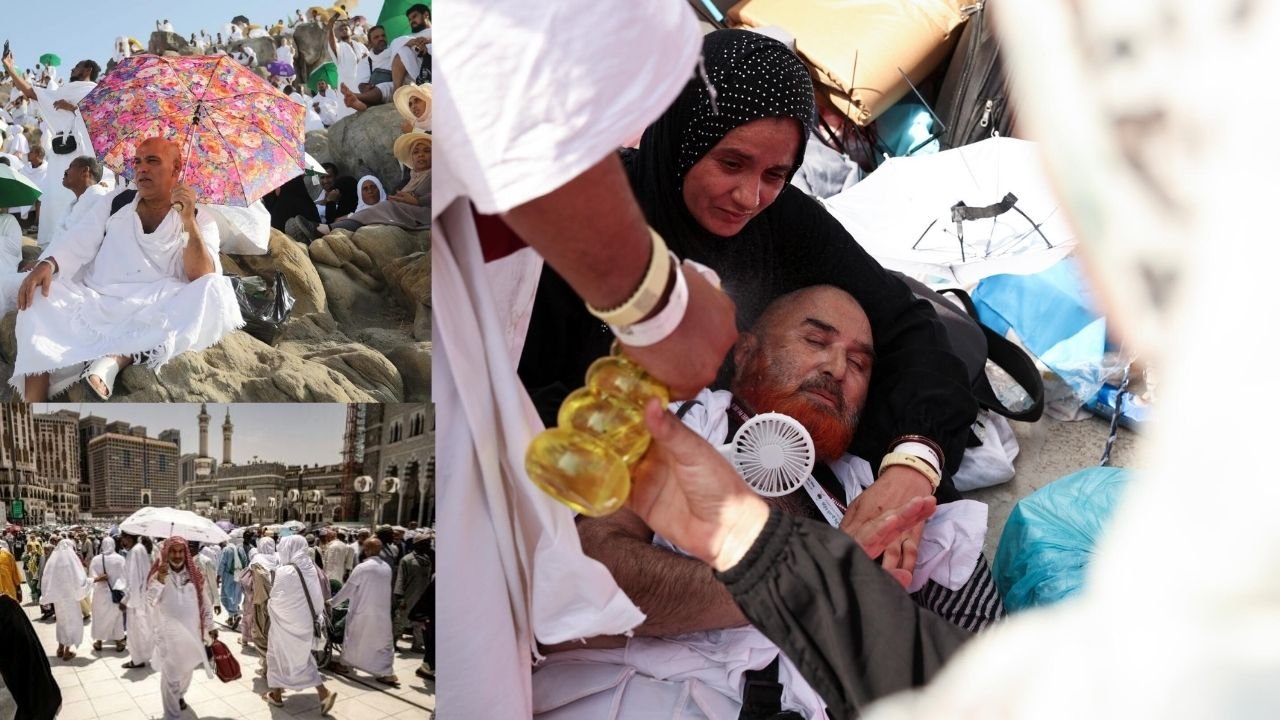
    AFP journalists in Mina, outside Makkah, on Monday saw pilgrims pouring bottles of water over their heads as volunteers handed out cold drinks and fast-melting chocolate ice cream to help them keep cool.

    Saudi officials had advised pilgrims to use umbrellas, drink plenty of water and avoid exposure to the sun during the hottest hours of the day.

    Some pilgrims described seeing motionless bodies on the roadside and ambulance services that appeared overwhelmed at times.

    Around 1.8 million pilgrims took part in the Haj this year, 1.6m of them from abroad, according to Saudi authorities.

    Unregistered pilgrims

    Each year tens of thousands of pilgrims attempt to perform the Haj through irregular channels as they cannot afford the often costly procedures for official Haj visas.

    This places these off-the-books pilgrims at risk as they cannot access air-conditioned facilities provided by Saudi authorities along the Haj route.

    One of the diplomats who spoke to AFP on Tuesday said that the Egyptian death toll was “absolutely” boosted by a large number of unregistered Egyptian pilgrims.

    “Irregular pilgrims caused great chaos in the Egyptian pilgrims’ camps, causing the collapse of services,” said an Egyptian official supervising the country’s Haj mission.

    “The pilgrims went without food, water, or air conditioning for a long time.”

    They died “from the heat because most people had no place” to take shelter.

    Earlier this month, Saudi officials said they had cleared hundreds of thousands of unregistered pilgrims from Makkah ahead of the Haj.

    Other countries to report deaths during the Haj this year include Indonesia, Iran and Senegal.

    Most countries have not specified how many deaths were heat-related.

    Saudi Health Minister Fahd bin Abdul Rahman Al-Jalajel said on Tuesday that health plans for the Haj had “been successfully carried out”, preventing major outbreaks of disease and other public health threats, the official Saudi Press Agency reported.

    Health officials “provided virtual consultations to over 5,800 pilgrims, primarily for heat-related illnesses, enabling prompt intervention and mitigating the potential for a surge in cases,” SPA said.