Tag: Climate change

  • Shehbaz meets with world leaders during climate change conference

    Shehbaz meets with world leaders during climate change conference

    Prime Minister (PM) Shehbaz Sharif on Monday attended the inaugural ceremony of the United Nations (UN) Climate Implementation Summit at the coastal city of Sharm El-Sheikh in Egypt.

    The “Sharm El-Sheikh Climate Implementation Summit” is part of the 27th UN Climate Change Conference (COP27).

    The premier separately met with the Presidents of Iraq, Tajikistan and Indonesia Abdul Latif Rashid, Emomali Rahmon, and Joko Widodo, respectively. He also conducted a meeting with Lebanese PM Najib Makati.

    In his meeting with the President of the United Arab Emirates (UAE) Sheikh Mohammed bin Zayed al-Nahyan, Shehbaz Sharif thanked him for the assistance sent as aid for flood victims.

    In his meeting with the European Union Commissioner Ursula von der Leyen, PM Shehbaz appreciated the spirit of EU nations for their support extended to the flood-hit population of Pakistan. The premier also met with UN chief Antonio Guterres.

    The PM arrived in Egypt on Sunday to participate in the conference that has drawn delegates from 197 countries.

    Before his departure, PM Shehbaz took to Twitter to say that he would raise the matter of the devasting effects of climate change in Pakistan.

    Last month, it was announced that PM Shehbaz would be the vice-chairperson for COP27.

    The conference is taking place at a time when millions of people in Pakistan, and millions more in other parts of the world, are facing severe adverse impacts of climate change.

    For the first time in the history of COP27, the members would discuss whether rich countries should compensate poor nations most exposed to the adverse effects of climate change.

  • PM Shehbaz left for Egypt to attend Climate Change Conference

    PM Shehbaz left for Egypt to attend Climate Change Conference

    Prime Minister (PM) Shehbaz Sharif has left for Egypt to attend the United Nations (UN) Climate Change Conference (COP27).

    The premier is accompanied by Foreign Minister (FM) Bilawal Bhutto-Zardari, other cabinet members and senior officials.

    Before his departure, PM Shehbaz took to Twitter to say that he will raise the matter of the devasting effects of climate change in Pakistan.

    “I will urge the world to deliver on its commitment on climate finance & loss and damage fund. Without financial support, the developing countries will continue to remain exposed to the multifarious threats of climate change. We are asking for climate justice”, he tweeted.

    The premier highlighted that Pakistan’s post-disaster needs assessment has shown that its journey to recovery and rehabilitation can be held back by public debt, rising international energy and food prices and lack of access to adaption funds.

    “The world should treat Pakistan as a case study,” he concluded in a series of tweets.

    Last month, it was announced that PM Shehbaz would be the vice-chairperson for COP27.

    The conference is taking place at a time when millions of people in Pakistan, and millions more in other parts of the world, are facing severe adverse impacts of climate change.

  • Climate Change: Floods in Nigeria kills at least 600 people

    The death toll from devastating floods in Nigeria this year has increased to 603.

    Some 1.3 million people have been displaced, and more than 200,000 homes have been destroyed.

    Flooding is expected to continue until the end of November.

    Seasonal flooding is not new in the African country, but this year has been substantially worse than usual.

    In addition to the disruption of food and fuel sources, there are worries about the increasing spread of disease.

    Sadiya Umar Farouk, Nigeria’s minister for humanitarian affairs and disaster management, urged local authorities to evacuate residents in the riskiest locations during a press conference on Sunday.
    She said that authorities are already giving food and other forms of assistance to those in need.
    She continued by saying that several state administrations “failed not to prepare” for the disaster despite “concerted efforts” and early warnings.
    Of Nigeria’s 36 states, 27 have been impacted by the disaster.

  • ‘Relief activities for floods could continue for next two years’: Ahsan Iqbal

    ‘Relief activities for floods could continue for next two years’: Ahsan Iqbal

    Minister for Planning and Development, Ahsan Iqbal, has said that relief activities after the devastating effects of floods across the country could continue for the “next two years”.

    “Natural disasters are a result of climate change, however, we are coming up with plans to deal with them in the future. For now, the government has allocated Rs40 billion for 20 underdeveloped districts.”

    The federal minister said that the armed forces, provincial governments and district administrations are working actively to provide relief.

    “The floods have caused wide-scale destruction”, he added while urging the nation to unite and help those affected by floods.

    On Thursday, Climate Change Minister Senator Sherry Rehman announced that the Parliament has approved the country’s largest “Living Indus” initiative that is aimed at protecting the cradle of civilizations which was under serious threat due to environmental degradation and anthropogenic activities.

    The floods have also raised questions on whether Pakistan will be able to pay its debts on time. Prime Minister (PM) Shehbaz Sharif and Foreign Minister Bilawal Bhutto-Zardari have sought climate justice to compensate for the destruction.

    It is pertinent to mention that the US is so far the largest donor to flood relief and rehabilitation funds. Washington has provided about $56 million to Pakistan since July.

    Devastating floods are responsible for killing more than 1,600 people and the damages to the infrastructure is estimated at nearly $30 billion.

  • PM Shehbaz speaks about Islamophobia, climate injustice, and India at UNGA

    PM Shehbaz speaks about Islamophobia, climate injustice, and India at UNGA

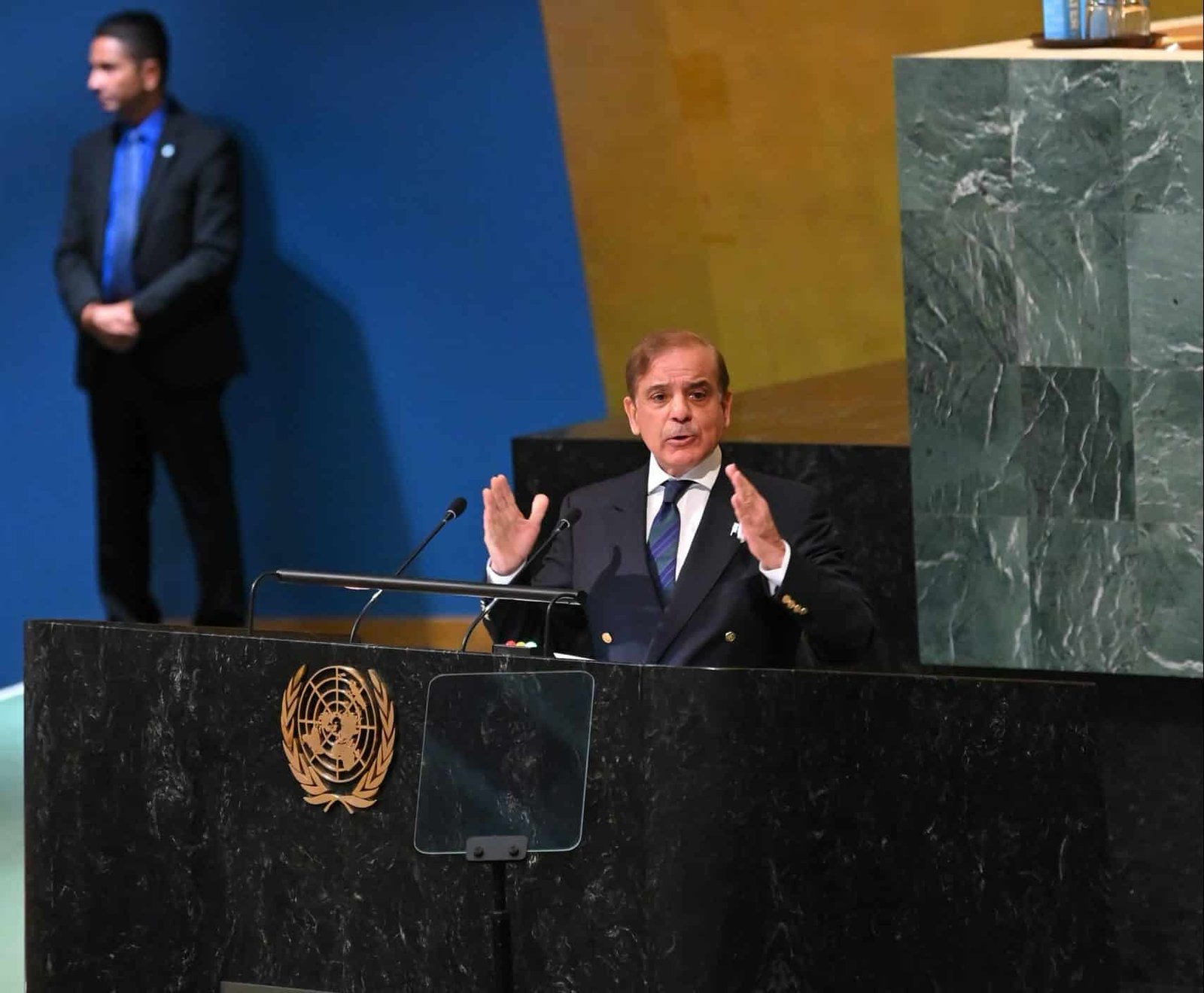
    Prime Minister (PM) Shehbaz Sharif said that Pakistan strongly condemns terrorism in all its forms and manifestations, emphasizing that terrorism does not have a religion. “It is based on dogma, fueled by poverty, deprivation, injustice, and ignorance, and fanned by vested interests,” the Premier stated.

    During his debut speech at the United Nations General Assembly (UNGA), the Prime Minister said, “Pakistan is the principal victim of terrorism. Over the last two decades, we have suffered more than 80,000 casualties and over $150 billion in economic losses due to terrorist attacks. Our armed forces, with the support of our people, have broken the back of terrorism within Pakistan. Yet, we continue to suffer terrorist attacks from across our borders, sponsored and financed by our regional adversary. We are determined to defeat such cross-border terrorism.”

    Talking about Islamophobia, Shehbaz Sharif said that it is a global phenomenon. “Since 9/11, suspicion and fear of Muslims and discrimination against them have escalated to epidemic proportions. The officially sponsored campaign of oppression against India’s over 200 million Muslims is the worst manifestation of Islamophobia,” said the Premier.

    Continuing in the same vein, Sharif said that Muslims in India are subjected to discriminatory laws and policies, Hijab bans, attacks on mosques, and lynchings by Hindu mobs. “I am particularly concerned by the calls for ‘genocide’ against India’s Muslims by some extremist groups,” he told the General Assembly.

    “Pakistan needs a stable external environment. We look for peace with all our neighbours, including India,” the Prime Minister said, offering an olive branch to its regional arch rival. “Sustainable peace and stability in South Asia, however, remain contingent upon a just and lasting solution to the Jammu and Kashmir dispute. At the heart of this longstanding dispute lies the denial of the inalienable right of the Kashmiri people to self-determination,” he said.

    Talking about India, PM said, “India’s illegal and unilateral actions of 5th August 2019, to change the internationally recognised disputed status of Jammu and Kashmir and to alter the demographic structure of the occupied territory further undermined the prospects of peace and inflamed regional tensions. India’s relentless campaign of repression against Kashmiris has continued to grow in scale and intensity.”

    “In pursuit of this heinous goal. New Delhi has ramped up its military deployments in occupied Jammu and Kashmir to 900,000 troops, thus making it the most militarized zone in the world. The serial brutalization of Kashmiris takes many forms: extrajudicial killings, incarceration, custodial torture and death, indiscriminate use of force, deliberate targeting of Kashmiri youth with pellet guns, and ‘collective punishments’ imposed on entire communities.”

    “India is seeking to turn the Muslim-majority Jammu and Kashmir into a Hindu-majority territory, through illegal demographic changes. Millions of fake domicile certificates have been issued to non-Kashmiris; Kashmiri land and properties are being seized; electoral districts have been Jerry Mandered, and over 2.5 million non-Kashmiri illegal voters fraudulently registered. All this is in blatant violation of Security Council resolutions and international law, particularly the 4th Geneva Convention,” said Shehbaz.

    The PM made a passionate appeal to the world on Friday to undo the ‘climate injustice’ done to countries like Pakistan that make little contribution to global warming and yet face its worst consequences.

    “Why are my people paying the price of such high global warming through no fault of their own?” the premier asked.

    “Nature has unleashed her fury on Pakistan without looking at our carbon footprint, which is next to nothing. Our actions did not contribute to this,” he stressed, adding that he came to the UN to “explain first hand” the scale and magnitude of the climate catastrophe that has pushed one-third of the country under water in a super storm that no one has seen in living memory.

    “For 40 days and 40 nights a flood of biblical proportions poured down on us, smashing centuries of weather records, challenging everything we knew about the disaster, and how to manage it,” the prime minister said.

    “Even today, huge swathes of the country are still underwater, submerged in an ocean of human suffering. In this ground zero of climate change, 33 million people, including women and children, are now at high risk from health hazards, with 650,000 women giving birth in makeshift tarpaulins,” he told the world.

    The Prime Minister said Pakistan had never seen a more stark and devastating example of the impact of Global Warming. “Life in Pakistan has changed forever. People in Pakistan ask why, why has this happened to them? When global warming rips apart whole families and an entire country at this ferocious speed, it is time to ask why, and time to ask not what can be done but what MUST be done,” said the PM while explaining how this calamity had affected hearts and minds in Pakistan.

  • What did Angelina Jolie do in Pakistan?

    What did Angelina Jolie do in Pakistan?

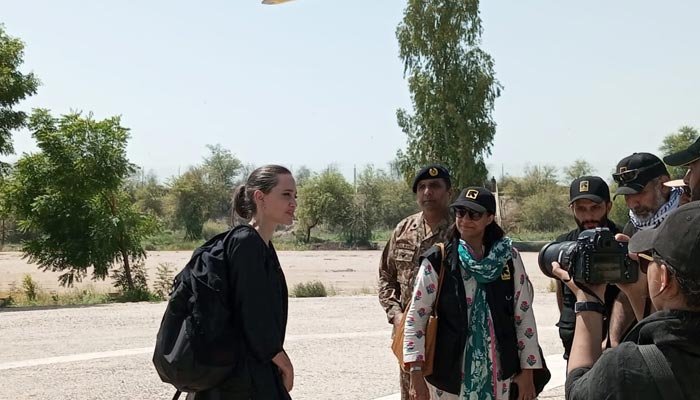
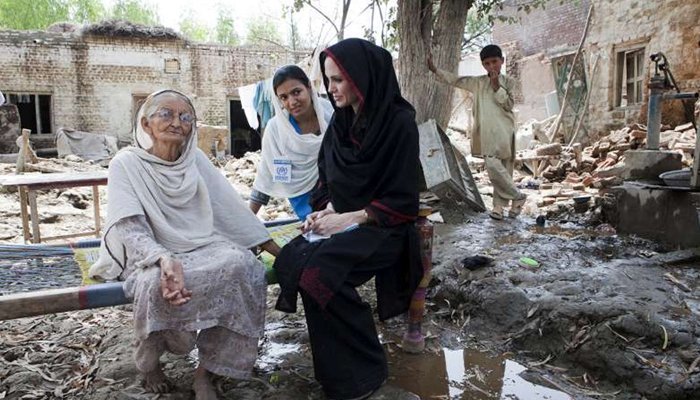
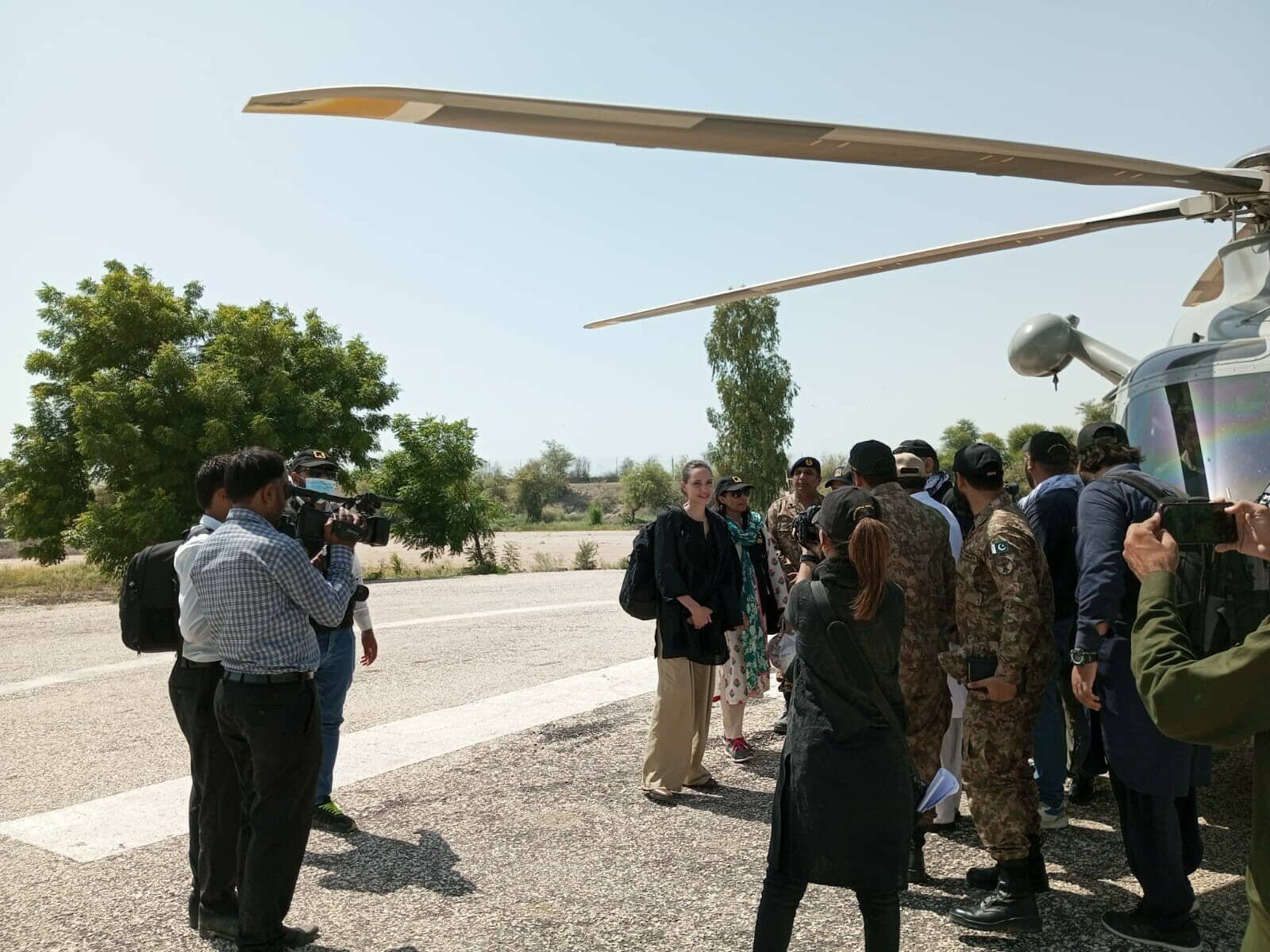
    United Nations High Commissioner for Refugees (UNHCR) Special Envoy and Hollywood actor Angelina Jolie arrived in Pakistan on Tuesday, September 20, to support communities affected by devastating floods.

    Jolie has arrived to witness and gain an understanding of the situation and to hear from people about their needs and steps to prevent such suffering in the future.

    Jolie will highlight the need for urgent support for the Pakistani people and long-term solutions to address the multiplying crises of climate change, human displacement and protracted insecurity we are witnessing globally.

    She will see first-hand how countries like Pakistan are paying the greatest cost for a crisis they did not cause.

    “The IRC hopes her visit will shed light on this issue and prompt the international community — particularly states contributing the most to carbon emissions — to act and provide urgent support to countries bearing the brunt of the climate crisis,” it said.

    IRC’s latest needs assessment shows people are in urgent need of food, drinking water, shelter, and healthcare. Every person the organisation surveyed reported women and girls have no access to menstrual hygiene products.

    Jolie, who previously visited victims of the 2010 floods and 2005 earthquake in Pakistan when she was the UNHCR’s goodwill ambassador, is scheduled to visit the IRC’s emergency response operations and local organisations assisting displaced people, including Afghan refugees.

    The Government of Pakistan stated that it finds Jolie’s gesture heart warming.

  • Number of flood affectees may cross 33 million, warns Climate Change Minister

    Number of flood affectees may cross 33 million, warns Climate Change Minister

    Federal Minister of Climate Change Sherry Rehman warned on Sunday (August 28) that the number of those affected by the floods may cross 33 million as the devastating floods continue.

    She said that the government, supported by the United Nations (UN) and other humanitarian agencies, is leading the humanitarian action.

    “Kabul River is still at very high flood level at Nowshera as more than 300,000 cusecs of water was crossing the river,” she said, adding that with 500,000 cusecs, water levels in River Indus at Taunsa, Sukkur and Chashma are at “high flood level”.

    Calling the floods “a perfect storm”, Sherry Rehman added that as relentless rains had battered the southern parts of the country, the floods in the Indus River devastated the northern areas.

    Updating on the relief efforts, she said that as rain has subsided in some areas, the National Disaster Management Authority (NDMA) and Pakistan Army have amped up rescue efforts.

  • What caused Pakistan’s greatest flood in a decade?

    What caused Pakistan’s greatest flood in a decade?

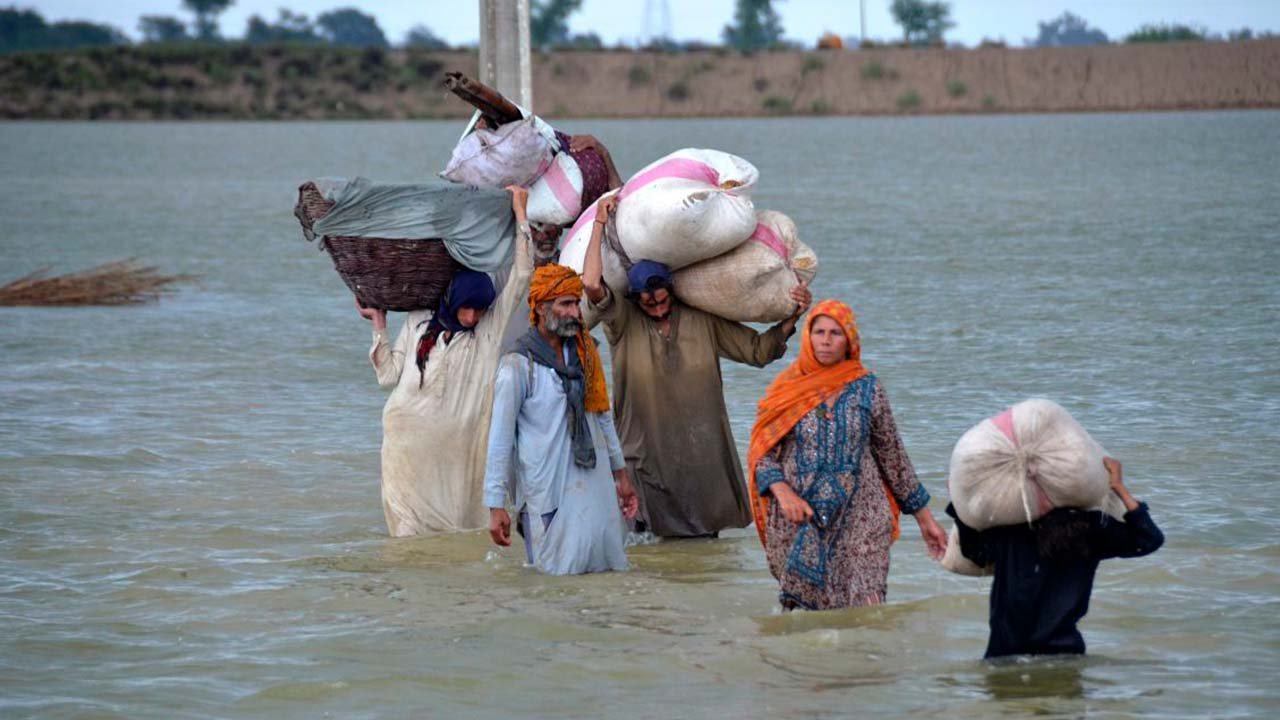
    Floods in Pakistan have affected millions of people, drowned hundreds, and prompted the government to proclaim a national emergency.

    Nearly 1,000 people have died since June, according to the National Disaster Management Authority (NDMA). People are looking for shelter as torn tents fill the streets of Sukkur.

    Around 15,500 people sacrificed everything in the 1,000-kilometer-long coastal area patch of Sindh’s Thatta district.

    The flood water has swallowed up people’s entire life savings, earned after years of hard work, meant to get their kids educated.

    The locals are concerned that the standing water may spread waterborne diseases. There hasn’t been any relief for residents expecting to return home to see what can be salvaged because it has been raining all week in Sindh province.

    Many houses in the city’s center have sustained damage, leaving only the walls standing.

    Over 300 people have died as a result of the floods in the province of Sindh alone. People set up tents along the narrow alleyways in any remaining dry area because further rain is predicted.

    About 15 per cent of the population, or 33 million people, were affected by the floods, according to Prime Minister (PM) Shehbaz Sharif on Friday.

    The nation has pleaded for greater international assistance, as PM met with ambassadors from other countries in Islamabad.

    He claimed that this season’s flood losses were on par with those from the floods of 2010–2011.

    The country is currently experiencing its eighth monsoon cycle, whereas typically there are only three to four cycles of rain, according to climate minister Sherry Rehman.

    She claimed that the proportions of super flood torrents are startling.

    Numerous monsoon cycles that have hit Pakistan since the start of summer have destroyed more than 400,000 homes.

    The Office for the Coordination of Humanitarian Affairs (OCHA), the UN organization in charge of disaster relief, announced on Thursday that at least 184,000 people had been relocated to relief camps.

    The rains have notably affected Sindh, which has seen nearly eight times its normal August rainfall. Southern Pakistan has been severely hit.

    On Thursday, Ms. Rehman claimed that officials had requested a million tents to house the refugees.

    What led to Pakistan’s floods?

    Extreme weather conditions or rains brought on by climate change are to blame for the recent floods that have affected Pakistan. Some floods originate in inland regions because of excessive rain, whereas others happen at the seashore because of sea-level rise, causing devastation in coastal districts.

    High tides in the sea cause heavy flooding primarily in coastal locations. Because of the daily rise in global temperature, this is related to climate change.

    There are two main causes of the floods: The experts noted that sea-level rise is a result of expanding saltwater caused by glacier and Arctic sea ice melting as well as cyclones and heavy rains brought on by warming ocean temperatures.

    Seawater intrusion inland has been caused by a significant sea-level rise of 1 millimeter along coastal Sindh recorded over hundreds of years. Communities in coastal regions, where economic activity is concentrated, are significantly impacted by invasive sea water.

    Experts have noted that the storms that have occurred more frequently and with greater severity in the Arabian Sea over the past 50 years as a result of climate change have an economic impact on urban areas like Karachi, Badin, and Thatta.

    According to a research, the primary causes of sea incursion include thermal expansion, freshwater inflows, physical forces, monsoon fluctuation, and ocean current variance.

    As seawater warms, the top layers of the ocean release some heat into the sky, while the lower layers hold onto this heat for a longer time and in greater amounts. As a result, saltwater gradually warms up due to a process known as thermal expansion.

    According to a study, freshwater inflow from melting glacial layers, ice sheets, and sea ice contributes to sea level rise. Freshwater input also rises as a result of the hydrogen cycle brought on by the warming of the oceans and surface areas.

    The scenario of subsidence and lifting also affects sea level without changing the volume of ocean water. This is caused by tectonic activities such extraction for oil, gas, and water.

    A direct connection between climate change and variations in monsoon rainfall. In recent years, Pakistan has had numerous instances of extreme monsoon rainfall and flooding.

    Regional ocean currents, which transfer a lot of water from one place to another, do not alter the volume but have an impact on sea level in another place.


  • Monsoon in Pakistan: What is the situation now?

    Monsoon in Pakistan: What is the situation now?

    The Pakistan Meteorological Department has warned Sindh of another monsoon spell this week from Thursday (July 14) till Monday (July 18). It is also said that sea conditions will also remain “rough to very rough” during this timeframe.

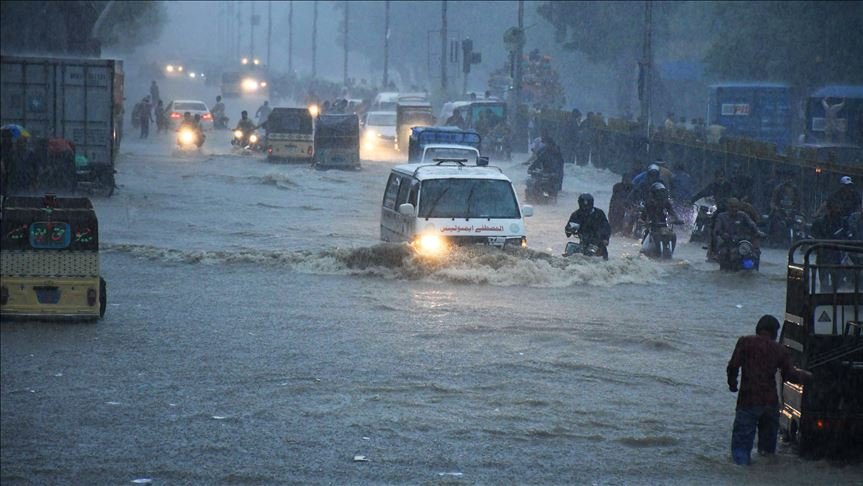
    The Met department also said that torrential rains may generate urban flooding in Karachi, Hyderabad and other cities. It has also advised that travellers and tourists remain cautious during the forecast period.

    Climate Change Minister Sherry Rehman shared a rain update on her Twitter, saying: “Sindh and Balochistan still under heavy monsoon pressure for the last 13 days. Sindh is 625 per cent above the 30-year average while Balochistan is 501.”

    Action taken by the authorities:

    Sindh Information Minister Sharjeel Inam Memon has claimed that rainwater from 90 per cent of the city has been drained out and roads have been cleared.

    Meanwhile, K-Electric spokesperson Imran Rana tweeted, “Wherever possible power has been restored, however, few parts of DHA remain severely water logged like Bukhari Commercial seen below (as of 10:00 PM 12th July). Power in inundated areas expected to be restored once water recedes to safe operating levels.”

    On Sunday, the Sindh government imposed a rain emergency in Karachi after severe rain. Chief of Army Staff (COAS) General Qamar Javed Bajwa took an aerial view of Karachi on Tuesday to oversee the catastrophic situation.

    The Pakistan Navy is also taking part in the relief and rescue operations.

    Destruction

    According to the Provincial Disaster Management Authority (PDMA) and Sindh Police, 49 people have died in the province, 31 in Karachi alone, in the monsoon spell from July 4 to July 12.

    In Khyber Pakhtunkhwa (KP), at least six people were killed in Swabi, Mardan, South Waziristan and Bajaur districts. The rains also damaged the crops and infrastructure. Swabi, Dera Ismail Khan, Tank, Nowshera and Malakand were the worst affected.

    Six people died and dozens of houses collapsed throughout over Eid across Balochistan. Many areas across Gilgit-Baltistan (GB) were cut off from each other after roads, bridges, electricity supply and properties were damaged due to the melting glaciers.

  • Developed world should do more to reduce emissions: Sherry Rehman

    Developed world should do more to reduce emissions: Sherry Rehman

    Federal Minister for Climate Change Senator Sherry Rehman has stated that the developed world is the largest emitter of greenhouse gases and that the developed world should do more to reduce emissions rather than putting pressure on the most vulnerable countries.

    She made these views during a session titled “The Future of Democracy” at the World Economic Forum 2022 in Davos, which is held every year.

    Sherry said big international companies causing more pollution should show more responsibility to avoid environmental hazards.   

    She said democracy is the only solution to the problems of a multicultural country like Pakistan as it represents and protects the weaker sections of society and involves consensus, transparency and accountability.                         

    She said dictatorships receive more aid, but they are not based on consensus.

    Sherry Rehman took charge of the Climate Change Ministry on April 20.