Tag: Climate change

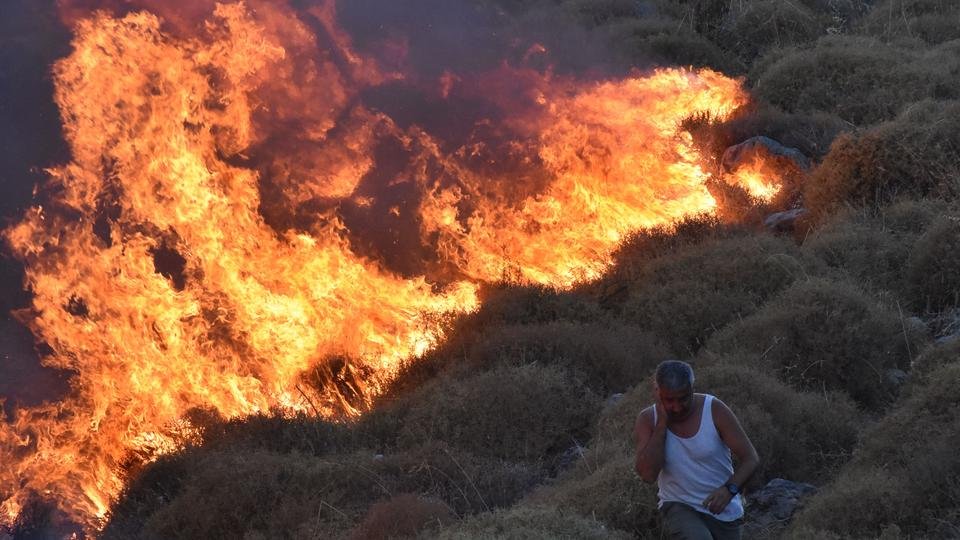
  • Wildfires sweep Turkey, Pakistan extends support

    Wildfires sweep Turkey, Pakistan extends support

    Prime Minister Imran Khan and several other politicians have showed solidarity with the Turkish government over the loss of lives in Turkey as wildfires sweep the country.

    PM Khan, in his tweet, stated that Pakistan is ready to offer any help at this difficult time. “We stand with the govt & people of Turkey & share in their sorrow at the tragic loss of life in the wildfires tragedy”, he further added.

    Leader of the Opposition in the National Assembly, Shehbaz Sharif, expressed his grief and said, “We send our prayers & best wishes 2 our Turkish brothers & sisters as firefighters are busy putting down fire.”

    Moreover, Pakistan Foreign Minister Shah Mahmood Quershi, tagging Minister of Foreign Affairs of Republic of Turkey stated, “Pakistan extends support to the government of Turkey and to our Turkish brothers and sisters over the loss of lives.”

    In addition to this, PML-N’s MPA Hina Parvez Butt and PTI’s Abdul Aleem Khan have also extended their support.

    Support and help are pouring in from throughout the world as planes from Russia and Ukraine helped battle the flames.

    About 70 wildfires have broken out across 17 provinces on the country’s coasts this week resulted in four deaths and the evacuation of thousands, reports Reuters.

    #PrayforTurkey is the top trending hashtag on Twitter in Pakistan today.

  • Pakistan to host World Environment Day on June 5: PM Khan

    Pakistan to host World Environment Day on June 5: PM Khan

    Addressing a ceremony in Haripur in connection with the Ten Billion Tree Tsunami Programme, Prime Minister Imran Khan said that Pakistan will be hosting World Environment Day on June 5.

    “This is a great honour and acknowledgment of the fact that Pakistan is among a handful of countries trying to reduce the impact of climate change and global warming,” said PM Khan.

    PM Khan said that his government had taken steps to protect the environment, adding that it was a worrying sign that Pakistan was included in the list of 10 countries that are worse affected from climate change.

    Earlier this month, Pakistan was chosen to host the World Environment Day 2021 in partnership with the UN Environment Programme (UNEP) on June 5.

    This will be the first time in history that the country will be officially hosting the day.

    The day will be celebrated across the world through various events and activities under Covid-19 standard operating procedures (SOPs).

    The theme for the day this year will be ecosystem restoration, with a special focus on creating a good relationship with nature.

  • Trash on Everest to be turned into art to highlight mountain’s garbage problem

    Trash on Everest to be turned into art to highlight mountain’s garbage problem

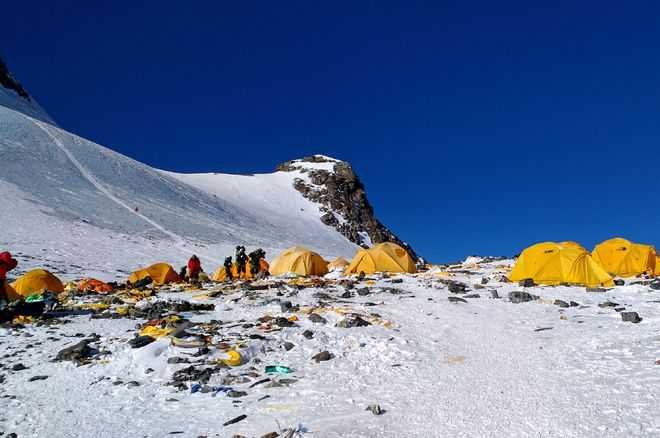
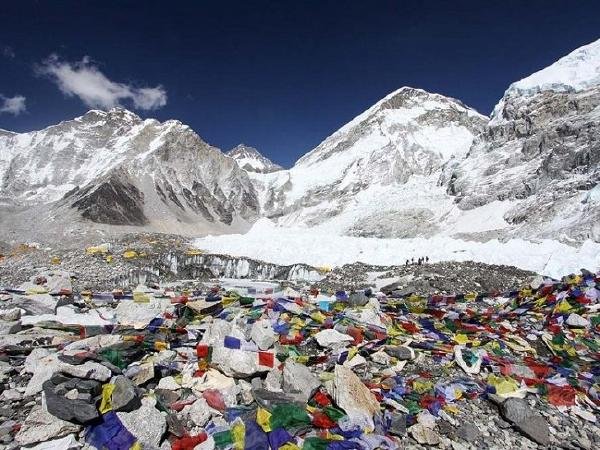
    Trash collected from Mount Everest is set to be transformed into art and displayed in a nearby gallery, to highlight the need to save the world’s tallest mountain from turning into a dumping site.

    Used oxygen bottles, torn tents, ropes, broken ladders, cans, and plastic wrappers discarded by climbers and trekkers litter the 8,848.86 metre (29,032 feet) tall peak and the surrounding areas.

    Tommy Gustafsson, project director and a co-founder of the Sagarmatha Next Centre – a visitors’ information centre and waste up-cycling facility – said foreign and local artists will be engaged in creating artwork from waste materials and train locals to turn trash into treasures.

    “We want to showcase how you can transform solid waste to precious pieces of art … and generate employment and income,” Gustafsson told Reuters. “We hope to change the people’s perceptions about the garbage and manage it.”

    The Centre is located at an altitude of 3,780 metres at Syangboche on the main trail to Everest base camp, two days’ walk from Lukla, the gateway to the mountain.

    It is due for “soft opening” to locals in the spring as the number of visitors could be limited this year due to coronavirus pandemic restrictions, Gustafsson said.

    Products and artwork will be displayed to raise environmental awareness, or sold as souvenirs with the proceeds going to conservation of the region, he said.

    Trash brought down from the mountain or collected from households and tea houses along the trail is handled and segregated by a local environmental group, the Sagarmatha Pollution Control Committee, but the task in a remote region that has no roads is a huge challenge.

    Garbage is dumped or burned in open pits, causing air and water pollution as well as contamination of soil.

    IN PICTURES: Nepali mountaineers first to summit K2 in winter

    Phinjo Sherpa, of the Eco Himal group involved in the scheme, said under a “carry me back” initiative, each returning tourist and guide will be requested to take a bag containing one kilogram (2.2 pounds) of garbage back to Lukla airport, from where the trash will be airlifted to Kathmandu.

  • Pakistan opts for ‘happy’ solution to curb smog

    Pakistan opts for ‘happy’ solution to curb smog

    Air pollution contaminates the air in Punjab and it shoots up in winter as farmers burn rice stalks left behind after harvesting to clear their fields to plant wheat.

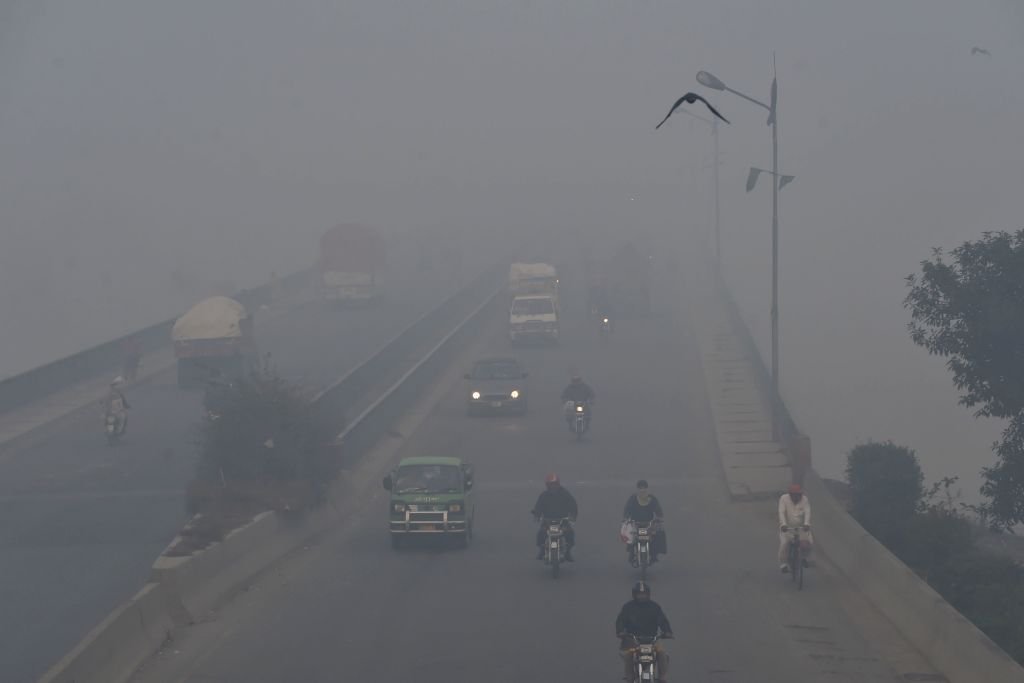
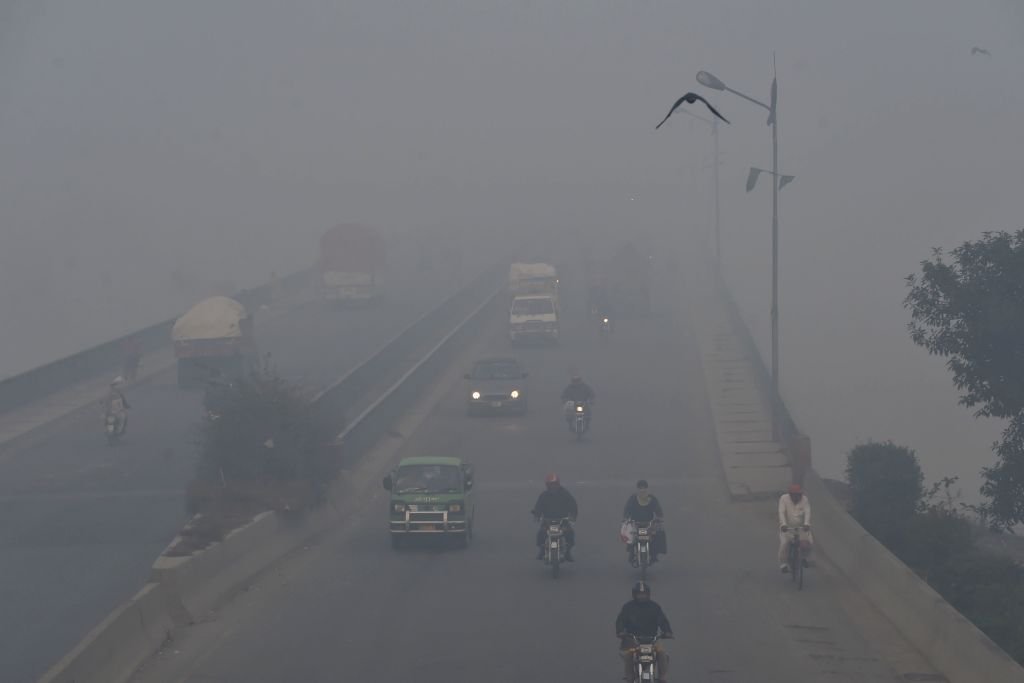
    During these cooler months, Lahore, which is surrounded by rice-growing districts, is covered with thick smog, putting people, especially the elderly and sick, at an increased risk.

    “It is a health emergency – the air quality monitors in Lahore routinely show hazardous levels in November,” said Farah Rashid, a climate and energy program coordinator for green group WWF-Pakistan.

    Now the Punjab government hopes to tackle the problem by providing 500 rice farmers around Lahore with a set of machines named ‘Happy Seeder’ that together eliminate the need to burn crop stubble.

    The machines include a shredder that breaks down rice stubble and mulches it into the ground and a seed drill that follows to sow wheat through the mulch.

    Malik Amin Aslam, climate change adviser to Prime Minister Imran Khan, called air pollution a “silent killer” and said Lahore’s smog had increased in intensity and frequency over the last five years.

    He explained that rice farmers traditionally use combine harvesters to cut their rice in October, leaving behind about four inches of stubble.

    With less than two weeks before they have to ready their fields to sow wheat, burning is the fastest way to clear the land, he told the Thomson Reuters Foundation.

    In Pakistan, rice is grown on an area of about 2 million hectares (5 million acres), mainly in the Punjab and Sindh provinces. Many of the fields are cleared by burning every year.

    Commuters drive their vehicles amid heavy smog conditions in Lahore

    In October and November, Lahore’s Air Quality Index level can jump to over 300, a number that the US Environmental Protection Agency says corresponds to a “health warning of emergency conditions.”

    CUTTING EMISSIONS

    Farmers say the new farm equipment can help combat smog but note that crop burning produces only a small share of the province’s pollution.

    “The stubble is burned only for a few weeks in the winter. It is a fact that the problem becomes worse during this short period,” Bhandara said.

    “But farmers are not the only reason for this pollution,” he added.

    A 2018 report by the UN Food and Agriculture Organisation (FAO) on the underlying causes of smog in Punjab noted that agriculture — mainly rice residue burning — accounts for 20 percent of total air pollutant emissions.

    That puts it behind the industry, which produces a quarter of the air pollution in the province, and transport, which contributes more than 40 percent.

    Tackling air pollution — and leaving stubble on the soil as mulch, rather than burning it — also has the benefit of reducing carbon emissions that contribute to climate change.

    In India, where farmers have been using the rice stubble shredder and Happy Seeder for the past few years, a group of scientists published a report last year stating the technology could cut greenhouse gas emissions by as much as 78 percent.

    CHOSEN BY LOTTERY

    In Mandi Bahauddin district, where famed Basmati rice is grown, Muhammad Afzal, an agriculture officer at Punjab’s Government Agriculture Seed Farm, has been experimenting with the Happy Seeder for the past two years.

    “Stubble management is a serious issue for farmers,” said Afzal, who helps farmers adopt new farming techniques.

    Pakistan has penalties for rice stubble burning, including fines of up to Rs20,000 per acre — but most farmers have little other choice and simply continue the practice and pay the penalty when they are charged.

    But a growing number are looking for alternative solutions, Afzal said.

    The total cost for the stubble shredder and Happy Seeder is about Rs637,500 rupees, and the government this year is paying about 80 percent of the price for 500 farmers, he noted.

    “For those who can’t afford it, bigger farmers are willing to rent out the machines. In the future, more service providers will come up to rent them out,” Afzal said.

    One drawback to the machines, he noted, is the need to mount them on the back of a tractor — and not just any tractor will do.

    “It requires a large, 85-horsepower tractor,” he noted, something most rice farmers in Pakistan do not have.

    Bhandara, the farmer in Pakpattan, said the subsidised machines also are only available in certain districts around Lahore, in the so-called smog “red zone.”

    “The subsidised machines should be made available to rice farmers in South Punjab and Sindh as well, otherwise they are too expensive for most farmers,” he said.

    Despite the limitations, the Happy Seeder has proven so popular that the government has had 10 applicants for each of its 500 machines, according to Aslam, the climate change adviser.

    He said authorities are using a lottery system to decide who gets the subsidised equipment.

    The government has plans to expand the Happy Seeder program next year and cover the whole of the Punjab rice belt by 2023, Aslam noted.

    In the meantime, he added, it is already working on a technology upgrade.

    “The agriculture extension department has developed a prototype to combine the two shredder [and] seeder machines into one ‘Pak Seeder’, which will be even more effective and efficient” — plus 30 percent cheaper, he said.

  • PM launches historic tree plantation campaign with 3.5 million trees in a day

    PM launches historic tree plantation campaign with 3.5 million trees in a day

    Prime Minister (PM) Imran Khan has launched the biggest tree plantation campaign in the history of the country, targeting a plantation of around 3.5 million trees in a day across the country.

    Addressing a ceremony in Islamabad, he thanked all those who had participated in Sunday’s campaign.

    He said that Pakistan is among the top ten countries in the world most affected by climate change. “Our wheat production has fallen over the past two years due to climate change and unprecedented rainfall,” the PM said.

    “If we keep continuing on this path, then some of the areas will become deserts,” he said. “It is our responsibility to make the country green for future generations.”

    “The 3.5 million saplings that we have planted today is just the start. This is a constant, ongoing battle, [but] we are not doing this for us. We are doing it for the coming generations,” he further said.

    “This is just the beginning. he said, promising that trees would be planted in empty spaces across cities,” he added.

    The prime minister also urged women to participate. “The women have to participate the most,” he said.

    He added that the nation also had to focus on cleaning the country’s rivers, in addition to making the country green. “So first we have to make the country green by planting trees, but simultaneously we also have to focus on cleanliness and make our rivers clean once again. Planting trees will also help in cleaning our climate and lessening pollution,” he said.

    Earlier, in a tweet, the premier had invited everyone to join him today in planting trees all over Pakistan. He had also asked the parliamentarians, ministers, chief ministers, and Tiger Force volunteers to participate in the biggest tree planting campaign.

    “The target is 35 lakh trees in a day though we will try to exceed it,” the prime minister had said.