Tag: Climate change

  • Heat-wave coming in Punjab and Sindh

    Heat-wave coming in Punjab and Sindh

    The Meteorological Department has predicted that heat waves will hit the plains of Punjab and Sindh in coming days.

    Provincial Disaster Management Authority has cautioned that the plains of Punjab and Sindh will be effected by heat waves, especially big cities due to which there is a possibility of an increase in the intensity of heat this month.

    The spokesperson of the PDMA Punjab has said that the irrigation department has been informed about the situation.

    According to the spokesman, strong winds, dust storms, rain and hailstorms are also expected in April. There is a risk of flooding in rivers due to heavy rains in northern Punjab.

    In Sindh, heat intensity is likely to increase in most places.

    According to the Meteorological Department, the weather is likely to remain hot in most places in Sindh from April 7 to 9.

    Day temperatures in the upper and central areas of Sindh may reach 38 to 40 degrees celsius, while the temperature in lower Sindh is likely to be 36 to 38 degrees celsius.

    During April 7 to 9, temperature in Karachi can also reach 36 to 38 degrees celsius, says the Meteorological Department.

  • Pakistan facing 30 percent water shortage for sowing season

    Pakistan facing 30 percent water shortage for sowing season

    Pakistan is facing a 30 percent water shortage at the start of the sowing season for cash crops such as rice and cotton, the country’s water regulator said.

    The Indus River System Authority (IRSA) said the gap is based on lower-than-normal winter snowfall in Pakistan’s northern glacier region, affecting catchment areas of the Indus and Jhelum Rivers that are used for irrigation.

    Kharif crops, or monsoon crops, including rice, maize, sugarcane and cotton are sown in April and require a wet and warm climate with high levels of rainfall.

    “There was less snow than normal as a result of climate change affecting the country’s glaciers,” Muhammad Azam Khan, assistant researcher with IRSA, which regulates the distribution of water resources along the Indus river, told AFP on Wednesday.

    “This will have a direct impact on the availability of water for kharif crops in the summer.”

    The water shortage gap is expected to narrow as the monsoon rains arrive later in the season.

    However, the country’s meteorological department has also forecast higher than normal temperatures during monsoon season, increasing uncertainty.

    Agriculture is the largest sector of Pakistan’s economy, contributing about 24 percent of its GDP.

    But it has been criticized for being water inefficient.

    “What this current water shortfall means for the crops is that authorities will have to better plan on how to utilize the water that is allotted to them,” said IRSA’s Khan.

    Pakistan, the world’s fifth-largest country with a population of more than 250 million, has recently been grappling with the profound impacts of climate change which includes shifting and unpredictable weather patterns.

    Devastating floods in 2022 — which scientists linked to climate change — that affected more than 30 million people also severely impacted Pakistan’s cotton crop that year.

  • Heatwaves to last longer amidst climate change

    Climate change is causing heat waves to slow to a crawl, exposing humans to extreme temperatures for longer than ever before, a study published in Science Advances said Friday.

    While previous research has found climate change is causing heat waves to become longer, more frequent and more intense, the new paper differed by treating heat waves as distinct weather patterns that move along air currents, just as storms do.

    For every decade between 1979 to 2020,  researchers found heat waves slowed down by an average of five miles (eight kilometers) an hour per day.

    “If a heatwave is moving slower, that means heat can stay in a region longer, so that has effects on communities,” senior author Wei Zhang of Utah State University told AFP.

    The researchers divided the world into three dimensional-grid cells and defined heat waves as a million square kilometer zones where temperatures reached at least the 95th percentile of the local historical maximum temperature. They then measured their movement over time in order to determine how fast the hot air was moving.

    They also used climate models to determine what the results would have looked like absent human-caused climate change, and found manmade factors loomed large.

    “It’s pretty clear to us that a dominant factor here to explain this trend is anthropogenic forcing, the greenhouse gas,” said Zhang.

    The changes have accelerated in particular since 1997 and in addition to human causes, weakening upper atmospheric air circulation may play a part, the paper said.

    The duration of heat waves also increased, from an average of eight days at the start, to 12 days during the last five years of the study period.

    “The results suggest that longer-traveling and slower-moving large contiguous heat waves will cause more devastating impacts on natural and societal systems in the future if GHG keep rising, and no effective mitigation measures are taken,” the authors wrote.

    Zhang said he was worried by the disproportionate impacts on less-developed regions.

    “In particular, cities that don’t have enough green infrastructure or not many cooling centers for some folks, in particular for the disadvantaged population, will be very dangerous,” he warned.

    la-ia/mdl

    © Agence France-Presse

  • What is El Nino effect and how is it impacting global sea levels?

    What is El Nino effect and how is it impacting global sea levels?

    Global average sea levels rose by about 0.3 inches (one-third of an inch) from 2022 to 2023 — nearly four times the increase of the previous year — Nasa said on Thursday, attributing the “significant jump” to a strong El Nino and a warming climate.

    The Nasa-led analysis is based on more than 30 years of satellite observations, with the initial satellite launching in 1992 and the latest in 2020.

    Overall, sea levels have risen by around four inches since 1993. The rate of increase has also accelerated, more than doubling from 0.07 inches per year in 1993, to the current rate of 0.17 inches per year.

    “Current rates of acceleration mean that we are on track to add another 20 centimetres (eight inches) of global mean sea level by 2050,” said Nadya Vinogradova Shiffer, director for the Nasa sea level change team and the ocean physics programme in Washington.

    That would be double the amount of change in the next three decades compared to the previous century, she said, creating a future where flooding is far more frequent and catastrophic than today.

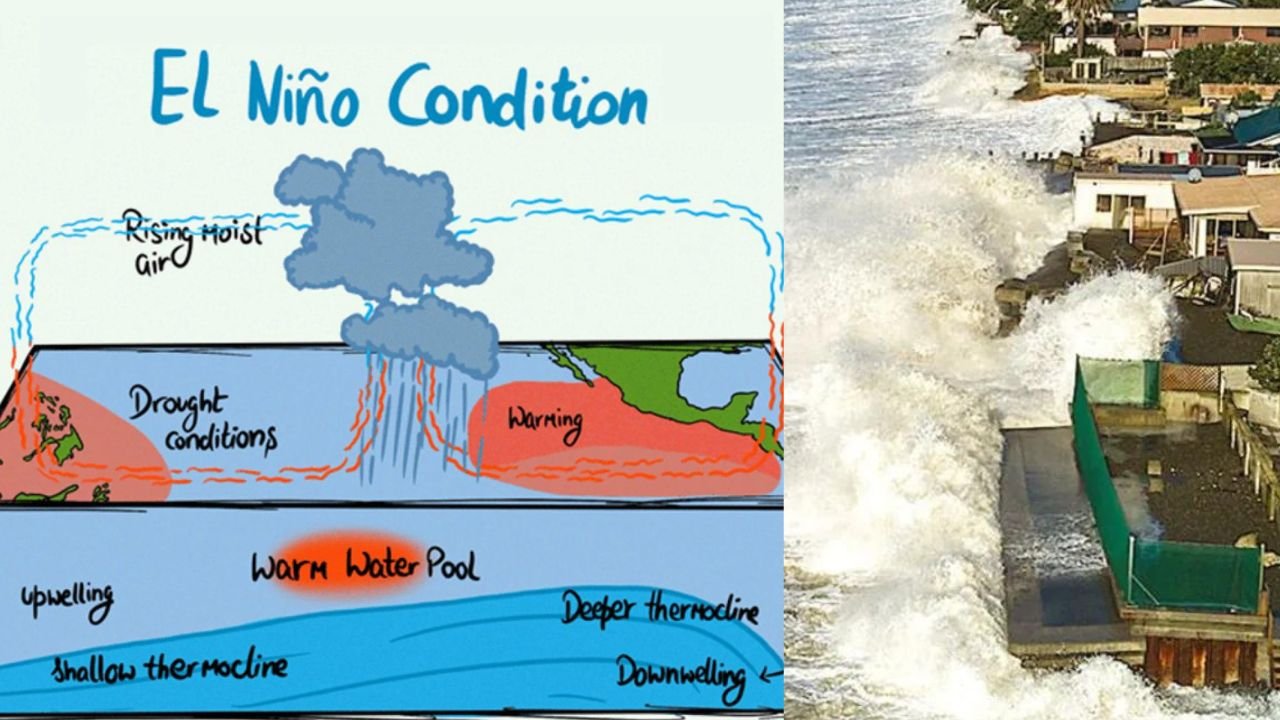
    The immediate cause of the spike is the El Nino weather effect, which replaced the La Nina from 2021 to 2022, when the sea level rose around 0.08 inches.

    El Nino involves warmer-than-average ocean temperatures in the equatorial Pacific.

    The term El Niño (Spanish for ‘the Christ Child’) refers to a warming of the ocean surface, or above-average sea surface temperatures, in the central and eastern tropical Pacific Ocean. The low-level surface winds, which normally blow from east to west along the equator (“easterly winds”), instead weaken or, in some cases, start blowing the other direction (from west to east or “westerly winds”). El Niño recurs irregularly, from two years to a decade, and no two events are exactly alike. El Niño events can disrupt normal weather patterns globally, asserts US Geological Survey.

  • Heavy snow leads to food shortage in Chitral

    Heavy snow leads to food shortage in Chitral

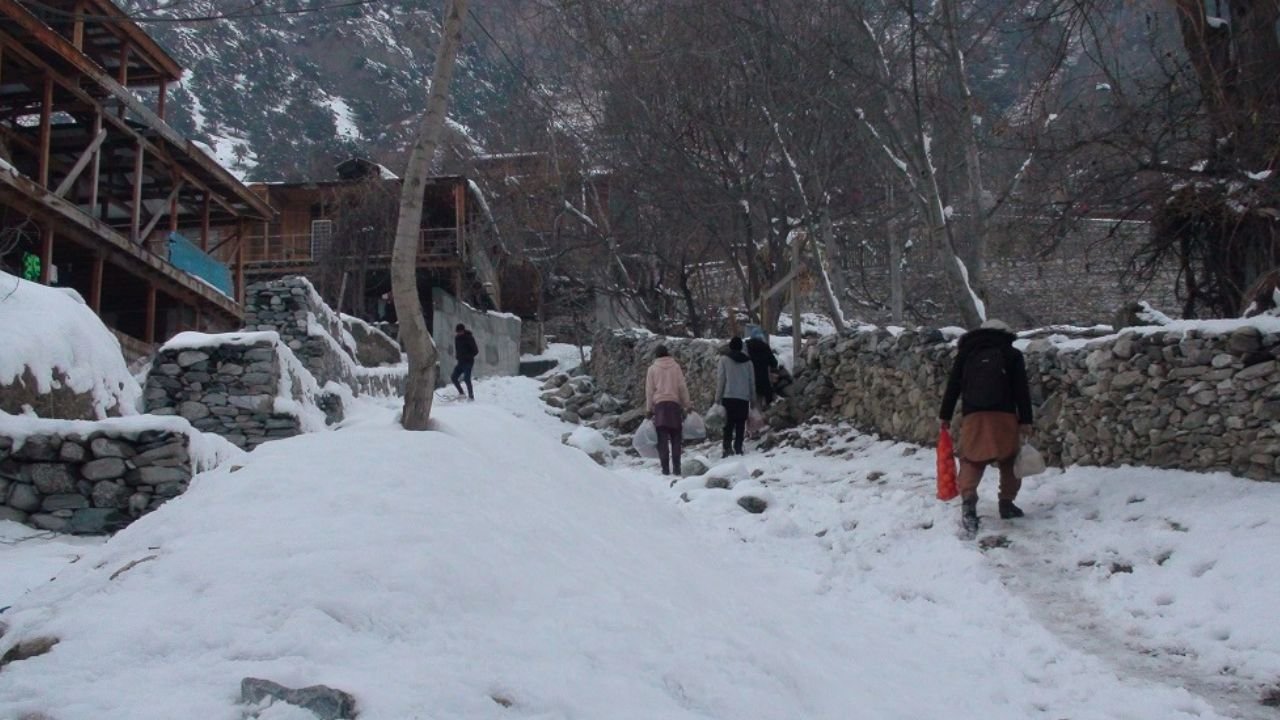
    Climate change is hitting home with heavy snow halting normal life, creating food insecurity in districts of upper and lower Chitral. The situation is dire, as MNA Abdul Akbar Chitrali has asserted that “It may result in a human tragedy”.

    The closure of roads to more than a dozen valleys in Chitral for the last three weeks has been creating countless issues for people.

    The most affected areas are the sub-valleys of Madaklasht, Susoom, Karimabad, and Gobor in Lower Chitral and Broghil, Yarkhoon, Upper Terich, Khot, Rech, Melp and Rech in Upper Chitral, says the report by Dawn. One has to wade through the snow for more than eight hours to reach there.

    The residents of the affected areas have said that food items and lifesaving drugs are running out while patients are taken on shoulder by villagers towards the road.

    Some minor work has been done by the government in the city but the roads leading to the sub-valleys are still unclear, leaving it up to the local people to do it on self-help basis.

    The former village nazim of Broghil, Amin Jan Tajik, said that there was a famine-like situation for people and their cattle after the valley received more than four feet snow while one had to walk for two days to reach Brep village to get a vehicle.

    He recalled that the last time the valley received such a heavy snowfall was in 1974, prompting the then government of Zulfiqar Ali Bhutto to airdrop ration for people as well as forage for their cattle, which formed their only source of sustenance.

    Mr Tajik said that to reopen the road by clearing snow and removing boulders and debris was beyond the capacity of locals as heavy machinery was required for the purpose.

    Former MNA Maulana Abdul Akbar Chitrali while talking to Dawn said that closure of roads gave birth to all kinds of issues and it was a pity that both federal and provincial governments neglected the ordeals of people.

    Talking to journalists here on Wednesday, he said that restoration of power supply to the affected villages would not be possible without reopening of roads. “More than three-fourth villages of Chitral have been without electricity after the heavy snowfall,” he added.

    He said that during the month of Ramazan, shortage of food was deplorable.

  • Do you know what were the top three most polluted countries in 2023?

    Do you know what were the top three most polluted countries in 2023?

    IQAir, a Swiss air monitoring organisation, published its World Air Quality Report on Tuesday revealing troubling details of the world’s most polluted countries, territories, and regions in 2023.

    “IQAir’s annual report illustrates the international nature and inequitable consequences of the enduring air pollution crisis. Local, national, and international effort is urgently needed to monitor air quality in under-resourced places, manage the causes of transboundary haze, and cut our reliance on combustion as an energy source,” states Aidan Farrow, Sr. Air Quality Scientist, Greenpeace International.

    “In 2023, air pollution remained a global health catastrophe. IQAir’s global data set provides an important reminder of the resulting injustices and the need to implement the many solutions that exist to this problem.”

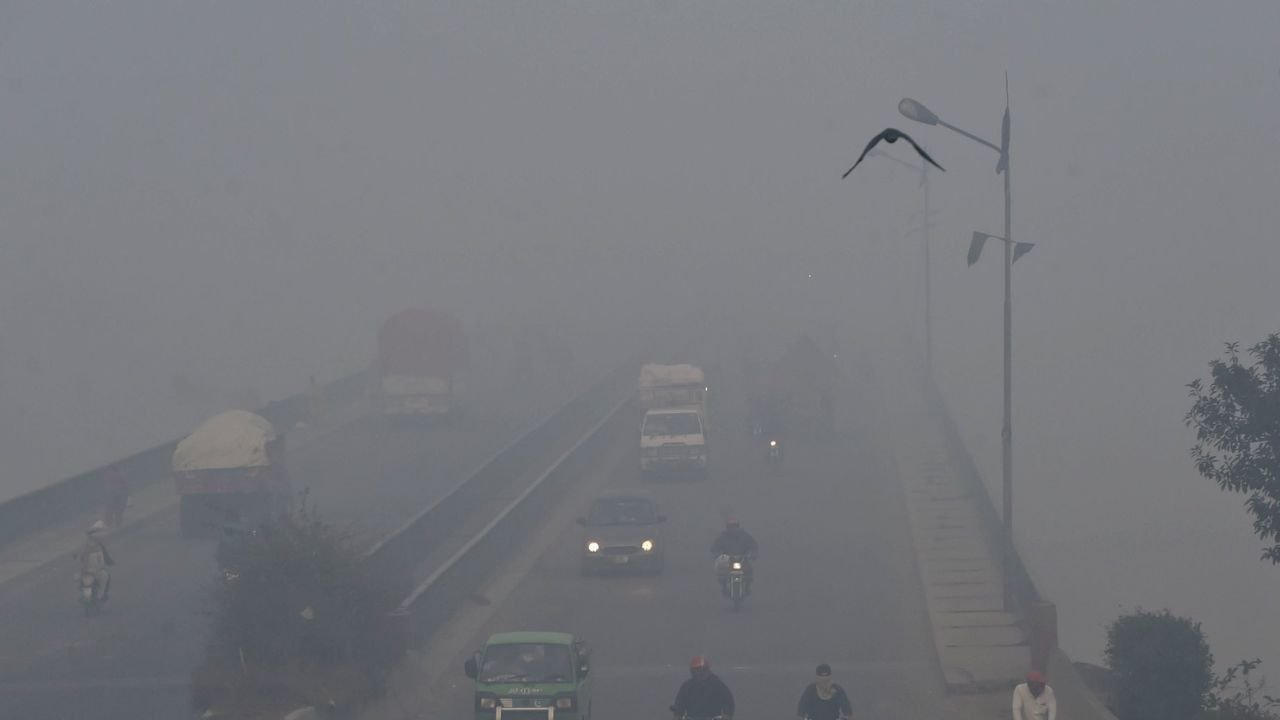
    The report revealed that Pakistan, alongside Bangladesh and India, remained among the top three countries with the highest levels of air pollution, particularly concerning particulate matter, in 2023.

    The concentrations of PM2.5, harmful airborne particles detrimental to respiratory health, surpassed recommended levels by a staggering margin, as indicated by the World Health Organization (WHO).

    In Bangladesh, the average concentration of PM2.5 reached 79.9 micrograms per cubic meter, while in Pakistan, it stood at 73.7 micrograms per cubic meter. These figures starkly contrast with the WHO’s guideline of no more than 5 micrograms per cubic meter.

    “Because of the climate conditions and the geography (in South Asia), you get this streak of PM2.5 concentrations that just skyrocket because the pollution has nowhere to go,” said Christi Chester Schroeder, air quality science manager at IQAir.

    “On top of that are factors such as agricultural practices, industry and population density,” she added. “Unfortunately, it really does look like it will get worse before it gets better.”

    In 2022, Bangladesh was ranked fifth for its air quality, with India in the eighth position. Approximately 20% of premature deaths in Bangladesh are attributed to air pollution, with related healthcare costs accounting for a substantial portion of the country’s GDP, according to Md Firoz Khan, an air pollution expert at Dhaka’s North South University.

    India also witnessed an escalation in pollution levels in 2023, with PM2.5 levels exceeding the WHO standard by about 11 times. Notably, New Delhi emerged as the worst-performing capital city, recording a PM2.5 level of 92.7 micrograms.

    China experienced a 6.3% increase in PM2.5 levels in 2023, marking a departure from five consecutive years of decline. Conversely, only a handful of countries, including Australia, Estonia, Finland, Grenada, Iceland, Mauritius, and New Zealand, met the WHO standards for air quality.

    The IQAir report, based on data from over 30,000 monitoring stations across 134 countries and regions, highlighted significant gaps in air quality monitoring, particularly in countries where the health impacts of pollution are most severe.

    Christa Hasenkopf, director of the Air Quality Life Index at the University of Chicago’s Energy Policy Institute, said 39pc of countries have no public air quality monitoring.

    “Considering the large potential benefits and relatively low cost, it’s stunning that we don’t have an organised global effort to deploy resources to close these data gaps, especially in places where the health burden of air pollution has been largest,” she said.

  • Understanding GSP+ status: What it means for Pakistan’s trade relations

    Understanding GSP+ status: What it means for Pakistan’s trade relations

    The Pakistan Tehreek-e-Insaf (PTI) has vehemently dismissed accusations levelled by Federal Information Minister Attaullah Tarar, labelling them as unfounded and baseless.

    In a statement issued today, the PTI refuted claims made by Tarar, asserting that they are nothing but a concoction of falsehoods and rhetoric aimed at maligning the party’s reputation.

    Earlier, Tarar had accused the PTI of plotting to undermine Pakistan’s Generalised Scheme of Preferences Plus (GSP+) status.

    He alleged that the party’s spokespersons were actively engaged in activities detrimental to the country’s interests under the directives issued from confinement.

    Understanding GSP+ and its significance for Pakistan’s economy

    The GSP+ status, a cornerstone of Pakistan’s trade relations with the European Union (EU), holds significant importance for the nation’s economy.

    Under this scheme, selected developing countries, including Pakistan, receive extensive trade concessions aimed at fostering sustainable development and good governance practices.

    The European Union’s GSP+ Scheme is founded on the effective implementation of 27 United Nations conventions covering various aspects such as human rights, labour rights, climate change, narcotics control, and corruption.

    Once granted GSP+ status, beneficiary countries are subject to rigorous monitoring to ensure compliance with the stipulated conventions and reporting requirements.

    The dialogue on GSP+ compliance involves various stakeholders, including international monitoring bodies, civil society, trade unions, and businesses.

    Regular monitoring visits are conducted by the EU to assess the progress of beneficiary countries in addressing the outlined issues.

    The significance of GSP+ for Pakistan’s economy cannot be overstated, particularly for its textile industry and workforce.

    Over the past decade, Pakistan has witnessed a notable increase in exports to the EU, accompanied by a surge in EU imports, owing to the preferential treatment offered under the GSP+ scheme.

  • Youths having to grow up ‘too quickly’ amid climate fears, says Greta Thunberg

    Youths having to grow up ‘too quickly’ amid climate fears, says Greta Thunberg

    Swedish climate campaigner Greta Thunberg said Monday that young people like her have had to grow up “too quickly” to resolve a climate crisis caused by previous generations.

    Denouncing inaction by politicians on climate change, Thunberg made her remarks just days ahead of the fifth anniversary of a global youth climate protest that drew over a million participants.

    On Monday, she sat on the steps of Sweden’s parliament, blocking the main entrance in a protest with around 10 other youth activists, holding a banner reading “Climate Justice Now”.

    “We are way too many young people who have had to grow up in the climate movement and who have had to grow up way too quickly, to take the responsibility to try to clean up after the older generations,” Thunberg told AFP.

    “The Swedish government as well as all other governments in the world are not treating the climate crisis like a crisis at all.”

    “They are still letting short-term economic profits be prioritised over human lives and the planet,” she said, adding that she and her fellow activists “feel a bit like broken records, we have been repeating the same message over and over again”.

    News agency TT reported that politicians were still able to enter parliament through side entrances.

    When Thunberg started sitting outside the Swedish parliament in August 2018 with her “School Strike for the Climate” sign, she was an anonymous teenager in a world she saw as dying in silence.

    Five years later, Thunberg’s “Fridays for Future” movement and its subsequent global marches had had a global impact, political science researcher Joost de Moor told AFP in October.

    “It has raised awareness for the issue,” he said.

    It has also “contributed to the increased legitimacy of pro-climate policy-making, which has in turn made it easier for willing politicians to act on the issue”, he said, citing as an example Frans Timmermans, the former EU climate commissioner responsible for the Green Deal currently being debated in the bloc.

    Despite this, and “as Greta Thunberg has said herself many times… climate policy-making continues to fall far behind what climate scientists say is necessary”, de Moor said.

    A report by the European Environment Agency (EEA) on Monday warned of “catastrophic” consequences if Europe failed to take urgent action to adapt to risks posed by climate change.

  • Rain emergency in Rawalpindi, below zero in Quetta as cold wave takes over

    Rain emergency in Rawalpindi, below zero in Quetta as cold wave takes over

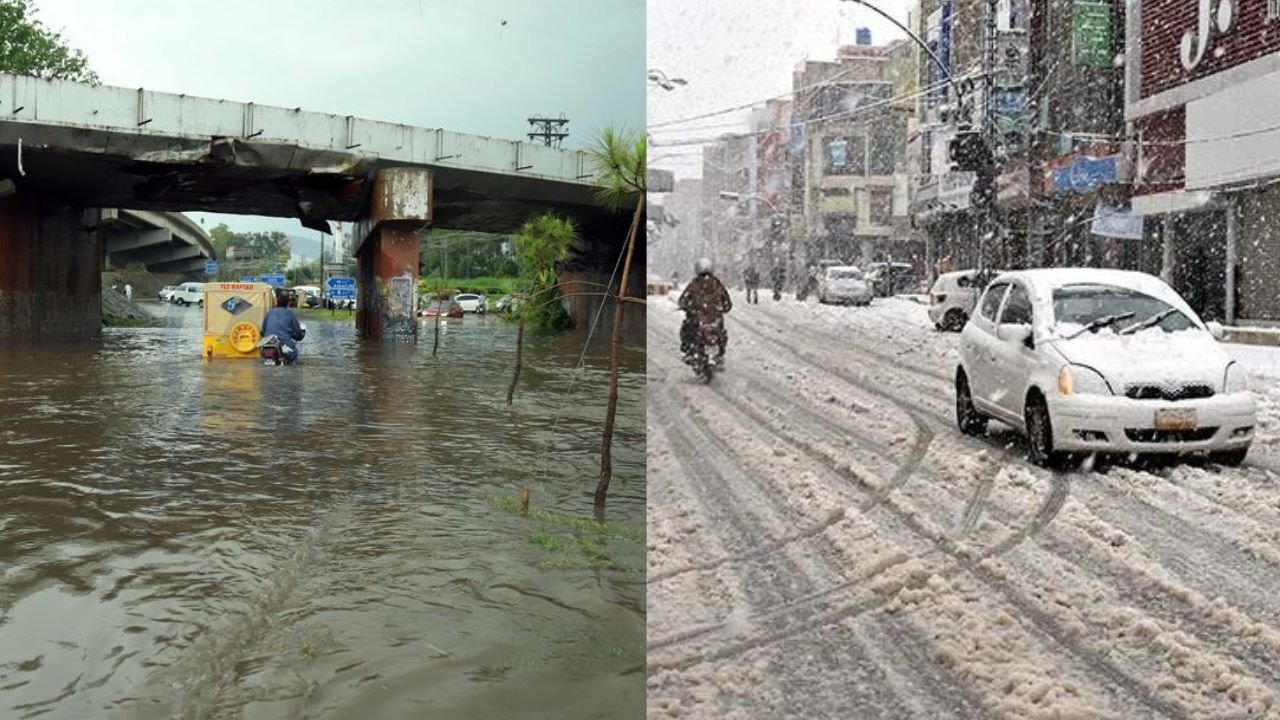
    The weather in Quetta became colder after rain and snowfall while a rain emergency has been imposed in Rawalpindi after heavy rains.

    The Department of Meteorology has stated that weather in Quetta Valley and its surroundings will remain partly cloudy today. After yesterday’s rain and snowfall, the temperature in Quetta has dropped to minus five, reports Geo.

    Due to severe cold in Quetta, rainwater has frozen on the sides of roads. Consumers are also facing a reduction in natural gas pressure.

    Additionally, the Meteorological Department has said that the weather will remain very cold and dry in the northern districts of Balochistan. Rain is expected at a few places in Ziarat, Zhob, Barkhan, including Quetta, and snowfall is expected in the mountains.

    The lowest temperature has been recorded as minus 7 in Kalat.

    In Punjab, intermittent rain is continuing in Lahore, Islamabad and Rawalpindi. However, the Water and Sanitation Agency (WASA) has imposed a rain emergency in Rawalpindi.

    As per MD WASA, 25 mm of rain has been recorded in Rawalpindi. Teams are engaged in draining with heavy machinery while the flow of rainwater has been recorded as five feet at Katariyan in Nala Lai and four feet at Gawalmandi Bridge.

    Chief Meteorologist Sardar Faraz has predicted clear weather in Karachi with no expected rainfall, but cold and chilly winds are anticipated to lower temperatures, reports Hum News.

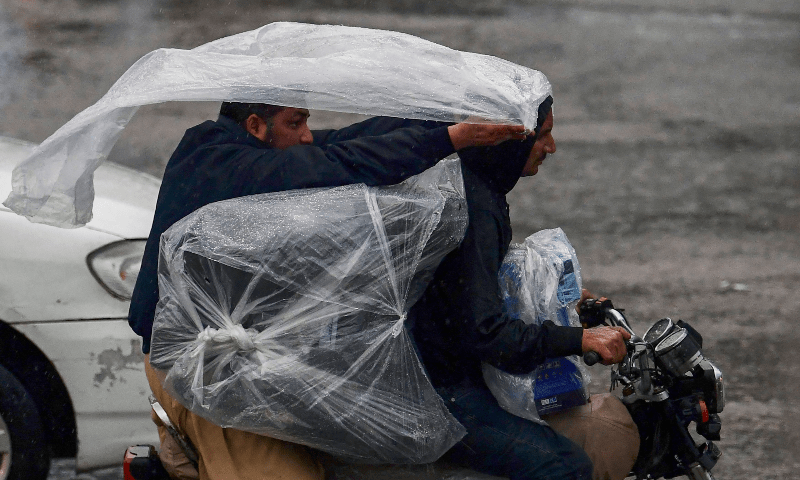
    Riders on a motorcycle wrap a plastic sheet over themselves to shelter as they make their way along a road amid rains in Karachi on March 1, 2024. — AFP

    The maximum temperature is estimated to range between 22 to 24 degrees Celsius.

    Currently, Karachi is experiencing winds at a speed of 18 kilometers per hour, with a humidity level of 49 percent.

    The met office also noted that Karachi’s weather today will be chillier compared to yesterday.

  • Sindh govt declares rain emergency, announces half-day in Karachi

    Sindh govt declares rain emergency, announces half-day in Karachi

    Syed Murad Ali Shah, Chief Minister of Sindh, has on Thursday imposed rain emergency in the province and declared that tomorrow (Friday) will be a half-day for all government and private offices in the megacity.

    On Wednesday, the Sindh Pakistan Disaster Management Authority (PDMA) issued a notice warning of the possibility of urban flooding in the province with expected heavy rainfall, directing deputy commissioners and all concerned officials to take required measures, reports Dawn.

    According to the advisory issued by the Meteorological Department, rain/thunderstorms with scattered heavy rainfall is expected in northern parts of the province from Feb 29 till March 2.

    “Heavy falls may generate urban flooding in low-lying areas. Fishermen of Balochistan are advised not to venture into deep sea till March 1 while those of Sindh are advised to remain careful during the forecast period,” it said.

    Today, the Sindh chief minister chaired a meeting to discuss the matter, deciding to declare a rain emergency in the province and put local institutions, the administration, and hospitals on high alert, a statement issued by his spokesperson said.

    The statement also said that Murad decided that tomorrow would be a half-day at all public and private offices in Karachi and urged the people to not leave their houses unnecessarily.

    “After 2 pm tomorrow, three to four spells of rainfall have been predicted in different areas of Karachi,” he said.

    Karachi Mayor Murtaza Wahab also confirmed the same. In a post on X, he said: “Though preparations have been made, as a matter of abundant precaution, it has been decided in the meeting presided by CM that tomorrow will be a half-day for offices in Karachi division from 2 pm.

    “Citizens are requested to also avoid unnecessary movement to avoid any inconvenience,” he said.

    Meanwhile, the meeting chaired by the Sindh CM was informed by PDMA Director General Salman Shah that rainfall had been predicted in the northern areas of the province from tonight till March 2 (Saturday).

    He said that rainfall was expected in the central areas of the province from March 1 (tomorrow), adding that rains were expected in the province from today.
    “Rains are expected to begin in Karachi on Friday afternoon, with 13mm to 16mm expected in a 12-hour timespan,” the official informed the meeting.

    Over the possibility of rainwater entering the province from the mountainous areas in Balochistan’s Jhal Magsi and Khuzdar, CM Murad directed the Larkana commissioner to make the necessary arrangements in this regard.

    Meanwhile, the provincial irrigation department assured Murad that Manchhar Lake would be able to withstand the inflow of rainwater.

    The Karachi mayor acknowledged that there were drainage issues after last month’s rainfall. However, he assured that these were being resolved, adding that the Karachi Water and Sewerage Board (KWSB) had 53 vehicles with suction machines available.

    PDMA’s Shah also vowed to provide the necessary machinery to the Karachi Metropolitan Corporation (KMC) for draining rainwater, noting that Karachi’s main artery Sharea Faisal comes under water pressure during the rains.