Tag: Climate change

  • 2023 set to be hottest year on record: UN

    2023 set to be hottest year on record: UN

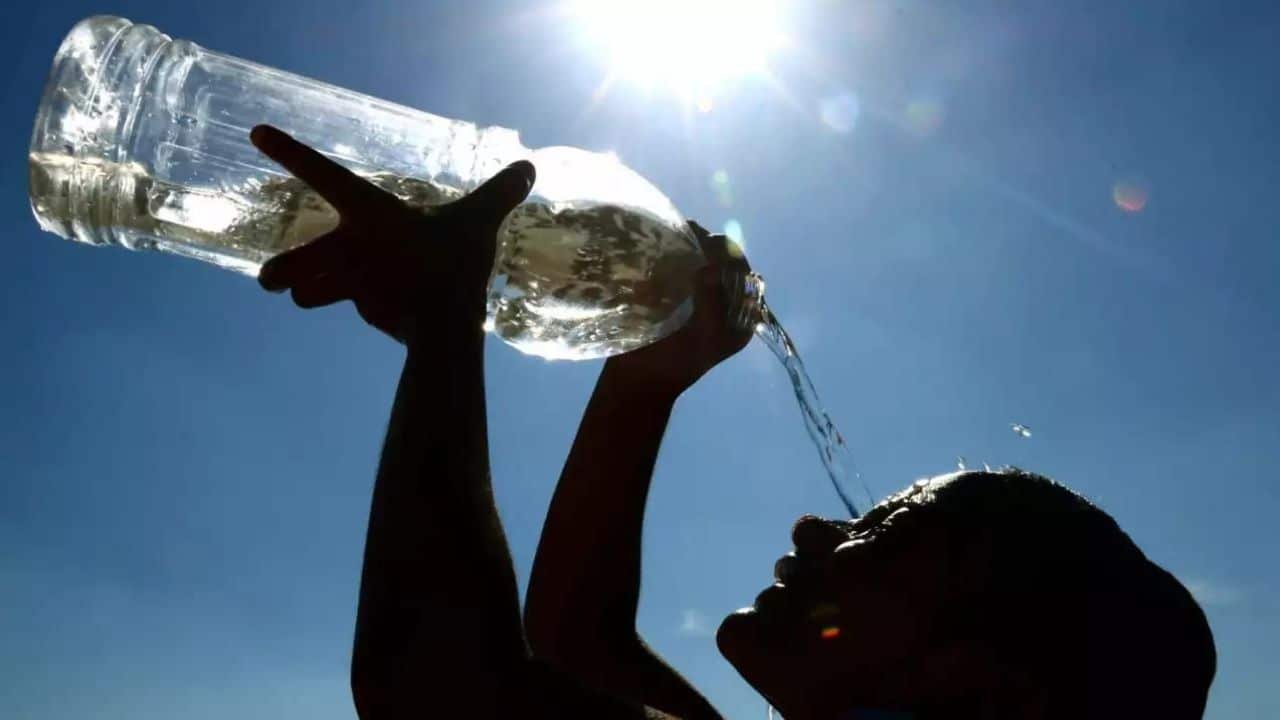
    Geneva (AFP) – This year is set to be the hottest ever recorded, the UN said Thursday, demanding urgent action to rein in global warming and stem the havoc following in its wake.

    The UN’s World Meteorological Organization warned that 2023 had shattered a whole host of climate records, with extreme weather leaving “a trail of devastation and despair”.

    “It’s a deafening cacophony of broken records,” said WMO chief Petteri Taalas.

    “Greenhouse gas levels are record high. Global temperatures are record high. Sea level rise is record high. Antarctic sea ice is record low.”

    The WMO published its provisional 2023 State of the Global Climate report as world leaders gathered in Dubai for the UN COP28 climate conference, amid mounting pressure to curb planet-heating greenhouse gas pollution.

    United Nations chief Antonio Guterres said the record heat findings “should send shivers down the spines of world leaders”.

    The stakes have never been higher, with scientists warning that the ability to limit warming to a manageable level is slipping through humanity’s fingers.

    The 2015 Paris climate accords aimed to limit global warming to well below two degrees Celsius above pre-industrial levels — and 1.5C if possible.

    But in its report, the WMO said 2023 data to the end of October showed that this year was already around 1.4C above the pre-industrial baseline.

    ‘Not just statistics’

    The agency is due to publish its final State of the Global Climate 2023 report in the first half of 2024.

    But it said the difference between the first 10 months of this year and 2016 and 2020 — which previously topped the charts as the warmest years on record — “is such that the final two months are very unlikely to affect the ranking”.

    The report also showed that the past nine years were the hottest years since modern records began.

    “These are more than just statistics,” Taalas said, warning that “we risk losing the race to save our glaciers and to rein in sea level rise”.

    “We cannot return to the climate of the 20th century, but we must act now to limit the risks of an increasingly inhospitable climate in this and the coming centuries.”

    The WMO warned that the warming El Nino weather phenomenon, which emerged mid-year, was “likely to further fuel the heat in 2024”.

    That is because the naturally-occurring climate pattern, typically associated with increased heat worldwide, usually increases global temperatures in the year after it develops.

    The preliminary report also found that concentrations of the three main heat-trapping greenhouse gases — carbon dioxide, methane and nitrous oxide — reached record high levels in 2022, with preliminary data indicating that the levels continued to grow this year.

    Carbon dioxide levels were 50 percent higher than the pre-industrial era, the agency said, meaning that “temperatures will continue to rise for many years to come”, even if emissions are drastically cut.

    ‘Climate chaos’

    The rate of sea level rise over the past decade was more than twice the rate of the first decade of satellite records (1993-2002), it said.

    And the maximum level of Antarctic sea ice this year was the lowest on record.

    In fact, it was a million square kilometres less than the previous record low at the end of the southern hemisphere winter, the WMO said — an area larger than France and Germany combined.

    Meanwhile, glaciers in North America and Europe again suffered an extreme melt season, with Swiss glaciers losing 10 percent of their ice volume in the past two years alone, the report showed.

    Dramatic socio-economic impacts accompany such climate records, experts say, including dwindling food security and mass displacement.

    “This year we have seen communities around the world pounded by fires, floods and searing temperatures,” UN chief Guterres said in a video message.

    He called on the leaders gathered in Dubai to commit to dramatic measures to rein in climate change, including phasing out fossil fuels and tripling renewable energy capacity.

    “We have the roadmap to limit the rise in global temperature to 1.5C and avoid the worst of climate chaos,” he said.

    “But we need leaders to fire the starting gun at COP28 on a race to keep the 1.5 degree limit alive.”

  • Climate crises drove 27 million children into hunger in 2022

    Climate crises drove 27 million children into hunger in 2022

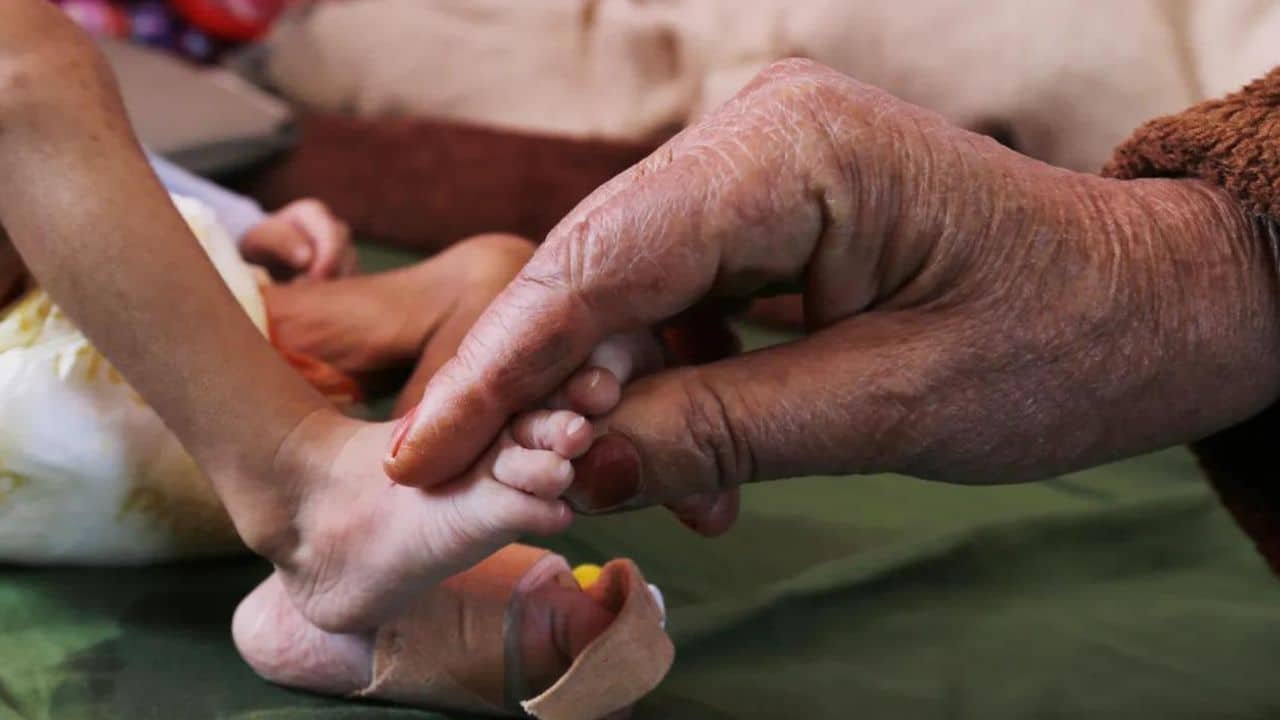
    Extreme weather events in countries vulnerable to climate change drove more than 27 million children into hunger last year, Save the Children said on Tuesday.

    The figure represented a sharp 135 percent increase over 2021, the UK-based charity said in an analysis ahead of the COP28 climate summit opening in Dubai on Thursday.

    It said children made up nearly half the 57 million people pushed into crisis levels of acute food insecurity or worse across 12 countries because of extreme weather in 2022, according to data from the IPC hunger monitoring system.

    Out of the 12, countries in the Horn of Africa were most affected, with Ethiopia and Somalia accounting for about half of the 27 million children facing hunger, Save said.

    “As climate-related weather events become more frequent and severe, we will see more drastic consequences on children’s lives,” Save’s CEO Inger Ashing said in a statement.

    The charity called on leaders meeting at COP28 in Dubai to take action on the climate crisis by recognising children as “key agents of change” but more broadly to address other causes of food insecurity such as conflict and weak health systems.

    Save highlighted the situation in Somalia, which is considered one of the most vulnerable countries to climate change, locked in a vicious cycle of drought and floods.

    It said the recent torrential rains and flooding that have engulfed many parts of the country had displaced about 650,000 people, about half of them children.

    Elsewhere, Save noted that two million children in Pakistan remained acutely malnourished after floods that swamped a third of the country last year.

    Across the planet, Save estimated that 774 million children -– or one third of the global child population — are living with the dual impacts of poverty and high climate risk.

    In a report issued last week, Save said that more than 17.6 million children will be born into hunger this year, one-fifth more than a decade ago.

  • Extreme Rainfall Increases Exponentially With Global Warming: Study

    State-of-the-art climate models drastically underestimate how much extreme rainfall increases under global warming, according to a study published Monday that signals a future of more frequent catastrophic floods unless humanity curbs greenhouse emissions.

    It comes as countries prepare to meet at the COP28 summit in Dubai beginning later this week, amid fears it could soon be impossible to limit long-term warming to the 1.5 degrees Celsius scientists say is necessary to curb the worst effects of human-caused climate change.

    Researchers from the Potsdam Institute of Climate Impact Research (PIK) looked at the intensity and frequency of daily precipitation extremes over land in 21 “next generation” climate models used by a UN body in its global assessments.

    They then compared the changes projected by the models with those observed historically, finding that nearly all climate models significantly underestimated the rates at which increases in precipitation extremes scaled with global temperature rise.

    “Our study confirms that the intensity and frequency of heavy rainfall extremes are increasing exponentially with every increment of global warming,” said Max Kotz, lead author of the paper published in the Journal of Climate.

    The changes track with the Clausius-Clapeyron relation in physics, which established that warmer air holds more water vapor. This finding underpinned the fact that temperature and not wind dominate the global change in extreme rainfall events, according to the authors.

    Stronger increases in rainfall intensity and frequency were found across the tropics and high-latitudes, like in Southeast Asia or Northern Canada, according to the study.

  • Pakistani shepherdess, midwife make it to BBC’s top 100 women list

    Pakistani shepherdess, midwife make it to BBC’s top 100 women list

    Two Pakistani women have been included into the BBC’s list of this year’s top 100 inspiring and influential women. The list highlights women who became trailblazers in their field and worked to spread awareness about issues like climate change, political instability and natural disasters. Among the list are famous Muslim figures like lawyer Amal Clooney, Pakistani Nobel Prize winner Malala Yousafzai, Iraqi-American beauty mogul Huda Kattan.

    The first Pakistani woman included in the list is Afroze-Numa, one of the last Wakkhi shepherdess who has taken care of goats, yack and sheep for over three decades.

    “Having learnt the trade from her mother and grandmothers,” the BBC description reads, “she is part of a centuries-old tradition that is now dying out in Pakistan’s Shimla valley.”

    “Every year these shepherdesses take their flocks to pastures 4,800m (16,000ft) above sea level, where they prepare dairy products to barter, while their animals feed.

    Their income has brought the village prosperity and allowed them to provide an education for their children. Afroze-Numa still fondly remembers being the first woman in the valley to own a pair of shoes.”

    The second Pakistani woman included in the list is Neha Mankani, a midwife who travelled to flood-affected areas in order to provide life-saving birthing kits and midwifery care to mothers and their babies.

    “Her typical practice focuses on low-resourced settings, emergency response and climate-affected communities,” the BBC said, adding that Mama Baby Fund has now raised enough money to launch a boat ambulance that will transport pregnant women living in coastal communities to nearby hospitals and clinics for urgent treatment.

    Taking to Instagram to share the post, Mankani wrote she was honoured to receive the acknowledgement from BBC.

    “Really honoured to be on the @bbc100women list this year as a climate hero, celebrating the important role of midwives in climate emergencies and highlighting my work with @mamababyfund in last year’s floods and in the climate affected island communities of Karachi. Head over to @bbc100women to read about all the really amazing women highlighted this year”

  • Pakistan’s climate problems partially due to world’s richest one per cent: Report

    Pakistan’s climate problems partially due to world’s richest one per cent: Report

    Oxfam has released a new report, “Climate Equality: A Planet for the 99%”, revealing that “The richest one per cent of the world’s population produced as much carbon pollution in 2019 as the five billion people who made up the poorest two-thirds of humanity.”

    While fighting the climate crisis is a shared challenge, not everyone is equally responsible and government policies must be tailored accordingly, Max Lawson, who co-authored the report, told AFP.

    “The richer you are, the easier it is to cut both your personal and your investment emissions,” he said. “You don’t need that third car, or that fourth holiday, or you don’t need to be invested in the cement industry.”

    Among the key findings of this study are that the richest one percent globally—77 million people—were responsible for 16 percent of global emissions related to their consumption.

    That is the same share as the bottom 66 percent of the global population by income, or 5.11 billion people.

    Pakistan

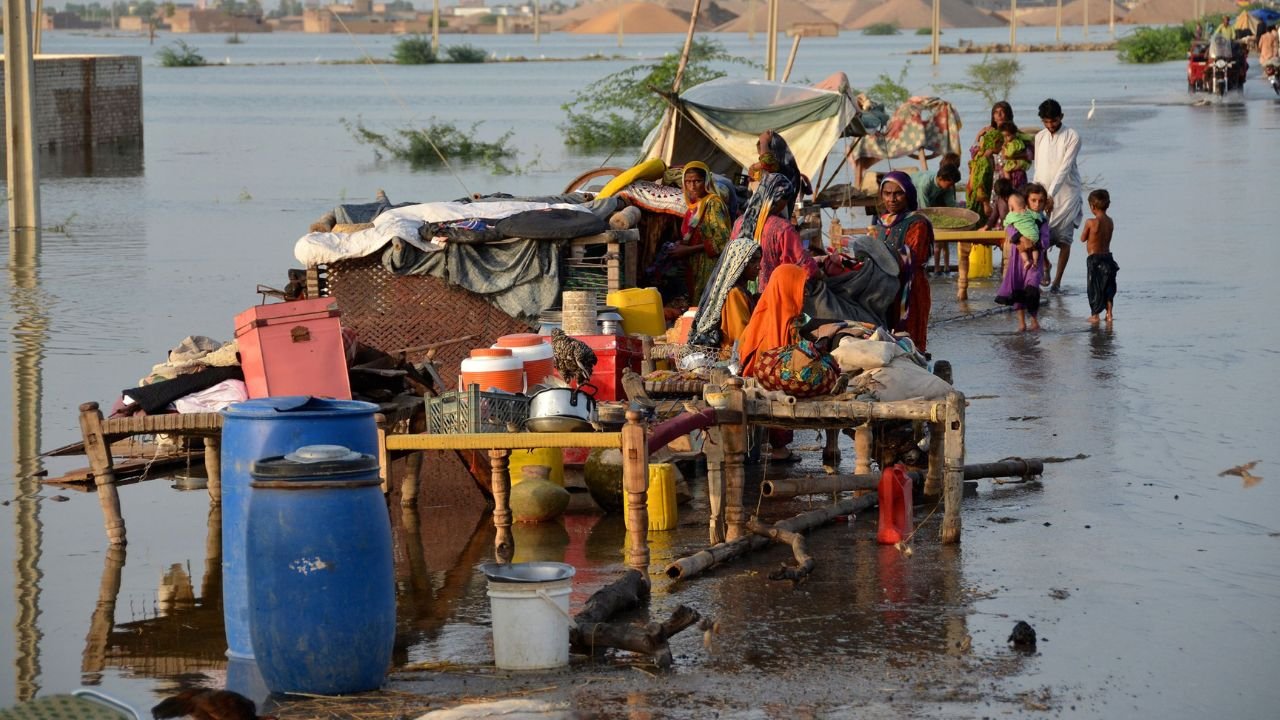
    The difference in recent floodings in Germany and Pakistan unveils how a country’s wealth can “enable or hinder its ability to respond to a climate emergency”.

    German floods affected a population of 40,000 people, resulting in damage and economic costs of 40 billion dollars. They were able to mobilise funding through federal and state government flood relief funds for reconstruction of 35 billion dollars within weeks.

    On the contrary, Pakistan floods affected a population of 33 million people, leading to damage and economic costs of 30 billion dollars. International donors pledged a funding of 8.57 billion dollars as of January 2023 for the next three years.

    While Germany could easily manage the financial and technical resources required, debt-troddened Pakistan was unable to allocate the necessary resources resulting in suffering from “the lasting impacts of the floods”.

    The report explains that this comparison between the two countries shows “a common double standard practised by many Global North countries: they rapidly find the funds needed when disasters hit within their borders, but fail to do so when they occur in the Global South”.

  • Saturdays off and artificial rains for Lahoris: Punjab Government

    Saturdays off and artificial rains for Lahoris: Punjab Government

    Lahore once again topped global charts in air pollution on Wednesday while the caretaker chief minister of Punjab called an important meeting to deal with the smog situation.

    Caretaker Chief Minister Punjab Mohsin Naqvi discussed the closure of schools, colleges and universities in Punjab on Saturdays and fixed working hours for businesses that remain operational on Saturdays.

    For now, he announced that schools and offices will be closed this Saturday, November 18.

    During the meeting, it was decided that business centres, theatres and cinemas across Punjab will also be able to open after 3 pm on Saturday.

    Caretaker CM Naqvi also talked about the installation of smog air filter ioniser units at 12 places in Lahore. He additionally said that LWMC and WASA were spraying water on an area of 400 km daily and that consultations are also going on about artificial rain.

    It was also decided that a special meteorological laboratory will be established in Punjab.

    Previously, Lahore High Court ordered the closure of private and government schools and colleges on Saturday to control smog, adding that government and private offices should adopt a policy of working from home two days a week.

    During the hearing of petitions for the prevention of smog, the court remarked that smog is no longer the problem of just Lahore, it has become the problem of all of the Punjab.

  • South Asia worst in world for water scarcity: UN

    New Delhi (AFP) – More children in South Asia are struggling due to severe water scarcity made worse by the impacts of climate change than anywhere else worldwide, the United Nations said Monday.

    “A staggering 347 million children under 18 are exposed to high or extremely high water scarcity in South Asia, the highest number among all regions in the world,” the UN children’s agency said in a report.

    The eight-nation region, comprising Afghanistan, Bangladesh, Bhutan, India, Nepal, Maldives, Pakistan and Sri Lanka, is home to more than one-quarter of the world’s children.

    “Climate change is disrupting weather patterns and rainfall, leading to unpredictable water availability,” the UN said in its report.

    The report cites poor water quality, lack of water and mismanagement such as over-pumping of aquifers, while climate change decreases the amount of water replenishing them.

    “When village wells go dry, homes, health centres and schools are all affected,” UNICEF added.

    “With an increasingly unpredictable climate, water scarcity is expected to become worse for children in South Asia.”

    At the UN COP28 climate conference in December in Dubai, UNICEF said it will call for leaders “to secure a livable planet”.

    “Safe water is a basic human right,” said Sanjay Wijesekera, UNICEF chief for South Asia.

    “Yet millions of children in South Asia don’t have enough to drink in a region plagued by floods, droughts and other extreme weather events, triggered increasingly by climate change”.

    Last year, 45 million children lacked access to basic drinking water services in South Asia, more than any other region, but UNICEF said services were expanding rapidly, with that number slated to be halved by 2030.

    Behind South Asia was Eastern and Southern Africa, where 130 million children are at risk from severe water scarcity, the report added.

  • Next four days crucial for Lahore, says caretaker CM Naqvi

    Next four days crucial for Lahore, says caretaker CM Naqvi

    Caretaker CM Punjab Mohsin Naqvi has said that, “The next four days are highly important regarding smog.” He was visiting construction sites in Saggiyan.

    Section 144 has been imposed in Lahore as part of a health and environmental emergency. The Chief Minister asserted that people should not come out of their houses unnecessarily. “There will not be much restriction on Iqbal Day but later anti-smog measures will be strictly implemented,” he said.

    The lesser number of traffic on the roads will provide ease in improving the environment and for that Punjab Government has requested traders to comply with the decision and announce the shutdown of the markets. This, he believes, will reduce the traffic and that will lessen the intensity of the smog.

    It is important to mention that Lahore is topping the charts for having a hazardous air-quality index for the last one week.

  • ‘Til trash do us part: Taiwan couple embraces garbage wedding shoot

    ‘Til trash do us part: Taiwan couple embraces garbage wedding shoot

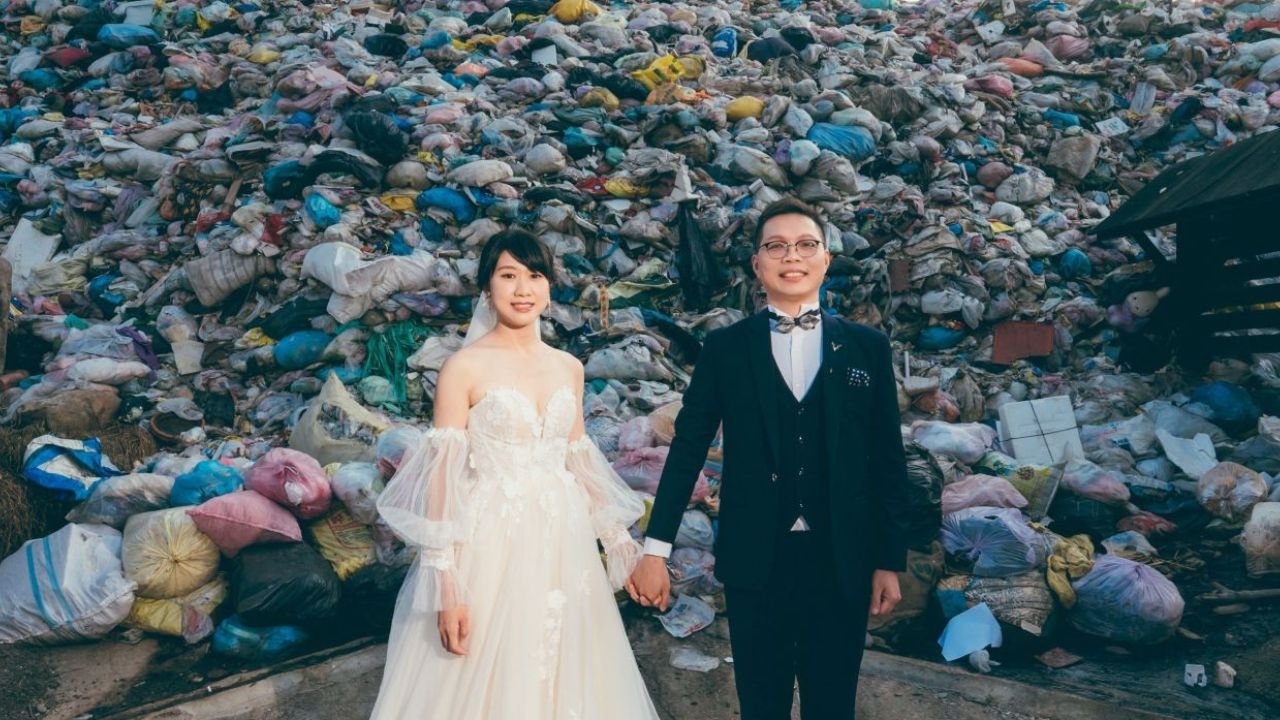
    A Taiwanese couple decked out in a tux and gown embrace in front of a mountain of trash in an unorthodox wedding photo – one the environment-conscious bride hopes will discourage her guests from generating unnecessary garbage.

    Greenpeace campaigner Iris Hsueh and her fiance are having their “environmentally friendly wedding” in January, and have asked guests to bring their own containers for taking home leftovers.

    Deciding that showing – not telling – was a more effective communication method, the Taipei-based couple travelled three hours south for a photo shoot in Nantou county’s Puli township, where the amount of trash brought to a local dump has steadily risen over the years.

    “If any guests are not willing to bring along a container, I would show them the photograph and say, ‘would you reconsider?’” the 33-year-old told AFP, adding that the photos ended up drawing local media attention.

    “I didn’t think it would create such a big sensation.”

    Self-ruled Taiwan, an island of 23 million people, has had a recycling programme since 1987, with over 50 per cent of household trash processed through the system – among the highest rates in the world.

    But Puli township’s sanitation crew chief Chen Chun-hung said the amount of garbage there has mushroomed – back in the 1980s, it was about 20 tonnes a day; now, its about 50.

  • Greta Thunberg calls for ceasefire in Gaza, freedom for Palestine

    Greta Thunberg calls for ceasefire in Gaza, freedom for Palestine

    Climate Change activist Greta Thunberg has raised her voice in calling for an end to the genocide in Palestine. She shared a post on Instagram, holding the poster ‘Free Gaza’ and announced that she was striking in solidarity with Palestine.

    “Week 270. Today we are striking in solidarity with Palestine and Gaza. The world needs to speak up and call for an immediate ceasefire, justice and freedom for Palestinians and all civilians affected.”

    The climate change activist also shared several accounts for her followers to educate themselves on the struggle for Free Palestine.