As temperatures surge to unprecedented levels year after year, July 2023 is on track to become the hottest month ever recorded on Earth, surpassing previous records by a significant margin, CNN has reported.
Scientific reports from both the European Union’s Copernicus Climate Change Service and the World Meteorological Organization have confirmed that this month’s scorching heat is virtually certain to break global climate records.
Till the first 23 days of July, the average air temperature across the entire world reached a staggering 16.95 degrees Celsius (62.51 Fahrenheit), well above the previous record of 16.63 degrees Celsius (61.93 Fahrenheit) set in July 2019.
Scientists warn that these extreme temperatures are the hottest witnessed in human history, with estimates suggesting they are the warmest the planet has experienced in over 120,000 years
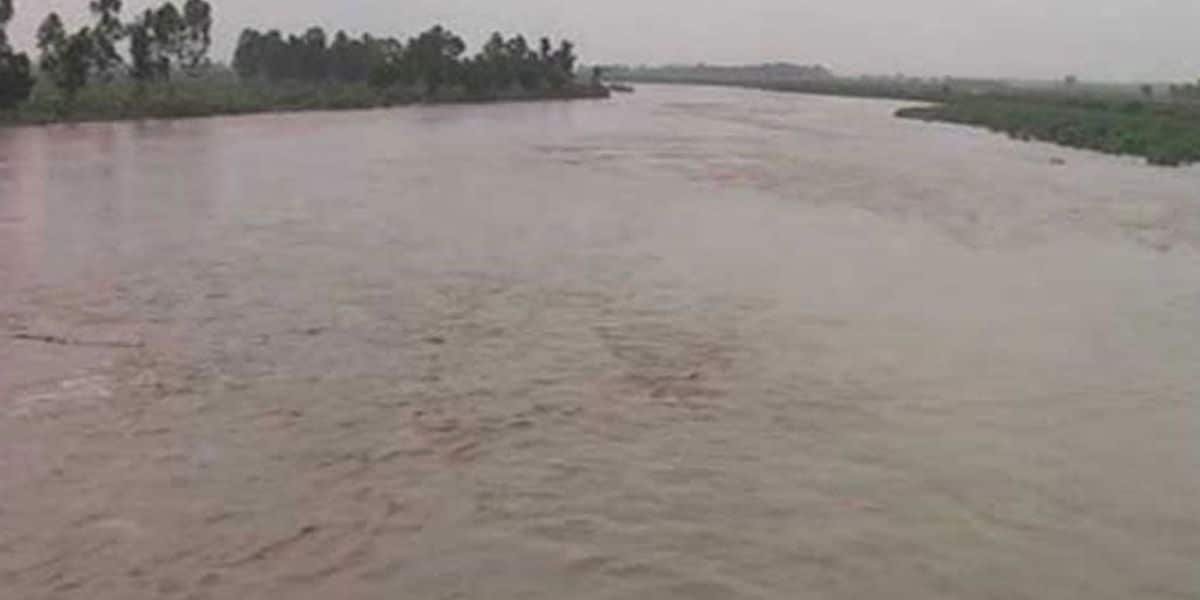
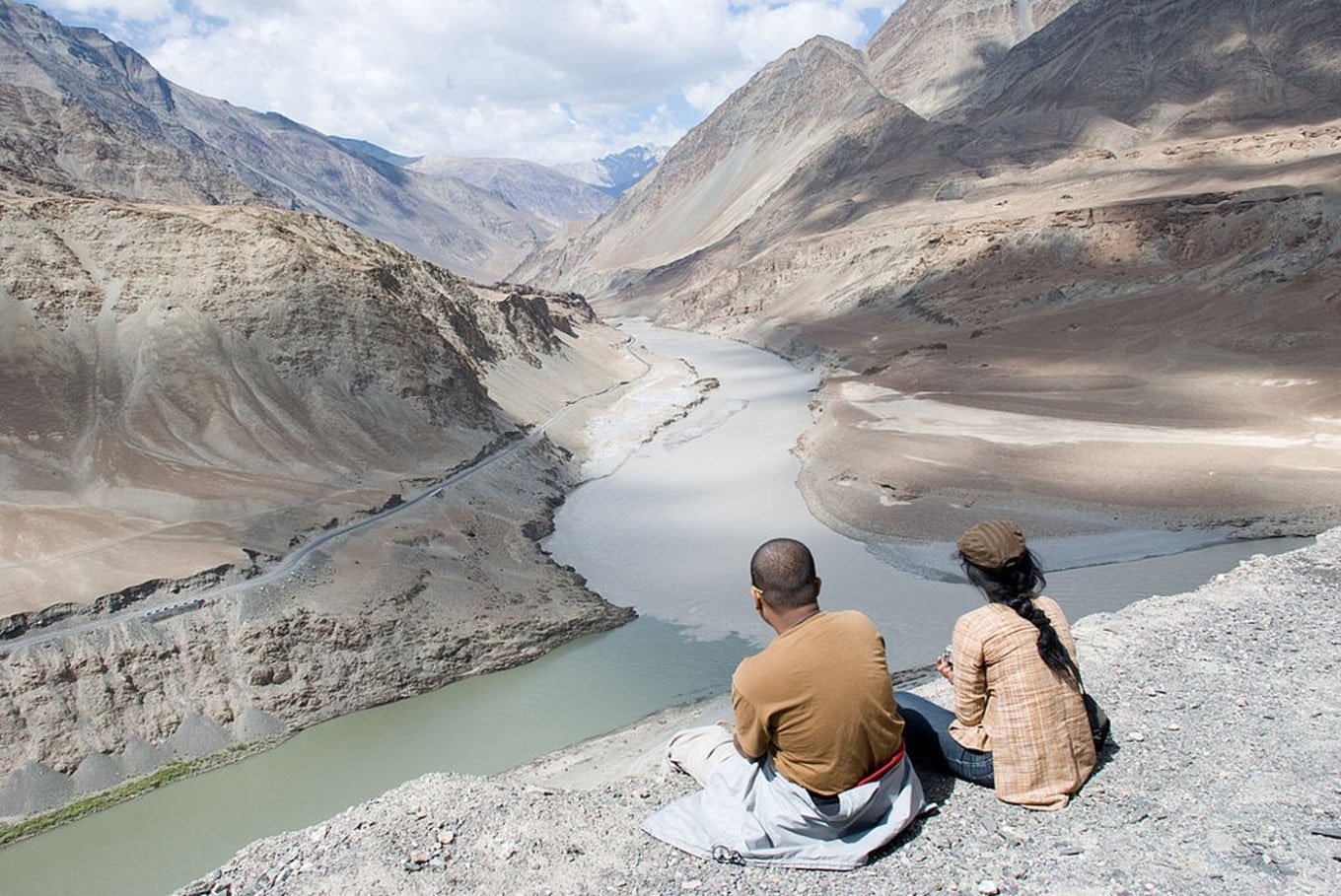
The Indus River has stopped flowing due to the melting of a glacier, which has emerged as an eminent threat to the surrounding population in Diamer district of Gilgit-Baltistan.
There is a fear of damage to the adjacent population due to the hold in water flow of the Indus River, reported Geo News. The rising water level has started touching the Labcher Bridge that could result in damaging the structure.
Following the water blockage in Indus, the Raikot Mathath drain has also flooded and the drain water has entered the water channel of the Raikot Power House [Raikot is a village situated along the Indus River].
Flooding in the drain has further caused a power outage in Gonar farm and Goharabad areas. Furthermore, a house and crops were also damaged.
Flood waters from Yamuna river have reached the boundary wall of the Taj Mahal, raising fears of damage to the most famous building in India.
Water levels in Yamuna have risen steadily since June when unusually heavy rains hit north India including Uttar Pradesh, home to the iconic Taj. According to India’s Central Water Commission (CWC), the portion of the river flowing alongside the Taj Mahal rose to 152m on Tuesday evening, well above the warning level for potential danger of 151.4m. The level considered dangerous is 152.4 metres.
The last time flood waters hit the boundary wall was in 1978, exactly 45 years ago.
The mausoleum, where Mughal emperor Shah Jehan and his wife Mumtaz Mahal are buried, remains untouched by the water as of now.
However, the red walls of the compound appear submerged in photographs shared by Indian news outlets.
The National Disaster Management Authority (NDMA) has issued a warning stating that the Ganda Singhwala area along the Sutlej River may experience a medium to high level of flooding within the next 24 to 48 hours, Dawn has reported.
The NDMA advised the administration of flood-prone areas, particularly in the Trimmu area of the river Chenab and Jassar area of the river Ravi, to remain vigilant until July 20.
In a weather advisory released on Wednesday, it is predicted that scattered thunderstorms and light to moderate rainfall may occur in Islamabad and Punjab, including the upper catchments of the major rivers in the Indus River System. These weather conditions could potentially lead to medium to high-level flooding in the Sutlej River at Ganda Singhwala.
The period from July 14 to 16 is expected to bring scattered to widespread thunderstorms and heavy rainfall in isolated areas within the upper catchments of the major rivers in the Indus River System, added the report.
Pakistan’s Federal Minister for Climate Change, Sherry Rehman, tweeted her joy on Tuesday at the ‘Recharge Pakistan’ project receiving approval for funding. A joint collaboration by Global Climate Fund (GCF), WWF and the Government of Pakistan, the project aims to build climate resilience through multiple Ecosystem-Based Adaptation (EBA) interventions.
Good news for Pakistan! Our Recharge Pakistan project, which will be implemented over the next 7 years, has been approved today for funding of 77.8 M USD. These include GCF resources of 66 M USD and co-financing of around USD 11.8 M. This adaptation project aims to initiate… pic.twitter.com/MZAQ77EymO
The project is said to be implemented over the next seven years and will be receiving resources of $66 million from GCF, and $11.8 million from co-financing organisations.
The EBA interventions are comprised of three components: firstly, to store flood water in wetlands, floodplains, and depressions (also known as green infrastructure) at several priority sites.
Secondly, the project is designed to build community resilience amongst those Pakistani communities particularly vulnerable to climate change.
Lastly, and perhaps most importantly, the project aims to enable a paradigm shift towards ecosystem-based adaptation in Pakistan in order to scale up more projects with this approach.
As Senator Rehman also said, the project is aimed to enable the Government of Pakistan, “including all lead provinces and stakeholders”, to implement and replicate nature-based solutions for climate change.
The tentative goal is that by 2030, there would be a reduction of flood risk, with enhanced water recharge at six sites in the Indus Basin, building resilience amongst 10 million people and vulnerable ecosystems.
In order to ensure that the aforementioned EBA interventions are sustained and continue to function effectively, WWF states that the project will ensure that climate-adapted, community-based natural resource management is implemented locally.
Thus, Recharge Pakistan will hopefully contribute towards improving water and food security at a national level, and climate-adapted livelihoods locally, increasing resilience through the protection and restoration of ecosystems and building the climate resilience of vulnerable communities in the Indus Basin.
As one of the countries most threatened by climate change, the approved funding for Recharge Pakistan is definitely a win. More nature-based solutions for climate change could help our country escape imminent disaster while preserving and rebuilding what’s left of our environment.
According to a study published by JAMA Psychiatry on Wednesday, the rising temperatures in South Asia caused by climate change has led to a rise in domestic violence inflicted upon women and girls.
Researchers completed the study by gathering data of physical, emotional and sexual abuse from 194,871 girls and women between the ages of 15 to 49 from countries like India, Pakistan and Nepal between the years 2010 and 2018.
Their results have shown that with every one degree rise in temperature, there was an eight per cent hike in physical violence, a 7.3 per cent rise in sexual violence, and a 4.9% increase in domestic violence.
The study has warned that domestic violence is likely to rise by 21 per cent by the end of the century because of the “unlimited emissions scenario”, with India likely to see a 23.5 per cent increase, 14.8 per cent in Nepal and 5.9 per cent in Pakistan.
A report by Amnesty International has called for global leaders to take action against rising heatwaves in Pakistan, stating that the country was on the “frontlines of the climate crisis” despite producing less than one per cent of planet-warming gases.
“Despite their small contribution to climate change, its people face disproportionately severe consequences which are often life threatening. Tackling a climate crisis of this scale requires global attention and action. Wealthier countries must make no mistake about the important role they play,” said Dinushika Dissanayake, Amnesty’s deputy regional director in South Asia.
The report revealed that after speaking to 45 people in the summers of 2021 and 2022 from Lahore and Jacobabad, where temperatures had reached 52C, the human rights organisation revealed that people complained about heatstroke, shortness of breathe and dizziness, with some needing hospital care.
People who were interviewed for the study belonged to professions at a higher risk of exposure to heat, such as working in agriculture, brick kilns, factories or delivery men.
The organisation also shared that 40 million Pakistanis suffer from constant power outrages, while others receive erratic power supplies due to lengthy outrages.
“People living in poverty do not have access to, or are unable to afford, electricity for fans or air conditioning units and neither can they afford to buy solar panels,” the report said.
Climate Change Minister Sherry Rehman is not one to hold back when it comes to calling out audacious ideas. Earlier this week, Capital Development Authority (CDA) Chairman Noor Ul Amin Mengal tweeted a suggestion for alleviating traffic congestion on the road to Daman e Koh and Peer Sohawa on Margalla Hills. He pondered planning a road from Peer Sohawa to Barri Imam and 3rd Avenue to make it a loop to facilitate traffic movement.
The road to daman e koh and peer sohawa at times becomes congested. Should we plan a road from peer sohawa to barri Imam and 3 rd avenue to make it a loop to facilitate traffic movement or not ? Pl say or no.
Rehman clapped back today, reminding the Chairman of his domain of authority:
This is not @CDAthecapital domain. You cannot take a road through @WildlifeBoard green area. It is against our existing wildlife laws and goes against our Int’l commitments. Not your mandate to be eliciting comments. This is under @ClimateChangePKhttps://t.co/AsDC8cSK1x
Correcting the Chairman, Rehman stated that planning infrastructure through a Wildlife Board-protected green area is not under the CDA’s domain of authority. She reiterated that the plan is against Pakistan’s existing wildlife laws and goes against the country’s international commitments to preventing climate change.
Other Twitter users also chimed in with their opinions:
Will this not open doors to illegal construction and real estate mafias moving in especially in the KPK side of the national park area ?
As part of UNDP’s Climate Promise, Pakistan intends to set a cumulative ambitious conditional target of an overall 50% reduction of its projected emissions by 2030, with a 15% reduction from the country’s own resources and a 35% reduction subjected to the provision of international grant finance.
Cutting down trees in order to build concrete infrastructure stands decidedly against Pakistan’s Nationally Determined Contribution to the Climate Promise.
When Cyclone Biparjoy was hurtling towards the Sindhi coastline, many heard the name ‘Keti Bandar’ repeatedly on television, as well as talk of the existential threat the port-town faced due to the tropical storm. Many only recognised Keti Bandar as the part of coastal Sindh that Biparjoy was initially predicted to make landfall on.
Yet Keti Bandar is the remnant of a practically ancient community that has long suffered the systematic destruction of the Indus delta. What many don’t realise is that, before Biparjoy even began stirring in the Indian Ocean, Keti Bandar had sank under the Arabian sea and reemerged three times.
This is the story of a community that is fighting against a disappearing delta. A community that still stands after being swallowed by the sea. A community that may not survive another submergence.
The lords of the sea
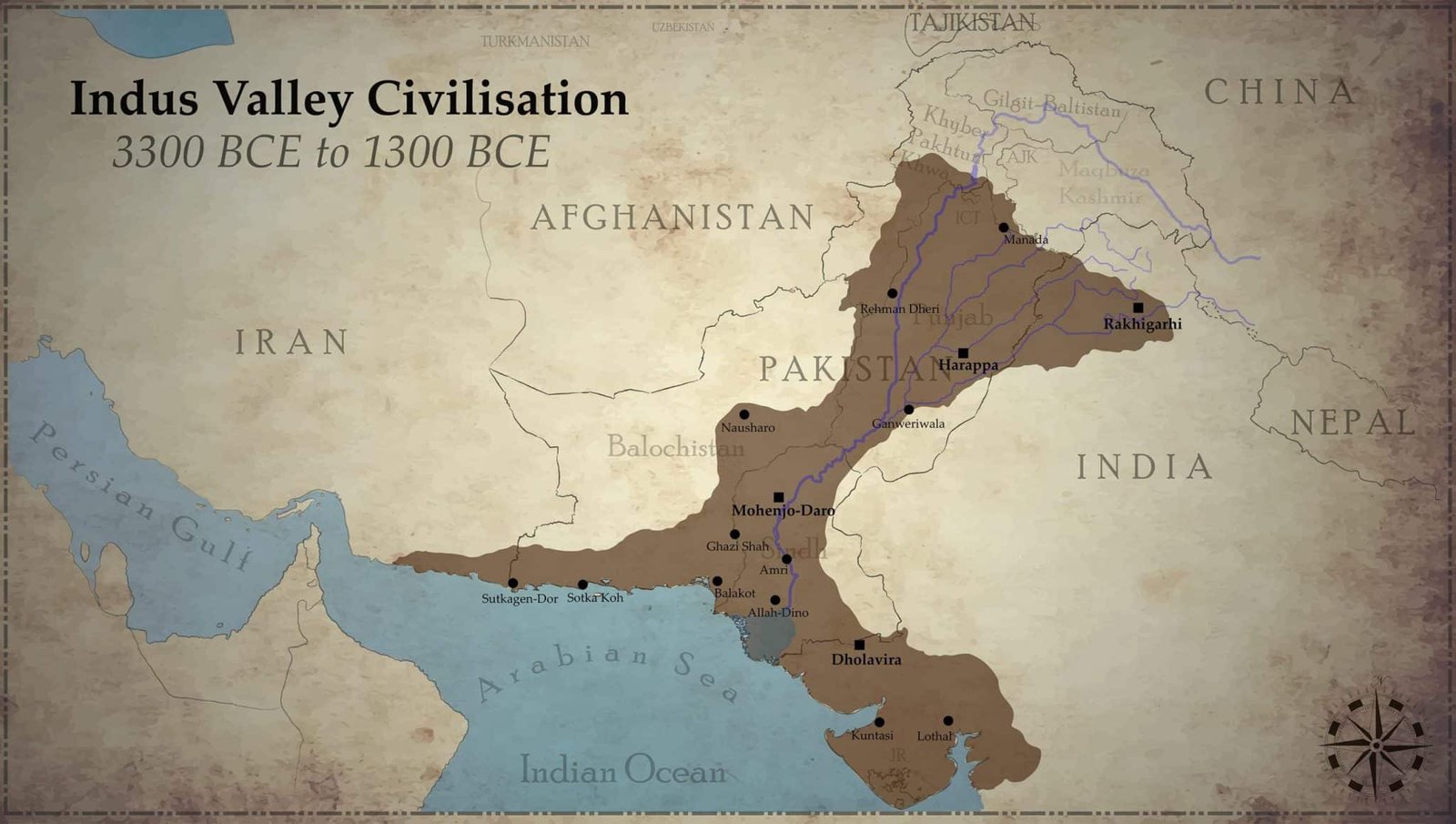
The residents of Keti Bandar are part of the Mohana tribe, descendants of the first inhabitants of the Indus valley. The remains of the original Mohana settlement can still be seen at the archeological site of Mohenjo-daro, which once stood on the banks of the Indus before the mighty river changed its course.
The Mohana refer to themselves as ‘Mir Bhar’, an Arabian word which means ‘kings of the sea’. They are historically a boat and river folk, engaged in the business of fishing and transport along the sea and river. The Mir Bhar are one of the oldest castes that have existed in Sindh. It is one of the few cultures dating back to the ancient Indus Valley Civilization that has remained continuous in the region.
Much of lower Sindh lay beneath the Arabian Sea 3000 years ago. Part of a rivers’ natural process is the deposit of silt. A river is as much mud as it is water, a fact that is often forgotten. Over time, the Indus deposited so much silt that the sea water receded, creating the mud flats that comprise much of lower Sindh. The mudflats that house communities such as Keti Bandar.
Keti Bandar exists solely because of its connection to the river. There are so many subtribes of the Mohana fishermen community that live across lower Sindh, which shows the crucial part the Indus played in its creation and livelihood.
It was a thriving port once – in fact, the inhabitants of Keti Bandar were once far more affluent than those of Karachi. Rich fishermen and farmers that cultivated red rice would lend money to aspiring businessmen in the bustling city. The fresh river water of the delta allowed the Mir Bhar to live well and prosper.
Keti Bandar sank three times due to hurricanes and sea advances: once in 1857, then in 1877, and the last known submergence was in 1910. When Cyclone Biparjoy came around, the sea swallowed many homes along Keti Bandar again, but the water receded fairly quickly as the storm moved along its course.
Yet the persisting Mohanas were damned long before Cyclone Biparjoy, long before the current throes of climate change. The deposit of silt, that was so instrumental to the creation and preservation of Keti Bandar, was halted when the Kotri Barrage was finished in 1955.
The Gradual Death of the Delta
The construction of the Kotri Barrage began during the British Raj in 1932. Environmental activist Zulfikar Ali Bhutto Jr. reflected on his visit to Keti Bandar in 2015. He shared how Kotri Barrage (also known as the Ghulam Muhammad Barrage), as well as other barrage systems built by The World Bank and IMF post partition, were the ‘final nail in the coffin’ on what we knew once as the mighty Indus delta.
“It’s as though Keti Bandar has suffered 15 – 16 years of dehydration,” Zulfikar said. Indeed, there can be no development with no fresh water. The excessive damming and redirecting of the Indus has drastically decreased the water flow from the river to the mudflats of lower Sindh. As a result of resource degradation, the Indus delta has seen a mass exodus.
According to a study by Altaf Memom published in 2005, an estimated 90, 000 had been displaced and about 120 villages depopulated. One can only imagine the state of things now: the lack of fresh water and the encroaching Arabian Sea has rendered Keti Bandar practically unlivable. And yet, the community persists. While we are hearing the term ‘climate refugees’ now more than ever – especially considering the devastation of the 2022 floods – Pakistan has technically had climate refugees since the 50s.
Due to the various irrigation systems along the Indus, 43% of land in Northern Sindh has been left saline. Because of this, the entire delta system has seen catastrophic changes. The locals of Keti Bandar primarily complain of ‘kaala paani’: no fresh water. Without fresh water, there can be no development. And with the now obstructed deposition of silt, Keti Bandar and other coastal regions that lie atop mud flats are facing the existential threat of being swallowed by the sea.
When asked about the recent floods and their potential benefit to the arid region, Zulfikar said, “Even if there is a good summer monsoon, so much of it is still drained out. Whatever’s left behind after crossing through Sukkur Barrage is just seepage and not enough silt.”
The Decline of Keti Bandar
The Mohanas, once one of the oldest and wealthiest tribes of Sindh, has now become one of the poorest. The entire province of Sindh is part of the Indus delta, and because of it shrinking, the locals of Keti Bandar have gone from living in the abundance of the rich river to living in sheer poverty.
As lords of the sea, Keti Bandar’s community is mostly comprised of fishermen. They rely solely on fishing for sustenance. However, this stream of income is not only threatened by extreme weather events such as Cyclone Biparjoy. The fishermen of Keti Bandar have been ruined by loans with astronomical interest rates, endowed on them by Middlemen that orchestrate business between the fishermen of Keti Bandar and the fish markets of Karachi.
They buy the catch at low prices, and sell them to traders in Karachi and other cities for a 200-500 percent profit. Since the poor fishermen owe them money, they have no choice but to sell their catch to these people, otherwise risking the seizure of their boats and fishing nets.
The locals are very cognizant of the decline of wealth and prosperity in Keti Bandar. Some of the oldest members of the community were still alive when Keti Bandar’s municipality was loaning to the growing metropolis of Karachi. Since its steady decline, the government has made empty promises to provide for the community, but to no avail.
On a visit to Keti Bandar in 2011, Moin Khwaja shared the frustration of a local fisherman: “The government is literally pushing us into the sea. Loan sharks visit us every single day while the politicians come to us once in five years to beg for our votes”.
While the climate crisis worsens, communities such as the Mohanas along Keti Bandar have already been facing the brunt of drastic environmental changes and lack of governmental support. One can only imagine the magnitude of the threat they face now, as extreme weather events such as Biparjoy will only increase in frequency.
Special thanks to Zulfikar Ali Bhutto Jr. for giving The Current his insights regarding the environmental degradation of the Indus Delta and Keti Bandar.
Altaf A. Memon (May 14–19, 2005). “Devastation of the Indus River Delta”. World Water & Environmental Resources Congress 2005. Anchorage, Alaska: American Society of Civil Engineers. World Wildlife Fund.
Environment activists smeared red paint and glued their hands to the protective glass on a Claude Monet painting at Stockholm’s National Museum on Wednesday, June 14.
The two women, aged 25 and 30, were arrested after the attempted vandalism. The organisation Återställ Våtmarker, meaning “Restore the Wetlands” claimed responsibility for the stunt.
In a video, the two women can be heard chanting: “The climate situation is urgent” and “our health is threatened”. Spokesperson of Återställ Våtmarker, Helen Wahlgren, explained in an interview with AFP that this was in protest of the Swedish government allegedly not respecting its international climate commitments.
Wahlgren also pointed out that a climate catastrophe is “also a health crisis” with “millions of people already dying from the climate disaster”.
Återställ Våtmarker said “gorgeous gardens like those in Monet’s painting will soon be a distant memory”.
Monet’s “The Artist’s Garden at Giverny” (1900) is currently being examined by the museum’s conservation team to see if it has been damaged.
The museum said it was “naturally” opposed to actions that risk damaging works of art. The acting Chief Curator, Per Hedstrom, said cultural heritage has great symbolic value, and claimed it was “unacceptable” to attack it regardless of the purpose.
Climate-Induced Vandalism of Masterpieces:
Monet is not the first great painter to have his work vandalised by climate change activists. Last year, major paintings by the likes of Vincent van Gogh, Johannes Vermeer and Gustav Klimt caught the wrath of climate change activists.
Cans of tomato were splattered over Van Gogh’s “Sunflowers”. At another Dutch museum, a man glued his head to Vermeer’s “Girl with a Pearl Earring.” In Austria, protestors threw red and brown slime – meant to represent blood and oil – at Klimt’s “Death and Life”.
Never before have so many purported fine art masterpieces been vandalised in such a short amount of time. It raises the question of whether or not the destruction of art is an effective vehicle for protest.
All of the paintings involved were undamaged, as reported by the museums that house them.
Time magazine on Thursday revealed its list of the 100 most influential people of 2023 with Minister for Climate Change Senator Sherry Rehman included in it.
Time’s list of the most influential people is curated by its editors while individuals on the list are nominated by previous honorees, as well as the magazine’s writing staff.
“As Pakistan’s Minister for Climate Change, she gave a voice to those who had lost everything to the floods. Through impassioned speeches and tireless engagement in negotiations, she convinced many of the delegates that the blatant injustice must come to an end. COP27 ended with a historic decision—the world community agreed for the first time to establish new loss and damage funding arrangements to support the most vulnerable countries. This is a big step towards climate justice, but we still have a long way to go. We will need more people like Sherry Rehman along the way,” writes Times about Sherry.
“Omg thank you @peterfrankopan! Just saw this. Honoured to be on this list”, said Sherry on Twitter while reacting to receiving the honour.