Tag: climate resilience

  • ECNEC approves multi-billion rupee initiatives for education, healthcare, and infrastructure 

    ECNEC approves multi-billion rupee initiatives for education, healthcare, and infrastructure 

    The Executive Committee of the National Economic Council (ECNEC) recently convened to review and approve nine projects valued at Rs371.85 billion across various sectors, as detailed in a press release from the Finance Division.   

    Among the sanctioned projects is the Khyber Pakhtunkhwa Food Security Support Project, with a budget of Rs25.098 billion, aimed at addressing climate vulnerabilities, enhancing food security, and improving livelihoods in flood-affected districts of KP province over a five-year period.  

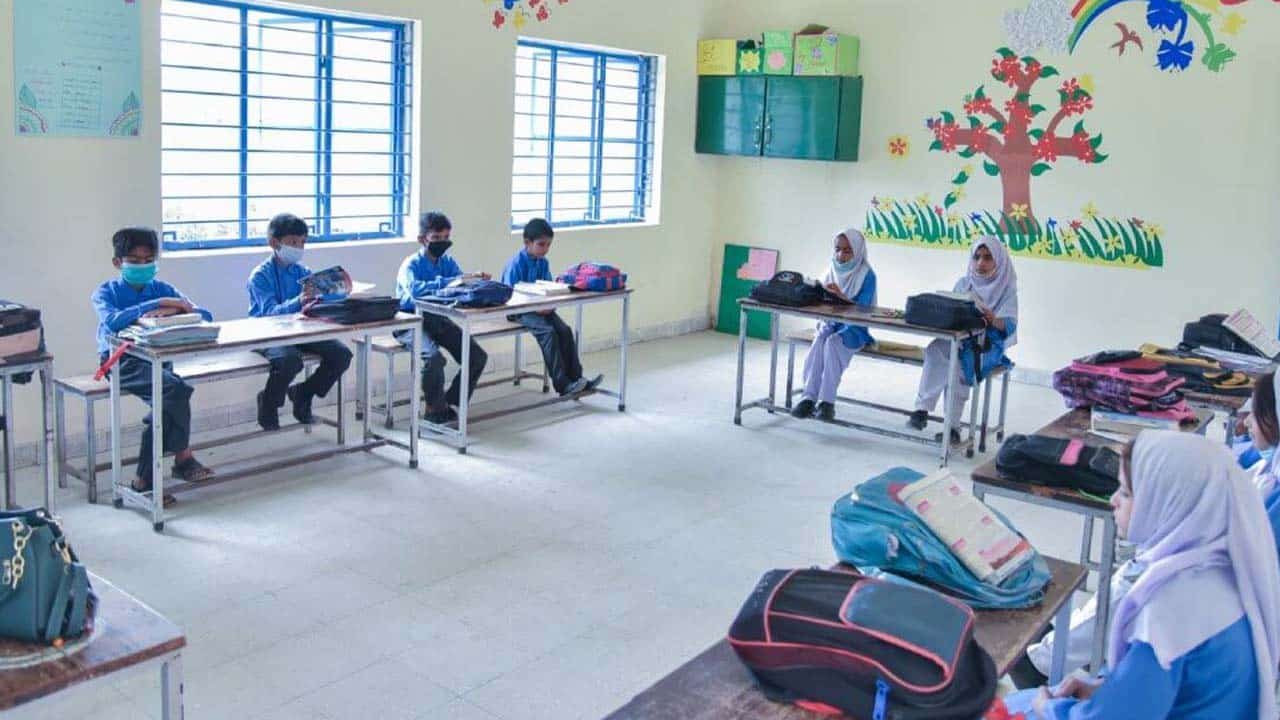
    In Sindh, the ECNEC approved the “Sindh School Rehabilitation Project under Flood Restoration Programme,” valued at Rs86.081 billion, with the goal of rehabilitating 1607 schools in districts severely affected by rain/floods.   

    Another KP-focused initiative, the “Education Component: Refugees & Host Communities Regional Sub-Windows SH Khyber Pakhtunkhwa Human Capital Investment Project (KP-HCIP),” received approval at a cost of Rs32.835 billion, targeting the rehabilitation and reconstruction of 1165 damaged schools in 13 districts.  

    Additional projects approved include the “Prime Minister’s Laptop Scheme” (Rs16.801 billion), Khyber Pakhtunkhwa Human Capital Investment Project (Health Component) (Rs24.225 billion), Women Inclusive Finance (Rs31.413 billion), Thar Coal Railway Connectivity (Rs53.727 billion), Peshawar Northern Bypass Project (PNBP) (Rs27.052 billion), and the Greater Thal Canal Project (Phase-II), which was deferred for further consultation.  

    The ECNEC also granted permission for the Sindh Barrage Improvement Project (Phase-II), allocating Rs74.618 billion for the rehabilitation and modernization of Sukkur Barrage and remaining works for Guddu Barrage.   

    Chaired by Dr. Shamshad Akhtar, the caretaker Federal Minister for Finance, Revenue & Economic Affairs, the meeting involved discussions among government officials.   

    The approved projects cover diverse areas such as education, healthcare, infrastructure, and disaster recovery, reflecting a comprehensive approach to addressing various socio-economic challenges across provinces. 
  • ADB approves $250 million loan to upgrade Pakistan’s power transmission system 

    ADB approves $250 million loan to upgrade Pakistan’s power transmission system 

    The Asian Development Bank (ADB) has granted a $250 million loan to Pakistan to enhance the country’s power transmission system, addressing persistent electricity shortages. 

    The approved aid aims to ensure a reliable electricity supply by expanding and enhancing the power transmission network in Punjab and Khyber Pakhtunkhwa provinces, as outlined in an official ADB statement. 

    The initiative, known as the Power Transmission Strengthening Project, focuses on fortifying the national grid’s stability by increasing transmission capacity. 

    The project includes the expansion of high-voltage transmission networks, specifically 500 kilovolt (kV) and 220 kV transmission line loops, with the goal of reducing transmission losses in Lahore, Punjab, through the replacement of outdated transmission lines. 

    ADB Director General for Central and West Asia, Yevgeniy Zhukov, emphasised the significance of a reliable power supply for inclusive and sustainable economic growth. 

    He expressed satisfaction in continuing ADB’s support for Pakistan’s pursuit of energy security and improved energy efficiency. 

    In addition to reinforcing power transmission, the project aims to complement ADB’s existing assistance to the National Transmission & Despatch Company Limited (NTDC). 

    This support targets energy security, climate resilience, and increased transmission capacity for the deployment of sufficient, reliable, clean, and cost-effective energy. 

    The project’s key objectives extend to enhancing the management of the national transmission system. 

    Beyond strengthening power transmission, ADB’s initiative will improve the project and financial management of NTDC, incorporating climate resilience in planning and operations. 

    To promote gender equality and women’s involvement in the energy sector, ADB plans to develop mentorship guidelines, conduct awareness campaigns, establish childcare centres, and provide technical training for female staff within NTDC. 

    The project also includes livelihood skills development for women in the designated areas, aiming to enhance their economic opportunities. 

    Additionally, local communities will receive training to enable them to respond effectively to climate-induced natural hazards. 

  • ‘Recharge Pakistan’ climate resilience project approved for funding

    ‘Recharge Pakistan’ climate resilience project approved for funding

    Pakistan’s Federal Minister for Climate Change, Sherry Rehman, tweeted her joy on Tuesday at the ‘Recharge Pakistan’ project receiving approval for funding. A joint collaboration by Global Climate Fund (GCF), WWF and the Government of Pakistan, the project aims to build climate resilience through multiple Ecosystem-Based Adaptation (EBA) interventions.

    The project is said to be implemented over the next seven years and will be receiving resources of $66 million from GCF, and $11.8 million from co-financing organisations. 

    The EBA interventions are comprised of three components: firstly, to store flood water in wetlands, floodplains, and depressions (also known as green infrastructure) at several priority sites. 

    Secondly, the project is designed to build community resilience amongst those Pakistani communities particularly vulnerable to climate change. 

    Lastly, and perhaps most importantly, the project aims to enable a paradigm shift towards ecosystem-based adaptation in Pakistan in order to scale up more projects with this approach.

    As Senator Rehman also said, the project is aimed to enable the Government of Pakistan, “including all lead provinces and stakeholders”, to implement and replicate nature-based solutions for climate change.

    The tentative goal is that by 2030, there would be a reduction of flood risk, with enhanced water recharge at six sites in the Indus Basin, building resilience amongst 10 million people and vulnerable ecosystems. 

    In order to ensure that the aforementioned EBA interventions are sustained and continue to function effectively, WWF states that the project will ensure that climate-adapted, community-based natural resource management is implemented locally. 

    Thus, Recharge Pakistan will hopefully contribute towards improving water and food security at a national level, and climate-adapted livelihoods locally, increasing resilience through the protection and restoration of ecosystems and building the climate resilience of vulnerable communities in the Indus Basin.

    As one of the countries most threatened by climate change, the approved funding for Recharge Pakistan is definitely a win. More nature-based solutions for climate change could help our country escape imminent disaster while preserving and rebuilding what’s left of our environment.

  • World Bank commits $213 million for Balochistan’s flood recovery and climate resilience

    World Bank commits $213 million for Balochistan’s flood recovery and climate resilience

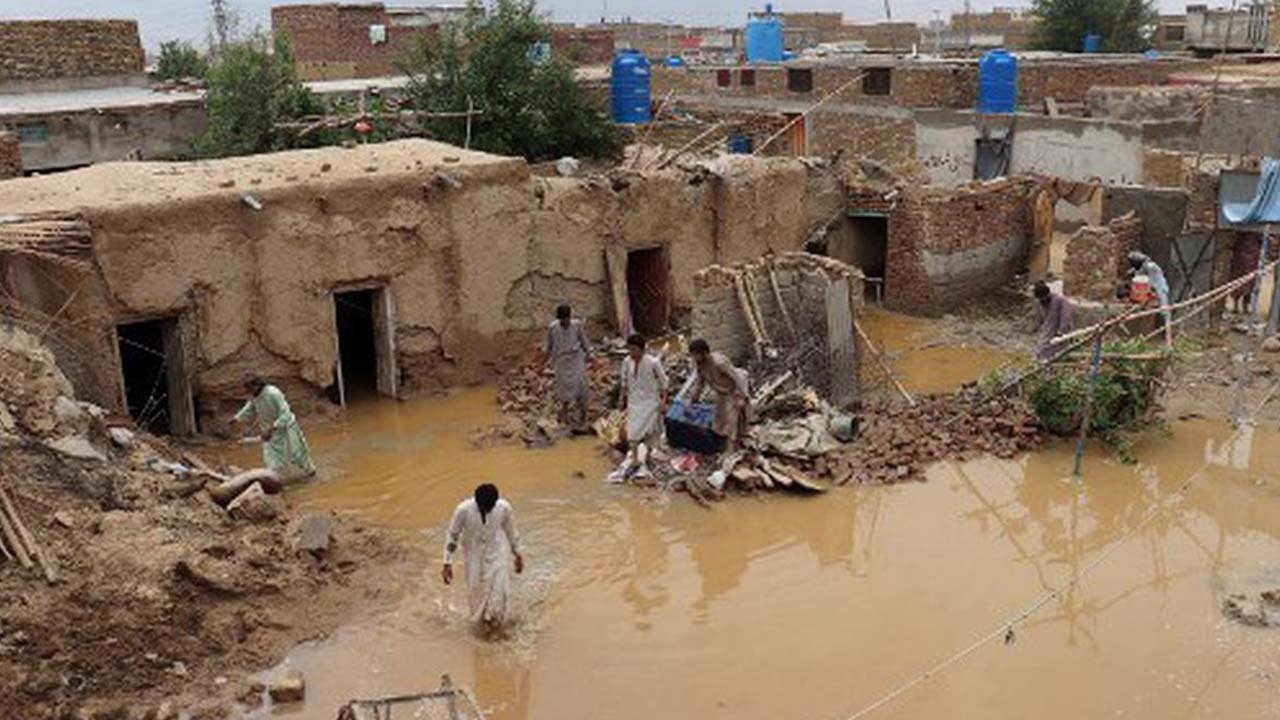
    The Board of Executive Directors of the World Bank has granted $213 million in funding to Balochistan for the purpose of improving livelihoods, essential services, and risk protection in communities that were affected by the devastating floods in 2022.

    This financial assistance is part of a larger program established in collaboration with the government to address the aftermath of the floods and build a climate-resilient Pakistan.

    Najy Benhassine, the World Bank Country Director for Pakistan, expressed the organization’s commitment to closely cooperate with the Government of Balochistan in supporting the affected communities. The World Bank aims to provide livelihood support and rehabilitate irrigation and flood protection infrastructure.

    These efforts will not only restore the livelihoods of the affected population but also enhance their resilience to potential future climate-related disasters and natural hazards. The project aligns with the comprehensive package of post-flood rehabilitation and resilient reconstruction program agreed upon with the authorities.

    The floods of the previous year were a result of record monsoon rains in the southern and southwestern regions of Pakistan, compounded by glacial melt in the northern areas. The calamity affected nearly 33 million people in the country, which has a population of 220 million. Tragically, the floods claimed over 1,700 lives and caused substantial damage to homes, crops, bridges, roads, and livestock.

    The Integrated Flood Resilience and Adaptation Project (IFRAP) outlined by the World Bank will provide housing reconstruction grants to approximately 35,100 homeowners. It will also focus on restoring essential services by rehabilitating damaged community infrastructure and facilities, such as water supply systems, irrigation networks, roads, and community facilities.

    Balochistan, with its geographical location, socioeconomic background, and vulnerability to climate change, faces significant risks from natural disasters. Yoro Sidibe, a Senior Water Specialist at the World Bank, emphasized that the project aims to provide economic opportunities to the affected communities while ensuring social inclusion and participation. Additionally, it will enhance institutional capacity for preparedness and response to future disasters.

    The World Bank expects that the Integrated Flood Resilience and Adaptation Project will benefit approximately 2.7 million people in selected communities across Balochistan’s calamity-declared districts. The project’s objectives include the restoration of degraded watersheds and the strengthening of institutional capacity at both the provincial and local levels.

  • Pakistan likely to receive economic assistance from friendly countries soon, says Minister Ahsan Iqbal

    Pakistan likely to receive economic assistance from friendly countries soon, says Minister Ahsan Iqbal

    On Tuesday, Minister for Planning and Development Ahsan Iqbal announced that Pakistan is likely to receive confirmation of economic assistance from friendly countries in the coming days. This confirmation is the last condition of the International Monetary Fund (IMF) and will be followed by a staff-level deal with the Fund.

    According to Iqbal, Pakistan has fulfilled nearly all conditions previously agreed upon with the IMF by the previous government. Currently, the Fund is requesting confirmation from the friendly countries providing assistance to Pakistan. Once received, the IMF deal will come on track.

    During the US-Pakistan Diaspora and Private Sector for Flood Recovery and Rehabilitation Conference, three Memoranda of Understanding (MoUs) were signed with a Pakistan-based US company and US-Pakistani diaspora entities, mobilizing $78 million. The conference was organized by the US Agency for International Development (USAID).

    When questioned about the IMF’s objection to the fuel subsidy announced by the government for the poor segment of society, Iqbal clarified that this was an internal adjustment within the fuel price and no new subsidy was being announced. He expressed hope that the IMF would have no objection to the government’s move.

    Iqbal urged the US-Pakistan Diaspora to support the government’s efforts in recovering and rehabilitating millions of flood-affected people. He appreciated the United States’ pledge of $200 million for flood relief efforts but emphasized that Pakistan needs much more for the complete rehabilitation of millions of people affected by floods.

    In his remarks, United States Ambassador Donald Blome highlighted the contributions of the US-Pakistani diaspora and private sector in building back better for flood-affected communities in Pakistan. He reaffirmed the US government’s commitment to supporting flood relief and recovery efforts, disaster resilience, and food security.

    The conference continued the momentum built at the previous conferences in Islamabad where USAID signed six MoUs mobilizing $75 million. The discussions held in those conferences led to additional contributions and investments to help populations and areas affected by floods. More than 200 participants attended the Building Back Better Conference, including members of the US-Pakistani diaspora, prominent local business leaders, US business representatives, and Pakistani officials. They discussed ways to help the flood-affected population and communities.

    Ambassador Blome emphasized the longstanding US-Pakistan partnership in advancing Pakistan’s economic growth and social and humanitarian causes. He highlighted the need to strengthen climate resilience through the US-Pakistan “Green Alliance” framework and expressed the United States’ commitment to helping the US-Pakistani diaspora and Pakistan-based private companies find opportunities to pursue energy transformation and foster economic growth and development outcomes.