Tag: closure

  • Sindh govt’s Rs2 roti plan may trigger shortage, price inflation in the near future

    Sindh govt’s Rs2 roti plan may trigger shortage, price inflation in the near future

    Sindh Governor Kamran Tessori has announced a subsidised food programme for the poor. As part of this initiative, the government will provide roti (flatbread) at a price of Rs2.

    Tessori stated that the provision of roti at a reduced price is aimed at helping people affected by inflation and will be implemented in specific areas of the metropolis. He emphasised that this noble cause will be pursued as a mission.

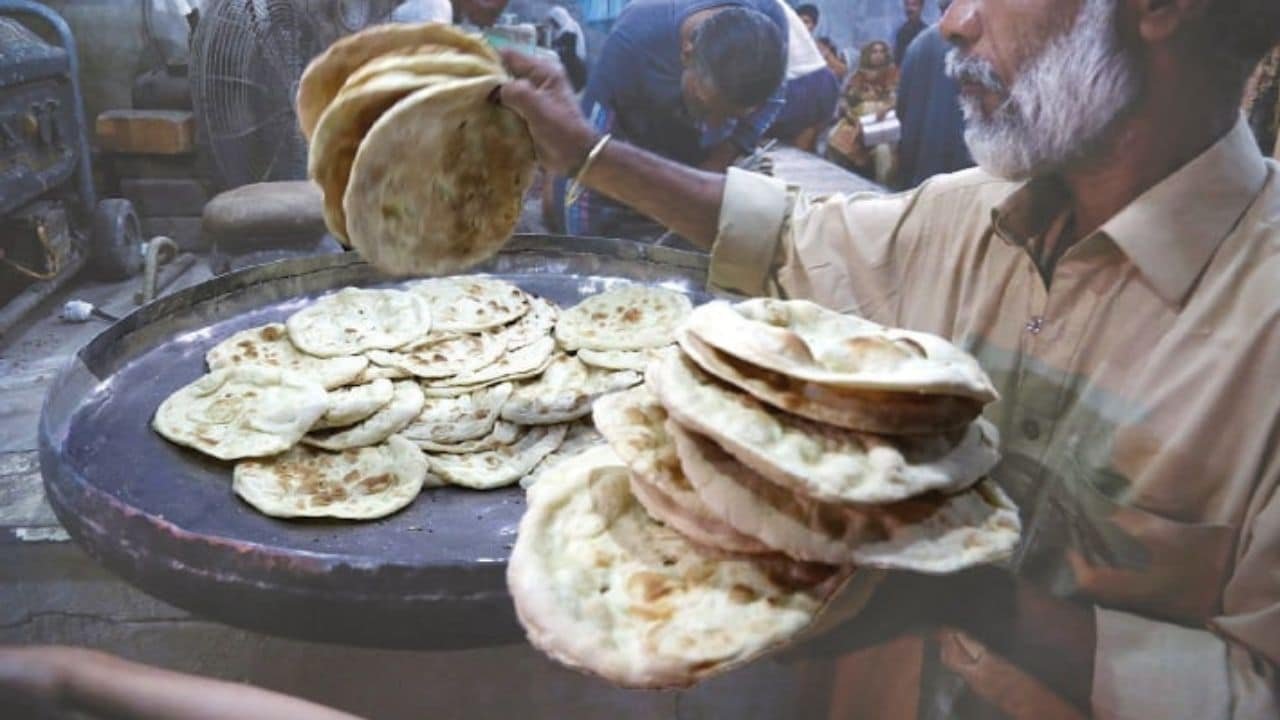
    During a ceremony on Sunday, the governor announced the establishment of up to 300 tandoors (traditional clay ovens) across the Sindh capital, where roti will be sold for only Rs2. Additionally, he reiterated that ration bags would be distributed among one hundred thousand deserving families in the port city.

    While it may seem beneficial for the inflation-hit people of Karachi to have access to roti at a significantly lower price of Rs2 compared to the Rs20-25 market price, there could be unintended consequences.

    If the government sets up 300 temporary tandoors selling roti at Rs2, the majority of people may opt to buy from them rather than purchasing roti from tandoors selling it at a higher price. Consequently, the tandoors selling roti for Rs20 may be forced to close as they would be unable to compete with these subsidised tandoors.

    Once the government discontinues the cheap roti scheme or ceases to offer it at reduced rates, there is a potential for a shortage to arise. With only a limited number of tandoors available for citizens to purchase roti from, the scarcity could drive up the price of roti to Rs30 or even higher.

    This highlights the possibility that the government’s initiative of selling roti at a reduced rate may not be sustainable in the long run. The temporary availability of roti at Rs2 might not be as beneficial as initially perceived. Only time will tell whether this programme will provide temporary relief to the masses or worsen the situation.


  • Pakistan’s biggest tractor manufacturer announces to shut down operations

    Pakistan’s biggest tractor manufacturer announces to shut down operations

    The biggest manufacturer of agricultural machinery in Pakistan, Millat Tractors Limited, has stated that it will cease operations starting on January 6 and continuing till further notice, citing weak demand and cash flow issues.

    Details indicate that Millat Tractors, a producer of agricultural machinery and tractors, informed the Pakistan Stock Exchange (PSX) of the situation in a letter.

    “Due to continuing reduced demand for tractors and cash flow constraints, the company will remain closed from Friday, January 6, 2023, till further notice,” the statement added.

    The development occurred as a number of other businesses recently declared a shutdown or reduction in operations in Pakistan due to a decline in demand, a scarcity of inventory, or issues with the supply chain.

    The federal government’s import restrictions forced KSB Pumps Company Limited (KSBP) to close its production facility in Pakistan earlier on January 3.

    Due to the import ban, KSB announced that operations at its Hasanabdal factory would be temporarily suspended beginning January 2, 2023. The company also informed the Pakistan Stock Exchange of their decision.

  • Suzuki to halt car and bike production in January 2023 due to parts shortage

    Suzuki to halt car and bike production in January 2023 due to parts shortage

    Following in the footsteps of Toyota Indus Motor Company (IMC), Pak Suzuki Motor Company (PSMC) has said that its production facility will be totally shut down from January 2 to 6, as a result of a ban on the import of auto parts.

    The automaker, in a notice sent to the Pakistan Stock Exchange (PSX), said that the State Bank of Pakistan (SBP) has introduced a mechanism for prior approval for import under “HS code 8703 category (including completely knocked down – CKDs) vide circular No.09 of 2022 dated May 20, 2022”.

    “Restrictions had adversely impacted clearance of import consignment which resultantly affected the inventory levels.”

    “Therefore, due to shortage of inventory level, the management of the company has decided to shut down its plant for the automobile as well as a motorcycle for the period from January 2 to January 6, 2023,” PSMC said.

    It is important to note that this is not the first time that Suzuki, one of the country’s top-selling automakers, has closed a production facility. Several shutdowns have already been announced in 2022 by some well-known automakers, including Honda and Toyota.

    PSMC is involved in the assembly, progressive manufacturing, marketing, and distribution of Suzuki vehicles, pickup trucks, vans, 4x4s, motorcycles, and associated spare parts.

    According to Geo, due to the central bank’s limits on the opening of letters of credit (LCs) as a result of a severe liquidity crunch, Pakistan’s car sector, which is heavily dependent on imports, is currently experiencing serious difficulties.

  • Gas supply to industrial sites suspended for two days

    Gas supply to industrial sites suspended for two days

    The gas crisis has grown worse in the economic hub of Pakistan as the duration of gas load-shedding in Karachi industries was extended for up to two days.

    The industrial sites in Karachi will be facing two-day gas load-shedding instead of one.

    According to the information obtained, all industrial facilities and captive power plants in Karachi will not be supplied gas for two days.

    From December 17 to December 19, seven industrial zones and captive power plants were instructed to refrain from using Sui Southern Gas Company’s (SSGC) gas supplies on Saturday and Sunday.

    In addition to conducting unannounced raids on all industrial sites, the SSGC surveillance teams will also take legal action against those who violate the rules.

    Imtiaz Shaikh, the energy minister for Sindh, criticised the gas load-shedding on December 13 and claimed that although the province is generating more natural gas than it needs, it is still being denied its legitimate right.

    Imtiaz Shaikh, the energy minister, demanded that Sindh be given preference over other parts of the country in the provision of natural gas.

    “We will take the matter to court if required,” Sindh’s energy minister said. “We are also considering raising the issue in the Council on Common Interest (CCI),” he said.

    He said that the chief minister had discussed Sindh’s case regarding the gas issue during discussions between the state and federal governments. He expressed hope that the prime minister will pay attention to the situation.

    The provincial minister stated that when additional petrol is provided to the province, Karachi’s industry will resume operation.

    The most natural gas-producing province in Pakistan, Sindh, is now experiencing a severe natural gas shortage for home, industrial, and commercial customers.

  • CNG stations in Punjab, KP to remain shut till March 2023

    CNG stations in Punjab, KP to remain shut till March 2023

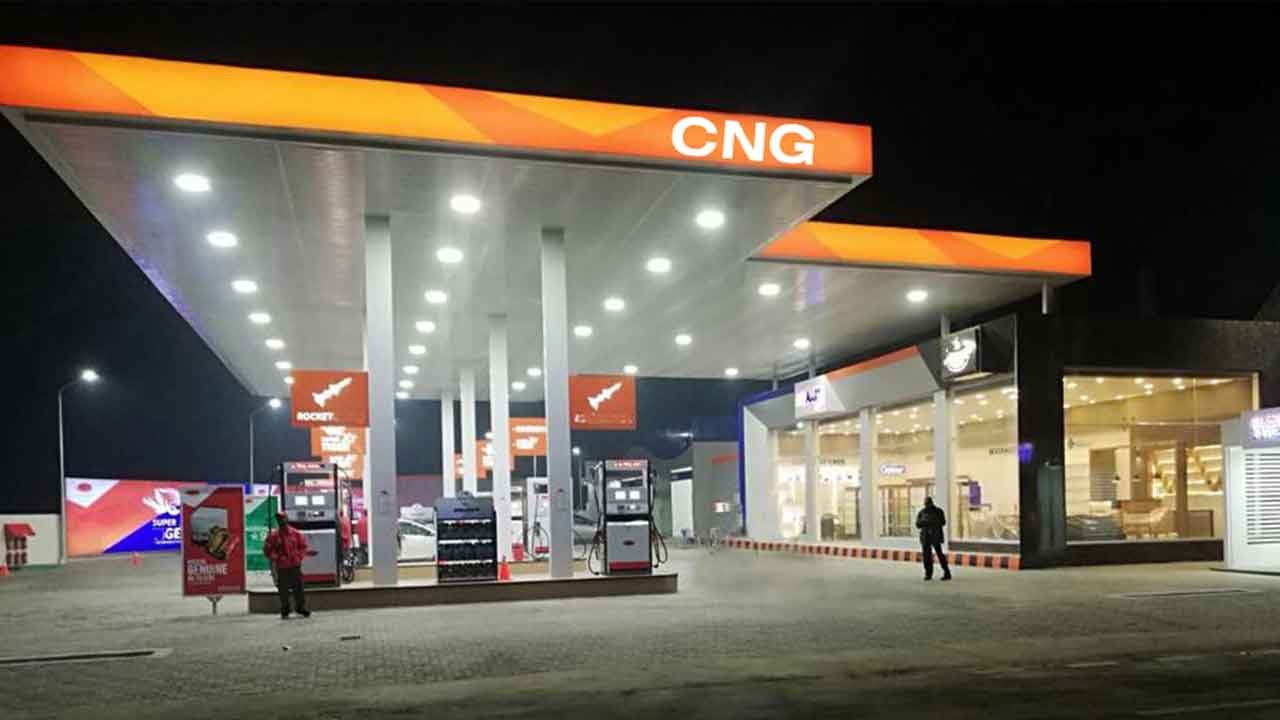
    CNG stations in Punjab and KP will stop operating from November 2022 to March 2023 as the gas crisis increases as a result of the lack of required LNG during the winter.

    While the government is obligated to purchase 12 LNG cargoes each month, Pakistan LNG Limited (PLL) has been unable to do so; as a result, the country will only have 10 LNG cargoes available in December and nine LNG cargoes each month in the following months. Due to the decreased LNG import cargoes, gas utilities will be forced to limit the supply of gas to captive power plants by 50 per cent.

    According to Express, in Punjab and KP, there won’t be any LNG available for CNG stations during the winter. Due to insufficient local gas output, Punjab has also been experiencing a gas crisis.

    According to government officials, the Sui Northern Gas Pipelines Limited (SNGPL) system’s gas supply to the fertiliser sectors won’t be reduced. Due to the probable political reaction this would cause, the government does not intend to reduce supplies of gas for the household sectors, therefore there will always be a supply available.

    As instructed by the federal government, SNGPL has been providing Re-Gasified Liquefied Natural Gas (RLNG) to a number of subsidised industries, including domestic consumers, export-oriented businesses, and fertiliser producers.

    Government payments to SNGPL for RLNG subsidies are Rs199 billion as of this writing. SNGPL’s capacity to pay RLNG suppliers PSO and PLL has been severely hampered by the reduced pricing. The amounts owed to PSO and PLL are now Rs284 billion and Rs135 billion, respectively.

    The power industry pays in full, but because its receivables have grown to over Rs115 billion, payments to suppliers have been significantly delayed.

  • Sindh extends market timings for Eid-ul-Adha after Punjab

    Sindh extends market timings for Eid-ul-Adha after Punjab

    The government of Sindh on Sunday decided to revoke the notice it had issued regarding time limits for markets due to Eid-ul-Adha, following the relaxation of restrictions in Punjab.

    The province’s home department reportedly sent out a notice saying that the limitation will resume on July 11.

    In order to conserve electricity as the country was experiencing frequent power outages, the Government of Sindh earlier in June ordered all marketplaces in the province to close at 9 pm.

    The limitation was supposed to last until July 16, but as Eid-ul-Adha is quickly approaching, the regional government has decided to temporarily relax the ban. The letter states that it was decided to suspend the closure orders for the benefit of locals.

    Islamabad and Punjab had also let marketplaces stay open until late the day before to help the business community and those who were buying for Eid.

  • Pharmaceutical industry wants to raise drug prices by 25 per cent

    Pharmaceutical industry wants to raise drug prices by 25 per cent

    The government is given the deadline of June 30 to accept the pharmaceutical industry’s demands, or the cash-strapped sector will have no choice but to shut down.

    In order to prevent the collapse of the industry, Qazi Mansoor Dilawar, chairman of the Pakistan Pharmaceutical Manufacturers Association (PPMA), called for the refund of Rs40 billion that the government had collected as sales tax on the import of raw materials, the removal of the 17 per cent sales tax, and a 20 to 25 per cent increase in the price of medications during a press conference at the National Press Club.

    He also called for a 20 per cent increase in the maximum retail price (MRP). According to him, there is already a shortage of about 40 medicines on the market, and if immediate action is not taken, the shortage will grow alarmingly large.

    Dilawar claimed that the previous administration had pledged to refund the sales tax that had been imposed as a result of IMF pressure within 48 hours, but regretted that no mechanism had yet been established, preventing the refund of a significant Rs40 billion.

    The problem was made worse by a three-fold increase in the price of raw materials, a massive increase in freight costs, an increase in the price of fuel and electricity, and a drop in the value of the rupee. He added that 95 per cent of the raw materials used in the sector had to be imported.

    The president of the PPMA dismissed the notion that the industry was reaping huge profits by mentioning that many medications had costs that were higher than their retail prices.

    He asserted that about 70 per cent of Pakistani medications were less expensive than those found in India and Bangladesh.

    In response to a question, he stated that while there was much discussion about the increase in 600 drug prices after 13 years under the PTI government, there was little discussion of the decrease in 400 drug prices.

    The industry was not prepared to handle the challenge this time, according to the former PPMA chairman Qaisar Waheed, who also spoke about the recent increase in Covid-19 cases, particularly in Sindh.