Tag: coalition government

  • India’s Modi pleads for ‘consensus’ as parliament opens after elections

    India’s Modi pleads for ‘consensus’ as parliament opens after elections

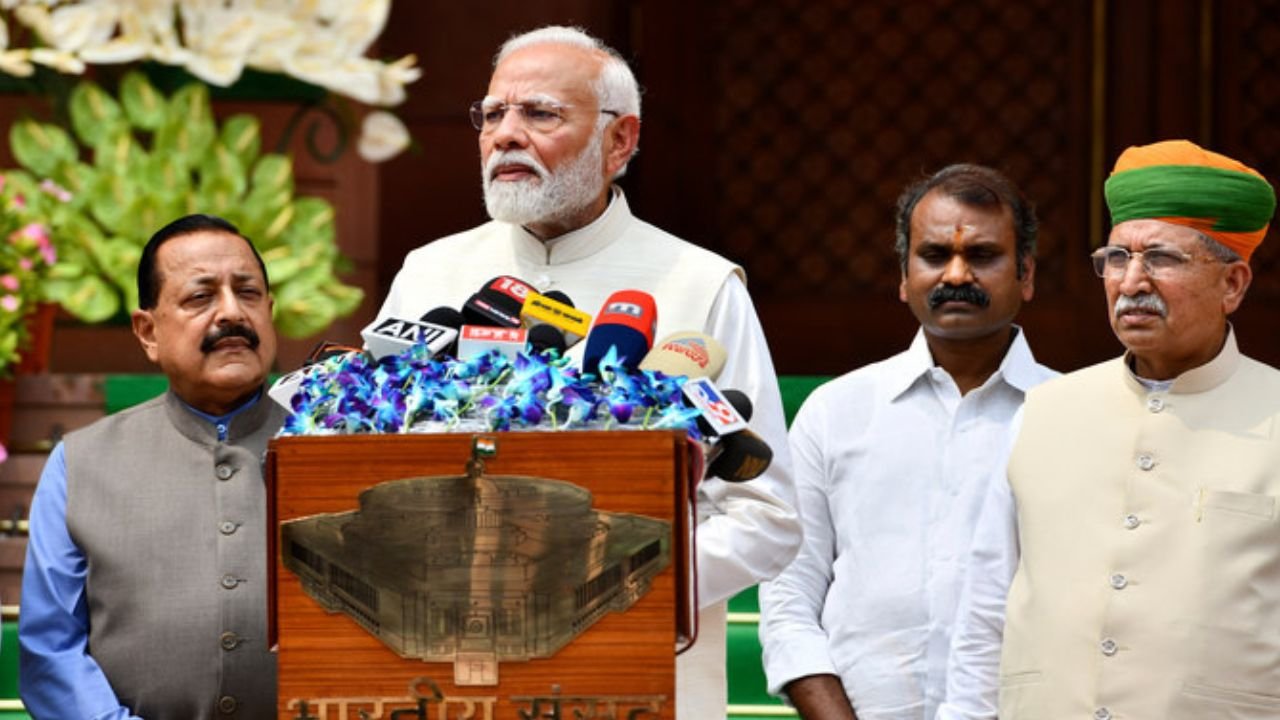
    Indian Prime Minister Narendra Modi appealed to an emboldened opposition for “consensus” Monday, as parliament opened following an election setback that forced him into a coalition government for the first time in a decade.

    Expected in the first session, which will run until July 3, is a preview of Modi’s plans for his third term and the likely formal appointment of Rahul Gandhi as leader of the opposition — a post vacant since 2014.

    Modi’s first two terms in office followed landslide wins for his right-wing Bharatiya Janata Party (BJP), allowing his government to drive laws through parliament with only cursory debate.

    But now analysts expect the 73-year-old Modi to moderate his Hindu-nationalist agenda to assuage his coalition partners, focusing more on infrastructure, social welfare and economic reforms.

    “To run the country, a consensus is of utmost importance”, Modi said in a speech shortly before entering parliament, calling on the opposition to play a constructive role.

    “People expect their representatives to debate and discuss issues which are important to the country […] they don’t expect disturbances or hindrances in the parliamentary proceedings,” he said. “People want substance, not slogans.”

    Modi led lawmakers in taking the oath — as his cheering supporters thumped their desks in support, and opposition members waved the constitution in protest. He said he was “proud to serve” India.

    Minister of Parliamentary Affairs Kiren Rijiju on Monday called for a “peaceful and productive” session, but Indian media said they expected lively debate with a far stronger opposition.

    “All set to spar”, one headline in The Hindustan Times read Monday. “Resurgent opposition set to push government”, The Indian Express front page added.

    Rahul Gandhi, 54, defied analyst expectations to help his Congress party nearly double its parliamentary numbers, its best result since Modi was swept to power a decade ago.

    Gandhi is the scion of a dynasty that dominated Indian politics for decades and is the son, grandson and great-grandson of former prime ministers, beginning with independence leader Jawaharlal Nehru.

    Parliamentary regulations require the opposition leader to come from a party that commands at least 10 per cent of the lawmakers in the 543-seat lower house.

    The post has been vacant for 10 years because two dismal election results for Congress — once India’s dominant party — left it short of that threshold.

    Lawmakers elected behind bars

    The parliamentary session will start with newly elected lawmakers taking their oaths over the first two days. Many will be watching if two lawmakers elected from behind bars, bitter opponents of Modi, will be allowed to join.

    One is Sikh separatist Amritpal Singh, a firebrand preacher arrested last year after a month-long police manhunt in Punjab state. The second is Sheikh Abdul Rashid, a former state legislator in India-occupied Kashmir.

    It is unclear if either will be granted bail to attend the ceremony in person.

    Modi’s decade as premier has seen him cultivate an image as an aggressive champion of the country’s majority Hindu faith, worrying minorities including the country’s 200-million-plus Muslim community.

    But his BJP won only 240 seats in this year’s poll, 32 short of a majority in the lower house — its worst showing in a decade.

    It has left the BJP reliant on a motley assortment of minor parties to govern. Modi has kept key posts unchanged in this government and the cabinet remains dominated by the BJP.

    That includes BJP loyalists Rajnath Singh, Amit Shah, Nitin Gadkari, Nirmala Sitharaman and S. Jaishankar — the defence, interior, transport, finance and foreign ministers, respectively — staying on in their jobs.

    But out of his 71-member government, 11 posts went to coalition allies who extracted them in exchange for their support — including five in the top 30 cabinet posts.

    Many will also be eying the election of the speaker, a powerful post overseeing the running of the lower house, with lawmakers slated to vote on Wednesday.

    Coalition allies covet the post, but others suggest Modi will put forward a candidate from his BJP.
  • PPP will not join coalition government, confirms Qamar Zaman Kaira

    PPP will not join coalition government, confirms Qamar Zaman Kaira

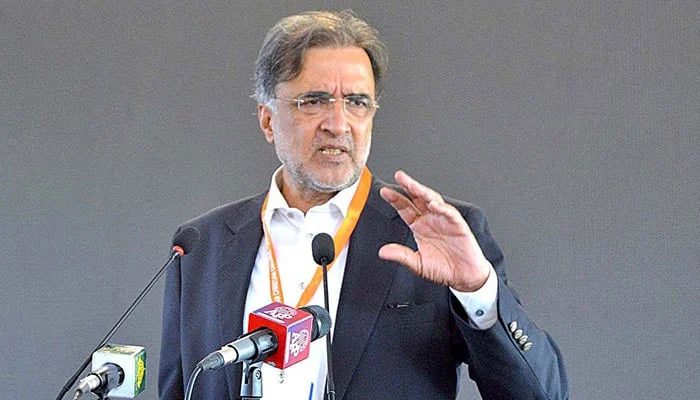
    Pakistan Peoples Party (PPP) senior leader Qamar Zaman Kaira has denied media reports that his party will join a coalition government, terming them “baseless.”

    Rumors about PPP joining the treasury benches emerged after Pakistan Muslim League-Nawaz (PML-N) leader Ahsan Iqbal’s meetings with Kaira and Chief Minister Balochistan Sarfraz Bugti.

    Kaira claimed while talking to Geo News that he met with Ahsan Iqbal and discussed his constituency’s developmental projects.

    “I did not discuss anything about joining the government with Ahsan Iqbal,” Kaira said.

  • Govt expected to present Rs13-15 trillion budget for FY23-24 amidst economic uncertainties

    Govt expected to present Rs13-15 trillion budget for FY23-24 amidst economic uncertainties

    The government is anticipated to present a budget ranging from Rs13-15 trillion for the fiscal year 2023-24, according to a budget preview report by Topline Securities. This substantial increase is attributed to the record-high markup cost caused by the soaring interest rates. The proposed budget target of Rs9-9.2 trillion marks a 21 per cent surge compared to the current fiscal year’s target of Rs7.5 trillion.

    Notably, if implemented, the tax target for the upcoming financial year would be 29 per cent higher than the projected tax collection for the outgoing FY23. However, the brokerage house highlights the challenging nature of formulating a budget amidst stagflation and uncertainties surrounding the upcoming elections and Pakistan’s ability to bridge its external account funding gap.

    The report emphasises the prevailing nervousness in currency, bond, and stock markets due to the uncertainty surrounding the financing of the US dollar funding gap. Furthermore, it states that revenue targets have historically deviated by an average of 8 per cent from the actual targets in the past five years, and a similar trend is expected in FY24 due to the economic slowdown.

    The non-tax revenue target for FY24 is estimated at Rs2.5 trillion (2.4 per cent of GDP), compared to Rs1.6 trillion (2 per cent of GDP) for FY23. The report predicts several taxation measures, including tax on undistributed reserves, continuation of the super tax, a shift from the final tax regime to the minimum tax regime, asset/wealth tax, higher tax on non-filers, tax on rental income, and taxes on banks, tobacco, and beverages.

    Regarding development spending, the Federal Public Sector Development Programme (PSDP) is projected to amount to Rs0.9 trillion for FY24. However, due to fiscal constraints, significant cuts are expected in this area. The consolidated PSDP (federal and provincial) is anticipated to reach Rs2.6 trillion (2.5 per cent of GDP) in FY24.

    With the Pakistan Tehreek-e-Insaf (PTI) party being sidelined, there is a possibility of a weak coalition government coming to power in the upcoming elections. The report highlights the importance of an aggressive and competent new setup to tackle the ongoing economic crisis.

    To create a favorable perception, the government may set unrealistic revenue targets in order to allocate more spending in the budget. The report suggests that it is unlikely for the government to complete the current International Monetary Fund (IMF) program on time and urges Pakistan to enter another, potentially larger, IMF program.

    In light of the economic slowdown and high inflation, the government may introduce expansionary policies in the budget to appease the public, such as direct cash subsidies for the underprivileged and an increase in minimum wages. However, the brokerage firm warns against excessive spending without substantial tax collection measures.

    In terms of its impact on the stock market, the upcoming budget is expected to be neutral to positive. Sectors such as oil and gas exploration, chemicals, pharmaceuticals, consumers, tobacco, technology and communication, textile, cement, fertilizers, and oil marketing companies may experience a neutral effect. Conversely, the budget might have a neutral to negative impact on banks and autos, while steel and independent power producers could experience a neutral to positive effect, according to the research.

    As the budget is unveiled, stakeholders and citizens alike will closely monitor the government’s strategies to address the economic challenges and promote stability and growth in Pakistan.

  • Pakistan shares plan with IMF to bridge $3 billion financing gap

    Pakistan shares plan with IMF to bridge $3 billion financing gap

    The coalition government of Pakistan has revealed its plan to the International Monetary Fund (IMF) for obtaining an additional $3 billion to fill the financing gap as it tries to persuade the lender to release the next loan tranche.

    In order to conclude talks with Pakistan regarding its delayed bailout, the IMF required “necessary” financing guarantees as soon as possible. Pakistan was asked to raise $6 billion in external financing, which is required by the country until June to avoid a potential default.

    This figure was determined on the assumption that the current account deficit would remain at around $7 billion in the current fiscal year. The IMF welcomed the recent announcement of financial support from key bilateral partners, but this support is inadequate for Pakistan’s requirements.

    Islamabad informed the IMF about its plan to secure a $450 million second Resilient Institutions for Sustainable Economy (RISE-II) budget support loan, as well as its plans to obtain $1 billion from the Asian Infrastructure Investment Bank (AIIB) and other commercial banks, and to materialise pledges made at the Geneva moot. According to sources, once the staff-level agreement is signed with the IMF, it will become easier for Pakistan to obtain financing.

    Pakistan’s foreign exchange reserves have fallen to cover barely a month of imports following the stall in IMF funding in November, which was later complicated by snags over fiscal policy adjustments after officials from the lender visited Islamabad for talks in February. The fiscal policy adjustments were part of the ninth review exercise on a bailout package agreed upon in 2019, whose resumption is crucial for Pakistan to avoid the risk of defaulting on external payment obligations.

    Pakistan will receive another disbursement of more than $1 billion from the IMF programme before it ends in June, which will unlock other bilateral and multilateral financings for the country, helping to ease its financial difficulties.

    Programme loans from other multilateral agencies await completion of the IMF review, as reported by central bank governor Jameel Ahmad during the spring meetings of the lender and the World Bank in Washington.

  • ‘One year in power’: PM Shehbaz talks about challenges and difficulties

    ‘One year in power’: PM Shehbaz talks about challenges and difficulties

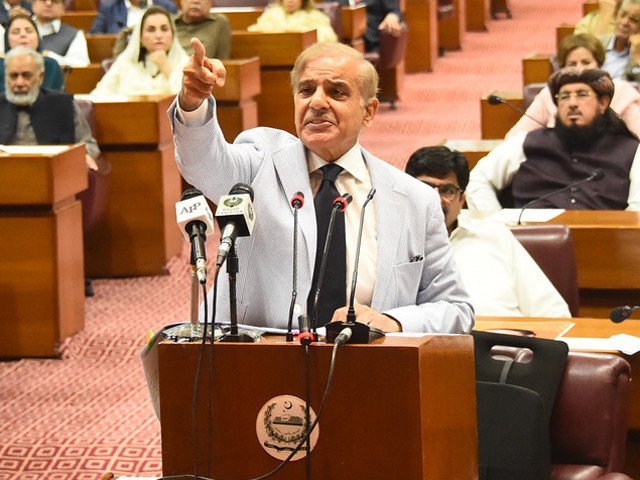
    On the one-year anniversary of assuming power as the head of the coalition government, Prime Minister (PM) Shehbaz Sharif on Tuesday said that this has been a successful tenure that resulted in Pakistan’s restored credibility and overcoming of the country’s financial and energy challenges.

    In a series of tweets, the Premier wrote, “Today marks the completion of one year since I took oath as PM of a coalition government. This has been a time of massive challenges & difficulties. Here’s my perspective on this year.”

    “The passage of No-Confidence Vote against Imran Niazi’s government was unprecedented not because PDM came into power but because almost all of Pakistan’s political forces came together to use the forum of Parliament to vote out an unpopular govt through constitutional means,” tweeted Shehbaz.

    The premier further said that the coming together of political parties with different manifestos for a common national cause represented a major step forward in the country’s political evolution. “Reconciliation & cooperation, not confrontation & vendetta mark the new politics post-April ’22,” tweeted Shehbaz.

    He said that despite the economic landmines laid by Imran Khan and disruptions in global fuel and food supply lines, Pakistan’s economy continued to stay afloat. “All predictions of default have turned out to be false alarms. Sincere efforts are underway to revive the economy,” wrote the premier.

    “Coalition govt has been at pains to repair, rebuild & deepen Pakistan’s diplomatic relations that were dealt a severe blow by Niazi regime. I can inform people that over the last one year, we have largely succeeded in establishing Pakistan’s credibility as a partner & friend.”

    Talking about challenges, PM Shehbaz said, “Pakistan faced unprecedented floods last year. The decisiveness with which the government undertook rescue, relief & rehabilitation efforts, provided social protection to millions of people & mobilized international community has been acknowledged by the world as outstanding.”

    “Government employed climate diplomacy to present Pakistan’s case on the international stage. As Chair of G77 plus China, we were instrumental in the establishment of loss & damage fund. Pledges of USD 9 billion at Geneva moot are evidence of our successful diplomacy.”

    “In the last one year, we have made efforts to diversify the energy mix with an aim to provide relief to the citizens. The renewed focus on solar, hydel, and coal power projects is aimed at replacing the costlier sources of power generation with cheaper ones.”

    “Inflation has hit people hard globally. Geo-strategic rivalries, increase in prices of the fuel & food commodities & historic floods are some of the key factors responsible for inflation. Mindful of its impact, govt has expanded social safety net & provided targeted subsidies,” tweeted Shehbaz.

    “Under the watch of the PDM government, Pakistan managed to exit the FATF grey list, thanks to the excellent inter-ministerial coordination as well as support extended by our military leadership. It was a long journey but sustained efforts made it possible.”

    “Building on the public transport infrastructure, govt., since its inception in April last year, focused on early completion of the development and transport infrastructure projects in Islamabad.”

    “Idea was to provide ease, comfort & affordable mobility to the people Pakistan,” said PM Shehbaz.

  • Relief for workers as Punjab govt raises minimum wage to Rs32,000 per month

    Relief for workers as Punjab govt raises minimum wage to Rs32,000 per month

    The Punjab government has announced an increase in the minimum wage for unskilled workers from Rs25,000 to Rs32,000 per month, providing some relief to workers during a period of skyrocketing inflation.

    This increase of Rs7,000 was made official through a notification issued by the interim government on Thursday. It is worth noting that in April of last year, Prime Minister (PM) Shehbaz Sharif announced a minimum wage increase for government employees to Rs25,000 and a 10 per cent increase in civil and military pensions for retired employees.

    Following this announcement, the Punjab government set the minimum wage at Rs25,000. On January 31, 2023, Asif Ali Zardari, the former president and Pakistan Peoples Party (PPP) Co-chairperson, proposed to the coalition government that the minimum wage should be raised to Rs35,000.

    Zardari emphasised that the government should take responsibility for providing relief to workers and take far-reaching measures to address the problems faced by the masses.

  • Ishaq Dar denies reports of financial emergency amidst economic turmoil

    Ishaq Dar denies reports of financial emergency amidst economic turmoil

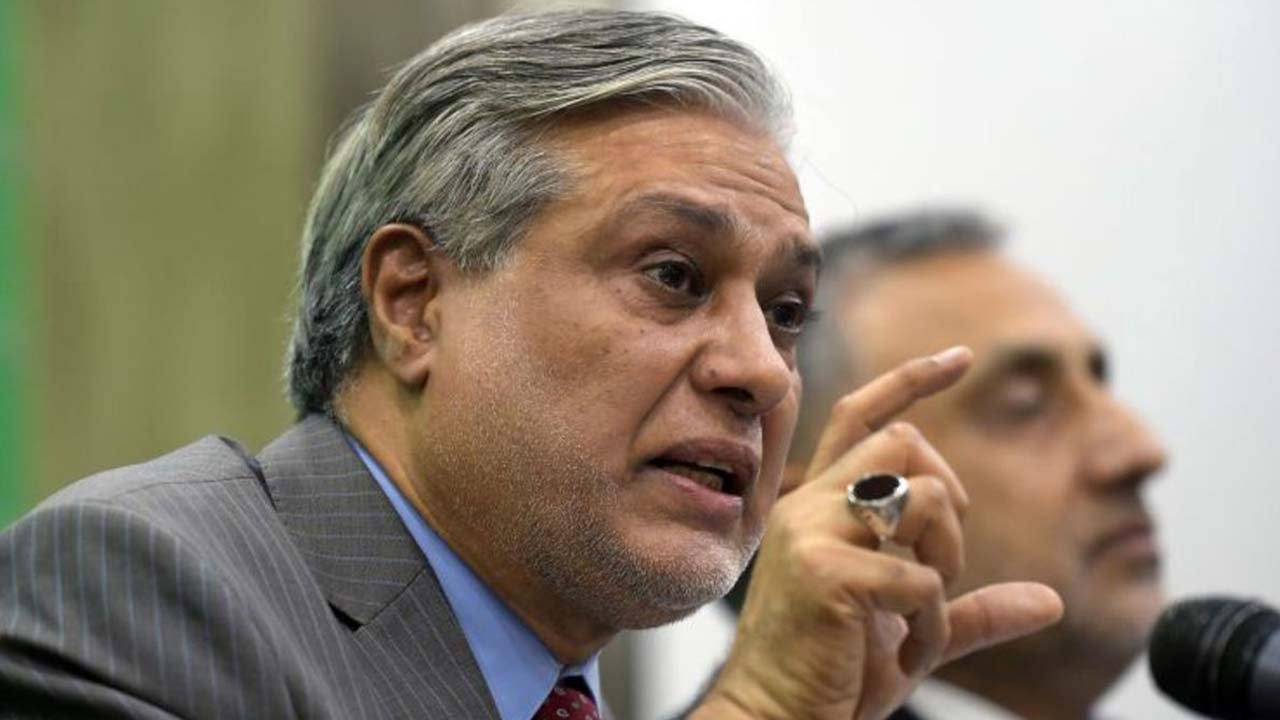
    On Friday, Federal Minister for Finance and Revenue Ishaq Dar denied reports suggesting Pakistan should impose a financial emergency, amidst constant criticism over the current economic turmoil. He berated Imran Khan-led Pakistan Tehreek-e-Insaf (PTI) for spreading “fake news” about Pakistan heading towards default. Dar blamed the previous PTI government for pushing the nation of 220 million people on the brink of default, claiming that it was the coalition government that saved the country by prioritising the state over politics.

    Dar recalled that when the Pakistan Democratic Movement (PDM) ousted Khan through a no-confidence motion, the leaders of the coalition government had decided to keep aside all political interests in the wider interest of the state. He stated that the PTI leaders have been calling him out since the rupee plunged to a historic low of Rs285.09 a day earlier while February’s inflation hit nearly a 50-year high of 31.5 per cent.

    Expressing his surprise and concerns over Khan’s continuous criticism of the coalition government, he said: “I am unable to understate whether he (Khan) has a problem in his leg or brain.” Instead of protecting the national interest, PTI’s leadership tried to sabotage the International Monetary Fund (IMF) deal, Dar said. “Khan’s attitude is selfish.”

    According to Geo, Dar reiterated that Pakistan has neither defaulted in the past nor will it default in the future. Referring to Khan’s remarks about default, the finance minister said that the PTI chairman’s statements adversely affect the country’s financial markets. He, however, admitted that the State Bank of Pakistan’s (SBP) reserves fell below $3 billion. It should be noted that the liquid foreign reserves held by the country stand at around $9 billion as of February 24 while the net reserves held by commercial banks stand at around $5.5 billion.

    The finance minister revealed that China has renewed a facility under which Pakistan expected an additional inflow of $500 million in the “next few days”. He highlighted the PDM-led government’s economic achievements, stating that the foreign exchange reserves held by the SBP climbed to $3.8 billion from $2.8 billion recorded last month. He maintained that the government returned $6.5 billion of foreign debt during the current fiscal year.

    Dar drew a comparison between the economic performance of nearly four years of PTI and almost 11 months of PDM-led government. He shared numeric data to prove that Khan and Co. did everything to “destroy the country,” but the numbers show who is sincere with the country. Dar argued that the opposition — the PTI — has not really improved Pakistan’s standing. However, Pakistan will escape the economic quagmire, he said, adding that the country is making repayments to bilateral and multilateral lenders and has made payments beyond its capacity.

  • Govt not going anywhere; Shahid Khaqan Abbasi dismisses threat of long march

    Govt not going anywhere; Shahid Khaqan Abbasi dismisses threat of long march

    Former Prime Minister Shahid Khaqan Abbasi has said that the coalition government will not fall as a result of Pakistan Tehreek-e-Insaf (PTI)’s long march.

    “Imran Khan may launch a long march or do as he wishes, the government will remain as it is,” said Khaqan while speaking at Geo News programme Aaj Shahzeb Khanzada Kay Sath while referring to the PTI Chairman who announced that the long march will commence from Friday.

    On Tuesday, Khan announced that his long march will commence from Lahore’s Liberty Chowk on October 28. After the announcement, federal ministers and Pakistan Muslim League-Nawaz (PML-N) leaders came forward, stating that the government will deal firmly with the marchers who are planning to come to the capital city.

    Federal Minister for Planning, Ahsan Iqbal, said that the long march was announced because Khan wants National Reconciliation Ordinance (NRO) to escape punishment in the foreign funding and Toshakhana cases.

  • Germany’s centre-left Social Democrats narrowly win against Angela Merkel’s party

    Germany’s centre-left Social Democrats narrowly win against Angela Merkel’s party

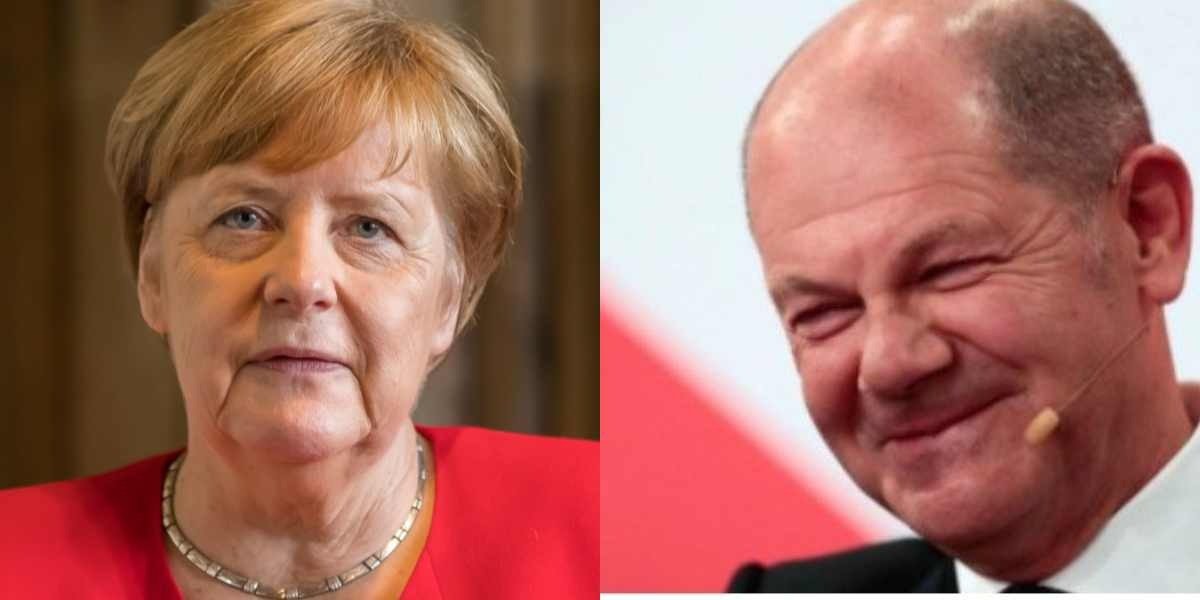
    Germany’s centre-left Social Democrats narrowly won Sunday’s national election, projected results showed, and claimed a “clear mandate” to lead a government for the first time since 2005 and to end 16 years of conservative-led rule under Angela Merkel, reported BBC.

    The SPD secured 25.7 per cent of the vote, while the ruling conservative CDU/CSU bloc gained 24.1 per cent. The Greens achieved the best result in their party’s history, coming in third with 14.8 per cent of the ballot.

    A coalition must now be created to form a government.

    Agreeing to a new coalition could take months, and will likely involve the smaller Greens and liberal Free Democrats (FDP).

    “We are ahead in all the surveys now,” the Social Democrats’ chancellor candidate, Olaf Scholz, said in a round table discussion with other candidates after the vote.

    Scholz’s conservative rival Armin Laschet signalled his bloc was not ready yet to concede, though his supporters were subdued.

    “It is an encouraging message and a clear mandate to make sure that we get a good, pragmatic government for Germany,” he added after earlier addressing jubilant SPD supporters.

    Scholz, 63, would become the fourth post-war SPD chancellor after Willy Brandt, Helmut Schmidt, and Gerhard Schroeder. Finance minister in Merkel’s cabinet, he is a former mayor of Hamburg.

    Attention will now shift to informal discussions followed by more formal coalition negotiations which could take months, leaving Merkel in charge of a caretaker role.

    Scholz and Laschet both said they would aim to strike a coalition deal before Christmas.

    Merkel plans to step down after the election, making the vote an era-changing event to set the future course of Europe’s largest economy.