Tag: Colombia

  • Colombia president enacts law banning bullfighting

    Colombia president enacts law banning bullfighting

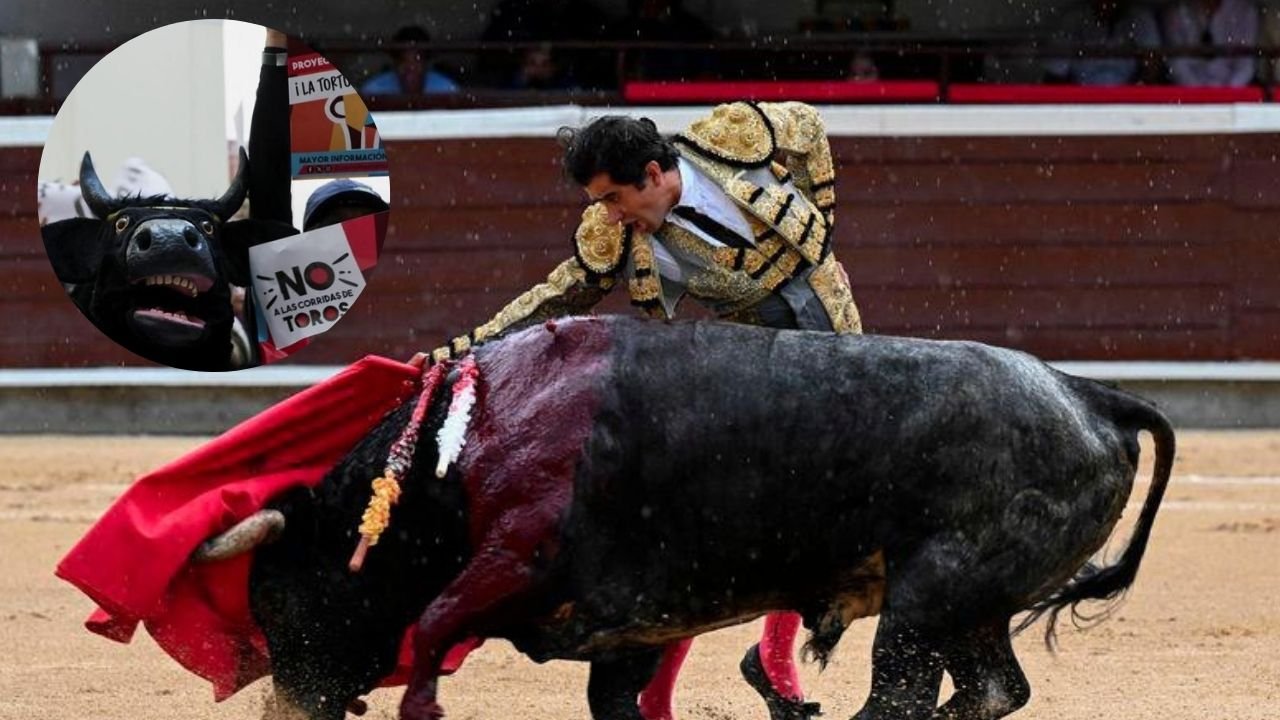
    In front of a crowd gathered at the bullring in the capital Bogota, renamed the Santamaria Cultural Square, Petro on Monday celebrated ending the “right to kill” animals for entertainment.

    “Culture, and even less the justice (system), cannot say that it is culture to kill sentient beings, living creatures, for pleasure,” said Petro, in reference to a 2018 Constitutional Court ruling permitting bullfights in places with such a tradition.

    “If we have fun by killing an animal, we will have fun by killing human beings,” Petro said, addressing the crowd which included animal rights activists.

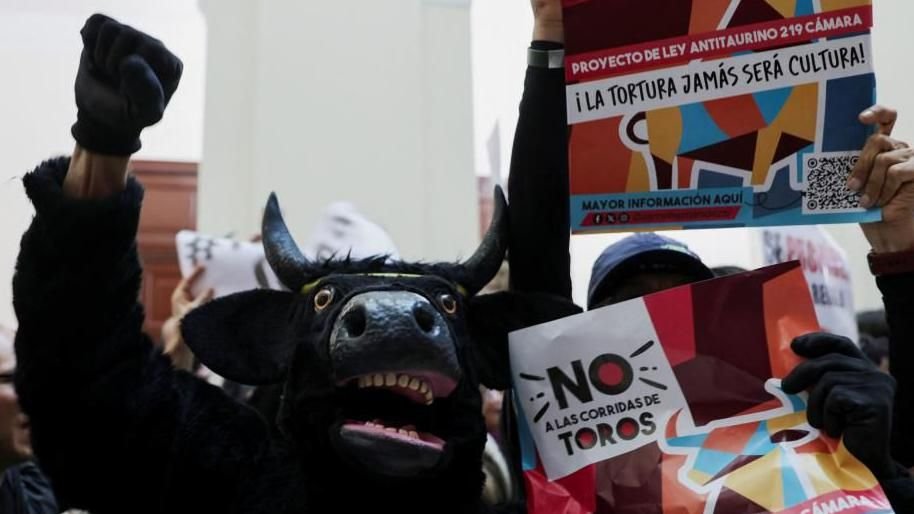
    Spectators chanted “No more ‘ole’!”, a slogan used during the legislative process by supporters of the law, which was passed by congress in late May.

    Luana Delgado, an influencer and anti-bullfighting activist, underlined the importance of the ban being enacted at Bogota’s bullring.

    “A place where you saw blood, where you saw death, now you will see culture,” she said.

    The nationwide legislation paves the way for bullrings to be transformed into cultural spaces or sports venues.

    Jesus Merchan, an animal rights campaigner, said to applause: “Today, we put an end to a long history of suffering.”
    The new law will be enforced from 2027, allowing time to convert arenas and provide alternative jobs to those who rely directly or indirectly on bullfighting.

    Colombia joins other Latin American countries that have outlawed bullfighting, including Argentina, Brazil, Chile, Guatemala and Uruguay.

    Bullfights are still held in Ecuador, Mexico, Peru and Venezuela, as well as in European nations France, Spain and Portugal.

  • Journalist investigating corruption killed in Colombia

    Journalist investigating corruption killed in Colombia

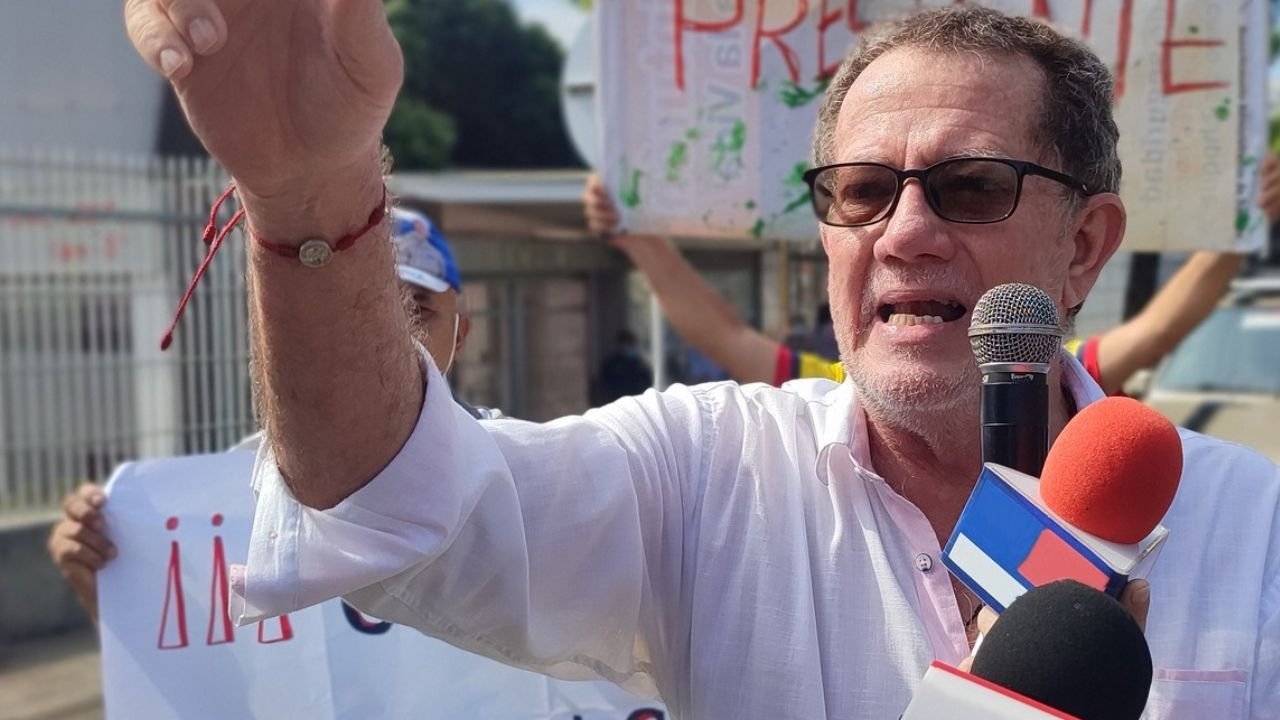
    Bogotá, Colombia – A Colombian journalist investigating corruption was killed over the weekend in a city near the border with Venezuela, officials said Monday.

    The reporter, 54-year-old Jaime Vasquez, was shot in Cucuta in front of about a dozen witnesses, according to security videos released by local media.

    Prosecutors say the gunman fled on a motorbike.

    President Gustavo Petro said on X he had ordered an investigation into the murder of Vasquez, who had published allegations of irregular contracts and abuses of power in the city administration and received threats as a result of his work, according to a friend.

    Colombia’s FLIP press freedom foundation condemned the killing and called for a “rapid and exhaustive” probe.

    Since 2006, 167 journalists have been killed in Colombia, according to FLIP. Last year, 163 reporters received threats.

    Another eight people were killed in and around Cucuta on the same weekend, police said, in a region where paramilitary fighters, guerrillas and local criminal gangs are known to operate.

    vd/jss/lv/mlr/dw

    © Agence France-Presse

  • Woman arrested for smuggling 130 poisonous frogs

    Woman arrested for smuggling 130 poisonous frogs

    BOGOTA: Authorities in Colombia seized 130 poisonous frogs being trafficked through the Bogota airport on Monday and arrested the Brazilian woman carrying them.

    The woman was transporting the colorful harlequin poison frogs (oophaga histrionica) inside film containers while travelling to Sao Paulo with a stopover in Panama.

    She “claimed that a local community had given them as a gift,” Bogota Environment Secretary Adriana Soto said in a video shared with media.

    Harlequin frogs are venomous, measure less than five centimetres (two inches) and live in damp forests along the Pacific coast between Ecuador and Colombia, as well as in other countries in Central and South America.

    “This endangered species is sought after in international markets,” said Bogota Police Commander Juan Carlos Arevalo, adding that private collectors might pay up to $1,000 for each.

    The police reported that the woman carrying the frogs was arrested “for the crime of wildlife tracking” before being handed over to the prosecutor’s office.

    Animal trafficking is common in Colombia — one of the most biodiverse countries in the world — especially of amphibians, small mammals and marine animal parts, such as those of sharks.

  • 40 countries to hold elections in 2024, including Pakistan

    40 countries to hold elections in 2024, including Pakistan

    The new year is just over one month away and it is going to be the biggest election year in history yet.

    40 countries are scheduled to vote in 2024 across the globe which, as calculated by Bloomberg Economics, represent 41% of the world’s population and 42% of its global GDP.

    The marathon will begin with Taiwan in January and end with the US in November.

    Here are some of the prominent countries lined up for elections: Republic of the Congo, Democratic Republic of the Congo, Egypt, Gambia, and Libya in Africa; Brazil, Colombia, Mexico, Peru, the United States, and Venezuela in the Americas; Bangladesh, India, Indonesia, South Korea, Sri Lanka, Taiwan, Australia, and Pakistan in Asia and Oceania; Austria, Belarus, Belgium, the European Union, Finland, Germany, Ireland, Portugal, Russia, Spain, Turkey, Ukraine and the United Kingdom in Europe.

    There are, however, four elections that the world has eyes on — elections that are expected to alter geopolitics in the next decade.

    Russia will elect the new president in March who will govern until 2030, putting Russia-NATO relations at the forefront.

    In April-May, India will hold elections and as per analysts, Modi’s loss can push back investors.

    The European Union will conduct bloc-wide polls in June to appoint members of the European Parliament for the 2024-2029 which will be pertinent for the increasing friction between right-wing and left-wing policymakers on issues like immigration and Ukraine.

    The United States will hold legislative and presidential elections in November for 2025-2028, while everyone curiously waits whether Republicans will return to the White House or not.

  • ‘If Israel does not stop massacre of Palestinians, we cannot be there’: Colombia warns

    Colombian President Gustavo Petro has warned Israel about breaking off diplomatic ties if the country does not stop attacks in the Gaza Strip.

    Colombia recalled its ambassador to Israel on Tuesday.

    “I have decided to recall our ambassador to Israel for consultations. If Israel does not stop the massacre of the Palestinian people, we cannot be there,” Petro said on X.

    “Now the neo-Nazis want the destruction of the Palestinian people, freedom, and culture,” he wrote in X.

    “If we have to suspend foreign relations with Israel, we suspend them,” he said on X. “We do not support genocides.”

    His stance led to a reaction from US Embassy in Bogota: “We are dismayed to see Colombian President Gustavo Petro compare the Israeli government with Hitler’s genocidal regime. We strongly condemn your statements and ask that you condemn Hamas, a designated terrorist organization, for the callous murders of Israeli men, women and children.”

  • Colombia to open embassy in Palestine

    Colombian President Gustavo Petro has been very vocal in his condemnation of Israel’s war on Gaza. In one of his recent statements, after a meeting with both the ambassadors of Palestine and Israel, he showed his solidarity with the children from both sides and pledged to open an Embassy in Ramallah, Palestine.

    “I have expressed my position to achieve an international peace conference that opens the way for two independent and free states. I reiterated my solidarity with Israeli and Palestinian children, who must and have the right to live in peace,” he said in a post on X (former Twitter).

    The Colombian president further pledged, “We will send a plane with humanitarian aid to the outskirts of Gaza waiting for a humanitarian corridor to open. Colombia will open its embassy in Ramallah, Palestine.”

    It is crucial in the context of the ongoing conflict as Petro has refused to condemn Hamas’ attack on Israel and compared Israel’s actions to those of Nazi Germany. In response to this, the country bore the cost in the form of suspension of defence imports from Israel — their biggest supplier of warplanes, surveillance equipment, and assault rifles since the 1990s.

  • Four children, including one-year-old baby, found alive 40 days after plane crash

    In a stunning case of survival, four children, including a one-year-old baby, have been found alive 40 days after their aircraft crashed in Colombia’s Amazon forest, the country’s President Gustavo Petro has confirmed.

    The children, aged 13, nine, four and one, were traveling with their mother, a pilot and a co-pilot in a private aircraft when it crashed in dense forest on May 1, killing all three adults on board.

    The Cessna 206 airplane was flying from Araracuara to San José del Guaviare when it issued a mayday alert due to engine failure.

    When rescuers reached the site of the crash, they found the bodies of the adults along with evidence that the four children had escaped into the forest.

    This led to a massive search by the Colombian army in the Amazon forest, as they found clues that the children were alive, including the baby’s milk bottle, footprints and a shelter the children crafted. The children belonged to the indigenous Huitoto tribe, giving hope to their grandfather that their knowledge of the jungle will help them survive.

    President Pedro has said that it is a “magical day”, while sharing photos of the children with rescuers. “These children are today the children of peace and the children of Colombia,” he said.

    The children are receiving medical care while they await being reunited with their grandfather.

  • Cow barges into hospital, attacks visitors

    Cow barges into hospital, attacks visitors

    An escaped cow attacked people in a hospital’s waiting room in Colombia resulting in a panic.

    The incident took place at the Hospital, San Rafael, in the northwestern Colombian department of Antioquia on Saturday.

    CCTV footage shows visitors running to a corner for safety after being attacked by the cow.

    A woman got hurt after being pinned to the wall by the cow.

    Two men came in and pulled the animal towards the exit but could not get it out of the hospital. The cow again attacked the woman in the corner. 

    One of the men ran in and distracted the cow and the animal finally left the hospital.

    Local newspaper Vanguardia wrote nobody was seriously injured in the incident. The wounded woman was treated for minor injuries and pain while the rest of the patients did not need any treatment.

    The cow also damaged two motorcycles at the hospital’s entrance and some chairs in the waiting room.

    Later, the cow’s owner went to the hospital to apologize for the damage and asked about the woman’s health. There have been no reports on the police initiating an investigation.