Tag: commercial banks

  • PSX bounces back with gain of nearly 500 points

    PSX bounces back with gain of nearly 500 points

    The Pakistan Stock Exchange (PSX) welcomed a resurgence of bullish activity as the KSE-100 Index marked a substantial gain of nearly 500 points in Tuesday’s trading session.

    At 1:55 pm, the benchmark index stood at 66,496.21, reflecting a noteworthy increase of 483.89 points, or 0.73 per cent. 

    The positive momentum was evident in key sectors such as cement, fertiliser, oil and gas exploration, OMCs, refineries, and power generation. However, a mixed trend characterised the automobile and commercial bank sectors.

    In contrast to the previous session, where profit-taking led to a 211-point dip in the KSE-100 Index, today’s bullish trend is attributed to favourable economic indicators. 

    Investors are keenly observing the upcoming International Monetary Fund (IMF) executive board meeting on January 11, 2024.

    Simultaneously, the Monetary Policy Committee (MPC) of the State Bank of Pakistan (SBP) is convening today, with market expectations leaning towards a maintenance of the key interest rate—a rate that reached an unprecedented 22 per cent in June and has remained unchanged for the past three meetings.

    Analysts note that investors have factored in the pinnacle of Pakistan’s interest rates, and optimism surrounds the anticipated successful conclusion of the IMF programme, contributing to the positive sentiment in both the stock markets and the currency.
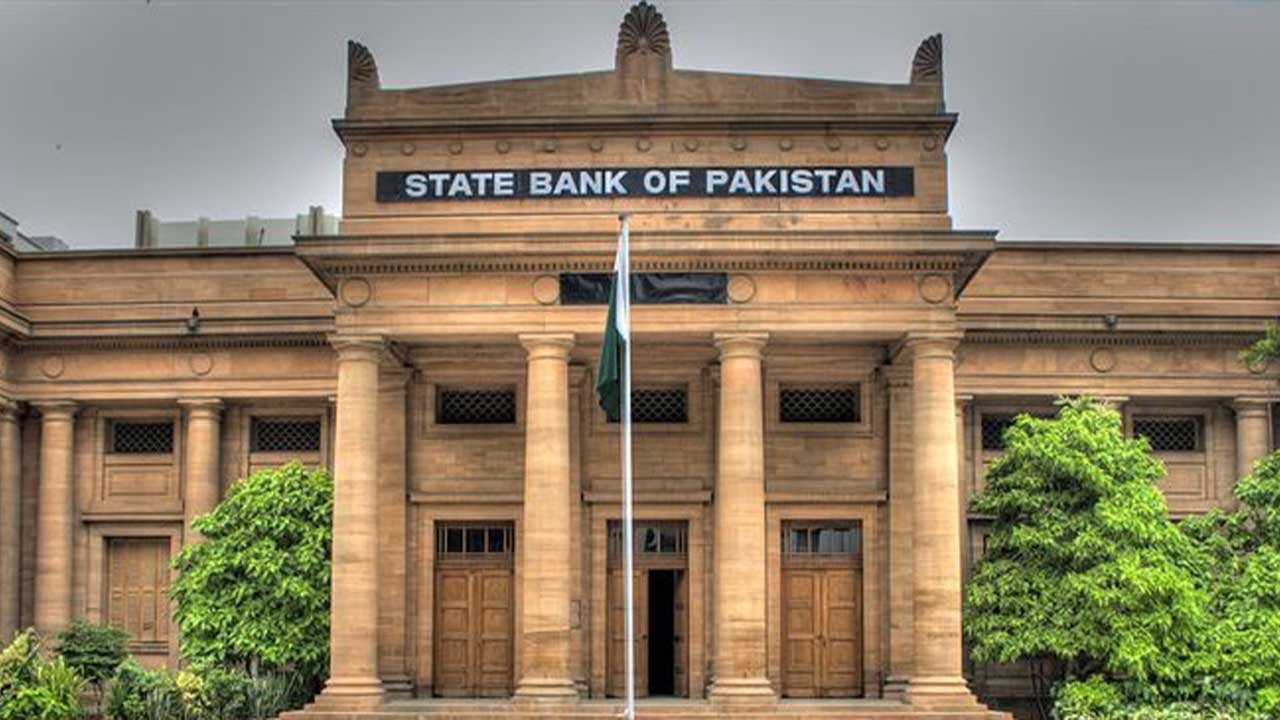

  • State Bank of Pakistan’s forex reserves decline to $7.02 billion amidst debt repayments 

    State Bank of Pakistan’s forex reserves decline to $7.02 billion amidst debt repayments 

    During the week ending December 1, 2023, the State Bank of Pakistan (SBP) witnessed a decline of $237 million in its foreign exchange reserves, bringing the total to $7,020.2 million. This reduction is attributed to debt repayments.  

    As of the same date, the country’s overall liquid foreign reserves amounted to $12.1 billion. Commercial banks held net foreign reserves totaling $5.08 billion. 

    Notably, the central bank’s reserves received a boost in July of the current year when Pakistan secured the initial tranche of approximately $1.2 billion from the International Monetary Fund (IMF).  

    This was part of a newly approved $3 billion stand-by arrangement (SBA). Additionally, inflows were received from Saudi Arabia and the UAE. 

    Despite these positive developments, the SBP’s reserves have been under pressure due to ongoing debt repayments, increased import payments following eased restrictions, and a lack of new inflows. 

    In a significant development, the IMF announced last month that a staff-level agreement (SLA) had been reached between its team and Pakistani authorities regarding the first review of the SBA.  

    However, the approval of the IMF Executive Board is required for this agreement to take effect. 

    Upon approval, approximately $700 million (SDR 528 million) will become available, bringing the total disbursements under the programme to almost $1.9 billion. 

    Addressing the media after the SLA with the IMF, Caretaker Finance Minister Dr Shamshad Akhtar expressed confidence that external financing would not be a concern.  

    The government anticipates inflows in December 2023, which are expected to contribute to an increase in foreign exchange reserves. 

  • Pakistan’s forex reserves rebound: SBP gains $77 million in a week 

    Pakistan’s forex reserves rebound: SBP gains $77 million in a week 

    According to data released on Thursday, the State Bank of Pakistan (SBP) witnessed a weekly increase of $77 million in its foreign exchange reserves, reaching $7.26 billion as of November 24.  

    The total liquid foreign reserves for the country amounted to $12.39 billion, with commercial banks holding net foreign reserves at $5.13 billion. 

    During the week ending on November 24, 2023, SBP’s reserves increased by $77 million, reaching $7,257.0 million. Contrastingly, the previous week saw a decrease of $217 million in Pakistan’s central bank reserves. 

    In July of this year, the central bank’s reserves received a boost as Pakistan obtained the initial tranche of approximately $1.2 billion from the International Monetary Fund (IMF) following the approval of a new $3-billion Stand-By Arrangement (SBA).  

    This boost was complemented by inflows from Saudi Arabia and the UAE. 

    However, the SBP reserves faced pressure due to debt repayments, a surge in import payments after the easing of restrictions, and a lack of fresh inflows. 

    In a significant development, the IMF announced last week that its staff and Pakistani authorities had reached an agreement on the first review of the SBA.  

    The staff-level agreement is pending approval by the IMF Executive Board. 

    The IMF team reached a staff-level agreement (SLA) with the Pakistani authorities on the first review of their stabilization program supported by the IMF’s $3 billion (SDR2,250 million) SBA.  

    Upon approval, approximately $700 million (SDR 528 million) will become available, bringing total disbursements under the program to almost $1.9 billion. 

    Following the SLA with the IMF, Caretaker Finance Minister Dr Shamshad Akhtar expressed confidence that external financing would not be an issue, anticipating inflows in December 2023 to contribute to an increase in foreign exchange reserves. 

  • SBP reports second consecutive weekly decline in forex reserves

    SBP reports second consecutive weekly decline in forex reserves

    During the week ending on November 17, 2023, the State Bank of Pakistan (SBP) experienced a decline of $217 million in its foreign exchange reserves, settling at $7,180.0 million, as revealed by data released on Thursday.

    The total liquid foreign reserves for the country amounted to $12.3 billion, with commercial banks holding net foreign reserves of $5.1 billion.

    The central bank attributed this reduction in reserves to debt repayments. In a statement, the SBP explained, “During the week ended on November 17, 2023, the SBP’s reserves decreased by US$ 217 million to US$ 7,180.0 million due to debt repayments.”

    This marks the second consecutive week of a decline in the dollar stockpile, following a $115 million decrease in the previous week.

    It’s noteworthy that in July of this year, the central bank’s reserves received a significant boost as Pakistan received the initial tranche of approximately $1.2 billion from the International Monetary Fund (IMF).

    This followed the approval of a new $3 billion stand-by arrangement (SBA). Additional inflows were received from Saudi Arabia and the UAE.

    However, the SBP’s reserves have been facing pressures due to ongoing debt repayments, increased import payments following the relaxation of restrictions, and a lack of fresh inflows.

    In a positive development, the IMF announced last week that its staff and Pakistani authorities had reached an agreement on the first review of the SBA.
    The staff-level agreement is pending approval by the IMF Executive Board.

    The IMF stated, “The IMF team has reached a staff-level agreement (SLA) with the Pakistani authorities on the first review of their stabilisation programme supported by the IMF’s US$3 billion (SDR2,250 million) SBA.”

    Upon approval, approximately US$700 million (SDR 528 million) will become available, bringing the total disbursements under the programme to nearly US$1.9 billion.

    Caretaker Finance Minister Dr Shamshad Akhtar, speaking to the media after the SLA with the IMF, expressed confidence that external financing would not be an issue, anticipating increased inflows in December 2023, which would contribute to boosting the foreign exchange reserves.

  • Pakistan’s forex reserves dip by $79 million amidst external debt repayments

    Pakistan’s forex reserves dip by $79 million amidst external debt repayments

    Pakistan’s total liquid foreign exchange reserves declined by $79 million in the past week, primarily due to external debt repayments. 

    According to the State Bank of Pakistan (SBP), as of November 10, 2023, the country’s total reserves amounted to $12.535 billion, down from $12.614 billion on November 3, 2023.

    During the reviewed week, SBP’s reserves decreased by $115 million to $7.397 billion due to debt servicing. Conversely, commercial banks’ net foreign reserves increased by $36 million, reaching $5.139 billion by the end of the week.

    In a significant development, the International Monetary Fund (IMF) announced on Wednesday that a staff-level agreement (SLA) has been reached on the first review of a nine-month stand-by arrangement (SBA) totaling $3 billion with Pakistani authorities.

    Pending approval by the IMF Executive Board, the SLA signifies a milestone, and upon approval, an amount of SDR 528 million, approximately a $700 million loan tranche, will be disbursed to Pakistan. 

    This disbursement will bring the total funds received under the IMF SBA to $1.9 billion.

    These incoming funds are expected to contribute to replenishing the country’s diminishing foreign exchange reserves. 

    The IMF team, led by Nathan Porter, conducted discussions in Pakistan from November 2–15, 2023, culminating in the announcement of the SLA upon the completion of the economic review.

  • State Bank of Pakistan’s forex reserves dip by $220 million in weekly report 

    State Bank of Pakistan’s forex reserves dip by $220 million in weekly report 

    The State Bank of Pakistan (SBP) witnessed a notable decline in its foreign exchange reserves, with a weekly reduction of $220 million, bringing the total to $7.5 billion as of October 20th, according to the data released on Thursday. 

    The overall liquid foreign reserves of the country now stand at $12.6 billion, while the commercial banks hold net foreign reserves of $5.1 billion.  

    The decrease in SBP’s reserves was attributed to debt repayments during the week that ended on October 20, 2023, leading to a decrease of $220 million and bringing the total to $7,494.2 million. 

    Last week saw a modest increase of $67 million in Pakistan’s central bank reserves. Notably, Pakistan’s central bank received a significant boost to its reserves in July of this year.  

    This boost was a result of the initial installment of approximately $1.2 billion from the International Monetary Fund (IMF), following the approval of a new $3-billion stand-by arrangement by the IMF. Additionally, Pakistan received inflows from Saudi Arabia and the UAE. 

    Nevertheless, the central bank’s reserves have come under pressure due to a combination of factors, including ongoing debt repayments, increased import payments after the easing of restrictions, and a lack of substantial new inflows. 

  • State Bank of Pakistan reports $21 million decline in forex reserves

    State Bank of Pakistan reports $21 million decline in forex reserves

    Pakistan’s total liquid foreign reserves reached a sum of $13,030.8 million, with the central bank holding reserves amounting to $7,615.4 million, as reported by the State Bank of Pakistan (SBP). 

    According to a statement released by the State Bank of Pakistan on Thursday, during the week ending on September 28, 2023, SBP’s reserves experienced a decrease of $21 million, resulting in a total of US$ 7,615.4 million. Concurrently, commercial banks held net foreign reserves totaling $5,415.4 million. 

    In the preceding week, ending on September 22, 2023, the country’s total liquid foreign reserves were reported at US$ 13.162 billion. Among these, the central bank held foreign reserves amounting to $7.636 billion, while commercial banks held net foreign reserves of $5.525 billion. 

    As of September 29, the total liquid foreign reserves of Pakistan stood at US$ 13.18 billion, with the central bank’s reserves totaling $7,636.7 million. The State Bank of Pakistan (SBP) spokesperson attributed the decrease in SBP’s reserves by $59 million to debt repayments during the week ending on September 22, 2023. Net foreign reserves held by commercial banks amounted to $5,525.1 million. 

    In the week ending on September 15, 2023, the country’s total liquid foreign reserves were recorded at $13.186 billion. Among these, the central bank held foreign reserves amounting to $7.695 billion, while commercial banks held net foreign reserves totaling $5.491 billion. 

  • SBP calls for action against unauthorised mobile apps providing online banking services

    SBP calls for action against unauthorised mobile apps providing online banking services

    The State Bank of Pakistan (SBP) has raised concerns about commercial banks jeopardising depositors’ funds by allowing unauthorised mobile phone applications to offer online banking services to clients.

    The central bank issued a notification to regulated entities (REs) that provide digital banking services, warning about the use of unlicensed digital lending mobile applications and platforms.

    These applications integrate with customers’ bank accounts for loan disbursement, creditworthiness checks, and collections, posing consumer protection risks and potential harm to banks’ reputation.

    Regulated entities encompass commercial banks, microfinance banks (MFBs), payment system operators, payment service providers, and electronic money institutions (EMIs).

    The central bank explicitly stated that REs should not provide services such as deposits, lending products, mobile application integration with third parties, payment gateway services, credit scoring and creditworthiness checks, wallet services, and/or API integration services to unlicensed digital lending platforms, whether directly or indirectly.

    IT expert Noman Ahmad, speaking to The Express Tribune, emphasised the need for the central bank to disclose the names of financial institutions offering services through unlicensed applications. By doing so, depositors would have the opportunity to withdraw and safeguard their deposits before any unexpected events occur. He expressed surprise that unauthorised mobile platforms were offering banking services despite the SBP’s status as a responsible regulator.

    Banks in Pakistan manage deposits totaling approximately Rs23 trillion and serve 67.52 million depositors in a population of 227 million. The country has 103 million branchless banking accounts, while EMIs oversee 1.60 million accounts (e-wallets).

    The SBP’s notification advises REs to verify the licensing status and authorisation of digital lending platforms and mobile applications from relevant regulatory bodies, including the Securities and Exchange Commission of Pakistan and the central bank itself. This verification should be conducted as part of the know-your-client and customer due diligence processes.

    Furthermore, REs are urged to implement reasonable measures during customer onboarding and transaction monitoring to prevent unauthorised financial service providers from utilising their banking channels and platforms, either directly or indirectly.

  • Moody’s warns of limited loan options for Pakistan without new IMF programme

    Moody’s warns of limited loan options for Pakistan without new IMF programme

    According to a report by Moody’s Investors Service, Pakistan’s ability to secure loans from bilateral and multilateral partners will be severely limited until a new programme is negotiated with the International Monetary Fund (IMF). The report suggests that it may only become clear whether Pakistan will join another IMF programme after the elections, which are scheduled to take place by October 2023. Furthermore, even if negotiations for a new IMF programme are successful, they are expected to take some time.

    Moody’s warns that Pakistan is unlikely to access affordable market financing from sources such as Eurobonds or commercial banks in the foreseeable future. In fiscal year 2023, the government did not issue any Eurobonds and fell significantly short of its target by raising only Rs521 billion ($2.8 billion) from commercial banks, compared to the target of Rs1.4 trillion set in the fiscal year 2022-23 budget.

    The report also highlights the high external debt repayment burden for Pakistan in the coming years, with approximately $25 billion of repayments (principal and interest) due in fiscal year 2024. Additionally, Pakistan’s foreign exchange reserves are very low at $3.9 billion as of June 2.

    Moody’s further expresses uncertainty about Pakistan’s external funding prospects for fiscal year 2024 and beyond, noting that it is not guaranteed that Pakistan will secure the $2.4 billion from the IMF as budgeted. The IMF has been in talks with Pakistan regarding the ninth tranche of a $6.5 billion bailout package, with the current programme set to expire at the end of June.

    Regarding debt rescheduling, the report mentions that the government is considering rescheduling bilateral debts but has no plans to approach the Paris Club or multilateral partners for debt rescheduling. Moody’s states that a suspension of debt service obligations only to official creditors is unlikely to have direct rating implications, as it would provide the government with additional fiscal resources for essential expenditures in health, social, and infrastructure sectors.

    Moody’s criticises Pakistan’s newly announced budget for the fiscal year 2023-24, noting that it lacks significant revenue-raising or spending-containment measures to alleviate intense government liquidity pressures. The report suggests that the deficit estimates and growth projections in the budget may be overly optimistic, given the economic stresses faced by the country, including government liquidity and external vulnerability pressures, which have been exacerbated by severe floods in August 2022, expected to impact economic activity throughout fiscal year 2024.

    The budget does provide relief measures for households and businesses, including a reduction in fuel and electricity prices, an increase in the minimum wage, and a one-time cash transfer to low-income households. However, a substantial portion of the increased expenditure is allocated to salaries and pensions for government employees, with total employee-related expenses budgeted at Rs1.2 trillion, compared to an estimated spending of Rs960 billion in fiscal year 2023. The government has also earmarked Rs2.8 trillion for grants and subsidies in fiscal year 2024, compared to an estimated Rs2 trillion in fiscal year 2023.

    Pakistan’s low revenue-to-GDP ratio is identified as a major constraint on the government’s debt affordability and debt burden. The budget aims to achieve tax revenue of Rs9.2 trillion in fiscal year 2024, representing a 28 per cent increase from the estimated Rs7.2 trillion in fiscal year 2023. However, Moody’s sees significant downside risks to this revenue projection, given the lack of significant revenue-raising measures and the current economic context.

  • SBP-held forex reserves increase by $66 million as Pakistan seeks critical IMF loan tranche

    SBP-held forex reserves increase by $66 million as Pakistan seeks critical IMF loan tranche

    The State Bank of Pakistan (SBP) has reported a minor increase in its foreign exchange reserves, as the nation desperately seeks to unlock a critical tranche of funding from the International Monetary Fund (IMF).

    The central bank stated that its reserves had risen by $66 million to $3,258.5 million as of the week ended February 17, providing an import cover of around three weeks. The net foreign reserves held by commercial banks were reported to stand at $5,468.0 million, $2,209.5 million more than the SBP, taking the total liquid foreign reserves to $8,726.5 million.

    China development bank approves $700 million facility for Pakistan

    Finance Minister Ishaq Dar has announced that the forex reserves are expected to receive a significant boost in the coming week, as the Board of China Development Bank has approved a $700 million facility for Pakistan. The funds could be deposited into the SBP’s account this week.

    Pakistan takes austerity measures in a bid to resume IMF programme

    In a bid to resume the delayed IMF programme and avoid default, the Pakistani government has taken a series of steps in the past two months. These measures include adding new taxes, increasing energy prices, and loosening its control on the rupee.

    Parliament approved a supplementary finance bill that increases sales tax from 17 per cent to 25 per cent on imports ranging from cars and household appliances to chocolates and cosmetics. People will also have to pay more for business-class air travel, wedding halls, mobile phones, and sunglasses. A general sales tax was raised from 17 per cent to 18 per cent.

    Prime Minister Shehbaz Sharif also unveiled cost-cutting measures to save $764 million annually, stating that austerity, simplicity, and sacrifice are the need of the hour.

    Concerns over Pakistan’s debt and dollar crunch

    Fitch Ratings, a global credit ratings agency, has downgraded Pakistan’s $350 billion economy twice in four months, citing dwindling foreign reserves. Bloomberg data shows that Pakistan has coupon repayments of $542.5 million this year.

    In all, the country has $8 billion in dollar bonds debt due by 2051, with the next payment of $1 billion due in April of next year. Most of the nation’s external debt of about $100 billion is sourced from concessional multilateral and bilateral sources.

    Pakistan also faces a dollar crunch that tests its external stability, and supply disruptions caused by flooding, food shortages, and IMF preconditions for rescue may push inflation above 30 per cent for the first time on record, according to Bloomberg Economics.