Tag: communication

  • Email kholo! SIFC to officials

    Email kholo! SIFC to officials

    The Special Investment Facilitation Council (SIFC) has ordered all the focal persons of ministries to regularly check and respond to their emails after it was revealed that no one responded to UAE companies interested in investing in renewable energy projects in Pakistan.

    The event unfolded when the Foreign Office (FO) of Pakistan noted that when its ambassador to UAE held a meeting with Abu Dhabi Development Holding Company (ADQ) focal person to receive an update on the seven bilateral investment MoUs signed with UAE in November 2023.

    It was then revealed that the ADQ had tried to establish contacts with the concerned focal persons through formal channels of communication – emails. However, they received no reply in over a month and despite reminders, they await our response.

    Considering the recent developments, SIFC has requested all focal persons to establish official communication channels with a proper record keeping mechanisms in place. Email is regarded as the official means of communication while WhatsApp is treated as an informal tool.

  • Sania Mirza shares yet another cryptic post about divorce

    Sania Mirza shares yet another cryptic post about divorce

    Indian tennis ace and wife of Pakistani cricketer Shoaib Malik, has posted yet another message about divorce on her Instagram, prompting rumors of a breakup. “Divorce is hard,” the post said, making some wonder if there are problems in the marriage. Sania and Shoaib got married in 2010 and have a son named Izhaan.

    In her post, Sania talked about life being tough and how we can choose our challenges. “Marriage is hard. Divorce is hard. Choose your hard. Obesity is hard. Being fit is hard. Choose your hard. Being in dept is hard. Being financially disciplined is hard. Choose your hard.Communication is hard. Not communicating is hard. Choose your hard. Life will never be easy.It will always be hard. But we can choose your hard. Pick wisely.”

    On January 8, Sania shared another post, saying, ‘When something disturbs the peace of your heart, let it go.” Interestingly, she removed many pictures with Shoaib from her Instagram account.
    People started talking about Sania and Shoaib’s possible separation in November 2022. Even though things seemed okay after they appeared together on ‘The Mirza Malik Show,’ rumors sprang up again in 2023. Shoaib changed his Instagram bio, taking out the part about being the ‘Husband to a Superwoman @mirzasaniar.’

    Despite all the talk about them splitting up, the couple recently celebrated their son Izhaan’s success in a swimming competition.

  • Death toll crosses 8,000: What we know about day 23

    Death toll crosses 8,000: What we know about day 23

    Operation expansion

    Israeli spokesperson, Daniel Hagari, has announced that the Israeli military is expanding its operations.

    “We are moving to the next phase of our war against Hamas in Gaza – from the air, land, and sea,” he stated in a video shared on social media.

    Communication restored

    Earlier today, the Palestine Telecommunications Company announced that landline, mobile and internet services were gradually being restored while their technical teams have been “diligently addressing the damage to the internal network infrastructure under challenging conditions”.

    Hospital vicinity bombed

    Israeli air raids have targeted areas near Gaza’s largest hospital that currently has “tens of thousands of people seeking shelter”, AP reports.

    Without giving any proof, Israel claims that Hamas has a command post under the hospital.

    Additionally, Health Ministry officials have told Al Jazeera that at least 30 hospitals and health centres have shut down in Gaza since October 7 and that they have a dearth of medical and fuel supplies.

    Now more hospitals are expected to shut down in the coming days if supplies do not come in.

    Al-Quds Hospital will be bombed: Israel

    The Palestinian Red Crescent (PRCS) has received “serious threats” from the Israeli forces to “immediately evacuate the al-Quds Hospital as it is going to be bombed”.

  • WhatsApp to introduce animated avatars for video calls soon

    WhatsApp to introduce animated avatars for video calls soon

    Meta’s messaging application, WhatsApp, is reportedly gearing up to introduce animated avatars for video calls. This anticipated feature, reminiscent of Apple’s Memoji, has been in development since the previous year.

    According to WABetaInfo, an independent source for real-time WhatsApp updates, the Messenger app has now unveiled the capability to use animated avatars during video calls in its latest Android beta version 2.23.19.14.

    WhatsApp is actively informing its users about this innovation through a pop-up notification. This notification provides the option to “utilise your avatar during calls,” offering the choice to either “switch to avatar” or defer the decision with a “not now” button.

    To employ this new video call avatar feature, users must select the “Switch to avatar” option. This function will replicate their facial movements and expressions in real-time through the use of an avatar character. Importantly, users retain the flexibility to disable this feature at any time through the settings, allowing them to reveal their true selves. Crucially, the introduction of the avatar feature will not compromise WhatsApp’s end-to-end encryption, ensuring the preservation of user safety and privacy.

    It’s worth noting that some data usage will be necessary to enhance the Avatar experience on the app. Additionally, WhatsApp is actively developing avatars for status updates, although there is no official information regarding their release at this time.

  • Elon Musk’s X to launch audio and video calls soon

    Elon Musk’s X to launch audio and video calls soon

    In a significant development for the social media landscape, Elon Musk, the owner of Twitter (now known as X), has officially announced the imminent launch of audio and video call features on the platform. 

    This revelation marks a departure from the platform’s previous attempts, which were either delayed or abandoned. Now, it appears that users can finally anticipate the long-awaited feature.

    The unveiling of this groundbreaking feature came directly from Elon Musk himself, who detailed that audio and video calls will be accessible on a wide range of devices, encompassing Android, iOS, Windows, and MacOS platforms. 

    Remarkably, this feature is designed to function seamlessly without the necessity of traditional phone numbers. Instead, X will serve as a global address book, relying on user-generated usernames. In Musk’s words, “This set of factors is unique,” emphasising the distinctive nature of this forthcoming addition.

    However, Elon Musk has remained tight-lipped regarding a specific launch date for this exciting feature, simply indicating that it is “coming soon. This cryptic announcement has left users eagerly anticipating its arrival.

    Notably, this isn’t the first time Twitter (X) has teased the possibility of audio and video calls. Just last month, the company’s designer shared tantalising screenshots of what users can expect from the feature. 

    One such preview showcased a phone receiver icon prominently positioned at the top right corner of Twitter (X) direct messages (DMs), signalling the impending arrival of the functionality. Upon tapping this icon, users will be presented with the choice to initiate audio or video calls, promising a more immersive and interactive communication experience.

    As the tech world eagerly awaits further updates and a definitive release date, Twitter (X) users can anticipate a transformative shift in their social media interactions, thanks to Elon Musk’s ambitious vision for the platform’s future.

  • WhatsApp now lets users share videos in HD resolution

    WhatsApp now lets users share videos in HD resolution

    Shortly after introducing support for high-definition photos, Meta’s messaging app, WhatsApp, has now incorporated the capability for users to send videos in high-definition resolution as well. This enhancement has been made available to both iOS and Android users.

    Much like the previously launched high-definition photos feature, the inclusion of high-definition videos empowers users with the option to share videos in superior quality through WhatsApp. 

    Prior to this update, videos of high-definition quality would undergo compression, limiting them to 480p resolution. With the recent update, users are now afforded the choice to transmit videos in high-definition, although this is restricted to a maximum resolution of 720p.

    The process for sharing high-definition videos mirrors that of sharing high-definition photos. Upon selecting the desired video or videos for sharing, users will encounter a newly integrated HD button positioned atop the screen. Subsequently, a dialogue box will emerge, affording the user the decision to opt for Standard Quality or HD Quality. This dialogue box also provides insight into the associated file sizes. The sharing procedure is then finalized by selecting the “send” option, consistent with standard sharing practices.

    It is noteworthy that all images and videos exchanged on WhatsApp remain safeguarded through the company’s robust end-to-end encryption protocols. 

    According to Meta, this feature is currently being rolled out, indicating that users who have yet to access it will likely do so in the coming days.

  • Pakistan launches its own WhatsApp-like messaging platform called Beep

    Pakistan launches its own WhatsApp-like messaging platform called Beep

    Federal Minister for Information Technology Syed Amin Ul Haque unveiled ‘Beep Pakistan,’ the country’s own messaging app, to serve as an alternative to the popular platform WhatsApp. The app was introduced during a launching ceremony, where Minister Haque emphasised its significance for Pakistan’s IT industry.

    During the initial 30-day trial run, ‘Beep Pakistan’ will facilitate internal communication between the Ministry of IT and Communication and the National Information Technology Board (NITB). In subsequent phases, the app will be rolled out to all government departments and eventually made available to the general public across the country.

    Minister Haque acknowledged that while neighbouring countries like India and Bangladesh had already introduced alternative messaging apps, Pakistan was still making a crucial stride in the right direction. He highlighted the app’s unique selling point, assuring users that it will be 100% secure, with its servers and source code residing in Pakistan.

    The app boasts an array of features, including data sharing, audio calling, video calling, and conference calling capabilities. Its focus on data security and privacy resonates with the nation’s growing concerns regarding cybersecurity.

    Praising the efforts of the National Information Technology Board (NITB), Minister Haque expressed pride in Pakistan’s successful creation of a WhatsApp alternative. The app’s development signifies the country’s ambition to bolster its domestic IT industry and reduce dependency on foreign platforms.

    According to Brecorder, beyond messaging app developments, Minister Haque highlighted the Ministry of IT’s broader initiatives. Over the last 3.5 years, the ministry has spearheaded 83 new projects, investing a total of Rs77 billion across Pakistan. These projects primarily targeted second- and third-tier cities to enhance connectivity and digital infrastructure in remote areas.

    Additionally, the Ministry of IT has been actively promoting digital literacy and skills development among young Pakistanis. As of now, over 3.3 million children have received digital skills training, empowering them with valuable knowledge for the digital era.

    The government has also demonstrated its commitment to nurturing the startup ecosystem through the establishment of three new National Incubation Centres (NIC) during Minister Haque’s tenure. These centres provide vital support and resources to budding entrepreneurs and innovators across the country.

    As ‘Beep Pakistan’ begins its trial phase, expectations are high for the app to gain traction among government officials and eventually become a popular communication tool for citizens. With an emphasis on security, user-friendly features, and localization, the app aims to carve its own path in the digital landscape of Pakistan.

  • WhatsApp introduces animated avatars to spice up messaging

    WhatsApp introduces animated avatars to spice up messaging

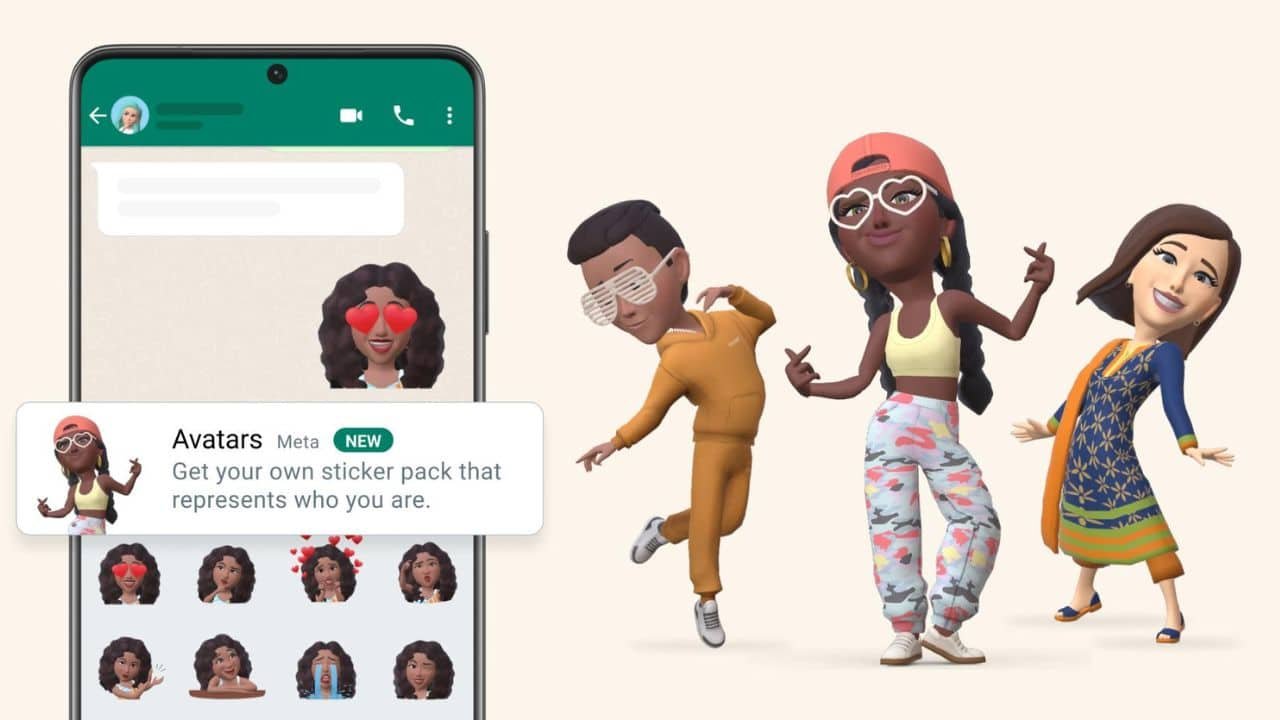
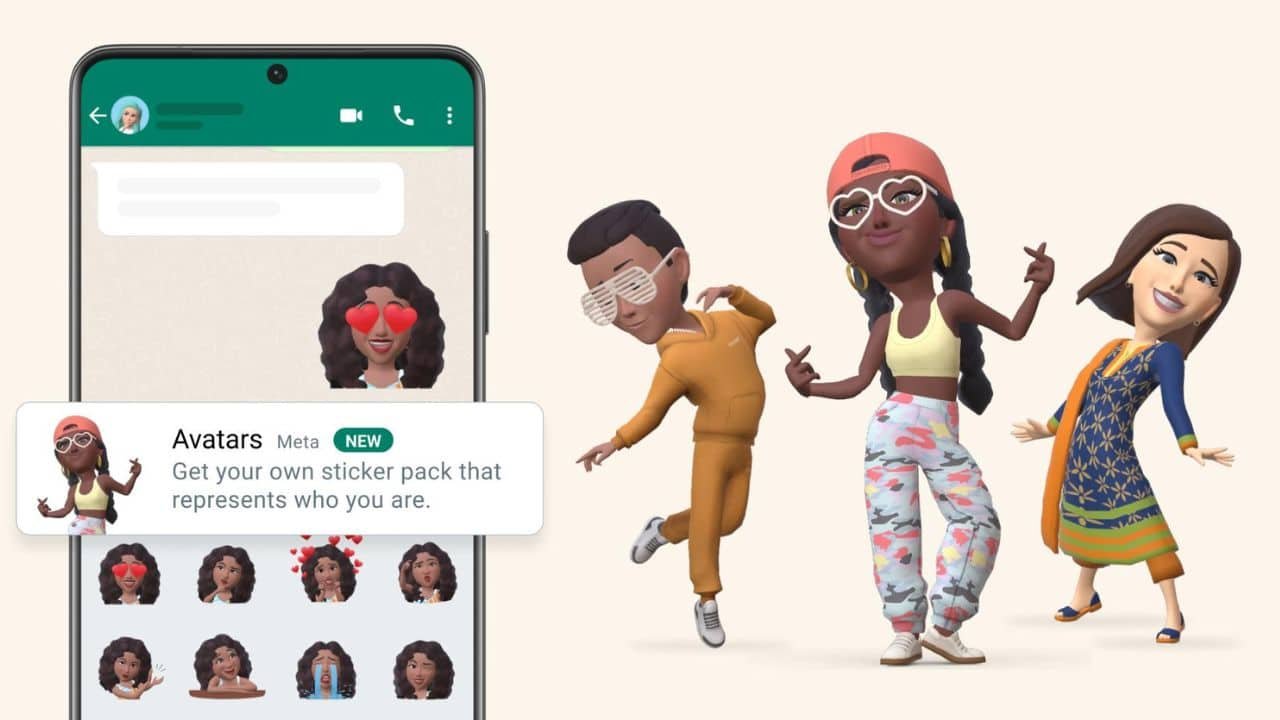
    WhatsApp, the renowned messaging app, is stepping up its game with the introduction of a highly anticipated feature: animated avatars. The update, now available through the Google Play Beta programme, elevates the app’s version to 2.23.16.12 and promises to bring more life and personality to communication.

    According to reports from WABetaInfo, the animated avatars feature had been under development for some time and has finally been rolled out to beta users. To check whether the feature is enabled for their account, users need to open the keyboard and select the avatar tab. Once activated, beta users can enjoy various animations associated with specific avatars.

    Excitingly, animated avatars can be shared with anyone, regardless of whether the recipient is using the beta version or not. However, it’s worth noting that only a limited number of stickers currently support animation. Nonetheless, industry experts speculate that WhatsApp will expand this feature, offering an animated version of the entire avatar pack in the future.

    The addition of animated avatars is expected to elevate the overall communication experience on the platform. By infusing stickers with motion, users can now convey emotions, expressions, and reactions in a more engaging and dynamic way.

    As of now, the animated avatar feature is available to select beta testers who have installed the latest WhatsApp beta for iOS from the TestFlight app. In the coming days, WhatsApp plans to roll out the feature to a broader user base, enhancing the overall messaging experience for millions of users worldwide.

    Moreover, WhatsApp enthusiasts can look forward to even more exciting features on the horizon. The messaging giant is also working on a Video Messaging feature akin to Voice Messaging, which is bound to add another layer of convenience and richness to communication. Additionally, a time-saving group creation feature is in the works, making it easier for users to organise and manage their group chats.

    Furthermore, WhatsApp is also embracing Material Design 3 enhancements, offering users a modern and visually pleasing interface that aligns with Google’s design language.

    As technology continues to evolve, WhatsApp’s commitment to innovation and improving user experiences sets the stage for a more engaging and dynamic messaging platform, delighting users worldwide.

  • Future of communication: Scientists use AI to translate brain activity into words

    Future of communication: Scientists use AI to translate brain activity into words

    Neuroscientists at the University of Texas in Austin have made a significant breakthrough by using artificial intelligence (AI) powered ChatGPT to translate brain activity into words. This discovery has the potential to greatly benefit patients suffering from conditions such as “locked-in” syndrome and stroke, which leave them unable to communicate effectively.

    The researchers leveraged OpenAI’s advanced chatbot technology, which has demonstrated its applications in various sectors, including healthcare. The integration of AI into our daily lives is steadily advancing, and this development showcases its potential in the field of neuroscience.

    Alexander Huth, an assistant professor of neuroscience and computer science at the University of Texas, emphasized that the term “mind reading” is inaccurate and misleading, as it implies capabilities that are beyond our current reach.

    To conduct their study, Professor Huth spent 20 hours inside an fMRI (functional magnetic resonance imaging) machine while listening to audio clips. The machine captured detailed snapshots of his brain activity, which were then analyzed by the AI system. Through this analysis, the technology was able to predict the words Professor Huth was hearing solely by monitoring his brain activity.

    The researchers utilized OpenAI’s chatGPT-1 model, which has been trained on a vast database of books and websites. They found that the AI system accurately predicted participants’ auditory and visual experiences based on their mental activity.

    While still in its early stages, this technology holds promise, particularly in assisting individuals who have lost the ability to communicate. Professor Huth explained that the true potential application lies in aiding patients with conditions such as “locked-in” syndrome and stroke, whose brains are functional but lack the ability to speak.

    Importantly, this breakthrough demonstrates the achievement of high accuracy levels without the need for invasive brain surgery. The researchers believe this marks the first step toward helping individuals regain their ability to communicate without resorting to neurosurgery.

    However, the technology’s results have also raised concerns regarding its potential use in controversial contexts. The researchers highlight the importance of obtaining consent from subjects and conducting brain scans within an fMRI machine. Additionally, the AI technology requires extensive training on an individual’s brain for accurate predictions to be made.

    Jerry Tang, the lead author of the research paper, emphasizes the need for safeguarding the privacy of brain data. He asserts that everyone’s brain data should be kept private, as our thoughts represent one of the last frontiers of personal privacy. Tang acknowledges the potential misuse of brain decoding technology and emphasizes the importance of legislators taking mental privacy seriously.

    Professor Huth clarifies that the technology can discern the general ideas and narratives individuals have in mind, effectively capturing internal storytelling. However, Tang warns against complacency, highlighting that technology is continually evolving, which could impact the accuracy of decoding methods and the extent to which an individual’s cooperation is required.

    In summary, the use of AI to translate brain activity into words has emerged as a groundbreaking discovery by neuroscientists. Although promising, further development and considerations regarding privacy and ethical use are necessary before widespread implementation can occur.