Tag: Constitution of Pakistan

  • ’Threat to national security’, PEMRA bans Bol show after Khan’s interview

    The Pakistan Electronic Media Regulatory Authority (PEMRA) has just banned Bol News’ programme “Tajzia” hosted by Anchor Sami Ibrahim after Pakistan Tehreek-e-Insaf (PTI) Chairman Imran Khan’s appearance on the show.

    The notice reads that “the statements that Khan gave at the show gravely threatened the national security, independence, sovereignty, integrity and ideology of the country and it is a clear violation of Article 19 of the constitution, PEMRA Ordinance, Electronic Media Code of Conduct (2015).

    Article 19 mainly states that “every citizen shall have the right to freedom of speech and expression, and there shall be freedom of the press, subject to any reasonable restrictions imposed by law in the interest of the glory of Islam or the integrity, security or defence of Pakistan or any part, therefore, friendly relations with foreign States, public order, decency or morality, or in relation to contempt of court, or incitement to an offence.’

    Imran Khan, in an interview aired on Wednesday, said that the establishment needs to make the right decisions and if they don’t, “the army will be destroyed”.

    He further said, “If the establishment doesn’t make the right decisions then I can assure you in writing that the army and they will be destroyed. Pakistan is going towards default. If right decisions aren’t made, then the country will be on a suicidal path.”

  • ‘Khan wants to destroy Pakistan for his ego’: CM Hamza Shehbaz

    ‘Khan wants to destroy Pakistan for his ego’: CM Hamza Shehbaz

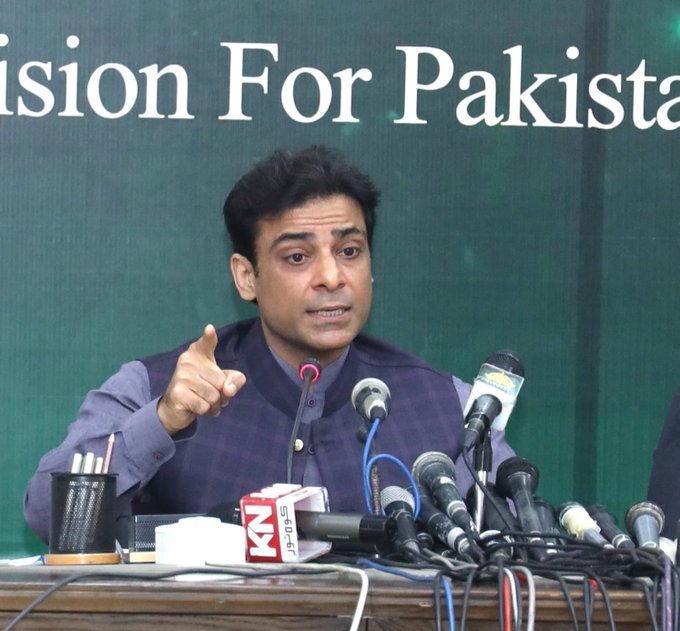
    Punjab Chief Minister (CM) Hamza Shehbaz on Thursday said that Pakistan Tehreek-e-Insaf (PTI) Chairman Imran Khan was “trying to divide the army”.

    “I want to tell you today that what Imran Khan Niazi is doing is not politics. He is spreading hatred in the name of politics,” said Hamza, addressing a press conference in Lahore. “What does he want to do with this country? I, as a Pakistani, want to warn the nation: don’t be misled with his fake demeanour.”

    He urged people and the institutions to “keep an eye” on Imran and his tactics.

    “He is trying to destroy Pakistan for his ego, just like he trampled upon the Constitution and the law for his ego. Keep politics aside. First decide what this man is trying to do with the nation. The people and institutions will have to take notice.”

    Hamza said he would stay on the post of CM “as long as God wills it” and vowed to continue working for the welfare and well-being of the people of the province “without wasting any moment”.

    “The way these people are creating problems in Punjab, whether it is the former governor [Omar Sarfraz Cheema] or the president [Arif Alvi] … The way they are spreading propaganda among the public … I have decided not to waste a second in making things easier for the people.”

    “I won’t let anything hinder my resolve in working for the people of Punjab.”

    “But I want to tell you today that the government of Punjab is standing with its people,” he pledged, announcing a relief package for the province in which the price of a 10kg bag of wheat flour, which earlier cost Rs650, has been reduced to Rs490. “In 36 districts of Punjab, people will be able to buy flour at this price,” the CM said. “We are giving a relief of Rs160 under the Rs200 billion subsidy for the province.”

    Hamza also said that he will ensure that everyday medicines and especially the ones used for cancer will be given free to people.

  • SC decides defecting lawmakers’ votes will not be counted

    SC decides defecting lawmakers’ votes will not be counted

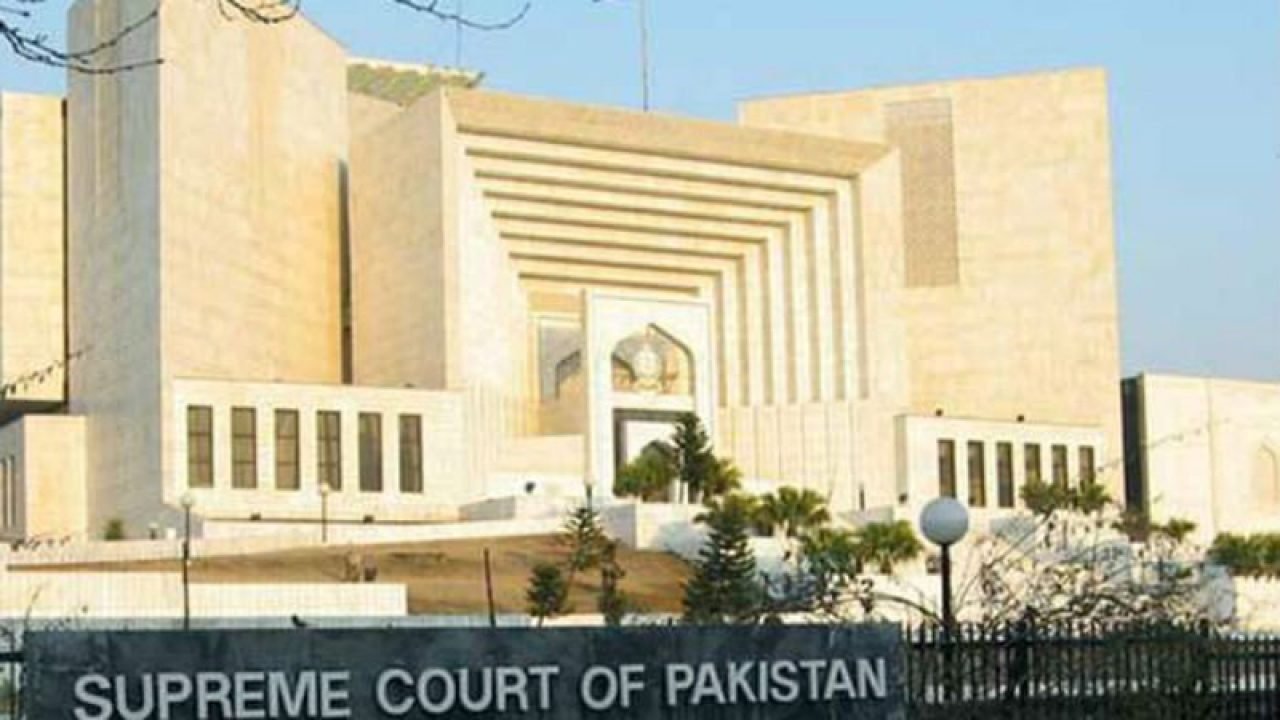
    The Supreme Court (SC) on Tuesday in its decision on a presidential reference seeking interpretation of Article 63-A of the Constitution, which is related to the status of defecting lawmakers, said the votes of defecting lawmakers will not be counted.

    Chief Justice of Pakistan (CJP) Umar Ata Bandial, Justice Ijazul Ahsan, and Justice Munib Akhtar gave the majority verdict while Justice Mazhar Alam Khan Miankhel and Justice Jamal Khan Mandokhail were the dissenting judges.

    Question 1: Should Article 63-A have a limited or a broad, purpose-oriented interpretation?

    The short-order said that the first question was related to the proper approach to be taken for the interpretation and application of Article 63-A.

    “In our view, this provision cannot be read and applied in isolation and in a manner as though it is aloof from, or indifferent to, whatever else is provided in the Constitution,” the verdict stated.

    It said that Article 63-A was an “expression in the Constitution itself of certain aspects of the fundamental rights that inhere in political parties under clause (2) of Article 17,” adding that the two provisions were “intertwined”.

    “Defections rightly stand condemned as a cancer afflicting the body politic. They cannot be countenanced,” the order said, adding that 63-A must be interpreted in a “purposive and robust manner”.

    “The pith and substance of Article 63-A are to enforce the fundamental right of political parties under Article 17 […] It must therefore be interpreted and applied in a broad manner, consistent with fundamental rights,” the verdict said.

    Question 2: Will the defecting members’ vote be counted, given equal weightage?

    Giving its stance on the second question, the verdict said that the vote of any member of a parliamentary party in a house “that is cast contrary to any direction issued by the latter in terms of para (b) of clause (1) of Article 63-A cannot be counted and must be disregarded, and this is so regardless of whether the party head, subsequent to such vote, proceeds to take, or refrains from taking, an action that would result in a declaration of defection.”

    Question 3: Will the defectors be disqualified for life?

    “While it is for parliament to enact such legislation, it must be said that it is high time that such a law is placed on the statute book. If such legislation is enacted it should not amount to a mere slap on the wrist but must be a robust and proportionate response to the evil that it is designed to thwart and eradicate,” the order stated.

    Question 4: Measures that can be taken to prevent defection, floor crossing, and vote-buying

    On the question of the measures that can be taken to curb vote-buying, the verdict refrained from giving an opinion on the fourth question, submitted by the president was returned by the court as it was “stated in terms” that were “vague, and too broad and general”.

    What is Article 63-A?

    Article 63(A) of the Constitution of Pakistan deals with the defection of parliamentarians.

    According to the Article, a lawmaker can be disqualified on the grounds of defection if they vote or abstain from voting in the House contrary to any direction issued by the parliamentary party to which they belong.

    However, this is restricted to three instances where they have to follow the party’s directions:

    Election of the prime minister or chief minister;

    Vote of confidence or a vote of no-confidence;

    Money bill or a Constitution (amendment) bill.

    Per the Article, the head of the party is required to present a written declaration that the MNA concerned has defected.

    However, prior to presenting the declaration, the head of the party will have to give the MNA concerned a chance to explain the reasons for defection.

    Following that, the party chief will then forward the written declaration to the speaker, who would, in turn, hand it over to the chief election commissioner (CEC).

    The CEC will have 30 days at its disposal to confirm the declaration. Once confirmed, the MNA concerned will no longer be a member of the House and their “seat shall become vacant”.

  • ECP says PTI MNAs who ditched PTI can’t be disqualified

    ECP says PTI MNAs who ditched PTI can’t be disqualified

    The Election Commission of Pakistan (ECP) on Wednesday dismissed the Pakistan Tehreek-e-Insaf’s (PTI) references seeking the disqualification of its dissident members of the National Assembly (NA).

    A three-member bench headed by Chief Election Commissioner (CEC) Sikandar Sultan Raja reserved its decision after hearing arguments from all sides — the PTI and the lawyers of the dissident MNAs.

    The ECP stated that the declarations by the PTI against its lawmakers were not found to be in accordance with the Constitution.

    PTI’s lawyer Faisal Chaudhry requested the court to provide a copy of the reserved verdict, saying that he will appeal against it.

    While presenting his arguments, Noor Alam Khan’s lawyer Gohar Khan maintained that Article 63(A)1 does not apply to Noor.

    “The show-cause notice issued by the PTI secretary-general doesn’t have legal status. Therefore, Noor is still a PTI member,” Gohar argued, adding that the show-cause notice issued by the secretary-general was nothing more than a piece of paper as per the law. He maintained that as per the Supreme Court’s (SC) ruling, ECP’s full-court bench can give its verdict in the disqualification reference.

    The PTI filed references against 20 MNAs seeking their disqualification under Article 63-A of the Constitution ahead of the no-trust vote against then-premier Imran Khan.

  • Govt to file high treason case against PTI leaders

    Govt to file high treason case against PTI leaders

    The government has started preparing a high treason case against the former and the current PTI government officials on the basis of Article 6 for violating the Constitution, confirmed Deputy Secretary General PML-N Attaullah Tarar.

    According to Geo News’ sources, the people who are being named are President of Pakistan Dr Arif Alvi, Former Prime Minister (PM) Imran Khan, Former National Assembly (NA) Deputy Speaker Qasim Suri and Punjab Governor Omar Sarfraz Cheema.

    As per the news outlet, currently, the government is consulting legal experts. The current ministries of interior and law have started gathering evidence related to the case.

    Article 6 of Constitution of Pakistan, says any person who “abrogates or subverts or suspends or holds in abeyance the Constitution shall be guilty of high treason”.

    On April 3rd, Deputy Speaker Suri “dismissed” the no-confidence motion against Imran Khan, terming it against Article 5 of the Constitution. Then, Khan addressed the nation, saying he had advised President Alvi to dissolve NA, which the President approved.

    Later, the Supreme Court of Pakistan (SCP) declared the act unconstitutional, restored the assemblies and directed to hold the no-confidence motion in the House, which resulted in the removal of Khan’s government.

    A couple of weeks ago, PML-N Hamza Shehbaz was elected as the new CM of Punjab. However, his oath-taking ceremony is still hanging as the Governor of Punjab Omar Sarfraz Cheema declined to administer the ceremony multiple times. Despite Lahore High Court’s (LHC) order to do the ceremony, it is yet to take place.

    Many legal experts have argued that Punjab’s governor cannot decline to administer the oath to the chief minister-elect under any circumstances and termed it illegal.

  • What do the legal experts have to say about the expected SC verdict?

    What do the legal experts have to say about the expected SC verdict?

    All eyes are on the Supreme Court of Pakistan (SCP) as the country waits for the verdict of the dismissal of the no-confidence motion tabled against Prime Minister (PM) Imran Khan by National Assembly (NA) Deputy Speaker Qasim Suri. Pakistan is in a state of political chaos as the no-confidence motion against Khan was dismissed abruptly on Sunday, April 3.

    Supreme Court will announce its verdict on Deputy Speaker Qasim Suri’s ruling at 7:30pm today.

    Chief Justice of Pakistan (CJP) Umar Ata Bandial on Thursday said that it was clear that the April 3 ruling of Deputy Speaker Qasim Khan Suri was “incorrect”.

    Here is what legal experts have to say about the expected verdict.

    Ahsan Bhoon, President of the Supreme Court Bar Association (SCBA) said, “I am hopeful that the SCP will give its verdict in accordance with the constitution,” adding, “It is important to emphasise the need for an election order while maintaining the dissolution order of the Assembly.”

    SC lawyer Feisal Naqvi wrote in his op-ed in The News titled, ‘Destroying democracy from within‘: ” If today, the entire opposition can be disenfranchised on the basis of one man’s suspicions of treason, then tomorrow the entire opposition can be disenfranchised on the basis of different suspicions. No parliamentary system can work in such manner.”

    Lawyer Salaar Khan tweeted, “If the SC decides to return proceedings to the original position, the vote of no-confidence proceeds. If it fails, Imran Khan stays PM. If it succeeds, the next PM can be elected immediately thereafter. In either case, we have a stable government.”

    However, Salaar also wrote, “Mixed signals coming in from the SC. On the one hand, it has indicated that it believes the Speaker/Deputy Speaker’s ruling to be illegal. On the other, terms like ‘public interest’ and ‘stability’ suggest that we may be veering close to Necessity.”

    SC lawyer Salahuddin Ahmed tweeted, “Real mistake of SC was in not constituting a full court or larger bench of 5/7 senior-most judges. In a polarised political atmosphere; they will be lambasted whatever they decide.”

    PM Khan on March 27 claimed that the Opposition’s no-trust move is part of an alleged “foreign-funded conspiracy” hatched against his government. It is pertinent to mention here that the Opposition tabled the no-confidence motion against PM Khan on March 8. The government claims to have received the threatening communique on March 7.

    Deputy Speaker Qasim Suri on April 3 said that the no-confidence motion, presented on March 8, should be according to the law and the Constitution. “No foreign power shall be allowed to topple an elected government through a conspiracy,” he said, adding that the points raised by the minister were “valid”.

  • ‘Dissolution of Assembly deprives Pakistanis of right to choose govt’: Human Rights Watch

    ‘Dissolution of Assembly deprives Pakistanis of right to choose govt’: Human Rights Watch

    Human Rights Watch (HRW) denounced Prime Minister (PM) Imran Khan’s action of dissolving the National Assembly and escaping from facing the no-confidence motion tabled against him. “This move of the premier has infringed on the rights of Pakistani citizens to choose their government.”

    “To dissolve parliament rather than face a no-confidence vote that could remove him from power effectively deprives Pakistani citizens of their right to choose their government,” said HRW in a statement.

    The watchdog for advocating human rights said, “Move has plunged Pakistan into a constitutional crisis. Under Pakistan’s constitution, the prime minister ceases to hold office if a majority of the National Assembly votes for a motion of no confidence – Imran Khan’s party appeared to have lost its majority by April 3. The action allows Khan to continue as prime minister until a caretaker government takes over, with neither a national assembly nor a federal cabinet.”

    “Government officials threatened to blow up the Opposition in a suicide attack and called on supporters to go out and take traitors to the task,” said HRW.

    “One member of parliament from Khan’s party tweeted that all Opposition members should be shot – a tweet he subsequently deleted. Senior members of Khan’s party have called for Opposition members to be arrested for treason,” added Human Rights Watch.

    Pakistan is in a state of political chaos as the no-confidence motion against Khan was dismissed abruptly on Sunday, April 3. Deputy Speaker Qasim Suri said that the no-confidence motion, presented on March 8, should be according to the law and the Constitution. “No foreign power shall be allowed to topple an elected government through a conspiracy,” he said, adding that the points raised by the minister were “valid”.

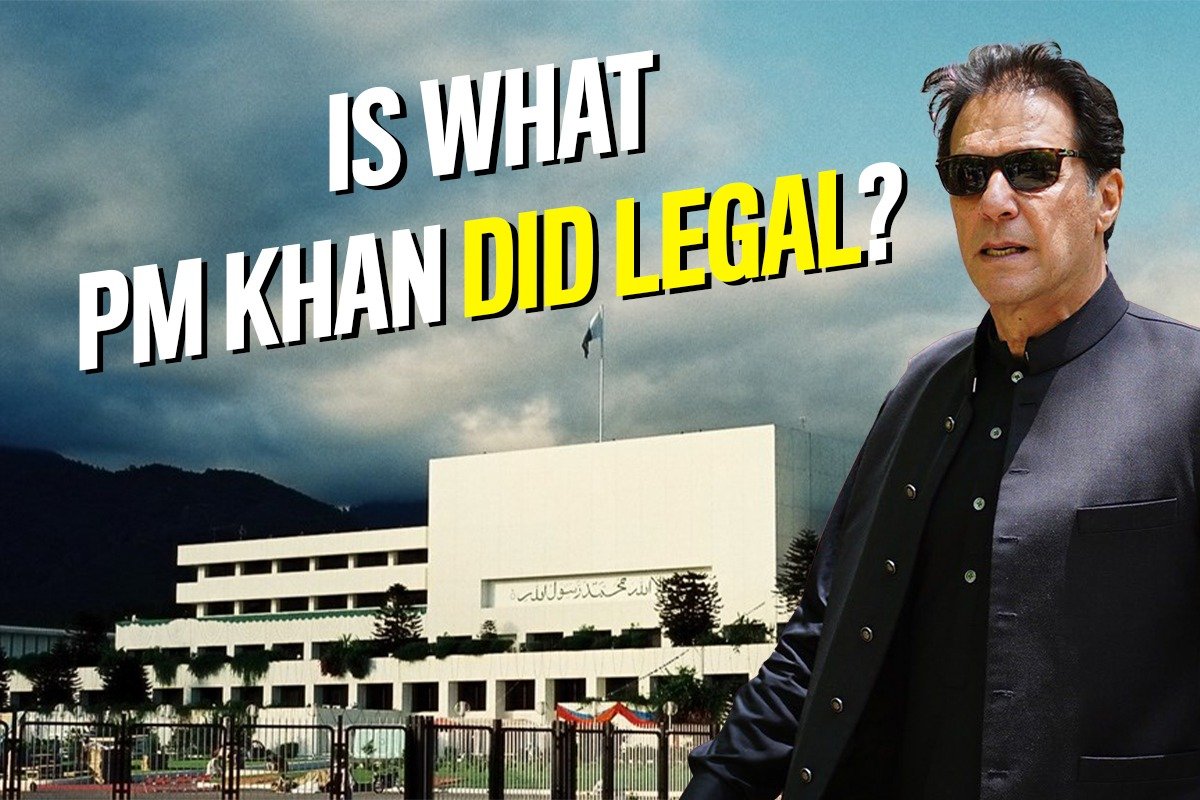
  • Legal Battle: Is what Prime Minister Imran Khan did today, legal?

    Legal Battle: Is what Prime Minister Imran Khan did today, legal?

    After the National Assembly (NA) Deputy Speaker Qasim Khan Suri on Sunday “dismissed” the no-confidence motion against Prime Minister (PM) Imran Khan, terming it against Article 5 of the Constitution, the legal war began. PM Khan then addressed the nation, saying he had advised the President to dissolve the National Assembly, which the President approved. The country is in a state of shock and the main question is: Is what is going on, legal?

    BUT FIRST, WHAT HAPPENED IN THE ASSEMBLY SESSION?

    Loyalty to the state is the basic duty of every citizen under Article 5: Fawad Chaudhry

    The much-awaited and crucial NA session started after a delay to hold the vote on the no-confidence motion against Khan.

    Information Minister Fawad Chaudhry said, “On March 7, our official ambassador was invited to a meeting attended by the representatives of other countries. The meeting was informed that a motion against PM Imran was being presented,” he said, adding that this happened a day before the Opposition filed the no-trust move.

    “We were told that relations with Pakistan were dependent on the success of the no-confidence motion. We were told that if the motion fails, then Pakistan’s path would be very difficult. This is an operation for a regime change by a foreign government,” he alleged.

    NA speaker dismisses no-confidence motion against PM Imran, terms it contradictory to Article 5

    After Fawad Chaudhry spoke, Deputy Speaker Suri agreed with Fawad and said that the no-confidence motion was presented on March 8 and should be according to the law and the Constitution. “No foreign power shall be allowed to topple an elected government through a conspiracy,” he said, adding that the points raised by the minister were “valid”.

    He dismissed the motion, ruling that it was “contradictory” to the law, the Constitution, and the rules. The session ended and the government representatives walked out.

    LET’S GET LEGAL: What is Article 5?

    According to Article 5, “Loyalty to the State is the basic duty of every citizen.”

    “Obedience to the Constitution and law is the [inviolable] obligation of every citizen wherever he may be and of every other person for the time being within Pakistan.”

    THEN WHAT HAPPENED: On PM Imran Khan’s advice, President Arif Alvi approved the dissolution of the assembly

    In a surprise move, the premier on Sunday said that he has advised President Alvi to dissolve all the assemblies.

    President Dr Arif Alvi dissolved the National Assembly on the proposal of PM Khan.

    In a brief address to the nation after the no-confidence motion was rejected, the premier congratulated the nation and said that he had sent a proposal to the President to dissolve the NA and the nation should prepare for the next election.

    WAS WHAT HAPPENED LEGAL?

    What do the legal experts have to say?

    The Current reached out to legal experts to understand and get better clarity on the constitutional process in relevance to dismissing the no-trust move against PM Khan.

    Senior Lawyer and Journalist Muneeb Farooq terming the dismissal of the no-trust move “absolute nonsense” said, “The court will decide if what the speaker did is illegal and the no-confidence motion will likely move on. Today the court is closed, they [the Opposition] will take it to the court tomorrow.”

    Farooq further said, “Article 69 says that the court cannot question parliament proceedings, but there are exceptions,” adding that certain things were taken to court and the Supreme Court has ruled on them.

    WHAT’S FAROOQ’S MAIN POINT?

    Farooq said that the Prime Minister does not have the right to ask the President to dissolve the national assembly when there is a motion of no-confidence against him. He also added that the Speaker cannot dismiss a motion against the PM when the motion is already a part of the agenda. He added that Article 5 cannot be used in this situation, the way the government has used it.

    THE OTHER SIDE:

    Supreme Court Lawyer Chaudhry Faisal Hussain said, “The Deputy Speaker gave the ruling to dismiss the no-confidence motion. It is in his power to discard the no-confidence motion against the prime minister. Hence the motion gets dismissed and PM Khan still remains the prime minister.”

    WHAT’S HUSSAIN’S MAIN POINT?

    “Since Imran Khan is still Prime Minister, he can call for fresh elections, after dissolving the assembly, which he has done. The issue now will be that PM Khan has already moved past the no-confidence motion. If the assembly had not been dissolved, then perhaps the Supreme Court could make a ruling on the no-confidence issue.”

    ANOTHER POINT OF VIEW

    Advocate Supreme Court of Pakistan (SCP) Salman Akram Raja speaking to Geo News said that what happened in the National Assembly today was “highly unconstitutional”.

    He further said that SCP will look into the ruling given by the deputy speaker and could decide on allowing early elections or letting the no-confidence motion vote happen.

    The Joint Opposition had submitted the no-confidence motion to kick out PM Khan on March 8. According to reports, Chief Justice Umar Bandial has called his fellow justices to his place to discuss what is going on in the country.

    Meanwhile, sources say the Supreme Court may hold special proceedings today as well.
  • PML-N questions extension debate of army chief tenure by PM Khan

    PML-N questions extension debate of army chief tenure by PM Khan

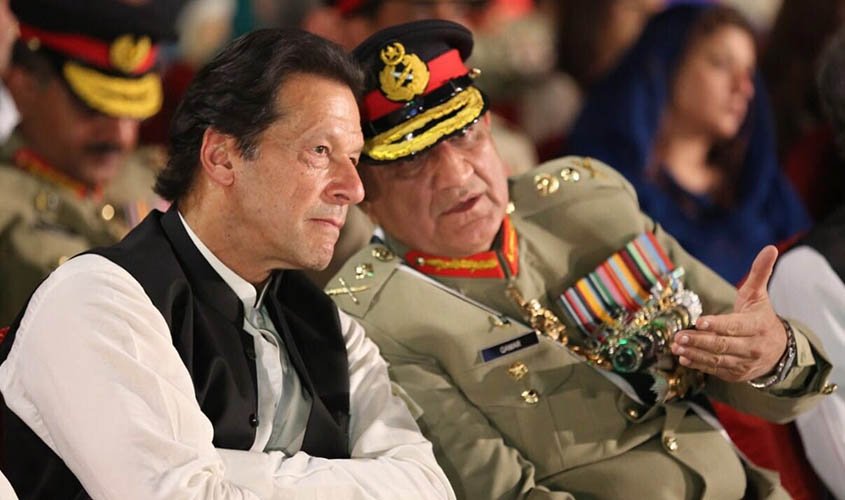
    Pakistan Muslim League-Nawaz (PML-N) leaders Shahid Khaqan Abbasi and Ahsan Iqbal slammed Prime Minister (PM) Imran Khan over talking about the extension of the Chief of Army Staff’s (COAS) General Qamar Javed Bajwa’s extension, arguing that it is an “unconstitutional and political tactic”.

    Abbasi said that the Constitution of Pakistan was clear on the army chief’s appointment, saying: “The Constitution that we’ve read says the army chief gets appointed for three years. There has never been a debate on the extension of the army chief’s tenure.”

    Last week, PM Khan, in a programme said he had so far not thought about the extension of COAS as November [the appointment month of COAS] is far away.

    Similarly, PML-N Secretary-General Ahsan Iqbal condemned the act and said that the government is “trying to play a dangerous political card on the matter of the army chief’s appointment.”

    “A new military chief is appointed during the last three months of the incumbent’s tenure, therefore, talking about the extension before time is just a political tactic,” he added.

    General Qamar Javed Bajwa’s tenure was extended for three years by PM in August 2019, just three months before he was set to retire.

  • ‘If law can apply to Nawaz Sharif, why not Imran Niazi?’ Shehbaz demands action against PM

    ‘If law can apply to Nawaz Sharif, why not Imran Niazi?’ Shehbaz demands action against PM

    Leader of the Opposition in the National Assembly (NA) Shehbaz Sharif on Friday demanded legal action and “daily court proceedings” against Prime Minister (PM) Imran Khan.

    In a series of statements shared by the party’s official Twitter account, “A person who hides facts, steals, and lies, cannot hold constitutional, governmental or political office,” said Shehbaz.

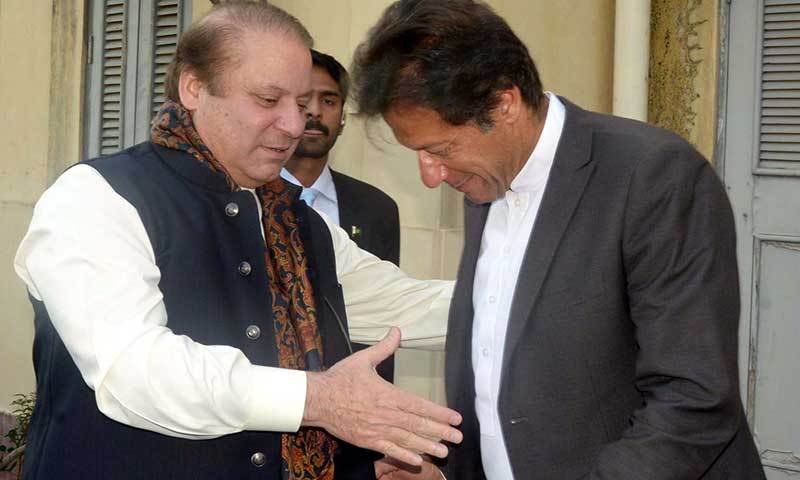
    Shehbaz asked, “if the law can apply to a popular leader like Nawaz Sharif, why not Imran Niazi?”

    “If a Panama Papers JIT can be formed against Nawaz Sharif, and can be overseen by the honourable judges of the Supreme Court (SC), then why can this not be done for Imran Niazi?” he further questioned.

     “Under the Constitution of Pakistan and its laws, “no thief can be a prime minister. Imran Niazi, who has been proven a thief and a liar under the law, must resign,” he added.


    The Pakistan Muslim League-Nawaz president demanded that a probe be initiated against PM Imran Khan and his case be heard on a daily basis — like against former prime minister Nawaz Sharif.

    He said equal treatment under the Constitution and law is a fundamental principle of Pakistan’s laws and one that must be fulfilled.

    “The Election Commission of Pakistan (ECP’s) scrutiny committee has charged Imran Niazi and his party under the law,” he said.

    The ruling Pakistan Tehreek-e-Insaf (PTI) hid 53 bank accounts and funds worth millions of rupees from the ECP.

    The report of an ECP scrutiny committee probing the party’s funds revealed the following details.

    The committee’s report showed that the PTI had only disclosed 12 out of its 65 accounts, which are registered with the State Bank of Pakistan (SBP).