Tag: constitutional Amendments

  • 26th Constitutional Amendment passed: Here’s what you need to know

    26th Constitutional Amendment passed: Here’s what you need to know

    The coalition government’s much-awaited 26th Constitutional Amendment Bill has been passed by both the Senate and the National Assembly in the wee hours of Monday morning.

    The Constitutional Amendment bill has been sent to President Asif Ali Zardari, following the approval from Prime Minister Shehbaz Sharif.

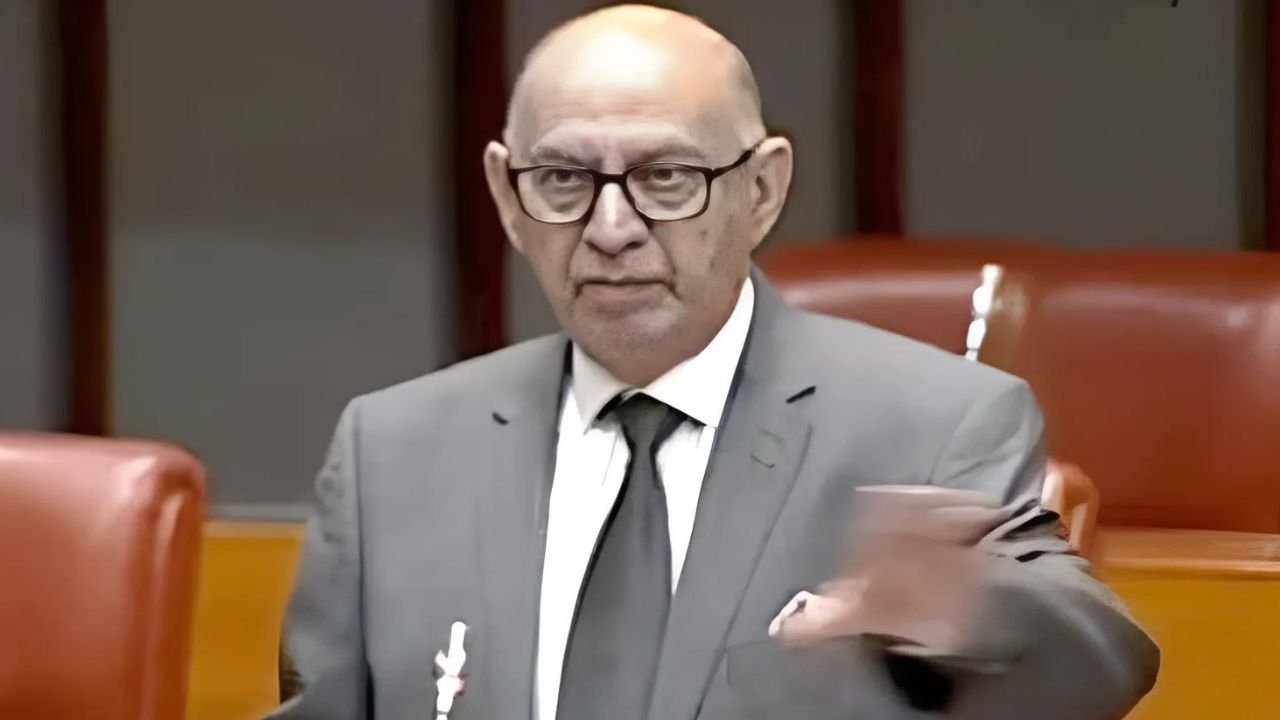
    The bill, containing 22 clauses, was presented by Federal Law Minister Azam Nazeer Tarar in the Senate where it secured 65 votes, a two-thirds majority in the Upper House.

    Following the voting, Chairman Senate Yousaf Raza Gilani stated, “Sixty-five members are in favour of the motion regarding the passage of the bill, and four members are against it. So, the motion is carried out by the votes of not less than two-thirds of the total membership of the Senate, and consequently, the bill stands passed.”

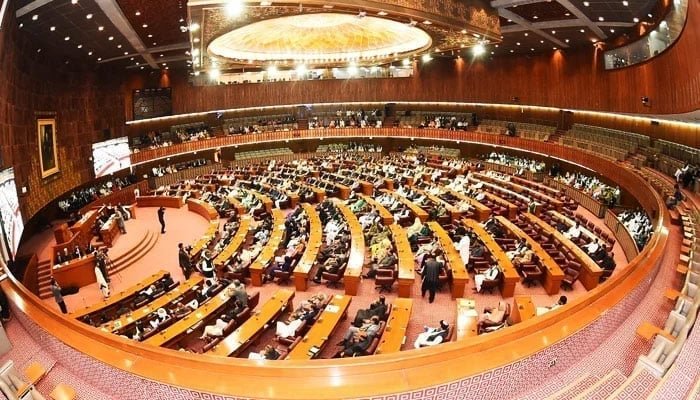
    The 26th Constitutional Amendment bill was tabled at the National Assembly following approval from the Upper House and passed with a two-thirds majority as 225 lawmakers voted in favour of the bill in NA, while the magic number in the Lower House was 224 votes.

    Pakistan Tehreek-e-Insaf (PTI) and Sunni Ittehad Council’s 12 Member National Assembly (MNA) opposed the Constitutional Amendments In the National Assembly.

    “225 members cast their votes for ayes, 12 for nos. Consequently, the bill is passed by the assembly by not less than two-thirds of the total membership of the assembly,” the Speaker of the National Assembly Ayaz Sadiq said.

    Following the passage of the bill from the NA, Prime Minister Shehbaz Sharif remarked, “Today’s amendment, the 26th, is not just an amendment, but an example of national solidarity and consensus. A new sun will rise, emanating across the nation.”

    The key points of the 26th Constitutional Amendment

    The much-debated Federal Constitutional Court (FCC) has been dropped from the Constitutional Amendments bill. However, it has been suggested that constitutional benches be formed in the Supreme Court (SC) of Pakistan to deal with constitutional matters.

    The Supreme Judicial Commission (SJC), headed by the Chief Justice of Pakistan and including the three most senior judges of the Supreme Court, two senators and two MNAs, a Law Minister and the Attorney General of Pakistan will form the constitutional bench and ensure that all provinces get representation on it.

    The minimum number of judges in the constitutional bench would be five.

    A 12-member special parliamentary committee, including eight members from the National Assembly and four Senators, would be responsible for sending the names of the three most senior judges of the top court to PM Pakistan for the appointment of Chief Justice of Pakistan.

    The Chief Justice’s retirement age is fixed at 65 years of age.
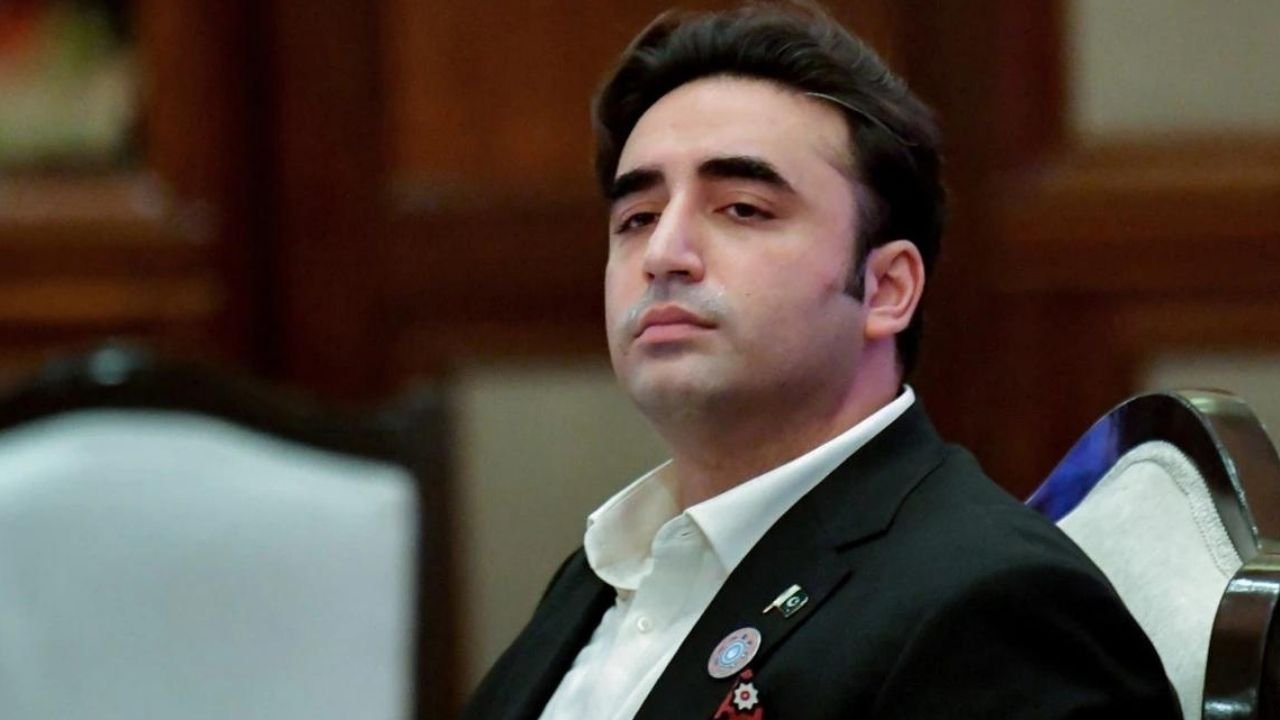
  • Bilawal warns of ‘face-off’ in country if amendments not passed before Oct 25

    Bilawal warns of ‘face-off’ in country if amendments not passed before Oct 25

    Pakistan Peoples Party (PPP) chairman Bilawal Bhutto while talking to journalists during a meeting with Supreme Court Press Association’s delegation on October 2, warned of a “face-off like situation” in the country if the constitutional amendments were not passed before October 25.

    It should be highlighted that Chief Justice of Pakistan Qazi Faez Isa is set to retire on October 25 this year.

    Bilawal has been at the forefront of campaigning for the coalition government’s decision to pass the constitutional amendments ever since it failed to do so last month.

    Last month, the government remained unsuccessful in convincing JUI-F Chief Maulana Fazl ur Rehman as opposition and government leaders raced to woo him.

    “The matter will be resolved peacefully if the amendment is passed before October 25. Otherwise, the situation could lead to confrontation,” warned Bilawal.

    He reiterated the PPP’s goal to establish a constitutional court – a goal set in the Charter of Democracy signed by the slain former Prime Minister Benazir Bhutto and Nawaz Sharif in 2006.

    Bilawal blamed the judiciary for being biased and political, questioning the top court’s reserved seats verdict.

    Interestingly, he also stated that when Law Minister Azam Nazeer Tarar apprised the SC judges of judicial reforms, then “they [SC Judges] instantly announced the verdict in the reserved seats case which is direct interference.”

    Meanwhile, Jamiat Ulema-e-Islam (JUI) leader Senator Kamran Murtaza told Geo News that he won’t cooperate with anyone under threat of bloodshed and pressure, in reference to Bilawal’s statement.

  • Sanaullah informally discussed amendments with PTI; Gandapur calls it an attack on democracy

    Sanaullah informally discussed amendments with PTI; Gandapur calls it an attack on democracy

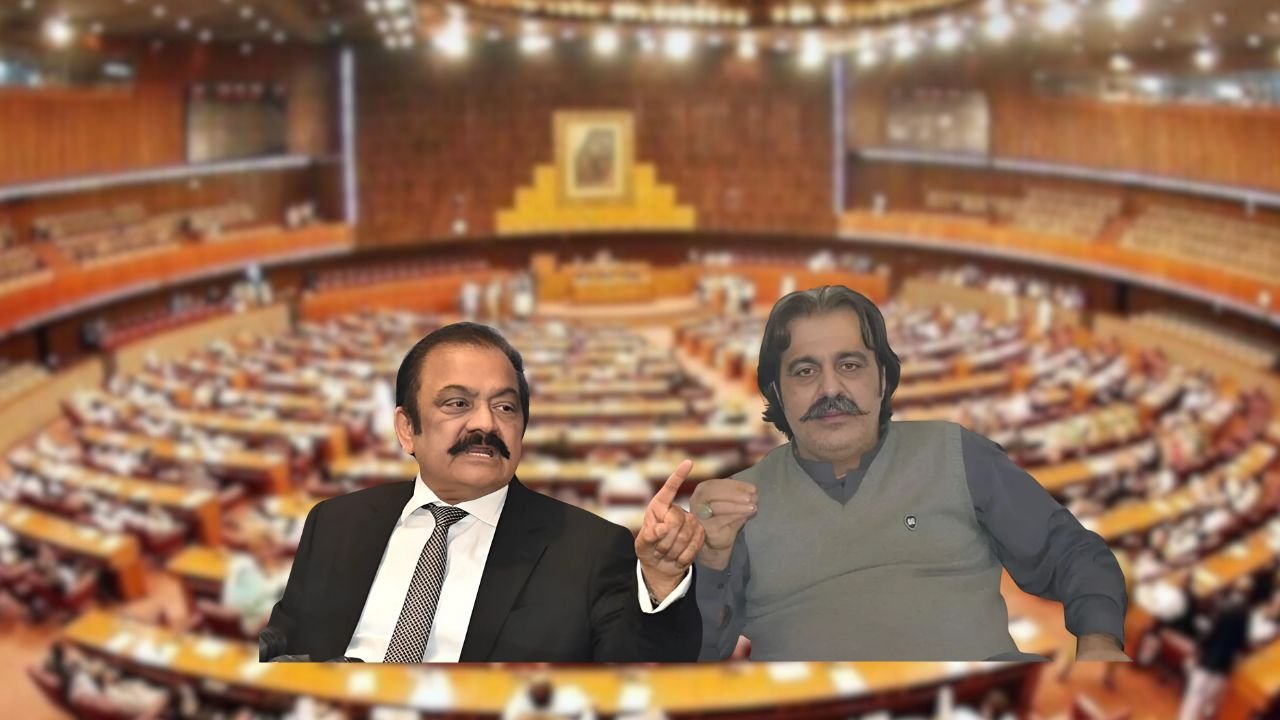
    Prime Minister Advisor for Political Affairs Rana Sanaullah has confirmed that the government held informal talks with Pakistan Tehreek-e-Insaf (PTI) over the proposed constitutional amendments draft.

    Appearing on the Geo News programme ‘Geo Pakistan’, the PM’s Advisor remarked that the PTI leadership also envisaged that amendments would bring better results.

    He said, “The agreed amendments can be approved in the first week of October,” while the rest will be passed after securing a one-third majority in parliament.

    Responding to the formation of the Federal Constitutional Court (FCC), Sanaullah said, “Apex court judges are disturbed” by the number of pending cases. FCC will hear cases regarding constitutional petitions,” which would significantly elevate the judiciary’s burden.

    Meanwhile, Chief Minister (CM) Khyber Pakhtunkhwa (KP) Ali Amin Gandapur said that approval of proposed amendments is a far distinct thing; they (the government) wouldn’t even dare to present it in parliament.

    He said, “These amendments are an attack on Pakistan’s democracy, and PTI won’t let them win.”

  • The turbulent story of govt’s aspirational constitutional amendments

    The turbulent story of govt’s aspirational constitutional amendments

    Amid the undetermined delay of the incumbent federal government’s proposed twenty-sixth constitutional amendment package, the past days have been tumultuous for both the Upper and Lower House of parliament.

    To every government effort to pass the constitutional amendments package, the opposition put up resistance, ultimately pushing the coalition government to back foot. Chief Jamiat Ulema Islam- Fazl (JUI-F) Maulana Fazlur Rehman remains the decision-maker, despite having only five Senate votes.

    The story started when Pakistan Muslim League Nawaz (PML-N) bigwigs, Interior Minister Mohsin Naqvi and Federal Law Minister Azam Nazeer Tarar were tasked to convince Fazlur Rehman to vote for the controversial constitutional amendments, prominent journalist Ansar Abbasi told Geo News.

    Government sources revealed that the government called National Assembly (NA) and Senate meetings without any deal with JUIF Chief Rehman, which ultimately failed.

    A PML-N source has disclosed that it has become difficult for the government to convince Rehman over the proposed amendments, but the government will make every effort to bring him on board.

    The leader of PML-N unveiled a government plan to pass the controversial amendments in the upcoming fifteen days.

    He further said that the current federal government led by Prime Minister (PM) Shehbaz Sharif couldn’t afford to delay the amendments, adding the probability of awarding two Senate seats to JUI-F over its consent to the constitutional package.

    Fazlur Rehman had remarked that government has not shared the constitutional package draft with any party including his, “It is a sensitive issue which should be discussed calmly,” he said.

    Leader of the Opposition in the National Assembly (NA) Omer Ayub Khan had stated, “They (the government) have no draft with them, and they did not know what to discuss.”

    Pakistan People’s Party (PPP) leader Raja Pervaiz Ashraf declared the constitutional package “a serious piece of legislation” and advised the government not to act hastily.

    The chief of the Balochistan National Party-Mengal (BNP-M), Akhtar Mengal, had disclosed that two party senators were being pressurised to vote in favour of a “constitutional package”, a set of proposed amendments tabled by the government.

    Meanwhile, incarcerated former Prime Minister (PM) Imran Khan has said that new constitutional amendments will jeopardise the country’s future.

    Talking to journalists in Adiala Jail Rawalpindi, the founder of Pakistan Tehreek-e-Insaf (PTI) said that the formation of a new Federal Constitutional Court is being considered as the incumbent government fears the Supreme Court (SC).

    He stated, “The purpose of constitutional amendments is to keep me in jail; rulers have decided to destroy the judiciary.”

    He further stated, “Sitting members in government don’t want to perceive the judiciary as independent.”

    Responding to controversial proposed constitutional amendments, he alleged that the money and properties of those proposing the amendments are outside the country.

    Criticising the Chief Justice of Pakistan (CJP) Qazi Faez Isa, he said, “The incumbent government wanted to destroy judiciary by reinstating CJP Isa.”

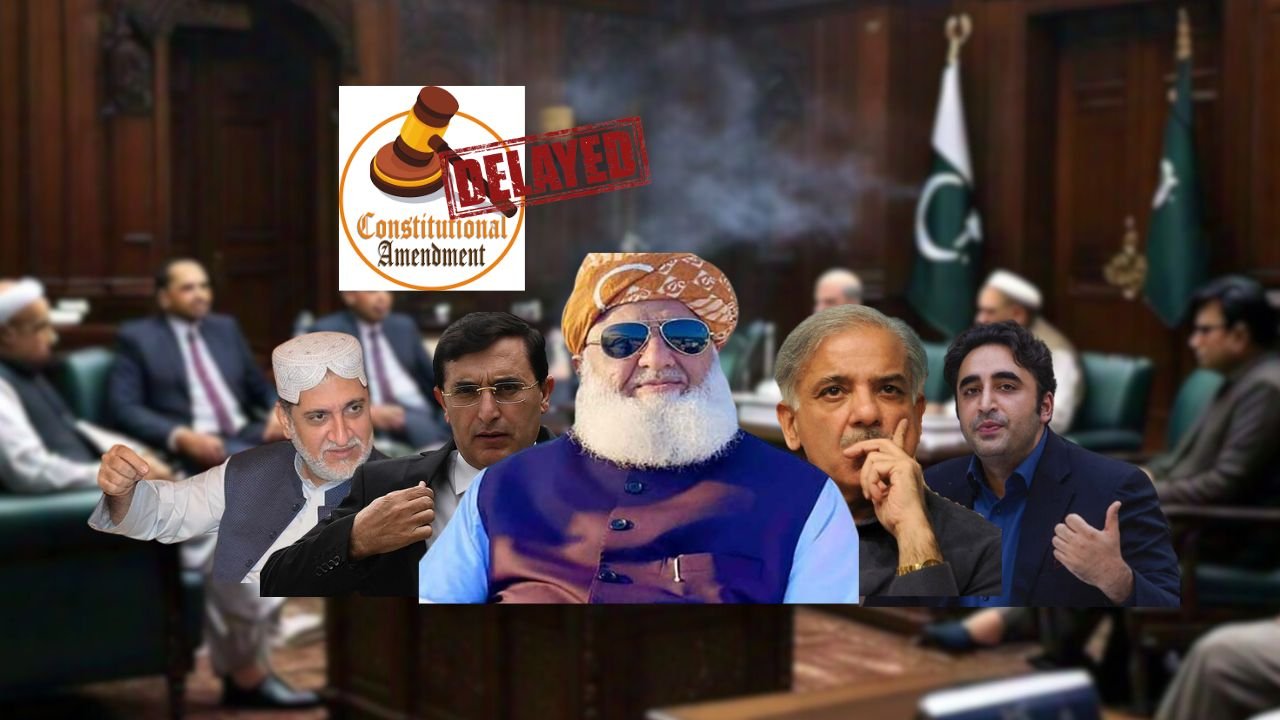
    On Monday, Pakistan Muslim League-Nawaz (PML-N) Senator Irfan Siddiqui has confirmed that the government’s late-night hustling and manoeuvring to get JUI-F president Fazal ur Rehman onboard to pass the constitutional amendments have failed, and the amendments have been postponed indefinitely.

    However, The proposed constitutional package formulated by the federal government contained fifty-four suggestions, has been revealed.

    According to the constitutional amendments draft, article 63 (A) of the constitution states that a member vote against the direction of the parliamentary party will be counted, Geo News reported.

    Article 17 suggests establishing a Federal Constitutional Court (FCC), and Article 175 proposes changing the judge’s appointment method.

    The draft proposals suggests that an eight-member National Assembly Committee will send the names of top senior judges to the Prime Minister (PM) for the position of Chief Justice (CJ) of the Federal Constitutional Court. The committee will then choose one CJ out of three recommended names, ruling out the scenario of the most senior judge as CJ.

    However, the first CJ of the FC Court will be appointed by the President on the advice of the Prime Minister. Meanwhile, the President will appoint the first Constitutional Court judges after consulting with the Chief Justice.

    The retirement age of CJ FC Court will be sixty-eight years, and a Supreme Court judge will be appointed for a three-year term in FCC as a judge.

    The draft also read that the Suo Motu authority will be withdrawn from the High Court.

  • Constitutional Amendment Bill: What was the govt trying to do?

    Constitutional Amendment Bill: What was the govt trying to do?

    The coalition government remained unsuccessful last week as it tried to pass the Constitutional Amendment Bill amidst protests by opposition party and senior lawyers. The Government failed to get the magic number to pass the bill with JUI-F President Fazal ur Rehman holding the key. Fazl took the centre stage as opposition and coalition government raced to meet with him to get his support. Ultimately, the government postponed the sessions of Parliament on Sunday indefinitely as the government’s cajoling did not convince JUI-F’s Fazal ur Rehman.

    However, what exactly was the secretive amendments bill? The Current breaks it down for you:

    Article 17

    When the government decides to ban a political party if it threatens the sovereignty and integrity of Pakistan, the government shall refer the matter to “Federal Constitutional Court” instead of the Supreme Court

    Article 63A

    Votes given by members of Parliaments against their party directions will be counted and not disregarded.

    Article 175

    Seniority principle for appointment of Chief Justice of Pakistan revised. Under the amendments, the CJP would be appointed based on the recommendation of National Assembly Committee.

    Section 46

    No Court including the Supreme Court or the proposed Federal Constitutional Court would have the authority to call into question any amendment or provision of Constitution made by the Parliament.

    Article 179

    The retirement age for a judge of the Federal Constitutional Court has been raised from 65 to 68 years. Additionally, if a former Supreme Court judge is appointed to the Federal Constitutional Court, they shall hold office for a term of three years. It has also been added that the term of the Chief Justice of the Supreme Court (CJ SC) shall be three years unless they resign, are removed from office, or attain the age of 65 years.

    Article 184

    All petitions, appeals, or review applications against judgments passed under Article 184, whether pending or filed before the Supreme Court even prior to these constitutional amendments, will now be transferred to the Federal Constitutional Court for adjudication.

    Article 184

    All appeals, petitions, or review applications arising from orders or judgments by High Courts passed under Article 199 (mostly matters related to federal and provincial governments), which are pending before the Supreme Court, shall be transferred to the Federal Constitutional Court for adjudication.

    Article 185

    Any appeal from High Court involving matters of constitutional interpretation would also be heard by the Federal Constitutional Court and not the Supreme Court.

    Article 189

    Decisions made by the Federal Constitutional Court and the Supreme Court on questions of law will be binding on all courts in Pakistan, including the Supreme Court itself.

    However, decisions made by the Supreme Court on questions of law will be binding on all courts except the Federal Constitutional Court.

    Article 190

    All executive and judicial authorities to act in aid of the proposed Federal Constitutional Court. The requirement to act in aid of Supreme Court has been removed.

    Article 192

    The number of High Court judges will now be decided by the Parliament.

    Article 193

    Eligibility criteria for a High Court judge changed as the person must have been an advocate of the High Court for 15 years and have held a judicial office for 15 years instead of 10 years.

    Article 199

    The High Court shall not make any orders against armed forces personnel performing functions under any law related to national security.

    Article 200

    The President would have the authority to transfer a High Court judge on the recommendation of the Judicial Commission.

    Article 202

    The rules for practice and procedure that the High Court may establish are now subject to the Constitution and Parliament, rather than just the Constitution and law.

  • Govt’s efforts fail, Senator Irfan Siddiqui confirms constitutional amendments postponed indefinitely

    Govt’s efforts fail, Senator Irfan Siddiqui confirms constitutional amendments postponed indefinitely

    Pakistan Muslim League-Nawaz (PML-N) Senator Irfan Siddiqui has confirmed that the government’s late-night hustling and manoeuvring to get JUI-F president Fazal ur Rehman onboard to pass the constitutional amendments have failed, and the amendments have been postponed indefinitely.

    Siddiqui, while talking to Geo News, revealed that the government might take a week or ten days to pass the amendments.

    It should be noted that the draft constitutional amendments were to be presented in yesterday’s parliament session, but the government failed to get the magic number to pass the legislation, so the sessions were adjourned for today.

    While today’s sessions of both houses of parliament will be postponed indefinitely, Siddiqui said, “Our numbers are complete, and not being able to pass the amendments is certainly not a failure.”

    “I do not see any big difference in it, and even if the amendments do not take place, it won’t be a doomsday,” said the senior senator.

    He also said that the problem isn’t with the number of votes but some difference of opinion on some points in the proposed amendments, “which is the right of each political party.”

    Irfan Siddiqui confirmed that Fazal ur Rehman has asked for some time to study the details of the draft.