Tag: consumer

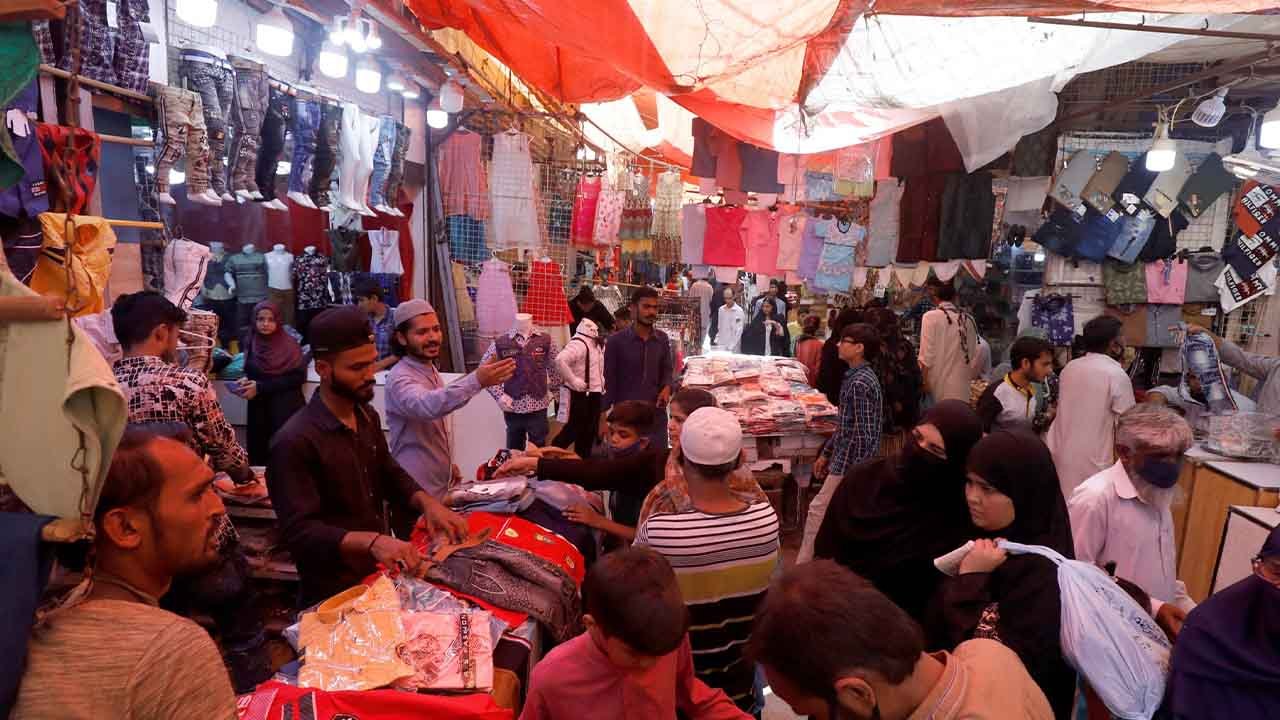
  • Unchecked overcharging: Shopkeepers set their own rates for essential items during Ramzan

    At the start of Ramzan, prices of essential food items have witnessed an uncontrolled surge, with little intervention from the authorities concerned. Shopkeepers are selling essential food items at their desired rates instead of selling at government-announced rates.

    A recent survey of markets in Peshawar reveals an alarming increase in prices of food items, which have continued to soar with each passing day in this holy month.

    A vendor reported that the price of live chicken has surged to Rs350 per kg, while rice prices have increased by Rs70 per kg, reaching Rs335 per kg. Split chickpeas (chana dal) are now selling at Rs220 to Rs260 per kg, and the cost of beans has gone up by Rs60 per kg, with rates jumping from Rs281 to Rs339 per kg. According to a shopkeeper, the cost of spices has surged from Rs150 to Rs200 per kg and now stands at Rs600 per kg in the city.

    Oil and ghee prices have also skyrocketed by Rs62 per kg. Vegetables and fruits have become unaffordable for many, with garlic being sold at Rs360 and ginseng at Rs620 per kg. Peas cost Rs200, Arvi Rs180, Zucchini Rs170, green capsicum Rs150, and tomato Rs120 per kg.

    Fruits have also witnessed an upward trend in prices, with sweet oranges priced at Rs440 per dozen, oranges at Rs400 per dozen, banana at Rs300 per dozen, pomegranate Rs400, Iranian apple at Rs340 per kg, Kohati guava at Rs350, and strawberry costing Rs280 per kg.

    The meat market has also been hit hard by price hikes, with beef now selling at Rs800 to Rs1,000 per kg from its previous price of Rs700 per kg before Ramzan, while mutton prices have increased from Rs1,400 to Rs1,600 per kg and now stand at Rs1,800 per kg.

    Many shopkeepers have been charging prices of their own choosing, as district administration officials have not been able to check rates due to heavy rain and mud-stranded water. Butchers in the local market have expressed their dissatisfaction with the rates issued by the district administration, and have not faced any fines or raids from officials.
  • International petrol, diesel prices drop, but no relief for Pakistanis

    The government has decided not to reduce the prices of diesel and petrol for local consumers, despite a significant decrease in their international prices. This decision is intended to offset previous exchange losses and raise taxation.

    On February 28, 2023, the average fortnightly prices of petrol and diesel in the global market will be used for the next price revision. According to industry sources, the average price of diesel for the next fortnightly review has dropped by $7 per barrel, which equates to a reduction of Rs30 per litre for domestic diesel prices.

    The global average price of diesel has fallen to approximately $100 per barrel compared to $107 per barrel in the previous fortnight. Similarly, the average price of petrol has dropped to $90 per barrel for the next review of prices compared to $93 per barrel in the last fortnightly review, which translates into a reduction of Rs10 per litre for consumers in the local market.

    According to Geo, the appreciation of the Pakistani rupee against the dollar in the last two weeks has also contributed to the reduction in import prices of diesel and petrol. However, industry sources do not expect any significant reduction in the prices of diesel and petrol for domestic consumers.

    The government is expected to adjust the exchange losses, which were not passed on fully to the oil sector in the last several reviews. For example, an exchange loss adjustment of Rs88 per litre was due on diesel, but the government only transferred Rs12 per litre on this head, leaving the remaining amount to be adjusted. The same is true for petrol, with an exchange loss adjustment of Rs34 per litre due, but only Rs12 per litre being given to the oil industry.

    Under the conditions set by the International Monetary Fund (IMF), the government may increase the petroleum levy (PL) on diesel to Rs50 per litre, as it now has room to do so. Currently, the PL on diesel is Rs40 per litre.

    If the government does not impose GST, sources expect a cut of Rs10 per litre in diesel prices, which would otherwise deprive local consumers of the drop in diesel prices in the global market.

    However, official industry sources do not anticipate any reduction in the price of petrol for local consumers, which would otherwise have been down by Rs10, as per the trends of its price in the global market.

  • Pakistan’s inflation hits 21.32 per cent in June 2022

    Pakistan’s inflation hits 21.32 per cent in June 2022

    In June 2022, Pakistan’s yearly inflation rate reached a 13-year high of 21.3 per cent, up from 9.7 per cent in June 2021 and 13.8 per cent in May 2022, according to the most recent data made public recently by the Pakistan Bureau of Statistics (PBS).

    According to PBS, monthly CPI-based inflation rose by 6.3 per cent in June 2022 as opposed to a 0.4 per cent increase the month before and a 0.3 per cent decrease in June 2021.

    Compared to increases of 14.1 per cent a month prior and 17.6 per cent a year prior, the Sensitive Price Index (SPI) inflation on a YoY basis increased by 21.7 per cent in June 2022. On a month-over-month basis, it increased by 6.2 per cent in June 2022 compared to a 0.6 per cent increase the previous month and a (-)0.4 per cent decrease in June 2021.

    The Consumer Price Index (CPI) reached 21.3 per cent on a year-over-year (YoY) basis as Pakistan’s economy battles a widening current account deficit brought on by a high import bill, rising inflation has become a major concern.

    In an effort to combat economic headwinds, the State Bank of Pakistan (SBP) increased the key interest rate by 150 basis points to 13.75 per cent earlier in May. At the time, the central bank predicted that as electricity and fuel subsidies are eliminated, inflation is likely to spike briefly, remain high through FY23, and then drop precipitously in FY24, according to Brecorder.

    The SBP is currently scheduled to decide the key interest rate at its upcoming Monetary Policy Committee meeting on July 7.

    On the other hand, the current administration increased the price of petroleum products in an effort to resurrect the International Monetary Fund (IMF) programme, which is anticipated to drive up inflation even further.

    The government announced a late-night price increase for petroleum products on Thursday, raising the ex-depot price of gasoline to Rs248.74 per liter (after an increase of Rs14.85) and diesel to Rs276.54 (after a hike of Rs13.23).

    CPI inflation in urban areas

    In contrast, year-over-year CPI inflation in urban areas increased by 19.8 per cent in June 2022 as opposed to increases of 12.4 per cent in May 2022 and 9.6 per cent in June 2021.

    In June 2022, it increased by 6.2 per cent month over month, compared to a 0.3 per cent increase the month before and a 0.4 per cent decline in June 2021.

    CPI inflation in rural areas

    In contrast to the previous month’s increase of 15.9 per cent and the increase of 9.7 per cent in June 2021, the CPI inflation rate in rural areas increased by 23.6 per cent on an annual basis in June 2022.

    Comparing June 2022 to June 2021, it increased by 6.6 per cent month over month, compared to increases of 0.6 per cent and 0.1 per cent, respectively.

  • Turkey: Food prices surged by 89 per cent, transportation costs increased by 106 per cent

    Turkey: Food prices surged by 89 per cent, transportation costs increased by 106 per cent

    Turkey’s inflation rate skyrocketed to almost 70 per cent last month, creating a substantial challenge for President Recep Tayyip Erdogan, whose unusual economic strategies are frequently blamed for the country’s economic woes.

    Erdogan, defying economic conventional wisdom, insists that major interest rate cuts are essential to reduce spiralling consumer costs.

    Turkey’s consumer price index (CPI) climbed by 69.97 per cent on a year-on-year (YoY) basis in April 2022, compared to 61.14 per cent in March 2022, according to the national statistics agency, indicating a massive increase.

    The transportation industry saw the largest price rises in April, up 105.9 per cent, while food and non-alcoholic drinks cost increased by 89.1 per cent.

    Likewise, lira’s depreciation has quadrupled the cost of energy imports, and international investors are progressively fleeing the formerly emerging economy. Energy price hikes and production constraints have been worsened by Russia’s invasion of Ukraine and the coronavirus outbreak.

    According to economists, Turkey’s yearly inflation rate – the highest since Erdogan’s ruling AKP party took office in 2002 – is entirely due to Erdogan’s unusual economic thinking.

    Read more: Transporters continue to overcharge ahead of Eid-ul-Fitr

    Erdogan has pushed the supposedly independent central bank to reduce interest rates. Despite strong inflation, the bank maintained its benchmark interest rate for the fourth month in a row in April, yielding to criticism.