Tag: consumer prices

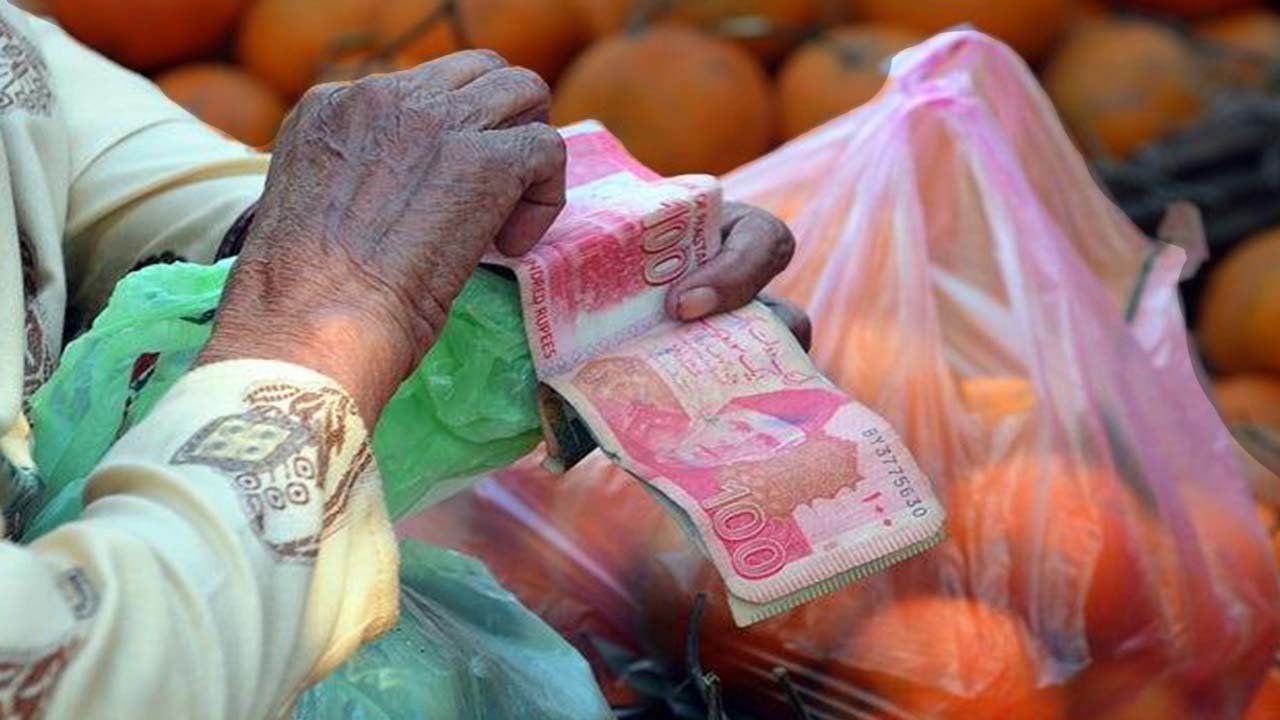
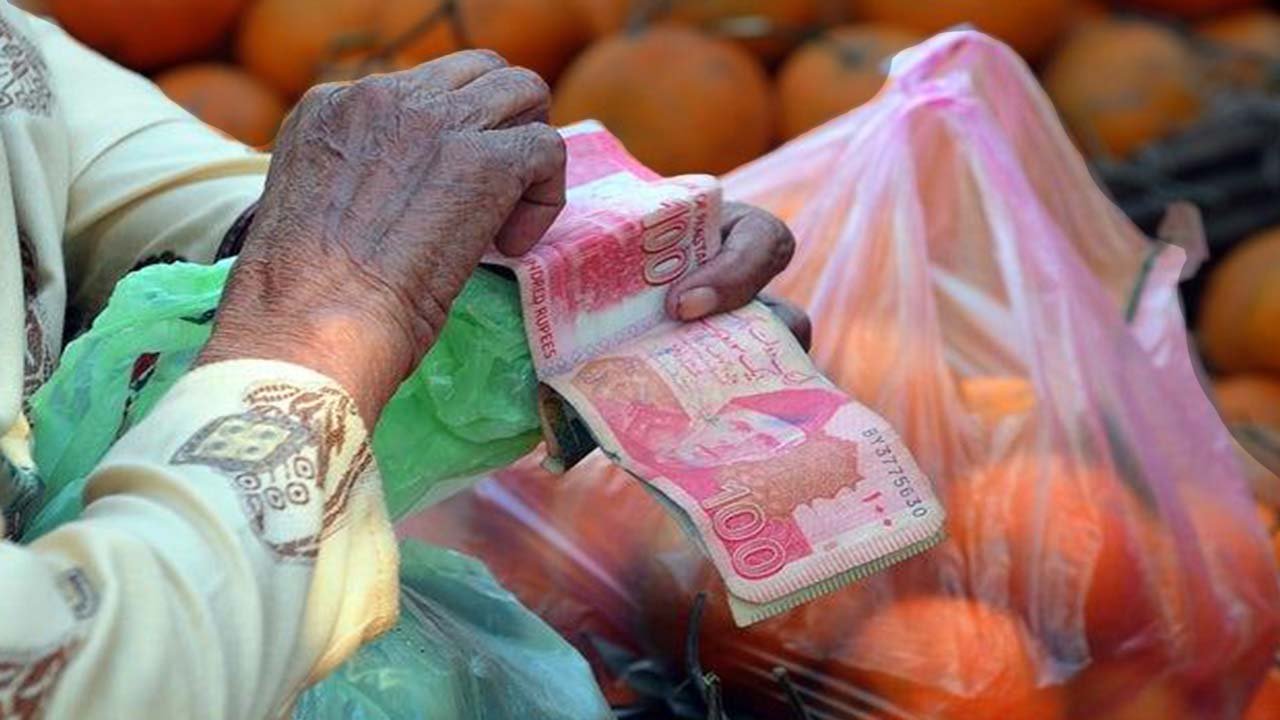
  • Pakistan’s weekly inflation dips slightly amid lower fuel and onion prices

    Pakistan’s weekly inflation dips slightly amid lower fuel and onion prices

    Pakistan’s weekly inflation, as measured by the Sensitive Price Indicator (SPI), registered a slight decline of 0.16 per cent for the combined consumption groups during the week ending on August 15, according to the Pakistan Bureau of Statistics (PBS).

    The SPI for the period under review stood at 322.03 points, down from 322.54 points the previous week. However, compared to the corresponding week last year, the SPI for the combined consumption group saw a significant increase of 16.86 per cent.

    The SPI, with the base year set at 2015-16, covers 17 urban centres and tracks 51 essential items across all expenditure groups.

    For the lowest consumption group, with a monthly expenditure of up to Rs17,732, the SPI witnessed a marginal increase of 0.07 per cent, rising to 311.04 points from 310.83 points in the previous week.

    Similarly, the SPI for the Rs 17,732-22,888 consumption group saw a minimal rise of 0.01 per cent. In contrast, for consumption groups with expenditures ranging from Rs22,889-29,517, Rs29,518-44,175, and above Rs44,175, the SPI declined by 0.05 per cent, 0.10 per cent, and 0.25 per cent, respectively.

    Out of the 51 items monitored during the week, the prices of 19 items (37.25 per cent) increased, 13 items (25.50 per cent) decreased, while the remaining 19 items (37.25 per cent) remained stable.

    The key items that saw a decrease in average prices on a week-on-week basis included onions (4.91 per cent), petrol (3.15 per cent), diesel (2.44 per cent), wheat flour (1.83 per cent), pulse moong (1.81 per cent), chicken (1.57 per cent), bananas (1.36 per cent), LPG (0.90 per cent), sugar (0.59 per cent), potatoes (0.58 per cent), and pulse masoor (0.56 per cent).

    Conversely, items that recorded an increase in their average prices included tomatoes (34.77 per cent), eggs (4.78 per cent), garlic (1.99 per cent), beef (0.88 per cent), cooked beef (0.41 per cent), georgette (0.40 per cent), gur (0.39 per cent), curd (0.32 per cent), and mustard oil (0.28 per cent).

  • Petrol price reduced by Rs10.2, diesel by Rs2.33 per litre

    Petrol price reduced by Rs10.2, diesel by Rs2.33 per litre

    The government has announced a reduction in the prices of petrol and high-speed diesel (HSD) by Rs10.2 and Rs2.33 per litre, respectively, for the upcoming fortnight. 

    In a notification, the Ministry of Finance stated that the prices of petroleum products have exhibited a mixed trend in the international market over the past two weeks. The Oil and Gas Regulatory Authority (Ogra) calculated the new consumer prices based on these international market fluctuations.

    The revised prices set petrol at Rs258.16 per litre and HSD at Rs267.89 per litre. 

    The Prime Minister’s Office described the reduction as a gift from the premier in anticipation of the upcoming Eidul Azha. 

    Sources previously indicated that the government intended to pass the benefits of lower international prices on to consumers. 

    Over the past two weeks, the prices of petrol and HSD in the international market decreased by approximately $3.75 and $2.7 per barrel, respectively. This follows a significant drop of about $12 per barrel for petrol and $8 per barrel for HSD over the prior month.

    The international price of petrol has decreased to just over $90 per barrel from about $94 per barrel, while the price of HSD has fallen to $95 per barrel from $98 per barrel.

  • Pakistanis catch a break as weekly inflation hits 18-week low

    Pakistanis catch a break as weekly inflation hits 18-week low

    Short-term inflation in Pakistan dipped to 29.06 per cent year-on-year by the week ending March 21, stepping down from its prolonged stint above 30 per cent for the past 18 weeks, as per recent official data.

    The pullback in weekly inflation, tracked by the Sensitive Price Index (SPI), was primarily attributed to a drop in the prices of key staples like tomatoes, onions, and potatoes. The SPI noted a 1.13 per cent week-on-week decrease as of March 21, down from 32.89 per cent recorded in the previous week.

    This follows an unbroken 11-week stretch of inflation topping 40 per cent, starting from 29 per cent noted on November 8, 2023. The surge was largely fueled by upticks in gas prices, electricity tariffs, and essential kitchen item costs.

    Weekly inflation peaked at a record 48.35 per cent year-on-year in early May 2023, before cooling off to as low as 24.4 per cent in late August 2023, only to surge past 40 per cent again by the week ending November 16, 2023.

    Among the notable declines in prices on a week-on-week basis were tomatoes (36.73 per cent), onions (19.58 per cent), potatoes (4.02 per cent), garlic (2.87 per cent), pulse mash (1.25 per cent), wheat flour (1.02 per cent), sugar (0.95 per cent), pulse masoor (0.86 per cent), and diesel (0.60 per cent).

    Conversely, significant increases were seen in the prices of LPG (1.49 per cent), shirting (0.74 per cent), beef (0.53 per cent), rice basmati broken (0.48 per cent), mutton (0.42 per cent), mustard oil (0.40 per cent), rice irri 6/9 (0.25 per cent), powdered milk (0.14 per cent), and georgette (0.03 per cent) compared to the previous week.

    On an annual basis, notable price hikes were observed in gas charges for Q1 (570 per cent), chilli powder (86.05 per cent), gents sponge chappal (58.05 per cent), garlic (57.41 per cent), onions (54.65 per cent), gents sandal (53.37 per cent), gur (39.86 per cent), sugar (35.01 per cent), salt powder (33.29 per cent), energy saver (29.83 per cent), and pulse mash (27.31 per cent).

    In contrast, certain items witnessed declines, with cooking oil 5-litre dropping by 21.35 per cent, followed by vegetable ghee 2.5 kg (18.48 per cent), vegetable ghee 1 kg (18.44 per cent), mustard oil (13.90 per cent), bananas (13.52 per cent), diesel (2.47 per cent), and cigarettes (0.06 per cent).

    The short-term inflation, gauged through the SPI, stood at 323.50, compared to 327.21 in the preceding week and 250.66 a year ago. Comprising 51 items collected from 50 markets in 17 cities, the SPI is calculated weekly to monitor the prices of essential commodities and services at shorter intervals. Data indicates that prices of nine items increased, 17 items decreased, and 25 items remained stable compared to the previous week.

  • Inflation edges higher as weekly SPI indicates increase in prices

    Inflation edges higher as weekly SPI indicates increase in prices

    According to the Weekly Sensitive Price Indicator (SPI) released by the Pakistan Bureau of Statistics (PBS), the Combined Group’s SPI increased by 0.04 per cent during the week ending February 22, 2024.

    Additionally, the SPI surged by 30.68 per cent YoY compared to the same period last year.

    As of February 22, 2024, the Combined Index stood at 315.31, a slight uptick from 315.18 on February 15, 2024. A year ago, on February 23, 2023, the index was significantly lower at 241.29.

    Analysing the data for 51 items, it was found that the average prices of 23 items increased, 8 items decreased, and 20 items remained stable.

    Notable increases during the week were observed in the prices of tomatoes (22.71 per cent), bananas (7.40 per cent), diesel (3.02 per cent), chicken (1.22 per cent), and petrol (1.00 per cent).

    Conversely, onions (14.42 per cent), eggs (11.19 per cent), LPG (1.82 per cent), cooking oil (5 litres) (0.75 per cent), and wheat flour (0.36 per cent) experienced significant decreases.

    Breaking down the SPI percentage change by income groups, it was noted that SPI decreased across all 3 quantiles while increasing across 2 quantiles. The lowest-income group saw a weekly decline of -0.08 per cent, while the highest-income group recorded a rise of 0.09 per cent.

    On a yearly basis, the SPI change across different income segments revealed an increase ranging between 25.53 per cent and 35.39 per cent. The lowest-income group witnessed a 25.53 per cent increase, while the highest-income group recorded a 28.22 per cent rise.

    Specifically, the average price of Sona urea reached Rs4,928 per 50 kg bag, reflecting a 9.19 per cent increase from the previous week and a substantial 69.14 per cent surge compared to the same period last year.

    The surge in prices, especially for essential items, poses a challenge for the general populace, particularly those in lower-income groups.

    Authorities and policymakers are likely to face increasing pressure to address and mitigate the impact of inflation on the economy and the daily lives of people.

  • Yearly basis: Weekly inflation stays above 34%

    Yearly basis: Weekly inflation stays above 34%

    In the week concluding on February 15, 2024, the Weekly Sensitive Price Indicator (SPI) for the Combined Group exhibited a slight decrease of 0.78 per cent week-over-week (WoW).

    However, compared to the same period last year, the SPI surged by 34.25 per cent YoY, according to data released by the Pakistan Bureau of Statistics (PBS).

    The combined index, standing at 315.18, marked a slight dip from 317.65 recorded on February 8, 2024. A year ago, on February 16, 2023, the index was substantially lower at 234.77.

    Analysing the data further, out of the 51 items monitored, the average price of 22 items increased, 11 items witnessed a decrease, and 18 items remained stable.

    Notably, PBS did not release SPI data last week, following a 0.28 per cent WoW decline in the preceding week.

    During the week under review, significant decreases were noted in the prices of eggs (28.82 per cent), chicken (4.23 per cent), onions (3.48 per cent), LPG (2.85 per cent), and gur (1.13 per cent).

    Conversely, notable increases were observed in the prices of bananas (4.64 per cent), potatoes (2.80 per cent), match boxes (1.31 per cent), long cloth (1.29 per cent), and cooked daal (0.77 per cent).

    Analysing the SPI percentage change by income groups, a uniform decline of -0.82 per cent to -0.72 per cent was witnessed across all quantiles.

    The lowest-income group experienced a weekly decline of 0.78 per cent, while the highest-income group recorded a decrease of 0.77 per cent.

    On a yearly basis, SPI increased across all quantiles, ranging between 28.68 per cent and 38.54 per cent. The lowest-income group saw a 28.68 per cent increase, while the highest-income group recorded a 32.08 per cent rise.

    The average price of Sona urea fell to Rs4,513 per 50 kg bag, marking a 0.50 per cent decrease from last week and a significant 54.84 per cent increase from the previous year.

    Meanwhile, the average cement price recorded at Rs1,234 per 50 kg bag marked a 2.05 per cent increase from the previous week and a 14.27 per cent hike from the prices recorded last year.

    In a volatile market environment, these fluctuations in the SPI indicate the dynamic nature of the economic landscape, impacting consumers across various income groups.

  • Monthly inflation expected to ease in the coming months

    Monthly inflation expected to ease in the coming months

    In January, a discerning shift towards disinflation is anticipated, as headline inflation is poised to soften to 27.2 per cent year-over-year (YoY), attributed to a favourable base effect.

    This decline from the previous month’s 29.7 per cent is primarily influenced by a higher base in the preceding year, while monthly pressures on consumer prices are expected to persist.

    Despite the overall yearly decrease, monthly inflation is projected to rise by 0.93 per cent month-over-month (MoM), contrasting with the 12-month average of 2.2 per cent MoM. 

    Consequently, the average yearly inflation for the first seven months of fiscal year 2024 is estimated at 28.57 per cent YoY, up from 25.40 per cent YoY in the same period last fiscal year.

    The surge in monthly inflation is predominantly fueled by a rise in the food and housing index. Food inflation is expected to increase by 1.76 per cent MoM, driven by inflated prices of essential commodities such as onions, chicken, tomatoes, eggs, and pulses. 

    Meanwhile, the housing index is projected to experience a 1.54 per cent MoM increase, primarily due to quarterly rent adjustments. In contrast, the transport index is anticipated to decrease by 2.69 per cent MoM, attributed to relief in fuel prices.

    Looking ahead, a 0.5 per cent MoM inflation rate in February could result in an annual headline inflation of around 22 per cent, with a gradual decline below 16 per cent by June 2024.

    Even a 1 per cent MoM inflation rate, significantly lower than the 12-month average, is expected to maintain real interest rates from turning positive until March 2024, as illustrated in the accompanying chart depicting various monthly inflation scenarios.

    Starting in January, the disinflationary trend is expected to accelerate due to the favourable base effect, the lagged impact of monetary tightening, and other administrative measures.

    However, potential risks include unforeseen climate events, volatility in global commodity prices—especially oil—and external account pressures.

    Rising global oil prices amid geopolitical tensions pose a threat to the inflation outlook, and an additional gas price adjustment, as suggested by the International Monetary Fund (IMF), may further intensify pressure on consumer prices.

  • Pakistan’s weekly inflation soars beyond 44%

    Pakistan’s weekly inflation soars beyond 44%

    In the latest economic developments, Pakistan has witnessed a surge in weekly inflation for the third consecutive week, marked by a notable increase in the Sensitive Price Indicator (SPI) for the Combined Group.

    The SPI for the said group witnessed a significant rise of 1.36 per cent week over week (WoW) during the week concluded on January 11, 2024.

    Adding to the economic landscape, the SPI showcased a remarkable year-over-year (YoY) increase of 44.16 per cent, comparing the current statistics with the corresponding period from the previous year.

    Last week’s SPI for the Combined Group demonstrated a WoW increase of 0.81 per cent.

    Data released by the Pakistan Bureau of Statistics (PBS) reveals that the combined index stood at 317.92 in comparison to 313.66 on January 4, 2024.

    Notably, this index was recorded at 220.53 a year ago, specifically on January 12, 2023.

    Among the 51 items analysed, 21 experienced an increase in average prices, while prices for 8 items decreased, and 22 items remained stable.

    The noteworthy price hikes during the week were observed in tomatoes (15.63 per cent), onions (8.94 per cent), chicken (6.42 per cent), electricity charges for Q1 (5.11 per cent), and eggs (4.31 per cent).

    Conversely, significant decreases were noted in the prices of potatoes (5.92 per cent), vegetable ghee (1 KG) (0.84 per cent), sugar (0.43 per cent), vegetable ghee (2.5 KG) (0.29 per cent), and mustard oil (0.26 per cent).

    The weekly SPI percentage change, when categorised by income groups, indicated a uniform increase ranging between 1.2 per cent and 1.34 per cent across all quantiles. The lowest-income group experienced a 1.2 per cent rise, while the highest-income group recorded a 1.34 per cent increase.

    On a yearly basis, the analysis of SPI change across various income segments revealed an overall increase ranging from 36.06 per cent to 47.48 per cent.

    The lowest-income group witnessed a yearly rise of 36.06 per cent, whereas the highest-income group recorded a significant increase of 42.71 per cent.

  • Weekly inflation in Pakistan remains above 40% for sixth consecutive week

    Weekly inflation in Pakistan remains above 40% for sixth consecutive week

    In the week concluding on December 21, weekly inflation exhibited a marginal easing but persisted above 40 per cent for the sixth consecutive week. 

    Official data released for this week highlighted heightened consumer costs for eggs, firewood, and pulses. 

    The Pakistan Bureau of Statistics (PBS) revealed a 0.51 per cent decline in the Sensitive Price Indicator (SPI) from the previous week, attributed to lower prices of potatoes, petrol, diesel, tomatoes, and sugar.

    Despite this reduction, the SPI inflation rate remained notably high at 43.16 per cent, surpassing last year’s figure of 42.68 per cent for the same week. 

    This elevated inflation has adversely impacted the purchasing power of consumers, particularly those in lower and middle-income brackets. 

    The decline in SPI was driven by significant drops in the prices of potatoes (13.17 per cent), petrol (4.97 per cent), diesel (4.68 per cent), tomatoes (3.45 per cent), sugar (1.16 per cent), and other essential items.

    Conversely, considerable increases were observed in the prices of eggs (10.4 per cent), firewood (1.23 per cent), onions (1.19 per cent), and various pulses. 

    Out of the 51 essential items in the SPI, 35.29 per cent experienced price increases, 17.65 per cent saw decreases, and 47.06 per cent remained stable during the week.

    ConsumeRsin the lowest income bracket, earning up to Rs17,732 per month, faced a substantial SPI inflation rate of 35.13 per cent. 

    Meanwhile, the higher-income group, spending more than Rs44,175 per month, encountered an even higher SPI inflation rate of 40.93 per cent. 

    The middle quintile, ranging from Rs22,889 to Rs29,517, experienced a weekly inflation rate of 46.46 per cent.

    Various consumer goods displayed a mix of price increases, decreases, and stability, as indicated by the latest PBS data. 

    Notably, the price of a dozen eggs rose by 10.42 per cent, reaching Rs388.7, while firewood’s 40kg bundle increased by 1.23 per cent, totaling Rs1146. 

    Onion prices rose by 1.2 per cent, and various pulses witnessed increases.

    In contrast, potato prices per kilogramme dropped significantly by 13.17 per cent, reaching Rs76.8/kg, and petrol recorded a decrease of 4.97 per cent per litre, settling at Rs268.41. Hi-Speed Diesel also saw a decline of 4.68 per cent, reaching Rs277.29 per litre. 

    Tomatoes and refined sugar experienced decreases of 3.45 per cent and 1.16 per cent, respectively.

    Several essential commodities, including bread, beef, mutton, and various household items, maintained stable prices during the week with no significant fluctuations.

  • Cost of living rises: SPI records increase in weekly inflation 

    Cost of living rises: SPI records increase in weekly inflation 

    The Sensitive Price Indicator (SPI) recorded a slight increase of 0.71 per cent for the week ending November 3, 2023, compared to the previous week.

    According to data from the Pakistan Bureau of Statistics (PBS), the combined index stood at 279.08 on November 3, 2023, up from 277.11 on October 26, 2023, and significantly higher than the index of 214.88 recorded a year ago on November 3, 2022.

    Out of 51 items, the prices of 12 items increased, 14 items decreased, and 25 items remained stable. 

    The most notable price increases were seen in tomatoes (25.58 per cent), onions (25.25 per cent), chicken (10.79 per cent), potatoes (1.61 per cent), Lipton tea (1.58 per cent), eggs (1.30 per cent), garlic (0.50 per cent), basmati broken rice (0.19 per cent), georgette (0.28 per cent), and firewood (0.05 per cent).

    Conversely, significant price decreases were observed in gur (2.66 per cent), bananas (1.78 per cent), 5-litre cooking oil (1.62 per cent), 1 kg vegetable ghee (1.23 per cent), LPG cylinders (1.05 per cent), masoor pulse (0.93 per cent), wheat flour (0.62 per cent), washing soap (0.41 per cent), and mustard oil (0.32 per cent).

    The weekly SPI percentage change across different income groups revealed an increase in SPI for all quantiles, ranging from 0.64 per cent to 0.86 per cent.

  • Annual inflation increases by 29.65% in Pakistan, driven by rising gas prices 

    Annual inflation increases by 29.65% in Pakistan, driven by rising gas prices 

    According to the Pakistan Bureau of Statistics (PBS) report released on Friday, the weekly inflation, as measured by the Sensitive Price Indicator (SPI), exhibited a decline of 0.33 per cent during the week ending on October 19. 

    The Combined Index, as reported by PBS, stood at 277.11, down from 278.04 on October 19, 2023, with a notable contrast to the index of 213.74 recorded on October 27, 2022, a year ago.

    Among the 51 items monitored, the analysis indicates that the average prices of 14 items experienced an increase, 17 items saw a decrease, and 20 items remained stable. 

    Significant reductions were observed in the prices of chicken (10.19 per cent), onions (4.4 per cent), rice IRRI-6/9 (3.84 per cent), bananas (3.64 per cent), gur (3.4 per cent), pulse masoor (2.36 per cent), sugar (2.22 per cent), and mustard oil (2.17 per cent). 

    Conversely, notable price increases were recorded for tomatoes (20.81 per cent), potatoes (3.33 per cent), eggs (1.63 per cent), salt powdered (0.91 per cent), garlic (0.77 per cent), tea prepared (0.67 per cent), bread plain (0.56 per cent), and mutton (0.28 per cent).

    In a year-on-year comparison, the trend reveals an increase of 29.65 per cent in overall inflation, with substantial hikes in gas charges for Q1 (108.38 per cent), cigarettes (94.46 per cent), chilies powder (84.11 per cent), rice basmati broken (78.51 per cent), wheat flour (77.49 per cent), sugar (63.22 per cent), rice irri-6/9 (62.83 per cent), gents sponge chappal (58.05 per cent), gur (57.73 per cent), and salt powdered (54.84 per cent). 

    In contrast, price decreases are observed in tomatoes (31.90 per cent), onions (24.88 per cent), pulse gramme (5.82 per cent), mustard oil (4.16 per cent), and vegetable ghee (1 1 kg) (0.92 per cent).