Tag: core inflation

  • Pakistan informs IMF of preparedness to address near-term challenges

    Pakistan informs IMF of preparedness to address near-term challenges

    In a recent communication to the International Monetary Fund (IMF), the government has underscored its preparedness to address potential near-term challenges, signalling a commitment to maintaining economic stability.

    The disclosure comes as part of the IMF’s first review under the stand-by arrangement.

    The government, as revealed in the report, stands ready to respond decisively should near-term price pressures reemerge. This includes addressing stronger-than-expected second-round effects on core inflation and potential pressures on the exchange rate amid the normalisation of the current account.

    Amid signs of weaker demand, positive supply developments, and decreasing pressures on the exchange rate, the government anticipates a notable decline in inflation in the coming months.

    As a result, the policy rate was maintained at 22 per cent during the latest Monetary Policy Committee (MPC) meeting held on October 30. However, the government reiterated its readiness to respond promptly if there is a resurgence of near-term price pressures.

    The primary objective is to ensure a clear downward trajectory for inflation and inflation expectations. The pace of future adjustments will be contingent on various factors, including inflation data, exchange rate developments, external position strength, and the fiscal-monetary policy mix.

    The government aims to keep the real policy rate in positive territory on a forward-looking basis, signalling a commitment to bringing inflation within the target band by fiscal year 2026.

    To enhance monetary policy transmission, the interest rate on major refinancing schemes, specifically the EFS and LTFF, will continue to be linked to the policy rate, with a spread of no more than 3 per centage points, as per the announcement by Pakistani authorities.

    The report emphasised the importance of vigilance, highlighting that despite the return of the forward-looking real policy rate to positive territory, caution is necessary due to near-term risks.

    With inflation expectations not yet firmly anchored, the Monetary Policy Committee is urged to respond robustly and promptly should inflationary pressures resurface.

    Maintaining a positive real policy rate during a period of easing inflation and promptly addressing signs of new demand pressures or rising inflation expectations is seen as crucial.

    This strategy aims to re-anchor inflation expectations and guide down core inflation from the second half of fiscal year 2024 onwards, contingent on the absence of a resumption in administrative import compression.

    The report projects a significant decline in headline inflation through fiscal years 2025–26, aligning within the targeted 5–7 per cent range by fiscal year 2026. This outlook is supported by fiscal consolidation efforts and the normalization of global commodity prices.

    While the IMF staff views the current stance as broadly appropriate given weak domestic demand, the report suggests that the MPC should remain prepared to respond resolutely if near-term price pressures reemerge, including second-round effects.
  • State Bank of Pakistan maintains policy rate at 22% despite inflation concerns 

    State Bank of Pakistan maintains policy rate at 22% despite inflation concerns 

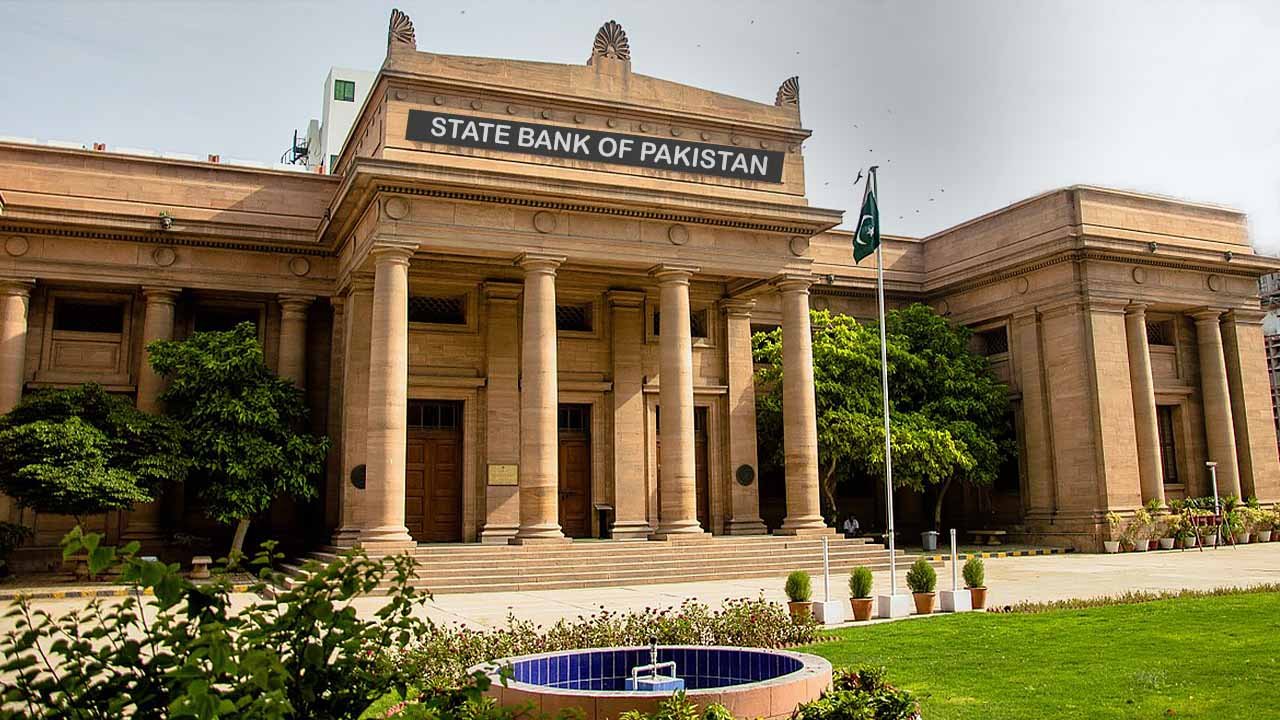
    The Monetary Policy Committee (MPC) of the State Bank of Pakistan (SBP) convened today to deliberate on the prevailing economic conditions and has resolved to maintain the policy rate at 22 per cent for the fourth consecutive meeting. 

    This decision aligns with market expectations, as a majority of market participants were in agreement regarding the rate remaining unchanged. 

    The Monetary Policy Statement issued by the central bank indicates that the decision takes into consideration the impact of the recent increase in gas prices on November’s inflation, which exceeded the MPC’s earlier projections.  

    The Committee acknowledged the potential implications of this on the inflation outlook while also noting offsetting factors such as the recent decline in international oil prices and the improved availability of agricultural produce. 

    Additionally, the Committee conducted an assessment indicating that the real interest rate remains positive over a 12-month forward-looking horizon and anticipates a downward trajectory for inflation. 

    Key developments since the October meeting were considered by the MPC. Firstly, the successful completion of the staff-level agreement for the first review under the IMF SBA programme, which is expected to unlock financial inflows and enhance the SBP’s foreign exchange serves, 

    Secondly, the quarterly GDP growth for Q1–FY24 met the MPC’s expectations for a moderate economic recovery. 

    Lastly, consumer and business confidence surveys reflected positive sentiment improvements. Lastly, core inflation persists at elevated levels, showing a gradual reduction. 

    Considering these developments, the Committee determined that the existing monetary policy stance is conducive to achieving the inflation target of 5-7 per cent by the end of FY25. 

    The Committee emphasised that this assessment is contingent on the sustained implementation of targeted fiscal consolidation and the timely realisation of planned external inflows. 

  • CPI inflation in Pakistan increases to 26.6% in October

    CPI inflation in Pakistan increases to 26.6% in October

    In Pakistan, Consumer Price Index (CPI)-based inflation rose sharply in October, surging by 26.6 per cent year over year (YoY). On the other hand, it climbed 4.7 per cent month over month (MoM), indicating a decline of 1.2 per cent from September.

    “CPI inflation General, increased to 26.6 per cent on YoY basis in Oct 2022 as compared to an increase of 23.2 per cent in the previous month and 9.2 per cent in Oct 2021,” said the PBS.

    According to APP, inflation reached a YoY high of 27.3 per cent in August 2022, which was over a 47-year high in the inflation measurement in June 2022 after it had crossed the 20 per cent threshold.

    The inflation reading matches what the market had predicted.

    According to the PBS, year-over-year CPI inflation in urban areas reached 24.6 per cent in October 2022 as opposed to an increase of 21.2 per cent in the previous month and 9.6 per cent in October 2021.

    In October 2022, it grew to 4.5 per cent month over month, up from 1.7 per cent in October 2021 and a decline of 2.1 per cent the month before.

    In addition, year-over-year CPI inflation in rural regions reached 29.5 per cent in October 2022 as opposed to increases of 26.1 per cent in the previous month and 8.7 per cent in October 2021.

    When compared to the previous month’s gain of 0.2 per cent and the increase of 2.2 per cent in October 2021, it increased by 5.0 per cent in October 2022 on a monthly basis.

    Rising inflation has become a major worry for Pakistan’s economy, which is already experiencing a loss of foreign exchange reserves.

    The State Bank of Pakistan (SBP) maintained the policy rate at 15 per cent in October at the recommendation of its Monetary Policy Committee (MPC), believing that the current monetary policy stance achieves the right mix between controlling inflation and sustaining growth in the wake of the floods.

    “On the one hand, inflation could be higher and more persistent due to the supply shock to food prices, and it is important to ensure that this additional impetus does not spill over into broader prices in the economy. On the other, growth prospects have weakened, which should reduce demand-side pressures and suppress underlying inflation,” MPC said then.

    However, the government on Monday night announced that the price of petroleum products will remain the same for the ensuing 15 days.

    According to PBS data, the inflation rates that were highest in October were in the transportation, food, housing, and restaurant and hotel groupings.

    Items that witnessed an increase in prices

    Food

    The food commodities that witnessed increase in prices on a YoY basis included tomatoes (219.34 per cent), onions (165.66 per cent), gram whole (69.80 per cent), pulse gram (65.08 per cent), besan (62.25 per cent), mustard oil (61.14 per cent), pulse masoor (61.07 per cent), fresh vegetables (58.87 per cent), cooking oil (58.06 per cent), pulse mash (55.33 per cent), vegetable ghee (52.5 per cent), pulse moong (49.84 per cent), wheat (45.77 per cent), tea (41.89 per cent), rice (40.76 per cent), wheat flour (37.38 per cent), milk fresh (29.61 per cent), meat (25.34 per cent), potatoes (20.65 per cent), fish (15.4 per cent), chicken (12.22 per cent) and gur (0.39 per cent).

    Non-food items

    The non-food commodities that witnessed increase on a YoY basis included motor fuel (64.81 per cent), stationery (44.5 per cent), washing soap/detergents/match box (41.49 per cent), transport services (41.27 per cent), motor vehicles (34.29 per cent), construction input items (32.03 per cent), motor vehicle accessories (31.31 per cent), electricity charges (24.95 per cent), cotton cloth (24.16 per cent), household equipment (21.4 per cent), solid fuel (20.88 per cent) and construction wage rates (12.72 per cent).