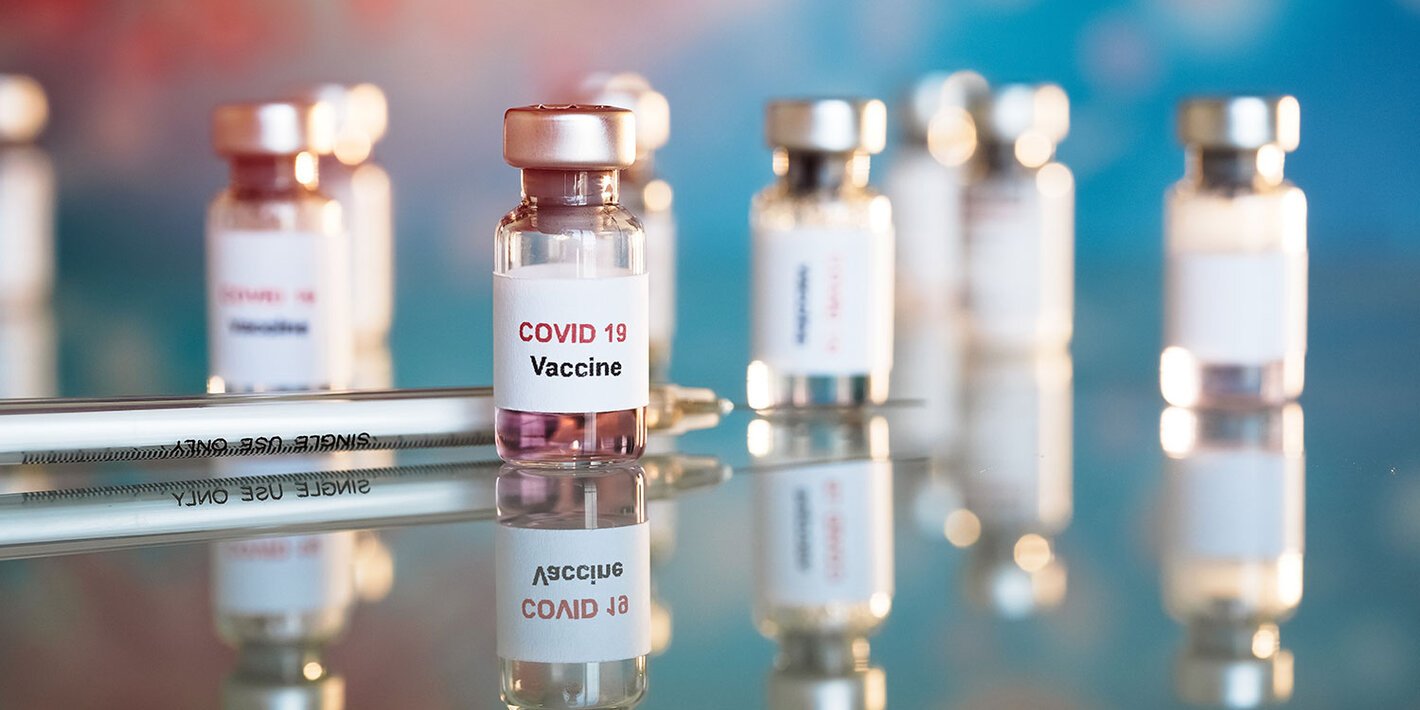
Tag: Coronavirus vaccine

  • Govt officials get secretly vaccinated amid delay in mass vaccination, claims journalist

    Govt officials get secretly vaccinated amid delay in mass vaccination, claims journalist

    Amid reports of a delay in the procurement of vaccine, senior journalist Sohail Warraich has claimed that the government is in no hurry to order the coronavirus vaccine as most of the senior government members have already been vaccinated against the deadly disease.

    In an article published in Jang, Warraich implied the bigwigs of this country are in no hurry to inoculate the masses as they now consider themselves safe following the administration of the vaccine. His article was shared by former Pakistan Muslim League-Nawaz (PML-N) minister Miftah Ismail, who retweeted the column on his Twitter handle.

    A similar claim was made by journalist Saleem Safi as well. He tweeted that the senior government officials and aides of the prime minister have already been vaccinated. “These people are now distributing the vaccine to their near and dear ones,” he alleged.

    Federal Minister for Information Shibli Faraz rejected these claims. Talking to The Current, Faraz said he hasn’t heard anything like this to the best of his knowledge.

    Asad Umar, who heads the National Command Operations Centre to fight the virus, also denied these reports while talking to a media outlet.

    He said a proposal for the earliest vaccination of strategic leadership was presented earlier, but it was rejected by the government. “I, however, do not know if someone got themselves vaccinated in secret,” he added.

    As the pharmaceutical companies, such as Pfizer, started to roll out vaccines, the government announced that Pakistan will have the vaccine by March 2020. However, a recent report revealed that the government has not even placed the final order for the procurement nor has any manufacturer agreed to sell it to Pakistan as of yet.

    PM’s aide on health Dr Faisal Sultan was quoted by The News saying that Pakistan has yet to place a final order and strike a deal with a manufacturer.

    On Dec 31, it was reported that the government had decided to purchase 1.2million doses of a Chinese vaccine, Sinopharm, amid a worsening coronavirus outbreak across the world.

    Pakistan had planned to vaccinate its population in three phases: In the first phase, frontline health workers will be inoculated; the second phase will be focused on the elderly; the third phase will be for the general populace.
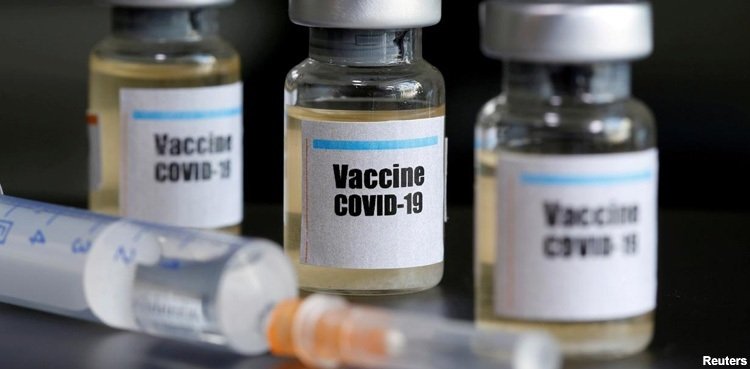
  • Pakistan has yet to place final order for vaccine procurement: report

    Pakistan has yet to place final order for vaccine procurement: report

    Even though the government has promised Pakistanis a vaccine in the first quarter of this year, the ruling Pakistan Tehreek-e-Insaf (PTI) has failed to place a final order to acquire the much-needed vaccine to inoculate at least 100 million people.

    According to a media outlet, the country was striving to get its first batch of the vaccine doses, as not a single pharma company has accepted Pakistan’s request to deliver the order.

    PM’s aide on health Dr Faisal Sultan was quoted by The News saying that Pakistan has yet to place a final order and strike a deal with a manufacturer.

    “Although, we are striving hard to get the first batch of COVID-19 vaccine at the earliest for our frontline workers and others the final order has not yet been placed and accepted (by any vaccine manufacturer),” he reportedly said.

    China’s Sinopharm, whose vaccine is apparently 50 per cent effective, has submitted its data with the Drug Regulatory Authority of Pakistan (DRAP) and the health authorities are still in the process of reaching an agreement with the company, it added.

    Pakistan is also interested in Russian vaccine Sputnik V, Dr Sultan said, adding that negotiations are underway with Astrazeneca’s manufacturer. “We are trying to get AstraZeneca vaccine both through the Covax facility and through direct procurement,” he added.

    Earlier this month, Russia approached Pakistan with a vaccine offer. It wrote a letter to Pakistan asking for details of the process of vaccine registration as well as the demand in the country for the batch of dozes.

    In the letter addressed to Special Assistant to Prime Minister Dr Faisal Sultan, the Russian Direct Investment Fund’s (RDIF) Head, Kirill Dmitriev has said that the Sputnik-V had an emergency use certificate and it was 91.4% effective.

    On Dec 31, it was reported that the government had decided to purchase 1.2million doses of a Chinese vaccine, Sinopharm, amid a worsening coronavirus outbreak across the world.

    Pakistan has planned to vaccinate its population in three phases: in the first phase, frontline health workers will be inoculated; the second phase will be focused on the elderly; the third phase will be for the general populace.
    According to DW, it can take several years to develop an effective and safe vaccine. On average, it takes between 10 and 12 years, but it can take longer. The search for a vaccine against HIV has been going since the early 1980s — so far without success.

    In the case of COVID-19, researchers are racing to shorten the time it usually takes because of the ongoing pandemic. Despite the pressure that that brings, vaccine developers, manufacturers and the World Health Organization (WHO) say there will be no compromises on safety.

  • COVID-19 vaccines to be provided in three phases

    COVID-19 vaccines to be provided in three phases

    The federal government has completed the plan for the COVID-19 vaccination drive. Vaccines will be distributed in three phases with the first phase expected to start from March 2021.

    A spokesperson for the Ministry of National Health Sajid Hussain Shah told The Current that in the first phase, vaccines will be provided to 0.5 million frontline essential health workers while in the second phase, it will be given to the population over 65 years of age.

    The remaining population will be given COVID-19 vaccines in the third phase. During the third phase,  the number of people to get the vaccination will depend on the available quantity of COVID-19 vaccines.

    Earlier, a special cabinet committee led by Federal Minister Asad Umar, had been formed for the procurement of the COVID-19 vaccine.

    The National Command and Operation Centre (NCOC) had approved the ‘Vaccine Administration Plan’, the comprehensive strategy prepared by the Expanded Programme on Immunisation (EPI) of the health ministry.

  • Japan might have a vaccine for Coronavirus

    Japan might have a vaccine for Coronavirus

    The Japanese media is reporting that a drug created in Japan to treat new strains of the flu has appeared to be effective in coronavirus patients in China.

    Medical authorities have used the drug during a drug test in China reports The Guardian, and according to an official of China’s science and technology ministry, “it is clearly effective in treatment”.

    The drug, known as favipiravir, developed as a subsidiary of Fujifilm, has produced encouraging results in clinical trials in Wuhan and Shenzhen. The trials included 340 patients.

    READ MORE: All Coronavirus Updates

    In Shenzhen, patients who were given the medicine, showed negative for the virus, four days after they had tested positive. This is in comparison to people who showed negative to the virus after 11 days of testing positive. X-rays also showed improvements in lung conditions in “about 91% of the patients who were treated” with the medication, “compared to 62% of those without the drug,” reported The Guardian.

    Simultaneously, doctors in Japan were using the same drug in their studies on coronavirus patients with mild to moderate symptoms but their results suggested that it doesn’t work on people with more severe symptoms.

    RELATED: The U.S. warns coronavirus “will last 18 months or longer”

    The drug was first used in 2016 by the Japanese government as an emergency medication to counter the Ebola virus in Guinea. Since this drug was originally intended to treat the flu, it would need government approval for full use on coronavirus patients.