Tag: coronavirus

  • COVID-19: Pakistan’s positivity rate exceeds 3% after 70 days

    COVID-19: Pakistan’s positivity rate exceeds 3% after 70 days

    Minister for Planning, Development and Special Initiatives Asad Umar on Thursday announced that the country’s coronavirus positivity ratio was higher than 3% on October 29.

    In a tweet, the minister wrote that the coronavirus positive rate exceeded three percent after a period of more than 70 days. 

    “However, the rising spread of the disease can only be controlled if people believe in the need for precautions,” added the minister, appealing to everyone to follow the necessary SOPs.

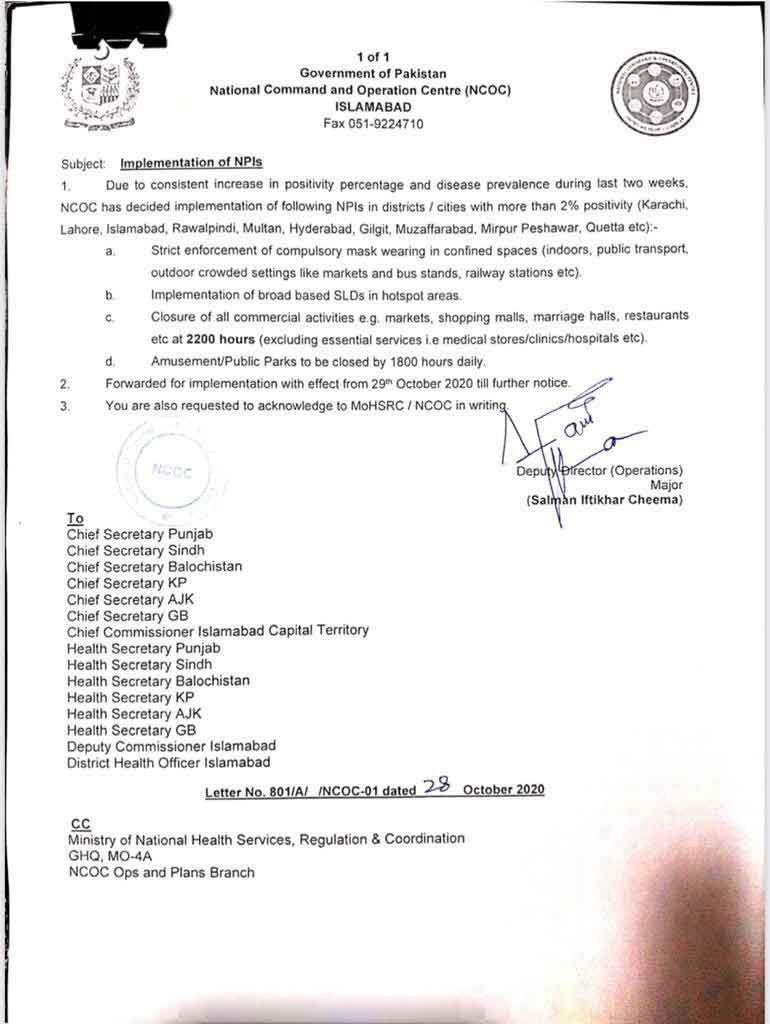
    Meanwhile, the National Command and Operation Center (NCOC) has tightened restrictions on some high-risk public activities to address the coronavirus pandemic.

    NCOC has also launched a helpline to report the COVID-19 related violations by the public.

    Now people can report the violation of COVID-19 SOPs like non wearing of mask, non-adherence to Social distancing, over-crowding at public places etc, at 03353336262 (0335333NCOC) along with a picture and the following details:

    Location Name:

    Tehsil/district/city:

    Date and Time:

    Event:

    The coronavirus seems to be gradually spreading again across the country as 1,078 new cases have reported over the past 24 hours. According to the NCOC, the total number of confirmed patients of coronavirus has risen to 332,186. 20 people succumbed to the infection during the past 24 hours, pushing the death toll to 6,795.

  • ‘Corona se darna nahi, larrna hai’ declared un-Islamic as top religious body says virus is Allah’s will

    ‘Corona se darna nahi, larrna hai’ declared un-Islamic as top religious body says virus is Allah’s will

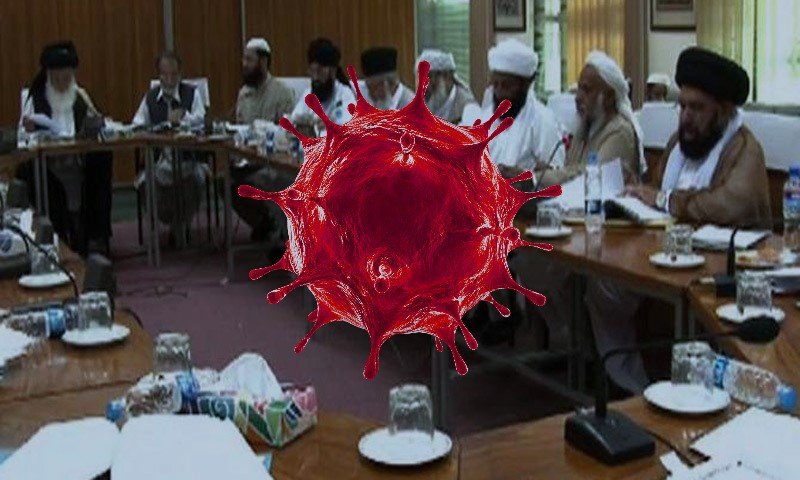
    The popular anti-coronavirus slogan “Corona se darna nahi, larna hai [we have to fight, not fear corona]” has been declared un-Islamic by the Council of Islamic Ideology (CII) that says the virus outbreak is Allah’s will.

    According to Dawn, the Lahore High Court (LHC), while hearing a petition filed by a lawyer against the use of these words in national print and electronic media and official sources of communication, was on Wednesday informed that the top religious body has advised the government against using the slogan.

    The petitioner-lawyer, Salman Idrees, had argued that no one could fight against God’s will but the national media and government communication sources had been using “un-Islamic” and “immoral” words challenging the supremacy of God. He asked the court to ban the use of the words “corona se darna nahi, larrna hai”.

    In the last hearing, LHC Chief Justice Muhammad Qasim Khan had directed the CII to give its opinion on the choice of words in the anti-COVID-19 slogan.

    On Wednesday, a government lawyer informed the court that the CII after considering the slogan had stopped the government from using it.

    The council had advised the government to refer the matter to the federal cabinet to come up with a new anti-virus slogan, Deputy Attorney General Asad Ali Bajwa said.

    An official at the CII told the English daily that the reason the council had opposed the slogan was that in its view, humans could not fight God’s will and the term “fighting corona” should be replaced with “protecting against corona”.

    The hearing has been adjourned until next week.

  • COVID-19: Shopping malls, restaurants, shops & marriage halls to close by 10 pm

    COVID-19: Shopping malls, restaurants, shops & marriage halls to close by 10 pm

    The National Command and Operation Centre (NCOC) has announced new coronavirus restrictions for cities and districts where COVID-19 cases have increased.

    According to a notification issued by the NCOC, all shopping malls, restaurants, shops and marriage halls are to shut by 10 pm from Thursday. The authority also directed public parks and recreational spots to be closed by 6 pm from Thursday.

    The cities where there restrictions have been imposed include Karachi, Lahore, Islamabad, Rawalpindi, Multan, Hyderabad, Gilgit, Muzaffarabad, Mirpur, Peshawar and Quetta.

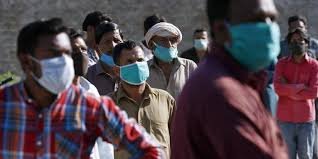
    Meanwhile, the NCOC has also made it mandatory to wear face masks in confined spaces (indoors, public transport, outdoor crowded settings like markets and bus stands, railway stations, etc) and ordered the provincial governments to take strict actions against violators. The government has also said that those violating the order will be fined Rs6,000 to Rs35,000 and punishment of six-month imprisonment.

    NCOC Chairman Asad Umar also appealed to the people to take the virus seriously and follows the SOPs.

    It has emerged that a rise in coronavirus cases was recorded up to 80 percent in eleven major cities including Karachi, Islamabad, Rawalpindi, Lahore, Quetta, Multan, Hyderabad, Gilgit and Muzaffarabad.

    Pakistan has reported 331,108 coronavirus cases so far with with 3.08% positivity rate.

  • Early COVID-19 Vaccine ‘likely to be imperfect’: UK Task Force

    Early COVID-19 Vaccine ‘likely to be imperfect’: UK Task Force

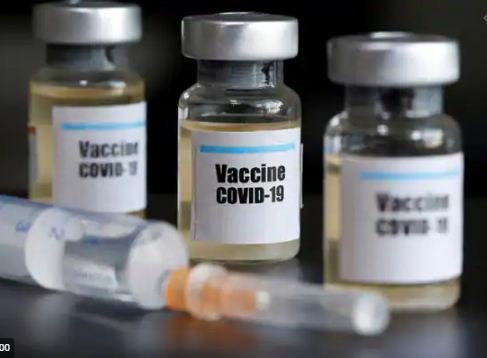
    UK Vaccines Taskforce Chair Kate Bingham said on Tuesday that the first generation of COVID-19 vaccines “is likely to be imperfect” and that they “might not work for everyone”.

    “However, we do not know that we will ever have a vaccine at all. It is important to guard against complacency and over-optimism,” Bingham wrote in a piece published in The Lancet medical journal.

    “The first generation of vaccines is likely to be imperfect, and we should be prepared that they might not prevent infection but rather reduce symptoms, and, even then, might not work for everyone or for long,” she added.

    Bingham wrote that the Vaccine Taskforce recognises that “many, and possibly all, of these vaccines could fail”, adding the focus has been on vaccines that are expected to elicit immune responses in the population older than 65 years.

    She said that the global manufacturing capacity for vaccines is vastly insufficient for the billions of doses that are needed and that the United Kingdom’s manufacturing capability to date has been “equally scarce”.

    Earlier on Tuesday, a study by scientists at Imperial College London found that antibodies against the novel coronavirus declined rapidly in the British population during the summer, suggesting protection after infection may not be long-lasting and raising the prospect of waning immunity in the community.

    The Telegraph newspaper reported that the British government is working on the assumption that the second wave of coronavirus will be more deadly than the first.

  • Coronavirus: Antiviral drug to now be sold at Rs9,244 in Pakistan

    Coronavirus: Antiviral drug to now be sold at Rs9,244 in Pakistan

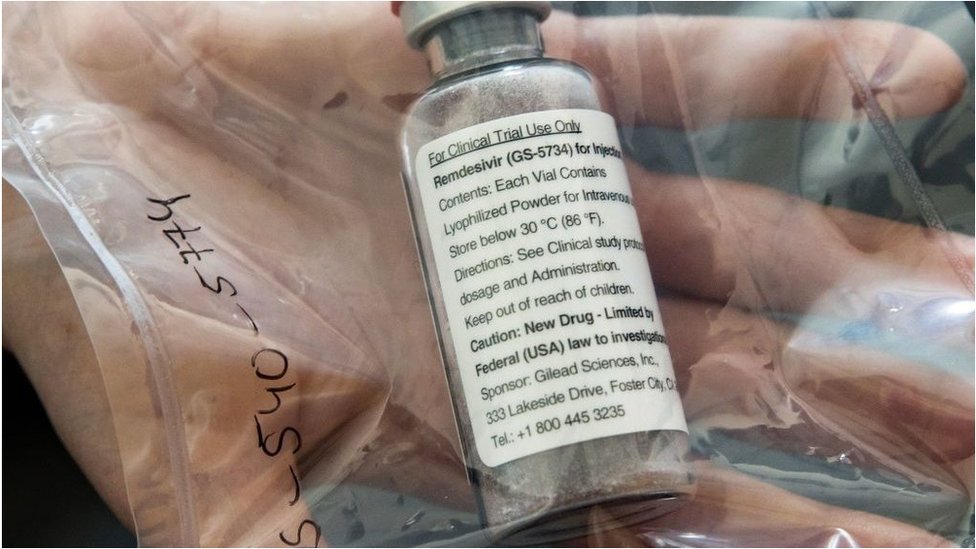
    In a major relief to coronavirus patients, the Drug Regulatory Authority of Pakistan (DRAP) on Monday reduced the price of Remdesivir, the first and only approved treatment for COVID-19 in the United States (US), by Rs1,629 to Rs9,244.

    In a notification, DRAP said that the price of Remdesivir injection has been slashed by Rs1,629, adding that the antiviral drug will be sold at Rs9,244 across the country.

    The regulatory authority warned that strict legal action will be taken against those who are selling the drug at higher prices.

    It is pertinent to mention that remdesivir has reportedly proved effective against the novel coronavirus and the federal cabinet had approved to reduce the price of the antiviral drug last month. In May, US pharmaceutical company Gilead had allowed Pakistan to produce the antiviral drug in the country.

    Meanwhile, COVID-19 cases are once again at rise in the country as 707 new infections were reported across the country on Sunday-Monday, lifting the national tally of infections to 328,602, said the National Command and Operation Centre (NCOC).

    Three patients, who were under treatment in hospitals, died during the aforementioned period, according to the latest update shared by the NCOC. The figure of patients recovered from the virus has reached 311,075. There are now nearly 11,000 active cases in the country.

    About 26,492 tests were conducted across the country on Sunday. Around 311,075 people have recovered from the disease so far across Pakistan. Since the pandemic outbreak, a total of 328,602 cases were detected, including Sindh reporting 143,836, Punjab 102,875, Khyber Pakhtunkhwa (KP) 39,043, Balochistan, 15,810, Islamabad, 1,902, Azad Jammu and Kashmir (AJK) 3,846, and Gilgit Baltistan (GB) has reported 4,180 cases.

    A total of 4,290,545 tests have been conducted so far, while 735 hospitals are equipped with COVID-19 facilities. About 559 patients admitted to hospitals across the country are said to be in critical condition.

    Meanwhile, as many as 71 healthcare staff working at Pakistan Institute of Medical Sciences (PIMS) Islamabad have tested positive for the coronavirus in the past 30 days.

  • 10 streets in Islamabad sealed after surge in COVID-19 cases

    10 streets in Islamabad sealed after surge in COVID-19 cases

    The capital administration has sealed 10 streets in seven residential sectors after coronavirus cases surged in the city.

    Deputy Commissioner Islamabad Hamza Shafqaat took to Twitter to announce the COVID-19 hot spots, adding that “only people with jobs in essential services and negative COVID-19 certificate will be allowed to leave” in those areas.

    Islamabad has reported 19,012 coronavirus cases so far.

  • Asia crosses 10 million coronavirus cases after India becomes worst hit after US

    Asia crosses 10 million coronavirus cases after India becomes worst hit after US

    Asia surpassed 10 million infections of coronavirus on Saturday, the second-heaviest regional toll in the world, according to a Reuters tally. Cases continue to mount in India despite a slowdown and sharp declines elsewhere.

    Behind only Latin America, Asia accounts for about one-fourth of the global caseload of 42.1 million of the virus. With over 163,000 deaths, the region accounts for some 14% of the global COVID-19 toll.

    The Reuters tally is based on official reports by different countries. The true numbers of cases and deaths are likely much higher, experts say, given deficiencies in testing and potential underreporting in many countries.

    Despite the Asian spikes, the region overall has reported improvement in handling the pandemic in recent weeks, with daily caseloads slowing in places like India – a sharp contrast to the COVID-19 resurgence seen in Europe and North America.

    Within the region, South Asia led by India is the worst affected, with nearly 21% of the reported global coronavirus cases and 12% of deaths.

    India is the worst-hit country in the world after the United States. India is reporting more than 57,000 cases of the virus a day and averaging 764 COVID-19 deaths a day.

    The country has reported nearly 7.8 million infections, behind the U.S. tally of 8.5 million, and nearly 118,000 deaths, versus 224,128 in the United States. Unlike the recent U.S. surge, however, India’s slowdown saw the lowest daily caseload in nearly three months on Wednesday.

    But India’s infections may surge again, doctors fear, with a holiday approaching and winter bringing more severe pollution from farmers burning stubble, worsening the breathing difficulties that many COVID-19 patients suffer.

    India’s eastern neighbour Bangladesh is Asia’s second-worst hit country, with nearly 400,000 cases. But daily infections have slowed to 1,453, less than 40% of the July peak.

    Despite Asia’s patchy record, a World Health Organization expert said on Monday that Europe and North America should follow the example of Asian states in persevering with anti-COVID measures and quarantine restrictions for infected people.

    Mike Ryan, head of the UN agency’s emergency programme, said the global death toll from COVID-19 could double to 2 million before a successful vaccine is widely used and could be even higher without concerted action to curb the pandemic.

  • Japan researchers claim masks do not block coronavirus ‘perfectly’

    Japan researchers claim masks do not block coronavirus ‘perfectly’

    Japanese researchers have demonstrated that though masks can offer protection from coronavirus particles, but even professional-grade coverings cannot eliminate the risk of the contagion completely.

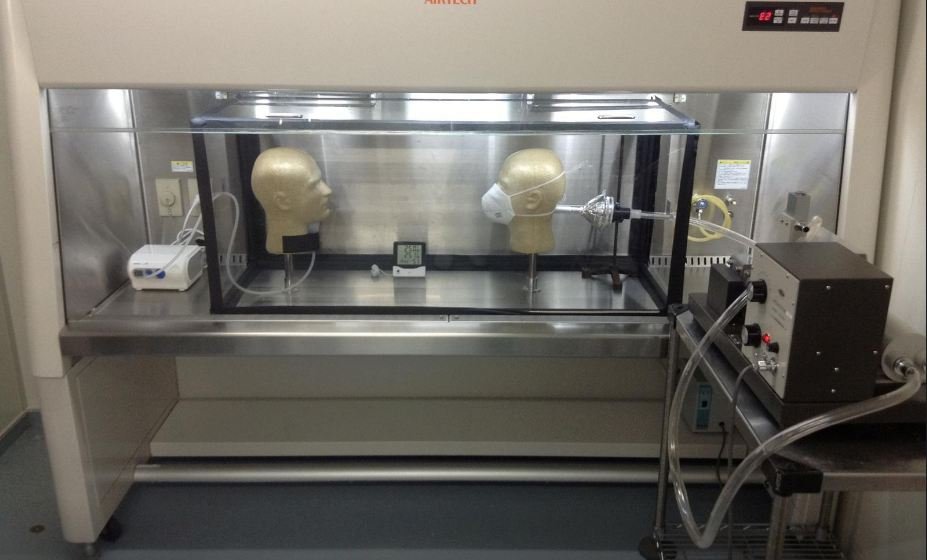
    Scientists at the University of Tokyo built a secure chamber with mannequin heads facing each other. One head, fitted with a nebulizer, simulated coughing and expelled actual coronavirus particles. The other mimicked natural breathing, with a collection chamber for viruses coming through the airway.

    A cotton mask reduced viral uptake by the receiver head by up to 40% compared to no mask. An N95 mask, used by medical professionals, blocked up to 90%. However, even when the N95 was fitted to the face with tape, some virus particles still sneaked in.

    When a mask was attached to the coughing head, cotton and surgical masks blocked more than 50% of the virus transmission.

    “There was a synergistic effect when both the virus receiver and virus spreader wore masks,” the researchers wrote in their study.

    There has been a growing consensus among health experts that the COVID-19 virus can be spread through the air. The US Centers for Disease Control and Prevention (CDC) has revised its guidance this month to say the pathogen can linger in the air for hours.

    A separate team of Japanese researchers used supercomputer simulations to show that humidity can have a significant effect on the airborne dispersion of virus particles.

  • Pakistan records highest one-day COVID-19 death toll in 7 weeks

    Pakistan records highest one-day COVID-19 death toll in 7 weeks

    COVID-19 claimed 19 more lives across the country during the past 24 hours, taking the death toll from the disease to 6,692.

    According to the National Command and Operation Centre (NCOC), 660 fresh infections emerged during this period, lifting the national tally of cases to 324,744. As many as 26,670 new tests were conducted over the previous 24 hours.

    There are a total of 9,378 active cases of the coronavirus as 308,674 patients have recovered from the virus.

    Sindh has reported 142,348 cases so far, followed by Punjab that reported 101,936 cases while Khyber Pakhtunkhwa reported 38,779, Balochistan 15,717, Islamabad 18,309, Gilgit-Baltistan 4,091 and Azad Jammu and Kashmir 3,564.

    In a special session, the NCOC hinted that drastic steps including the closure of all services will be taken to curb the spread of the virus as the public is not complying with the SOPs.

    “NCOC is closely monitoring the situation. If there is no improvement in SOPs compliance, the NCOC will have no choice but to revert to strict measures leading to re-closures of services,” said the centre, in a statement.

    Earlier, Minister for Planning and Development and Chairman NCOC Asad Umar had said that daily COVID-19 death rate witnessed a spike of 140 percent last week as compared to the mortality rate recorded a few weeks back.

  • Study reveals COVID-19 can survive on human skin for nine hours

    Study reveals COVID-19 can survive on human skin for nine hours

    Japanese researchers have discovered that COVID-19 stays on human skin for nine hours, stressing the need for frequent hand washing to fight the on-going pandemic.

    The pathogen that causes the flu, by comparison, survives on human skin for about 1.8 hours, said the study, published this month in the Clinical Infectious Diseases journal.

    The study backs World Health Organisation guidance for regular and thorough hand washing to limit the spread of the virus.

    “The nine-hour survival of SARS-CoV-2 (the virus strain that causes COVID-19) on human skin may increase the risk of contact transmission in comparison with IAV (influenza A virus), thus accelerating the pandemic,” the study underscored.

    “The longer survival of SARS-CoV-2 on the skin increases contact-transmission risk; however, hand hygiene can reduce this risk,” the study said.

    Both the contagious diseases, the COVID-19 and the flu virus are inactivated within 15 seconds by applying ethanol that is used in the hand sanitizers.