Tag: coronavirus

  • Corona times: What’s next for educational institutes, wedding industry, restaurants and cinemas?

    Corona times: What’s next for educational institutes, wedding industry, restaurants and cinemas?

    The spread of coronavirus in Pakistan has decreased significantly. In June, Pakistan ranked 12th on the list of the countries hit by the COVID-19 pandemic, but within two months, it has improved its ranking with a drop in both the number of daily infections and fatalities.

    Not only the drop but anti-corona efforts of Pakistan’s government which led to it are being praised internationally as president-elect of the United Nations General Assembly (UNGA), Volkan Bozkir, has termed the same a “good example for the world to follow”.

    The decline in COVID-19 cases has been followed by the government allowing to reopen all sectors that had been closed for months, excluding educational institutions and marriage halls. The two are likely to reopen on September 15, after a final review by authorities concerned on September 7. 

    While it’s still difficult to estimate the economic losses Pakistan suffered due to the global pandemic, it can be said that people associated with educational institutions, wedding halls, cinemas and restaurants were more vulnerable amid lockdowns.

    EDUCATIONAL INSTITUTIONS:

    Pakistan’s 317,328 educational institutions have remained closed for the past six months and as a result, more than 40 million students are suffering. Teachers, on the other hand, and other staffers have no source of income. While many have been sacked by private institutions, some private school owners such as Muhammad Danish from Karachi, who had been running the school for the past 14 years, has now been forced to set up a biryani stall at his own school.

    While reopening of the institutions still is to be decided upon, experts believe it will be hard to bounce back from the current situation and that with extra precautions.

    WEDDING INDUSTRY:

    As the second most-affected industry remains wedding, marriage halls have been served a severe blow. According to Punjab Marriage Halls Association President Khalid Idrees, as many as 12,000 marriage halls run the households of over four million staffers and management members in Punjab alone, all of whom have been jobless since March.

    Trends suggest that a number of people are awaiting the new wedding world order to once again resort to huge gatherings or continue shifting towards smaller, simpler functions.

    RESTAURANT SECTOR:

    Meanwhile, as the restaurant sector also remains affected by COVID-19, Arab News reported that 30% to 40% of restaurants in Lahore have shut down permanently.

    Admin of popular food blog Foodies ‘R Us, Asad Sheikh, believes some of the government-issued guidelines for coronavirus prevention are beyond comprehension as the dine-in capacity of restaurants being reduced by 50% would affect sales and ultimately leave owners with no other option but to prefer managing takeaways.

    CINEMAS & THEATRES:

    In the case of another hard-hit industry, cinema and theatre owners are not yet ready to implement social distancing SOPs for coronavirus either and ensuring limited seating capacity.

    While there are 160 cinemas in the country with almost 24,000 seating capacity, reopening to public at the cost of half their audiences would be unprofitable.
  • Lockdown order withdrawn; Punjab returns to ‘pre-coronavirus’ routine with a few exceptions

    The Punjab Primary and Secondary Healthcare Department has allowed resumption of “pre-COVID-19 practices subject to the adoption of social distancing guidelines” as it withdrew the government’s lockdown order.

    According to the notification dated August 9, all sectors barring marriage halls and marquees and educational institutions have been allowed to resume operations from Monday (August 10), with timings and weekly holidays “reverted to pre-COVID-19 practice”.

    According to Dawn, religious congregations will only be held after approval from the administration and will be bound to follow the standard operating procedures laid out by the government. Operators of public transport — that has been allowed to resume function — will also have to ensure that preventive measures are being observed by passengers.

    The notification was issued three days after the federal government announced it was lifting restrictions on the tourism sector, restaurants and public transport, after months of suspension.

    The decisions were made in a meeting of the National Coordination Committee, which was presided over by Prime Minister Imran Khan and attended by representatives of all the provinces. The meeting participants also decided to lift restrictions on railways, airlines and metro buses.

    While the restrictions are being eased as government boasts of having successfully tackled the pandemic, it is worth mentioning that a sudden spike has been recorded in coronavirus infections over the past week. The number of per day fatalities, however, on Sunday dropped to single digits for the first time in over 110 days.

  • Coronavirus in Pakistan: A July-August diary

    Since the beginning of July, there has been a decline in new coronavirus cases and the number of recovered patients has also increased. By the time this report was filed, there were 26,834 active COVID-19 cases in the country.

    While Prime Minister (PM) Imran Khan, as well as members of his team and other experts, repeatedly urged people to follow social distancing guidelines and standard operating procedures (SOPs) on Eidul Azha in order to avoid a June-like surge in coronavirus cases in the days to come, people were seen flaunting the same not only over the Eid weekend but also during rallies protesting illegal Indian annexation of held Kashmir on August 5.

    It was reported by Gulf News that the upper class of Karachi completely ignored Sindh government directives by sacrificing animals wherever they wished to despite 500 sites being designated by the provincial administration for the purpose. “Residents in the most expensive and posh neighbourhoods of the city were no exception… officials didn’t make any effort to ensure the people followed the law,” the report said.

    Meanwhile, the Punjab government on August 3 announced to lift the smart lockdown two days ahead of the scheduled date. The government announced to lift all restrictions on the third day of Eid because of a “significant” reduction in coronavirus cases.

    While Punjab Chief Minister (CM) Usman Buzdar expressed satisfaction over the observance of SOPs on Eidul Azha, Federal Minister for Planning, Development and Special Initiatives Asad Umar announced on Thursday that restrictions on the hospitality and recreational sectors, put in place nearly five months ago to curb the spread of the coronavirus, would be lifted by August 10.

    Dine-in restaurants, parks, cinemas, tourist spots and salons would be re-opened while marriage halls would remain closed at least until September 15 and the decision to re-open educational institutes would be looked into during the first week of September, he said.

    However, just a day after the announcement, Punjab witnessed a sudden increase in the number of new coronavirus cases. The everyday cases that had on an average dropped to below 100 during the past one month after reaching a new high in June, once again increased to around 300.

    Although some medical experts were not perturbed and declared it a routine surge, others believed that it might be a signal for the beginning of the second wave of the outbreak. Punjab reported 277 new confirmed cases of COVID-19 besides five deaths during the last 24 hours against 235 a day earlier, Dawn reported.

    Besides the lifting of lockdown restrictions for the economy’s sake in July, the surge is also being attributed to the fact that next to none social distancing guidelines were followed during the preparations and hosting of seminars and rallies to mark ‘Youme Istehsal [Exploitation Day]’ on the first anniversary of Narendra Modi-led India’s annexation of occupied Kashmir.

    Even though the coronavirus situation in Pakistan is getting better on paper, how the pandemic turns out over the next few days is subject to the behaviour of the masses and the policies of the government.

  • Aviation in hot water

    Aviation in hot water

    “The cat is out of the bag and the current government faces another uphill task to make amends within the aviation industry.”

    The aviation industry has transformed due to various kinds of security threats that have emerged over time. Starting from 2001 after the 9/11 hijackings, airports around the world tightened their screening of passengers, and pilots began locking their cockpits. Ever since a detonator was caught inside a passenger’s shoes, passengers have been told to take their shoes off at security checkpoints. The increasing threats have led the United States (US) to spend nearly $100 billion on revamping airport security. A few years later, the second threat surfaced in the United Kingdom (UK) when a terror plot to smuggle explosive liquids on to planes was uncovered in 2006, after which the number of liquids allowed on flights was restricted.    

    The latest security threat that has wreaked havoc is the coronavirus pandemic that emerged in China in late 2019. The industry had been growing over the decade and was estimated to earn more than $800 billion in revenue until 2020 hit, and things took an ugly turn. Approximately seven million flights were canceled between January and July as people stopped booking flights and thousands of planes that needed to be grounded struggled to find parking spots. Many travelers and foreigners were left stranded in various countries around the world and even stuck at airports when countries closed their borders.   

    A century ago, when the Spanish Flu struck, air travel was in its infancy. As a result, the effect on flights was minimal. Now, air travel is the most popular mode of transport with approximately 40 million flights a year and billions of travelers.    

    The virus has bogged down the entire flying process and made it more painstaking because masks and social distancing are mandatory. Airlines now need to follow new protocols such as leaving seats between passengers to ensure social distancing — this adds to the losses being faced by many airlines.

    “The virus, however, is not the only problem the industry will be facing this year thanks to Pakistan’s Federal Aviation Minister, Ghulam Sarwar.”

    The devastating impact of COVID-19 will not dissipate until a few years. The damage has compelled airlines to seek multi-billion-dollar bailouts from their respective governments. Airlines such as Lufthansa and Thai Airways were saved through bailouts.

    The virus, however, is not the only problem the industry will be facing this year thanks to Pakistan’s Federal Aviation Minister, Ghulam Sarwar.   

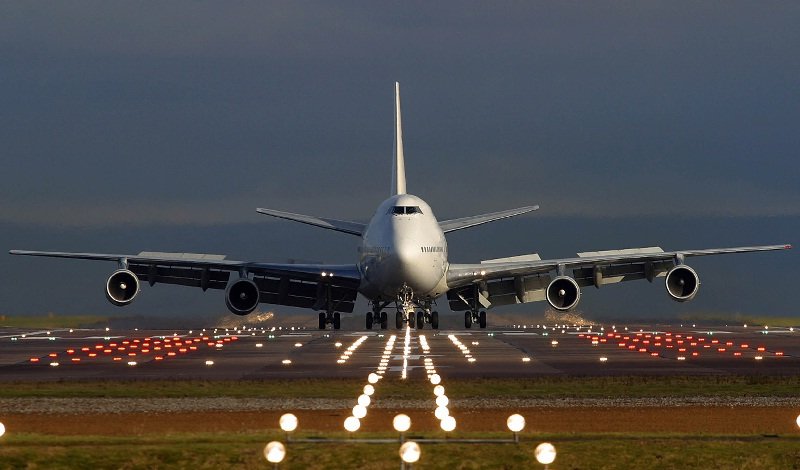
    On May 22, an Airbus A320, operated by Pakistan International Airlines (PIA) and en route from Lahore to Karachi, crashed moments before attempting a second landing, which led to the death of 97 passengers. Luckily, two passengers managed to survive the crash. The damage did not end there. When the aviation minister was expected to present the crash report, he went on to bring to light the pilots’ licensing issue that was still under investigation.    

    The revelation by Pakistan’s aviation minister unveiled a new type of security threat that jolted the entire aviation industry. Speaking on the floor of the National Assembly, the minister announced that 262 out of 860 Pakistani licensed pilots, who are working within Pakistan and abroad, had fake licenses and certificates. He repeated the number in a press conference the next day but added that the 262 pilots’ credentials were “suspected” to be fake.    

    This unprecedented revelation made frontlines, astonished the entire aviation industry, and damaged whatever little credibility the Civil Aviation Authority (CAA) had, since it is responsible for providing legitimate licences and certifications, hence ensuring travelers’ safety.

    “[Aviation minister’s] announcement rang alarm bells and dealt a heavy blow to the faltering national carrier. Now, not only PIA, but the entire CAA, needs to prove that it is capable of ensuring that its pilots are airworthy.”

    As soon as the news broke out, the European Union (EU) and the United Kingdom (UK) barred Pakistani commercial planes from entering their airspace. The European Union Air Safety Agency (EASA) issued letters to airline operators in member countries to suspend PIA’s authorisation to operate in the EU for six months. The US Department of Transportation also revoked the PIA’s authorisation to conduct flights to and from the country due to safety concerns.    

    The announcement rang alarm bells and dealt a heavy blow to the faltering national carrier. Now, not only PIA, but the entire CAA, needs to prove that it is capable of issuing legitimate licences and certificates while ensuring that its pilots are airworthy. It will definitely take a long time to recover, but the fact that such a thing could occur has alerted aviation authorities around the world. 

    Pakistan has been struggling to improve its image in the international world while being scrutinised by the Financial Action Task Force (FATF) and monitored by the International Monetary Fund (IMF). This incident might lead to the country being closely investigated by other organisations, such as the International Civil Aviation, which will be liable for ensuring that trained and certified pilots are flying planes around the world. With the Pakistani passport already being ranked among the worst in the world, the repercussions of this announcement will only cause its ranking to drop further, wiping out whatever efforts had been made to improve the country’s global image in the past. 

    It is heartbreaking to see PIA, which helped set up Emirates by leasing its aircraft and training its staff, in such a dilapidated state. Even though the coronavirus had pushed a large number of airlines towards bankruptcy, PIA’s poor global image and tarnished reputation will solely be responsible for its ill fate. The cat is out of the bag and the current government faces another uphill task to make amends within the aviation industry.

  • The Current Data: Province-wise breakdown of COVID-19 and how the numbers have dropped

    The Current Data: Province-wise breakdown of COVID-19 and how the numbers have dropped

    Before stepping down as the special assistant to Prime Minister (PM) Imran Khan on health, Dr Zafar Mirza, who spearheaded Pakistan’s fight against coronavirus, said that all estimates made by international organisations regarding COVID-19 in Pakistan proved to be wrong and the world was acknowledging the government’s efforts as well as the decline in infections in Pakistan. 

    On July 27, he shared the “good news” that the country had recorded its lowest number of deaths due to COVID-19 within the past three months when the virus is said to have peaked. On the same day, the premier said Pakistan was “one of the few countries that had overcome the coronavirus challenge” and stressed the need for people to continue taking precautionary measures over Eid holidays and during Muharram.

    By the filing of this report, the total number of coronavirus cases in the country stood at 276,287. The deadly virus had claimed 5,892 lives while the number of recovered COVID-19 patients stood at 244,883.

    The number of COVID-19 cases reported in worst-hit Sindh is 119,398 while the death toll from the virus is 2,172. Across the province, 108,989 patients have recovered and a total number of 720,230 tests have been conducted.

    Meanwhile, the number of cases in Pakistan’s most populous province, Punjab, which had briefly beaten Sindh to clinch the “worst-hit” tag from late April to late May, is 92,452. As many as 2,133 people have been so far died due to COVID-19 in the province while 82,512 people have recovered. The number of tests conducted in the province is 697,989.

    There are 33,724 patients of COVID-19 in Khyber Pakhtunkhwa (KP), of which 1,186 have lost their lives and 27,724 have recovered. A total of 208,869 people were tested.

    Islamabad, the federal capital, remains the fourth worst-hit territory where the virus was detected in 14,963 people of the total 177,467 who underwent COVID-19 testing. Out of the total number of patients, 165 people died and 12,377 recovered.

    The number of coronavirus cases in Balochistan is 11,654 and the death toll stands at 136. The number of recoveries is 10,080 while the number of tests is 56,919.

    Azad Jammu & Kashmir (AJK) has 2,055 cases, 50 people have died there and 1,543 people have recovered. Meanwhile, the number of patients, who tested positive of 17,561 total tests conducted in Gilgit, is 2,042. As many as 1,658 have recovered and at least 50 have lost their lives.

    While the government is boasting about its smart lockdown policy that it says “has led to the significant drop in coronavirus cases with little impact on the economy”, it is worth mentioning that experts believe lower testing besides a massive shift in behaviours could also be the reason behind the drop. They, however, fear a second and deadlier wave that can wreak havoc if people flout social distancing guidelines during or after Eid.

  • IN PICTURES: Hajj 2020

    IN PICTURES: Hajj 2020

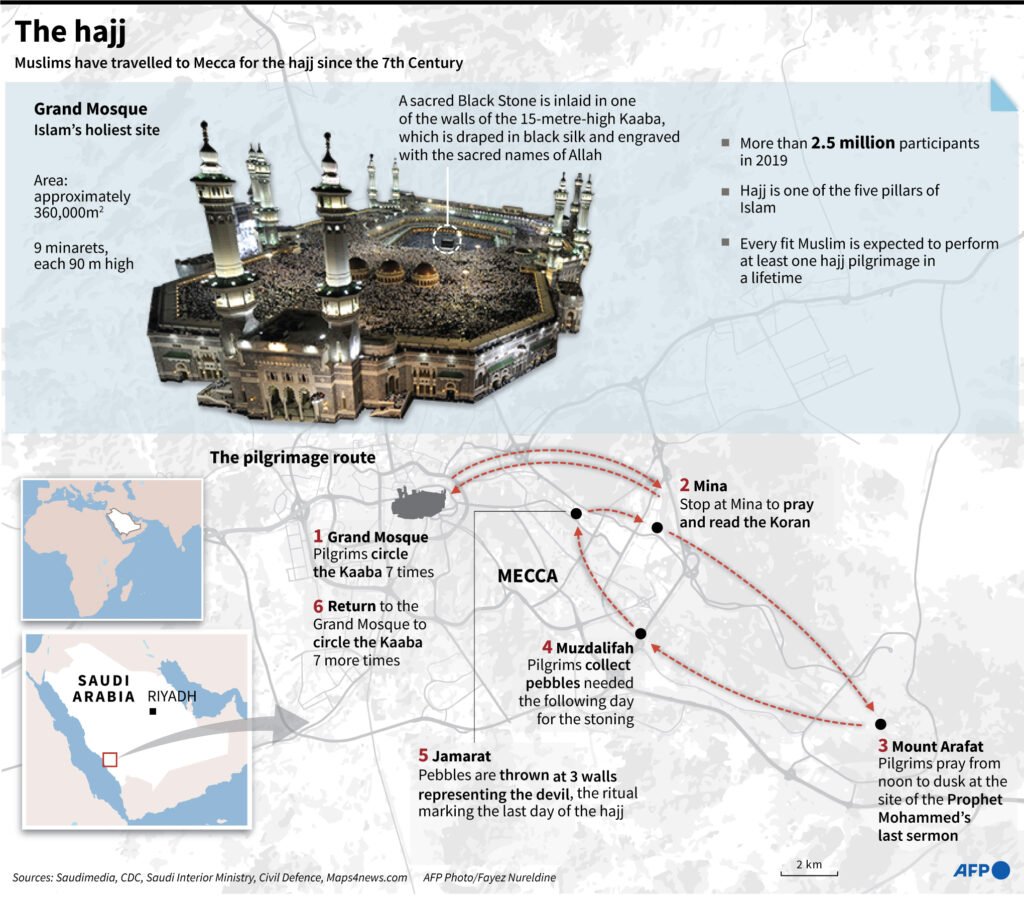
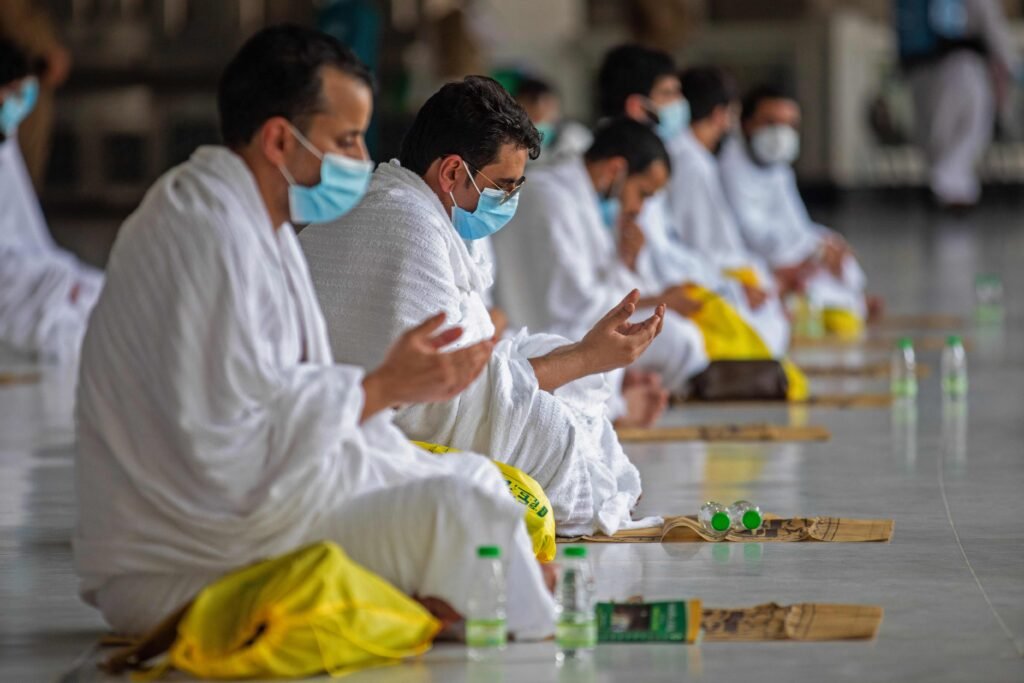
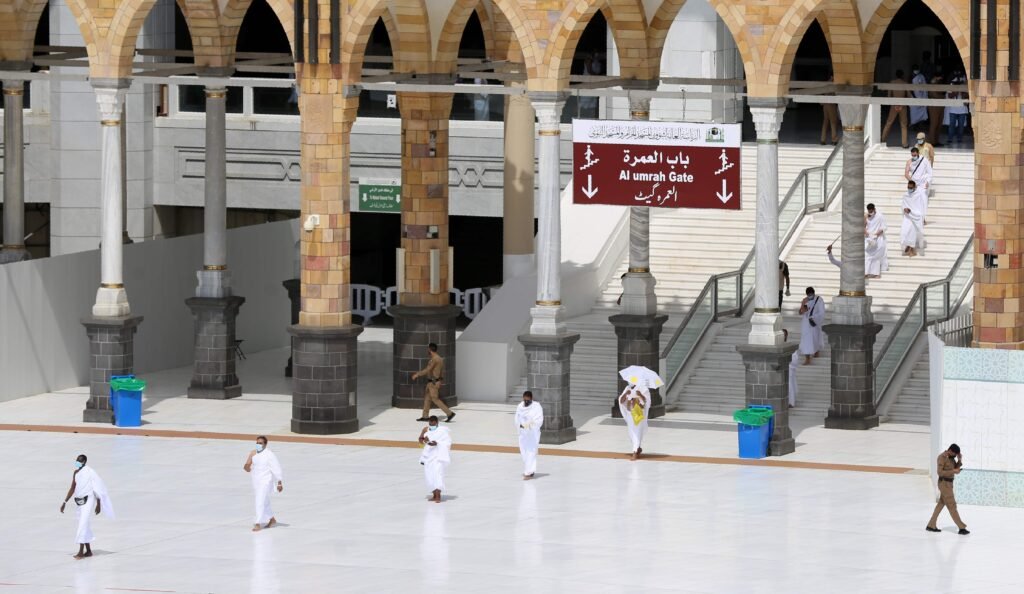
    The five-day annual Hajj pilgrimage began in Makkah, Saudi Arabia on Wednesday with strict measures to contain the spread of the coronavirus.

    A downsized Hajj, this year the number of pilgrims have been drastically reduced to 10,000 from last year’s 2.5 million making it perhaps the safest Hajj ever. In past years, pilgrims have faced a host of viral illnesses, with some falling sick and developing respiratory diseases after mingling with large crowds and staying in cramped pilgrim camps where social distancing was unheard of.

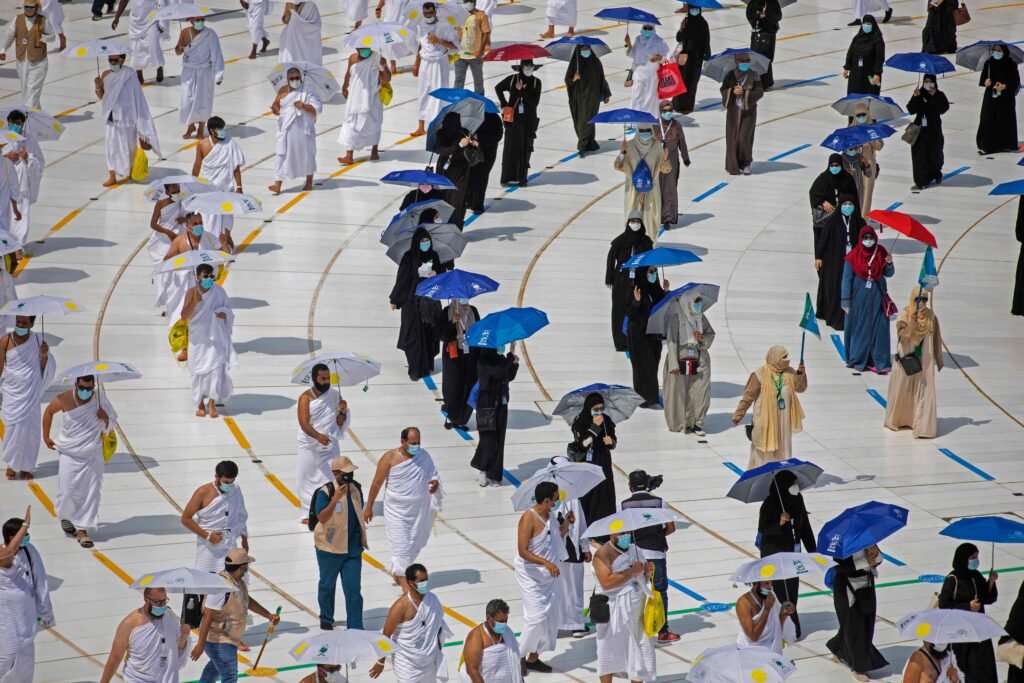
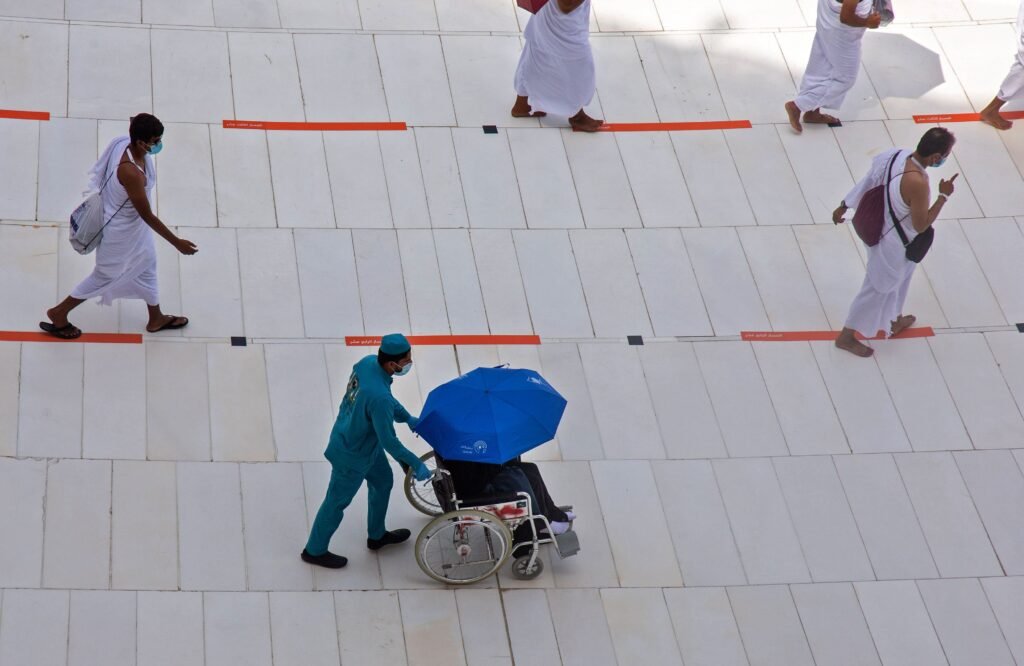
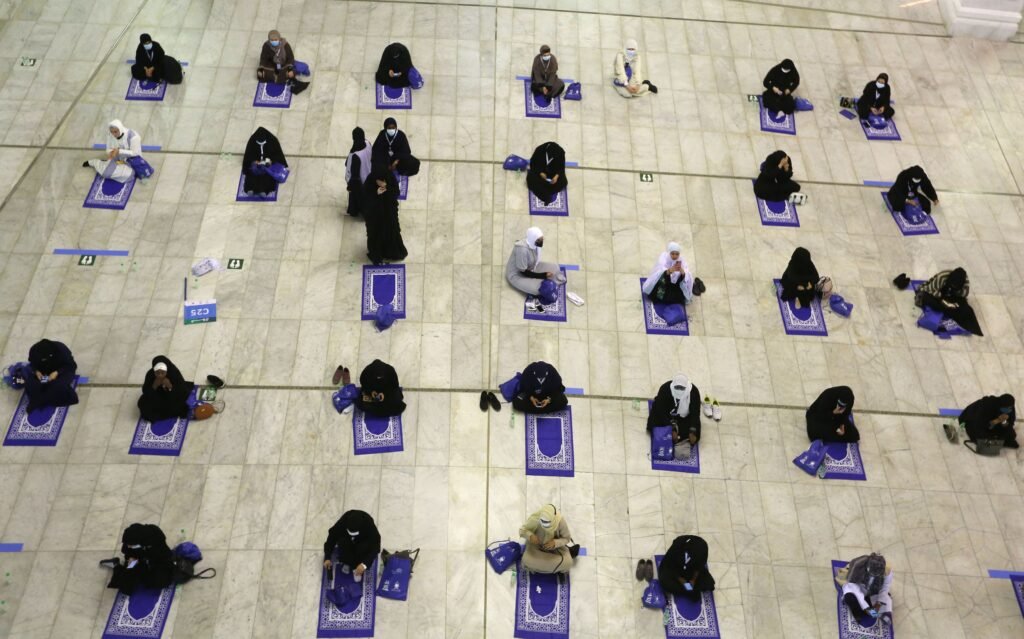
    The kingdom has put strict safety protocols in place with a mandatory quarantine that began on Tuesday. According to details, pilgrims had to undergo COVID-19 tests before arriving in Mecca. They are required to wear masks and maintain social distance at all times. Attendees were also given elaborate amenity kits that included sterilised pebbles for the ritual Stoning of the Devil (rami), disinfectant, masks and a prayer rug, according to the Hajj ministry.

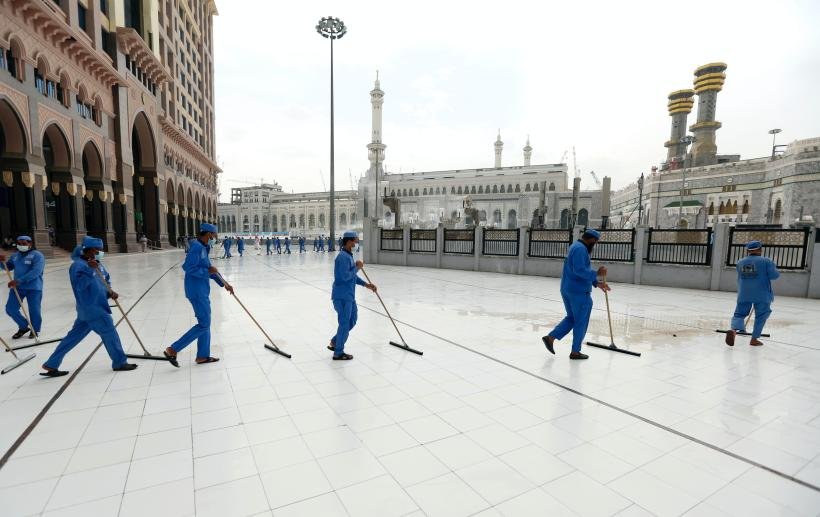
    Several health facilities, mobile clinics and ambulances are also available on hand while workers continuously clean and disinfect the holy site, in uniforms resembling those of hospital staff.

    Saudi authorities initially said only around 1,000 pilgrims residing in the kingdom would be permitted for Hajj however, local media later reported that as many as 10,000 will be allowed to take part.

    Some 70% of the pilgrims are foreigners residing in the kingdom, while the rest will be Saudi citizens.

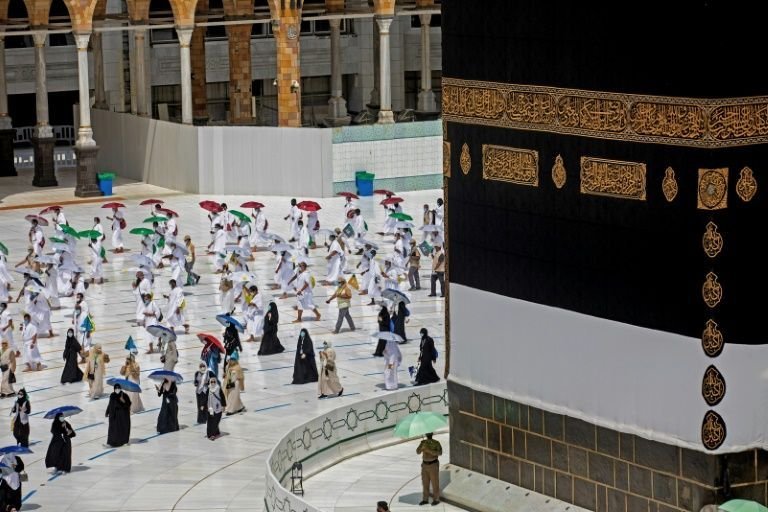
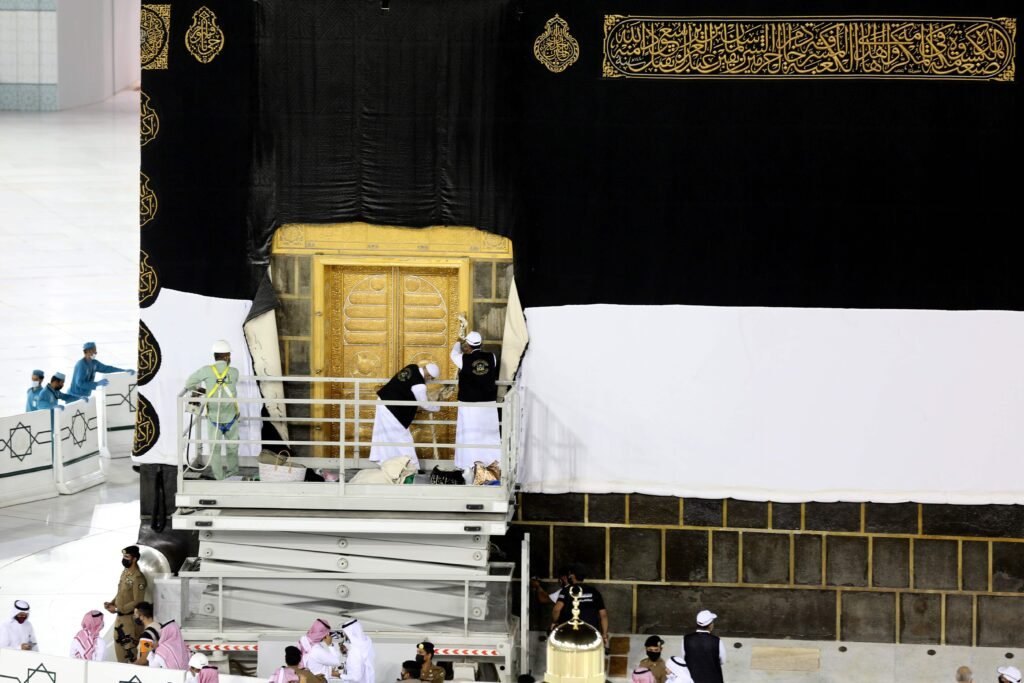
    Check out pictures from this year’s first-ever ‘socially distant’ Hajj below:

    The first group of female pilgrims praying in the Grand mosque in the holy city of Makkah at the start of the annual Hajj pilgrimage
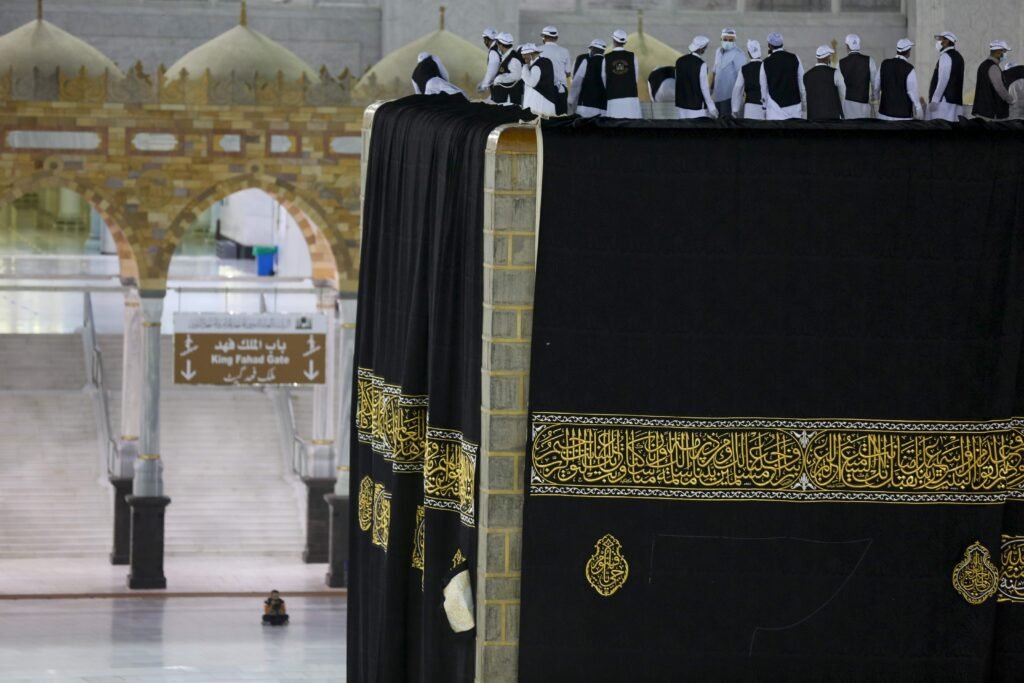
    Saudi labourers put the new Kiswa, the protective cover that engulfs the Kaaba, made from black silk and gold thread and embroidered with Holy Quran verses
    The first group of pilgrims enter the Kaaba at the centre of the Grand Mosque in the holy city of Makkah at the start of the annual Hajj pilgrimage
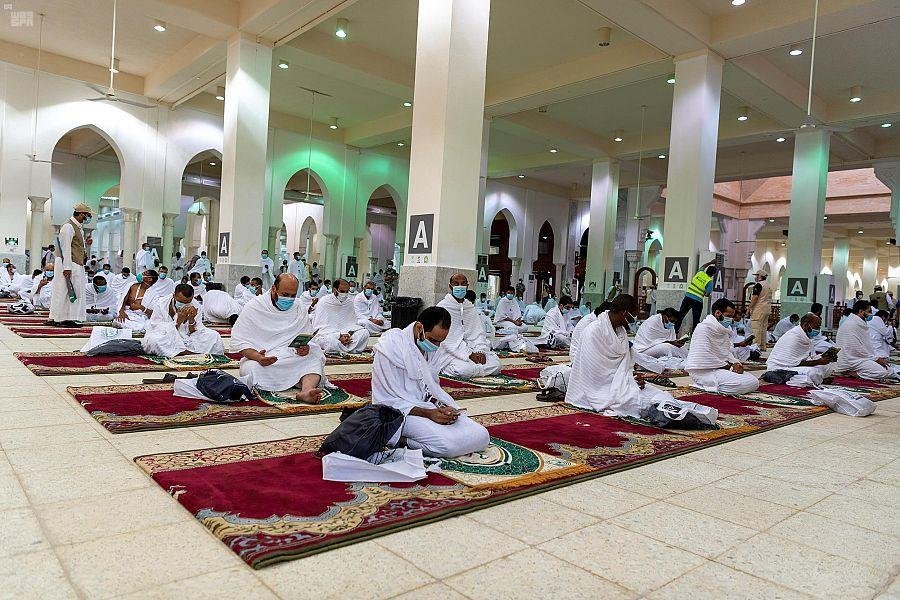
    Pilgrims perform Zuhr and Asr Prayers at Arafat
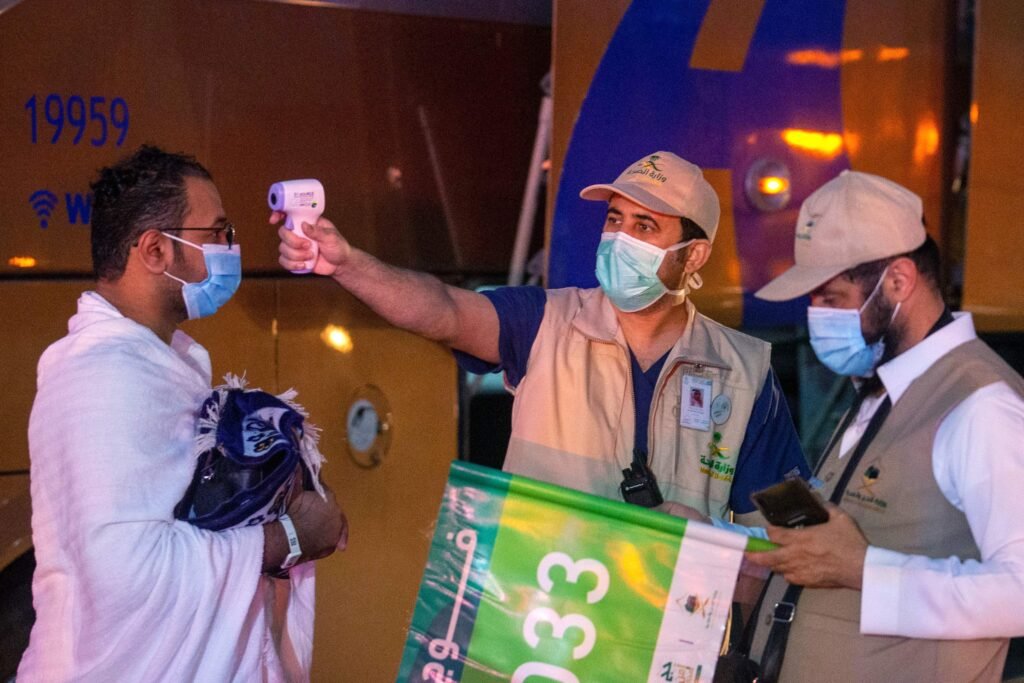
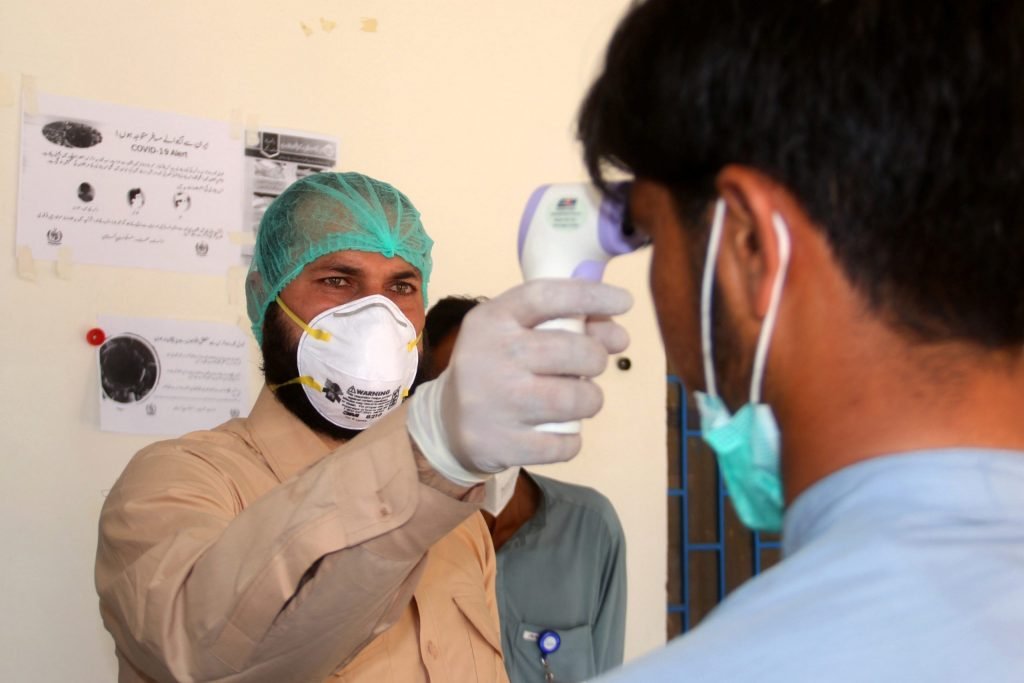
    A Muslim pilgrim gets his temperature checked before boarding a bus heading towards Makkah on the first day of the annual Hajj pilgrimage
    Workers disinfect the ground outside the Grand Mosque
    https://www.instagram.com/p/CDOUEukpK5R/
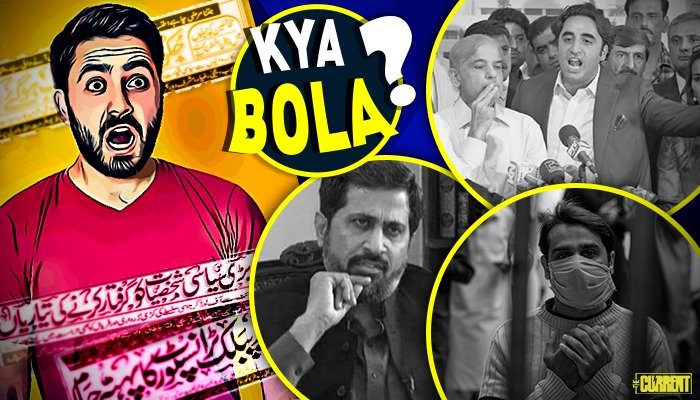
  • KYA BOLA? (Jul 29): ‘Bilawal k jawaan kandhay’ to ‘Coronavirus k khilaf Allah ki ghayebi maddad’

    KYA BOLA? (Jul 29): ‘Bilawal k jawaan kandhay’ to ‘Coronavirus k khilaf Allah ki ghayebi maddad’

    Following are some snippets that stood out from Urdu newspapers on July 29, 2020, which The Current takes no responsibility for.


    ‘Bilawal k jawaan kandhay’

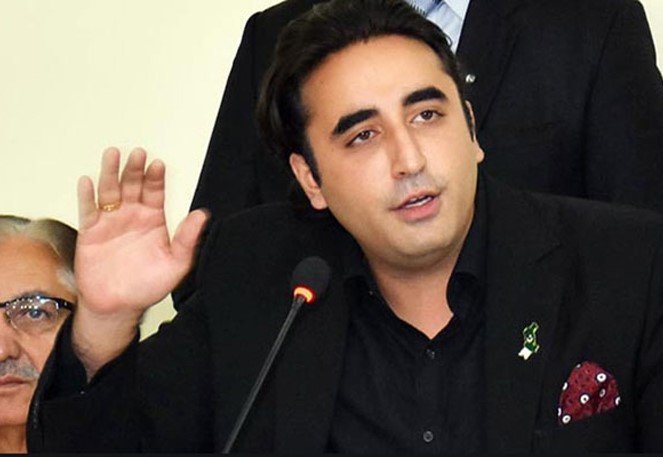
    It has been reported by Daily Jang that Pakistan People’s Party (PPP) chief Bilawal Bhutto-Zardari, in a press conference with opposition bigwig Shehbaz Sharif, said,“Ab Shehbaz Sharif tandrust hain aur hukoomat mukhalif tehreek ki inqalabi qiyadat krnay k liye tayaar hain.” Shehbaz, in response to this, said, “Bilawal k jawaan kandho par zimadari dali hai… yeh humein lead karein ge.” 

    While opposition alliance is once again gearing to get rid of the government, many believe this attempt too wouldn’t be successful for the PPP and the Pakistan Muslims League-Nawaz (PML-N) won’t be able to work together.


    ‘Ab kya gul khilayga?’

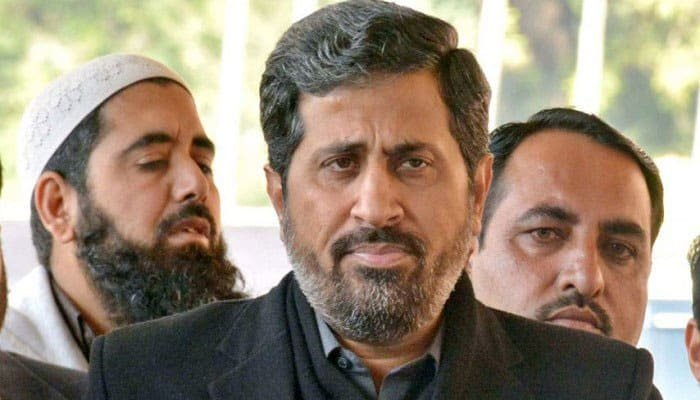
    According to Daily Jang, Punjab Information Minister Punjab Fayazul Hasan Chohan has termed the meeting between Shehbaz and Jamiat Ulema-e-Islam-Fazl (JUI-F) chief Maulana Fazulur Rehman as the between “political orphans”. “Sindh mein Maulana ki Asif Ali Zardari aur Bilawal se mulaqaat ka chand Ziaur Rehman ki bataur deputy commissioner tayinaati ki surat mein charrha tha… ab dekhein Maulana ki Shehbaz se maulaqaat kia gul khilati hai.”

    Fazl’s brother had been appointed the deputy commissioner of Karachi’s District Central despite not being a qualified CSS officer. Amid severe backlash and criticism, the federal government on Monday approved a letter by the Khyber Pakhtunkhwa (KP) government requesting the repatriation of his services back to the province.


    ‘Coronavirus k khilaf Allah ki ghayebi maddad’

    Daily Dunya has quoted the Corona Expert Advisory Group as saying that, “Corona cases aur amwaat mein kami Allah ki ghayebi maddad hai kyun k kami ki hatmi waja samnay nahi aa saki.”

    The statement comes as both COVID-19 cases and deaths in Pakistan continue to drop over the past three weeks. While some are praising the government for its efforts aimed at curbing the outbreak, others believe lower testing and people choosing to stay back home is the actual reason.

  • KYA BOLA? (Jul 28): ‘Sindh k barsaati maindak’ to ‘Aglay aath dino ki ehmiyat’

    KYA BOLA? (Jul 28): ‘Sindh k barsaati maindak’ to ‘Aglay aath dino ki ehmiyat’

    Following are some snippets that stood out from Urdu newspapers on July 28, 2020, which The Current takes no responsibility for.


    ‘Sindh k barsaati maindak’

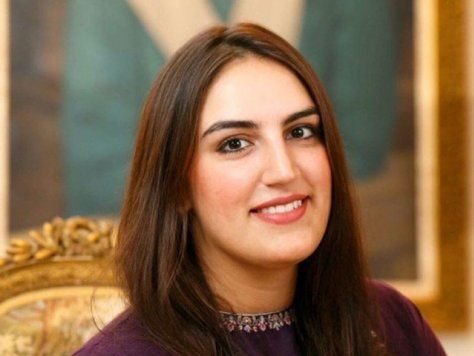
    It has been reported by Daily Jang that Bakhtawar Bhutto-Zardari has thanked the Sindh government for its hard work in draining out rainwater from different areas of Karachi.“Saari raat sarrko’n ki nigraani krnay pr Sindh government ka shukriya adaa krti hun. Sab saaf hogya lekin badqismati se hum barsaati maindako’n k masaail hal nahi kr saktay jo baarish hotay he nikal aatay hain.”

    Daughter of the late former prime minister (PM) Benazir Bhutto and former president Asif Ali Zardari was taking a dig at the critics of the Pakistan People’s Party (PPP) led Sindh government who had been raising their voices after Karachi was flooded following heavy moonsoon rains.


    ‘Churrailo’n ne Pakistan k dou tukrray kiye’

    Prominent senior journalist and analyst Suhail Warraich, in his column for Daily Jang, has written, “Yeh churrailei’n he theen jinho’n ne Mashraqi aur Maghrabi Pakistan mein ghalat fehmiya’n paida ki aur humein judaa kr dia. Agar churrailei’n larraayi naa krwatee’n to Ziaul Haq 90 din mein election krwa kr chalay jatay.”


    ‘Aglay aath dino ki ehmiyat’

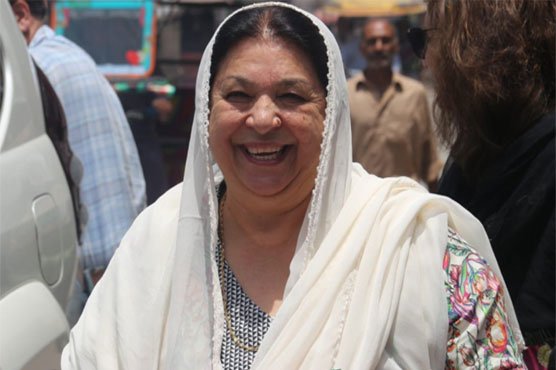
    According to Daily Dunya, Punjab Health Minister Dr Yasmin Rashid has said, “Agly aath [8] din buhat eham hain. Agar halaat theek rahay to tamaam cheezei’n khol di jayein gi.”

    The minister’s statement comes as the Punjab government imposes a province-wide smart lockdown ahead of Eidul Azha. It will remain in place until August 5.

  • 103yo Pakistani becomes one of world’s oldest coronavirus survivors

    103yo Pakistani becomes one of world’s oldest coronavirus survivors

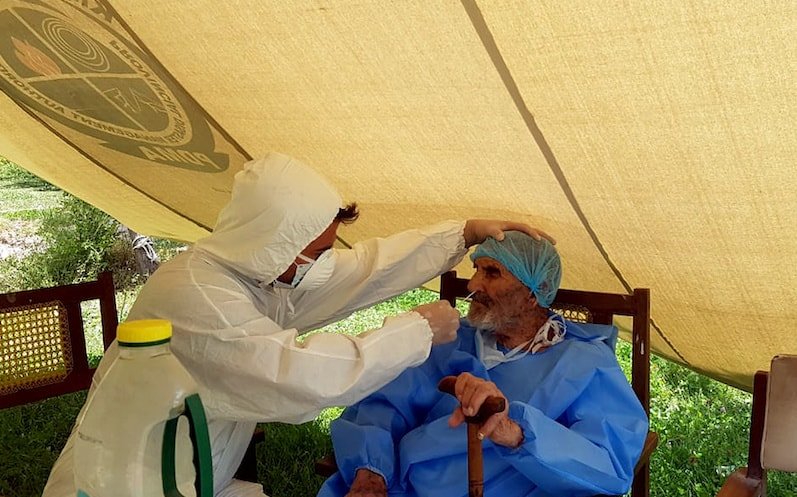
    A 103-year-old man has recovered from COVID-19 in Pakistan to become one of the oldest survivors of the disease in the world, beating the odds in a country with a weak healthcare system, his relatives and doctors said.

    Aziz Abdul Alim, a resident of a village in the mountainous northern district of Chitral, was released last week from an emergency response centre after testing positive in early July.

    “We were worried for him given his age, but he wasn’t worried at all,” Alim’s son Sohail Ahmed told Reuters on the phone from his village, close to the border with China and Afghanistan.

    Ahmed quoted his father as saying that he had been through a lot in life and the coronavirus did not scare him. He did however, not like being in isolation.

    READ: Pakistan’s secret to ‘flattening the curve’

    A carpenter until his 70s, Alim has outlived three wives and nine sons and daughters, said Ahmed, who is himself in his 50s, adding that his father had separated from his fourth wife and is currently married to his fifth.

    Alim also had to be provided with moral and psychological support during his isolation and treatment, Dr Sardar Nawaz, a senior medical officer at the Aga Khan Health Service emergency centre told Reuters on Friday.

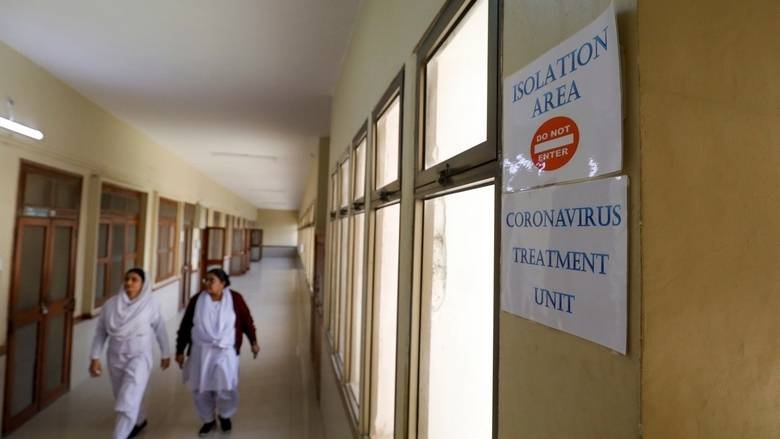
    The makeshift centre was set up in a girls’ hostel just weeks before Alim was brought in and is the only one equipped to deal with COVID-19 patients for miles.

    Pakistan has registered more than 270,000 cases of the disease and 5,778 deaths. While the number of people testing positive has dropped over the last month, government officials fear there could be another rise during the Eidul Azha holidays and Muharram.

  • Coronavirus: Pakistan’s secret to ‘flattening the curve’

    According to a report published by The Washington Post on July 19, “Pakistan has flattened its coronavirus curve” as the past several days have seen fewer than 1,500 cases and 40 deaths on an average.

    So far, 5,677 people have succumbed to COVID-19 in Pakistan, which is 2.1% of the total infected population while almost 79% (210,468) patients have recovered.

    The initial estimate of the World Health Organization (WHO) was that the infection fatality rate (IFR) for COVID-19 would be 3.4%, which means that for every hundred cases at three or four people would lose their lives. But as per the Centre for Disease Control and Prevention, the IFR has turned out to be much lower — at a mere 0.65%

    READ: Did COVID-19 peak in Pakistan in June?

    Pakistan’s total number of deaths from COVID-19 in June was 2,835. Since the second week of June, an average of 80 to 100 people had been dying on a daily basis and the same trend continued till June 30. The highest single-day death toll was 153 on June 19.

    So far in July, the highest number of deaths was recorded on the fourth day while the daily death toll within the first week stood at around 80. The trend came down to 60 to 70 deaths a day in the second week and the latest trend suggests up to 30 or 40 COVID-19 fatalities a day.

    Punjab Health Minister Dr Yasmin Rashid says that due to the strict quarantine policy of the provincial government, the virus has not spread as expected. She also says most fatalities are of those who are older than 60 years of age or are suffering from certain other diseases.

    READ: Is coronavirus ending in Pakistan?

    The rate of COVID-19 infections and deaths seems to have dropped significantly in Pakistan but it is an open secret that the number of cases and deaths is also being grossly misreported.

    “I am aware of a few cases in which patients with COVID-19 symptoms were never taken to hospitals and in case of death were laid to rest at large funeral gatherings,” said Love for Data Chief Executive Officer (CEO) Syed Tajamul Hussain. He added that the country hadn’t had a mortality census in a while and it was highly likely that cases were being under-reported amid limited testing capacity.