Tag: coronavirus

  • KYA BOLA? (Jul 22): ‘Noon League pr aitebaar nahi’ to ‘Baadal mein chaand nahi’

    KYA BOLA? (Jul 22): ‘Noon League pr aitebaar nahi’ to ‘Baadal mein chaand nahi’

    Following are some snippets that stood out from Urdu newspapers on July 22, 2020, which The Current takes no responsibility for.


    ‘Noon League pr aitebaar nahi’

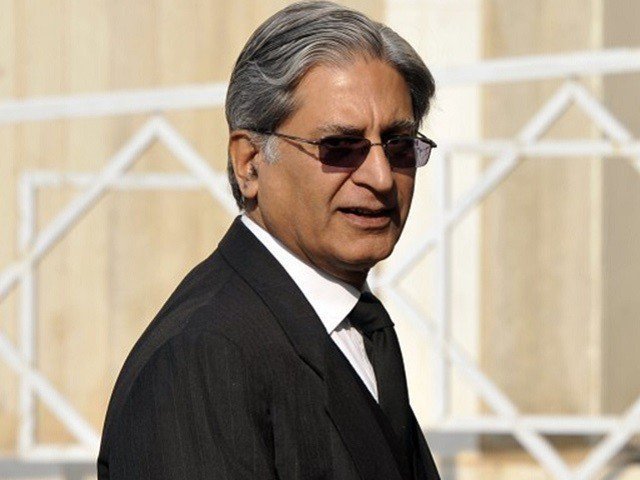
    It was reported by Daily Jang senior leader of the Pakistan People’s Party (PPP), Aitzaz Ahsan has said, “Noon League pr aitebaar nahi, apni party ko bhi raaye doonga k in se bach kr rahein.”

    The statement comes at a time when the two largest opposition parties, the Pakistan Muslim League-Nawaz (PML-N) and PPP, are in talks to work out a strategy and take entire opposition on board to get rid of the current government.


    ‘Lagta hai NDMA khatam krna parrayga

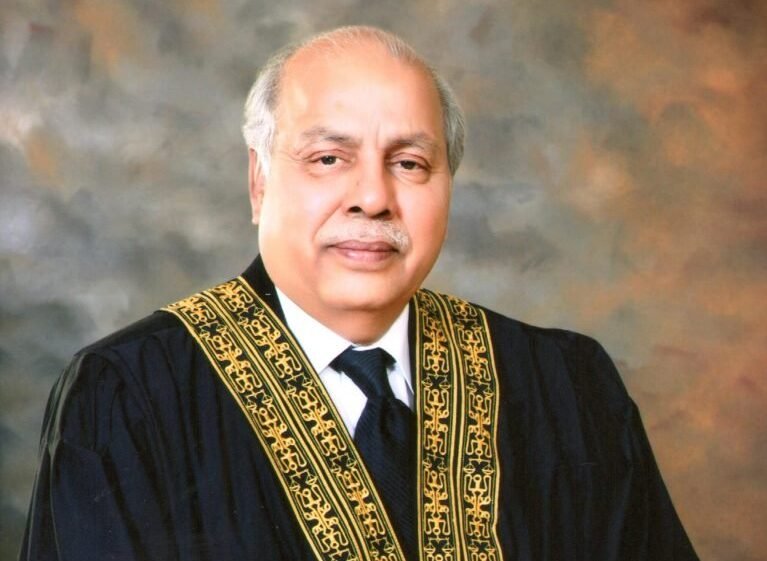
    According to Daily Jang, Chief Justice of Pakistan (CJP) Gulzar Ahmed, while hearing the coronavirus suo motu case, has said,“NDMA arbon rupay kaisay kharch kr raha hai? Lagta hai idaara khatam karna paray ga.”

    The Supreme Court (SC) was criticising the National Disaster Management Authority’s (NDMA) failure to ensure transparency in expenditures pertaining to the coronavirus pandemic and locust control.


    ‘Baadal aur chaand’

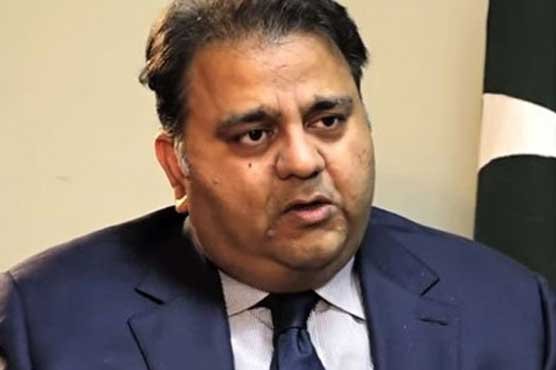
    It has been reported by Daily Dunya that Federal Minister for Science and Technology Fawad chaudhary has said, “Baadal hain tou chaand kaisay nazar aaye ga? Ruet App pr dekhein, chaand nazar ayega.”

    His statement came as the tussle between the Science & Tech Ministry and the Ruete Hilal Committee, which is now witnessed at least twice every year over moon-sighting methods, began on Tuesday. Zilhaj moon was not sighted and Eidul Azha is to be celebrated on August 1 in Pakistan.

  • Supreme Court criticises NDMA over lack of transparency in expenditure

    Supreme Court criticises NDMA over lack of transparency in expenditure

    The Supreme Court (SC) has criticised the National Disaster Management Authority’s (NDMA) failure to ensure transparency in expenditures pertaining to the coronavirus pandemic and locust control.

    A five-member bench of the apex court, headed by Chief Justice of Pakistan (CJP) Gulzar Ahmed, heard the coronavirus suo moto case, during which the CJP suggested abolishing the NDMA over the authority’s failure to explain its expenses.

    NDMA has yet to submit crucial documents, observed the CJP. “Where are the documents permitting imports of machinery from Al-Hafeez Crystoplast (Pvt) Ltd?” he asked. The CJP also inquired why the documents have not been submitted despite directives being issued thrice in this regard. Where are the details pertaining to chartering the aircraft and its payments, he asked further.

    The director of NDMA maintained before the court that the authority did not import machines from Al-Hafeez company.

    The owner of the company has yet to appear, noted the CJP. The real issue is non-compliance with customs and other laws, he remarked.

    Meanwhile, Justice Ijazul Hasan noted that the cost of the machinery has not been disclosed in the documents.

    Over Rs10.7 million was paid for the charter, observed the CJP. How were the payments made according to the charter agreement, he asked. How can someone give this much cash in Karachi, asked the CJP.

    Where are the documents pertaining to imports of vaccine and the medicines, asked the CJP

    The relevant authorities will have to satisfy the court, said the Attorney General.

    The CJP observed that it appeared that the NDMA would have to be abolished as its chief has failed to provide explanations.

    Perhaps a lot has gone wrong and attempts are being made to cover up, observed the CJP. Should contempt of court notices be issued to the NDMA chief, he asked.

    The institutions of the country should be run in a transparent manner, said the chief justice.

    The NDMA was given a free hand and hefty amounts to deal with the coronavirus pandemic, said Justice Hasan. The authority is answerable to the court and the people, he added.

    The NDMA is acquiring planes and machinery for locust control, noted the CJP. Transparency will have to be ensured through documents and not just verbal statements, he remarked, adding that it was not comprehensible how billions of rupees were being spent.

    From corona to floods to locusts, everything has been handed over to the NDMA, remarked Justice Hasan. But the NDMA’s admin member himself does not know anything, he added.

  • Is coronavirus ending in Pakistan?

    Is coronavirus ending in Pakistan?

    The first three weeks of June saw not only a rapid spread of the new coronavirus but deaths attributed to the COVID-19 also stood at around a daily average of 100.

    While the country, since the last week of June, has witnessed a significant decrease in the number of coronavirus infections amid conflicting claims regarding what has led to the drop, Pakistan has an optimistic recovery rate as 67.5% of people who had contracted the virus have so far recovered.

    While it is still unclear if the virus has already peaked in Pakistan or not, testing, active cases and the recovery rate are the major factors proving helpful in estimating not only the spread of the virus but also the pandemic situation.

    So far, July hasn’t been as bad as last month as government statistics from the first two weeks show there has been an increase in COVID-19 recoveries while the number of new cases has also dropped significantly.

    While the reason behind the sudden drop still remains unclear as government boasts of its successful strategy and experts attribute the decline to Pakistanis’ better immunity due to exposure to various vaccinations, it cannot be denied that the drop has been led to also because of lower testing as compared to the month of June.

    People are realising that they would recover if they have mild symptoms and only need to isolate themselves without actually heading out to get tested, surveys suggest.

    Special Assistant to Prime Minister (SAPM) on Heath Dr Zafar Mirza has also confirmed that not many people are voluntarily showing up to get tested anymore. “We are unable to conduct as many tests as we were earlier, despite having a daily capacity 60,000. Pakistan has set up more than 125 labs for COVID-19 testing but we need human resources to run those labs as the testing capacity needs to continuously be enhanced.”

    Meanwhile, a majority of people are also making use of telehealth services by consulting their doctors over the phone or contacting the government’s coronavirus helpline (1166). According to a doctor working at a COVID-19 helpline centre, she alone receives around 40 calls a day for medical advice.

  • PIA likely to face losses over Rs100 billion amid bans, coronavirus

    PIA likely to face losses over Rs100 billion amid bans, coronavirus

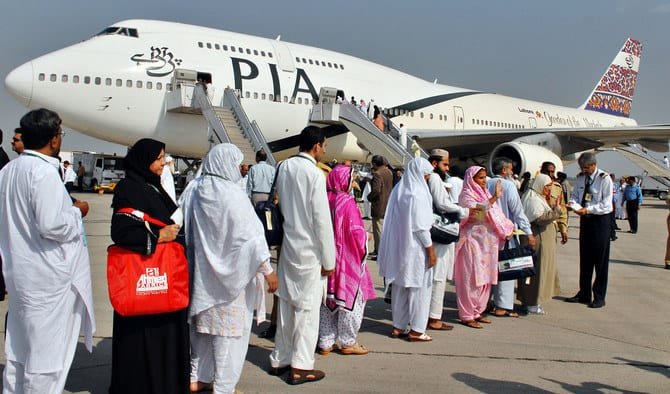
    The Pakistan International Airlines (PIA) is expected to incur losses over Rs100 billion due to suspension of international flights amid the fake licences controversy and the coronavirus pandemic.

    As per details, the national carrier is expected to incur losses up to Rs100 billion due to ban on flight operations by the United Kingdom (UK), European Union (EU) and the United States (US). The target of revenue for the current year was set at Rs196 billion.

    Moreover, PIA would also suffer losses of up to Rs12 billion in terms of Hajj operations this year after the Saudi authorities decided to hold the annual pilgrimage on a limited scale, while the airline is also facing losses up to Rs9 billion due to closure of Umrah operations.

    It is pertinent to mention here that that on July 10, PIA Chief Executive Officer (CEO) Air Marshal Arshad Malik had apprised Prime Minister (PM) Imran Khan regarding the status of ongoing dialogues with European Union Aviation Safety Agency (EASA) for the resumption of flight operation. He had also given a briefing to the premier regarding the restructuring process of the national carrier.

    Malik had reportedly presented a comprehensive plan to PM Imran for turning PIA into a profitable national entity and the premier had directed the PIA CEO to expedite the reform process of the national flag carrier.

    He had also summoned the framework for reform agenda within seven days.

  • Did COVID-19 peak in Pakistan in June?

    Special Assistant to the Prime Minister (PM) on Health Dr Zafar Mirza on July 1 said that the number of coronavirus cases was rapidly increasing by mid-June but the country was now in a better position than it was two weeks ago in the continuing battle against COVID-19.

    “The ratio of confirmed infections has gone down from 22% to 15% while the number of suspected cases has also decreased,” the premier’s aide said in an interview, adding that the rate of fatalities was also lower than before.

    READ: Govt is grossly under-reporting coronavirus deaths and infections: PM’s task force head

    Dr Mirza maintained that the government was to now determine over the next couple of days if Pakistan had passed the peak of the COVID-19 outbreak or was still only heading towards it. “If the situation remains stable in the coming days and the number of coronavirus cases continues to decrease, it would be good news for us.”    

    While the number of coronavirus cases in Pakistan is steadily declining amid selective lockdowns across the country and an increase in the number of recovered patients, it is not necessarily due to a decline in the rate of infections and an alleged lower testing rate could be the actual reason.

    However, according to official numbers, in June, a total of 140,726 confirmed cases of coronavirus were reported in Pakistan with at least 2,804 deaths.

    The second week of the said month proved to be the worst in terms of infections as 40,604 were reported. The third week was the most deadly as at least 856 people lost their lives to the virus.

    The last week of June saw 24,324 infections while the number of fatalities stood at 591 — 40 more than those recorded in the first week of the same month.

    It merits a mention that while PM Imran Khan and some members of his team, including senior doctors and other health experts, seem to believe that the virus peaked in Pakistan, especially in Punjab, during the second week of June and the curve has now started to flatten, Pakistan on Friday overtook Italy to become the 11th worst affected country from COVID-19.

  • Shah Mahmood Qureshi rubbishes rumours of his death after Wikipedia page edited

    Shah Mahmood Qureshi rubbishes rumours of his death after Wikipedia page edited

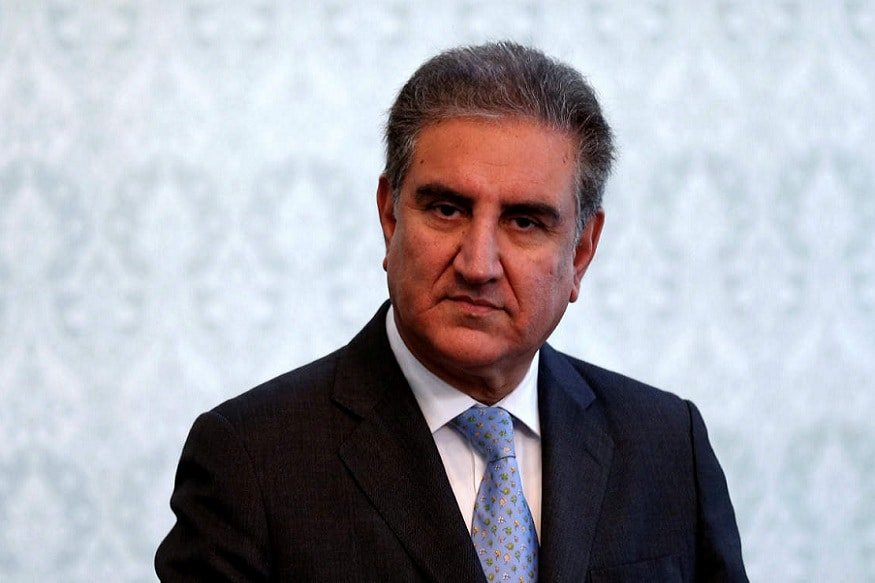
    Foreign Minister (FM) Shah Mahmood Qureshi, who contracted COVID-19 last week, has rubbished rumours of his death after his Wikipedia profile was edited, and said there was no truth to them.

    In a statement issued on Thursday, the Foreign Office (FO) said that “mischievous” elements had edited Qureshi’s profile on the site. “Many complications were created, and it caused distress to my loved ones and family members,” FM Qureshi said in a separate statement, adding that he also started receiving phone calls.

    “There is no truth to these reports, and I am doing well,” he said.

    While Qureshi did not specify the changes that were made, the page’s history showed that the edits were made on July 5 to reflect that the foreign minister had died on July 4.

    “We strongly condemn attempts by mischievous elements to hack [the] Wikipedia page of the foreign minister and spread rumours on social media about his health and well-being,” said FO spokesperson Aisha Farooqui in a tweet.

    “By the grace of Almighty Allah, [Qureshi] is recovering fast. Everyone’s prayers, from Pakistan and abroad, are deeply appreciated.”

    The FM had tested positive for coronavirus on July 3 and announced quarantining himself.

  • Metro, causing ‘Rs3.6 million loss a day’, remains shut for over three months

    Metro, causing ‘Rs3.6 million loss a day’, remains shut for over three months

    The Punjab Mass-Transit Authority’s (PMA) deficit has reached Rs375 million due to the closure of the metro bus service for 105 days while officials believe that a single-day shutdown of metro bus causes a loss of Rs3.6 million, Pakistan Today reported.

    According to reports, while no decision has been taken to restore the service by the government so far, the Punjab government had earlier also cut subsidy of PMA by Rs1 billion and the fourth quarter’s funds were not fully released in the last fiscal year (2019-2020).

    “Due to non-issuance of funds, there have been problems in payment to contractors,” reports quoted officials as saying.

    They lamented that the government’s policies were beyond understanding as it had allowed intra-city and inter-city transport to operate but had not yet restored the metro bus service since after the first coronavirus lockdown.

    “An average of 130,000 commuters were benefiting from the metro bus service daily. The authority is currently facing the worst financial crisis. No strategy has been formulated to restore the financial damages nor has it been decided how the foreign company which is operating the metro bus will be supported.”

    Due to the outbreak of coronavirus, the Punjab government had decided to close Lahore, Rawalpindi and Multan metro bus service in March. However, local transporters were later allowed to operate inter and intra-bus service while following certain guidelines.

    The report also quoted sources in the Punjab government as claiming that the metro bus service was a white elephant. “The service had been subsidised by the previous government but it is very difficult for the present government to subsidise the bus service further.”

    PMA General Manager (Operations) Uzair Shah said the decision to reactivate the bus service would be taken by the Punjab government whereas no order had so far come from the government. “The authority is facing problems due to non-receipt of subsidy,” he added while also requesting the government to release funds.

  • Employment opportunities for Pakistani doctors, nurses and paramedics in Kuwait under new agreement

    Kuwait has signed a government-to-government bilateral framework agreement with Pakistan to hire its healthcare professionals on a regular basis, Special Assistant to the Prime Minister (SAPM) on Overseas Pakistanis and Human Resource Development (OP&HRD) Sayed Zulfikar Abbas Bukhari has said.

    “We [have] signed an agreement with the government of Kuwait to send an increased number of Pakistani doctors, nurses and paramedics to work there,” Bukhari tweeted.

    He also expressed gratitude to the government of Kuwait for recruiting Pakistani medical professionals on a priority basis. “I thank our Kuwaiti brothers for preferring Pakistani healthcare professionals. This is a big step towards bringing our two great countries further closer,” the SAPM said.

    He also shared the news release of Pakistan’s Embassy in Kuwait, which confirmed the development.

    According to the release, the agreement was signed by Kuwaiti Undersecretary Ministry of Health Dr Mustafa Ridha and Pakistani Ambassador Syed Sajjad Haider on behalf of Overseas Employment Corporation (OEC) at the Ministry of Health of Kuwait.

    The cooperation agreement would institutionalise the recruitment of healthcare professionals from Pakistan for Kuwait on a regular basis as per the requirements of Kuwait’s Ministry of Health.

    Meanwhile, Kuwait’s International Health Relations Department Director Dr Rehab Al Watyan was quoted by Kuwait’s state news agency as saying that the agreement would enhance cooperation between the medical community of Pakistan and Kuwait and “would provide an opportunity to benefit from their experiences in dealing with disasters and epidemics, and to address the COVID-19 epidemic”.

  • An ordinary budget in extraordinary times

    An ordinary budget in extraordinary times

    The federal budget for 2020-21 has been approved amid protests by the opposition and criticism by economic analysts. Is it really that bad a budget? Not at all. In fact, if anything, it might be incrementally better than the previous years’ budgets in many ways.

    For instance, budget 2020-21 can be termed as pro-business as it did not introduce any new taxation measures and instead included a reduction in custom and regulatory duties in a number of areas. In addition, there is no provision for any foreign loan repayment on the account of debt moratorium granted to us by our international lenders. Power and petroleum subsidies have been reduced by more than Rs100 billion, which, if reflected in energy pricing, can very well reduce the financial pressure on the government.

    “Despite all the talk of ‘corona budget’, ‘structural reforms’ and an ‘expansionary fiscal policy’, this was truly an ordinary budget but in extraordinary times, falling short of people’s expectations and exhibiting a meek response to the enormous challenge at hand.”

    Most importantly, for the very first time, the budget included statements on contingent liabilities, fiscal risks and tax expenditure, setting a new standard of information disclosure and budget transparency. These statements might not be perfect and may need substantial improvements, but nevertheless it is the first time any government has opted for such measures in Pakistan.

    The government also restrained from financing its deficit from the State Bank of Pakistan (SBP), albeit under IMF pressure. The development budget does not exhibit the kind of cuts that one would have expected, and last but not the least, the Public Sector Development Programme (PSDP) did not include any unapproved projects, setting a good practice for public investment management.

    If all this is true, then what is the fuss really about? Why are people not appreciating government’s efforts?

    First and foremost, despite all the talk of ‘corona budget’, ‘structural reforms’ and an ‘expansionary fiscal policy’, this was truly an ordinary budget but in extraordinary times, falling short of people’s expectations and exhibiting a meek response to the enormous challenge at hand.

    At a time when the country truly needed a fiscal push through ambitious development spending, the budget ended up sticking to fiscal discipline that is usually required under the International Monetary Fund (IMF) programmes. Perhaps the government could not communicate its domestic priorities to the IMF well. But it is quite clear that in the contest of balancing the preferences, appeasing the IMF won by a wide margin over the goal of stimulating the economy.

    “When history would be written, budget 2020-21 would not be criticised for any excesses but for not doing enough to revive the economy in the wake of COVID-19.”

    Secondly, and even more importantly, it is an unrealistic budget. The Rs4.9 trillion revenue target for the Federal Board of Revenue (FBR) can never be achieved without new taxation measures and is likely to fall short by at least Rs500-600 billion. The Rs242 billion provincial surplus is also quite unrealistic, especially considering that both Sindh and Balochistan have posted a cumulative deficit of more than Rs100 billion. Notwithstanding the windfall gains on the account of interest rate cut leading to reduced markup payments and an increase in fuel prices resulting in an increase in petroleum levy, the overall revenue receipts will fall short of targets, and when that happens, it will happen at the cost of development expenditure.

    READ:Twitter loses it over Rs1.29 trillion budget for defence, Rs83.63 billion for education

    Lastly, a crisis generally brings in the appetite for bold and difficult decisions and a crisis of this unprecedented proportion should have led to a paradigm in our priorities. The next few years are going to be tough, leaving little room for fiscal leakages. If there was ever a time to fix the state-owned enterprises and to privatise them, to take decisions on circular debt and power sector reforms, to put a stop on the relentless expansion in government size, to manage the ballooning pension liabilities, or to create a balance between civil and military spending, that time was now. But unfortunately, none of this could be traced in the budget documents.

    When history would be written, budget 2020-21 would not be criticised for any excesses but for not doing enough to revive the economy in the wake of COVID-19.

  • Low testing rate bigger a reason for drop in coronavirus cases than govt efforts

    Low testing rate bigger a reason for drop in coronavirus cases than govt efforts

    Federal Minister for Planning, Development, Reforms and Special Initiatives Asad Umar has said that the coronavirus situation in the country is improving as the number of COVID-19 cases “decrease owing to effective measures taken by the government and a majority of people following social distancing guidelines”.

    But the statement the minister made while addressing a press conference at the National Command and Operation Centre (NCOC) last Friday, has been contradicted by the government itself as its data suggests that COVID-19 cases have declined over the past one week because of low testing rate.

    READ: Govt is grossly under-reporting coronavirus deaths and infections: PM’s task force head

    As many as 5,000 to 6,000 cases were being reported on a daily basis in Pakistan by mid-June, which had prompted the government to impose selective lockdowns in different parts of the country, especially Punjab and Sindh, and the number of daily infections has now dropped to 3,000 to 4,000.

    While data from June 15 to June 29 shows that the number of cases reported in the country after June 19 has comparatively been lower, contrary to Umar’s claims, a major reason behind the drop has been that the number of tests performed to diagnose COVID-19 across the country also dropped significantly during the said period.

    The rate of testing came down from 31,000 to 20,000 while the target set by the government to achieve in July was the enhancement of Pakistan’s testing capacity to 100,000.

    LIVE BLOG: COVID-19 pandemic

    If you look at the statistics, it is clear that Pakistan has conducted 1,327,638 (1.3 million) tests so far, while according to Worldometers, Pakistan ranks 32nd out of 49 Asian countries in terms of testing capacity. Countries including Iraq, Bhutan, Iran and Maldives have a higher testing capacity than that of Pakistan.

    According to Punjab health officials, the government is continuing to enhance testing capacity in the country but the testing rate has dropped because patients are less exposed to the virus amid lockdowns.

    “A test is conducted when a suspected patient comes forward after complaining of symptoms or as part of a random testing drive in hotspots,” they said, adding that both instances had seen a significant drop amid lockdown restrictions